
Nitrogen vs Regular Air in Truck Tires: Is the Extra Cost Worth It?
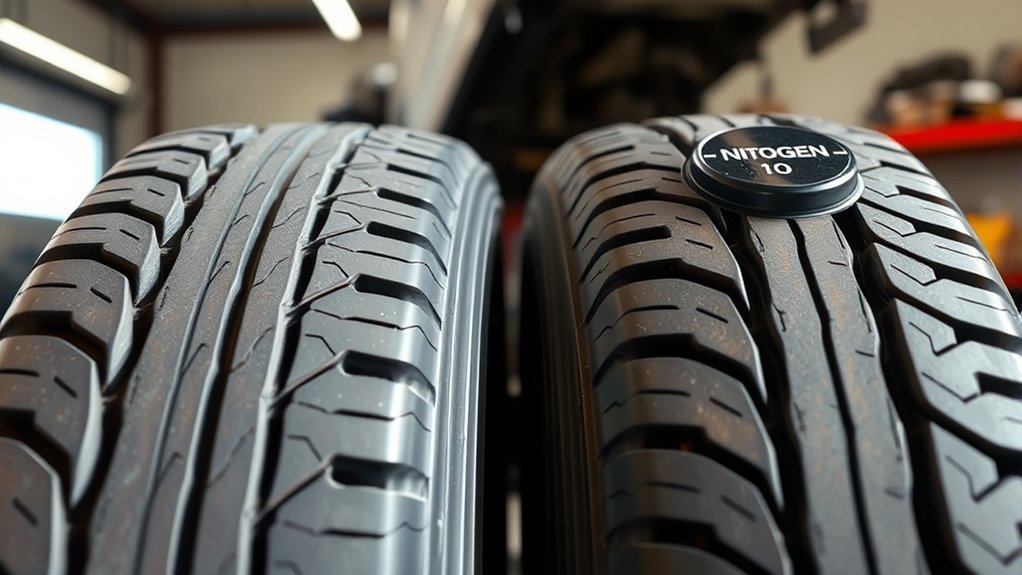
Nitrogen can help truck tires retain pressure slightly longer than ordinary compressed air, but it does not replace routine pressure checks or correct inflation. For most light-duty truck owners, readily available air is the practical choice. Nitrogen makes more sense when a fleet values dry inflation gas, controlled servicing, and small reductions in natural pressure loss.
Quick Answer
Nitrogen escapes through tire materials more slowly than compressed air, so it may reduce gradual pressure loss. However, it does not prevent punctures, valve leaks, or temperature-related pressure changes. Correct cold inflation pressure matters far more than the gas used, and you can safely add air to a nitrogen-filled tire when needed.
Key Takeaways
- Nitrogen can slow natural pressure loss, but the real-world difference is usually modest.
- Nitrogen does not directly improve rolling resistance or fuel economy when tire pressure is equal.
- Both nitrogen and air respond to temperature changes and require regular cold-pressure checks.
- You can mix compressed air with nitrogen when a tire needs pressure immediately.
- For towing, hauling, and commercial service, the correct pressure for the actual load matters more than the inflation gas.
Nitrogen vs. Air: A Quick Comparison for Truck Tires
Regular compressed air already contains roughly 78% nitrogen. A nitrogen service removes most of the oxygen and moisture, usually producing a much higher nitrogen concentration. The main measurable difference is slower gas permeation through the tire, not a dramatic change in grip, ride, or efficiency.
| Factor | Nitrogen | Compressed Air |
|---|---|---|
| Natural pressure loss | Usually slower through the tire material | Usually slightly faster |
| Moisture | Dry when supplied and handled correctly | Depends on compressor maintenance and drying |
| Temperature response | Pressure still rises and falls with temperature | Pressure rises and falls with temperature |
| Availability | Requires a nitrogen service source | Widely available |
| Best fit | Controlled fleets and specialized operations | Most everyday truck use |
A National Highway Traffic Safety Administration laboratory study found that nitrogen-filled new tires lost pressure at about two-thirds the rate of air-filled tires during a 90-day static test. That result supports a modest pressure-retention benefit, but it does not establish a fixed annual PSI difference for every truck tire.
The biggest performance gain comes from keeping the tire at the correct pressure, not from choosing one inflation gas over the other.
[Products Worth Considering]

EVOULTES heavy duty tire inflator with an integrated gauge delivers accurate pressure readings from 10–120 PSI, helping you inflate, deflate, and check tires in one tool. The 16.5-inch extended dual-head air chuck with swivel base reaches hard-to-access dual wheel valves on trucks and RVs. A brass trigger core and side-mounted air release valve make operation smooth, with standard 1/4" NPT threading and quick-connect compatibility for easy setup.

This portable cordless tire inflator delivers up to 160 PSI with fast 17 L/min airflow to help you quickly top up tires and get back on the road. It features dual power mode, running on a 21V rechargeable battery or a 12V DC adapter for convenient roadside use. An automatic shut-off with digital pressure gauge helps prevent overinflation, and a built-in LED light improves visibility in low-light conditions.
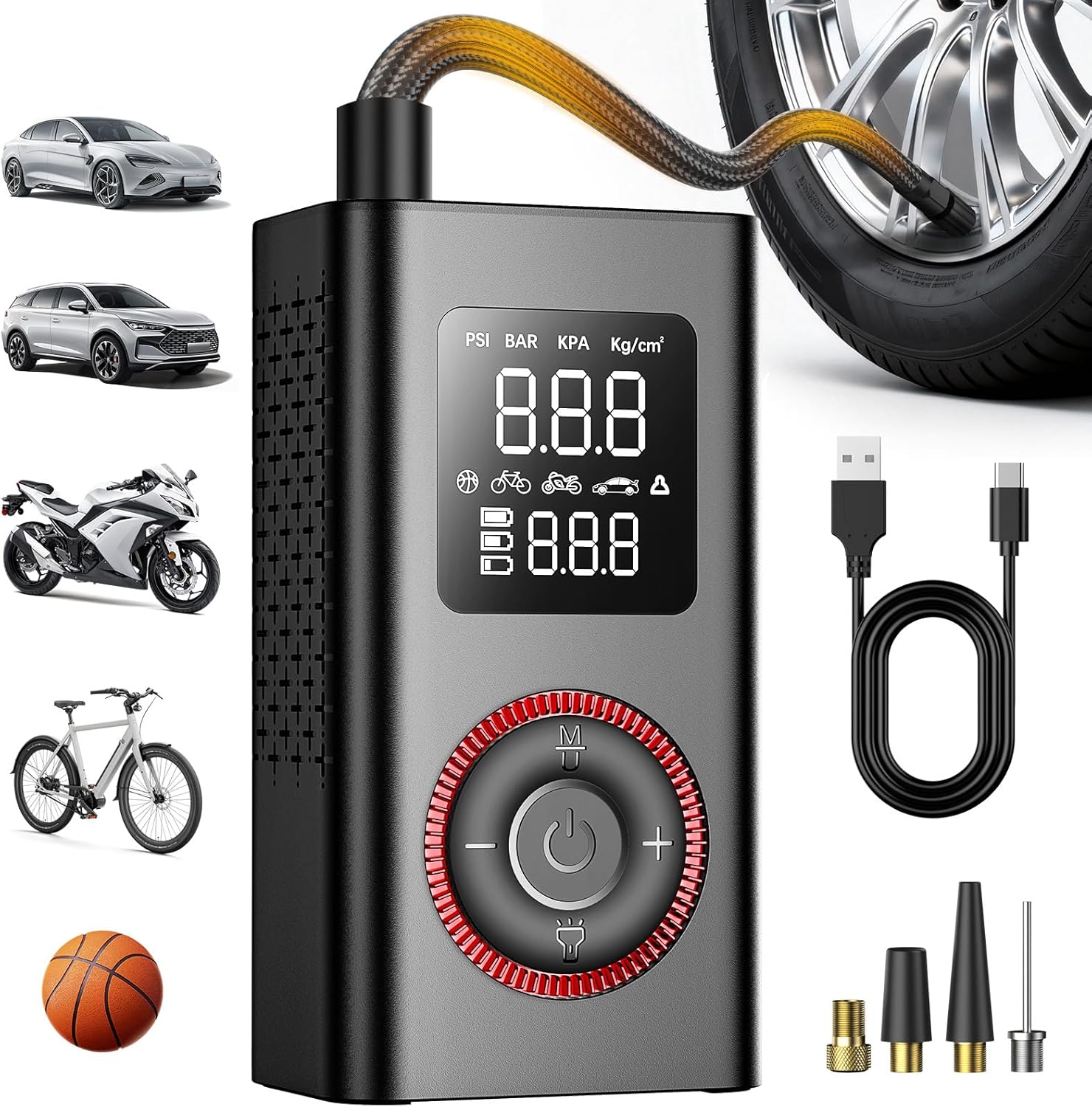
This portable tire inflator delivers fast, efficient inflation with a maximum 150 PSI rating and accurate pressure control for cars, motorcycles, bikes, and more. It features preset modes with automatic shutoff to help prevent overinflation, plus a real-time digital gauge and bright LED light for roadside use. Powered by a rechargeable 6000mAh battery with Type-C charging and a USB output, it’s also useful as an emergency power source for devices.
What Nitrogen Actually Changes Inside a Truck Tire
Nitrogen mainly changes the composition and dryness of the inflation gas. Oxygen permeates through tire materials faster than nitrogen, so a high-nitrogen fill can slow gradual pressure loss. Dry nitrogen can also reduce moisture inside the tire-and-wheel assembly when the tire is purged and filled correctly.
Those differences are limited. Pressure can still escape through punctures, damaged valve cores, bead leaks, cracked wheels, or poor sealing. Nitrogen also cannot correct an overloaded tire, an incorrect cold-pressure setting, tread damage, or a mismatched tire and wheel.
Top Benefits of Nitrogen vs. Air for Truck Tires
The benefits are most useful when they support a disciplined maintenance program rather than replacing one.
- Slower natural pressure loss: Nitrogen can extend the time before a small permeation-related adjustment is needed.
- Dry inflation gas: Properly supplied nitrogen contains little moisture, which is useful where internal moisture control matters.
- Consistent fleet servicing: A centralized nitrogen program can standardize inflation procedures and encourage technicians to document pressure checks.
- Specialized applications: Operations with strict pressure-control requirements may value dry gas and controlled filling more than an everyday pickup owner would.
Any fuel-economy or tread-life benefit is indirect. Nitrogen may help only if its slower pressure loss keeps a tire closer to the correct setting. The NHTSA laboratory research did not find a rolling-resistance benefit from nitrogen when tires were compared at equal pressure.
Disadvantages of Nitrogen vs. Air in Truck Tires
Regular air remains the better choice for many truck owners because the practical disadvantages of nitrogen can outweigh its modest pressure-retention benefit.
- Cost varies: Nitrogen may be included with a tire purchase, sold as a package, or charged per tire. A universal price claim is not reliable.
- Limited access: Air is easier to find during road trips, remote work, or long-haul service.
- False confidence: Drivers may check pressure less often because they assume nitrogen prevents all pressure loss.
- No direct performance upgrade: At the same correct pressure, nitrogen does not automatically improve traction, braking, handling, rolling resistance, or fuel economy.
- Service quality matters: The claimed moisture benefit depends on the purity of the nitrogen, the filling process, and how well the original air was purged.
Warning: Never delay a needed top-up because nitrogen is unavailable. Add ordinary compressed air and restore the correct cold pressure. Driving underinflated creates a greater safety risk than reducing the nitrogen concentration.
Is Nitrogen More Cost-Effective Than Air?
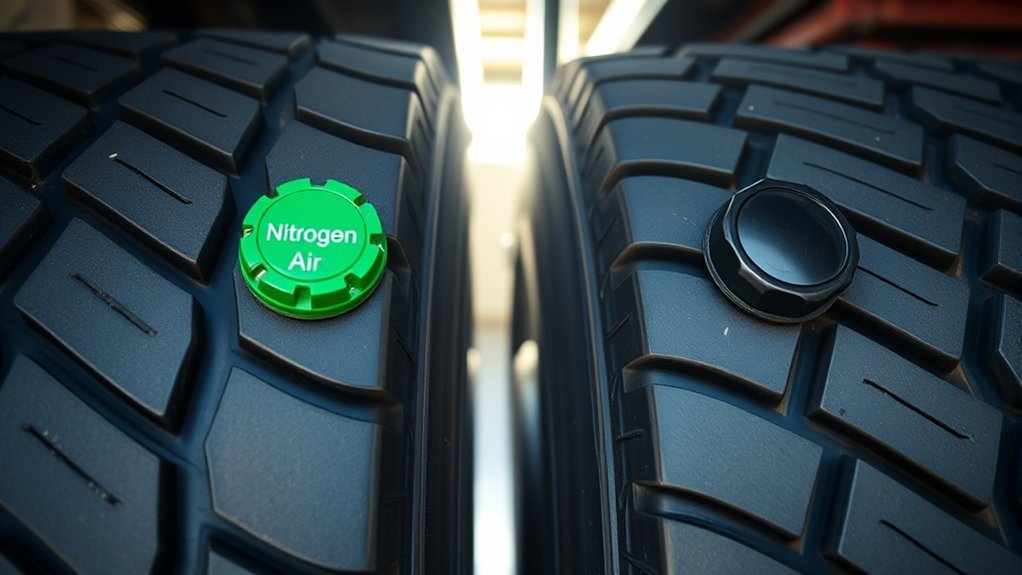
Nitrogen is cost-effective only when its operational value exceeds the service cost. That calculation differs for an individual pickup, a towing vehicle, a delivery fleet, and a heavy commercial truck.
Long-Term Savings Analysis
Nitrogen does not create savings by itself. Savings are possible only when slower natural pressure loss prevents underinflation between inspections. Correct pressure can reduce unnecessary rolling resistance and irregular wear, but a well-maintained air-filled tire can deliver the same benefit.
For a fleet, compare the annual nitrogen expense with documented changes in pressure-related service calls, roadside events, tire removals, casing condition, and fuel use. Without before-and-after records, a claimed return on investment is speculation.
Initial Cost Considerations
Avoid relying on a fixed price per tire because local service charges change. Ask whether the fee includes an initial purge, concentration testing, future top-ups, valve service, and pressure inspection. A low-cost fill with no purge or quality control may deliver little practical difference from ordinary air.
Inflation Frequency Comparison
Nitrogen may reduce the number of small pressure corrections caused by permeation, but it should not reduce inspection frequency. Michelin advises checking pressure at least monthly and before long trips, including when tires contain nitrogen.
Commercial fleets may require more frequent inspections based on duty cycle, axle loads, route conditions, tire position, and company policy. A tire that repeatedly loses pressure needs a leak inspection rather than repeated top-ups.
How Temperature and Load Affect Both Options
Both nitrogen and compressed air expand when heated and contract when cooled. Nitrogen does not stop seasonal or operating-temperature pressure changes. Measure pressure when tires are cold and compare it with the vehicle placard, owner’s manual, or approved load-and-inflation guidance.
Load is especially important for trucks. A light-duty pickup may list different pressures for normal and maximum-load use. Medium- and heavy-duty trucks may require pressures based on actual axle loads and the tire manufacturer’s load-and-inflation tables. Nitrogen cannot compensate for a pressure that is too low for the carried load.
[Products Worth Considering]

The AstroAI L7 Air Tire Inflator refills car tires quickly with up to 150PSI max pressure and a fast 1-minute inflation claim. It includes 5 preset modes for car, motorcycle, bicycle, balls, and manual use, along with an auto shutoff to help prevent overinflation. Designed for convenience, it features a digital gauge with unit switching, a top LED light with multiple modes, and USB-C/USB ports for backup power.
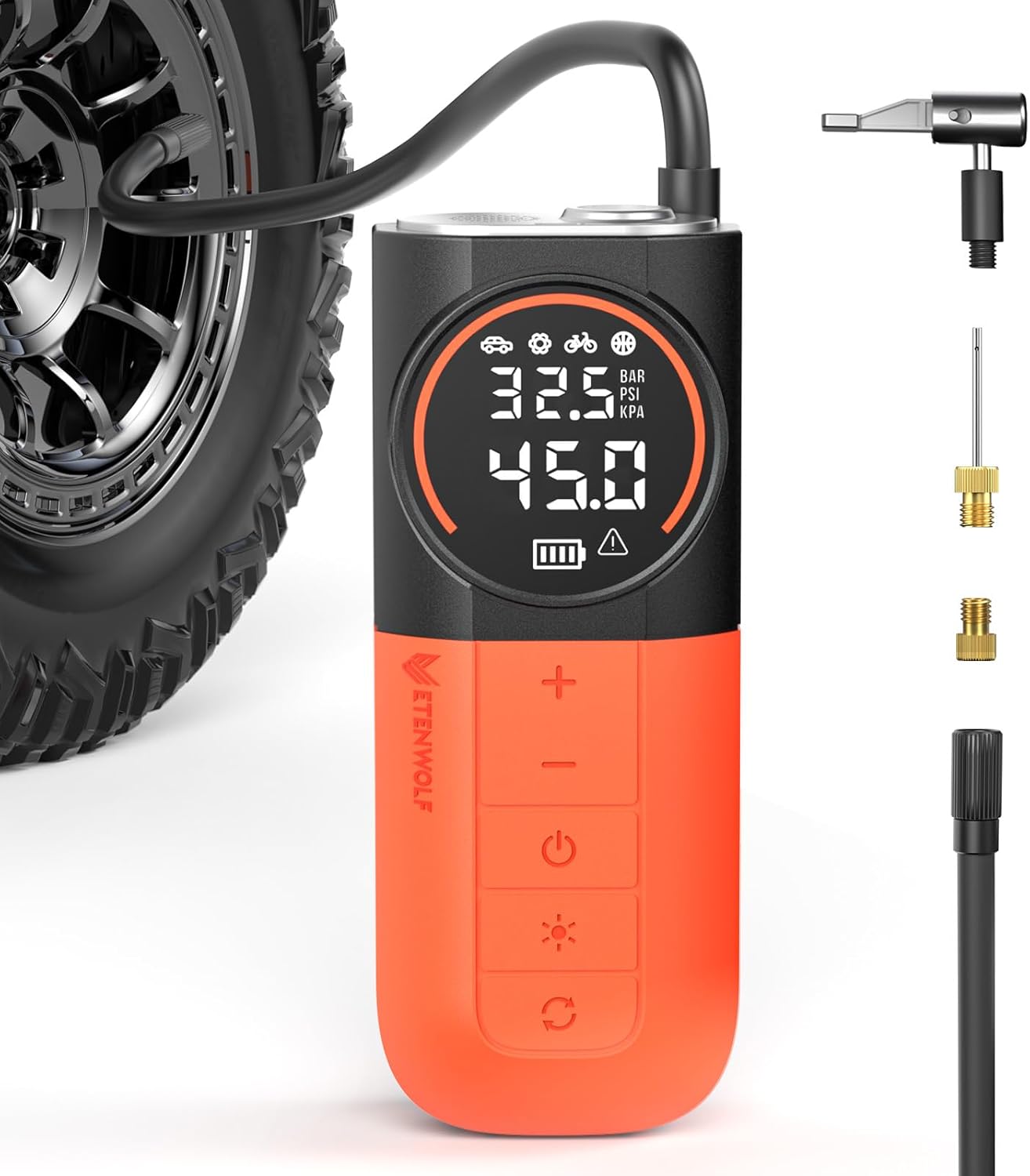
The ETENWOLF S1 cordless tire inflator delivers ultra-fast inflation with up to 160 PSI and a 20 L/min airflow for quicker tire top-offs. Its 5200mAh battery and cooling system support inflating many tires and sports balls on a single charge, while the digital pressure gauge and multi-unit display help you reach the right pressure accurately. With preset modes, pressure memory, an auto-stop feature, and an LED flashlight, it’s built for easy roadside and everyday use.
How to Maintain Truck Tire Pressure Correctly
- Check cold tires: Measure before driving or after the vehicle has been parked long enough for the tires to cool.
- Use the correct target: Follow the door-jamb placard or owner’s manual for a standard light-duty truck. For commercial applications, follow approved load-and-inflation guidance and fleet procedures.
- Use a reliable gauge: Check every tire, including the spare and both tires in a dual assembly.
- Adjust immediately: Add nitrogen or air as needed. Do not leave a tire low while searching for nitrogen.
- Investigate repeat loss: Inspect the valve, bead, wheel, tread, and sidewall if pressure keeps dropping.
- Record fleet readings: Track tire position, cold pressure, load, irregular wear, and recurring leaks.
Pro Tip: Check dual tires individually with a gauge. Two tires can look similar while carrying unequal pressure, which may create uneven loading and heat.
NHTSA’s TireWise guidance emphasizes cold-pressure checks and the vehicle manufacturer’s recommended setting. For commercial trucks, Michelin’s truck and bus guidance also states that nitrogen does not remove the need for frequent pressure checks.
Practical Considerations for Choosing Tire Inflation
Choose the option that makes correct pressure easiest to maintain throughout the truck’s real duty cycle.
- Daily-driven pickup: Use air unless nitrogen is free and convenient. Keep a gauge and portable inflator available.
- Towing or hauling: Set pressure for the vehicle, tire, and actual load. Nitrogen is optional, not a substitute for load management.
- Remote or long-distance operation: Prioritize access. Air is usually easier to obtain when pressure must be corrected quickly.
- Managed fleet: Nitrogen may be reasonable when the fleet can control purity, purging, top-ups, inspection intervals, and recordkeeping.
- Commercial truck: Follow the tire maker’s load-and-inflation data, fleet policy, and applicable safety requirements. The FMCSA Safety Planner notes that commercial-vehicle tires must meet inflation, load, and condition requirements.
Note: A TPMS warning light is not a substitute for scheduled gauge checks. The system may not alert you until a tire is already significantly underinflated.
User Experiences: Why Truck Owners Report Different Results
One owner may notice fewer top-ups with nitrogen, while another notices no meaningful difference. Those reports can both be honest because pressure loss depends on tire construction, valve condition, wheel sealing, temperature swings, driving distance, load, punctures, and how often pressure was measured.
Anecdotes cannot prove that nitrogen improved mileage or tire life. A fair comparison requires the same tires, the same cold pressure, the same load, and recorded measurements over time. Without that control, better results may simply come from more careful servicing when the nitrogen was installed.
Frequently Asked Questions
Are there any downsides to using nitrogen in tires?
Yes. Nitrogen may cost more, can be harder to find, and may create false confidence that pressure checks are no longer needed. Its pressure-retention advantage is modest, and it does not prevent punctures, valve leaks, bead leaks, or temperature-related pressure changes.
Do dealers actually put nitrogen in tires?
Many dealers and tire shops offer nitrogen service, but the final nitrogen concentration depends on the equipment and purging process. Ask what the service includes and whether future pressure checks or top-ups are covered.
Can you mix regular air with nitrogen?
Yes. Michelin states that nitrogen and compressed air can be mixed. Adding air lowers the nitrogen concentration, but restoring the correct pressure is more important than preserving purity.
Does nitrogen improve truck fuel economy?
Not directly when tires are kept at the same pressure. Nitrogen may help indirectly if slower pressure loss prevents underinflation between checks. A properly maintained air-filled tire can provide the same pressure-related efficiency benefit.
Is nitrogen better for towing or heavy loads?
Nitrogen is not automatically better for towing. Correct pressure for the truck, tire, and actual load is the priority. Check the owner’s manual, placard, and applicable load-and-inflation guidance before towing or hauling.
How often should nitrogen-filled truck tires be checked?
Check at least monthly and before long trips, or more often when fleet policy, heavy loads, severe service, or rapid temperature changes require it. Repeated pressure loss should trigger a leak inspection.
Conclusion
Nitrogen offers one clear advantage for truck tires: it can slow natural pressure loss through the tire material. That benefit may support a tightly managed fleet or specialized operation, but it does not eliminate temperature changes, leaks, pressure inspections, or load-based inflation requirements.
For most truck owners, regular air is affordable, accessible, and fully suitable. Use nitrogen when its dryness, servicing process, and modest retention benefit justify the cost. Whichever gas you choose, check cold pressure regularly and correct any loss promptly.
Sources
- NHTSA: The Effects of Varying the Levels of Nitrogen in the Inflation Gas of Tires — pressure-loss and rolling-resistance laboratory findings.
- NHTSA TireWise — cold-pressure checks, placard pressure, tire safety, and maintenance.
- Michelin: Tire Pressure — nitrogen and air mixing, pressure checks, and leak sources.
- Michelin Commercial Tires: The Right Pressure — truck and bus pressure-management guidance.
- FMCSA Motor Carrier Safety Planner: Tires — commercial-vehicle tire inflation, load, and condition requirements.
- Continental: Nitrogen in Tires — temperature response, typical-use limitations, and regular pressure checks.

Related Articles
Toyota Tundra Tire and Wheel Package: What to Consider Before Buying
Unlock the secrets to choosing the perfect tire and wheel package for your Toyota Tundra—essential tips await to enhance your ride.
Read More
Do Bigger Tires Void a Toyota Tundra Warranty? Magnuson-Moss Act Explained
Bigger tires might not void your Toyota Tundra warranty, but understanding the Magnuson-Moss Act is crucial—discover how to protect your investment effectively.
Read More
Toyota Tundra Tire Rack Setup: Garage Storage Ideas for Seasonal Sets
Better tire storage for your Toyota Tundra awaits—discover essential tips to maximize space and protect your seasonal sets in the garage!
Read More