Disclosure: As an Amazon Associate, we earn from qualifying purchases. If you click a link on this page and make a purchase, we may receive a small commission at no extra cost to you.
Choosing an all-terrain tire means balancing trail traction, winter ability, load capacity, road comfort, and cost. The Trail Guide All Terrain LT245/75R17 is built for light trucks and SUVs that need a Load Range E tire without moving into a more aggressive mud-terrain design. Its 16/32-inch tread, open shoulders, 3PMSF severe-snow rating, and 121/118S service description make it a practical value option. The tradeoff is that its heavier-duty construction and open tread can feel firmer and sound more noticeable than a highway-terrain tire.
Quick Verdict
Rating: 8.2/10, recommended with caveats
Best For: Light-truck and SUV drivers who need LT245/75R17 Load Range E capacity, all-terrain traction, and severe-snow certification.
Bottom Line: The Trail Guide All Terrain offers useful tread depth, strong load support, and a winter-ready tread at a value-focused price level. Choose a highway-terrain tire instead if low noise, softer ride quality, and fuel efficiency matter more than loose-surface traction.
Trail Guide All Terrain Tire Specifications
| Specification | Detail |
|---|---|
| Brand | Trail Guide |
| Model | All Terrain, TGT19 |
| Product type | All-terrain light-truck tire |
| Tire size | LT245/75R17 |
| Service description | 121/118S |
| Load range | E, commonly described as 10-ply rated |
| Maximum load | 3,195 lb in single-tire use |
| Maximum inflation pressure | 80 PSI |
| Tread depth | 16/32 inch |
| Overall diameter | 31.5 inches |
| Speed rating | S, rated up to 112 mph under specified test conditions |
| Season designation | All-season with 3PMSF severe-snow certification |
| Sidewall | Outlined white lettering |
| Run-flat | No |
| Treadlife warranty | 50,000 miles on current specialty-retailer listings; confirm seller terms before purchase |
| Package note | One tire only; wheel is not included |
Key Takeaways
- The LT245/75R17 size, 121/118S service description, and Load Range E construction suit compatible light trucks and SUVs that need higher load support.
- A 16/32-inch tread depth, wide grooves, staggered blocks, and open shoulders help the tread clear water, slush, mud, snow, and small stones.
- The 3 Peak Mountain Snowflake symbol confirms that the tire meets a severe-snow traction standard, but it does not make the tire equal to a dedicated winter tire on ice.
- The solid center section improves straight-line contact, while the aggressive outer tread adds loose-surface bite.
- This is a stronger match for mixed road, work, and trail use than for drivers who spend nearly all their time on quiet highways.
What Is the Trail Guide All Terrain Tire?
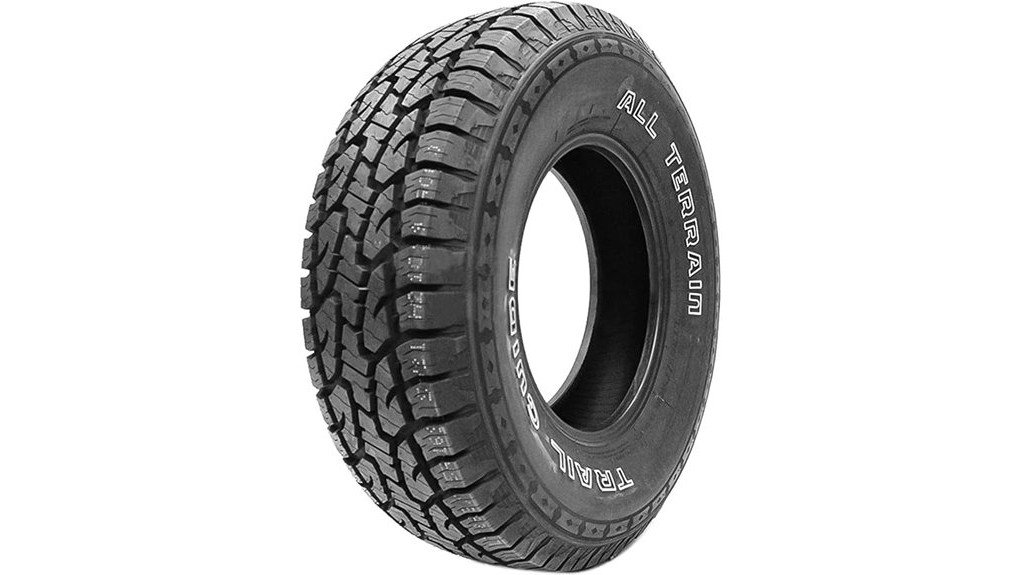
The Trail Guide All Terrain TGT19 is an LT-rated radial tire for compatible SUVs and light trucks. This review covers the LT245/75R17 121/118S Load Range E version, which measures about 31.5 inches in overall diameter and carries 16/32 inch of original tread depth.
Its main selling point is range. The tread combines staggered blocks and open shoulders for loose surfaces with a more continuous center area for road stability. It is also marked for severe-snow service, giving you more winter capability than a basic all-season highway tire.
Editorial note: This assessment is based on published product specifications, fitment data, and tread-design information. It does not claim instrumented road testing.
Before You Buy: Match the complete size and service description, not just “245/75R17.” Confirm LT construction, load range, load index, speed rating, wheel size, clearance, and required pressure against your door-jamb placard and owner’s manual. The listed 80 PSI is the tire’s maximum pressure, not the correct pressure for every vehicle.
Who Should Buy It?
Best For
- Truck and SUV owners whose vehicles specify LT245/75R17 with a compatible 121/118S Load Range E rating.
- Drivers who split time between pavement, gravel, work sites, muddy access roads, and moderate trails.
- Buyers who want 3PMSF winter capability and a 50,000-mile listed treadlife warranty at a value-focused tier.
Skip If
- Your vehicle requires a different size, lower load range, higher speed rating, or different overall diameter.
- You want the quietest ride and lowest rolling resistance for almost entirely paved commuting.
- You need maximum ice grip or deep-mud performance from a dedicated winter or mud-terrain tire.
Fit and Compatibility
Fitment starts with the full code: LT245/75R17 121/118S E. The LT prefix identifies a light-truck construction, 245 is the nominal section width in millimeters, 75 is the aspect ratio, and 17 is the wheel diameter in inches. The 121/118 load index covers single and dual-tire applications, while the S rating identifies the tire’s tested speed category.
Do not rely on a retailer’s example vehicle list alone. Trim level, suspension changes, wheel offset, axle ratings, and original-equipment packages can change what fits. A 31.5-inch overall diameter may also affect clearance, gearing, and speedometer accuracy if you are changing from another size.
Pro Tip: Photograph the sidewall of your current tire and the driver-door placard before ordering. Compare size, load index, speed rating, and load range line by line, then have a qualified tire shop confirm any planned size change.
Tread Design and Build
The Trail Guide uses staggered tread blocks, deep siping, wide grooves, and open shoulders. Those voids give mud, slush, and water room to leave the contact patch instead of packing between the blocks. The block edges also provide biting surfaces on gravel, loose dirt, and snow.
A more continuous center section helps keep the tire in steady contact with pavement. That design choice can improve straight-line feel compared with a very open mud-terrain pattern. The tradeoff is still typical of an all-terrain tire: larger tread features can produce more vibration and sound than closely spaced highway tread.
Load Range E construction supports demanding truck use, but “10-ply rated” describes load capability rather than ten literal fabric plies. The stronger casing can improve stability under load, although it may also feel firmer on an unloaded vehicle.
On-Road Performance
On dry pavement, the center tread area and broad 245-millimeter footprint should provide predictable tracking when the tire is correctly fitted, inflated, and aligned. The S speed rating is sufficient for normal road use, but it is a laboratory category, not a recommendation to drive at the rating limit.
In rain, the wide circumferential grooves and open shoulders are designed to move water away from the footprint. Tread depth gives the channels useful volume when new, but wet performance will decline as the tread wears. Regular pressure checks and adequate remaining depth remain essential.
Ride quality will depend heavily on vehicle weight and inflation pressure. A Load Range E tire on a lighter or unloaded truck can feel stiffer than a passenger-rated or lower-load alternative. Expect all-terrain tread noise to be noticeable, though the center contact area should keep it more controlled than a highly aggressive mud tire.
Off-Road and Snow Traction
The open-shoulder pattern is most useful on gravel, dirt roads, shallow mud, wet grass, and uneven work-site surfaces. Staggered blocks create multiple gripping edges, while the grooves help eject loose material and reduce stone retention. This makes the tire suitable for mixed use, not specialized rock crawling or bottomless mud.
The 3PMSF symbol means the tire passed a standardized acceleration test in packed snow. That is a meaningful advantage over an all-season tire without the symbol. It does not measure braking on ice, cornering on ice, or every winter condition, so drivers in severe climates may still benefit from dedicated winter tires.
Deep sipes add edges that can engage snow and wet surfaces. As with every tire, traction depends on tread condition, temperature, vehicle systems, driving speed, and the road surface.
Load Capacity, Towing, and Work Use
The 121 load index supports up to 3,195 pounds per tire in approved single-tire service at the required pressure. That capacity can suit heavier trucks, cargo, and towing setups, but the tire rating does not increase your vehicle’s legal payload, gross axle weight rating, or towing limit.
For towing, use the vehicle placard, owner’s manual, hitch rating, axle ratings, and actual scale weights. All four tires should meet the vehicle maker’s requirements, and replacement tires should be matched appropriately across each axle. A tire shop can calculate the correct cold pressure for your setup without defaulting to the 80 PSI maximum.
How It Performs in Real Use
For Daily Commuting
You get the stability and weather range of an LT all-terrain tire, but you may notice a firmer ride and more tread sound than with a highway-terrain design. It makes the most sense when your commute is only part of the tire’s job.
For Gravel Roads and Work Sites
The open shoulders and staggered blocks should give better loose-surface bite than a road-focused tire. The Load Range E casing also suits vehicles that regularly carry tools or equipment, provided total vehicle and axle limits are respected.
For Winter Driving
The severe-snow symbol and siped tread improve suitability for packed snow and slush. In regions with frequent glare ice, steep grades, or extreme cold, a dedicated winter tire can still provide a stronger safety margin.
For Weekend Trail Use
The tire is appropriate for maintained trails, forest roads, dirt access routes, and moderate mud. Drivers who regularly face sharp rock, deep mud, or highly technical terrain should compare more aggressive all-terrain or mud-terrain options.
Installation, Maintenance, and Safety
This listing is for one tire, and the wheel is not included. Have the tire mounted and balanced by a qualified shop. Ask the technician to inspect the wheel, valve stem or TPMS hardware, lug condition, and clearance at full steering lock.
- Use the vehicle maker’s cold-pressure recommendation unless a qualified professional specifies an adjusted pressure for an approved load or size change.
- Check the tire sidewall for a rotation arrow or other mounting instruction before choosing a rotation pattern.
- Rotate at the interval in your vehicle or tire warranty documentation, and keep records if you plan to claim treadlife coverage.
- Inspect for uneven wear, cuts, bulges, embedded objects, and pressure loss before long trips or towing.
- Keep comparable tires on the same axle, and avoid mixing incompatible sizes, load ranges, or tread conditions.
Pros and Cons
Pros
- Load Range E construction and a 121/118 load index support compatible heavy-duty applications.
- 16/32-inch tread depth provides substantial groove volume when new.
- Open shoulders, wide grooves, and staggered blocks suit mixed road and loose-surface use.
- 3PMSF certification adds verified severe-snow capability.
- A 50,000-mile treadlife warranty is listed by current specialty tire retailers.
Cons
- Load Range E construction may ride firmly on lighter or unloaded vehicles.
- All-terrain tread can be noisier and less efficient than a highway-terrain tire.
- Amazon warranty, seller identity, production date, and current availability should be confirmed before ordering.
Is It Worth the Price?
The Trail Guide All Terrain sits in the value-focused part of the LT all-terrain market. Its appeal comes from combining a deep starting tread, Load Range E support, severe-snow certification, and a listed 50,000-mile warranty without moving into a premium price tier.
It is worth considering when you need one tire for commuting, work roads, winter slush, gravel, and moderate trail use. It is not the best fit when you mainly want luxury-level ride comfort, minimal road noise, or the strongest possible ice and deep-mud performance.
How It Compares to Alternatives
The Crossmax AT-1 and Thunderer Ranger ATR are other value-oriented LT245/75R17 all-terrain choices worth comparing for price, warranty, and local availability. The Nexen Roadian ATX is a more established premium alternative for buyers willing to spend more for a broader dealer network and a newer tread platform.
The Trail Guide makes the most sense when its exact size and service description fit your vehicle and you prioritize load support, winter certification, and mixed-surface utility over premium-road refinement.
Frequently Asked Questions
What is the Trail Guide All Terrain tire’s treadlife warranty?
Current specialty-retailer listings identify a 50,000-mile treadlife warranty for new TGT19 tires. Confirm the exact Amazon seller terms, eligibility rules, rotation schedule, and required maintenance records before purchase.
Does it include a wheel?
No. The listing is for one tire only, and the wheel is not included. Professional mounting and balancing are recommended.
Is it suitable for towing a heavy trailer?
It can be suitable when LT245/75R17 121/118S Load Range E meets your vehicle’s requirements. The tire rating does not override the truck’s payload, axle, hitch, or towing limits, so verify the complete setup and actual loaded weight.
How noisy is it at highway speeds?
Expect more tread sound than from a highway-terrain tire because the shoulder and block pattern is more open. The center contact area should keep it more controlled than a highly aggressive mud-terrain design, but noise also depends on the vehicle, wear, alignment, and road surface.
How should the tire be rotated?
Check the sidewall for a rotation arrow or mounting instruction, then follow the vehicle and tire warranty schedule. If the sidewall has no directional marking, a qualified shop can choose the correct pattern for your drivetrain and tire setup.
What does the 3PMSF symbol mean?
The 3 Peak Mountain Snowflake symbol means the tire passed a standardized severe-snow acceleration test. It is a useful winter credential, but it does not guarantee dedicated-winter-tire braking or cornering performance on ice.
Should I inflate it to 80 PSI?
Not automatically. Eighty PSI is the listed maximum inflation pressure, while your correct cold pressure normally comes from the vehicle placard or an approved load calculation. Overinflation can reduce comfort and alter the contact patch.
Will LT245/75R17 fit every truck with 17-inch wheels?
No. Wheel diameter is only one part of fitment. You must also verify width, overall diameter, load and speed ratings, wheel specifications, clearance, and the vehicle maker’s approved tire sizes.
The Bottom Line
The Trail Guide All Terrain TGT19 is a sensible value choice for compatible light trucks and SUVs that need LT245/75R17 Load Range E support, 3PMSF winter capability, and useful off-pavement traction. Buy it for mixed road, work, and moderate trail use, but skip it if your priorities are the softest ride, the lowest highway noise, or specialized ice and deep-mud performance.
Ready to Buy?
Check the latest price, seller, production details, warranty terms, and vehicle fitment before you decide.