Toyota Tundra Off-Road Airing Down Guide: PSI Settings by Terrain Type
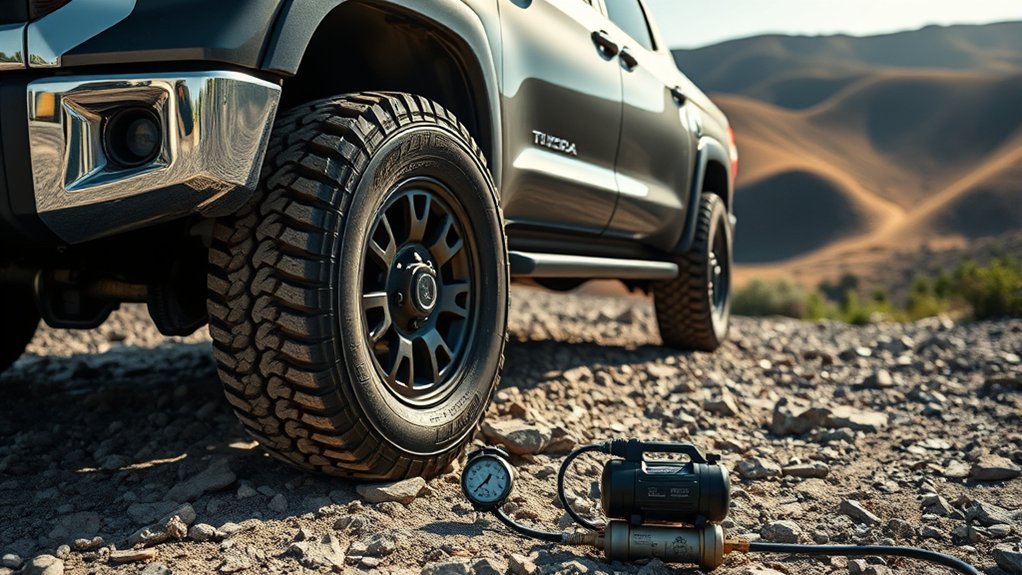
Airing down your Toyota Tundra is key for off-road success. For sandy terrain, drop your PSI to 12-15 for better flotation. In rocky environments, aim for 18-20 PSI to enhance traction and reduce puncture risks. For muddy conditions, adjust to 15-18 PSI, and for snowy surfaces, keep it around 12-15 PSI to improve stability. Understanding these settings guarantees your Tundra performs at its best, and there’s more to learn about tools and safety tips for a smoother adventure.
Understanding the Benefits of Airing Down for Off-Roading
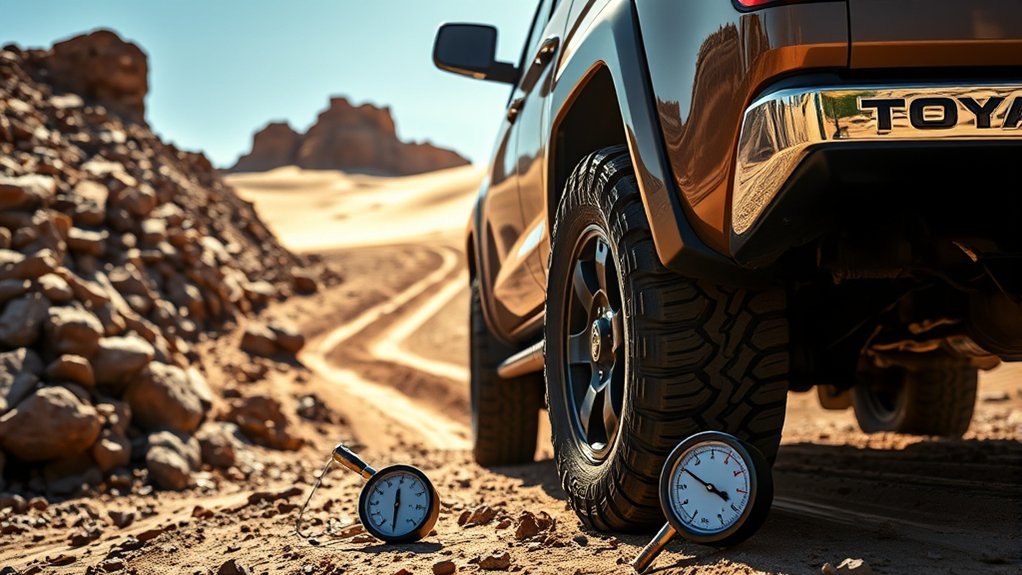
When you’re tackling off-road terrains, understanding the benefits of airing down your tires can make a significant difference in your driving experience. Lowering your tire pressure enhances traction improvement on loose surfaces like sand and gravel by increasing the contact area with the ground. For instance, dropping to around 12-15 psi in sand allows your vehicle to float better, reducing the chances of getting stuck and boosting mobility.
Moreover, softer tires offer comfort enhancement by absorbing impacts from obstacles, resulting in a smoother ride over rugged landscapes. This adaptation not only improves your comfort but also minimizes the risk of punctures and damage as your tires conform more effectively to sharp objects on challenging trails. Proper tire inflation management is essential, with recommended pressures varying according to terrain, ensuring you enjoy both stability and traction on your off-road adventures.
How to Determine the Right PSI for Various Terrain Types
When you’re off-roading, knowing the right PSI for different terrains can make all the difference. For sandy, rocky, muddy, and snowy conditions, specific tire pressures enhance traction and stability, helping you navigate confidently. Adjusting your PSI based on terrain type not only improves performance but also protects your tires from potential damage.
Tire Pressure Recommendations
To optimize your Toyota Tundra’s performance across various terrains, understanding the right tire pressure is essential. The effects of tire pressure on your vehicle’s terrain adaptability can’t be understated. For sandy terrain, air down to 12-15 PSI to enhance flotation and minimize getting stuck. In rocky environments, 18-20 PSI strikes a balance between traction and puncture protection. When traversing muddy conditions, a setting of 15-18 PSI helps maintain grip without sinking. For snowy surfaces, lower to 12-15 PSI for improved stability and traction. Always monitor tire pressure, as vehicle weight and tire type can greatly influence your ideal PSI. Adjusting your tire pressure guarantees a smoother, more capable off-road experience.
Terrain-Specific Adjustments
Understanding the right tire pressure for different terrains can make all the difference in your off-roading experience. For sandy terrain, lowering your PSI to 12-15 enhances tire flexibility, allowing for better flotation and reducing the chance of getting stuck. In rocky areas, aim for 18-20 PSI to balance terrain adaptability with puncture protection. When maneuvering through muddy conditions, a PSI of 15-18 helps maintain grip without sinking too deep. For snowy surfaces, reducing to 12-15 PSI increases stability and control on slippery paths. Always consider your vehicle’s weight and tire construction, as heavier setups might need lower pressures for peak performance. Adjusting your tire pressure can transform your adventure, ensuring you’re ready for any challenge.
Step-by-Step Guide to Airing Down Your Tires Effectively
Airing down your tires is essential for optimizing off-road performance, but you need the right tools and knowledge first. Start with a reliable tire gauge and a deflator tool to adjust your PSI levels based on the terrain. After your adventure, don’t forget to reinflate your tires to guarantee a smooth ride back on the pavement.
Essential Tools Required
Preparing for off-road adventures requires the right tools to guarantee your tires perform at their best on rugged terrain. Start with tire deflators, like Staun tire deflators preset to 18 psi, for quick and accurate pressure reduction. A reliable tire pressure gauge is essential; it helps you monitor pressure throughout your journey, ensuring ideal settings based on the terrain type. Don’t forget a portable air compressor for reinflating tires after off-roading, keeping you safe on paved roads. A high-quality tire inflator is vital to avoid blowouts when changing back. Regularly check and adjust tire pressure using these tire pressure tools and deflation techniques, accommodating changing conditions effectively for your ultimate off-road liberation.
Recommended PSI Levels
To tackle various off-road terrains effectively, knowing the right PSI levels for your tires is key. For sandy landscapes, lowering to 12-15 PSI enhances flotation, helping you avoid getting stuck. In rocky areas, aim for 18-20 PSI; this strikes a balance between traction control and puncture protection. When maneuvering through muddy conditions, a pressure of 15-18 PSI maintains grip without sinking. For snowy terrains, stick to 12-15 PSI to improve stability on slippery surfaces. Always refer to your manufacturer’s guidelines for the minimum tire pressure to guarantee safe handling after airing down. By adjusting your PSI wisely, you’ll minimize tire wear while maximizing performance, letting you conquer the wilderness with confidence.
Reinflation After Off-Roading
Once you’ve conquered the trails and are ready to hit the pavement again, the process of reinflating your tires becomes vital. Proper tire pressure is essential for on-road performance and safety. Follow these steps to guarantee a smooth changeover:
- Check the recommended PSI for your vehicle, typically 25-35 PSI after off-roading.
- Use a reliable tire inflator to gradually restore tire pressure, avoiding over-inflation.
- Verify each tire’s pressure with a gauge to match the manufacturer’s recommendations for balanced handling.
Investing in a portable air compressor can make this process efficient, allowing you to quickly adjust your tires after an adventure. Properly reinflated tires enhance your driving experience and guarantee your Tundra performs at its best on the road.
Common Challenges and Safety Tips When Airing Down
Airing down your tires can greatly enhance your off-road performance by improving traction, but it also comes with challenges that require attention. One major concern is bead popping, especially when you drop below 15 psi without beadlocks. Always be mindful of this risk. Shifting back to pavement demands careful re-inflation to avoid blowouts and handling issues; confirm you reach the recommended road PSI.
Regular tire maintenance is essential. Temperature fluctuations can affect PSI, so check your tire pressure frequently, particularly after airing down. While lower pressure boosts grip, it reduces ground clearance, making terrain awareness critical for safe navigation. Adjust your tire pressure based on the conditions you’re facing.
Finally, equip yourself with essential tools like a tire pressure gauge and portable air compressor to streamline the airing down and re-inflation process during your off-road adventures. Stay safe and enjoy the ride!
Essential Tools for Airing Down Your Tires
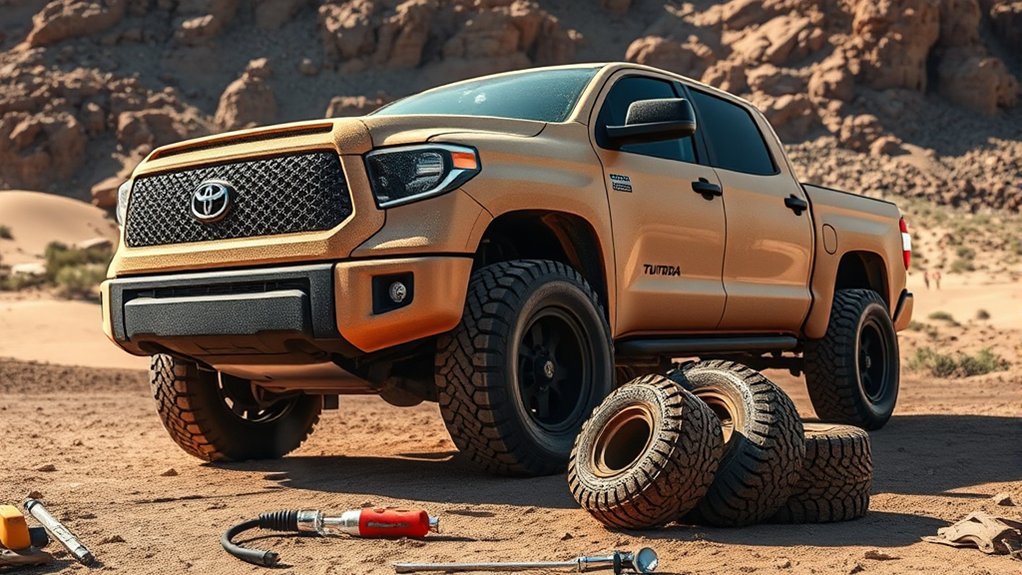
When you’re ready to tackle off-road challenges, having the right tools on hand makes all the difference. Essential tools for airing down your tires guarantee effective tire maintenance and enhance your off-road experience. Here are three must-have items:
Having the right tools for airing down your tires is crucial for effective maintenance and an enhanced off-road experience.
- Tire Deflator Tool: Quickly and accurately reduce tire pressure for various terrains.
- Tire Pressure Gauge: Monitor and measure tire pressure, helping you make timely adjustments based on conditions.
- Automatic Tire Deflators: Attach these to valve stems for simultaneous deflation of multiple tires to a pre-set pressure.
These off-road accessories streamline your preparation and keep you liberated on the trails. A portable air compressor is also invaluable for reinflating your tires post-adventure, guaranteeing you return to safe on-road pressure effortlessly. With the right tools, you’ll conquer any terrain with confidence and ease.
Re-Inflating for Road Readiness
To guarantee your Toyota Tundra is ready for the road after an off-road adventure, re-inflating your tires is essential. Aim for a pressure of 30-40 psi for ideal safety and handling. If you own a Gen 2 Tundra, take advantage of the built-in air compressor for quick re-inflation. For other trims, portable air compressors are a must-have for convenient tire maintenance.
As you re-inflate, make sure you’re monitoring the tire pressure closely. Exceeding the manufacturer’s maximum PSI can lead to dangerous blowouts. Always consult your vehicle manual to confirm the specific tire pressure recommendations, ensuring your Tundra performs at its best on paved roads.
Frequently Asked Questions
What PSI Should I Air Down to When off Roading?
Air down your tire pressure to 12-20 PSI for ideal off-road performance, depending on terrain. Lowering pressure enhances traction and stability, letting you conquer challenging conditions while avoiding getting stuck or damaging your tires.
Is 40 PSI Too High for 4WD?
Yes, 40 PSI is too high for 4WD. Lower tire pressure enhances off-road stability, allowing your tires to flex and conform to uneven terrain, improving traction and control in challenging conditions. Adjust accordingly for peak performance.
Conclusion
So, you’ve mastered the art of airing down your Toyota Tundra, thinking you’ve revealed the secret to off-road glory. Ironically, it’s not just about deflating those tires; it’s about knowing when to pump them back up! Remember, the real adventure begins when you’ve got the right PSI for the terrain. Stay ahead of the game, keep your tools handy, and you’ll navigate any challenge like a pro—unless, of course, you forget to re-inflate before hitting the highway!

Related Articles
How Altitude Affects Tire Pressure: Adjusting PSI for Mountain Driving
Climbing to higher altitudes can dramatically affect your tire pressure; discover how to adjust PSI for safe mountain driving and avoid potential hazards.
Read More
Why Tire Pressure Drops in Cold Weather: What Tundra Owners Must Know
Noticing a drop in tire pressure as temperatures fall? Discover essential tips for Tundra owners to ensure safe winter driving.
Read More
Hydroplaning Prevention Tips for Toyota Tundra: Tread, Pressure, and Speed
To prevent hydroplaning in your Toyota Tundra, discover essential tips on tread, pressure, and speed—your safety depends on it.
Read More