How Upsizing Tires Affects Gear Ratio and Performance on a Tundra
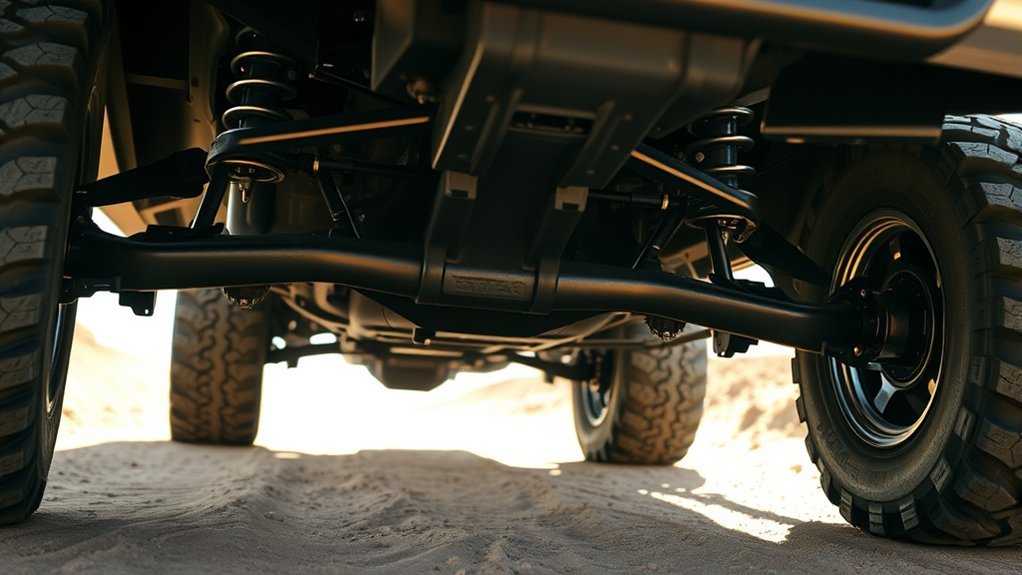
Upsizing tires on your Tundra greatly impacts gear ratios and performance. Larger tires can reduce acceleration by altering effective gear ratios, leading to sluggish response and decreased horsepower. You’ll likely see a drop in fuel efficiency by 2-3 MPG due to increased rolling resistance and weight. Plus, your speedometer may become inaccurate, requiring recalibration. Understanding these changes is essential for maintaining peak performance, and there’s much more to uncover about tire upgrades and their impacts.
Understanding Tire Size and Specifications
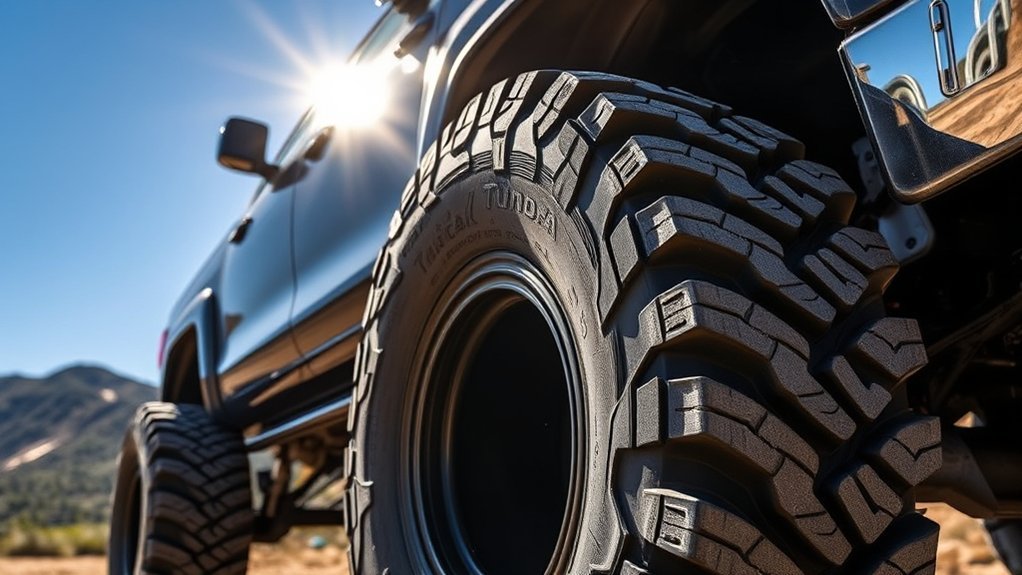
Additionally, larger tires affect fuel efficiency and engine workload, as the diameter increases by nearly 4.786%. It’s vital to check load ratings to guarantee the new tires can handle the demands of your vehicle, especially if you tow frequently. Keep in mind that speedometer inaccuracies can arise from upsizing, necessitating recalibration for accurate monitoring. By understanding these specifications, you can make informed choices that enhance your Tundra’s capabilities while maintaining safety and performance integrity.
How Tire Upsizing Affects Acceleration and Power Delivery
When you upsize your Tundra’s tires, the increased diameter greatly impacts acceleration and power delivery. This change alters the effective gear ratio, often reducing both. For example, moving from a stock diameter of 32.075 inches to 33.610 inches can result in an 18 horsepower loss, translating to slower acceleration. Heavier tires, especially off-road options at around 60 lbs, require more engine power to overcome inertia, diminishing responsiveness. Additionally, the ECU may misread vehicle speed, causing earlier shifts in the transmission, leading to inefficient torque management during acceleration. Without proper performance tuning, you may face decreased towing capacity and fuel efficiency, further hampering your Tundra’s capabilities. Therefore, it’s essential to take these factors into account when upsizing tires to maintain peak performance and guarantee you’re harnessing your vehicle’s full potential.
The Impact of Larger Tires on Gear Ratios
When you upsize tires on your Tundra, the effective gear ratio changes, impacting your vehicle’s performance. This shift can reduce acceleration and towing capacity, as the larger diameter tires increase rotational mass and alter the force applied to the road. To maintain peak performance, you might need to contemplate re-gearing to compensate for these changes.
Gear Ratio Changes Explained
Upsizing tires has a direct impact on your vehicle’s gear ratio, often leading to reduced acceleration power and altered performance dynamics. When you shift from a stock 32.075-inch tire to a larger 33.610-inch tire, you increase the diameter by about 4.786%. This change effectively lowers your gear ratio from 4.30 to 4.10, resulting in a perceived power loss similar to a horsepower reduction. As the tire circumference expands, your final drive ratio also shifts, which can lead to sluggish acceleration and diminished towing capacity unless you make necessary performance adjustments. Additionally, larger tires may cause speedometer inaccuracies, further complicating your vehicle’s performance metrics. Re-gearing becomes essential for ideal results, especially with significant tire size increases.
Performance Impact Assessment
While larger tires can enhance the rugged aesthetic of your Tundra, they also bring considerable performance implications that shouldn’t be overlooked. Upsizing typically reduces your effective gear ratio from 4.30 to about 4.10, leading to perceived power loss and slower acceleration. A diameter increase of around 4.786% can negatively impact fuel efficiency and power delivery. Furthermore, larger tires often cause speedometer inaccuracies, skewing your vehicle’s speed readings and affecting shift timing. This can result in shifts occurring earlier, disrupting ideal power delivery. To maintain performance and reduce strain on your engine and transmission, re-gearing becomes essential, especially when you alter tire size considerably. Adjusting tire pressure according to your driving habits can also help mitigate some effects.
Acceleration and Towing Capacity
As you increase tire size on your Tundra, the changes in gear ratios can greatly impact both acceleration and towing capacity. Upsizing from a stock tire like 275/65/18 to 295/70/18 may drop the effective gear ratio from 4.30 to 4.10, diminishing torque at the wheels. The added tire weight and rolling resistance demand more engine power, leading to an acceleration delay that makes your vehicle feel sluggish. You might notice extended shift points and a delayed throttle response, which compromises driving dynamics. Additionally, larger tires can strain towing capacity, risking transmission overheating and reduced braking efficiency. Re-gearing may be necessary to restore peak performance and reclaim the liberation you seek in driving your Tundra.
Fuel Economy: What Happens When You Upsize Tires?
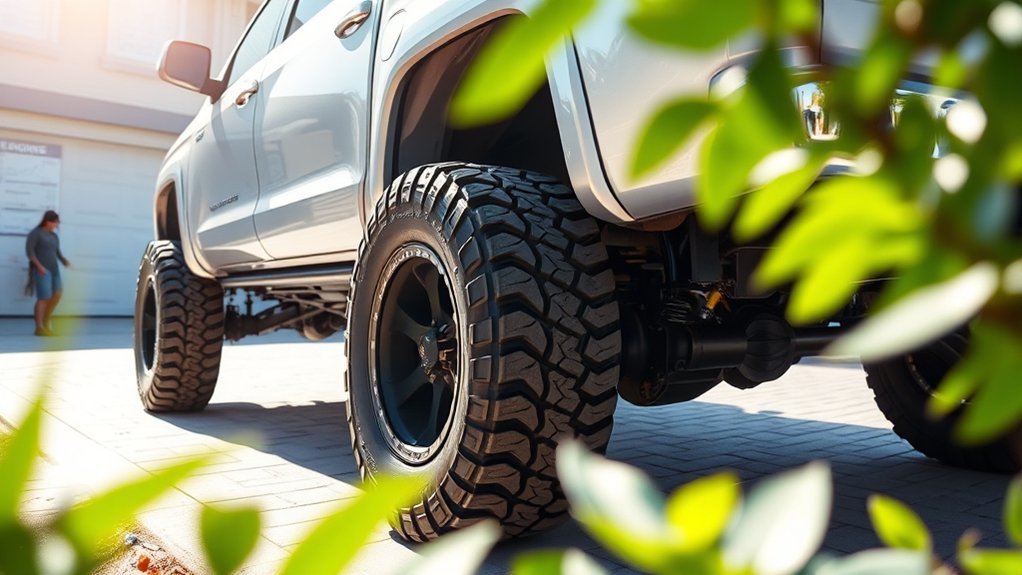
When you upsize tires on your Tundra, you can expect a noticeable drop in fuel economy, typically around 2-3 MPG. The increased weight and rotational mass place extra demands on your engine, affecting acceleration and overall efficiency. Additionally, the changes in gear ratios may lead to further fuel consumption issues, complicating your driving experience.
Fuel Economy Impact
Upsizing tires on your Tundra can greatly impact fuel economy, often resulting in a decrease of about 2-3 MPG. Larger tires increase rolling resistance and weight, making your engine work harder. This added mass raises rotational inertia, further degrading fuel efficiency. Additionally, altering the effective gear ratio can lead to decreased power delivery and slower acceleration, which compounds the fuel economy loss. Inaccurate speedometers can also mislead you into driving at less efficient speeds. To mitigate these effects, maintain ideal tire pressure and consider using fuel additives, but be aware that re-gearing may be necessary for better performance.
| Factor | Impact |
|---|---|
| Increased Rolling Resistance | Decreased MPG |
| Higher Rotational Inertia | More engine power needed |
| Altered Gear Ratio | Slower acceleration |
| Speedometer Inaccuracy | Inefficient driving speeds |
| Re-gearing Necessity | Additional investment required |
Weight Considerations
While larger tires can enhance your Tundra’s off-road capability, the added weight remarkably affects fuel economy. Upsizing tires increases rolling mass, which can reduce your mileage by 2-3 MPG due to heavier components requiring more power from the engine. For instance, switching from stock Michelins at 37 lbs to larger tires weighing around 57 lbs considerably alters weight distribution, necessitating greater energy to maintain speed. This increased rotational mass compounds fuel consumption issues, especially during acceleration and towing. Additionally, maintaining ideal tire pressure is essential; under-inflated larger tires exacerbate these fuel economy issues, further straining your engine. While tire durability improves, the trade-off can be higher operational costs that impact your overall driving experience.
Acceleration Changes
Increasing tire size considerably impacts acceleration performance in your Tundra, primarily due to the added rolling mass and altered gear ratios. When you upsize from a stock tire like 275/65/18 to 295/70/18, the 4.8% diameter increase alters acceleration dynamics, resulting in a noticeable power loss. Your engine works harder to overcome the increased load, leading to slower acceleration and a reduction in fuel economy by approximately 2-3 MPG. Additionally, larger tires can skew performance metrics and create speedometer inaccuracies, complicating assessments of your vehicle’s efficiency. If you pair these tires with a lift kit, recalibrating or re-gearing may be necessary to restore peak performance, ensuring you maintain the driving experience you desire.
Common Transmission Issues Caused by Tire Size Changes
When you change tire sizes, it can lead to notable transmission issues that affect your Tundra’s performance. Here are some common problems you might encounter:
- Transmission lag during acceleration due to altered effective gear ratios.
- Shifting delays, where the transmission shifts too soon or too late.
- Potential inaccuracies in your speedometer, complicating your driving experience.
- Impacts on the Vehicle Stability Control (VSC) system, necessitating recalibration.
- Reduced overall vehicle performance as larger tires increase rolling mass.
These issues can result in a perceived power loss and a decrease in acceleration, as your engine RPM may not align with the demands of larger tires. While the stock transmission can handle these changes, recalibrating is essential to maintain peak performance and fuel efficiency. Ignoring these adjustments could leave you feeling less liberated on the road.
Recalibrating Your Speedometer After Upsizing Tires
After upsizing your Tundra’s tires, recalibrating your speedometer is essential for maintaining accurate speed and performance. Larger tires alter the vehicle’s speed readings, often causing discrepancies that can affect shift timing and fuel efficiency. Utilizing tools like tuners or dealership services guarantees your truck operates at its best, aligning its performance with the new tire specifications.
Importance of Accurate Calibration
Accurate calibration of your speedometer is crucial once you upsize your tires, as failing to adjust can lead to significant inaccuracies in speed readings. You might find discrepancies of up to 8 mph, impacting your driving experience and safety. Here are key points to take into account:
- Your truck’s ECU is designed for factory tire sizes.
- Larger tires can make your vehicle seem to move slower.
- Misjudged speed can affect mileage calculations.
- Delayed shift points can hinder engine performance.
- Calibration techniques using tuners can rectify these issues.
Without proper recalibration, you risk not only speedometer accuracy but also fuel economy and engine responsiveness. Confirm you take the necessary steps to maintain peak performance.
Tools for Recalibration Methods
To guarantee your Tundra maintains peak performance after upsizing tires, using the right recalibration tools is essential. You have several options for recalibrating your speedometer, ensuring calibration accuracy and improving overall performance.
| Tool Type | Description | Pros |
|---|---|---|
| Tuner Options | Devices like Hypertech adjust your truck’s computer for new tire sizes. | Quick adjustments, DIY-friendly |
| Dealership Services | Professional recalibration by experienced technicians. | Reliable, expert advice |
| Software Solutions | Programs that modify vehicle settings through a laptop. | Versatile, customizable |
Utilizing these methods for speedometer adjustments not only corrects inaccuracies but also enhances shift timing, resulting in a more enjoyable driving experience post-upgrade. Choose the method that best fits your needs for ideal performance enhancements.
Tire Load Ratings and Weight Differences
Tire load ratings are essential for understanding how upsizing affects your Tundra’s performance and safety. When you consider larger tires, it’s important to evaluate both weight and load distribution. Here are key points to keep in mind:
- Stock Michelin tires weigh about 37 lbs each, while heavier aftermarket options like the Cooper Rugged Trek can weigh around 57 lbs.
- Increased tire weight can diminish fuel efficiency due to higher rotational mass.
- Load Range C tires provide lighter alternatives, which may enhance acceleration and handling.
- Proper tire pressure is crucial for optimal load distribution and performance.
- Heavier tires can compromise braking efficiency, especially under load.
Understanding these factors allows you to make informed decisions that maintain your Tundra’s performance and safety. By weighing the benefits of lighter tires against the potential drawbacks, you can guarantee a smoother driving experience.
Recommended Gear Ratios for Common Tire Sizes
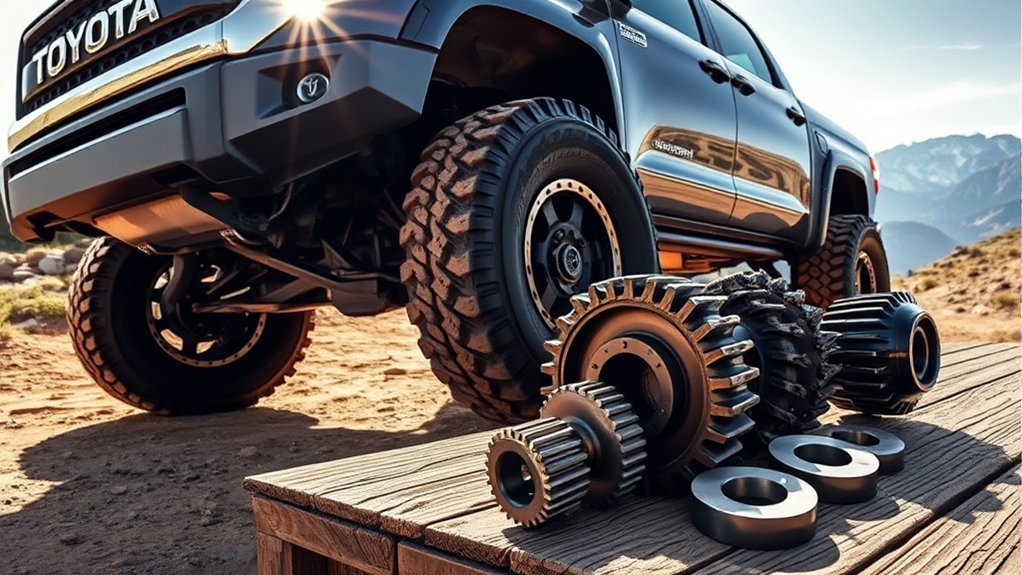
When considering upsizing your Tundra’s tires, selecting the right gear ratio is vital for maintaining performance and efficiency. Understanding gear ratio basics helps you enhance tire performance metrics for your vehicle.
| Tire Size | Recommended Gear Ratio |
|---|---|
| 33 inches | 4.30 |
| 35 inches | 4.88 |
| Stock (275/65/18) | Varies |
Upgrading to larger tires, such as 35 inches, typically requires a higher gear ratio of 4.88 to boost performance and offset the increased tire size. A shift from stock tires can alter your effective gear ratio, impacting both acceleration and towing capacity. This change may lead to a perceived power loss, so recalibrating your Tundra’s computer system is essential. Doing so guarantees accurate speedometer readings and ideal shift timing, allowing for a liberated driving experience without sacrificing performance.
Real-World Experiences With Larger Tires on Tundras
While many Tundra owners embrace the aesthetic and off-road capabilities of larger tires, real-world experiences reveal a complex interplay of benefits and drawbacks.
- Perceived power loss, impacting acceleration and towing capacity
- Fuel mileage decreases of 2-3 MPG due to increased rolling mass
- Altered effective gear ratios, leading to sluggish acceleration
- Speedometer inaccuracies of 5-8 mph, requiring recalibration
- Challenges in handling and responsiveness due to added weight
You might enjoy the enhanced tire aesthetics, but the trade-offs can be significant. Upsizing from stock tires to larger 33-inch options often means feeling a noticeable power reduction. The changes in tire diameter can affect gear ratios, causing sluggish performance. Additionally, the heavier tires can compromise fuel efficiency and handling. While the off-road capability may improve, it’s important to consider these factors before making a decision.
Best Practices for Upgrading Tires on a Tundra
Upgrading tires on your Tundra can greatly enhance its performance, but careful consideration is vital to avoid compromising efficiency and handling. First, assess the effective gear ratio change; for example, moving to larger tires like 33 inches can shift your ratio from 4.30 to about 4.10, impacting acceleration and towing. Recalibrating your speedometer and ECU is important since larger tires can cause speed discrepancies, leading to inaccurate readings.
Opt for lighter tire options, such as the Nitto Ridge Grappler, to minimize performance loss due to increased rotational mass. When selecting tire tread patterns, consider how aggressive designs might affect handling. Additionally, suspension upgrades may be necessary to guarantee proper clearance and maintain ride quality. If you’re considering tires over 35 inches, a gear ratio around 4.88 can enhance performance without straining your engine.
Frequently Asked Questions
Can I Put Bigger Tires on My Tundra?
Yes, you can put bigger tires on your Tundra, but watch for tire clearance issues. Also, you’ll need a speedometer calibration to guarantee accurate readings, maintaining your vehicle’s performance and driving experience.
Conclusion
In conclusion, upsizing tires on your Tundra can feel like shifting into a higher gear, but it’s a double-edged sword. While you gain a commanding presence and improved off-road capability, you may experience sluggish acceleration and reduced fuel economy. Like tuning an instrument, finding the right balance in gear ratios is essential. By understanding these dynamics, you can navigate the road ahead with confidence, ensuring your Tundra performs harmoniously, whether on pavement or trail.

Related Articles
How Tire Size Affects Speedometer Accuracy on a Toyota Tundra
Knowing how tire size influences speedometer accuracy on your Toyota Tundra could save you from costly mistakes—discover what adjustments are necessary.
Read More
Toyota Tundra Aftermarket Wheel Fitment Guide: Offset, Bore, and Bolt Pattern
Wondering how to choose the perfect aftermarket wheels for your Toyota Tundra? Discover essential specs and tips to elevate your ride!
Read More
305/55R20 on a Toyota Tundra With No Lift: Will It Fit?
Not sure if 305/55R20 tires fit your Toyota Tundra without a lift? Discover the surprising truths and tips that could change your ride!
Read More