
When to Put Snow Tires on a Toyota Camry: Timing, Signs & Tips

You should put snow tires on your Toyota Camry when temperatures consistently drop below 45°F (7°C). Look for signs like longer stopping distances or frequent icy conditions. Installing them early guarantees maximum traction and safety before heavy snowfall hits. Avoid myths that all-season tires are adequate for winter—they aren’t. Proper maintenance is key, too, for extending your tires’ lifespan. If you’re curious about best practices for installation and storage, there’s more to explore!
Understanding the Importance of Snow Tires for Your Toyota Camry

When the temperature dips below 45°F (7°C), it’s important to contemplate the benefits of snow tires for your Toyota Camry. Snow tires are engineered specifically for winter driving, featuring unique rubber compounds and tread patterns that enhance grip on icy and snowy roads. This design greatly reduces stopping distances by up to 30%, which can be critical in emergencies.
Switching to snow tires before the first major snowfall prepares your Camry for unpredictable road conditions, optimizing overall vehicle performance. While all-wheel drive (AWD) offers some handling advantages, snow tires deliver superior stability and stopping power, making them essential even for AWD-equipped vehicles.
Investing in snow tires not only boosts your safety but also extends the lifespan of your all-season tires, preventing unnecessary wear during harsh winter months. Embracing these snow tire benefits empowers you to navigate winter with confidence and freedom.
How Snow Tires Improve Safety and Performance
Snow tires considerably enhance both safety and performance for your Toyota Camry in winter conditions. With their softer rubber compounds, they remain flexible in temperatures below 45°F (7°C), providing superior traction on icy roads compared to all-season tires. The unique tread patterns, featuring deeper grooves and biting edges, effectively channel slush and improve grip on snow and ice.
Here’s a breakdown of key snow tire benefits:
| Benefit | Description |
|---|---|
| Improved Traction | Better grip on icy and snowy surfaces |
| Reduced Braking Distance | Up to 30% shorter stopping distances |
| Enhanced Control | Greater stability in heavy snow conditions |
| Tire Longevity | Prevents wear on all-season tires |
| Enhanced Performance | Maintains prime handling in winter driving |
When to Install Snow Tires: Key Temperature Guidelines
When temperatures consistently drop below 45°F (7°C), it’s time to contemplate installing snow tires on your Toyota Camry. Morning commutes often reveal the coldest conditions, serving as a reliable sign that winter is approaching. Acting before the first major snowfall guarantees you maintain traction and safety on icy roads.
Temperature Threshold Importance
As temperatures consistently dip below 45°F (7°C), it’s crucial to contemplate switching to snow tires for your Toyota Camry. Regular tires lose flexibility and traction in colder conditions, which directly impacts tire performance. The temperature effects on all-season tires can make them less responsive, increasing the risk of accidents when icy conditions hit. To guarantee your safety, consider early installation of snow tires, especially since morning commutes often reflect the coldest temperatures. Waiting too long can leave you vulnerable during sudden cold snaps, when conditions can change rapidly. By being proactive, you maintain ideal grip and responsiveness, guaranteeing a safer driving experience throughout the winter months. Don’t underestimate the importance of timely tire changes!
Signs of Winter Approaching
With winter just around the corner, it’s essential to recognize the signs that indicate it’s time to install snow tires on your Toyota Camry. Watch for dropping temperatures that consistently fall below 45°F (7°C), as this is when tire performance impacts become significant. Increased weather forecasts of snow also signal that winter weather patterns are setting in. Early installation before the first major snowstorm guarantees your vehicle is ready for icy roads.
| Sign of Winter Approaching | Action Required |
|---|---|
| Temperatures below 45°F | Install snow tires |
| Increased snow forecasts | Prepare for conditions |
| Slippery morning commutes | Check tire performance |
| Icy road warnings | Prioritize safety |
Signs It’s Time to Switch to Snow Tires?
How can you tell it’s time to switch to snow tires on your Toyota Camry? First, keep an eye on the temperature. When it consistently drops below 45°F (7°C), your all-season tires will lose flexibility and grip, compromising tire performance. If you notice frequent snowfalls or icy roads in your area, that’s a strong indicator that dedicated winter tires are vital for safer winter driving.
Additionally, if you experience reduced traction or longer stopping distances on cold, wet roads, your current tires may not cut it. Planning to drive in regions notorious for heavy snow or freezing temps? Snow tires are essential for ideal handling and safety. Finally, watch for weather forecasts predicting significant snowfall; installing snow tires ahead of time prepares you for unexpected changes in road conditions. Don’t wait until the last minute—stay ahead and keep your Camry safe this winter.
Debunking Common Myths About Snow Tires
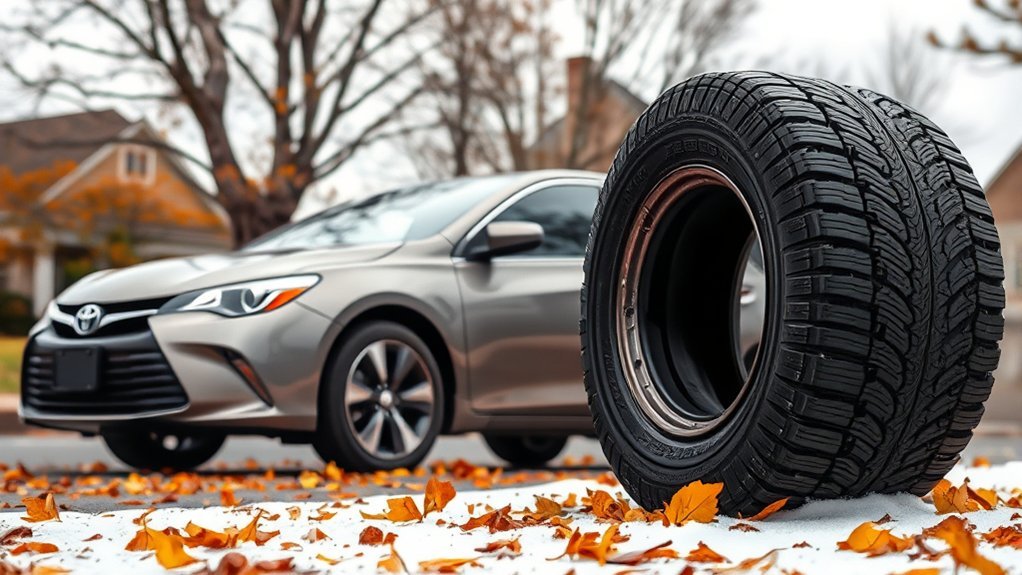
Many drivers think all-season tires are good enough for winter, but that’s a risky misconception. When temperatures drop below 45°F (7°C), those tires lose grip, making dedicated snow tires essential for your safety. Understanding this can help you make informed choices for winter driving conditions.
Snow Tires Aren’t Necessary
While some drivers think all-season tires can handle winter conditions, this belief can put your safety at risk. Many fall for snow tire myths, believing all-wheel drive alone suffices. The truth is, even AWD vehicles struggle without proper tires. All-season tires lose flexibility and grip below 45°F (7°C), making snow tires vital for maintaining traction. Snow tires are engineered with softer rubber and deeper treads, enhancing performance on icy roads. It’s a misconception that you only need them during heavy snowfall; they improve handling in any cold weather. Ignoring the need for snow tires can lead to longer stopping distances and increased accident risk. Stay safe and informed on winter driving misconceptions to make the best choices for your Toyota Camry.
All-Season Tires Are Sufficient
Although some drivers believe all-season tires can handle winter conditions, this misconception can jeopardize your safety on the road. While they may provide decent all-season performance in mild winter weather, temperatures below 45°F (7°C) cause the rubber to harden, reducing traction. In deep snow or icy conditions, these tires often fail to deliver the grip you need, leaving you vulnerable. Many think all-wheel drive can compensate for inadequate tires, but even AWD vehicles struggle in slick conditions with all-season tires. Dedicated snow tires feature specialized tread patterns and softer compounds that enhance safety and control. Investing in winter tires not only improves handling but also extends your tire lifespan, ensuring you stay secure when it matters most.
The Risks of Delaying Snow Tire Installation
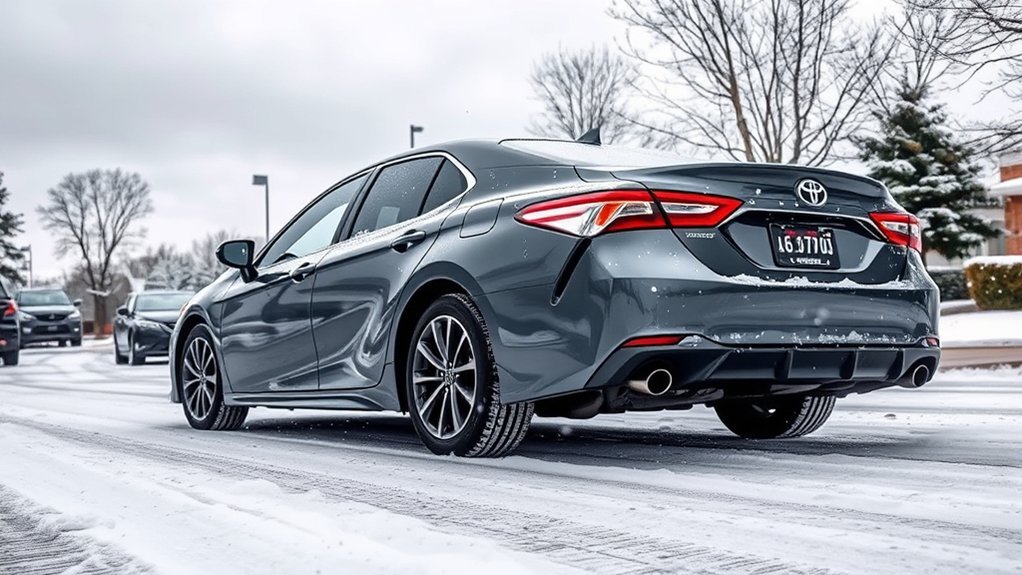
Delaying the installation of snow tires can greatly increase your risk of accidents, especially as temperatures drop. When you wait too long, you compromise tire performance and winter safety. Here are key risks to take into account:
Delaying snow tire installation heightens accident risks as temperatures fall, compromising your safety and vehicle performance.
- Traction Loss: Summer and all-season tires harden below 45°F (7°C), losing grip on icy roads.
- Accident Risk: Delayed installation raises the likelihood of skidding, particularly in slippery conditions.
- Permanent Damage: Waiting can lead to cracks and stiffness in summer tires, making them unsafe for winter driving.
- Tire Compatibility Issues: Mixing tires can create traction imbalances, further compromising vehicle control.
As seasonal changes unfold, be proactive about installation timing to guarantee your safety and maintain peak performance. Don’t let the cold catch you off guard—invest in snow tires early to navigate winter roads confidently.
Follow These Best Practices for Winter Tire Maintenance
To keep your winter tires in top shape, regularly inspect them for signs of damage and wear, such as cracks or bulges. Proper storage techniques also play an essential role; store your tires in a cool, dry place, ideally in opaque, airtight bags, to shield them from UV rays and moisture. Staying on top of these maintenance practices guarantees peak performance and safety throughout the winter season.
Tire Inspection Checklist
Winter driving can be challenging, but a thorough tire inspection checklist helps confirm your Toyota Camry is ready for the road. Here’s what you should check:
- Tread Depth: Use the penny test to verify at least 6/32 inches for ideal traction in snow and ice.
- Tire Pressure: Monitor frequently, as it can drop 1 PSI for every 10°F decrease in temperature.
- Visual Inspection: Look for cracks, bulges, or uneven wear that could compromise performance.
- Rotation Schedule: Rotate your winter tires every 5,000 to 7,500 miles to maintain even wear and extend their lifespan.
Proper Storage Techniques
Properly storing your winter tires is essential for maintaining their performance and longevity. Start with thorough cleaning using soap and water; make sure they’re completely dry to prevent moisture-related damage. For ideal tire care, place each tire in its own opaque, airtight bag with the air removed. This protects against dust and humidity. If your tires are mounted, stack them horizontally or hang them on wall racks to avoid deformation. For unmounted tires, store them upright to maintain their shape and prevent flat spots. Following these storage tips can greatly extend the life of your winter tires, ensuring they’re ready to perform when the snow hits.
Properly Storing Your Snow Tires Off-Season
Storing your snow tires correctly during the off-season is essential for maintaining their longevity and performance. Proper storage minimizes environmental impact while ensuring your tires are ready for the next winter. Follow these tips for ideal storage:
- Clean your tires thoroughly with soap and water to remove dirt and debris.
- Store them in a cool, dry environment to prevent moisture buildup, which can lead to mold.
- Use opaque, airtight bags to shield tires from UV light and dust, removing air to minimize oxidation.
- Check regularly for signs of damage, like cracks or bulges, ensuring your tires remain in good shape.
For mounted tires, stack them horizontally or hang them on wall racks. Unmounted tires should be stored standing upright. Following these guidelines not only helps preserve your tires but also supports effective tire rotation practices for your vehicle.
Switching Back to All-Season Tires: What You Should Know
As the weather warms and temperatures consistently rise above 45°F (7°C), it’s time to contemplate switching back to all-season tires for your Toyota Camry. This change is essential for peak tire performance and safety. Keep an eye on local weather patterns to make sure you remove your snow tires before prolonged warm periods, as this prevents accelerated wear.
Before you make the switch, inspect your winter tires for tread depth and any damage, confirming they’re ready for their next season. Properly store them in a cool, dry place, cleaning them thoroughly and sealing them in airtight bags to extend their lifespan.
After switching back to all-season tires, don’t forget to check and realign your vehicle’s wheels. Winter driving conditions can affect alignment, leading to uneven tire wear. Embrace the seasonal changes with confidence, knowing your Camry is equipped for the warmer months ahead.
Frequently Asked Questions About Winter Tire Installation?
When should you consider installing winter tires on your Toyota Camry? Ideally, you’ll want to make the switch when temperatures consistently drop below 45°F (7°C). Here are some key indicators and tips for winter tire installation:
Consider switching to winter tires for your Toyota Camry when temperatures drop below 45°F (7°C) for optimal safety.
- Frequent snowfall: If snow becomes a regular occurrence, it’s time for winter tires.
- Icy conditions: Noticeable ice on roads can signal decreased safety with all-season tires.
- Performance drop: If your all-season tires struggle for grip, don’t wait.
- Before the first major storm: Installing early prepares you for unexpected weather.
Be certain to check your tire pressure and tread depth regularly. Proper maintenance guarantees your winter tires perform effectively. And don’t forget: clean and store your winter tires properly in airtight bags to prolong their lifespan. Taking these steps can greatly enhance your safety on winter roads.
Frequently Asked Questions
Is October Too Early to Put Winter Tires On?
No, October isn’t too early for winter tires. Installing them now offers winter tire benefits, ensuring you’re prepared for seasonal driving considerations, like falling temperatures and unexpected snow, enhancing safety and tire longevity.
How Does a Toyota Camry Handle Snow?
Your Toyota Camry handles snow better than many vehicles, but it relies on proper tires for ideal snow traction. Upgrading to winter tires enhances its winter performance, ensuring safer handling and shorter stopping distances in challenging conditions.
What Is the 7 7 Rule for Snow Tires?
Imagine gliding effortlessly through a winter wonderland. The 7-7 Rule says install snow tires when temperatures drop to 7°C or lower. Embrace snow tire benefits for safer winter driving; it’s your liberation from icy roads.
What Should Tire Pressure Be in Winter on a Toyota Camry?
In winter, keep your Toyota Camry’s tire pressure between 30 to 35 PSI. Regular tire maintenance guarantees winter readiness, enhancing traction and handling. Check monthly to stay safe and maintain peak performance throughout the season.
Conclusion
In the winter driving landscape, snow tires are your best ally, like a trusty compass guiding you through a storm. Installing them at the right time guarantees safety and performance, keeping you anchored on slick roads. Watch for the temperature drops and signs that it’s time to switch, and don’t forget to maintain and store your tires properly. With these tips, you’ll navigate winter with confidence, ready to tackle whatever comes your way.

Related Articles

When to Switch to Winter Tires on a Toyota Camry: Temperature Guide
Are you ready for winter driving? Discover when to switch to winter tires on your Toyota Camry for optimal safety and performance.
Read More
Toyota Camry Tires in Rainy Conditions: A Complete Safety Guide
Get essential tips for ensuring your Toyota Camry's tires perform safely in rainy conditions; discover key insights that could save your life.
Read More
How Temperature Affects Tire Pressure on a Toyota Camry (And What to Do)
Get insights on how temperature shifts impact your Toyota Camry's tire pressure and discover essential tips for optimal performance and safety.
Read More