
FWD vs. RWD Tire Wear on Toyota Camry: Why the Pattern Differs
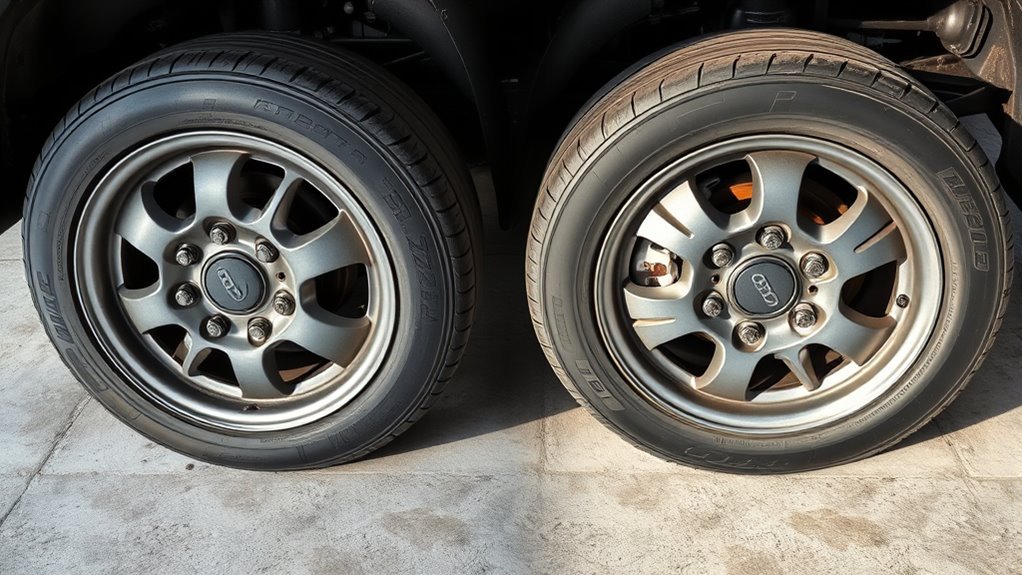
On a Toyota Camry, front-wheel drive makes your front tires wear faster because they handle acceleration, braking, and steering, so they scrub more under load. In a rear-wheel-drive vehicle, that stress shifts rearward, changing the wear pattern. You should rotate Camry tires front to back every 5,000 to 7,500 miles, and mount new tires on the rear for stability. Driving style, alignment, and tread depth all affect when your tires need replacement, as the details show.
Why Camry Front Tires Wear Faster
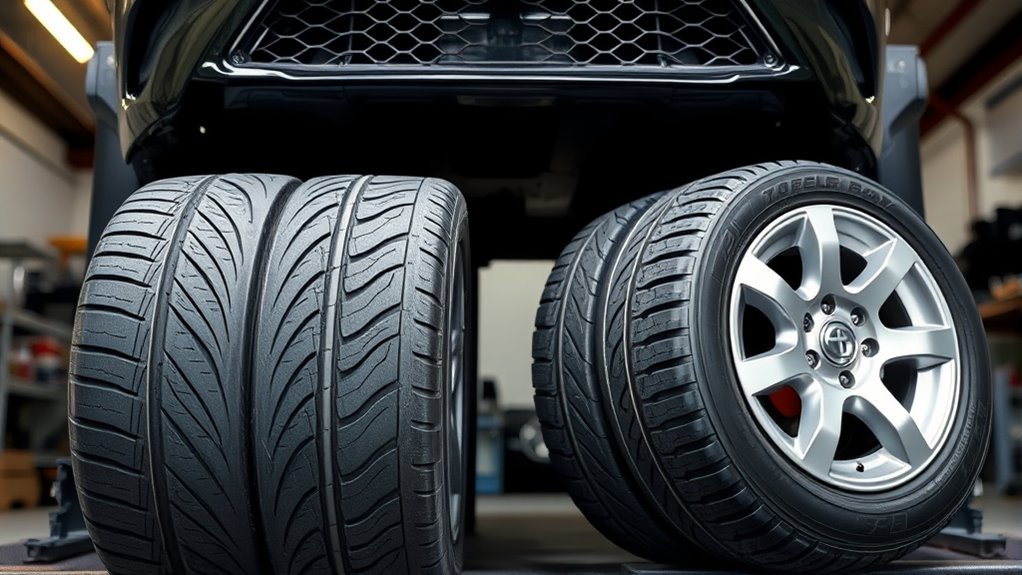
In a Toyota Camry, the front tires wear faster because the front axle handles most of the vehicle’s acceleration, braking, and steering forces. You’re asking those tires to transmit drive torque, scrub during cornering, and absorb the highest braking loads, so their tread degrades sooner. Because the Camry is front-wheel drive, the engine, transaxle, and weight bias all increase vertical load on the front contact patches, raising heat and abrasion. If you drive aggressively, rapid launches and hard stops intensify that stress and accelerate wear. To preserve performance and support liberation from unnecessary expense, keep up with tire maintenance and inspect front alignment regularly; misalignment compounds feathering and edge wear. Rotate the tires every 5,000 to 7,500 miles to redistribute load and slow uneven degradation. Even with high-quality tires, the front pair will still wear sooner, because the platform’s geometry and force path make that outcome intrinsic.
Which Camry Tires Wear First?
For a front-wheel-drive Toyota Camry, the front tires usually wear out first because they carry the main loads for acceleration, steering, and braking. You’ll see faster tread loss on the driven axle, while the rear tires mainly preserve stability and retain more rubber.
| Position | Wear Rate | Main Stress |
|---|---|---|
| Front left | High | Steering, braking |
| Front right | High | Drive torque, cornering |
| Rear axle | Lower | Stability support |
This pattern isn’t random; it’s mechanical. If you monitor tire pressure and schedule alignment checks, you can slow irregular wear and protect your tire budget. In a rear-wheel-drive Camry, the balance shifts, so wear can look more even across both axles. For you, that means the first tires to need replacement usually depend on drivetrain layout and maintenance discipline. Keep the front end calibrated, and you keep more control, more longevity, and more freedom from premature tire expense.
Best Rotation Pattern for Camry Tires
Because the 2022 Toyota Camry is front-wheel drive, a front-to-back rotation pattern is the most practical baseline: it moves the faster-wearing front tires to the rear, helping even out tread loss from acceleration, braking, and steering loads. You should schedule tire rotation every 5,000 to 7,500 miles, then measure tread depth at each service so you can track wear progression objectively. If your tires are non-directional, a modified X pattern can distribute wear more evenly across all four corners, but you still need to match the pattern to the tire design and the vehicle’s handling demands. Keep pressure and alignment within spec, because underinflation or toe error can erase the benefits of any rotation plan. When you treat maintenance as a data-driven routine, you extend tire life, preserve grip, and keep the Camry responsive without surrendering control to uneven wear.
Why New Camry Tires Go on the Rear
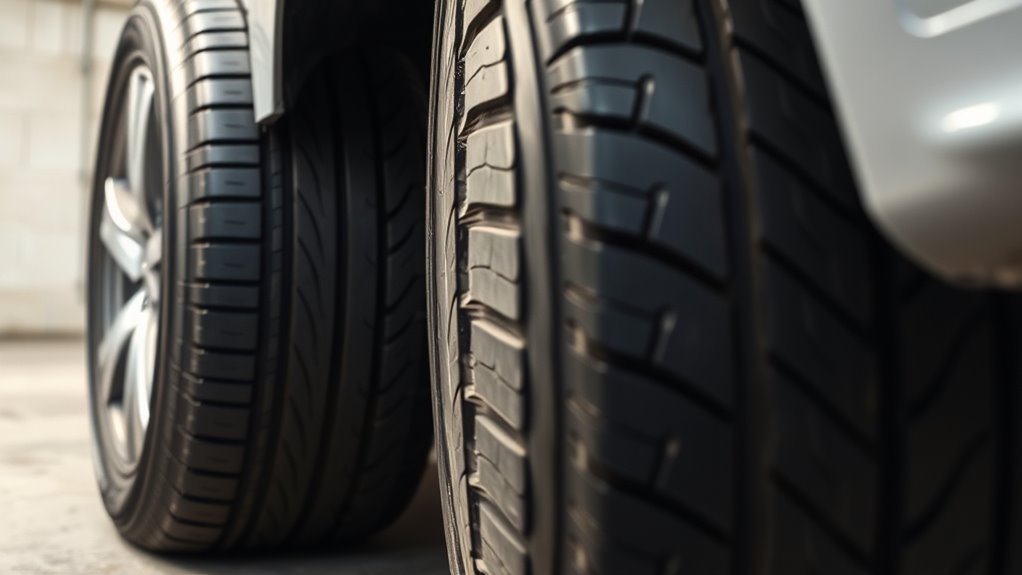
New tires belong on the rear of your Camry, even though the front tires do most of the driving work, because rear grip is what keeps the car stable when traction drops. You gain rear traction, reduce hydroplaning risk, and preserve tire stability when the road turns wet or sudden.
- Your rear axle stays planted
- Your steering stays predictable
- Your emergency lane change stays controlled
- Your braking balance stays safer
- Your freedom from sudden spin grows
On a FWD Camry, the front tires wear faster from steering, acceleration, and braking, but worn rear tires still destabilize the chassis. If you put the best tread on the front, you can sharpen turn-in yet expose the rear to loss of control. Tire experts back this rule because uneven tread depth compromises stability. Keep the newer pair behind, and you keep the car honest, composed, and ready to respond.
How Driving Habits Change Camry Tire Wear
Your driving inputs directly change Camry tire wear: rapid acceleration and hard braking load the front tires more heavily and speed tread loss. If you brake smoothly, you reduce heat buildup and shear forces, which helps preserve tread depth and extends rotation intervals. Frequent cornering also increases lateral scrub, so you should monitor alignment and tire pressure to control uneven wear.
Aggressive Driving Effects
Aggressive driving can accelerate Camry tire wear quickly, especially on FWD models where the front tires handle both steering and most of the acceleration and braking load. When you use aggressive acceleration or sharp cornering, you concentrate stress on the front tread, and wear can run up to 30% faster than the rear. In a RWD Camry, force distribution is more even, so the pattern often stays steadier, but abuse still disrupts balance.
- You lose tread depth faster.
- You feel grip fade sooner.
- You increase hydroplaning risk.
- You face earlier replacements.
- You limit driving freedom.
If you drive this way, rotate tires every 5,000 to 7,500 miles and keep pressures correct; otherwise, premature replacement can follow.
Smooth Braking Benefits
Smooth braking reduces tire stress by limiting heat buildup and tread scrubbing during deceleration, which is especially important on a FWD Toyota Camry. You can extend front-tire life by using controlled braking techniques instead of sudden pedal input. In a FWD layout, your front tires already manage steering, acceleration, and stopping loads, so harsh stops accelerate wear and sharpen uneven patterns. Gradual braking lowers peak force transfer and helps the tread contact patch stay more stable. On RWD Camrys, the load is distributed more evenly, but smooth inputs still protect tire longevity. Pair these habits with tire maintenance: check pressure regularly and keep alignment within spec. That discipline gives you more predictable wear, lower replacement costs, and greater control over your driving freedom.
Cornering And Alignment
When you corner a Toyota Camry hard, the front tires on a FWD model take on steering and drive forces at the same time, so sharp turns and quick throttle inputs can wear them faster than the rears. In RWD Camrys, cornering forces spread more evenly, so wear stays more balanced. Your habits matter:
- Aggressive apexing increases scrub
- Rapid throttle spikes heat tread
- Misalignment compounds edge wear
- Proper pressure stabilizes contact
- Alignment checks restore symmetry
If you want freedom from premature replacement, you need disciplined inputs and routine inspections. Precise alignment settings keep the tire contact patch centered, reduce lateral drag, and let each tire work as designed. That means longer life, better grip, and more control through every turn.
How to Keep Camry Tires Wearing Evenly
Keep your Camry’s tire wear even by rotating the tires every 5,000 to 7,500 miles, since the front tires on a FWD model take more load from steering, braking, and acceleration. This is one of the most effective tire maintenance tips you can apply. Check pressure monthly, because tire pressure importance is real: underinflated fronts flex more, run hotter, and lose traction sooner. You should also schedule periodic wheel alignments; even small toe or camber errors can concentrate wear on the front axle. Choose high-quality tires engineered for FWD duty, since stronger grip compounds and construction can better manage those forces. Finally, drive with discipline: smoother throttle input and lighter braking reduce scrub and preserve tread symmetry. When you control rotation, pressure, alignment, tire selection, and driving style, you keep more of the car’s load balanced and extend usable tread across all four corners, without surrendering handling or efficiency.
Camry Tire Wear: When to Replace Them
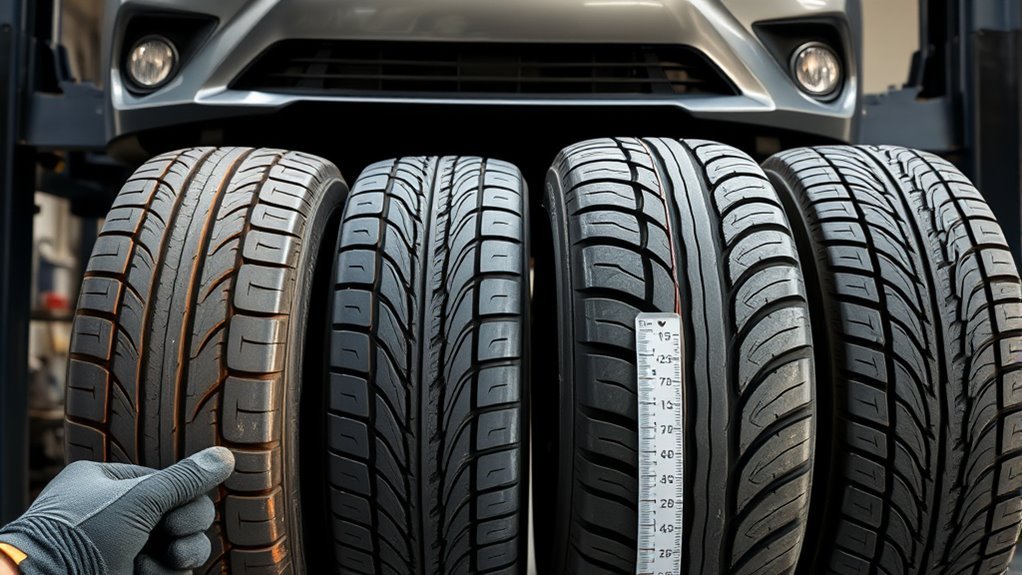
On a FWD Toyota Camry, the front tires usually reach replacement sooner because they handle steering, braking, and acceleration loads at the same time. You should inspect them regularly and compare tread depth across all four tires. Replace any tire at 2/32 of an inch, or sooner if you see uneven wear, cupping, or shoulder damage. That pattern often means you need alignment or rotation, not just new rubber. Routine tire maintenance every 5,000-7,500 miles helps you spread wear and preserve control, but the front pair may still age out first while the rear tires keep more usable tread.
- Feel the freedom of predictable handling
- Avoid the stress of surprise traction loss
- Protect your Camry from wasted tread
- Keep braking distances under control
- Drive with confidence, not compromise
Frequently Asked Questions
Do Front or Rear Tires Wear Faster on FWD?
Front tires wear faster on FWD. You load them with steering and drive force; your driving habits and tire alignment change the rate. Rotate regularly, keep pressure correct, and you’ll extend tire life.
What Causes Different Tire Wear Patterns?
Different tire wear patterns usually come from your tire alignment, driving habits, and load distribution. When you corner hard, brake late, or keep poor alignment, you force certain tires to scrub, heat up, and wear faster.
Conclusion
Your Camry’s front tires usually wear faster because they handle steering, braking, and most of the drivetrain load in FWD models, while RWD shifts wear differently. Rotate them on schedule, keep new tires on the rear, and monitor alignment, inflation, and driving habits to slow uneven wear. Think of tire wear like a fingerprint: it reflects exactly how you drive and maintain your car. Replace tires when tread depth or damage makes performance unsafe.

Related Articles

Toyota Camry 18-Inch Tire Size: Factory Specs and Compatible Options
Buckle up to discover the ideal tire size for your Toyota Camry's 18-inch wheels and uncover compatible options that enhance performance.
Read More
OE Tires vs. Replacement Tires for Toyota Camry: Do You Have to Match OEM?
Owning a Toyota Camry means weighing OE tires against replacements, but do you really need to match OEM exactly?
Read More
All-Terrain Tires vs. All-Season Tires for Toyota Camry: What You Should Know
Get the real difference between all-terrain and all-season Camry tires before you choose the wrong set for your driving needs.
Read More