Toyota Camry Tread Wear Indicator Explained: How to Find and Read It
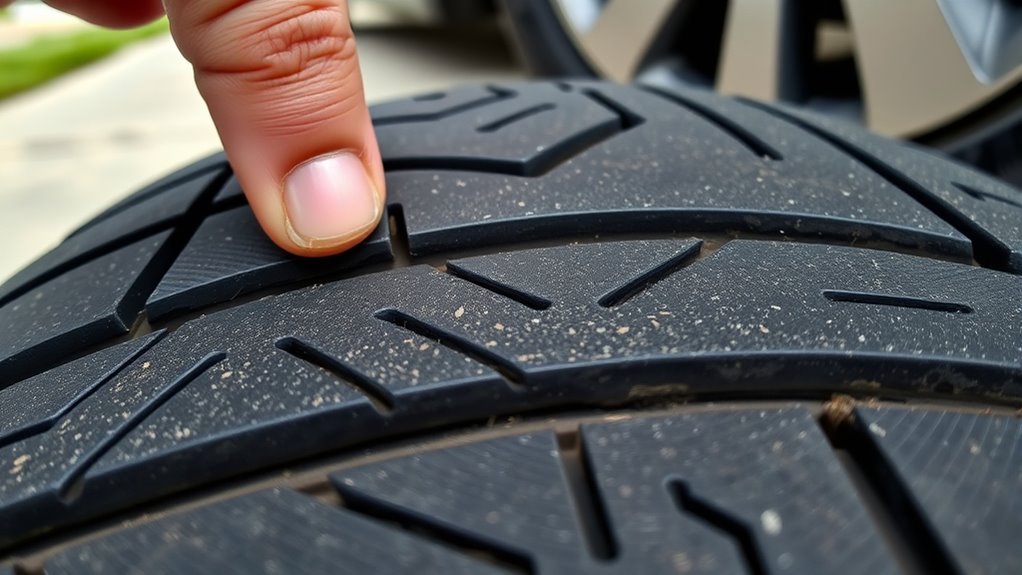
On your Toyota Camry, tread wear indicators are small raised rubber bars molded into the tire grooves. They are a built-in warning system: when the surrounding tread wears down level with those bars, the tire is at about 2/32 inch of tread depth and should be replaced. Use the bars for a fast visual check, then confirm the lowest tread reading with a tread depth gauge or the penny test.
Quick Answer
Toyota Camry tread wear bars sit inside the tire grooves and show when tread is worn to about 2/32 inch. Look for the “TWI” mark on the tire sidewall, then scan across the tread. If the tread is flush with the bar, replace the tire and avoid treating it as safe for wet-road driving.
Key Takeaways
- Camry tread wear indicators are raised bars molded across the main tire grooves.
- When the tread is level with the bars, the tire is at about 2/32 inch and needs replacement.
- Check inner, center, and outer grooves because one part of the tire can wear faster than the rest.
- Use your Camry’s door-jamb tire placard for the correct cold tire pressure, not a generic PSI number.
- Bulges, exposed cords, deep cracks, or repeated air loss need professional inspection even if tread depth still looks acceptable.
At a Glance
| Time Required | 5–10 minutes for all four tires |
| Difficulty | Easy beginner maintenance |
| Tools Needed | Good light, penny, tire tread depth gauge, tire pressure gauge |
| Cost | Free with a penny; usually low cost for a basic tread depth gauge |
How to Find Your Camry’s Tread Wear Bars
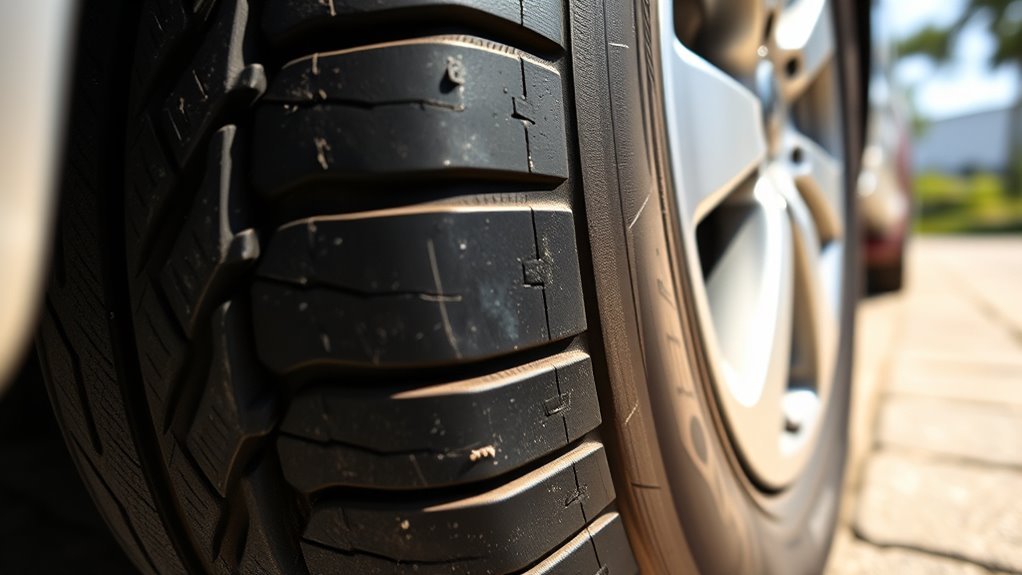
To find your Camry’s tread wear bars, start by looking at the tire sidewall near the tread shoulder. Many tires mark the indicator locations with “TWI”, a small triangle, or a similar molded symbol. Follow that mark straight across the tread face and look inside the main grooves for a short, smooth rubber ridge running across the groove.
These raised bars are not damage. They are built into the tire so you can see when the tread has reached its wear limit. Toyota’s owner information says to check whether the treadwear indicators are showing and to replace the tire if they are showing on a tire. You can confirm that guidance in the Toyota Camry tire section.
Pro Tip: Turn the steering wheel left and right while parked to expose more of each front tire. This makes the inner and outer tread grooves easier to inspect without crawling under the car.
What Camry Tread Wear Bars Tell You
Your Camry’s tread wear bars tell you when a tire is worn down to the minimum tread-depth area. For passenger-car tires, federal inspection guidance in 49 CFR § 570.9 uses 2/32 inch as the minimum tread depth. That is the point where you should replace the tire, not the point where you should start ignoring wear.
- Bars below the tread: The tire still has more tread above the indicator, but you should measure it.
- Bars nearly flush: Plan replacement soon, especially before long trips or rainy weather.
- Bars flush with the tread: Replace the tire now and inspect the matching tire on the same axle.
- Bars showing in only one area: Suspect uneven wear from alignment, inflation, rotation, or suspension issues.
Warning: Do not rely on a tire that is flush with the wear bars for wet-road traction. Also stop and get professional help if you see exposed cords, a sidewall bulge, a deep cut, or cracking that reaches into the rubber.
Camry Tread Depth Chart by 32nds
A tread depth chart helps you decide what to do before the wear bars are fully exposed. New passenger tires often start with much deeper tread, but replacement timing depends on tire type, driving conditions, road surfaces, alignment, inflation, and rotation habits. Use the lowest measurement you find on the tire, not the best-looking groove.
| Tread Depth | What It Means | Best Action |
| 6/32 inch or more | Usable tread remains for normal driving, assuming even wear and no damage. | Keep checking monthly and rotate on schedule. |
| 5/32 to 4/32 inch | Tread is getting lower; wet-road performance can start to feel less confident. | Start planning replacement if you drive often in rain, snow, or highway traffic. |
| 3/32 inch | Very close to the wear bars and close to the minimum limit. | Schedule tire replacement soon, especially before bad weather. |
| 2/32 inch | The tread is at the wear-bar level and the tire is at the minimum tread-depth area. | Replace the tire now. Check local inspection rules because requirements can vary. |
How to Read Tire Tread Depth on a Camry
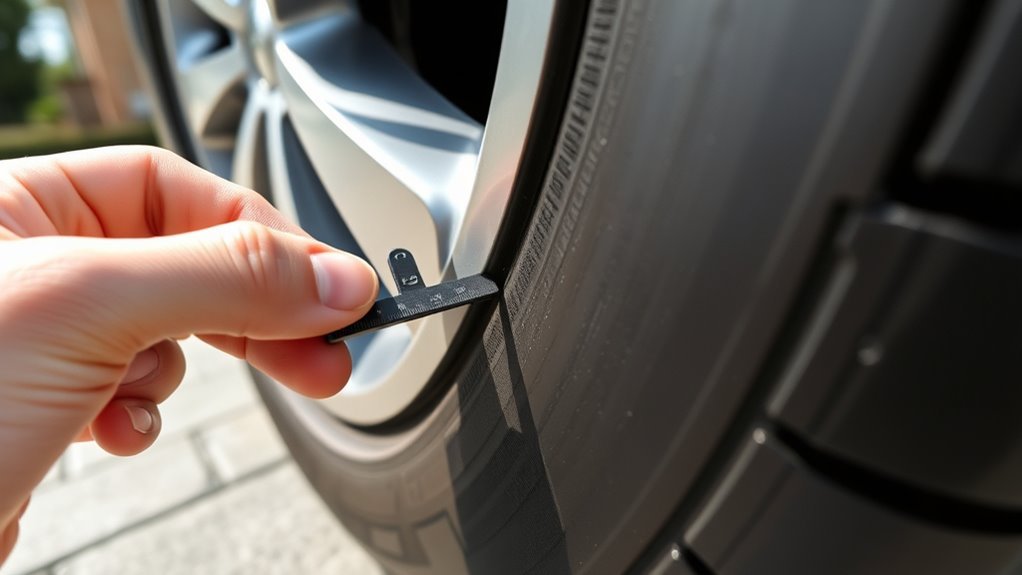
Start by parking on level ground, setting the parking brake, and checking the tires in good light. Inspect all four tires, not just the tire that looks most worn. The fastest visual check is the wear-bar check, but a tread depth gauge gives the clearest reading.
- Find the TWI mark. Look for “TWI,” a triangle, or a small sidewall symbol near the tread shoulder.
- Locate the raised bar. Follow the mark into the tread groove and find the short rubber bar across the channel.
- Check several grooves. Measure the inner, center, and outer tread areas.
- Measure around the tire. Take readings at several points around the tire because wear can vary.
- Use the lowest reading. If one groove is at 2/32 inch, treat the tire as worn even if another groove looks better.
- Compare both tires on the axle. Big differences between left and right tires can point to alignment, suspension, or inflation problems.
A gauge is the most precise tool. Press the gauge probe into the groove, make sure the shoulders sit flat on the tread blocks, and read the 32nds-of-an-inch scale. If you do not have a gauge, use the penny test as a quick backup.
Penny Test vs. Camry Wear Bars
Toyota Camry tread wear indicators are built into the tire, while the penny test is a quick field check. To use the penny test, place a penny into a main tread groove with Lincoln’s head pointing down. If the tread does not cover the top of Lincoln’s head, the tire is at or below the 2/32-inch area and should be replaced. NHTSA describes this same basic penny-test method in its tire safety guidance.
- Best for precision: Tread depth gauge.
- Best for fast visual check: Built-in wear bars.
- Best no-tool backup: Penny test.
Note: The penny test only tells you whether you are near the minimum limit. It does not tell you whether you have 3/32, 4/32, or 6/32 inch remaining. Use a gauge when you want a real measurement.
When Your Camry Needs New Tires
You need new tires when your Camry’s tread reaches about 2/32 inch, when the wear bars sit flush with the tread surface, or when a tire has visible structural damage. You may also need replacement earlier if you drive in frequent rain, snow, or highway conditions and your tread is already low.
Tread Depth Warning Signs
One clear warning sign is a wear bar that sits level with the surrounding tread. Another is a failed penny test. You should also look for uneven tread depth across the tire because a tire can be unsafe in one section even if another section still has usable tread.
- Center wear: Often linked to overinflation or repeated high center loading.
- Both-edge wear: Often linked to underinflation.
- One-edge wear: Often linked to alignment or suspension issues.
- Cupping or scalloping: Often linked to worn shocks, struts, or balance problems.
- Patchy wear: Can point to rotation gaps, wheel balance, or suspension problems.
Replacement Thresholds and Risks
At the wear-bar level, a Camry tire has very little tread left to move water out from under the contact patch. That raises the risk of hydroplaning and longer stopping distance in rain. Treat 2/32 inch as the last line, not the comfort zone.
If the wear bars are flush with the tread, the tire has reached the replacement point. A gauge can confirm the reading, but the visual warning is already enough to take action.
What Makes Camry Tires Wear Out Fast?
Your Camry’s tires wear out faster when tire pressure, alignment, rotation, suspension, load, or driving habits are off. Tread wear is not always caused by the tire itself. Often, the pattern tells you what the car needs next.
Tire Pressure Problems
Tire pressure affects how the tread contacts the road. Underinflation can overload the shoulders, while overinflation can concentrate wear near the center. Instead of relying on a generic PSI number, check your Camry’s Tire and Loading Information label on the driver-side door jamb or the owner’s manual. Toyota’s tire inflation section says the recommended cold tire pressure and tire size are displayed on that label.
- Check pressure when tires are cold, before driving or after the car has been parked long enough for the tires to cool.
- Use a reliable tire pressure gauge, not only the tire pressure monitoring system.
- Recheck pressure monthly and before long trips.
- Look for repeated pressure loss, which can signal a nail, valve leak, wheel issue, or tire damage.
Alignment and Suspension
Even with correct tire pressure, your Camry can wear tires quickly if the alignment or suspension is out of spec. Toe, camber, worn shocks, worn struts, bent components, or loose steering parts can push the tire across the pavement instead of letting it roll evenly.
Get an alignment or suspension inspection if the car pulls to one side, the steering wheel is off-center, a tire has one-sided shoulder wear, or the tread has cupped dips around the tire.
Driving Habits and Loads
Aggressive acceleration, hard braking, fast cornering, potholes, rough roads, and heavy cargo can all shorten tire life. Keep loads within Toyota’s rating, slow down for rough pavement, and rotate tires according to your maintenance schedule.
| Wear Pattern | Likely Cause | What to Do |
| Both outer edges worn | Low pressure or repeated underinflation | Set cold pressure from the door placard and inspect for leaks. |
| Center tread worn | Overinflation or load-related center wear | Adjust pressure when cold and recheck after several days. |
| One shoulder worn | Alignment, camber, toe, or suspension issue | Schedule alignment and suspension inspection. |
| Cupped or scalloped tread | Worn shocks/struts, balance issue, or suspension looseness | Have the tire, wheel balance, and suspension checked. |
Built-In Tire Wear Indicators on Toyota Tires
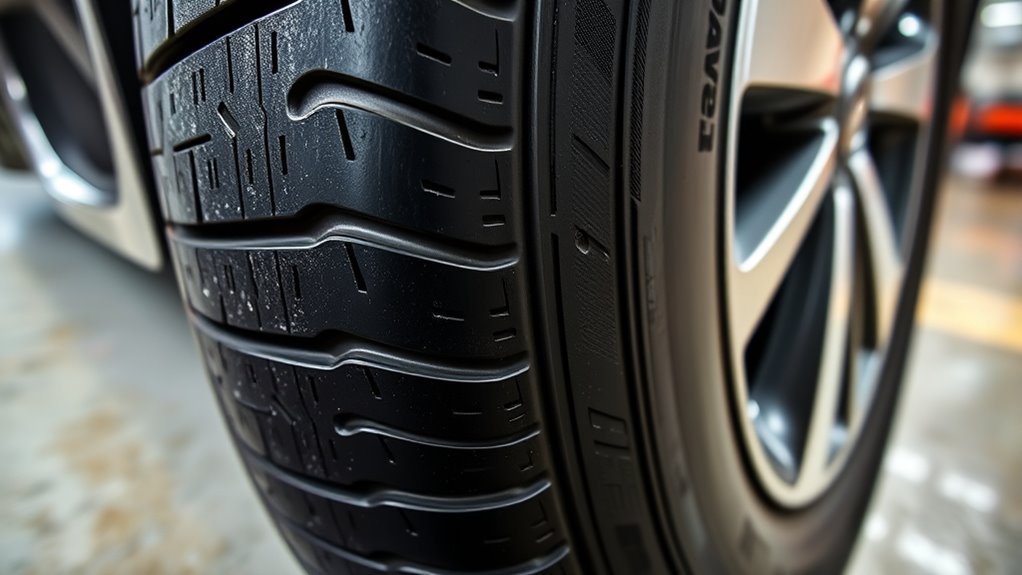
Toyota tires often include built-in tread wear indicators spaced around the tire so you can inspect more than one location. The indicator location is usually marked on the sidewall, then the bar itself appears inside a main groove. When the tread around it wears down to the same height, the tire has reached the minimum tread-depth area.
Do not check only one groove and stop. Look across the full tread width and around the tire. Uneven wear can expose one indicator early, which is useful because it tells you the tire or vehicle needs attention before every groove looks bald.
How to Check Camry Tires at Home
You can check Camry tires at home in a few minutes. Park on a flat surface, set the parking brake, and inspect the tires in daylight or with a flashlight.
- Scan the sidewalls first. Look for bulges, cuts, cracks, exposed cords, or objects stuck in the tire.
- Find the tread wear indicators. Use the sidewall TWI mark or triangle to locate the wear bars in the grooves.
- Compare tread height to the bars. If the tread is level with the bars, replace the tire.
- Measure tread depth. Use a tread gauge in the inner, center, and outer grooves.
- Use the penny test if needed. Insert Lincoln’s head downward. If the top of his head is visible, the tire is at or below the minimum area.
- Check pressure cold. Use the driver-door placard for the correct PSI and adjust only when the tires are cold.
- Write down the lowest reading. Track each tire position so you can spot uneven wear over time.
Note: If one tire is much lower than the others, the issue may not be tread depth alone. Ask a tire shop to check alignment, rotation history, tire pressure loss, wheel damage, and suspension condition.
Frequently Asked Questions
Is a 500 treadwear rating good?
A 500 treadwear rating can be good for many everyday drivers, but it depends on the tire category. Treadwear is a comparative UTQG rating, not a promise that the tire will last a fixed number of miles. Compare ratings within similar tire types and still judge the tire by traction, temperature grade, warranty, reviews, and your driving conditions.
How many miles is 100 treadwear?
A 100 treadwear rating does not equal a fixed mileage number. Toyota explains that UTQG treadwear is a comparative rating based on controlled testing, and real-world tire life depends on road surfaces, driving style, inflation, alignment, rotation, load, climate, and tire design.
Can I keep driving if my Camry’s wear bars are showing?
You should replace the tire as soon as possible. If the tread is flush with the wear bars, the tire is at the minimum tread-depth area. Avoid wet-road, high-speed, or long-distance driving until the tire is replaced or inspected by a qualified technician.
Where are the tread wear indicators on a Toyota Camry tire?
Look for “TWI,” a small triangle, or a similar mark molded into the tire sidewall near the tread shoulder. Follow that mark into the main tread groove. The wear indicator is the short raised rubber bar crossing the groove.
Is a tread depth gauge better than the penny test?
Yes. A tread depth gauge gives an actual reading in 32nds of an inch or millimeters. The penny test is useful for a fast pass/fail check near 2/32 inch, but it does not show how much usable tread remains above that point.
Conclusion
Your Camry’s tread wear indicators are easy to miss, but they give you a direct warning when tire tread is worn to the minimum area. Find the sidewall TWI mark, inspect the raised bars inside the grooves, measure several points with a tread depth gauge, and use the lowest reading to make your decision. If the tread is flush with the bars, or if you see bulges, exposed cords, deep cracks, or severe uneven wear, replace the tire or have it inspected right away.
Sources
- Toyota Owners — 2025 Camry Hybrid Tires — backs up treadwear indicator location, checking tires, and replacement guidance.
- Toyota Owners — Tire Inflation Pressure — backs up using the tire and loading information label for recommended cold tire pressure.
- eCFR — 49 CFR § 570.9 Tires — backs up passenger-car tread-depth inspection guidance.
- NHTSA — Tire Safety Guidance — backs up treadwear indicators and the penny test.
- Toyota Owners — Tire Information / UTQG — backs up the meaning and limits of treadwear ratings.
- Bridgestone Americas — Tire Replacement Guidance — backs up checking sidewalls and replacing tires at the wear indicator threshold.

Related Articles
Toyota Camry Tire Cupping Explained: Causes, Symptoms and Prevention
Gently overlooked tire cupping on a Toyota Camry can hint at bigger issues—discover the causes, warning signs, and prevention before it worsens.
Read More
Toyota Camry Tire Size by Year: Complete Chart for All Model Years
Jump into our comprehensive chart of Toyota Camry tire sizes by year to discover the perfect fit for your vehicle and enhance your driving experience.
Read More
Toyota Camry Vibration After Tire Rotation: Why It Happens and What to Do
Persistent Toyota Camry vibration after tire rotation? Discover the likely causes and fixes before a small shake turns into a bigger problem.
Read More