What’s in This Article
- Toyota Camry Tire Inspection Checklist
- Before You Begin
- How to Check Tire Pressure
- How to Measure Tread Depth
- How to Spot Tire Damage and Uneven Wear
- How to Check for Alignment and Balance Problems
- When to Inspect Camry Tires
- When Camry Tires Need Replacement
- Camry Tire Maintenance Tips
- Frequently Asked Questions
- Conclusion
Your Toyota Camry tires can look fine while pressure, tread, or age quietly raise your risk on the road. A five-minute check can help you catch low pressure, worn tread, sidewall damage, and uneven wear before they affect braking or handling. This checklist shows you what to inspect, when to inspect it, and when to replace a tire.
Quick Answer
Check your Toyota Camry tires monthly and before long trips. Check pressure when the tires feel cold, measure tread depth, inspect for damage, and look for uneven wear. Replace tires at 2/32 inch of tread, after serious sidewall damage, or when age and condition make them unsafe.
Key Takeaways
- Check tire pressure when the tires are cold, and use the driver’s door placard as your main guide.
- Measure tread in several grooves so you can catch low tread and uneven wear early.
- Inspect sidewalls and tread for cuts, cracks, bulges, punctures, and trapped debris.
- Watch for pulling, vibration, or a crooked steering wheel because those signs can point to alignment or balance problems.
- Rotate tires on schedule and replace unsafe tires before they reduce control in rain or emergency stops.
Toyota Camry Tire Inspection Checklist

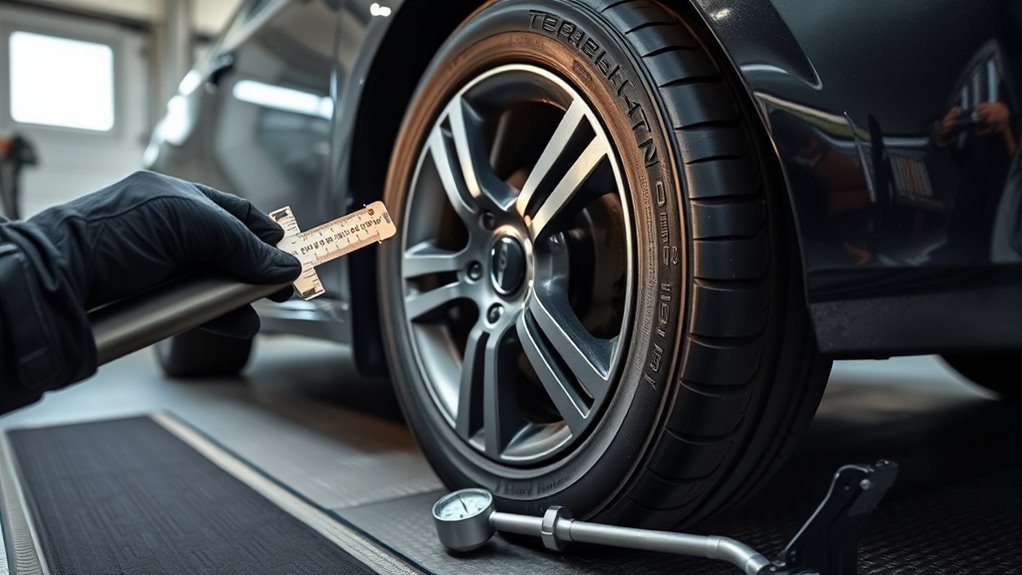
A good Toyota Camry tire inspection starts with four checks: pressure, tread depth, visible damage, and tire age. Check tire pressure monthly against the driver’s door placard or owner’s manual. Use a penny test or tread depth gauge to measure remaining tread.
Look across each tire for cracks, cuts, bulges, embedded debris, and uneven wear. Check the Department of Transportation (DOT) tire date code so you know the tire’s age. If the tread drops to 2/32 inch, replace the tire because wet traction drops sharply at that point.
Many tire makers suggest a professional inspection as tires age, often around six years, even when tread still looks usable. Age, heat, storage, and driving conditions can weaken rubber over time. Rotate your tires every 5,000 to 8,000 miles, or follow your Camry owner’s manual if it gives a specific interval.
Before You Begin
Estimated total time: 10 to 15 minutes for all four tires and the spare.
You need a reliable tire pressure gauge, a tread depth gauge or penny, and enough light to inspect the sidewalls. Park your Camry on level ground and check pressure before driving, or after the car has sat for a few hours. Keep the owner’s manual or driver’s door placard nearby so you can confirm the correct pounds per square inch (PSI).
- Park safely on level ground and set the parking brake.
- Check cold pressure on all four tires and the spare.
- Measure tread depth in several grooves on each tire.
- Inspect tire surfaces for damage, debris, and uneven wear.
- Plan service if you find low tread, sidewall damage, vibration, or pulling.
How to Check Tire Pressure
Check your Camry’s tire pressure when the tires are cold. Early morning works well, or you can wait until the car has stayed parked for a few hours. Remove the valve cap, press a reliable gauge straight onto the valve stem, and read the PSI.
Compare the reading with the recommended value on the driver’s door placard or in your owner’s manual. Add air if the tire sits below the recommended pressure. Release air if the tire sits too high, then recheck with the gauge.
Don’t skip the spare tire. A properly inflated spare can save you from a longer delay after a flat. Proper pressure also supports handling, helps reduce fuel waste, and limits uneven wear.
Pro tip: Keep a tire gauge in your glove box so you can check pressure before long trips.
How to Measure Tread Depth
You can measure tread depth with a penny test or a tread depth gauge. The penny test gives you a quick warning, while the gauge gives a more exact reading in 32nds of an inch. Check several spots across each tire so you can spot uneven wear before it affects safety.
Penny Test Method
Insert a penny into the tire’s grooves with Lincoln’s head facing down. If you can see all of Lincoln’s head, the tread has reached about 2/32 inch and you should replace the tire. Check more than one groove because tires rarely wear in a perfectly even pattern.
For wet roads, many drivers plan replacement before tread reaches the legal minimum. More tread helps the tire move water away from the contact patch. Check tread monthly and before long trips so your Camry stays road-ready.
Tread Depth Gauge
A tread depth gauge gives you a more precise reading than the penny test. Place the probe in a main tread groove, press the base flat against the tread, and read the measurement. Repeat the check at the inner edge, center, and outer edge of each tire.
| Reading | Status | Action |
|---|---|---|
| 8/32 | Healthy | Keep driving and inspect monthly |
| 6/32 | Fair | Monitor during routine checks |
| 4/32 | Low for wet roads | Plan replacement soon |
| 2/32 | Critical | Replace now |
| Below 2/32 | Unsafe | Stop using the tire |
If you reach 2/32 inch, or the wear bars sit flush with the tread, your Camry needs replacement tires. Grip drops quickly in rain when tread gets this low. This simple check helps you avoid a preventable loss of control.
Warning: Never rely on the penny test alone if you already see cords, bulges, or sidewall damage.
How to Spot Tire Damage and Uneven Wear
Even a quick visual check can reveal tire problems that affect your Camry’s safety and handling. Scan each tire for cuts, cracks, bulges, punctures, and embedded debris. These defects can weaken the tire and cause air loss or failure.
- Inspect sidewalls and tread for cuts, cracks, bubbles, and exposed cords.
- Compare wear across both edges and the center of each tire.
- Remove loose stones or debris, but get professional help for nails or deep punctures.
Uneven wear often points to improper inflation, poor alignment, worn suspension parts, or missed rotations. Center wear can mean overinflation, while edge wear can mean underinflation or alignment trouble. If you spot damage or unusual wear, schedule a professional inspection before the problem grows.
[Products Worth Considering]

Measure tyre tread depth precisely with a digital gauge that reads in both MM and inches, helping you monitor safe driving conditions. The large LCD screen is easy to operate, and the compact tool fits for cars, trucks, and motorcycles. It provides high accuracy with a 0-25.4mm range and includes a 1-year warranty for added peace of mind.

Monitor tire tread wear with a smart, color-coded depth gauge that shows clear condition ranges at a glance. The bar is range marked for fast, easy readings, helping you maintain safer traction and performance. Each gauge is portable with a pocket clip, and the set includes 20 units for daily use and sharing.

Measure tire tread depth quickly and accurately with this LUMITECO dial gauge that reads in 1/32" increments up to 14/32". The color-coded green/yellow/red zones make it easy to judge tire wear and know when replacement is needed. A rugged, compact design with a protective pouch helps keep the gauge ready for use on cars, trucks, motorcycles, and more.
How to Check for Alignment and Balance Problems
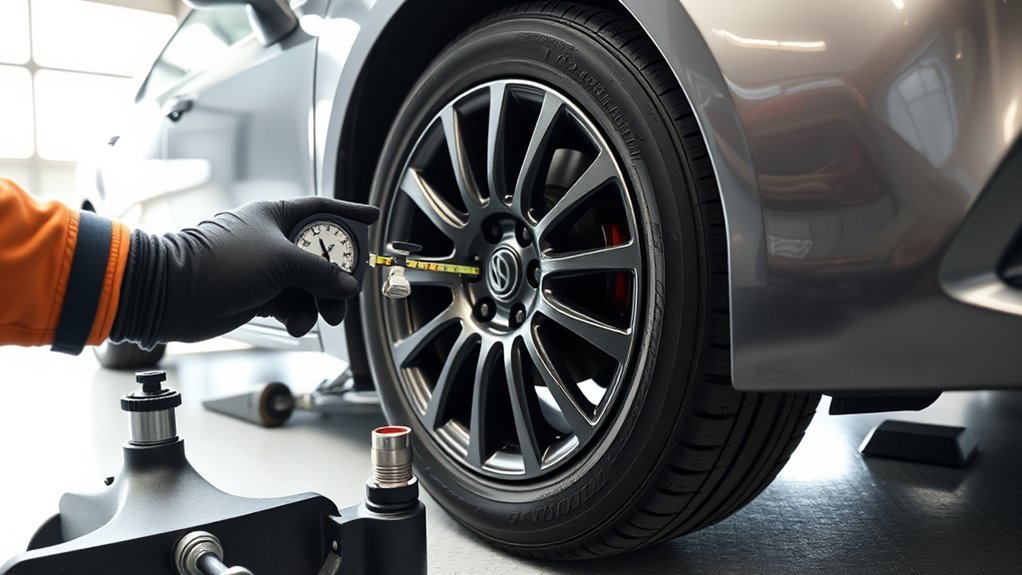
Check for alignment signs when your Camry pulls to one side or the steering wheel sits off-center while you drive straight. Watch for balance issues when you feel vibration through the steering wheel, seat, or floor. Both problems can reduce ride comfort and shorten tire life.
Check alignment whenever you install new tires, hit a hard pothole, or notice uneven wear. Many drivers also check it during rotation service. Balanced tires spread weight evenly, which helps reduce vibration and protects tread wear.
[Products Worth Considering]

The SAFELIFE dial tire tread depth gauge measures tread depth in 1/32 inch increments with clear, easy-to-read 2-inch dial face. Color zones using a traffic light system help you quickly judge whether tread is low, marginal, or ample for safer driving. Built with a durable zinc cast body and a metal detect probe for precise, comfortable use across cars, motorcycles, trucks, and buses.

Keep your tires properly inflated with this analog VONDIOR tire pressure gauge, designed for fast, easy readings without batteries. The swiveling, two-axis hose and large glow dial help you measure at any tire angle with instant visibility. Built with a protective rubber shield, it supports durable, low-maintenance use for cars and trucks.

Accurately measure tire tread depth with a calibrated gauge marked from 0 to 1 inch in 1/32 inch increments. The color-coded bar helps you quickly identify tread condition ranges, supporting safe driving for trucks, motorcycles, automobiles, and passenger vehicles.
Alignment Signs
If your Toyota Camry starts pulling to one side, the wheels may need alignment service. Also watch for uneven edge wear or a steering wheel that does not return to center cleanly. These steering issues can reduce control and make the tires work harder.
- Check for drift on a flat, low-traffic road.
- Inspect tire edges for uneven wear.
- Schedule alignment service when pulling, crooked steering, or edge wear appears.
Don’t ignore steering wheel vibration. It can point to tire balance, wheel damage, tire damage, or alignment trouble. Correct alignment protects your tires and helps your Camry track straight.
Balance Issues
When your Camry’s steering wheel vibrates at certain speeds, wheel balance may be off. Tire vibrations can also come from bent wheels, damaged tires, or uneven tread wear. Schedule a tire inspection if vibration starts suddenly or gets worse.
A technician can balance the tire and wheel assembly, inspect for damage, and check alignment if needed. Regular rotation and balance checks help your Camry maintain road contact. They can also improve ride comfort and reduce avoidable tread wear.
When to Inspect Camry Tires
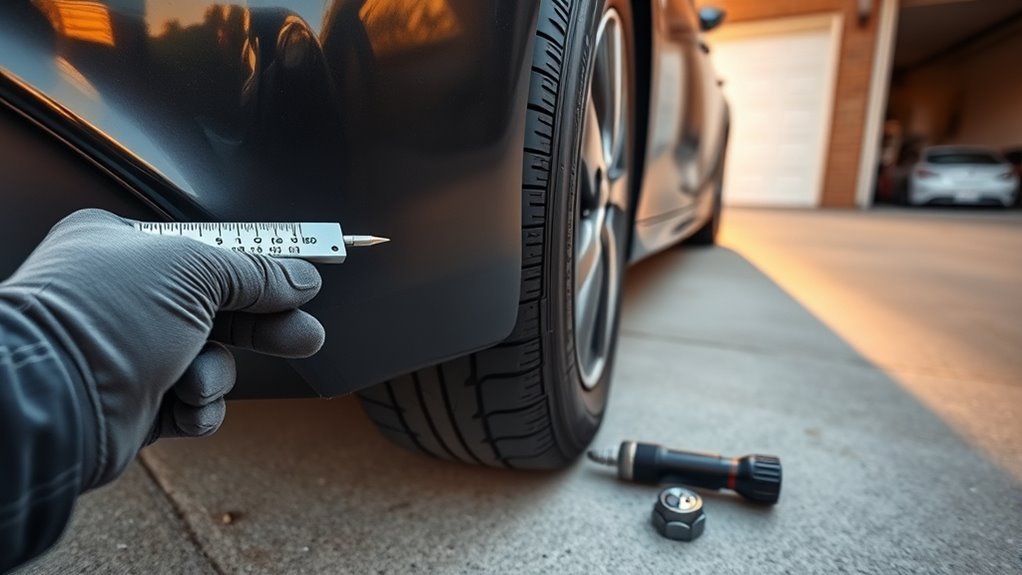
Inspect your Toyota Camry tires at least once a month. Monthly checks help you catch wear, damage, and pressure loss early. Check them before long trips too, since highway driving can expose weak pressure or tread problems fast.
- Check monthly: Inspect sidewalls, tread, and inflation.
- Check before trips: Verify pressure when tires are cold.
- Check after weather shifts: Recheck pressure and tread because temperature changes can affect inflation.
Measure tread with the penny test or a tread depth gauge. Review the DOT date code so you know how old each tire is. Build these checks around your driving routine, not just your mileage.
When Camry Tires Need Replacement
Replace Camry tires once the tread drops to 2/32 inch. Shallow tread reduces wet-road grip and raises hydroplaning risk. You should also replace any tire with sidewall bulges, cracks, exposed cords, or sidewall punctures.
If you spot uneven edge wear, treat it as a warning sign. Alignment problems, suspension wear, or improper pressure can force early replacement. Fix the cause before you install new tires, or the new set may wear the same way.
Age matters too. Check the DOT date code, and ask a tire professional to inspect older tires even if the tread looks fine. Heat, cold, sunlight, and use can weaken rubber and internal materials over time.
[Products Worth Considering]

The Milton S-693 straight foot dual head air chuck is designed for accurate tire pressure checks and quick, secure valve-core engagement with lock-on threads on both ends. With a 1/4" FNPT connection and a maximum 150 PSI rating, it’s built for use on inner duals and common vehicle tires, including trucks and RVs.

ETENWOLF’s calibrated digital tire pressure gauges deliver accurate readings across a wide pressure range, from below 12 PSI to above 140 PSI. The built-in thermal compensation helps maintain performance in extreme cold and hot conditions, while the LED light improves visibility for quick checks. Includes replaceable AAA batteries for long-lasting use and convenience for everyday tire monitoring.

Upgrade your Toyota tire setup with these corrosion-resistant, leak-proof valve stem caps designed to help protect the valve core from water, snow, and road grime. The caps feature a snug rubber seal and durable copper alloy construction to resist rust and oxidation while maintaining stable tire pressure. Ideal for replacing worn original caps and keeping your wheels looking clean and stylish.
Camry Tire Maintenance Tips
To keep your Camry tires safe and efficient, check tire pressure when the tires are cold. Keep it at the manufacturer’s recommended level, not the number molded on the tire sidewall. The sidewall number shows the tire’s maximum pressure, not your Camry’s normal setting.
- Inspect monthly: Use the penny test or tread gauge, and look for cuts, bulges, or embedded debris.
- Rotate on schedule: Follow your owner’s manual, or rotate about every 5,000 to 8,000 miles if your service plan allows it.
- Track tire age: Read the DOT code and ask for inspection when tires get older.
- Respond to symptoms: Check alignment and balance when you feel vibration, pulling, or a crooked steering wheel.
You don’t need to accept uneven wear or surprise failures. Stay consistent, document checks, and act early. A steady routine protects traction, extends tire life, and keeps your Camry ready for the road.
Frequently Asked Questions
How Often Should You Get a Wheel Alignment on a Toyota Camry?
You should check alignment when your Camry pulls, the steering wheel sits off-center, or the tires show uneven edge wear. Many drivers also have alignment checked during tire rotation or after installing new tires.
What Is the 30-60-90 Rule for Car Maintenance?
The 30-60-90 rule refers to major service checks around 30,000, 60,000, and 90,000 miles. These services often include inspections of fluids, filters, belts, brakes, and tires. Always compare that rule with your Camry owner’s manual because Toyota’s maintenance schedule may use different intervals.
What Tire Pressure Should a Toyota Camry Use?
Use the pressure listed on the driver’s door placard or in your owner’s manual. Do not use the maximum pressure molded on the tire sidewall as your normal setting. Check pressure when the tires are cold for the most accurate reading.
Can You Drive on a Tire With a Sidewall Bulge?
You should not keep driving on a tire with a sidewall bulge. A bulge can signal internal tire damage, and the tire can fail without much warning. Replace it or have a tire professional inspect it before you drive farther.
Conclusion
Your Camry’s tires protect every stop, turn, and lane change, so check them before small problems become costly ones. Inspect pressure, tread depth, sidewalls, and wear patterns monthly and before long trips. Rotate tires on schedule, check alignment when symptoms appear, and replace unsafe tires without delay. A few steady habits help your Camry drive better, stop with more control, and stay ready for the miles ahead.
References
- Tires — National Highway Traffic Safety Administration
- Tire Safety: Everything Rides on It — National Highway Traffic Safety Administration
- Toyota Owner’s Manuals — Toyota