
Camry Tire Rotation Pattern: FWD & AWD Guide
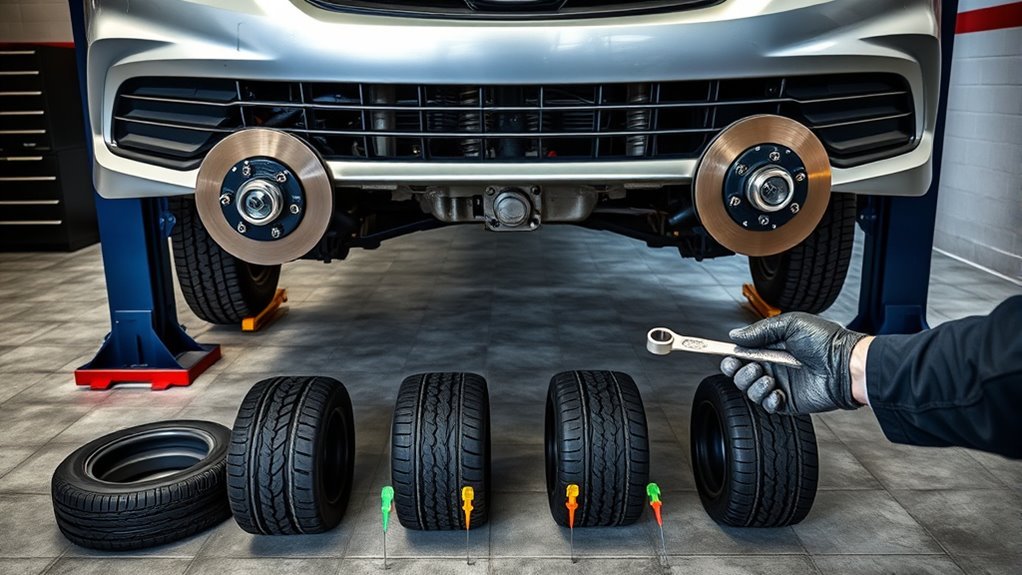
Uneven tire wear can make your Toyota Camry feel rough, noisy, or less steady in turns. The right rotation pattern helps each tire share the work from steering, braking, and driving. This guide explains which Camry tire rotation pattern fits your drivetrain, when to rotate, and what tire types may change the plan.
Quick Answer
Most front-wheel-drive Toyota Camry models use a Forward Cross tire rotation pattern. Move the front tires straight back, then cross the rear tires to the opposite front sides. For all-wheel-drive models with non-directional tires, use a Rearward Cross pattern unless your owner’s manual or tire maker says otherwise.
Key Takeaways
- Use Forward Cross for most front-wheel-drive Camry models with non-directional tires.
- Use Rearward Cross for all-wheel-drive Camry models when the tires allow side-to-side movement.
- Rotate Camry tires about every 5,000 to 7,500 miles, or follow your owner’s manual.
- Check tire pressure, tread depth, and uneven wear during each rotation.
- Use a same-side rotation if your Camry has directional tires.
What Tire Rotation Pattern Fits Your Camry?

For most front-wheel-drive Toyota Camry models, the best tire rotation pattern is the Forward Cross. Move the front tires straight back to the rear on the same side. Then move each rear tire to the opposite front side.
This pattern works because a front-wheel-drive Camry puts more work on the front tires. The front tires handle steering, much of the braking load, and power delivery. Regular rotation spreads wear evenly and helps your Camry keep steady grip.
Rotate every 5,000 to 7,500 miles, or use the schedule in your owner’s manual. During each rotation, check tread depth and tire pressure. Wrong pressure can speed up uneven wear and hurt handling.
[Products Worth Considering]

The GOOLOO A6 Gear delivers rapid, cordless inflation with a powerful 21,000 RPM motor and up to 160 PSI, inflating car tires in under a minute. Its 7500mAh battery provides up to 45 minutes of operation and fast Type‑C charging, while preset modes and multi‑unit options ensure precise control for cars, bikes, and balls. Integrated LED flashlight and smart auto shut‑off add safety and convenience for emergencies.

The Milton 555e digital tire inflator delivers fast, accurate pressure readings with a backlit display and multiple unit options, making tire inflation quick and easy. Its durable 20" EPDM rubber hose and grip‑head chuck provide reliable connection, while the ±1 PSI accuracy ensures precise inflation for cars, bikes, and trucks.

The CRAFTSMAN 3-in-1 tire inflator combines a high‑pressure air compressor, car vacuum, and dust blower into one compact tool, delivering up to 160 PSI for quick tire inflation and powerful suction for interior cleaning. Its dual power options—20 V cordless battery or 12 V car plug—provide flexibility for roadside emergencies or garage use, while the LCD display and LED light ensure precise control and visibility in low‑light conditions.
Camry Rotation Patterns by Drivetrain
Your Camry’s drivetrain helps determine which tire rotation pattern you should use. Most Camry models use front-wheel drive, so they often need the Forward Cross pattern. Some newer Camry models offer all-wheel drive, which may use Rearward Cross if the tires are non-directional.
Use the table below as a general guide, then check your owner’s manual. Your tire type can override the drivetrain pattern.
| Camry setup | Common rotation pattern | Best use |
|---|---|---|
| Front-wheel drive | Forward Cross | Most non-directional tire sets |
| All-wheel drive | Rearward Cross | Non-directional tire sets |
| Directional tires | Front to rear, same side | Tires with one rolling direction |
| Staggered tires | Side to side only if allowed | Different front and rear tire sizes |
Verify tire pressure before and after rotation. Add an alignment check if your Camry pulls, vibrates, or shows uneven tread. A poor alignment can cancel the benefit of a correct rotation pattern.
Forward Cross for Front-Wheel-Drive Camrys
For your front-wheel-drive Camry, the Forward Cross pattern moves the front tires to the rear on the same side. It then moves the rear tires to the front on opposite sides. This pattern helps balance tread wear across all four tires.
Use this pattern only when your tires allow side-to-side movement. Directional tires have arrows or markings that show the correct rolling direction. Those tires must stay on the same side unless a tire shop remounts them.
[Products Worth Considering]

The AIRSURE portable tire inflator delivers 150 PSI, inflating tires three times faster than standard pumps while featuring a real‑time LCD display and auto shut‑off for safety. It includes a USB charging port and LED light for emergencies, and works with cars, bikes, motorcycles, and sports balls, making it a versatile companion for road trips and outdoor adventures.

The BLACK+DECKER 20V Cordless Inflator offers versatile power options—120V AC, 12V car, and 20V battery—to inflate tires, sport balls, and large inflatables quickly. Its digital gauge and automatic shutoff ensure precise pressure control, while the high‑volume hose speeds up inflating bigger items. Includes multiple adapters for ball needles, Presta valves, and large hoses, making it a complete solution for home, road, and outdoor use.
Why Forward Cross Works
The Forward Cross pattern fits the wear profile of a front-wheel-drive Camry. The front tires handle steering, braking, and drive force, so they often wear faster than the rear tires.
You move the front tires straight back, then send the rear tires diagonally forward. That swap gives each tire a fairer duty cycle. It can help maintain traction, reduce vibration, and support longer tire life.
Front Tire Wear Pattern
On a front-wheel-drive Toyota Camry, front tire wear often appears first on the front axle. Steering and braking load the front pair more than the rear pair. Alignment issues can make this wear worse by adding scrub or feathering.
The Forward Cross pattern helps reduce that imbalance. It moves the front tires straight back and brings the rear tires forward on opposite sides. This keeps tread depth more even and supports stable handling.
Step-By-Step Rotation Order
Use this order for a front-wheel-drive Camry with non-directional tires. Check that all four tires match in size and type before you start.
| Tire position | New location | Action |
|---|---|---|
| Front left | Rear left | Move straight back |
| Front right | Rear right | Move straight back |
| Rear left | Front right | Cross forward |
| Rear right | Front left | Cross forward |
Do this every 5,000 to 7,500 miles, or use the interval in your owner’s manual. During tire maintenance, check pressure and tread depth so the pattern works as intended.
Rearward Cross for AWD Camrys

For all-wheel-drive Camrys with non-directional tires, the Rearward Cross rotation pattern helps keep tread wear even. Move the rear tires straight to the front on the same side. Then cross the front tires to the opposite rear sides.
This layout helps each tire share load across the car. It also helps your Camry feel more predictable during turns, braking, and acceleration. Use this pattern on a regular schedule, usually every 5,000 to 7,500 miles.
Note: If your owner’s manual lists a different rotation pattern for your exact Camry trim and tire setup, follow that guidance first.
Do Your Camry Tires Need a Special Rotation Pattern?
Your Camry’s tire type can change the rotation pattern. The main types to check are directional, non-directional, and staggered tires. The sidewall and owner’s manual can help you confirm which setup you have.
Most Camry tires are non-directional, so they can usually cross from one side to the other. Directional tires must keep rolling in one direction. Staggered tires use different front and rear sizes, so you may not be able to rotate them front to rear.
Camry Tire Type Matters
Camry tire type matters because not every tire can move to every corner. Non-directional tires give you the most freedom. They work with patterns like Forward Cross and Rearward Cross.
Directional tires have a tread pattern made to roll one way. Keep them on the same side unless a tire shop remounts them on the wheels. Staggered setups need extra care because the front and rear tire sizes may differ.
Best Pattern for Camry
The Toyota Camry usually does best with a Forward Cross rotation pattern when it has front-wheel drive and non-directional tires. This setup helps even out front tire wear. It also supports stable handling under braking and cornering.
- Front tires often wear faster from steering and braking load.
- Tread depth checks can reveal uneven wear or alignment faults.
- Scheduled rotations help support tire warranty requirements.
When you stay consistent, you extend tire life and reduce the risk of traction loss from uneven tread. You also help your Camry keep a smoother, more predictable ride.
How Often to Rotate Camry Tires
Rotate Camry tires every 5,000 to 7,500 miles, or follow the exact interval in your owner’s manual. This tire rotation frequency fits well with many routine service visits. Use the odometer instead of memory so you don’t miss the next rotation.
You should also rotate sooner if you see uneven tread, vibration, or pulling. Tire pressure matters too. Underinflated or overinflated tires can wear faster and make the car feel less stable.
The easiest habit is to pair tire rotation with regular maintenance. That keeps tire care on a simple schedule and helps you catch problems early.
Signs Your Camry Needs Tire Rotation
When your tires need rotation, the signs often appear before a service reminder does. Check your Camry’s tread closely. Uneven wear, bald spots, or one tire wearing faster than the others means your tire maintenance schedule may need attention.
Your driving habits can speed up tire wear. Frequent hard turns, stop-and-go traffic, and long highway trips can all affect the tread. Watch for these signs:
- Steering wheel or seat vibrations while cruising.
- Your Camry pulls left or right on level pavement.
- One tire shows more shoulder wear than the others.
- Your ride feels louder or rougher than usual.
If you notice these symptoms, inspect all four tires and compare tread depth. A rotation may help, but severe or uneven wear can point to alignment, suspension, or tire balance issues.
Why Camry Tire Rotation Matters

Regular tire rotation helps your Camry wear tires evenly. Balanced wear supports grip, steering response, and braking performance. It also helps you avoid replacing one pair of tires much sooner than the other.
For front-wheel-drive Camrys, the right rotation pattern distributes front tire wear across all four tires over time. That helps the car feel more stable in wet weather and during quick stops. At highway speed, consistent tread depth also supports predictable control.
Rotation does not fix every tire problem. If your Camry keeps pulling, shaking, or wearing tires unevenly after rotation, schedule an alignment or tire inspection.
Camry Tire Rotation Tips for Even Wear
To keep your Camry’s tires wearing evenly, use the right pattern for your drivetrain and tire type. For many front-wheel-drive Camrys, that means the Forward Cross rotation pattern. Rotate every 5,000 to 7,500 miles, or sooner if you notice uneven tread.
Use the Forward Cross rotation pattern for most front-wheel-drive Camrys with non-directional tires.
- Check tire pressure on all four tires and adjust it to spec.
- Inspect tread depth across the center and both shoulders.
- Schedule an alignment check if the Camry pulls or the tread looks uneven.
- Record the date and mileage after each tire rotation.
Pro tip: Mark each tire’s old position before rotation so you can confirm the pattern and track future wear.
This routine helps balance wear and supports a smoother drive on long trips. If you stay consistent, you’ll help extend tire life and keep your Camry ready for more miles.
Frequently Asked Questions
What pattern should you use when rotating Camry tires?
Use Forward Cross for most front-wheel-drive Camrys with non-directional tires. Move the front tires straight back, then cross the rear tires to the opposite front sides. For all-wheel-drive Camrys, use Rearward Cross if your tires allow it.
What does Toyota recommend for tire rotation?
Toyota service schedules often pair tire rotation with regular maintenance visits. Many Camry owners rotate every 5,000 to 7,500 miles. Your owner’s manual gives the best interval for your model year, drivetrain, and tire setup.
Can you use an X-pattern on a Toyota Camry?
You may use an X-pattern only if your Camry has non-directional tires of the same size on all four wheels. The X-pattern crosses all four tires diagonally. Do not use it for directional tires unless a tire shop remounts them.
What if your Camry has directional tires?
Directional tires must stay on the same side of the car because their tread rolls one way. Move the front tires straight to the rear and the rear tires straight to the front. Check the sidewall for rotation arrows before you move them.
Should you balance tires when you rotate them?
You don’t need tire balancing at every rotation if the ride feels smooth and wear looks even. Balance the tires if you feel vibration, see uneven wear, or recently hit a pothole. A shop can inspect the tires and wheels during the same visit.
Conclusion
The right rotation pattern keeps your Camry handling predictably and helps the tires wear evenly. Most front-wheel-drive Camrys use Forward Cross, while all-wheel-drive models often use Rearward Cross with non-directional tires. Check your owner’s manual, inspect the tire sidewalls, and rotate every 5,000 to 7,500 miles. Stay on schedule, and your Camry will reward you with steadier grip and a smoother ride.

Related Articles

Performance Tires vs. Touring Tires for Toyota Camry: Which Is Right for You?
Discover whether performance or touring tires better suit your Toyota Camry, and find out which tradeoff may matter most to your drive.
Read More
Steel Wheels vs. Alloy Wheels on Toyota Camry: What’s the Difference?
Toyota Camry steel wheels vs. alloy wheels explained—discover which fits your driving needs, but one choice may surprise you.
Read More
Toyota Camry Wheel Offset Explained: What It Means and Why It Matters
The Toyota Camry's wheel offset is crucial for performance and handling; discover how to measure it and choose the right wheels for your ride.
Read More