
Hyundai Sonata Snow Driving Tips With All-Season Tires
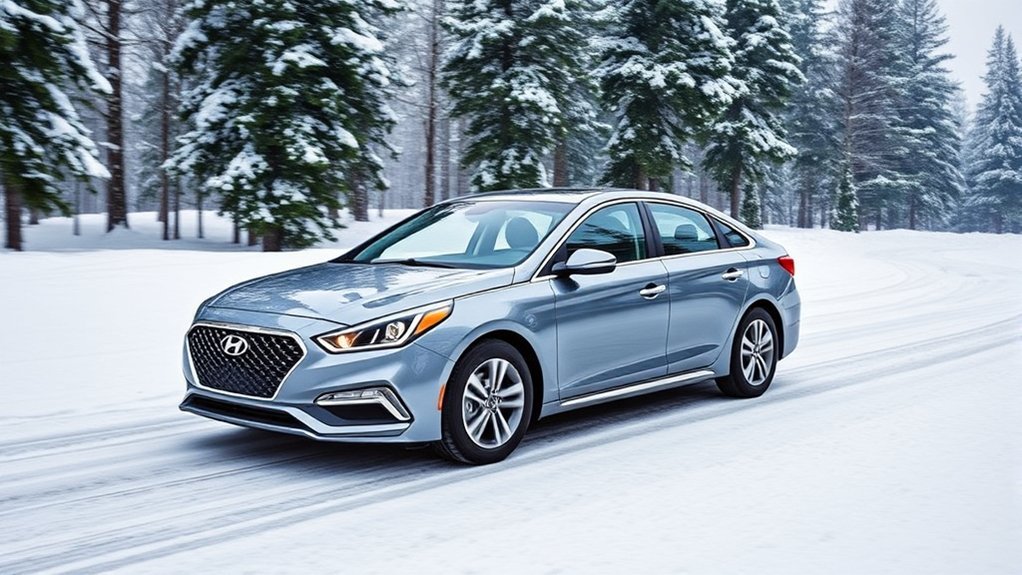
Driving a Hyundai Sonata in snow with all-season tires can be manageable in light snow, but it is not the same as driving on winter tires. The safest approach is to understand your tire limits, prepare the car before you leave, use smooth inputs on the road, and know when conditions are bad enough to delay the trip.
Quick Answer
A Hyundai Sonata can drive in light snow with good all-season tires, but snow, ice, and slush reduce grip and increase stopping distance. Drive slowly, leave extra following distance, use gentle steering and braking, keep traction control on, and switch to winter or severe-snow-rated tires for frequent or heavy winter conditions.
Key Takeaways
- All-season tires are best for mild winter driving, not deep snow, packed snow, freezing rain, or icy hills.
- Check tire pressure cold, inspect tread depth, top off winter washer fluid, and clear all snow from the car before driving.
- Use slow, smooth inputs: accelerate gently, brake early, steer gradually, and leave much more room than usual.
- If your Sonata has Snow mode or AWD, use it as a traction aid, not as a replacement for proper tires.
- If you get stuck, clear snow around the tires, add traction material, rock gently if safe, and keep the exhaust pipe clear.
At a Glance
| Time Required | 10–20 minutes for a pre-drive winter check; longer if you need to dig out or add supplies |
| Difficulty | Moderate; safe snow driving requires patience, extra space, and gentle control inputs |
| Tools Needed | Tire pressure gauge, snow brush, ice scraper, shovel, flashlight, jumper cables, traction boards or sand, winter washer fluid |
| Cost | $0 if your car is already equipped; about $20–$150 for basic winter supplies, depending on what you already own |
Understanding the Limitations of All-Season Tires in Snow
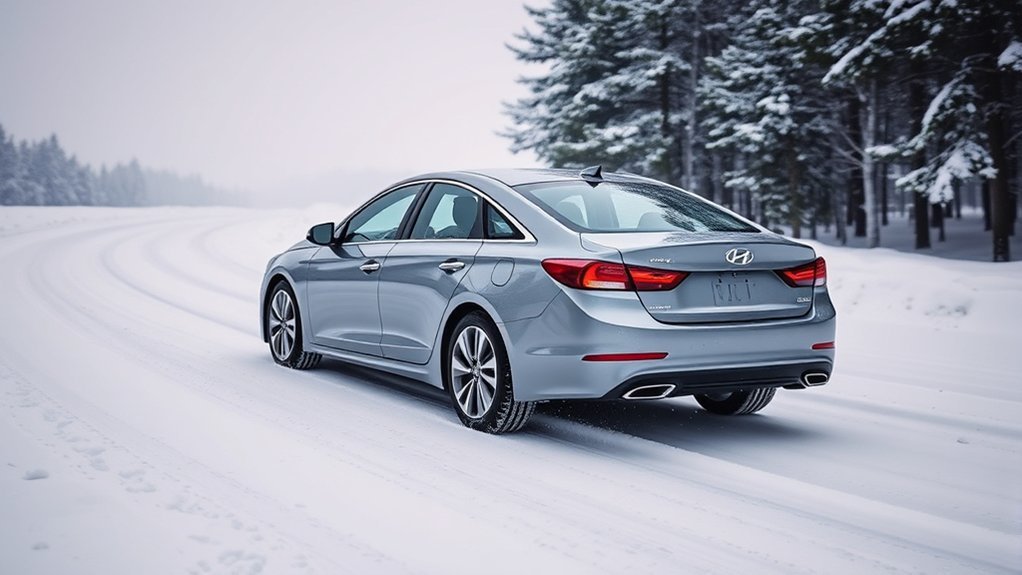
All-season tires are built to handle a range of dry, wet, and mild cold-weather conditions. They are not the best choice for repeated driving in deep snow, packed snow, freezing rain, or ice. Even when the tread looks acceptable, the rubber compound and tread pattern may not bite into snow as well as a dedicated winter tire.
That difference can be dramatic. In a Tire Rack snow test, a vehicle on winter tires stopped from 30 mph in about 59 feet on packed snow, while the same type of vehicle on all-season tires needed about 30 more feet. Your exact stopping distance will vary by tire model, tread depth, temperature, road surface, and driver reaction time, but the lesson is simple: leave much more space than you think you need.
On snow-packed roads, tire choice can be the difference between a controlled stop and sliding through the space you expected to use.
For frequent winter driving, look for tires with the three-peak mountain snowflake symbol. Transport Canada explains that this symbol means the tire meets specific snow-traction performance requirements. It also notes that all-season and summer tires begin to lose elasticity below 7°C, which can reduce traction.
Warning: Do not treat all-season tires as a guarantee of winter safety. If roads are icy, snow is deep, visibility is poor, or hills are untreated, the safest choice may be to delay non-essential travel.
[Products Worth Considering]

EVOULTES heavy duty tire inflator with an integrated gauge delivers accurate pressure readings from 10–120 PSI, helping you inflate, deflate, and check tires in one tool. The 16.5-inch extended dual-head air chuck with swivel base reaches hard-to-access dual wheel valves on trucks and RVs. A brass trigger core and side-mounted air release valve make operation smooth, with standard 1/4" NPT threading and quick-connect compatibility for easy setup.

This portable cordless tire inflator delivers fast, efficient inflation for cars, motorcycles, bikes, and sports balls with a digital pressure gauge. Use the one-click PSI preset with auto shut-off for accurate, hands-free topping to your target pressure up to 150 PSI. It’s compact and rechargeable with a built-in emergency LED light plus valve adapters and accessories for quick, ready-to-go use.

This portable cordless tire inflator delivers up to 160 PSI with fast 17 L/min airflow to help you quickly top up tires and get back on the road. It features dual power mode, running on a 21V rechargeable battery or a 12V DC adapter for convenient roadside use. An automatic shut-off with digital pressure gauge helps prevent overinflation, and a built-in LED light improves visibility in low-light conditions.
How to Prepare Your Sonata for Winter Driving
Preparing your Sonata before a storm gives you more control before you ever shift into Drive. Use this checklist before winter weather arrives and again before any snowy trip.
1. Check Tire Pressure While the Tires Are Cold
Cold weather lowers tire pressure, and underinflated tires can hurt handling, braking, tire life, and fuel economy. Use the pressure listed on the driver-side door placard or in your owner’s manual, not the maximum number printed on the tire. NHTSA recommends checking tire pressure when the tires are cold, meaning the vehicle has not been driven for at least three hours.
2. Inspect Tread Depth and Tire Condition
Look for uneven wear, cracks, bulges, punctures, and worn tread. NHTSA lists 2/32 inch as the minimum tread depth, but snow performance usually drops well before a tire reaches that point. For snowy roads, consider replacing tires earlier, especially if the tread is near 5/32 inch or the tire no longer clears slush well.
3. Top Off Winter Fluids
Use winter-grade windshield washer fluid with de-icer, and make sure the reservoir is full. Check coolant level and condition, because the cooling system must meet the manufacturer’s specifications for freezing temperatures. Replace worn wiper blades before a storm, not during one.
4. Test the Battery, Lights, and Defrosters
Cold weather makes the battery work harder. If starts are slow, the battery is older, or the terminals are corroded, have the battery and charging system checked. Confirm that headlights, brake lights, turn signals, hazard lights, defrosters, and heated mirrors are working.
5. Clear Snow From the Entire Car
Brush snow from the roof, hood, trunk, windows, mirrors, headlights, taillights, and license plate. Snow left on the roof can slide onto your windshield when braking or blow into traffic behind you.
Pro Tip: Keep a small tire pressure gauge in the glove box. The dashboard TPMS light is useful, but a gauge gives you the exact pressure before the warning threshold is reached.
FWD, AWD, Snow Mode, and Traction Control
Most Hyundai Sonata models are front-wheel drive, while some newer trims may offer all-wheel drive. Check your exact model year and trim before relying on AWD or Snow mode advice. If your Sonata is front-wheel drive, the front tires do the pulling, steering, and much of the braking work, so tire condition matters even more.
If your Hyundai is equipped with Snow mode, Hyundai says it adjusts wheel-slip control, engine torque, and shift patterns according to available traction. Use it when roads are snowy or slippery. Snow mode can help smooth power delivery, but it cannot create traction if the tires have reached their grip limit.
Keep traction control and stability control on for normal snow driving. These systems help reduce wheel spin and help the car stay pointed where you intend to go. If you are already stuck and the wheels will not move the car, some vehicles allow traction control to be reduced briefly to help rock the car free. Use that only as a short recovery step and turn the system back on once you are moving.
Note: Your owner’s manual overrides generic advice. Drive modes, traction-control buttons, tire sizes, and recommended pressures can vary by Sonata model year and trim.
Top Techniques for Safe Snow Driving
Once your Sonata is winter-ready, the goal is to avoid sudden weight shifts and keep every movement smooth. Snow driving is less about speed and more about patience.
- Slow down before trouble spots. Brake before a curve, bridge, hill, or intersection, not while you are already in the middle of it.
- Leave extra following distance. Use far more space than you would on dry pavement. If traffic is close behind you, let impatient drivers pass when it is safe.
- Accelerate gently. Press the accelerator as if there is an egg under your foot. Sudden throttle causes wheel spin.
- Brake early and smoothly. If your Sonata has ABS, apply firm, steady pressure in an emergency stop. Do not pump ABS brakes.
- Steer gradually. Quick steering corrections can make the front tires slide. Look where you want the car to go and guide it calmly.
- Avoid cruise control. On snow, slush, or ice, keep direct control of the accelerator.
- Use headlights. Turn on headlights in snow, fog, or low visibility, even during the day.
- Do not crowd snow plows. Plows stop, turn, and overlap lanes often. Stay well back.
On hills, build a little steady momentum before the climb, then keep a light, consistent throttle. Do not stop halfway up unless traffic requires it. Going downhill, reduce speed before the descent and brake gently in a straight line whenever possible.
How to Safely Recover When Stuck in Snow?
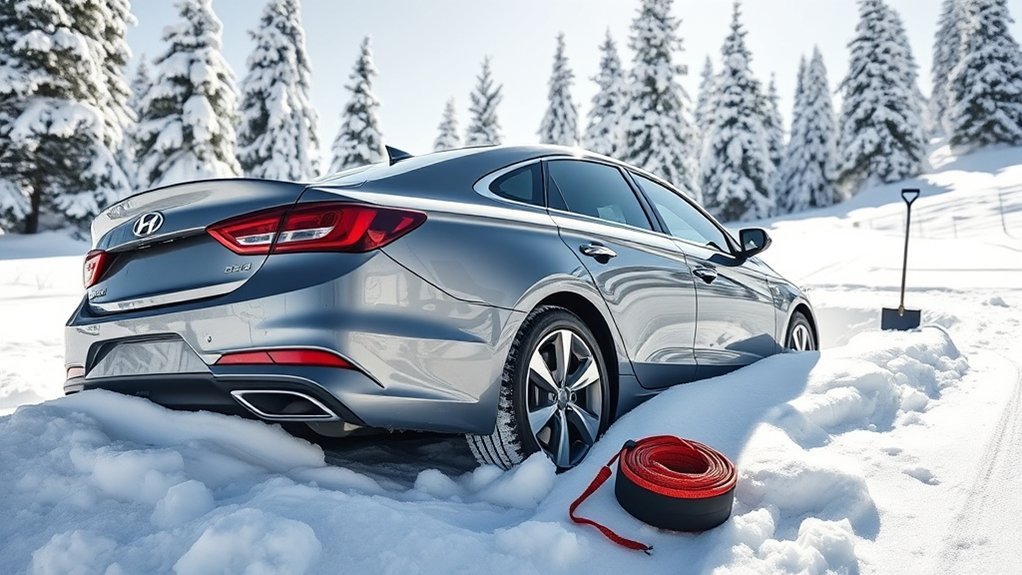
Getting stuck in snow is frustrating, but spinning the tires hard usually makes the rut deeper and polishes the snow into ice. Stop, assess the area, and recover slowly.
- Make the car visible. Turn on hazard lights. If you have warning triangles or bright markers, place them only if it is safe to exit the car.
- Clear the exhaust pipe first. Snow blocking the tailpipe can push carbon monoxide into the cabin.
- Dig around the tires. Use a shovel, brush, or gloved hands to clear snow from the front and back of the drive tires.
- Straighten the wheels. A straight tire path reduces resistance and helps the car move more easily.
- Add traction material. Place traction boards, sand, or non-clumping kitty litter in front of the drive tires. For most front-wheel-drive Sonatas, that means the front tires.
- Use gentle throttle. Ease onto the accelerator. If the tires spin, stop and add more traction instead of flooring it.
- Rock only if safe. Shift between Drive and Reverse gently, pausing between shifts. Do not rev the engine or slam the transmission between gears.
- Call for help if needed. If the car is high-centered, near traffic, sliding toward a ditch, or not moving after a few careful attempts, stop and call roadside assistance.
Warning: If you are stalled in winter weather, stay with the vehicle unless it is unsafe to do so. Keep the exhaust pipe clear of snow, and run the engine only briefly for heat to reduce carbon monoxide risk.
[Products Worth Considering]

This roadside assistance kit helps drivers and passengers in urgent situations after an accident or breakdown, providing practical support while waiting for help. It includes a lightweight, compact tire inflator for fast inflation of standard vehicle tires, plus reinforced jumper cable protection for safer handling. Ideal for winter weather, road trips, camping, and travel, with everything stowed neatly in a trunk bag.

Universal magnetic jack pad with aluminum grooved design to protect vehicle pinch welds during lifting. Durable nylon pad inserts are upgraded and secured with screws to resist damage and keep in place. Designed to fit most single vehicle pinpoint welds for safer, stable jacking when changing tires, repairs, or performing oil changes.
Must-Have Supplies for Winter Driving Safety
A small winter kit can turn a stressful delay into a manageable one. Keep supplies secured in the trunk or cargo area so they do not become projectiles during a sudden stop.
- Snow removal: snow brush, ice scraper, compact shovel, and gloves.
- Traction aids: traction boards, sand, or non-clumping kitty litter.
- Visibility and warning: flashlight, extra batteries, reflective vest, warning triangles, and hazard markers.
- Emergency basics: first aid kit, jumper cables or jump pack, phone charger, blanket, water, and non-perishable snacks.
- Vehicle fluids: winter-grade windshield washer fluid and any owner-manual-approved emergency items.
- Personal needs: medicine, warm layers, boots, and anything children or passengers may need during a long delay.
Also keep the gas tank close to full when winter weather is forecast. A fuller tank gives you more flexibility if traffic stops, roads close, or you need heat while waiting for help.
When to Choose Winter Tires Instead
All-season tires may be acceptable if your area gets only occasional light snow and roads are cleared quickly. Choose winter tires or severe-snow-rated all-weather tires if you regularly face any of these conditions:
- Snow-covered roads that remain untreated for hours or days
- Steep hills, mountain roads, or long rural routes
- Frequent ice, freezing rain, or packed snow
- Temperatures often below 7°C or 45°F during your driving season
- Long commutes where postponing travel is not realistic
- All-season tires worn near winter-unsafe tread depth
If you install winter tires, use a matching set of four. Mixing tire types can make the Sonata less predictable during braking and cornering.
Frequently Asked Questions
How do you drive a Hyundai Sonata in snow with all-season tires?
Drive slowly, leave extra following distance, accelerate gently, brake early, and steer smoothly. Keep traction control and stability control on for normal driving. If the roads are icy, snow is deep, or your tires are worn, postpone the trip or use winter tires instead.
What is Snow mode on Hyundai AWD?
On equipped Hyundai models, Snow mode adjusts wheel-slip control, engine torque, and shift patterns to improve drivability on snowy or slippery roads. It helps smooth power delivery, but it does not replace winter tires or make icy roads safe at normal speeds.
Should traction control be on or off in snow?
Keep traction control on for normal snow driving because it helps reduce wheel spin. If you are already stuck and the car will not move, you may need to reduce traction control briefly while rocking the car free, then turn it back on once moving.
Are all-season tires enough for a Hyundai Sonata in winter?
They can be enough for light snow, short trips, and well-cleared roads if the tires are in good condition. They are not ideal for frequent snow, ice, steep hills, or very cold weather. For those conditions, winter tires or severe-snow-rated all-weather tires are safer.
What should I do if my Sonata starts sliding?
Stay calm, ease off the accelerator, avoid sudden braking, and look where you want the car to go. Steer smoothly in that direction and let the tires regain grip. If ABS activates during emergency braking, keep firm, steady pressure on the brake pedal.
Conclusion
Your Hyundai Sonata can handle light snow with good all-season tires when you prepare properly and drive carefully. The key is respecting the limits: all-season tires need more stopping space, less speed, and smoother inputs than winter tires. Check the tires and fluids, use Snow mode only if your trim has it, keep traction control on for normal driving, and carry winter supplies before conditions turn bad. When snow is deep, roads are icy, or visibility is poor, the safest move is to wait or switch to proper winter tires.
Sources
- NHTSA Winter Weather Driving Tips — winter crash risk, vehicle preparation, emergency supplies, stalled-vehicle safety, washer fluid, coolant, lights, and route planning.
- NHTSA TireWise — tire pressure, cold tire readings, tire placard guidance, and tire safety checks.
- Hyundai Owner’s Manual: Snow Mode — Snow mode function, wheel-slip control, engine torque, shift-pattern behavior, and snow-driving cautions.
- Transport Canada: Using Winter Tires — three-peak mountain snowflake symbol, winter tire traction, cold-temperature rubber behavior, and winter tread-depth guidance.
- Tire Rack All-Season vs. Winter Tire Test — snow acceleration, braking, cornering, and stopping-distance comparison.

Related Articles
Danger of Using Summer Tires in Winter on a Hyundai Sonata
Potentially perilous, using summer tires in winter on your Hyundai Sonata can compromise safety—discover the hidden dangers that await you on icy roads.
Read More
Can You Mix Nitrogen and Air in Hyundai Sonata Tires? Answered
Discover the implications of mixing nitrogen and air in your Hyundai Sonata tires—are the benefits worth the risks? Explore the answer inside!
Read More
How to Tell If Hyundai Sonata Tires Are Too Old to Use Safely
Understand how to assess the age of your Hyundai Sonata tires and discover crucial signs of deterioration that could compromise your safety on the road.
Read More