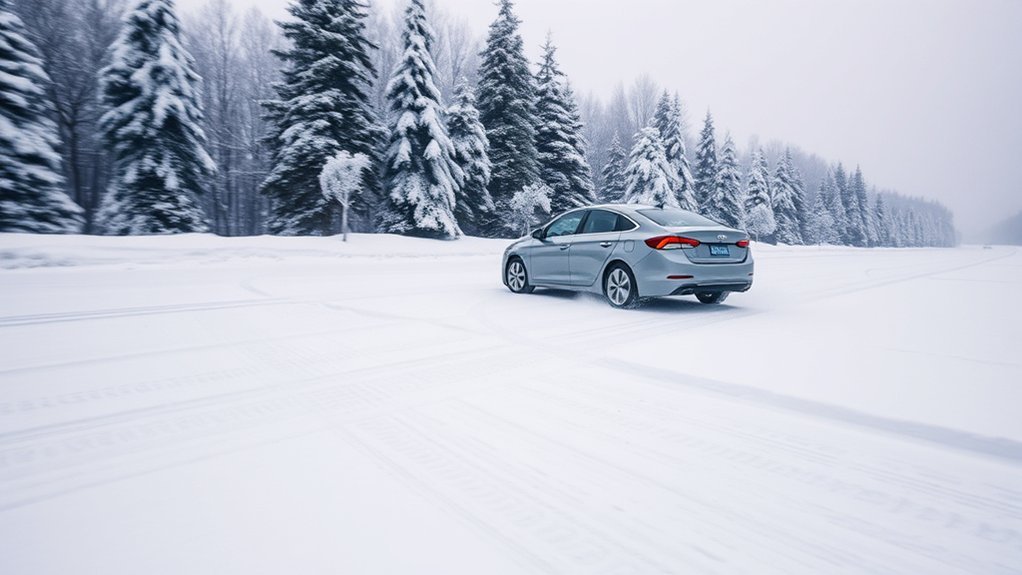
Driving a Hyundai Sonata in snow can feel much more controlled with the right set of winter tires, but tires are only one part of safe winter driving. A Sonata is usually front-wheel drive, which helps it get moving in slippery conditions, yet braking, cornering, visibility, tire pressure, and driver input still matter just as much once the road turns icy.
Quick Answer
A Hyundai Sonata performs far better in snow with four matching winter tires than with standard all-season tires. Winter tires improve grip in cold weather, help the car start and stop more predictably, and give the front-wheel-drive Sonata better control on packed snow, slush, and ice.
Key Takeaways
- Use four matching winter tires, not just two, to keep the Sonata balanced during braking and cornering.
- Winter tires are most useful when temperatures are regularly below about 45°F, or when you drive on snow, slush, freezing rain, or ice.
- Choose the correct tire size, load rating, and speed rating from the door placard or owner’s manual before buying.
- Even with winter tires, slow down and leave extra following distance because snow and ice can multiply stopping distances.
Why Winter Tires Are Essential for Your Hyundai Sonata
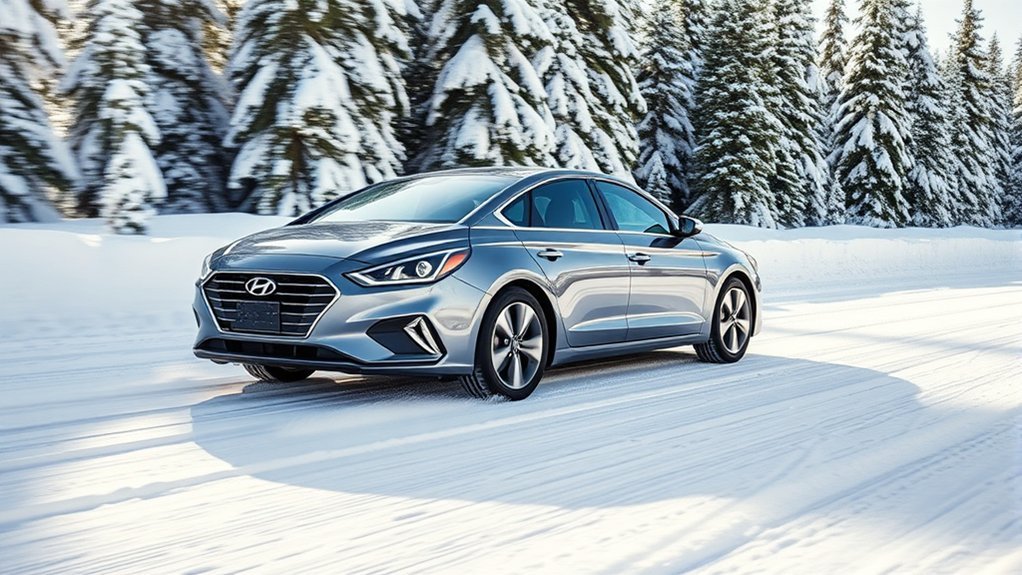
Winter tires are built for the kind of cold-road traction a Sonata needs in snow. Unlike many all-season tires, winter tires use rubber compounds and tread designs made to stay useful in cold weather. Hyundai’s own winter-care guidance recommends switching from summer or all-season tires to winter tires if you live where snow or ice accumulates, or where temperatures are regularly below 45°F.
Hyundai USA also recommends checking tread and pressure before winter. That matters because underinflated tires can reduce handling and stopping performance, and cold weather naturally lowers tire pressure.
The biggest benefit is not that winter tires make the Sonata “unstoppable.” They do not. The real benefit is more predictable grip during acceleration, braking, and turning. That predictability is what helps you avoid wheelspin at intersections, sliding through turns, or needing too much distance to stop.
Warning: Install winter tires on all four wheels. Mixing winter tires on one axle with all-season tires on the other can make the car behave unpredictably, especially during emergency braking or a quick lane change.
[Products Worth Considering]

Steelman white tire marking crayons provide high-contrast, semi-permanent marks for repairing and inspecting tires and equipment. They write on wet or dry, smooth or coarse surfaces including rubber, metal, glass, and wood, making them ideal for puncture location and damage outlining. The lead- and zinc-free crayons resist weather and fading yet wipe away when you no longer need the marks.

Monitor tire tread wear with a smart, color-coded depth gauge that shows clear condition ranges at a glance. The bar is range marked for fast, easy readings, helping you maintain safer traction and performance. Each gauge is portable with a pocket clip, and the set includes 20 units for daily use and sharing.

This roadside assistance kit helps drivers and passengers in urgent situations after an accident or breakdown, providing practical support while waiting for help. It includes a lightweight, compact tire inflator for fast inflation of standard vehicle tires, plus reinforced jumper cable protection for safer handling. Ideal for winter weather, road trips, camping, and travel, with everything stowed neatly in a trunk bag.
How Winter Tires Improve Hyundai Sonata Performance in Snow
A Hyundai Sonata with winter tires gains traction in three practical ways: the tire compound grips better in cold weather, the tread blocks bite into snow, and the siping helps create more edges for traction on slick surfaces. The result is better launch control from a stop, steadier cornering, and more confidence when braking.
Because most Sonata trims are front-wheel drive, the engine weight sits over the drive wheels. That can help the car pull itself forward in snow. However, front-wheel drive does not shorten stopping distance by itself. Once you brake, all four tire contact patches matter, which is why a full set of winter tires is so important.
On packed snow and slush, winter tires can help with:
- Less wheelspin when pulling away from a stop
- More stable braking when the ABS activates
- Better steering response during low-speed turns
- Improved traction when climbing mild grades
- More control when changing lanes through slush ridges
Still, snow tires do not cancel physics. The National Weather Service warns that stopping distances on snow and ice can increase several times compared with dry roads. Use the added grip as a safety margin, not as permission to drive faster.
The biggest winter-tire upgrade is predictability: the Sonata starts, turns, and stops more consistently, giving you more time to react when the road surface changes.
Winter vs. All-Season vs. All-Weather Tires for Snow
All-season tires are designed as a compromise for dry, wet, and mild conditions. Some can handle light snow, but they are not the best choice for frequent snow, deep slush, or icy mornings. Tire Rack’s winter tire testing concludes that dedicated winter tires are the better choice when drivers regularly face deep or frequent slush, snow, or ice.
All-weather tires sit between all-season and dedicated winter tires. Many carry the three-peak mountain snowflake symbol, also called 3PMSF, which means they meet a severe-snow traction standard. They can be a good option for mild winter areas where you see occasional snow but do not want to swap tires twice a year. For heavy snow belts, mountain roads, or frequent icy commutes, dedicated winter tires remain the stronger choice.
| Feature | Winter Tires | All-Season Tires | All-Weather Tires |
|---|---|---|---|
| Best use | Cold, snow, slush, ice | Mild weather and occasional light snow | Year-round use with better snow capability |
| Cold-weather compound | Designed for low temperatures | Can stiffen in cold weather | Better cold performance than many all-seasons |
| Snow grip | Best choice for severe winter conditions | Limited in packed snow and ice | Good for moderate winter driving |
| Warm-weather use | Remove when winter ends | Designed for year-round mild use | Designed for year-round use |
[Products Worth Considering]

This car emergency kit keeps essential roadside tools organized in a durable, portable bag so you can respond quickly during common driving emergencies. It includes battery jumper cables, a bright LED headlight, first aid supplies, a tire pressure gauge, and safety essentials like gloves and an emergency poncho. Designed for trunk or storage use, it helps you be prepared for dead batteries, minor malfunctions, and unexpected roadside issues.

Keep your tires properly inflated with this analog VONDIOR tire pressure gauge, designed for fast, easy readings without batteries. The swiveling, two-axis hose and large glow dial help you measure at any tire angle with instant visibility. Built with a protective rubber shield, it supports durable, low-maintenance use for cars and trucks.
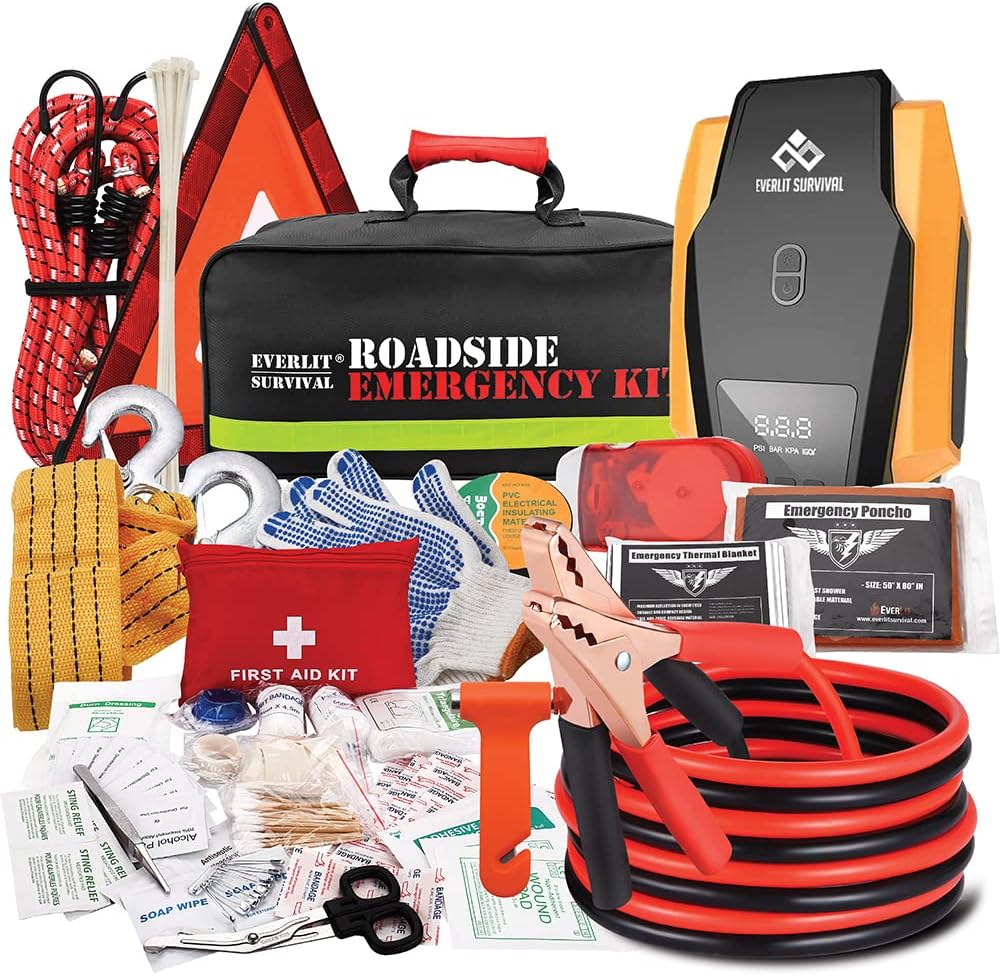
The Everlit Road Guardian emergency kit is designed for roadside breakdowns, combining essential safety gear and roadside tools in one compact bag. It includes a digital 12V auto tire inflator with preset and auto shutoff, plus 12-foot 8-gauge jumper cables to get you moving again. You also get a full 108-piece first aid kit, reflective warning tools, safety gloves, and emergency convenience items for safer travel.
Real-World Feedback on Sonata’s Snow Performance
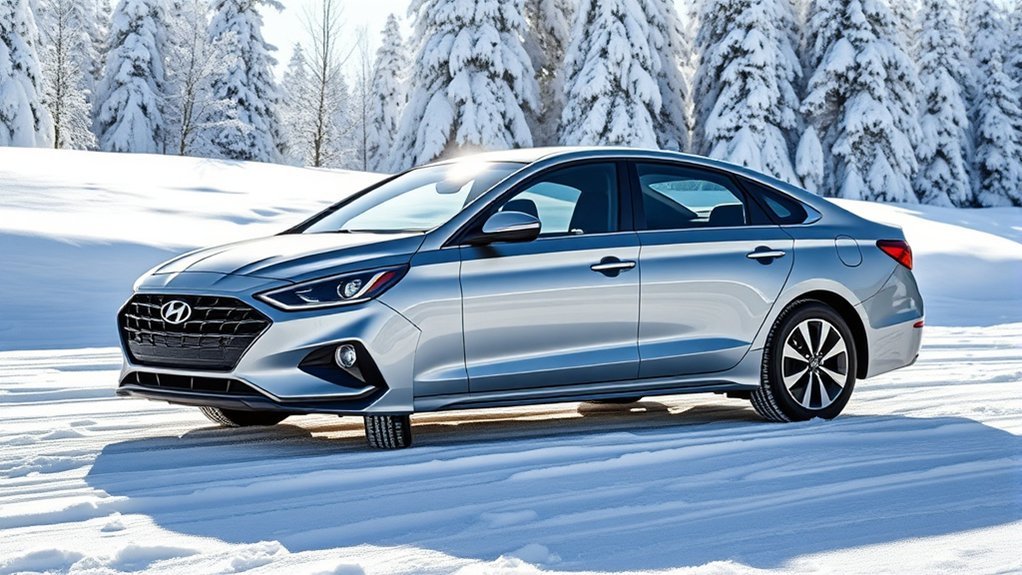
Sonata drivers often report the same pattern: the car is manageable in winter when the tires are right, but stock or worn all-season tires can struggle on inclines, polished intersections, and deep unplowed snow. That is normal for a midsize front-wheel-drive sedan. The car has enough weight and stability for winter commuting, but it does not have the ground clearance of an SUV or the traction advantage of all-wheel drive.
What the Sonata Does Well in Snow
- Pulling away from a stop: Front-wheel drive helps place weight over the drive wheels.
- Predictable commuting: With four winter tires, the Sonata can feel calm on plowed roads and packed snow.
- Braking stability: ABS and stability control work better when the tires have enough grip to work with.
- Fuel economy: Compared with larger AWD vehicles, the Sonata can still be efficient in winter conditions.
Where the Sonata Still Needs Care
- Deep snow: Ground clearance is limited, so avoid unplowed roads where snow can pack under the car.
- Steep icy hills: Winter tires help, but ice can still overwhelm available traction.
- Slush ridges: Cross slush gradually and avoid sudden steering inputs.
- Black ice: No tire can make black ice safe at normal speeds.
Note: Before driving, clear snow and slush from the windshield, windows, mirrors, lights, grille area, cameras, and driver-assistance sensors. Blocked sensors or lights can reduce visibility and may limit safety-feature performance.
What Are the Best Winter Tires for Your Sonata?
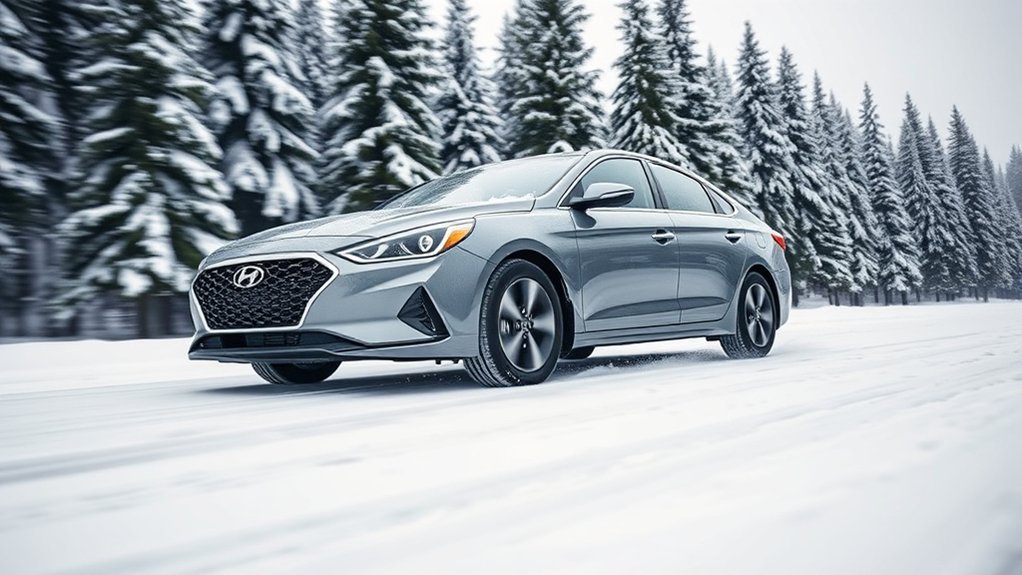
The best winter tire for your Sonata depends on your climate, tire size, budget, and how much ice you see. Before choosing a brand, check the tire placard on the driver’s door jamb or your owner’s manual for the original tire size, load index, speed rating, and recommended cold tire pressure.
[Products Worth Considering]

Black Magic Tire Wet delivers a deep wet-look shine that makes tires appear dark, rich, and freshly detailed. Its long-lasting formula helps resist rain, dust, and road grime for weeks of glossy protection, not days. Apply by spraying onto clean, dry tires—no buffing or wiping required—with a low-sling design to reduce splatter on paint and wheels.

Measure tire tread depth quickly and accurately with this LUMITECO dial gauge that reads in 1/32" increments up to 14/32". The color-coded green/yellow/red zones make it easy to judge tire wear and know when replacement is needed. A rugged, compact design with a protective pouch helps keep the gauge ready for use on cars, trucks, motorcycles, and more.
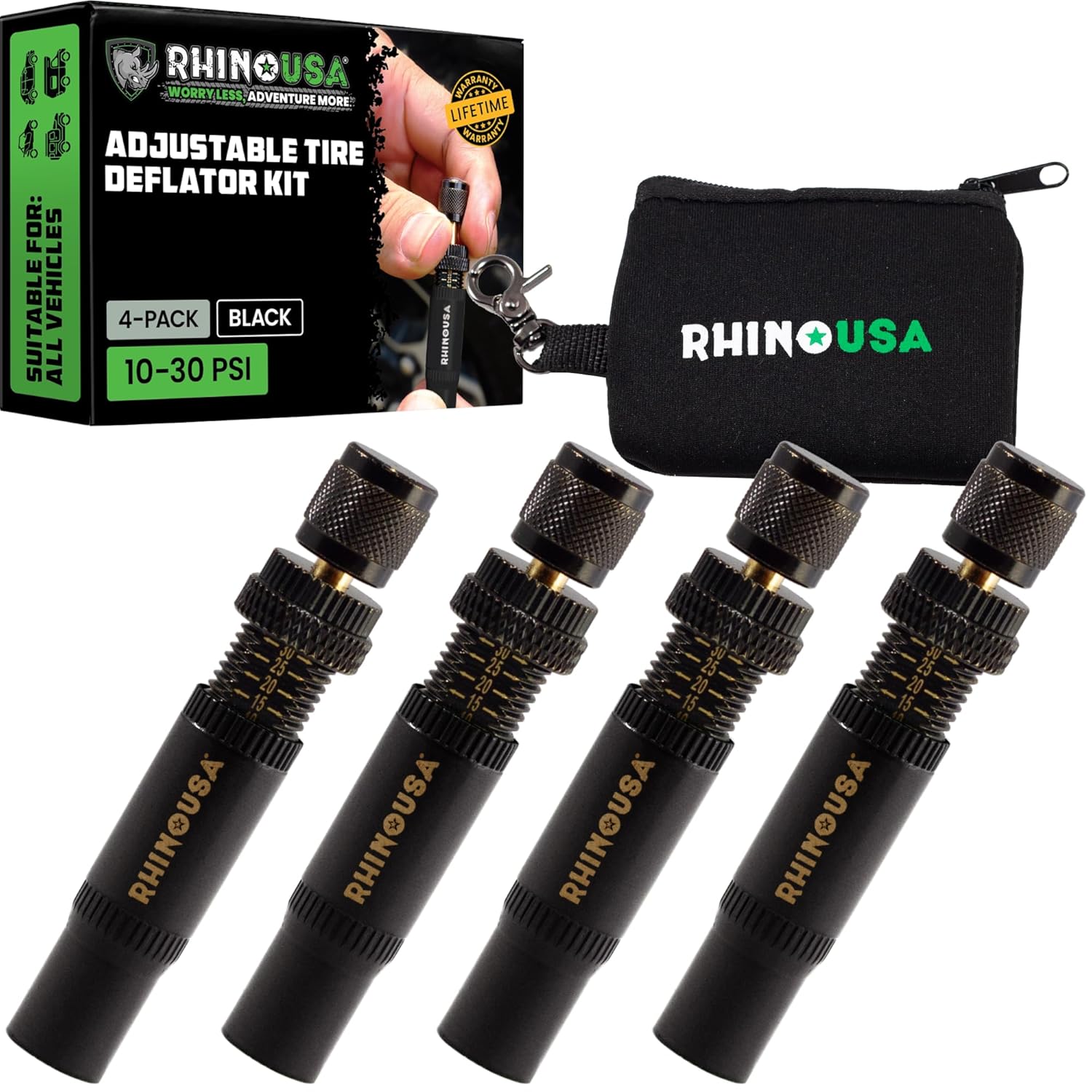
Use the Rhino USA adjustable tire deflators to air down all four tires at once by screwing one deflator onto each valve stem, letting you step away while the tires reach your preset pressure. Each deflator independently adjusts across a 10–30 PSI range with laser-etched indicators for quick setup and verification, making it ideal for beach, sand, and rocky off-road trails.
Top Winter Tire Options for a Hyundai Sonata
- Michelin X-Ice Snow+: A strong premium choice for drivers who want long winter tread life, ice grip, and balanced winter braking. Michelin lists it for sedans, hybrids, EVs, SUVs, pickups, and crossovers, with a 45,000-mile treadwear warranty on its official product page.
- Bridgestone Blizzak IcePeak: Bridgestone’s newer flagship winter tire, launched for 2026, replacing the WS90 and DM-V2 in the lineup. It is designed for sedans, minivans, CUVs, SUVs, and trucks, with severe-snow and ice-grip certification where applicable.
- Bridgestone Blizzak WS90: Still a familiar option if available in your Sonata’s size or remaining inventory. It has a strong reputation for snow and ice traction, but check availability because the IcePeak is the newer replacement direction.
- Nokian Hakkapeliitta R5: A premium studless winter tire often favored in harsh northern climates.
- Continental VikingContact line: A strong all-around studless winter option where available in the correct Sonata fitment.
- Firestone Winterforce line: A value-oriented winter choice that can make sense for budget-focused drivers who still need dedicated snow traction.
How to Pick the Right Size and Rating
Do not buy winter tires by model name alone. Match the tire size and load capacity required for your Sonata. If you use a separate winter wheel package, a slightly smaller wheel with a taller tire sidewall may be available for some trims, but the total outside diameter and load rating must remain appropriate.
Pro Tip: A dedicated winter wheel-and-tire set can save money over time because you avoid mounting and balancing the same tires twice each year. It also helps protect larger factory wheels from winter potholes and road salt.
Look for the 3PMSF Symbol
For snow use, look for tires with the three-peak mountain snowflake symbol. This mark means the tire meets a severe-snow traction standard. It is more meaningful than a basic M+S marking, although it does not guarantee the same ice or deep-snow performance as every dedicated winter tire.
Driving Techniques for Safe Winter Travel
Winter tires help your Sonata grip, but smooth driving is what keeps that grip from being wasted. On snow and ice, every input should be slower and gentler than it would be on dry pavement.
- Accelerate gently: Press the pedal lightly to avoid wheelspin.
- Brake early: Leave more room than you think you need.
- Steer smoothly: Quick steering can break traction even with good tires.
- Keep momentum on hills: Avoid stopping halfway up a snowy incline when it is safe to continue.
- Use lower-speed control when needed: If your Sonata has manual shift mode, a lower gear can help manage speed on descents, but do not rely on engine braking alone on ice.
- Respect ABS: If ABS activates, keep firm, steady pressure on the brake pedal and steer where you want the car to go.
The National Highway Traffic Safety Administration recommends slowing down, increasing following distance, and preparing both the driver and vehicle for snow, sleet, and ice.
Addressing Common Winter Driving Challenges
Even a Sonata with excellent winter tires can run into trouble if the road is icy, the snow is deep, or the tires are poorly maintained. Here is how to handle the most common winter problems.
Wheelspin at Intersections
Start slowly, avoid sudden throttle, and let traction control work. If the wheels spin, ease off the accelerator instead of pressing harder.
Sliding During Braking
Look where you want to go and apply steady pressure if your Sonata has ABS. Do not pump ABS brakes. Increase following distance so the system has room to work.
Deep Snow or Getting Stuck
Clear snow from around the tires, straighten the steering wheel, and use gentle throttle. If you carry traction aid such as sand or kitty litter, place it ahead of the drive tires. Do not spin the tires aggressively, because that can dig the car deeper and overheat components.
Tire Chains or Snow Socks
Some winter roads require chains or approved traction devices. Check your exact Sonata owner’s manual before installing chains or snow socks because clearance can vary by model year, trim, and tire size. Improper chains can damage tires, wheels, brake components, or bodywork.
Maintenance Tips for Winter Tires and Your Sonata
Winter tires work best when they are maintained like safety equipment, not just seasonal accessories. Use this checklist before and during winter:
- Check pressure when cold: Measure pressure before driving or after the car has been parked for several hours.
- Use the vehicle recommendation: Follow the tire placard and owner’s manual. Do not use the maximum PSI printed on the tire sidewall as your normal pressure.
- Inspect tread depth: Winter performance drops as tread wears down, especially in slush and deep snow.
- Rotate regularly: Rotate according to your owner’s manual or tire shop recommendation to even out wear.
- Inspect for damage: Look for cuts, cracks, bulges, punctures, and uneven wear.
- Remove them after winter: Winter tires wear faster in warm weather, so switch back when winter conditions are over.
- Store properly: Keep off-season tires in a cool, dry, dark place away from ozone sources, chemicals, and direct sunlight.
NHTSA advises drivers to inspect tires at least monthly and before long trips, including pressure, tread, sidewalls, cuts, punctures, bulges, scrapes, cracks, and bumps.
Get Your Sonata Ready for Winter
Before the first snowstorm, prepare the whole car, not just the tires. A winter-ready Sonata should have good visibility, a strong battery, full washer fluid, healthy wipers, correct coolant, and emergency supplies.
- Install four matching winter tires before snow and ice become routine.
- Check tire pressure after the first major temperature drop.
- Top off winter-rated windshield washer fluid.
- Replace worn wiper blades.
- Test the battery if it is older or slow to crank.
- Keep an ice scraper, small shovel, gloves, blanket, flashlight, phone charger, jumper cables, and traction aid in the trunk.
- Clear all snow and ice from the roof, hood, trunk, lights, mirrors, glass, and sensors before driving.
These steps make winter driving less stressful and help your winter tires do their job. The better your visibility, tire condition, and driving habits, the more stable your Sonata will feel in snow.
Frequently Asked Questions
Is a Hyundai Sonata good in snow with winter tires?
Yes, a Hyundai Sonata can be good in snow with four matching winter tires, especially on plowed roads, packed snow, and cold wet pavement. It is still a midsize sedan with limited ground clearance, so deep unplowed snow and steep icy hills require extra caution.
Can I use all-season tires on my Sonata in light snow?
You can use all-season tires in occasional light snow if they have good tread and the roads are mostly plowed. For regular snow, slush, freezing rain, or icy mornings, winter tires or high-quality all-weather tires are safer choices.
Do I need four winter tires or just two?
Use four winter tires. Installing only two can create uneven grip between the front and rear of the car, which can make the Sonata harder to control during braking, cornering, or emergency maneuvers.
What tire pressure should I use for winter tires?
Use the cold tire pressure listed on your Sonata’s tire placard or in the owner’s manual unless your tire dealer or manual gives model-specific winter guidance. Check pressure when the tires are cold, and do not inflate based on the maximum PSI printed on the tire sidewall.
How long do winter tires last on a Hyundai Sonata?
Many winter tires last several seasons, but lifespan depends on mileage, alignment, rotation habits, storage, tire compound, and how often they are driven on warm pavement. Replace them when tread depth is too low for winter use, when they are damaged, or when age-related cracking appears.
Are tire chains safe for a Hyundai Sonata?
They may be allowed on some Sonata tire sizes, but you must check the exact owner’s manual for your model year and trim before using chains or snow socks. Incorrect traction devices can damage the car or reduce control.
What are good winter tire brands for a Sonata?
Good options often include Michelin X-Ice Snow+, Bridgestone Blizzak IcePeak, Bridgestone Blizzak WS90 where still available, Nokian Hakkapeliitta R5, Continental VikingContact options, and Firestone Winterforce models. Always confirm the correct size, load rating, and fitment before buying.
Conclusion
A Hyundai Sonata can handle winter commuting well when it has the right tires and a careful driver behind the wheel. Four matching winter tires give the Sonata better grip in cold weather, more stable braking, and more predictable steering on snow and slush. Pair them with proper tire pressure, smooth driving inputs, extra following distance, and a full winter-prep checklist, and your Sonata will be far better prepared for snowy roads.
Sources
- NHTSA Winter Weather Driving Tips — winter driving, tire pressure, tire inspection, and vehicle-preparation guidance.
- Hyundai USA Winter Driving and Maintenance Tips — Hyundai-specific recommendation to inspect tires and use winter tires in snow, ice, or regular sub-45°F conditions.
- Tire Rack All-Season vs. Winter Tire Test — comparison support for winter tires in frequent snow, slush, and ice.
- National Weather Service Winter Driving Safety — stopping-distance and winter-road safety guidance.
- Michelin X-Ice Snow+ Official Product Page — current Michelin winter tire features and warranty information.
- Bridgestone Blizzak IcePeak Launch Announcement — current Bridgestone winter tire lineup update and IcePeak launch details.