
What Does W Mean on a Tire? Load, Speed & Rating Guide
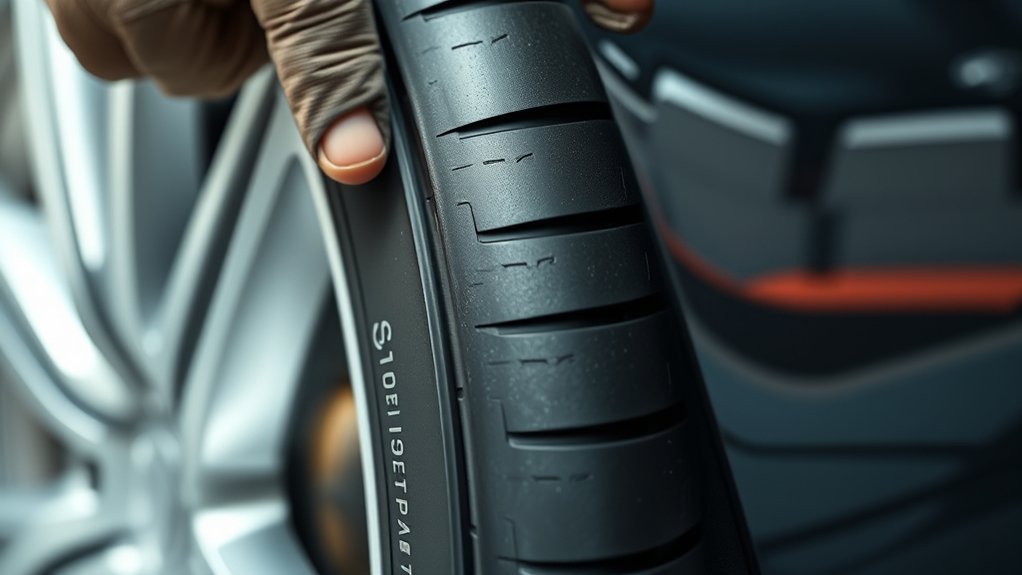
A W on your tire means the speed rating allows sustained driving up to 168 mph (270 km/h). You’ll find it at the end of the sidewall code, after the load index, such as 82W. Match this rating to your vehicle maker’s specs, because load and speed capability affect handling, heat buildup, and stability. If you mix ratings, the lowest one governs. Understanding the rest of the code can help you choose correctly.
Key Takeaways
- W on a tire means it has a speed rating of 168 mph (270 km/h), suitable for high-performance vehicles.
- The speed rating appears on the sidewall after the load index, such as 82W, showing the tire’s maximum safe speed.
- A tire’s load index and speed rating must match or exceed the vehicle manufacturer’s specifications for safe performance.
- If you mix tire speed ratings, the lowest-rated tire limits the whole set, which can affect handling and braking.
- Check the sidewall, driver’s door jamb, or owner’s manual for the correct tire size, load, and speed rating.
What Does W Mean on a Tire?
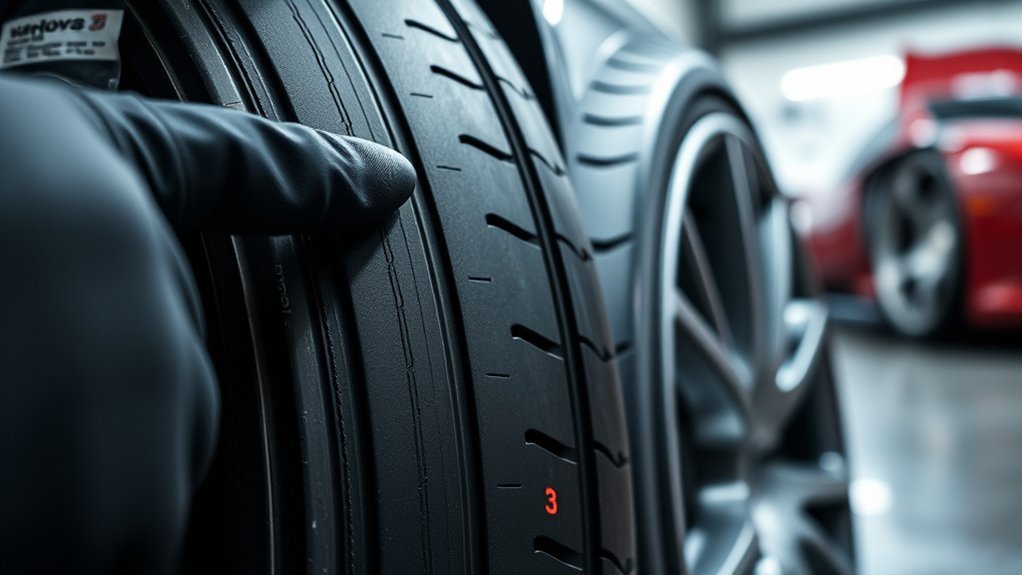
The “W” on a tire means the tire has a speed rating of up to 168 mph (270 km/h), which makes it suitable for high-performance sports and competition vehicles. You see this W speed rating in the tire speed ratings chart as a step above H and V, so your maximum speed margin is higher. Tire manufacturers place this mark on the tire’s sidewall after controlled testing confirms the casing can sustain load and heat at elevated velocity without structural failure. You’ll often find W-rated tires on sports cars, summer fitments, and other performance vehicles where handling and responsiveness matter. If you mix W-rated tires with lower ratings, the system defaults to the weakest tire, reducing safe maximum speed. You should treat the rating as a technical limit, not a suggestion. It gives you disciplined, liberated control when you choose tires that match your machine. Additionally, tire performance rating is crucial for ensuring safety and optimal handling in high-speed situations.
How Tire Speed Ratings Work
Speed ratings work as a standardized limit system that tells you how fast a tire can safely sustain speed under controlled conditions. You’ll find the rating on the sidewall, usually after the load index in a code like P205/60R16 82W. That W is part of the tire speed rating system, and it marks the tire’s maximum speed capability, verified through laboratory tests that measure structural integrity, heat resistance, and stability. The system began in Europe in the 1960s to match advancing vehicle performance. If you mix tires with different ratings, the lowest rating governs the safe ceiling for the vehicle, so you’re not truly free if one weak tire constrains the set. Choosing matched, properly rated tires supports proper handling and predictable control, especially when you rely on W-rated tires for demanding driving. Additionally, understanding UTQG ratings can guide you in selecting tires that offer a balance of performance and durability.
How Fast Is a W-Rated Tire?
So, how fast is a W-rated tire? You’re looking at a maximum speed of 168 mph (270 km/h), which is why W-rated tires often suit high-performance vehicles. This speed rating appears on summer and competition tires engineered for enhanced handling at higher velocities, not for ordinary commuting. The W designation tells you the tire has passed tested speeds in controlled laboratory conditions, with proper inflation, to verify durability and stability. You should match or exceed the vehicle manufacturer’s recommended speed rating when you select tires, because that choice protects both safety and performance. But don’t confuse capability with permission: legal speed limits still govern how fast you may drive on public roads. In practice, the W rating gives you headroom, precision, and confidence, while you remain responsible for using that capability within lawful, controlled limits. Additionally, it’s crucial to consider tire performance in rain and snow when choosing a tire that meets your driving needs.
Where to Find Your Tire Rating
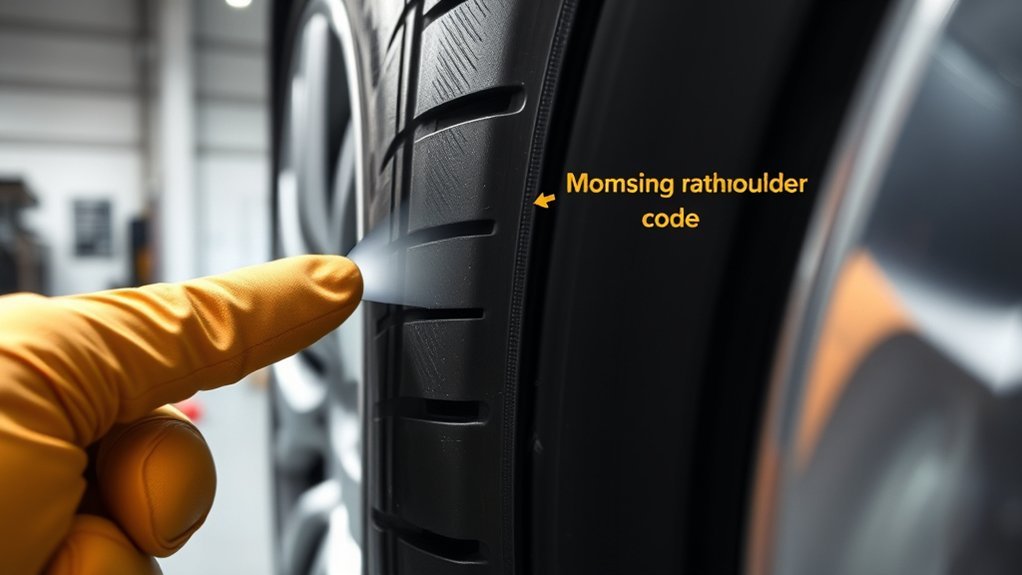
You can find your tire rating on the sidewall code, where the last letter after the load index identifies the speed rating, such as the “W” in P205/60R16 82W. Your driver’s side door jamb may also list the recommended tire size and speed rating on a placard, and your owner’s manual usually provides the same specifications. Check all three sources so you can verify that your tires meet or exceed the manufacturer’s required rating. Additionally, understanding the UTQG rating can help you gauge the expected performance and durability of your tires.
Sidewall Code Location
To find the tire rating, inspect the sidewall for the tire size code, where the final letter identifies the speed rating; for example, in “P205/60R16 82W,” the “W” is the last item and indicates the tire’s maximum safe operating speed. On the sidewall of your tire, the code pairs size, load index, and rating. That structure lets you verify W-rated tires with precision and move with confidence.
| Mark | Meaning | Effect |
|---|---|---|
| P205/60R16 | tire size | fit |
| 82 | load index | support |
| W | speed rating | release |
Use this tire rating to match the vehicle manufacturer’s guidance in your manual. If you read the code carefully, you reclaim control, avoid mismatch, and confirm the maximum speed your tire can sustain safely.
Door Jamb Placard
On the driver’s side door jamb, a placard gives you the factory tire specifications in one glance: recommended tire size, load index, speed rating, and inflation pressure. You can use this driver’s side door label to verify Load Index and Speed data before you buy replacements. It tells you the recommended tire setup, and its pressure figures support proper tire inflation for stable handling. Match the tires speed rating to the maximum speed the tire can sustain, then compare it with a speed rating chart if you need a quick decode. Check the placard before every swap so you can find the right tires, stay within manufacturer limits, and keep your vehicle compliant with safety standards. That’s how you protect performance and autonomy.
Owner’s Manual Details
If the door-jamb placard gives you the factory baseline, the owner’s manual confirms the manufacturer’s recommended tire speed rating for your vehicle. You can verify the W rating by checking tire specifications against the load index and sidewall markings. The manual often lists approved sizes, speed symbols, and proper inflation targets, so you’re not guessing—you’re aligning with manufacturer’s recommendations.
| Check | What you confirm |
|---|---|
| owner’s manual | tire speed rating |
| sidewall | W rating location |
| load index | rating sequence |
| tire specifications | approved fitment |
| proper inflation | operating safety |
Use the manual first, then inspect your current tires’ sidewall to match the code directly. That method keeps you informed and in control, with no dependence on assumptions or outdated advice.
Can You Mix Different Tire Ratings?
Mixing tires with different speed ratings isn’t recommended, because the lowest-rated tire sets the vehicle’s maximum safe speed. If you mix a W-rated tire on the front with an L-rated tire on the rear, your vehicle is still limited to 75 mph. That mismatch can alter handling, stability, and braking response, which directly affects safety. You should treat the tire speed rating as a system constraint, not an isolated spec. For liberated, informed driving, keep all four tires matched or at least equal to the original equipment requirements. Different ratings create uneven dynamic behavior under load, cornering, and heat. Even if legal speed limits are lower than the tires’ ratings, you still need uniform performance to preserve control and avoid legal or mechanical risk. The precise standard is simple: don’t mix different ratings unless every tire meets or exceeds the OE specification. Additionally, understanding tire load and speed ratings is crucial for ensuring optimal performance and safety on the road.
How to Choose the Right Speed Rating
To choose the right speed rating, you need to match the tire’s capability to your vehicle manufacturer’s specification, since that rating directly affects safety, handling, and high-speed stability. Read the sidewall code and verify the tire’s designed maximum speed before you buy. A W rating means the tire can sustain 168 mph, but you only need it if your vehicle manufacturer’s recommendations call for that level or your driving demands it. For steady highway speed use, an H or V rating may be enough; for performance driving, you may need more margin. Never mix ratings casually, because the lowest speed rating limits the whole set. Keep proper inflation, since underinflation can distort performance and heat buildup. Check your owner’s manual, then confirm with a trusted tire professional. When you choose precisely, you protect control, preserve efficiency, and keep your vehicle free to perform as intended. Additionally, consider the treadwear warranty of the tire, as this can indicate its expected longevity and performance under various driving conditions.
Frequently Asked Questions
Is W or V Better for Tires?
W’s better if you need higher Tire performance, stronger Speed ratings, and sharper Handling characteristics; V works fine for most drivers. You should match Load capacity and driving conditions to your vehicle’s specs, not just chase a higher rating. W can improve responsiveness, but it may trade off Tire durability, Fuel efficiency, and Weather suitability if you don’t need it. Check the manufacturer’s recommendation, then choose the tire that liberates your drive.
What Does 94V and 94W Mean on a Tire?
94V and 94W tell you two tire ratings: 94 is the load capacity, about 1,521 pounds per tire, and V or W marks speed categories. If you’ve wondered whether W always beats V, test that theory against your driving conditions. W allows higher speed, but both must meet safety standards. For tire selection, compare tire specifications and performance indicators, then choose the rating your vehicle manufacturer recommends for liberation from guesswork.
What Is a 95W Tire?
A 95W tire carries a 95 load index, so you get about 1,521 pounds of load capacity per tire, and its W speed ratings allow up to 168 mph. You’ll improve tire performance when you keep tire pressure correct, match tread design to driving conditions, and respect temperature ratings. For safe tire maintenance, check your vehicle specs and rotate regularly.
What Does 225 50R17 98W Mean?
225 50R17 98W means you’ve got a 225 mm-wide tire, a 50% aspect ratio, a radial build, and a 17-inch rim fit. You’re understanding load ratings with 98, which supports about 1,653 pounds, and speed rating importance with W, which allows up to 168 mph. For tire specifications explained, check tire performance factors, tire pressure guidelines, seasonal tire differences, tire longevity tips, and choosing the right tire.
Conclusion
So, when you spot a W on your tire, you’re not decoding a secret race badge—you’re seeing a speed rating that signals performance capability, not an invitation to treat public roads like a test track. You should match the rating to your vehicle’s specs, driving habits, and load needs. Mix ratings only when the manufacturer allows it. In other words, choose wisely, because physics doesn’t care how confident your tire looks.

Related Articles

What Does Tire Flipping Work? Muscles, Benefits & Workout Guide
Strong tire flips hammer your entire body, but which muscles and benefits matter most?
Read More
What Muscles Does Tire Flipping Work? Full Body Breakdown
Just how much of your body does a tire flip really challenge, and which muscles do the heavy lifting?
Read More
What Does THE Z Mean on a Tire? Load, Speed & Rating Guide
Baffled by a tire’s Z marking, load, and speed rating? Discover what it really means and why W and Y might change everything.
Read More