
How Does a Slashed Tire Look? Signs vs. Blowout vs. Normal Flat
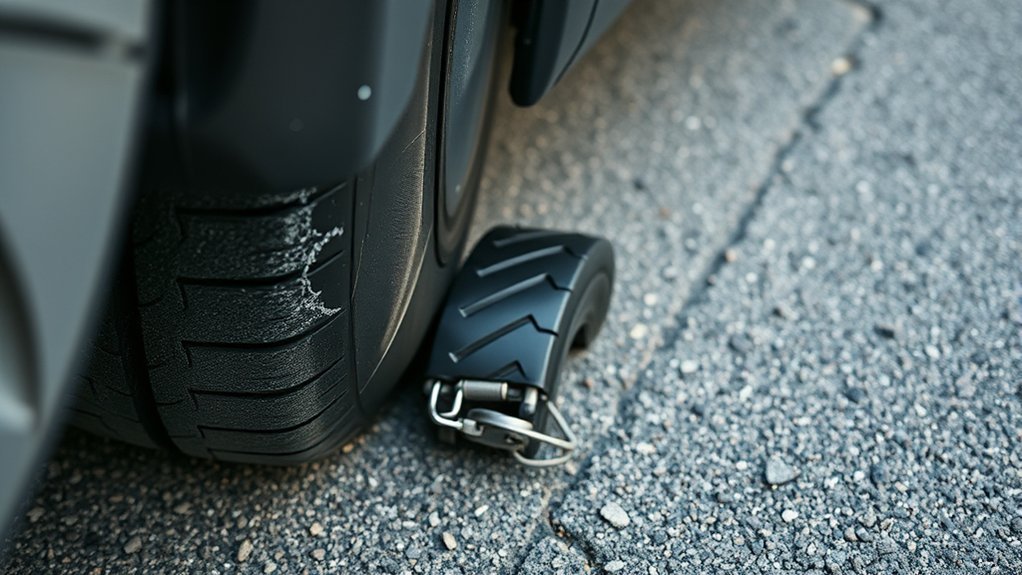
A slashed tire usually has a clean, straight cut in the sidewall or tread, with smooth edges and sometimes exposed cords or rubber fibers. You may hear a loud pop, then see rapid air loss within seconds. A blowout looks like a sudden rupture without a neat cut, while a normal flat deflates slowly from a puncture. If you spot matching cuts or sidewall damage, you’re likely dealing with vandalism, and more details can help you confirm it.
Key Takeaways
- A slashed tire usually has clean, straight sidewall cuts or gashes with smooth, deliberate edges.
- Exposed cords or frayed rubber inside the cut indicate serious structural damage and immediate replacement.
- A blowout typically shows sudden rupture or torn rubber, but no neat cut marks.
- A normal flat usually deflates slowly from a puncture in the tread, not a sharp sidewall slash.
- Rapid air loss, a loud pop, or multiple matching cuts on different tires can suggest vandalism.
What a Slashed Tire Looks Like
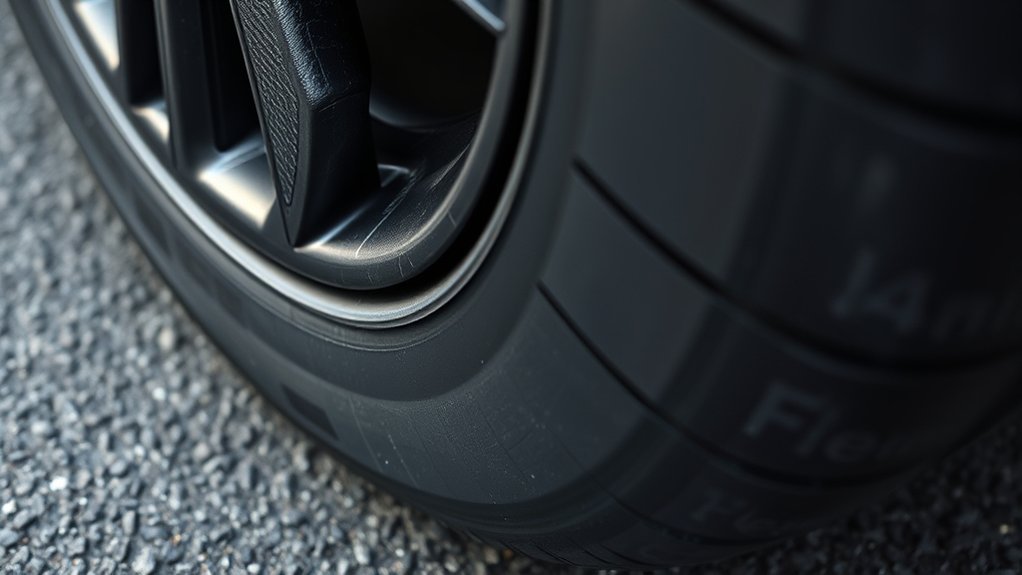
A slashed tire usually shows clean, straight cuts or gashes, most often on the sidewall, rather than the small round hole you’d expect from a puncture. When you inspect slashed tires, look for elongated openings with smooth, deliberate edges; they don’t appear frayed from normal wear. The tire may lose air quickly, sometimes in seconds, because the cut lets pressure escape fast. If the slash is deep, you might see exposed cords, which means the casing’s integrity is compromised and the tire needs immediate replacement. You’ll often notice damage on more than one tire if someone intentionally attacked your vehicle. Check the ground and nearby area for sharp objects, and look for other signs of vandalism around the car. These clues help you identify intentional harm, document it clearly, and take control of the situation without delay. Additionally, consider the importance of tire maintenance to ensure your vehicle remains safe and reliable.
How a Slashed Tire Differs From a Blowout or Flat
When you compare a slashed tire with a blowout or ordinary flat, the damage pattern tells you a lot: a slash usually leaves clean, straight cuts or gashes in the sidewall, while a blowout typically causes a sudden rupture without visible cut marks. With a slashed tire look, you’ll often see elongated openings, exposed cords, or rubber fibers, and the tire may drop pressure in seconds. A normal flat behaves differently: it usually deflates slowly after a small puncture, like a nail hole, so you can often trace a more limited entry point. By contrast, a blowout can leave the tire badly deformed yet still lacking obvious slicing. If you spot multiple slashed tires, treat that as strong evidence of vandalism rather than wear or road damage. To ensure tire safety, consider treadwear ratings as they indicate potential durability and longevity. You deserve clear facts, because fast identification helps you act, document the scene, and regain control without guessing.
What Clean Sidewall Cuts Mean
Clean sidewall cuts usually look straight, smooth, and deliberate, which points to intentional damage rather than ordinary road wear or debris. When you spot clean sidewall cuts, treat them as a structural failure, not a minor leak. The sidewall carries load and flex, so even a neat slash can make the tire unsafe and unrepairable. You’ll often lose air fast, sometimes in seconds, and continued driving can damage the rim. Additionally, it’s crucial to remember that run-flat tires, like Bridgestone DriveGuard, can provide peace of mind but still require immediate replacement if damaged.
Clean sidewall cuts are structural failures—straight, smooth slashes can drain air fast and make the tire unsafe.
- Check for a smooth, linear slice
- Compare it with irregular puncture marks
- Note any rapid pressure loss
- Inspect the wheel for rim contact
- Replace the tire immediately
Don’t patch or gamble on clean sidewall cuts. If you need mobility, swap in a spare or call for service. Acting quickly protects your vehicle and keeps you in control.
What Exposed Cords and Fraying Mean
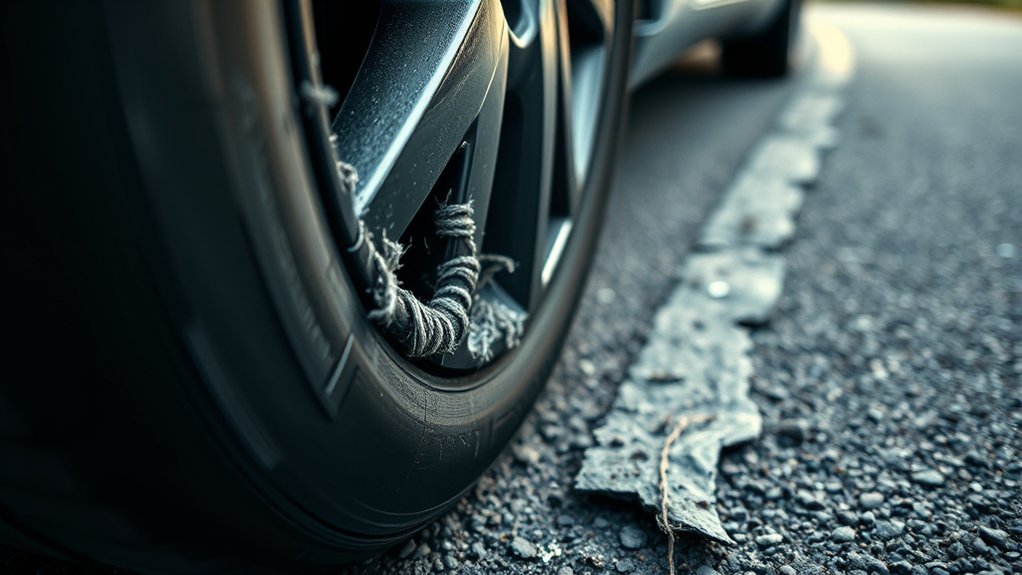
If you can see exposed tire cords, you’re looking at severe structural damage that usually points to slashing, not normal wear. Fraying along the sidewall means the rubber’s breaking down, which raises the risk of blowouts and sudden failure. You shouldn’t drive on a tire with visible cords; replace it immediately. Additionally, tires with good tread life significantly reduce the likelihood of such damage occurring.
Exposed Cords Warning
Exposed cords are a serious warning sign that your tire’s protective outer layer has been breached, usually by severe wear or a slash, leaving the tire structurally compromised. When you see exposed cords, you’re looking at a tire that’s no longer safe for service. Act immediately and replace it; continued driving can worsen damage and raise crash risk.
- Inspect the tire sidewall and tread edge.
- Look for visible cords or missing rubber.
- Check for cuts that reach the carcass.
- Replace the tire without delay.
- Reinspect all tires regularly.
A quick inspection helps you catch exposed cords early and keeps you moving with control, safety, and independence.
Fraying Sidewall Damage
Fraying on the sidewall means the tire’s outer rubber is wearing away and the structure beneath may already be compromised. You’re seeing fraying sidewall damage when the rubber fibers look fuzzy, split, or peeled, often after rough roads, low pressure, or a sharp impact. That wear isn’t cosmetic; it signals weakening cords that can’t hold load safely. If cords show through, the tire’s integrity has dropped sharply, and a sudden failure becomes more likely. You can’t restore sidewall strength with a patch or plug because the damage is structural. Inspect your tires often, especially after impacts or inflation loss, so you can spot fraying early and keep your vehicle under your control.
Replace Tire Immediately
Treat exposed cords or fraying as an immediate replacement issue, not a repair job. You need to replace the tire now, because the carcass has lost structural integrity and can fail without warning. A slashed tire often deflates fast, pulling cord bundles into view and leaving you with almost no safe margin.
- Exposed cords mean the belt package is compromised.
- Frayed edges signal tread or sidewall separation.
- Visible cuts can’t be patched safely.
- Continued driving raises blowout risk.
- Reduced traction undermines control and stability.
Don’t gamble on temporary fixes; they won’t restore strength. If you see cords, cuts, or fraying, replace the tire and stop driving it. That choice protects your freedom to move confidently, not limping on a hazard.
Signs Your Tire Was Slashed
You can spot a slashed tire by clean, straight cut marks rather than the irregular damage you’d expect from wear or a typical puncture. These cuts often appear on the sidewall, where they weaken the tire’s structure and indicate intentional damage. If you see this pattern, you’ll need to replace the tire immediately, since repairs aren’t safe or effective.
Clean Cut Marks
Clean cut marks are one of the clearest signs that a tire was slashed, because the damage usually appears as a straight, smooth-edged cut rather than a jagged tear or small puncture. You can inspect the slashed tire quickly and decisively:
- Look for clean cut marks with even edges.
- Check the outer sidewall or rim area.
- See if the tire went flat within seconds.
- Note any exposed tire cords.
- Treat the tire as unsafe and replace it.
Unlike a normal puncture, this damage opens a large path for air loss, so the tire often looks completely flat. If you spot these signs, don’t keep driving. You need a full replacement, not a repair, and that helps you reclaim control fast.
Sidewall Damage Clues
Sidewall damage is a strong indicator that a tire was slashed when you see clean, straight cuts or gashes rather than the uneven damage caused by an ordinary puncture. If the rubber opens fast and you lose air in seconds, that isn’t a normal flat tire; it’s consistent with a sharp object used in tire slashing. Check for visible cords or exposed layers, because that means the casing’s compromised and you need immediate replacement. Look from multiple angles for matching cuts on one tire or several tires; repeated damage often points to vandalism. If you heard a loud pop during the event, treat it as supporting evidence. Document the damage, avoid driving, and contact a repair shop for next steps so you can move safely and decisively.
Common Causes of Tire Cuts and Slashes
Tire cuts and slashes usually come from one of a few identifiable causes, and the shape of the damage often points to which one is responsible. When you inspect a tire, look for clean, straight gashes on the sidewall; those often mean the tire was slashed, not simply worn out. The common causes include:
- Vandalism with a sharp tool
- Nails or screws in the tread
- Glass or metal road debris
- Curb strikes or low-pressure abrasion
- Uneven wear that weakens outer rubber
Sharp objects usually make small punctures, while slashed tires quickly show longer cuts and sudden air loss. Curbs and underinflation can scrape or tear rubber, but the marks rarely look uniform. Road debris more often leaves localized punctures than broad cuts. If you see a clean sidewall gash, treat it as intentional damage until proven otherwise, because the pattern reveals the force applied and helps you assess the tire’s condition with confidence. Additionally, tire durability ratings can provide insight into how well a tire might withstand such damage.
Can You Drive on a Slashed Tire?
No, you shouldn’t drive on a slashed tire, because it can deflate almost immediately and leave you with a sudden loss of traction and control. A slashed tire is unsafe, and even a short drive can damage the rim and worsen the cut. If you see a visible sidewall slash, treat it as irreparable and replace the tire. Additionally, driving on a damaged tire can compromise your vehicle’s overall performance, making it crucial to address the issue promptly.
| Condition | Risk | Action |
|---|---|---|
| Slashed sidewall | Rapid air loss | Don’t drive |
| Low pressure from slash | Rim damage | Stop use |
| Visible cut | Unsafe tire | Replace |
If you keep rolling, you’ll increase repair costs and raise crash risk. For your safety and autonomy, choose the least harmful path: use a spare tire if you have one, or arrange professional towing. That keeps you in control without gambling with a compromised wheel.
What to Do After Finding a Slashed Tire
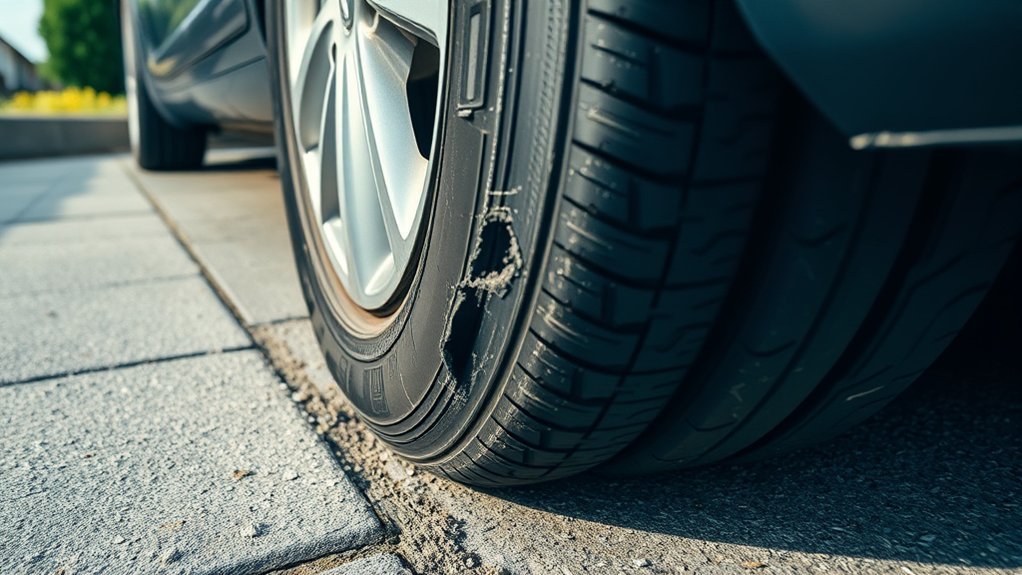
Act quickly after finding a slashed tire: don’t drive on it, because movement can worsen the cut and damage the rim. Stay still, secure the vehicle, and fix a slashed tire the right way with controlled steps.
- Photograph the tire, rim, and surroundings from multiple angles.
- File a police report with exact time, location, and visible damage.
- Call your insurer and ask whether full coverage applies.
- Arrange a tow or mobile tire service; don’t roll the vehicle.
- Replace the tire professionally before you resume travel.
Carrying a reliable spare tire kit can also help you manage emergencies effectively.
Clear documentation strengthens claims and preserves evidence if vandalism is involved. A police report can also help detect repeated incidents in your area. If you must move the car, use professional towing only. Trying to limp home can gouge the wheel, stress suspension parts, and turn a single slashed tire into a broader repair bill. You’re protecting your mobility by acting fast and using the system available to you.
How to Prevent Tire Slashing
To reduce the risk of tire slashing, start with three layers of prevention: choose well-lit, secure parking whenever possible, add visible surveillance like security cameras or motion-activated lights, and use tire locks or wheel clamps if the vehicle will sit unattended for long periods. These measures raise the cost of attack and make your car a poor target. Inspect your tires regularly for cuts, punctures, sidewall abrasion, and uneven wear so you can spot tampering early, before a tire is completely flat. If you park on the street, vary your routine and avoid leaving the vehicle in isolated spots. Build community power by supporting neighborhood watch efforts and sharing reports of suspicious activity. Clear, collective vigilance helps deter vandalism and protects everyone’s mobility. Keep records of tire condition and service dates, because documentation makes damage easier to verify and report. Additionally, selecting tires with durable treadwear ratings can enhance your vehicle’s resistance to unexpected damage.
Frequently Asked Questions
How Can You Tell if a Tire Has Been Slashed?
You can tell a tire’s been slashed by checking for clean, straight cuts in the sidewall, exposed cords, or elongated gashes that open the rubber. During Tire Inspection, look for rapid deflation, because a slash often drops pressure in seconds, not hours. You’ll usually see damage on one tire, and the cut won’t look jagged like a blowout tear. If you find this, treat it as vandalism and don’t drive it.
What Does It Look Like When Someone Slashed a Tire?
You’ll see clean, straight gashes in the sidewall, and about 90% of slashed tires deflate fast because the cut’s too large to seal. The edges often look smooth, not ragged, and you may spot exposed cords or inner layers. This Tire Damage usually appears without tread debris or a nail, and the tire can’t hold air. You can inspect it, document it, and reclaim control quickly.
What Happens if You Slash a Tire?
You’ll cause rapid air loss, damage the sidewall, and make the tire unsafe to drive on. Tire safety demands you stop immediately, move off the road, and inspect for clean cuts, exposed cords, or bent rim contact. You can’t reliably repair a slash; replacement’s the practical fix. If someone did it, document the damage, contact authorities, and protect your mobility by getting the vehicle towed.
Is Slashing One Tire a Felony?
Yes—slashing one tire can be a felony, or it can stay a misdemeanor, depending on your state and the damage. You’re cutting a rubber lifeline, and the law may see that as vandalism, criminal mischief, or malicious destruction. The Legal Consequences can include fines, restitution, jail, and a police report that supports insurance claims. If you acted with malice or repeat offenses, charges can rise fast.
Conclusion
You can read a tire like a wound map: a clean sidewall cut often signals deliberate harm, while a ragged tear or shredded tread points more toward a blowout. If you spot exposed cords, stop driving and inspect the damage right away. Don’t treat a slashed tire like a minor flat. By catching the signs early, you protect your safety, your vehicle, and your peace of mind before a hidden cut turns into a roadside failure.

Related Articles
How Does a Police Tire Grappler Work? Mechanism Explained
Grappling a fleeing vehicle with a front-mounted net sounds simple—until you see how it locks the tire and why the chase doesn’t end there.
Read More
How Do Tire Sealants Work? Types, Effectiveness & Limits
Get the facts on how tire sealants plug punctures, which types work best, and where their limits might leave you stranded.
Read More
Can You Drive on a Low Tire? Risks, Distance & Safe PSI Limit
A low tire can still move your car, but the real risk, safe PSI limits, and how far you can go may surprise you.
Read More