
What Does the Tire Light Look Like? TPMS Warning Guide
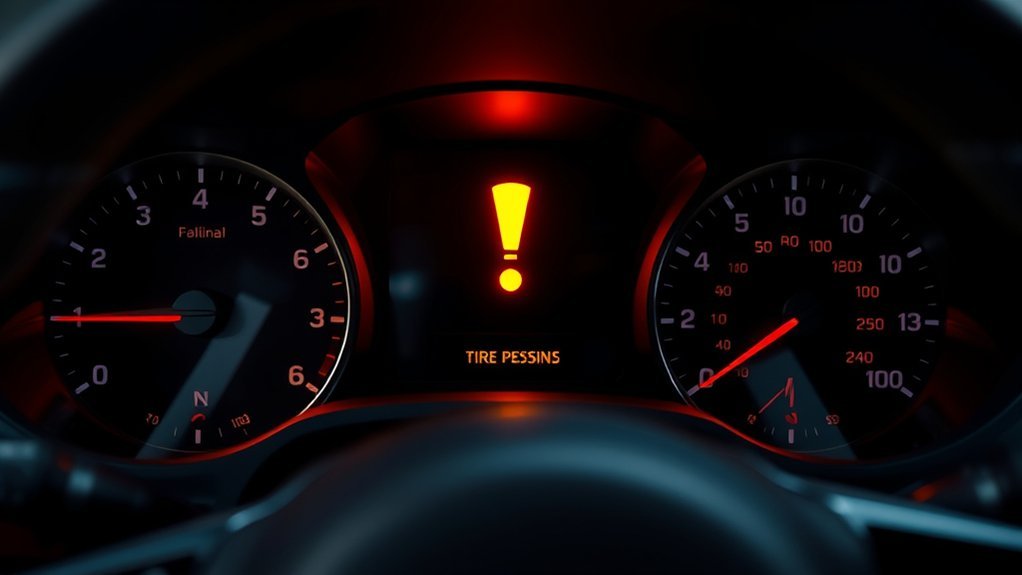
The tire light, also called the TPMS light, is usually a yellow or amber symbol shaped like a tire cross-section or horseshoe with an exclamation point inside. A steady light usually means one or more tires are significantly underinflated. A light that flashes for about a minute and then stays on usually points to a TPMS malfunction. Check your tire pressure with a gauge, use the PSI on the driver-door label or owner’s manual, and inspect the tires before you keep driving.
Quick Answer
The tire light means your vehicle has detected low tire pressure or a TPMS system problem. If it stays on, check all tires when cold and inflate them to the door-jamb PSI. If it flashes for 60 to 90 seconds and then stays on, have the TPMS diagnosed.
Key Takeaways
- The tire light usually looks like a horseshoe-shaped tire symbol with an exclamation point.
- A steady TPMS light usually means at least one tire is significantly underinflated.
- A flashing light that stays on after 60 to 90 seconds usually means a TPMS malfunction.
- Always use the PSI on the driver-door placard or owner’s manual, not the maximum PSI on the tire sidewall.
- Do not drive on a visibly flat tire, a tire with a sidewall bulge, or a tire that loses air again quickly.
At a Glance
| Time Required | 5 to 15 minutes for a pressure check; longer if you find a leak or damaged tire. |
| Difficulty | Easy for checking and adding air; moderate if a reset procedure is required. |
| Tools Needed | Tire pressure gauge, air compressor, owner’s manual, and flashlight for tire inspection. |
| Cost | Usually free to a few dollars for air; about $5 to $25 for a basic gauge; more if tire repair or TPMS service is needed. |
What the TPMS Light Means
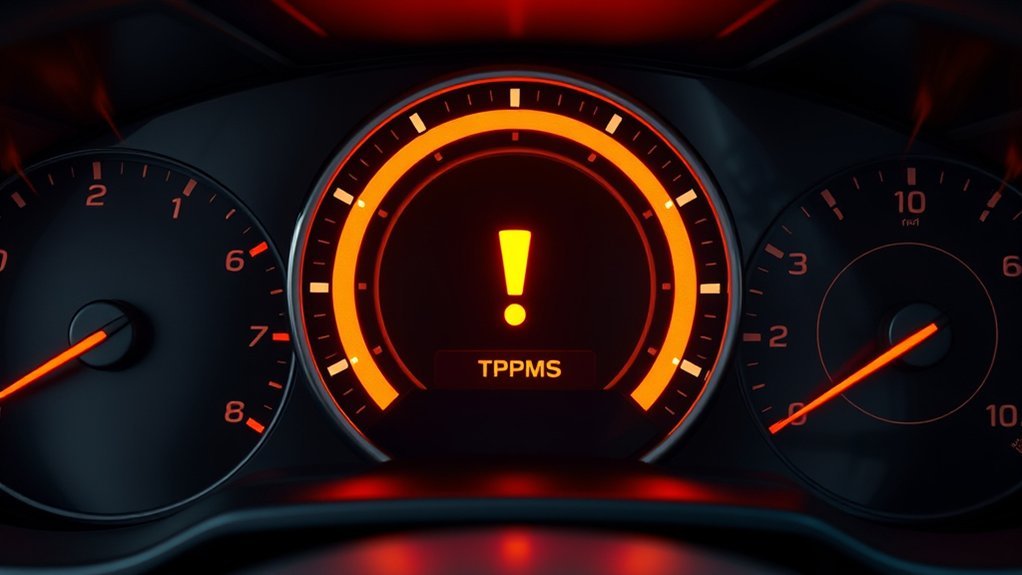
Your TPMS light tells you that your tire pressure needs attention. The symbol is commonly a tire-shaped icon with an exclamation point, although some vehicles also show individual tire pressure readings on the dashboard. The National Highway Traffic Safety Administration explains that TPMS warns when tire pressure is significantly underinflated, but it is not a replacement for regular tire checks.
On vehicles covered by 49 CFR 571.138, the system must warn when one or more tires are at or below the required low-pressure threshold, which is generally tied to 25% below the vehicle manufacturer’s recommended cold inflation pressure or the standard’s listed minimum activation pressure, whichever is higher. That means the light may not turn on for a small pressure loss, so you should still check your tires manually.
Proper tire pressure also supports strong wet grip, even tread wear, stable handling, and better fuel use.
| Light Pattern | Most Likely Meaning | What To Do |
|---|---|---|
| Steady light | One or more tires are significantly underinflated. | Check all tires cold and inflate to the door-jamb PSI. |
| Flashes for 60 to 90 seconds, then stays on | TPMS malfunction, sensor issue, or incompatible wheel/tire setup. | Check pressure first, then schedule TPMS diagnosis. |
| Brief light at startup | Normal bulb check if it turns off quickly. | No action if it goes out and pressures are correct. |
| On during cold mornings, then off later | Pressure may be near the warning threshold and rises as tires warm. | Check cold pressure and add air if needed. |
[Products Worth Considering]

EVOULTES heavy duty tire inflator with an integrated gauge delivers accurate pressure readings from 10–120 PSI, helping you inflate, deflate, and check tires in one tool. The 16.5-inch extended dual-head air chuck with swivel base reaches hard-to-access dual wheel valves on trucks and RVs. A brass trigger core and side-mounted air release valve make operation smooth, with standard 1/4" NPT threading and quick-connect compatibility for easy setup.
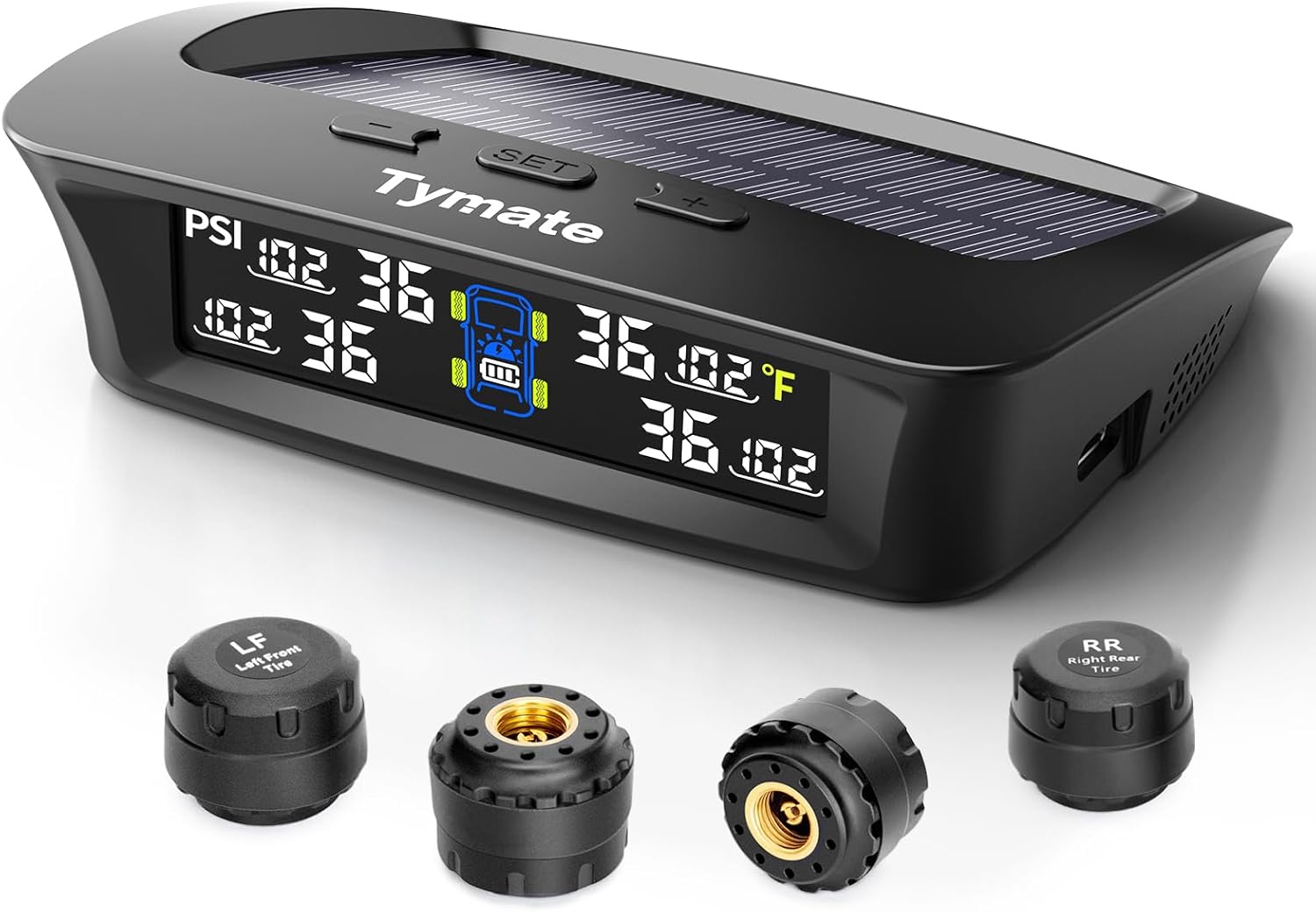
The Tymate TM3 RV TPMS delivers real-time tire pressure monitoring from 0 to 144 PSI with accurate readings and dependable wireless communication. It includes four external sensors with pre-pairing, six alarm modes for rapid leak, pressure extremes, temperature, and signal loss, plus an easy-reference setup for alert thresholds. Solar and USB-C charging help keep the display powered, while the color LCD and adaptive backlight improve visibility for safer driving and towing.

The Fanttik X10 Pro is a cordless portable tire inflator that reaches up to 150 PSI and can inflate an R15 tire in about 35 seconds for quick roadside or home top-ups. With AccuInFlate auto-stop and smart start/stop controls, it helps maintain accurate pressure and frees your hands once the target is reached. A high-visibility digital display and preset modes make it easy to set and monitor inflation for cars, motorcycles, bikes, and balls.
What Causes the TPMS Light to Come On
Your TPMS light usually comes on because one or more tires are underinflated. Air can leak slowly through the tread, valve stem, bead area, or a tiny puncture. Cold weather can also lower pressure enough to trigger the warning, especially if your tires were already close to the limit.
Low tire pressure affects handling, braking, tread wear, and hydroplaning resistance. Some vehicles with full pressure displays may also warn about abnormal high pressure, but the common TPMS warning light is mainly a low-pressure alert.
Underinflation Triggers Alert
When pressure drops far enough below the vehicle manufacturer’s recommended cold PSI, the TPMS light turns on. Underinflation makes the tire flex more than it should, which builds heat, wears the shoulders of the tread, and can reduce steering response.
Do not judge tire pressure by sight alone. Underinflated tires can look normal, especially on modern low-profile tires. Use a reliable gauge and compare the reading with the Tire and Loading Information Label on the driver’s door edge, doorjamb, or owner’s manual.
Sensor Or Pressure Faults
If the light flashes and then stays on, you may be dealing with a sensor fault, a TPMS control issue, a dead sensor battery, or a wheel/tire change that the system does not recognize. A monitored spare tire can also matter on some vehicles, but not every spare is monitored.
Sensor hardware does age. If tire pressures are correct and the warning still returns, ask a tire shop or dealer to scan the TPMS. A scan can show which sensor is not transmitting, whether the system needs relearning, or whether another fault is present.
Direct Vs Indirect TPMS
Not every TPMS works the same way. A direct TPMS uses pressure sensors in the wheels and may show individual PSI readings. An indirect TPMS uses wheel-speed and vehicle data to detect a tire that is rolling differently because of pressure loss.
This difference matters during reset. A direct system may need sensor registration after a wheel or sensor change. An indirect system often needs a reset or calibration drive after you correct all tire pressures. Always follow your owner’s manual for your exact vehicle.
What To Do When the TPMS Light Stays On
If the TPMS light stays on, treat it as a real warning. Pull over when safe, inspect the tires, and look for a visibly flat tire, sidewall bulge, exposed cord, puncture, or rapid air loss. If the tire looks unsafe, do not keep driving on it.
- Check all four tires with a gauge when the tires are cold, if possible.
- Compare each reading with the PSI listed on the driver-door placard or owner’s manual.
- Add air to any low tire with an air compressor.
- Recheck the pressure after adding air.
- Drive a short distance only after the tires look safe and are inflated correctly.
- If the light stays on, inspect for a slow leak or schedule a TPMS scan.
Warning: Do not drive on a visibly flat tire, a tire with a sidewall bulge, or a tire that loses pressure again soon after inflation. Use the spare, roadside assistance, or a tow service instead.
If your tires are worn, damaged, or repeatedly losing air, consider safe affordable tire options instead of repeatedly adding air to a failing tire.
How Temperature Changes Affect Tire Pressure
Temperature changes can move tire pressure up or down. A common rule of thumb is about 1 PSI for every 10°F change in air temperature. Cold weather lowers pressure, while warmer weather can raise it. This is why a TPMS light often appears on the first cold morning of the season.
Check pressure when the tires are cold, meaning the vehicle has not been driven for at least three hours. NHTSA recommends checking all tires, including the spare, at least once a month when cold. Correct pressure also supports optimal fuel economy.
| Temperature Change | Typical Pressure Change | Best Action |
|---|---|---|
| -10°F | About -1 PSI | Check cold pressure |
| -20°F | About -2 PSI | Refill as needed |
| -30°F | About -3 PSI | Inspect all tires |
| +10°F | About +1 PSI | Recheck pressure |
| Seasonal swing | Varies | Monitor monthly |
Pro Tip: If you add air after driving, recheck the tires later when they are cold. Warm tires can read higher than their true cold pressure.
Why the TPMS Light Blinks at Startup
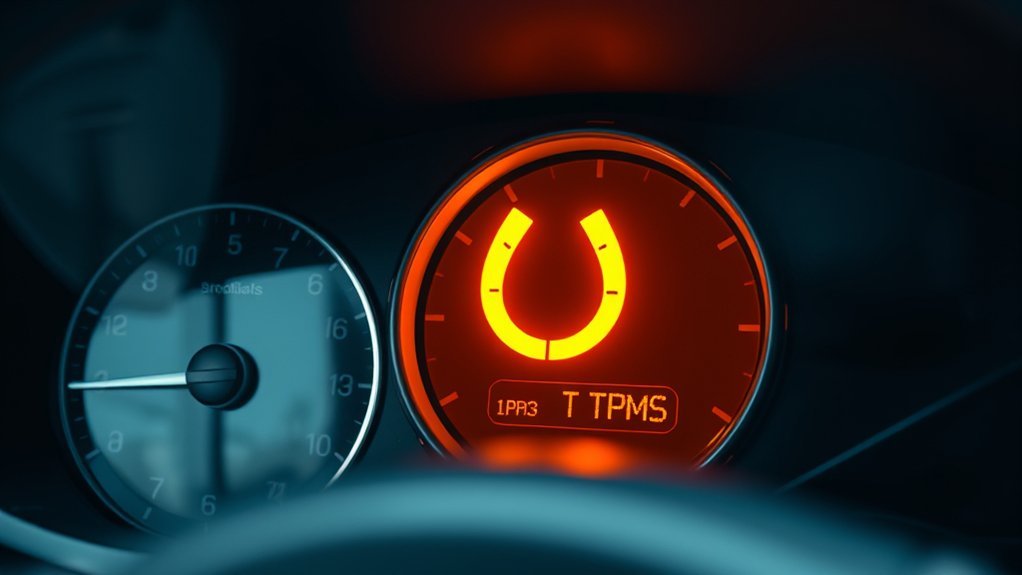
A brief light at startup can simply be a bulb check. If it turns off quickly and your tire pressures are correct, that is usually normal. A different pattern matters more: if the TPMS symbol flashes for about 60 to 90 seconds and then remains lit, the system is telling you it may not be working properly.
This can happen after a sensor battery dies, a sensor is damaged, wheels or tires are changed, or the system cannot communicate with one or more sensors. Learning how tire inflators work can help with pressure corrections, but it will not fix a failed sensor or module.
A steady TPMS light usually points to tire pressure. A flashing light that stays on usually points to the TPMS system itself.
If the blinking pattern repeats every time you start the vehicle, check tire pressure first. If pressure is correct, schedule a TPMS diagnosis.
How to Check Tire Pressure the Right Way
Use a reliable tire pressure gauge to check each tire when the tires are cold. The correct pressure is not the maximum PSI printed on the tire sidewall. It is the manufacturer’s recommended cold PSI on the driver-door label, door edge, B-pillar, glove box, fuel door, or owner’s manual, depending on the vehicle.
A good gauge is more reliable than guessing by sight. Using a reliable tire pressure gauge also helps you catch slow leaks before the TPMS light turns on.
[Products Worth Considering]

The JACO FlowPro Tire Inflator measures, inflates, and airs down tires up to 100 PSI with battery-free operation and ±2% accuracy after calibration. It features a glowing pressure dial for night visibility, a heavy-duty steel build with a hybrid hose, and a precision push-to-inflate thumb trigger. The patented Lightning Air Chuck locks on for a secure seal, and the kit includes quick-connect hardware for easy inline use with your air compressor.
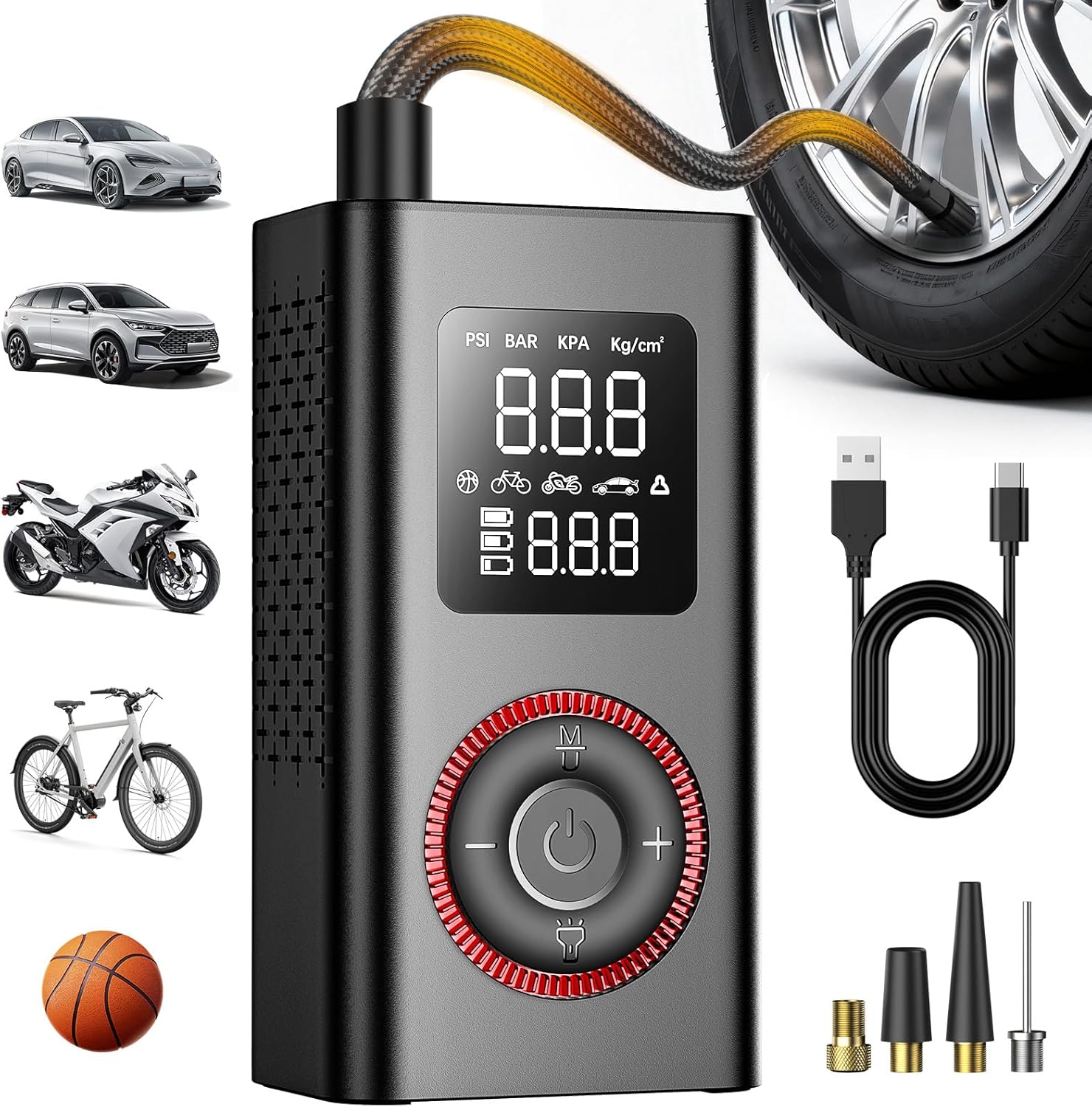
This portable tire inflator delivers fast, efficient inflation with a maximum 150 PSI rating and accurate pressure control for cars, motorcycles, bikes, and more. It features preset modes with automatic shutoff to help prevent overinflation, plus a real-time digital gauge and bright LED light for roadside use. Powered by a rechargeable 6000mAh battery with Type-C charging and a USB output, it’s also useful as an emergency power source for devices.
Check Pressure With Gauge
- Park the vehicle on a safe, level surface.
- Wait until the tires are cold, ideally before driving.
- Remove the valve cap from one tire.
- Press the gauge firmly onto the valve stem until the hissing stops.
- Read the PSI and write it down if needed.
- Repeat for all tires, including the spare if your vehicle has one.
Find Recommended PSI
Look for the Tire and Loading Information Label on the driver’s side door edge or doorjamb. If you cannot find it, check the owner’s manual. Front and rear tires may use different pressures on some vehicles, so read the label carefully.
Do not inflate to the maximum PSI printed on the tire sidewall unless your owner’s manual specifically tells you to. The sidewall number is a tire limit, not your vehicle’s normal recommended pressure.
Inspect All Tires Regularly
Check pressure at least once a month and before long trips. While you are checking pressure, inspect tread depth, sidewalls, valve stems, and the area around the tread for nails, screws, cuts, cracks, or bulges.
- Inflate low tires to the listed cold PSI.
- Release small amounts of air if a tire is above the recommended pressure.
- Recheck with the gauge after every adjustment.
- Replace valve caps to help keep dirt and moisture out.
- Visit a tire shop if one tire keeps losing pressure faster than the others.
How to Reset the TPMS Light
Only reset the TPMS light after you have corrected the tire pressures and inspected the tires. Resetting the system before fixing the pressure problem can hide a warning you still need to address.
The reset process varies by vehicle. Some vehicles clear the warning after you drive a short distance at normal speed with the tires set correctly. Others have a TPMS reset button under the steering wheel, in the glove box, or inside the dashboard settings menu. Indirect TPMS systems may need a calibration drive after you reset them.
Use the exact procedure in your owner’s manual. If the light returns, the system may need relearning, sensor replacement, or repair. Sensor compatibility also matters, especially if you installed new wheels, tires, or sensors. For some Toyota and Lexus owners, matching the correct Toyota/Lexus OEM part numbers can help prevent repeat TPMS faults.
Note: If the light flashes before staying on, a reset alone may not solve it. Check pressure first, then have the system scanned if the warning returns.
When to Visit a Tire Shop
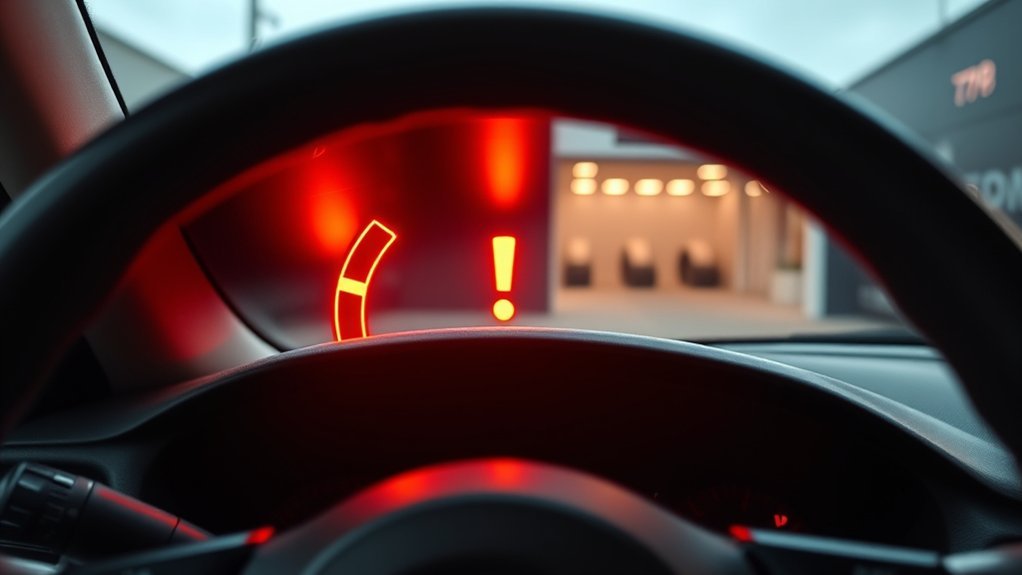
Visit a tire shop if the TPMS light stays on after you set all tires to the correct pressure, if it flashes and then stays on, or if one tire keeps losing air. A technician can check for punctures, bead leaks, valve-stem leaks, sensor faults, damaged wheels, and system relearn issues.
- Flashing light: Possible TPMS malfunction or sensor communication fault.
- Persistent steady light: Pressure may still be low, or the system may not have reset.
- One tire repeatedly low: Possible puncture, valve leak, bead leak, or wheel damage.
- Pulling, vibration, or harsh ride: Have the tire and wheel inspected immediately.
- Uneven wear or sidewall bulges: Stop driving on that tire and get professional help.
A technician can also help you compare tire condition, age, pressure, and treadwear ratings when replacement is safer than repair.
How to Keep the TPMS Light Off
Keeping the TPMS light off starts with consistent tire maintenance. Check pressure monthly, use the vehicle’s recommended cold PSI, inspect for damage, and correct pressure before small losses become larger problems.
- Check pressure when tires are cold.
- Inspect all four tires and the spare, if equipped.
- Use the door-jamb label or owner’s manual for PSI.
- Do not use the sidewall maximum as your target pressure.
- Recheck pressure after major temperature swings.
- Repair slow leaks instead of repeatedly topping off the same tire.
- Reset or recalibrate TPMS only after all tire pressures are correct.
Regular rotation, balancing, and alignment can also help tires wear evenly, which supports stable pressure, smoother driving, and longer tire life.
Frequently Asked Questions
Can I still drive with my tire pressure light on?
You can usually drive a short distance to a safe place if the tire is not visibly flat and the vehicle feels normal, but you should check pressure as soon as possible. Do not keep driving if the tire is flat, damaged, bulging, vibrating, or losing air quickly.
What tire pressure should I use for a Kia Forte?
Use the PSI printed on your Kia Forte’s driver-door placard or owner’s manual. Many passenger cars are around the low-to-mid 30 PSI range, but the correct number can change by model year, trim, tire size, and load. Do not rely on a universal number.
How do I check tire pressure on a Mercedes GLS 450?
Use the tire pressure display in the instrument cluster or infotainment menu if your GLS 450 shows individual readings. Then confirm with a gauge when the tires are cold and compare the readings with the driver-door placard. If you adjust pressure, follow the owner’s manual for any TPMS restart or reset step.
What is the difference between the tire light and the TPMS light?
People often use both terms for the same dashboard warning. “TPMS light” is the more specific term for the tire pressure monitoring system warning. A steady light usually points to low tire pressure. A flashing light that stays on usually points to a system malfunction.
Why did my tire light come on after cold weather?
Cold air can lower tire pressure enough to trigger the warning, especially if your tires were already near the low-pressure threshold. Check the tires when cold and add air to the PSI listed on the vehicle placard.
Can I reset the TPMS light without adding air?
You should not reset the light until you check and correct tire pressure. If you reset first, the warning may disappear even though the tire problem remains. Fix the pressure, inspect the tire, then reset according to the owner’s manual.
Conclusion
The tire light is a safety warning, not a dashboard nuisance. A steady light usually means one or more tires are significantly underinflated. A flashing light that stays on usually means the TPMS has a malfunction. Check pressure with a gauge, inflate to the door-jamb PSI, inspect for damage, and reset the system only after the pressure is correct. If the light returns, the tire loses air again, or the warning flashes, get a professional inspection.
Sources
- NHTSA TireWise — TPMS symbol meaning, monthly cold tire pressure checks, tire maintenance, and flashing TPMS malfunction guidance.
- 49 CFR 571.138, Tire Pressure Monitoring Systems — federal TPMS performance requirements, low-pressure threshold, warning telltale, and malfunction sequence.
- FuelEconomy.gov: Keeping Your Vehicle in Shape — proper tire inflation, fuel economy effects, and use of the vehicle placard instead of sidewall maximum pressure.

Related Articles
Slashed Tire or Blowout? How to Tell the Difference
A slashed tire or blowout? Spot the clues fast, but one subtle sign could change everything.
Read More
How to Break a Car Window in an Emergency Safely
After an emergency, a few simple moves can break a car window safely—but one crucial choice could change everything.
Read More
How to Buy Car Insurance: Coverage Guide for Beginners
Choose the right car insurance coverage and compare smarter to avoid costly gaps—discover the key details beginners often miss.
Read More