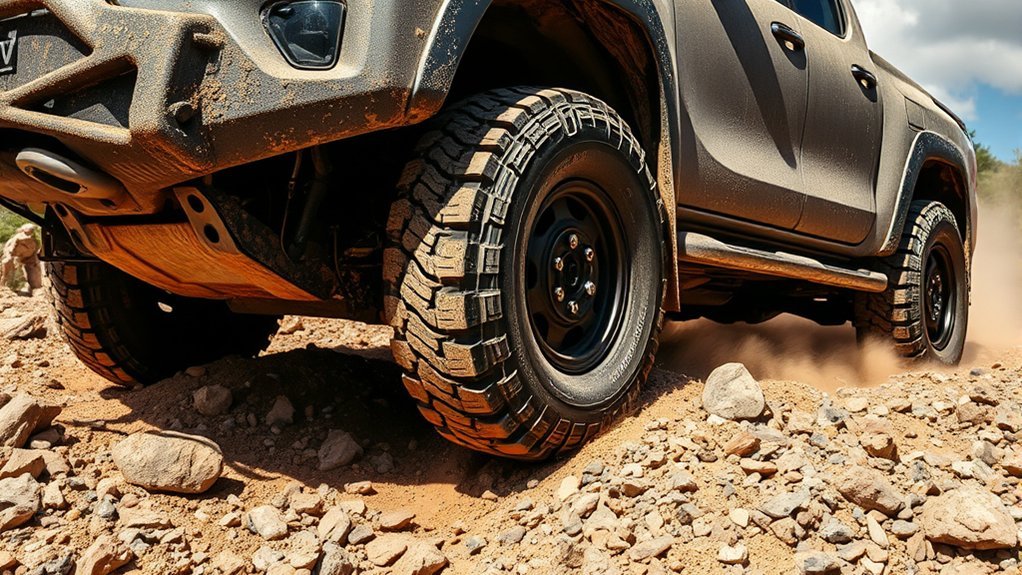
Your Toyota Hilux tire lifespan depends on more than the tire brand. Tire type, air pressure, rotation, load weight, wheel alignment, road surface, climate, and your driving style all affect how quickly the tread wears. Many Hilux owners can expect roughly 40,000 to 60,000 miles from suitable tires in normal road use, but towing, off-road driving, heavy cargo, hot weather, and poor maintenance can shorten that range.
Quick Answer
Toyota Hilux tires usually last longest when you keep them at the correct cold pressure, rotate them on schedule, avoid overloading, fix alignment issues early, and choose tires that match your driving. Replace them when tread reaches 2/32 inch, damage appears, or age-related cracking becomes visible.
Key Takeaways
- Check tire pressure at least once a month when the tires are cold, and use the pressure listed on your Hilux door placard or owner’s manual.
- Rotate tires every 5,000 to 8,000 miles if Toyota or the tire maker recommends it for your tire setup.
- Heavy loads, towing, rough roads, gravel, potholes, and aggressive driving all speed up Hilux tire wear.
- Replace tires when tread reaches 2/32 inch, sidewalls crack or bulge, cords show, or vibration suggests internal damage.
At a Glance
| Time Required | 5 minutes for pressure checks, 10 minutes for tread and sidewall inspection, 30 to 60 minutes for professional rotation and balance. |
| Difficulty | Easy for inspection and pressure checks; moderate for DIY rotation; professional service recommended for alignment and balancing. |
| Tools Needed | Tire pressure gauge, tread depth gauge or penny, flashlight, gloves, and your Hilux owner’s manual or tire placard. |
| Cost | Low for DIY checks; usually modest for rotation and balancing; higher if alignment, suspension repairs, or replacement tires are needed. |
Essential Factors Impacting Toyota Hilux Tire Lifespan
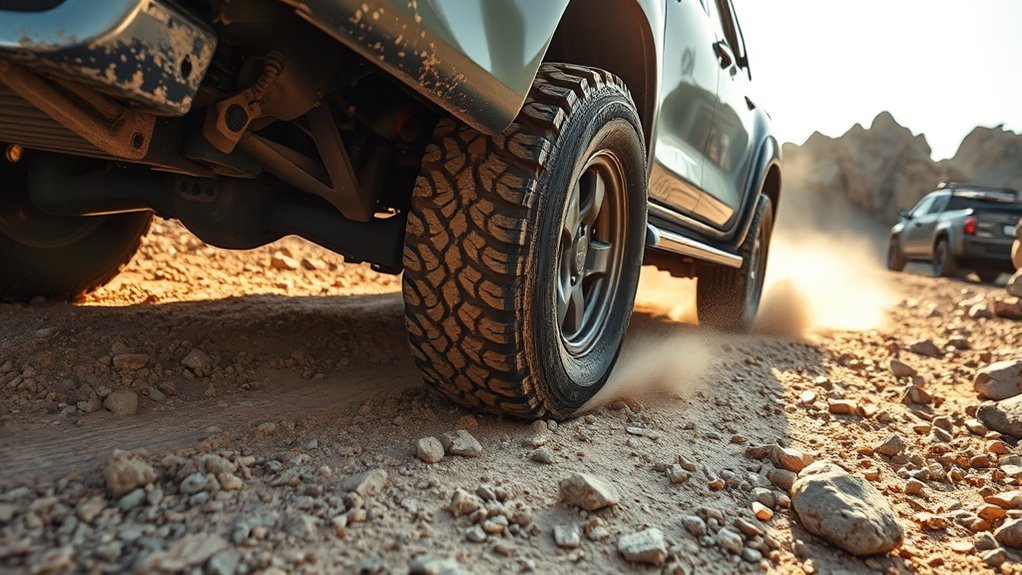
To maximize the tire lifespan of your Toyota Hilux, start with the basics: tire pressure, rotation, alignment, load weight, tire type, and road conditions. These factors decide whether your tires wear evenly or develop early problems such as shoulder wear, center wear, cupping, cracks, or sidewall damage.
The most important habit is checking cold tire pressure. The National Highway Traffic Safety Administration recommends checking all tires, including the spare, at least once a month when the tires are cold. Use the pressure on your Hilux tire placard or owner’s manual, not the maximum pressure printed on the tire sidewall.
Load weight also matters. A Hilux is often used for work, towing, camping, and off-road driving, so it is easy to overload the rear axle or exceed a tire’s load rating. Too much weight creates extra heat and stress in the tire, which can accelerate tread wear and raise the risk of failure.
Warning: Do not keep driving on a tire with a bulge, exposed cords, deep cracking, repeated pressure loss, or strong vibration. These can be signs of structural damage, and the tire should be inspected or replaced immediately.
How Driving Habits Affect Hilux Tire Wear
Your driving style has a direct effect on tire wear. A Hilux driven gently on paved roads will usually wear tires more evenly than one driven with hard acceleration, heavy braking, sharp cornering, and frequent high-speed towing.
Aggressive Driving Habits
Aggressive driving creates extra friction and heat. Over time, that can wear the tread faster and make uneven wear patterns more visible. The habits that usually hurt tire life the most include:
- Rapid acceleration: Spinning or scrubbing the rear tires can remove tread quickly, especially on loose gravel, wet roads, or steep driveways.
- Hard braking: Sudden stops put heavy force through the front tires and can create flat spots or irregular tread wear.
- Sharp cornering: Fast turns increase shoulder wear, especially on taller all-terrain or mud-terrain tires.
- High-speed driving on rough roads: Heat and impact damage can build up quickly when tires hit potholes, rocks, or broken pavement.
Smooth Driving Techniques
Smoother driving helps your Hilux tires last longer because the tread is not constantly being scrubbed against the road. Aim for gradual acceleration, early braking, steady speeds, and gentle steering inputs.
| Driving Habit | Impact on Tire Wear | Benefit |
|---|---|---|
| Gradual acceleration | Reduces wheelspin and tread scrub | Better tire life and smoother takeoff |
| Gentle braking | Lowers heat and front-tire stress | More even tread wear |
| Steady speed | Reduces repeated load shifts | Improved fuel economy and comfort |
| Gentle cornering | Limits shoulder wear | Cleaner tread pattern over time |
Pro Tip: If your Hilux is used for towing or loaded work, slow down before corners and roundabouts. Extra rear weight increases tire sidewall flex, heat, and shoulder wear.
How Load Weight Affects Tire Lifespan
Load weight is one of the biggest tire-life factors on a Toyota Hilux. When you carry tools, building materials, camping gear, passengers, or trailer tongue weight, the tires must support more heat and pressure. If the load is too heavy or poorly distributed, the rear tires can wear faster than the front tires.
- Follow the tire and loading information label: Check the label on the vehicle and your owner’s manual for the correct pressure, tire size, and load guidance for your Hilux model.
- Respect tire load index: Replacement tires must meet or exceed the load rating required for your Hilux, especially if you tow or carry heavy cargo.
- Distribute cargo evenly: Keep heavy items low and centered instead of placing all the weight behind one wheel arch.
- Recheck pressure before long trips: Heavy loads often require careful pressure checks, but stay within Toyota and tire manufacturer limits.
Never use the tire sidewall maximum pressure as your normal target unless the vehicle manufacturer’s guidance matches it. The sidewall number is a tire limit, not the default pressure for your specific Hilux.
Understanding How Road Conditions Impact Tire Lifespan
Road conditions can shorten or extend Hilux tire life. Smooth paved roads are easier on tread, while gravel, rocks, potholes, construction zones, and corrugated tracks can damage rubber, belts, and sidewalls.
Types of Road Surfaces
- Paved highways: Usually easiest on tires when pressure, alignment, and balance are correct.
- Gravel roads: Increase small cuts, tread chipping, and puncture risk, especially with passenger-rated highway tires.
- Rocky tracks: Can bruise sidewalls and break tread blocks if speed or pressure is wrong for the terrain.
- Pothole-filled streets: Can bend wheels, knock alignment out, and create internal tire damage.
- Mud and sand: May require terrain-specific driving techniques, but reinflate tires after airing down for off-road use.
Weather Impact on Roads
Hot weather, cold weather, rain, and strong sunlight all affect tire durability. Heat can increase pressure and speed up rubber aging. Cold weather can lower pressure and make older rubber less flexible. Wet roads make tread depth more important because worn tread cannot clear water as well.
Temperature, inflation pressure, tread depth, and road surface conditions all affect tire behavior and grip. That is why a Hilux used in hot climates, on long highway trips, or on rough roads needs more frequent tire checks than one used mainly for short paved-road trips.
Debris and Obstructions
- Inspect the tread: Look for nails, screws, stones, glass, and cuts after driving on construction roads or trails.
- Avoid debris when safe: Small metal objects can cause slow leaks that damage tires before you notice a flat.
- Watch for potholes: A hard impact can damage the tire internally even if the outside looks normal.
- Check after off-road trips: Look at sidewalls, tread blocks, valve stems, and wheel rims before returning to highway speed.
Environmental Effects on Tire Durability

Environmental factors affect Hilux tire durability even when the truck is parked. Sunlight, heat, moisture, road salt, and long storage periods can age rubber and weaken the tire over time.
Tire aging happens as the rubber and internal materials change with time, service, storage, and exposure. NHTSA notes that sunlight, warmer climates, poor storage, and poor maintenance can contribute to tire aging. That means low-mileage Hilux tires are not automatically safe just because they still have tread.
Look for cracking between tread blocks, weathered sidewalls, hard rubber, vibration, and repeated pressure loss. Also check the tire date code and follow the tire maker’s age guidance. If the tire is old or has visible aging, have it inspected by a qualified tire shop.
Note: A tire can age out before it wears out. This is common on spare tires, low-mileage trucks, stored vehicles, and Hilux models used only for occasional towing or off-road trips.
Key Tire Maintenance Practices for Longevity
To extend Toyota Hilux tire lifespan, build a simple maintenance routine. Small checks done often are more useful than waiting until tread wear is obvious.
In 2024, NHTSA reported 511 traffic fatalities in tire-related crashes, which is a reminder that tire maintenance is both a cost issue and a safety issue.
- Check tire pressure monthly: Measure pressure when the tires are cold, including the spare. Adjust to the pressure listed for your Hilux.
- Rotate tires on schedule: If recommended for your setup, rotate every 5,000 to 8,000 miles or as listed in the owner’s manual.
- Inspect tread depth: Use a tread depth gauge or the penny test. Replace tires at 2/32 inch or sooner if wet grip has become poor.
- Check alignment: If the Hilux pulls left or right, the steering wheel sits off-center, or one tire edge wears faster, get the alignment checked.
- Balance tires when needed: Vibration at speed can point to imbalance, bent wheels, or tire damage.
- Inspect valve stems and caps: A leaking valve stem can slowly lower pressure and create edge wear or heat damage.
[Products Worth Considering]

Monitor tire tread wear with a smart, color-coded depth gauge that shows clear condition ranges at a glance. The bar is range marked for fast, easy readings, helping you maintain safer traction and performance. Each gauge is portable with a pocket clip, and the set includes 20 units for daily use and sharing.

Measure tire tread depth quickly and accurately with this LUMITECO dial gauge that reads in 1/32" increments up to 14/32". The color-coded green/yellow/red zones make it easy to judge tire wear and know when replacement is needed. A rugged, compact design with a protective pouch helps keep the gauge ready for use on cars, trucks, motorcycles, and more.

The SAFELIFE dial tire tread depth gauge measures tread depth in 1/32 inch increments with clear, easy-to-read 2-inch dial face. Color zones using a traffic light system help you quickly judge whether tread is low, marginal, or ample for safer driving. Built with a durable zinc cast body and a metal detect probe for precise, comfortable use across cars, motorcycles, trucks, and buses.
Recognizing Signs of Tire Wear That Affect Lifespan
Recognizing tire wear early helps you avoid unsafe driving and early replacement. Start with tread depth. Tires are not safe once the tread reaches 2/32 inch, and the built-in treadwear bars will sit level with the tread at the replacement point.
Next, look at the wear pattern:
- Both outer edges worn: Often caused by underinflation or repeated heavy cornering.
- Center tread worn: Often caused by overinflation or incorrect pressure for the load.
- One edge worn: Often points to wheel alignment problems.
- Cupping or scalloping: May suggest worn suspension parts, imbalance, or shock absorber issues.
- Patchy wear: Can come from poor balance, hard braking, or internal tire damage.
Also inspect the sidewall. Cracks, bulges, cuts, bubbles, exposed cords, or a tire that keeps losing air should be handled right away. Do not rely only on a Tire Pressure Monitoring System if your Hilux has one. TPMS can warn you when pressure is significantly low, but it does not replace a manual monthly pressure check with a gauge.
How to Choose the Right Tire for Longevity
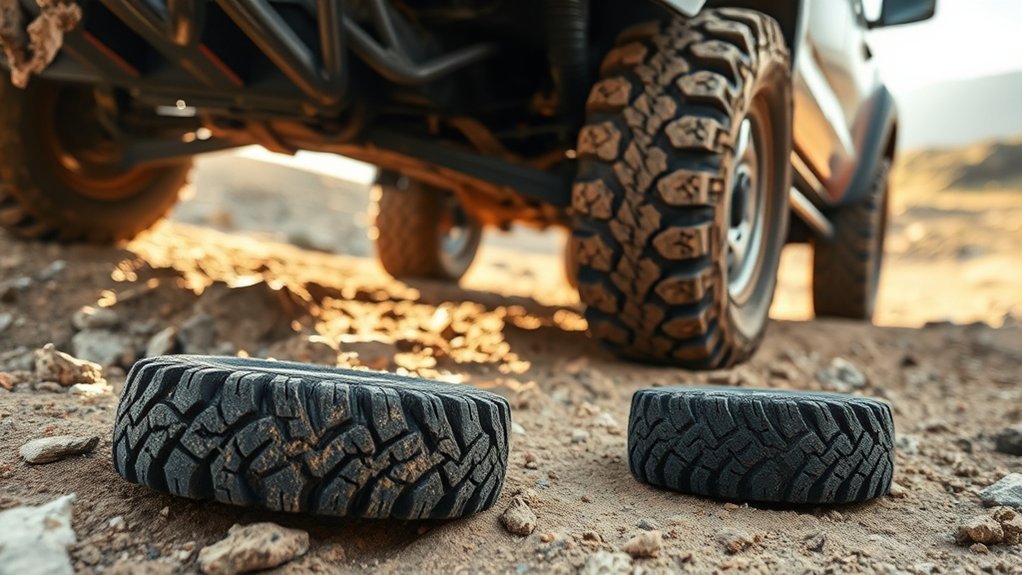
Choosing the right tire for your Toyota Hilux is essential for both performance and longevity. The longest-lasting tire is not always the most aggressive tire. Match the tire to how you actually drive.
- Highway-terrain tires: Best for mostly paved roads, commuting, and lighter-duty driving. They usually ride quieter and may wear more evenly on pavement.
- All-terrain tires: Best for mixed driving, gravel roads, job sites, mild trails, and weekend camping. They offer more toughness but can wear faster than highway tires on smooth roads.
- Mud-terrain tires: Best for frequent mud, rocks, and difficult off-road routes. They are usually louder and can wear faster during highway use.
- LT-rated tires: Useful for heavy loads, towing, and rough work, but they may ride firmer. Make sure the size, load index, and speed rating match your Hilux requirements.
When buying new tires, check the size, load rating, speed rating, date code, treadwear rating, traction rating, and temperature rating. NHTSA explains that tire ratings can help compare treadwear, wet traction, and heat resistance, but real tire life still depends on driving habits, maintenance, climate, and road conditions.
[Products Worth Considering]

Accurately measure tire tread depth with a calibrated gauge marked from 0 to 1 inch in 1/32 inch increments. The color-coded bar helps you quickly identify tread condition ranges, supporting safe driving for trucks, motorcycles, automobiles, and passenger vehicles.

The Tymate TM12 RV TPMS delivers real-time tire pressure and temperature monitoring with a stable 433Hz display for safer long-distance driving. It supports simultaneous monitoring across vehicle and trailer zones, includes six alarm modes for pressure, temperature, leakage, battery, and signal loss, and features easy DIY installation with auto calibration. Power is supplied via USB-C charging or solar recharging, with a wide 0–144 PSI range and up to 50 ft signal coverage for RVs and towable trailers.

Measure tyre tread depth precisely with a digital gauge that reads in both MM and inches, helping you monitor safe driving conditions. The large LCD screen is easy to operate, and the compact tool fits for cars, trucks, and motorcycles. It provides high accuracy with a 0-25.4mm range and includes a 1-year warranty for added peace of mind.
When to Replace Your Toyota Hilux Tires
Replace your Toyota Hilux tires when tread depth reaches 2/32 inch, when treadwear bars are flush with the tread, or when the tire has damage that could affect safety. In wet, snowy, or off-road driving, replacing before the legal minimum can be safer because deeper tread helps maintain grip and clear water, mud, or loose gravel.
You should also replace or professionally inspect a tire if you notice:
- Sidewall bulges, bubbles, or deep cuts
- Exposed cords or steel belts
- Severe cracking or dry rot
- Repeated air loss
- Strong vibration after balancing
- Uneven wear that returns after alignment
- Damage after a pothole, curb strike, or rock impact
- Tires that are old according to the tire maker’s age guidance
If you replace only two tires, ask a qualified tire shop where they should be installed for your Hilux drivetrain and tire setup. For many vehicles, the better pair is placed on the rear for stability, but your exact setup, tire type, and manufacturer guidance matter.
[Products Worth Considering]

Keep your tires properly inflated with this analog VONDIOR tire pressure gauge, designed for fast, easy readings without batteries. The swiveling, two-axis hose and large glow dial help you measure at any tire angle with instant visibility. Built with a protective rubber shield, it supports durable, low-maintenance use for cars and trucks.
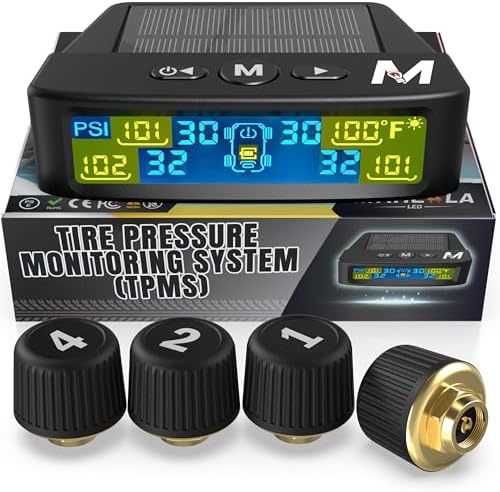
Marcala’s TPMS set of four sensors helps you monitor tire pressure and temperature in real time while driving, with updates every second. The bright color LCD uses auto-dimming for easy viewing, powered by dual solar and USB charging, and offers six alarm modes. Built for trailers, RVs, campers, trucks, and towing setups, the sensors support monitoring 1-4 wheels up to 98 PSI with IP67 waterproof protection.

Milton S-921 pencil tire pressure gauge helps you maintain optimal tire pressure for passenger cars with accurate readings in PSI and kPa. It features a built-in deflator valve for convenient pressure adjustments, plus a single chuck head and nylon indicator bar for easy use on the go. Built from durable plated brass and designed for reliable performance, it’s a practical road trip and cold-weather maintenance tool.
Frequently Asked Questions
How long do tyres last on a Hilux?
Hilux tires often last around 40,000 to 60,000 miles in normal road use, but the real number depends on tire type, pressure, rotation, alignment, road surface, load weight, climate, and driving style. Off-road driving, towing, heavy cargo, and hot conditions can shorten tire life.
What is the 3% tire rule?
The 3% tire rule is not a tread-depth replacement rule. It is usually discussed when comparing tire diameter changes, especially on 4WD or AWD vehicles where mismatched tire sizes can affect drivetrain behavior. For replacement, use tread depth, tire age, visible damage, and Toyota or tire manufacturer guidance.
How often should I rotate Toyota Hilux tires?
If rotation is recommended for your tire setup, a common interval is every 5,000 to 8,000 miles. Always check your Hilux owner’s manual and tire manufacturer guidance because directional tires, different front and rear sizes, or certain off-road tires may need a specific pattern.
Should I use highway, all-terrain, or mud-terrain tires on a Hilux?
Choose highway-terrain tires for mostly paved roads, all-terrain tires for mixed road and gravel use, and mud-terrain tires for frequent mud or difficult off-road driving. For heavy loads or towing, make sure the tire has the correct size and load rating for your Hilux.
When should I replace Hilux tires even if they still have tread?
Replace or professionally inspect them if they have sidewall bulges, deep cracks, exposed cords, repeated air loss, severe uneven wear, strong vibration, or age-related deterioration. Tires can become unsafe from damage or aging before the tread is fully worn out.
Conclusion
Extending Toyota Hilux tire lifespan comes down to steady care. Keep the tires at the correct cold pressure, rotate them when recommended, avoid overloading, inspect tread and sidewalls monthly, and choose tires that match your driving. A Hilux can be tough, but its tires still need the right pressure, load rating, alignment, and maintenance to stay safe and last longer.
Sources
- NHTSA TireWise — tire pressure, tread depth, rotation, TPMS, aging, and tire safety guidance.
- NHTSA Consumer Guide to Uniform Tire Quality Grading — treadwear, traction, and temperature rating context.
- Extended Pacejka Tire Model for Enhanced Vehicle Stability Control — technical background on how tread depth, inflation pressure, temperature, and road surface affect tire behavior.
- Toyota Hilux 50th Anniversary — official Toyota background on the Hilux model line.