How to Find the Biggest Tire That Will Fit Your Vehicle
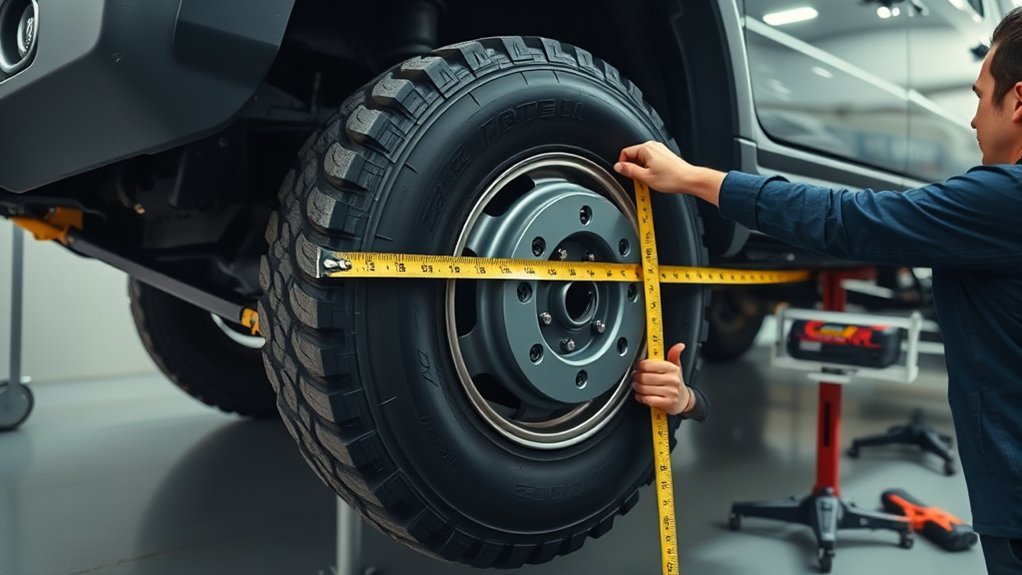
Start with your factory tire size, then measure wheel-well clearance at full lock and during suspension compression. Keep the new tire within about 3% of the original diameter unless you plan to recalibrate speedometer and gearing. Check lift height, wheel width, and offset, since these control rubbing at the fenders and suspension. Use P-metric or flotation sizing correctly, then compare fitment examples for your vehicle. The next steps get more exact.
Key Takeaways
- Check your factory tire size on the sidewall, door sticker, or owner’s manual to establish a fitment baseline.
- Measure wheel-well and suspension clearance at full lock and compression before choosing a larger tire.
- Keep new tire diameter within about 3% of stock unless you have confirmed extra clearance.
- Match tire width to wheel width and consider offset, lift height, and spacers to avoid rubbing.
- Expect changes in fuel economy, speedometer accuracy, ride quality, and handling with bigger tires.
How Much Tire Can Your Vehicle Fit?
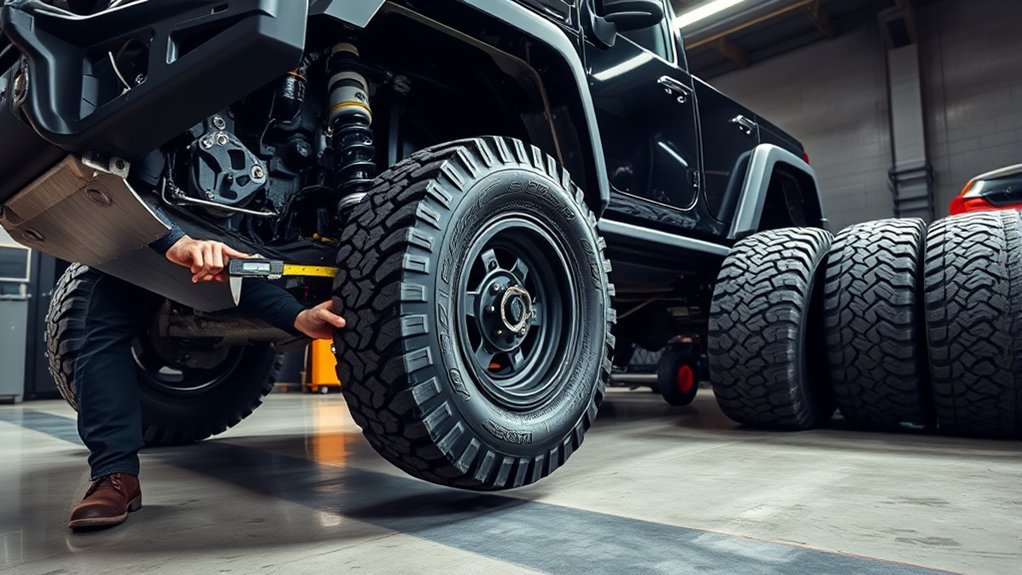
To determine how much tire your vehicle can fit, start with the factory tire size and work from there: on stock suspension, a safe upgrade is typically about 3% taller and 3% wider without creating clearance problems. This tire sizing method gives you a practical maximum tire target while preserving control, ride quality, and tire fitment integrity. For many trucks and SUVs, that means you can move up modestly on stock suspension, but you still need to verify wheel well clearance, fender spacing, and steering lock clearance. Some models, like the Honda Ridgeline and Cadillac Escalade EXT, can accept tires around 32 inches tall and 11 inches wide. If you’ve modified the chassis with lift kits, you may fit 37-inch tires or larger. Don’t guess; measure, compare specs, and consult manufacturer recommendations and professional fitment guides. Additionally, consider the UTQG ratings as they can provide insights into tire durability and performance. That’s how you reclaim capability without sacrificing safety or the freedom to drive hard.
Check Your Stock Tire Size First
Start by checking your stock tire size, since it gives you the baseline for any safe upgrade. You’ll usually find it on the tire sidewall, door jamb sticker, or in the owner’s manual. Read the format carefully: a code like 285/70R18 or 33×12.50R17 tells you the tire size classifications, width, construction, and rim diameter. That code also lets you calculate overall diameter, which is the key metric when you compare options. Your stock tire size anchors your search, because it shows what your vehicle was engineered to handle without compromise. On non-lifted trucks, stock setups often stay near 33 inches; lifted trucks may support 37 inches or more. Still, you should verify the manufacturer’s recommended tire guidance before you choose anything larger. That keeps fitment disciplined, preserves mechanical freedom, and helps you avoid unwanted rubbing or clearance problems. Additionally, understanding the all-season tire performance can help you make an informed decision on any upgrades.
Use the 3% Rule to Stay Safe
Use the 3% rule to keep a tire upgrade within a safe operating range: your new tire’s overall diameter shouldn’t be more than 3% larger than the original size. This tire size limit protects vehicle performance and preserves control.
| Metric | Limit |
|---|---|
| Original diameter | 30.0 in |
| 3% increase | 0.9 in |
| Maximum diameter | 30.9 in |
| Risk if exceeded | Error, rub, drift |
| Benefit | Accurate, safe, free |
When you choose larger tires, this 3% rule helps you avoid mechanical interference and keeps your speedometer and odometer aligned with reality. That accuracy matters for legal compliance and for the autonomy of your driving decisions. Many manufacturers publish specifications that already fit this window, so you can compare options with confidence. Use the rule as a filter: if the new tire’s diameter exceeds the threshold, reject it. If it stays within range, you’ve made a disciplined, technically sound upgrade. Additionally, understanding the treadwear warranty can guide you in selecting a tire that maintains its performance over time.
Measure Wheel Well Clearance at Full Lock
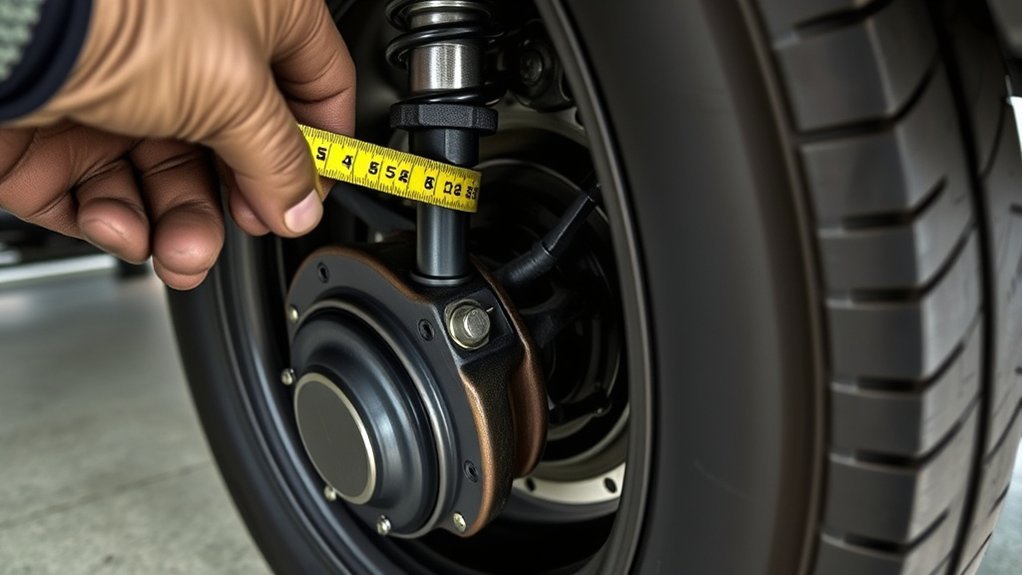
With the steering wheel turned to full lock, measure the gap between the tire’s outer edge and the nearest suspension component or body panel to determine your true clearance for a larger tire. Turn both directions and check both sides; manufacturing tolerances and wear can change the fender well space you actually have. Log the wheel diameter, tire size, and sidewall height together, because the combined tire-and-wheel package defines vertical clearance under the arch.
- Measure at full lock left and right.
- Compare driver and passenger clearances.
- Record total diameter, not just wheel diameter.
- Use the smallest value as your limit.
This analysis helps you estimate the biggest tire size that can fit without rubbing during normal driving. A precise measurement frees you from guesswork and lets you choose fitment on your terms, not the shop’s assumptions. Additionally, understanding the importance of tire size compatibility ensures optimal performance and safety.
Choose the Lift Height You Need
You need to compare stock clearance with lifted clearance because lift height directly limits the maximum tire diameter you can fit. A leveling kit typically adds 1-2 inches, a body lift usually adds 2-3 inches, and a suspension lift can add 4 inches or more, so you should match the lift choice to your target tire size. Keep the trade-off in mind: more lift expands fitment options, but it also raises the center of gravity and can affect stability and handling. Additionally, consider the tread depth of your chosen all-terrain tires, as it plays a crucial role in off-road performance.
Stock vs Lifted Clearance
Stock vehicles typically clear tires up to about 33 inches tall without modifications, while lifted trucks can often accommodate 37-inch tires or larger, depending on lift height. You should match tire size to clearance, not guess. On stock vehicles, every added inch of lift usually buys about one inch of tire height, but you still need to verify fender space.
- Measure wheel-and-tire diameter.
- Check suspension travel.
- Confirm fender clearance.
- Compare lift kit effect.
A body or suspension lift kit of 3 inches or more can expand options and off-road freedom. Yet bigger setups raise the center of gravity and can sharpen ride harshness. Choose the smallest lift that gives safe clearance, preserves control, and lets you move with purpose, not compromise.
Lift Height Options
Once you’ve matched tire size to your available clearance, the next decision is how much lift the vehicle actually needs. Your lift height options shape tire selection, handling, and stance. A body lift kit adds about 2 to 3 inches, giving you room for slightly larger tires without changing suspension geometry. Leveling kits raise the front 1 to 2 inches, correcting rake and restoring usable clearance. If you want a stronger step up, suspension lift kits usually add 3 to 10 inches and support larger tires with better off-road articulation. As a practical rule, each inch of lift can permit about 1 inch more tire diameter. Don’t ignore the tradeoff: more lift raises the center of gravity and can reduce stability.
Match Lift To Tires
A good starting point is to match lift to the tire increase you want: as a rule, about 1 inch of lift supports roughly 1 inch of additional tire height, helping maintain clearance and off-road capability. You should verify fender space before choosing a tire size, because rubbing defeats freedom.
- Body lifts add about 3 inches and can clear larger tires with fewer changes.
- Suspension lifts give more lift height options, but cost and complexity rise.
- Check the combined wheel and tire height against the fender opening.
- Weigh ride quality and handling, since each lift changes dynamics.
For liberated off-road use, choose the smallest lift that fits your larger tires cleanly. That keeps geometry manageable, preserves control, and avoids unnecessary strain on your vehicle.
Choose Between P-Metric and Flotation Sizes
You’ll choose between P-Metric and flotation sizes based on how each system expresses dimensions and load capacity. P-Metric sizes list width in millimeters and aspect ratio as a percentage, while flotation sizes use inches for overall height and width, so you need to read each format correctly. Match the size to your vehicle’s specifications and performance requirements so the tire fits the application and supports the expected load. Understanding tire selection criteria will help ensure you make an informed choice.
P-Metric Size Basics
P-metric sizing gives you a standardized way to read tire dimensions and match it to your vehicle’s needs. A P-metric tire like P245/75R16 tells you three things fast: 245 mm section width, 75% tire profile, and 16-inch wheel diameter. Use a tire size calculator to verify fitment before you buy. Then check the load index, because it defines how much weight each tire can carry and keeps your setup within safe limits.
- Measure width in millimeters.
- Read aspect ratio as sidewall height.
- Match wheel diameter exactly.
- Confirm load index and use.
This system helps you choose a tire that supports comfort, efficiency, and control without surrendering precision or vehicle freedom.
Flotation Size Basics
Flotation sizes use inches to describe tire dimensions, so a 33×12.50 tire means roughly 33 inches tall and 12.50 inches wide. You read flotation tire sizes by tire height first, then section width, which makes the format direct and practical. Unlike P-metric sizing, which uses millimeters and aspect ratio, flotation sizing gives you a bold, no-nonsense measurement system. You still need the load index and speed rating, because those ratings define carrying capacity and safe operating limits. If you compare flotation and P-metric options, you can identify fitment issues before you buy. That clarity gives you more control over your setup. Many vehicles accept either format, but you should follow manufacturer specifications to preserve performance, safety, and mechanical freedom.
Match Size To Vehicle
To match tire size to your vehicle, start by choosing the sizing system that fits your application: P-metric or imperial flotation. You’ll read P-metric in millimeters and aspect ratio, like P245/75R16, while flotation uses inches, like 33X12.50R17LT. Selecting the right tire size helps you reach the largest tire size without sacrificing control, clearance, or legality. For perfect fitment, verify:
- Wheel diameter
- Load index
- Speed rating
- Intended use
A P-metric tire often suits street-focused precision; flotation can favor off-road freedom and stance. Check the vehicle placard, suspension travel, and fender space before you commit. If the numbers don’t align, the fit’s wrong, even if the sidewall looks bold. Match the spec to your build, and you’ll own the road with confidence.
Match Tire Size to Wheel Width and Offset
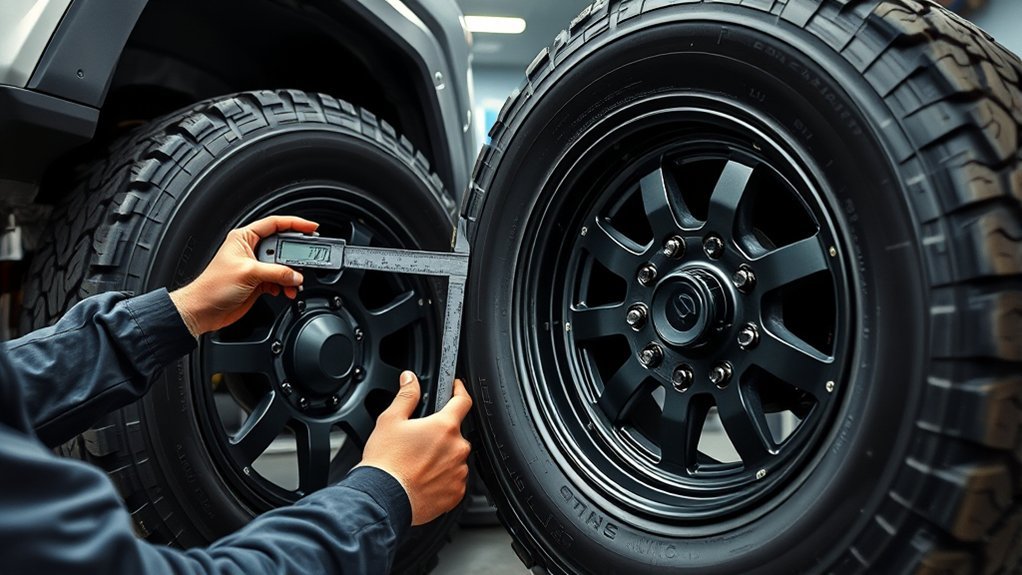
Wheel width sets the practical limits for tire selection, so you need to match the tire’s section width closely to the rim; as a rule of thumb, the tire should sit within about 0.5 to 1 inch of the wheel width for proper fitment. Your tire size choice then has to respect wheel width and offset together, because offset, measured in millimeters, controls how far the assembly sits in or out of the wheel well. Higher positive offset tucks the tire inward; lower offset pushes it outward. You should verify the combined package against fender clearance and suspension components before you commit. A wider wheel with less positive offset can improve grip, but it also increases load on suspension components. Use a tire size calculator to compare widths, offsets, and your specific vehicle model, so you can free the fitment from guesswork while keeping precise clearance and controlled geometry. Additionally, consider the tire construction and ply ratings to ensure durability and performance for your intended use.
See How Bigger Tires Change Performance
Once you’ve confirmed that the tire size works with your wheel width and offset, the next question is how a larger tire will change the vehicle’s behavior. Tire size affects more than stance: larger tires can add ground clearance, improve off-road approach, and expand the contact patch for better traction. But they also raise rolling resistance, which can cut fuel economy; tests have shown about 1.8 mpg between 19″ and 15″ setups.
- Ground clearance: You gain height, but only within safe limits.
- Ride quality: Expect a firmer, harsher response over rough pavement.
- Handling: Bigger mass can slow steering and add suspension wear.
- Calibration: Odometer and speedometer readings may drift with the new diameter.
You can usually stretch to about 3% over factory height and width, but each change shifts the balance between efficiency and capability. Choosing tires that offer enhanced traction and handling can significantly improve your driving experience. Choose deliberately so your vehicle serves your freedom, not the other way around.
Real-World Fitment Examples by Vehicle
In practice, fitment depends on the vehicle’s wheel well, suspension geometry, and intended use. You can use real-world tire sizes as benchmarks, but you still need to verify clearance on your own rig. A Honda Ridgeline or Cadillac Escalade EXT can typically accept 32-inch-tall, 11-inch-wide tires without modifications. Jeep Wranglers often fit larger tires, up to 33 inches tall and 11 inches wide, though model year and suspension setup matter. On a non-lifted truck, 33 inches is usually the upper limit; with a lift, you may run 37-inch or larger sizes if wheel specs support it. To know what’ll fit on your truck, measure the wheel well and inspect steering, compression, and turn clearance. Lift kits and wheel spacers can expand options, but they change load paths and scrub radius. These important factors help you choose larger tires without sacrificing control, legality, or mechanical freedom. Additionally, selecting tires with strong wet grip can enhance performance in adverse conditions, ensuring safety and stability.
Frequently Asked Questions
What Is the 7 7 Rule for Tires?
The 7-7 rule says you can increase your tire’s overall size by up to 7% in Tire width and 7% in Sidewall height from OE specs. You keep diameter close, so you preserve handling, clearance, Load capacity, and Rim compatibility. You’ll lower the risk of rubbing, instability, or speedometer error. Use it as a technical limit, not a law, and verify fitment with your manual or a tire pro.
How to Figure Out the Biggest Tire You Can Fit?
You figure it out by measuring tire clearance at the wheel well, then matching that space with your current tire’s diameter and width. Check wheel offset, since it can shift the tire inward or outward. If you need more room, consider suspension modifications or fender trimming. Compare options with a tire-size calculator and keep changes within about 3% of stock. That lets you choose boldly, without unnecessary restriction.
What’s the Biggest Tire That Will Fit My Truck?
You can usually fit up to about 3% larger than your truck’s factory tire if you keep stock suspension, but tire compatibility depends on your wheel well, wheel size, and clearance. Check the sidewall, doorjamb sticker, and owner’s manual, then measure the combined tire-wheel diameter. Lift kits and suspension modifications let you push bigger sizes, often about 1 inch taller per inch of lift, without rubbing.
What Are the Biggest Tires I Can Put on My Car?
You can usually fit tires up to about 3% larger in diameter and width than your stock tire size, if your wheel clearance stays safe. Check your manufacturer specs, then measure suspension and fender space. A tire size calculator helps you compare options and assess performance impact. If you want more off road capabilities, lift kits can let you run much larger tires, but you’ll need to verify fitment carefully.
Conclusion
So, you’ve got the method: start with your stock size, stay within the 3% rule, measure at full lock, and verify wheel width, offset, and lift before you buy. That process keeps you from turning a simple upgrade into a rubbing problem. Think of it like fitting a key to a lock—when my friend jumped from 265s to 35s without checking offset, the tire caught the fender on day one. Measure first, and you’ll fit bigger tires safely.

Related Articles

Are Fat Tire Bikes Harder to Pedal? Speed vs. Traction Compared
Fat tire bikes feel slower on pavement, but are they worth the extra effort for unmatched traction and control?
Read More
What Is a Steer Tire? Complete Guide & Best Options
Just what makes a steer tire different from the rest, and which options deliver the best control, grip, and durability?
Read More
What Does 98V Mean on a Tire? Load, Speed & Rating Guide
Most drivers see 98V on a tire and miss what it really means—discover the load and speed limits before choosing your next set.
Read More