
How to Figure Out Tire Diameter: Quick Calculation Guide
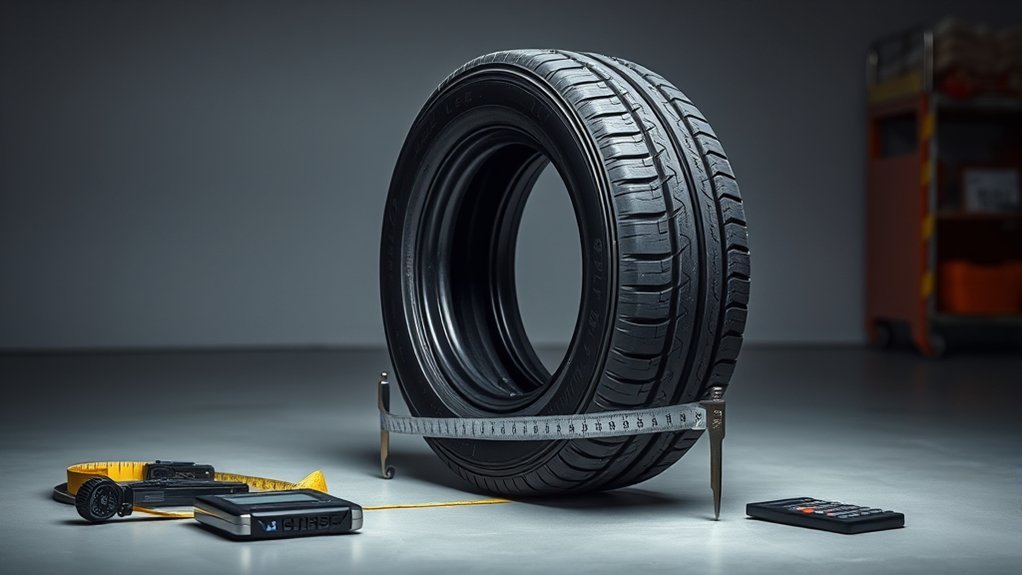
You can figure out tire diameter by reading the size code, such as 225/50R17. The first number is the width in millimeters, the second is the aspect ratio, and the last number is the wheel diameter in inches. Multiply the width by the aspect ratio to get sidewall height, convert it to inches, double it, then add the rim size. Compare the result to OE size, and you’ll see how it affects speedometer accuracy and fitment too.
Key Takeaways
- Read the tire code: XXX/YYRZZ, where XXX is width in mm, YY is aspect ratio, and ZZ is wheel diameter in inches.
- Calculate sidewall height by multiplying section width by aspect ratio as a decimal.
- Find overall tire diameter with: wheel diameter + 2 × sidewall height converted to inches.
- Example: a 225/50R17 tire measures about 25.86 inches in total diameter.
- Check tire diameter changes before buying, because they affect speedometer accuracy and vehicle handling.
How Do You Calculate Tire Diameter?
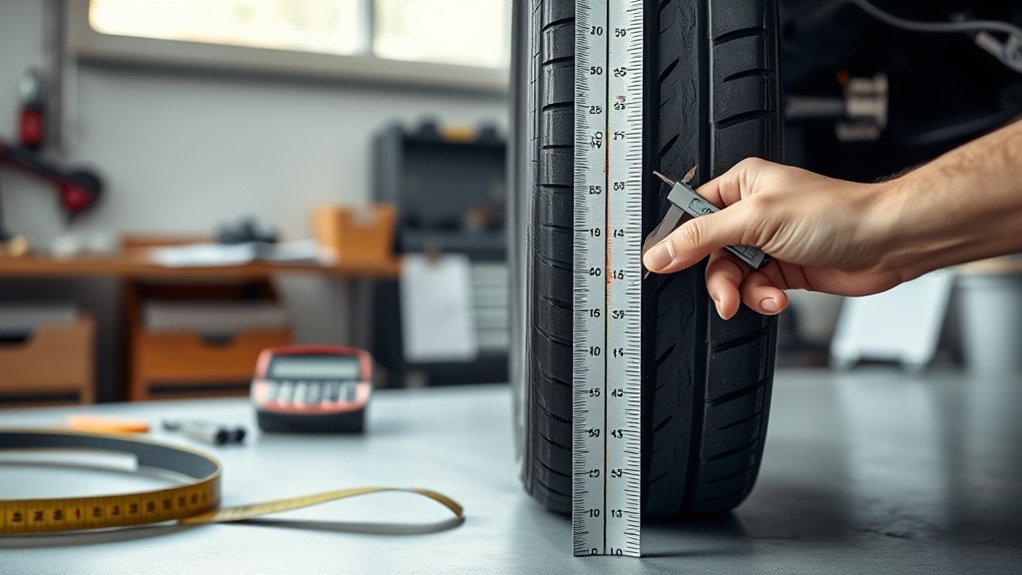
To calculate tire diameter, you use a simple formula: Overall Diameter = (2 × Sidewall Height) + Wheel Diameter. You get sidewall height by multiplying section width by aspect ratio, so you can expose the tire’s true footprint instead of accepting guesswork. For a 225/50R17 tire, the section width is 225 mm and the aspect ratio is 0.50, giving a sidewall height of 112.5 mm, or about 4.43 inches. Then convert the 17-inch wheel diameter to 431.8 mm. Plugging those values in gives you (2 × 112.5 mm) + 431.8 mm = 656.8 mm, which is about 25.87 inches. Use a tire size calculator to verify results, and keep the final tire diameter within ±3% of the original size so you preserve performance, safety, and the freedom your vehicle’s geometry depends on. Selecting the right tires, such as all-season tires, can significantly enhance your vehicle’s handling and comfort.
How to Read Tire Size Numbers
You can read tire size numbers in the format XXX/YYRZZ, where the first value gives section width in millimeters, the second gives aspect ratio, and the last gives wheel diameter in inches. That breakdown tells you the tire’s fitment envelope and how its sidewall geometry affects handling and ride. Once you identify those values, you can apply the diameter formula: wheel diameter plus twice the sidewall height. Understanding tire selection criteria can help ensure you choose the right tires for your vehicle.
Tire Size Number Breakdown
- Picture a broad 225 mm tread.
- See a sidewall rising to 50% of width.
- Imagine a 17-inch rim locking the fit.
Diameter Calculation Formula
Once you know the tire size format, you can calculate diameter by reading the numbers as width, aspect ratio, and wheel diameter. For a 225/50R17, you treat 225 as section width, 50 as the ratio, and 17 as rim size. Multiply width by ratio in decimal to get sidewall height. Then apply: overall diameter = (2 × sidewall height) + wheel diameter.
| Input | Value |
|---|---|
| Width | 225 mm |
| Sidewall height | 112.5 mm |
| Result | Value |
| Overall diameter | 656.8 mm |
| Inches | 25.9 |
That’s the tire diameter you need for fitment. A tire calculator can confirm it fast, but you can verify it yourself and keep control over speedometer accuracy, handling, and the freedom to choose the setup that works for you.
Calculate Sidewall Height From Tire Size
To calculate a tire’s sidewall height, multiply the section width by the aspect ratio expressed as a decimal. This gives you the vertical tire profile, the key measure that links section width to sidewall height and helps you read the diameter of the wheel with precision. For a 225/50 tire, you compute 225 mm × 0.50 = 112.5 mm. If you want inches, divide by 25.4, so 112.5 mm becomes about 4.43 inches. A higher aspect ratio means a taller sidewall, which can soften impacts and alter handling. You’re not guessing; you’re quantifying the tire’s shape. This understanding is crucial when selecting the right tires for optimal performance based on your driving conditions.
Multiply section width by aspect ratio to reveal sidewall height—the measurement that shapes ride, handling, and wheel fit.
- Picture a low-profile tire hugging the rim tightly.
- Imagine a taller sidewall flexing over broken pavement.
- See the section width as the base line, the sidewall height as the upward rise.
That measurement is essential before you move on to total diameter.
Add Wheel Diameter to Get Total Size
To find total tire height, you add the wheel diameter to twice the sidewall height, so the formula is (2 × sidewall height) + wheel diameter. This gives you the full outside diameter of the tire, not just the rubber section. For a 225/50R17 tire, that calculation yields about 25.86 inches. Understanding tire diameter is essential for ensuring proper fitment and vehicle performance.
Wheel Diameter Formula
The wheel diameter sets the base for your tire’s overall size, so you can calculate total diameter by adding twice the sidewall height to the wheel diameter in inches. You start with your tires’ section width, multiply it by the aspect ratio, then convert that height from millimeters to inches. A calculator speeds the process and reduces error. For a 225/50 tire, you get 112.5 mm, or about 4.43 inches.
- Picture a 17-inch wheel as a rigid circle.
- Add two equal sidewalls rising on each side.
- Check that the result stays within 3% of the original size.
This formula gives you control over fitment, handling, and speedometer accuracy. Precision lets you choose freely, without guesswork or compromise.
Total Tire Height
Add the wheel diameter to twice the sidewall height to get the tire’s total height, since you’ve got one sidewall above the wheel and one below it. This total tire height gives you the full tire diameter, so you can verify fitment with confidence. If your tire is 225/50R17, you calculate sidewall height as 225 mm × 0.50 = 112.5 mm, or about 4.43 inches. Then use 17 + (4.43 × 2) = 25.86 inches. If you’re working in millimeters, divide by 25.4 to convert to inches. A calculator will provide the same result faster, but you should still understand the formula. Accurate measurement protects speedometer calibration, handling, and ride comfort, helping you choose specs that support your freedom.
Compare Tire Diameter to OE Size
Start by comparing the new tire’s diameter against the OE size, because a mismatch beyond 3% can affect handling, load behavior, and safety. You can calculate tire diameter with (sidewall height x 2) + wheel diameter, then run a size comparison against your original tire. Since sidewall height comes from section width multiplied by aspect ratio, you’re not guessing; you’re verifying. A 205/60R16 measures about 25.7 inches, so use that as your baseline if it matches your OE fitment. For reference, a 225/50R17 lands near 25.9 inches, which shows how close some alternatives can be. Additionally, consider the load rating of your new tires to ensure they meet your vehicle’s requirements.
- Measure the tire diameter, not just tread width.
- Compare the new figure to the original tire’s OE diameter.
- Keep the difference within 3% for a precise, liberated fit.
How New Tires Affect Your Speedometer
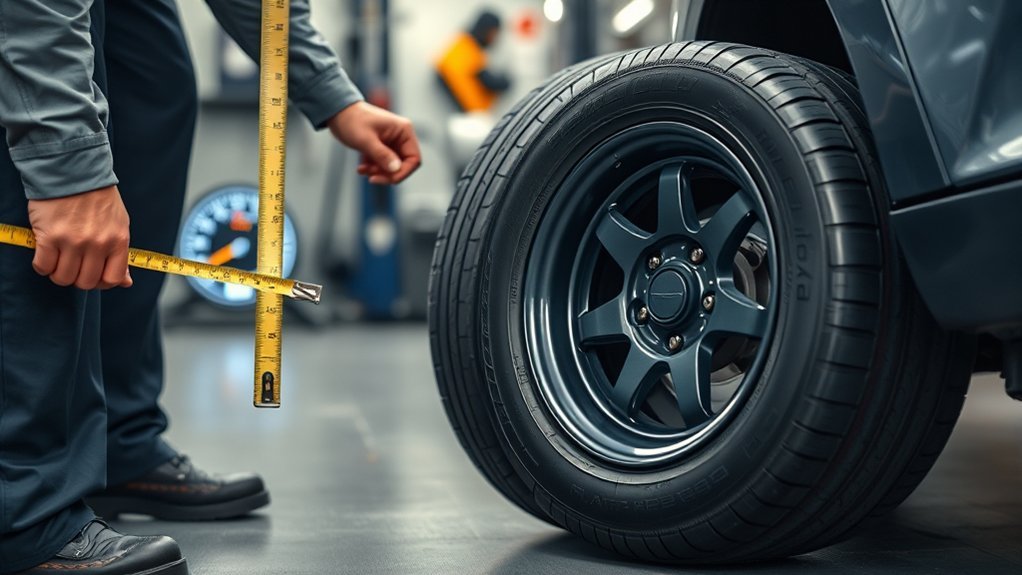
When you change tire size, you change the tire’s circumference, and that directly affects how your speedometer reads. Larger tire diameter lets you travel farther per revolution, so your speedometer readings drop below actual road speed. Smaller tires do the opposite: they spin more often per mile, so the gauge shows a higher speed than you’re really carrying. That means different tire sizes alter revolutions per mile, which also skews the odometer. For example, moving from 205/60R16 tires to 225/50R17 tires changes circumference from 80.68 inches to 81.24 inches, so the error shifts, even if it seems small. Don’t let that hidden math control you. If you want accurate data and stable handling, you should recalibrate the speedometer after any tire diameter change. Doing so restores trustworthy measurements, supports safer decisions, and keeps your vehicle aligned with your intent, not with a misleading instrument. Additionally, understanding tire performance in rain and snow can help you choose the right tires for your driving conditions.
Stay Within the 3% Tire Size Rule
To keep speedometer error, handling, and braking behavior in check, stay within the 3% tire size rule whenever you change tire sizes. You want the new tire diameter to track the original closely, so the overall diameter stays inside that narrow window and your vehicle keeps its intended dynamics.
Calculate it by adding both sidewalls and the wheel: section height = section width × aspect ratio. Then compare the result with the original. For example, if you run 205/60R16, your replacement shouldn’t exceed about 26.4 inches in overall diameter.
Add both sidewalls and the wheel, then compare total diameter to keep your tire size within range.
- Visualize a taller tire swelling like a larger ring under the fender.
- Picture the speedometer drifting as the wheel covers more ground per revolution.
- Imagine firmer control when braking and cornering stay aligned with factory calibration.
Check each candidate tire size before you buy. That discipline keeps the road open, the data honest, and your driving free.
Frequently Asked Questions
How Do I Calculate Tire Diameter?
You calculate tire diameter by using: (section width × aspect ratio × 2) + wheel diameter. First, convert the sidewall from millimeters to inches if needed. For example, a 225/50R17 tire size gives a 4.43-inch sidewall, so you add two sidewalls to the 17-inch wheel for about 26.86 inches. Check wheel compatibility and keep performance impact within ±3% of OEM specs for stable, liberated handling.
What Is the Diameter of 235 35 r20?
235/35R20’s diameter is about 26.5 inches, or 672.5 mm. You can verify the theory by checking tire sizing: the 35% aspect ratio gives you an 82.25 mm sidewall, then you add two sidewalls to the 20-inch wheel. That precision matters because tread patterns and diameter affect performance impact. You’re not trapped by guesswork; you can measure, analyze, and choose fitment that supports freedom, control, and honest engineering.
What Is the 3% Rule for Tires?
The 3% rule means you should keep your new tire’s overall diameter within 3% of your original tire size. You’ll preserve speedometer accuracy, ABS calibration, stability control, and safe load capacity. If you exceed that range, you can skew tire pressure readings, alter tread wear, and reduce control during seasonal changes. Use calculators or specs to verify fit. You’re not guessing—you’re engineering freedom with measurable tolerance and disciplined performance.
What Is the Diameter of a 285x70x17 Tire?
A 285/70R17 tire measures about 32.7 inches in diameter, like a measured horizon you can trust. You calculate tire sizing by doubling the 199.5 mm sidewall and adding the 17-inch wheel, which gives 830.8 mm overall. That diameter affects performance impact, tread patterns, and load capacity, so you can choose with clarity. If you’re tuning your setup, this number gives you precise freedom, not guesswork.
Conclusion
In the end, you can calculate tire diameter with a simple formula, but the result has real-world consequences. A slightly larger tire can improve stance and traction, yet it can also distort speedometer readings and alter handling. That’s why you should compare every new size to OE specs and keep changes within the 3% rule. Precise measurements aren’t just numbers—they’re safety, fitment, and performance. Measure carefully, choose wisely, and your setup will stay accurate.

Related Articles

What Is Tire Mount? Complete Guide & Everything You Need to Know
Discover what tire mounting really involves, why it matters, and the key steps pros use to avoid costly mistakes and unsafe rides.
Read More
How to Use a Manual Tire Machine: Beginner’s Step-by-Step Guide
Never miss the essential steps for using a manual tire machine—discover the beginner-friendly guide that helps you avoid costly mistakes.
Read More
How to Turn a Tire Inside Out: Step-by-Step Method
A step-by-step method reveals how to turn a tire inside out safely, but the trick that makes the hardest part easy comes next.
Read More