
How to Measure Tire Diameter: Accurate Methods & Formula
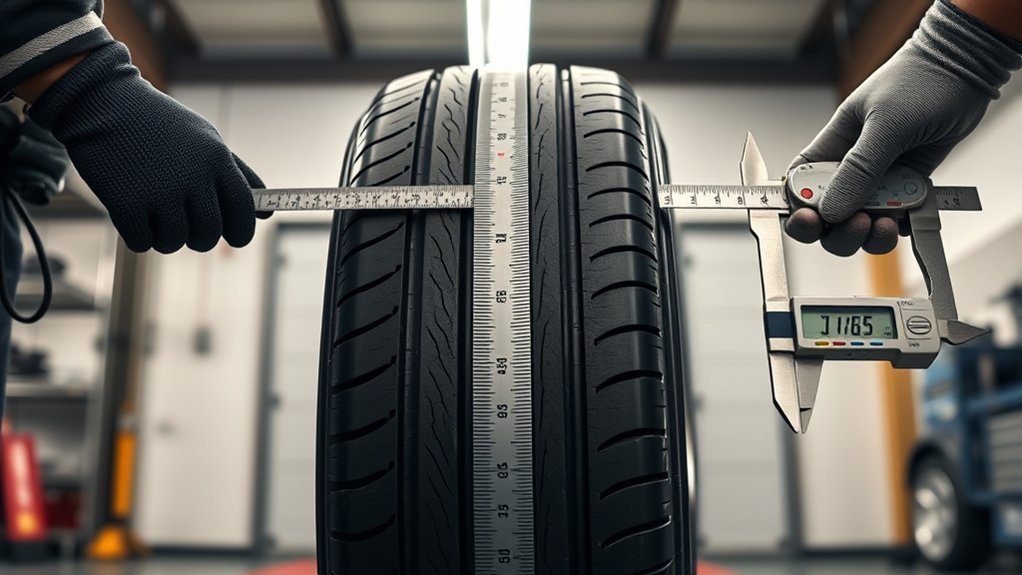
You can measure tire diameter by inflating the tire to the recommended PSI, then measuring from the ground to the top of the tread at the center. For a calculated value, use D = 2[(section width × aspect ratio)/2540 + rim diameter/2]. Also verify circumference with C = πD. Expect slight variation from manufacturing tolerances, tread design, and load. Keep fitment within about 3% of stock, and you’ll see why exact sizing matters.
Key Takeaways
- Inflate the tire to recommended pressure before measuring for the most accurate diameter.
- Measure mounted tire height from the ground to the top at the center tread.
- Measure circumference with a string around the center tread, then divide by pi to estimate diameter.
- Use the formula D = 2 × ((SW × AR) / 2540 + RD / 2) for metric tire sizes.
- Check fitment, speedometer accuracy, and clearance, keeping size changes within about 3% of stock.
What Tire Diameter Means
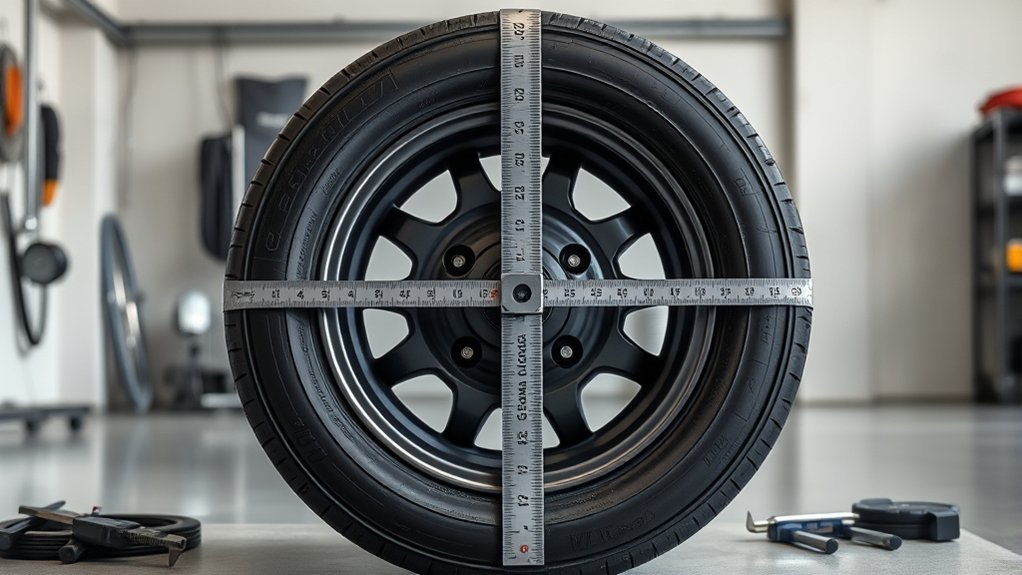
Tire diameter is the tire’s overall height from the ground to the top, and it directly affects how your vehicle rides, handles, and reads speed. You’ll also hear it called overall diameter, and it’s a core figure in tire measurements. You calculate it from section width, aspect ratio, and rim diameter, which together define the tire’s final size. When you choose a larger tire diameter, you can gain ground clearance and better off-road capability, but you may lose acceleration and skew speedometer accuracy if you don’t account for the change. Even a quarter-inch difference can shift handling and fuel economy, so precision matters. If you’re upgrading or replacing tires, you need the right diameter to keep fitment correct, preserve performance, and keep your machine working on your terms. Additionally, selecting the right tire size can enhance your driving experience and ensure optimal vehicle performance.
How to Measure Tire Diameter
First, inflate the tire to the recommended pressure, then wrap a string around the center tread to measure its circumference and record the length. You can calculate tire diameter with the formula D = C/π, where C is the measured circumference. For the most reliable result, keep your measuring point at the tread center and avoid parallax error. Additionally, ensure that your measurements align with tire size specifications to guarantee proper fitment.
Measuring Tire Circumference
To measure tire circumference accurately, wrap a string around the tire’s center tread at its widest point, make sure the tire is inflated to the recommended PSI, and mark where the string overlaps. Then lay the string flat and measure its length with a tape measure. This gives you an accurate circumference for tire diameter work, without distortion from underinflation or compression.
- Check that the tire stays fully inflated before you measure.
- Repeat the circumference reading at least twice for consistency.
- Use the widest point to reduce design-related error.
If your readings vary, average them to stabilize the result. Precision isn’t a privilege; it’s a practical tool you can use to assess tire diameter with confidence.
Calculating Tire Diameter
When you know the tire’s section width, aspect ratio, and rim diameter, you can calculate its overall diameter with the formula D = 2 × ((SW × AR) / 2540 + RD / 2), where SW is the section width in millimeters, AR is the aspect ratio as a percentage, and RD is the rim diameter in inches. Plug in the tire’s size numbers directly from the sidewall. For example, in P225/70R16, the section width is 225 mm and the aspect ratio is 70. This gives you a precise tire diameter estimate, so you can compare fitment and gearing without guesswork. Check that the tire is properly inflated and measured at the center tread, because load and pressure can shift the result. That’s how tire sizing works when you want control and clarity.
How to Measure a Mounted Tire
Before you measure a mounted tire, check that it’s inflated to the recommended PSI so the diameter isn’t skewed by underinflation. Measure at the center tread in a straight vertical line from the ground to the top of the tire, or wrap a string around that same centerline if you need a circumference-based check. If the tire’s under load, account for the added deflection, since vehicle weight can slightly reduce the measured height. Additionally, ensure that your measurement aligns with the tire size and load index specified in your owner’s manual for optimal accuracy.
Check Tire Pressure
Although tire diameter can affect fit and performance, you should also check tire pressure on a mounted tire to get an accurate reading and maintain proper inflation. Let the tire sit for a few hours so heat doesn’t skew the measurement. Use a tire pressure gauge, push it firmly onto the valve stem, and press quickly; if you hear hissing, reseat it and try again. Compare the result with the recommended tire pressure on the doorjamb sticker or owner’s manual, since tire size and vehicle specs change the target.
- Correct tire pressure supports handling and safety.
- Under-inflation wastes fuel; over-inflation increases harshness.
- Monthly measurements help you keep control and extend tire life.
Measure Center Tread
Measure the center tread on a mounted, properly inflated tire to get the most accurate diameter reading. Use a flexible tape measure and wrap it snugly around the tire’s center tread, keeping it flat and taut. This gives you the circumference, which you can use to calculate tire diameter with accurate methods. If you want the formula, divide the measured circumference by π, or 3.14: D = C/π. Repeat the measure center tread process at several points around the tire to catch any small irregularities or bulges. Keep each reading consistent, then record the final diameter for comparison with manufacturer specs or future replacements. When you work this way, you get precise data and stay in control of your maintenance.
Account For Load
Once you’ve measured the center tread, account for the load on the mounted tire before you trust the final number. Inflate it to the manufacturer’s PSI, then check the tire diameter with the vehicle’s weight resting on it. Extra load on the tire compresses the sidewall and can shorten the apparent height, so a static measurement may mislead you. Use a tape measure from the ground to the top at the tire’s center, and repeat it for accurate results.
- Compare readings after unloading to see compression effects.
- Measure the tire’s circumference with a string if you need a cross-check.
- Convert with d = C/π to confirm the true diameter.
Take several passes; bulge and wear can shift the reading, but careful method gives you freedom from guesswork.
Use the Tire Diameter Formula
Sure! Here’s the modified content:
—
| Variable | Meaning |
|---|---|
| SW | Section width |
| AR | Aspect ratio |
| RD | Rim diameter |
For verification, measure circumference and check C = π × D. Keep pressure consistent, because inflation changes the reading. With this formula, you’re not guessing; you’re using a technical method that supports informed, independent decisions and free movement. Additionally, understanding tire fitment specifications is crucial for ensuring safety and performance.
—
Let me know if you need any further adjustments!
Check Tire Width and Aspect Ratio
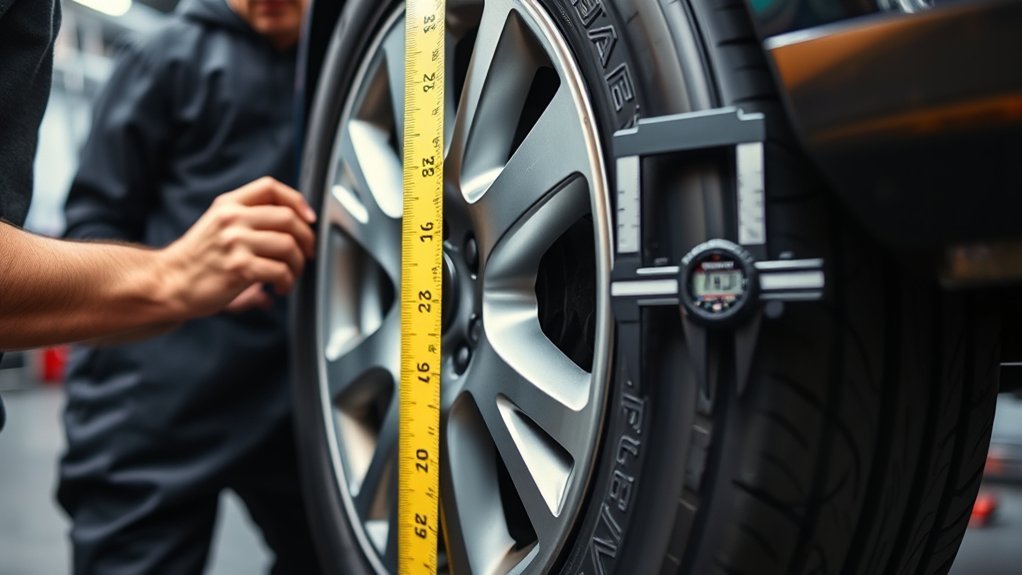
Start by checking the tire’s width, the first number in the size code, because it tells you the section width in millimeters from sidewall to sidewall; for example, P225/70R16 means the tire is 225 mm wide. Then read the aspect ratio, the next number, to find the sidewall height as a percentage of tire width. A 70 ratio means the sidewall height equals 70% of the width, which shapes ride quality and steering response.
Check tire width first, then aspect ratio to understand fit, ride quality, and steering response.
- Wider tire sizes can improve traction, but they may reduce fuel economy.
- Lower aspect ratio tires usually sharpen handling and feel more direct.
- Higher aspect ratio tires often absorb bumps better, giving you a smoother ride.
When you verify tire width and aspect ratio together, you protect fitment, performance, and efficiency. That knowledge lets you choose tires with intention, not compromise, and keeps your vehicle aligned with the freedom you want on the road. Additionally, understanding tire performance characteristics can help you make an informed decision based on your driving needs.
Why Measured Tire Size Differs
Measured tire size can differ from the number on the sidewall because real-world conditions change the tire’s shape and how you measure it. You’ll see variation from manufacturing tolerances and design details like tread pattern and sidewall construction, so the actual tire may not match the catalog value exactly. Inflation pressure changes the profile: more pressure can make the tire stand taller, while added load capacity can compress it and reduce measured diameter. Your measurement method matters too; a top-to-ground check won’t always match a circumference-based reading. Flotation tires also use sizing standards that differ from metric tires, so comparisons can mislead you. As tires wear and deform, the effective diameter drifts from the original spec, which means your measured tire size can shift over time. If you want accurate data, measure the tire under the same conditions you’ll use it, and trust the numbers that reflect how it rolls, not just how it’s labeled. Additionally, tire construction details such as ply rating and sidewall strength can significantly influence the overall performance and measured diameter of the tire.
Avoid Common Measurement Errors
To avoid common measurement errors, measure the tire at the center of the tread with a properly calibrated tape measure, and make sure it’s inflated to the recommended PSI first. This keeps your tire diameter reading stable and helps you use accurate methods instead of guesswork. If you need to measure tire circumference, wrap a string snugly around the tread, mark the length, then divide by 3.14 to get diameter. Don’t rely on one reading; take several from different points and average them to reduce error from tread irregularities. If you know the width in millimeters, record it separately, but don’t confuse width with diameter.
- Center-point measuring minimizes parallax and keeps the result repeatable.
- Proper inflation prevents under-sized readings that distort your calculation.
- Multiple checks give you a freer, more reliable number you can trust. Additionally, consider the tread depth as it can impact overall performance and safety.
How Tire Diameter Affects Fitment
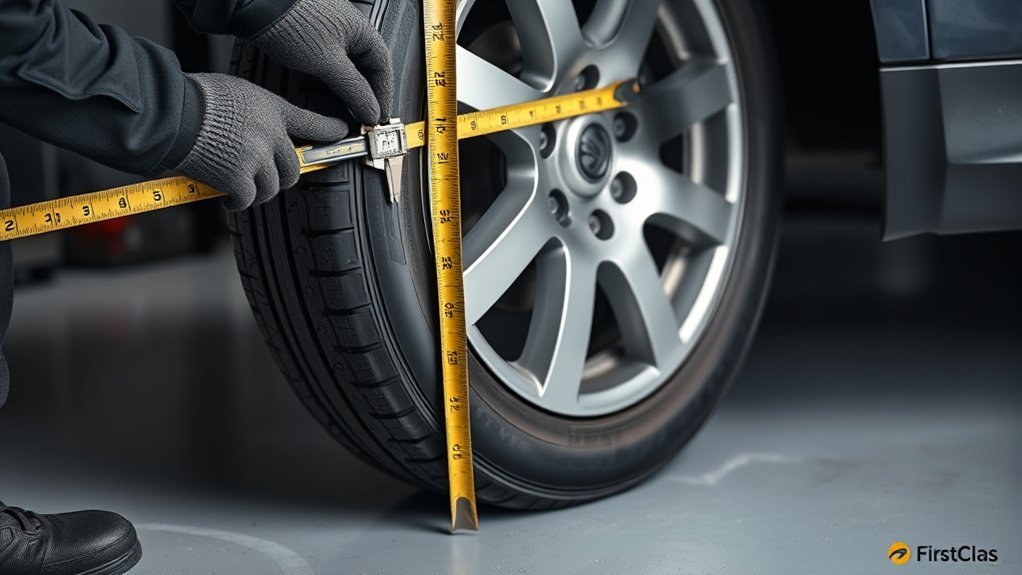
Tire diameter has a direct effect on fitment, so if you change sizes, you need to check more than just whether the tire looks right on the wheel. A larger tire diameter raises ground clearance, which can help off-road performance, but it can also shift weight and alter handling. If you choose oversized tires, inspect wheel-well space, steering travel, and suspension clearance to avoid rubbing on fenders or components. Keep the proper tire diameter within about ±3% of stock; that range helps preserve safe fitment and predictable behavior. A bigger diameter also changes gearing, lowering engine RPM at speed and possibly improving fuel economy, but it can slow acceleration. It will also make your speedometer read low, so a 2% increase means you’re actually moving 2% faster than indicated. Additionally, different tires like the Firestone All Season offer various performance characteristics that can influence fitment considerations. Measure carefully, because liberation on the road starts with accurate dimensions.
Frequently Asked Questions
How to Properly Measure Tire Diameter?
You properly measure tire diameter by inflating the tire to spec, then using tire measurement tools like a tape measure. Measure straight across the tire’s widest point, or wrap the tape around the center tread and calculate diameter from circumference. Use accurate measuring techniques, repeat readings, and avoid common measurement mistakes like underinflation or angled measurements. Understanding tire specifications helps you verify fitment, performance, and freedom to choose the right setup.
What Is the 3% Rule for Tires?
The 3% rule says you shouldn’t change tire diameter by more than 3% when you replace tires. You might think a small difference won’t matter, but it can skew speedometer readings and affect ABS. Check sidewall height, tread wear, load capacity, and tire rotation fit before you buy. For example, a 30-inch tire should stay between 29.1 and 30.9 inches. That keeps your vehicle’s systems accurate and dependable.
What Is the Diameter of 235 35 r20?
The diameter of a 235/35R20 tire is about 27.0 inches. You get this by combining the 235 mm section width, the 35% profile ratio, and the 20-inch wheel. This tire size gives you a low sidewall, so you’ll see sharper handling and a firmer ride. Check wheel compatibility before fitting it, and expect a real performance impact on speedometer accuracy, gearing, and clearance.
Is a 285 the Same as a 33?
No, you’re not looking at exactly the same tire. In tire sizing, a 285 usually means the width, not a 33-inch diameter, so diameter conversion depends on aspect ratio and rim size. A 285/75R17 often comes close to a 33-inch tire, but tread patterns, brand, and inflation can shift actual height. You’ll want to compare specs directly if you need precise fitment, clearance, or off-road performance.
Conclusion
To measure tire diameter accurately, you need the right method, the right formula, and a careful eye. You’ve seen how mounted and unmounted tires differ, why width and aspect ratio matter, and how small errors can distort fitment. So, measure twice, calculate once, and verify against your vehicle’s needs. When the numbers line up, the tire fits like a key in a lock—and that precision helps you avoid costly mistakes.

Related Articles
How to Fix a Tubeless Tire: Puncture Repair Without Removing It
Puncture your curiosity with this quick tubeless tire repair guide—discover the simplest fix without removing the tire, and what to do if it still leaks.
Read More
How Tall Is a 315 70R17 Tire? Exact Height, Width & Dimensions
What makes a 315 70R17 tire taller than expected? Discover its exact height, width, and dimensions before you choose.
Read More
How Tall Is a 315 70 R17 Tire? Exact Height, Width & Dimensions
Beneath the specs of a 315/70R17 tire lies its exact height, width, and fitment details—see what really makes it stand out.
Read More