
How Tall Is a 315 70R17 Tire? Exact Height, Width & Dimensions
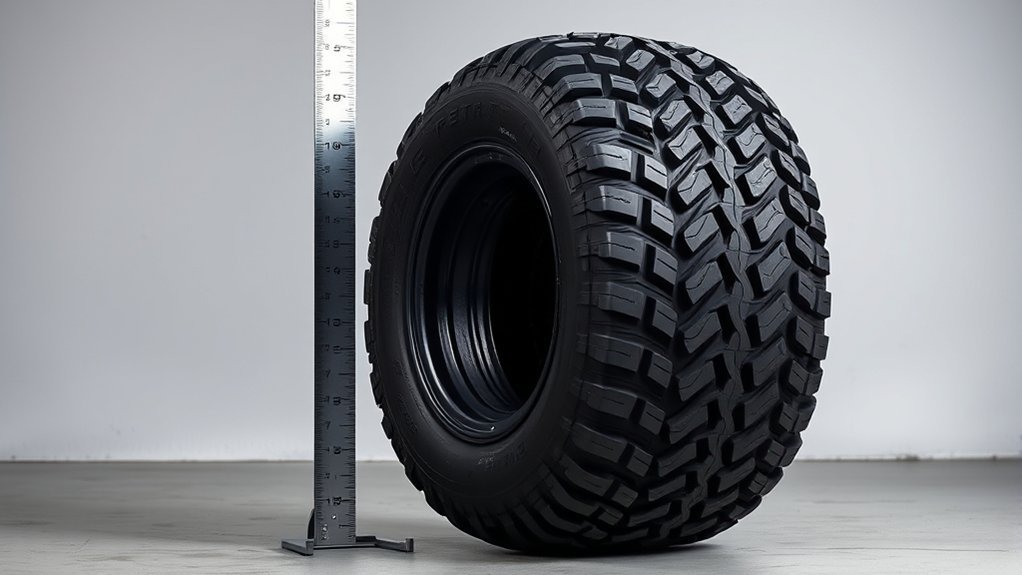
A 315/70R17 tire is a large metric light-truck/SUV size that works out to about 34.4 inches tall, about 12.4 inches wide, and about 8.7 inches of sidewall on a 17-inch wheel. Those numbers are nominal calculations, not a guarantee that every tire model will measure exactly the same once mounted, inflated, and loaded.
Last updated: August 18, 2026. Method: The dimensions below are calculated from the size code and cross-checked against current tire-industry, manufacturer, and federal safety sources. They are nominal values, not a claim that every mounted 315/70R17 will measure the same.
Quick Answer
A 315/70R17 tire is about 34.4 inches tall, 12.4 inches wide, and fits a 17-inch wheel. The sidewall is about 8.7 inches tall. Nominal circumference is about 108.0 inches, which works out to about 587 theoretical revolutions per mile. Actual mounted dimensions and published revolutions per mile can vary by tire model, wheel width, pressure, and load, so use the exact manufacturer spec sheet for fitment or calibration.
Key Takeaways
- A 315/70R17 tire has a nominal overall diameter of about 34.4 inches, or about 873 mm.
- Its nominal section width is 315 mm, which equals about 12.4 inches.
- The sidewall height is about 220.5 mm, or about 8.7 inches.
- Nominal circumference is about 108.0 inches, or about 2,744 mm, which equals about 587 theoretical revolutions per mile.
- The size fits a 17-inch wheel, but wheel width, offset, suspension travel, and fender clearance decide whether it fits your vehicle.
- Load range, load index, speed rating, tread depth, and actual measured width vary by tire model.
Note: Tire-size calculations are estimates. For close-clearance builds, use the exact spec sheet for the tire model you plan to buy, because manufacturer dimensions can differ from the size code.
What Does 315/70R17 Mean?
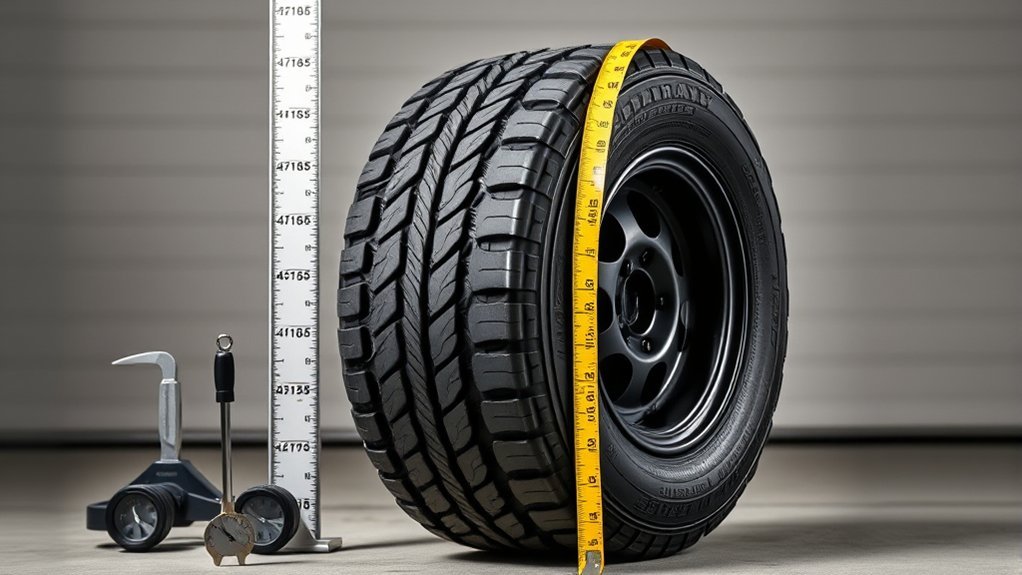
A 315/70R17 tire size tells you four main things:
- 315 = nominal section width in millimeters.
- 70 = aspect ratio, meaning the sidewall height is 70% of the tire width.
- R = radial construction.
- 17 = wheel diameter in inches.
In plain English, this is a wide, tall tire commonly used on light trucks, heavy-duty pickups, Jeeps, and off-road SUV builds. It is often grouped with “35-inch” tire options, but mathematically it is slightly shorter than a true 35-inch tire.
[Products Worth Considering]

This tire repair kit provides fast emergency puncture repair without removing the tire from the rim, helping you get back on the road quickly. Its screw plug system is designed for punctures in both tread and sidewall and includes a complete patch plug tool set with essential accessories. A portable storage bag makes it easy to carry for cars, trucks, SUVs, motorcycles, and heavy-duty applications.

This VEVOR tire bead breaker uses a slide-hammer impact and wedge tip to separate tire beads from rims quickly and efficiently without damaging hub surfaces. The long handle and sturdy steel construction help reduce user strain while providing reliable, portable tire changing for cars, trucks, and more. Ideal for home mechanics and repair shops handling multiple vehicle tire sizes.

This portable cordless tire inflator delivers up to 160 PSI with fast 17 L/min airflow to help you quickly top up tires and get back on the road. It features dual power mode, running on a 21V rechargeable battery or a 12V DC adapter for convenient roadside use. An automatic shut-off with digital pressure gauge helps prevent overinflation, and a built-in LED light improves visibility in low-light conditions.
315/70R17 Size Conversion Table
| Specification | Approximate Size |
| Overall diameter | 34.4 in / 873 mm |
| Section width | 12.4 in / 315 mm |
| Sidewall height | 8.7 in / 220.5 mm |
| Wheel diameter | 17 in / 431.8 mm |
| Approximate circumference | 108.0 in / 2,744 mm |
| Theoretical revolutions per mile | About 587 rev/mi from nominal circumference; use the tire maker’s published value for calibration |
How Tall Is a 315/70R17 Tire?
A 315/70R17 tire is about 34.4 inches tall. Here is the basic calculation:
- 315 mm × 0.70 = 220.5 mm sidewall height
- 220.5 mm ÷ 25.4 = 8.68 inches sidewall height
- 8.68 in + 8.68 in + 17 in = 34.36 inches overall diameter
Rounded normally, that gives you a 34.4-inch tire. Because many tire listings round up, you may also see this size grouped with 35-inch tires, but it is not exactly the same as a true 35×12.50R17.
How Wide Is a 315/70R17 Tire?
A 315/70R17 tire has a nominal section width of 315 mm, or about 12.4 inches. Section width is measured from sidewall to sidewall, not just the tread blocks that touch the road.
Actual measured width can vary by tire model and measuring rim. Tire Rack notes that section width changes as rim width changes, so the 315 mm size code should not be treated as an exact installed width. Tread and shoulder shape also affect clearance, which is why two 315/70R17 tires can rub differently on the same vehicle.
How to Calculate 315/70R17 Tire Size
You can calculate the basic dimensions with the same tire-size formula used for metric tire conversions:
| Step | Formula | 315/70R17 Result |
| Sidewall height | Width × aspect ratio | 315 × 0.70 = 220.5 mm |
| Sidewall in inches | Sidewall mm ÷ 25.4 | 220.5 ÷ 25.4 = 8.68 in |
| Overall diameter | Two sidewalls + wheel diameter | 8.68 + 8.68 + 17 = 34.36 in |
For a deeper explanation of tire dimension math, see Tire Rack’s guide to calculating tire dimensions. Tire Rack also explains how rim width affects measured section width.
What Affects 315/70R17 Tire Size?
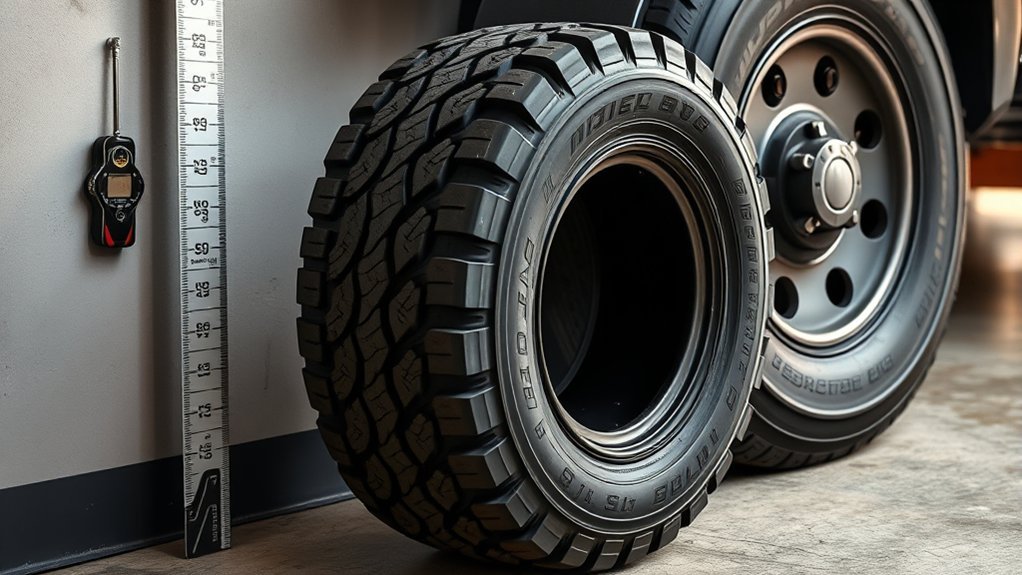
The size code gives you the nominal tire dimensions, but real-world measurements can shift. Tire brand, tread pattern, tread depth, rim width, inflation pressure, and load all affect the mounted shape.
Brand and Model Differences
Two 315/70R17 tires can measure differently because the size code is nominal. Tread design, casing construction, tread depth, and the measuring rim can change the published dimensions. Use the exact model’s specification sheet when clearance is tight.
Wheel Width and Offset
Wheel width changes the tire’s mounted profile. A wider wheel can spread the sidewalls slightly, while a narrower wheel can pull them inward. Offset also matters because it moves the tire closer to, or farther from, suspension parts and fender edges.
Tire Pressure and Load
Tire pressure changes sidewall shape under load. Under-inflation can increase sidewall flex, heat, uneven wear, and handling problems. Over-inflation can reduce ride comfort and create uneven tread wear. Always use the vehicle manufacturer’s recommended pressure from the tire placard or owner’s manual, not the maximum pressure molded on the tire sidewall.
Warning: Do not choose a 315/70R17 tire by diameter alone. Check load index, speed rating, approved rim width, fender clearance, steering clearance, brake clearance, and the vehicle manufacturer’s guidance before installing it.
How Does 315/70R17 Compare to Stock Tires?
A 315/70R17 is larger than many factory pickup and SUV tire sizes. For example, compared with a 275/70R17, a 315/70R17 is about 2.2 inches taller and 1.6 inches wider. Compared with a 285/70R17, it is about 1.7 inches taller and 1.2 inches wider.
| Size | Approx. Diameter | Approx. Width | Notes |
| 275/70R17 | 32.2 in | 10.8 in | Common narrower stock-style size |
| 285/70R17 | 32.7 in | 11.2 in | Popular upgrade size on many trucks and SUVs |
| 315/70R17 | 34.4 in | 12.4 in | Large upgrade; clearance must be verified |
| 35×12.50R17 | Nominally 35.0 in; actual model dimensions vary | Nominally 12.5 in; actual model dimensions vary | Slightly taller than 315/70R17 |
The bigger diameter can improve ground clearance, but it can also affect acceleration, braking feel, fuel economy, gearing, and speedometer accuracy. The wider footprint can help traction on loose terrain, but it can also create rubbing at full steering lock or suspension compression.
What Vehicles Use 315/70R17 Tires?
315/70R17 tires appear on both factory off-road packages and modified truck/SUV builds. One verified factory example is the 2026 Ford Bronco with the available Sasquatch package, which Ford lists with LT315/70R17 35-inch tires on applicable trims. That factory example does not mean the size fits other vehicles or trims without changes.
Fitment depends on the vehicle’s factory tire size, wheel offset, suspension height, lift kit, fender clearance, axle rating, and intended use. Some vehicles may need a lift, trimming, different wheels, steering-stop adjustment, or recalibration after moving to this size. If you are sizing a Tundra specifically, see our Toyota Tundra tire size calculator for a vehicle-focused comparison workflow.
[Products Worth Considering]

This compact capsule-style tire repair kit helps you quickly fix punctures and plug flats with minimal effort. The rugged stainless steel shell protects the contents for reliable roadside use, while the simple plug assembly makes repairs fast and tool-free. Suitable for motorcycles, cars, ATVs, UTVs, and even mountain bikes.
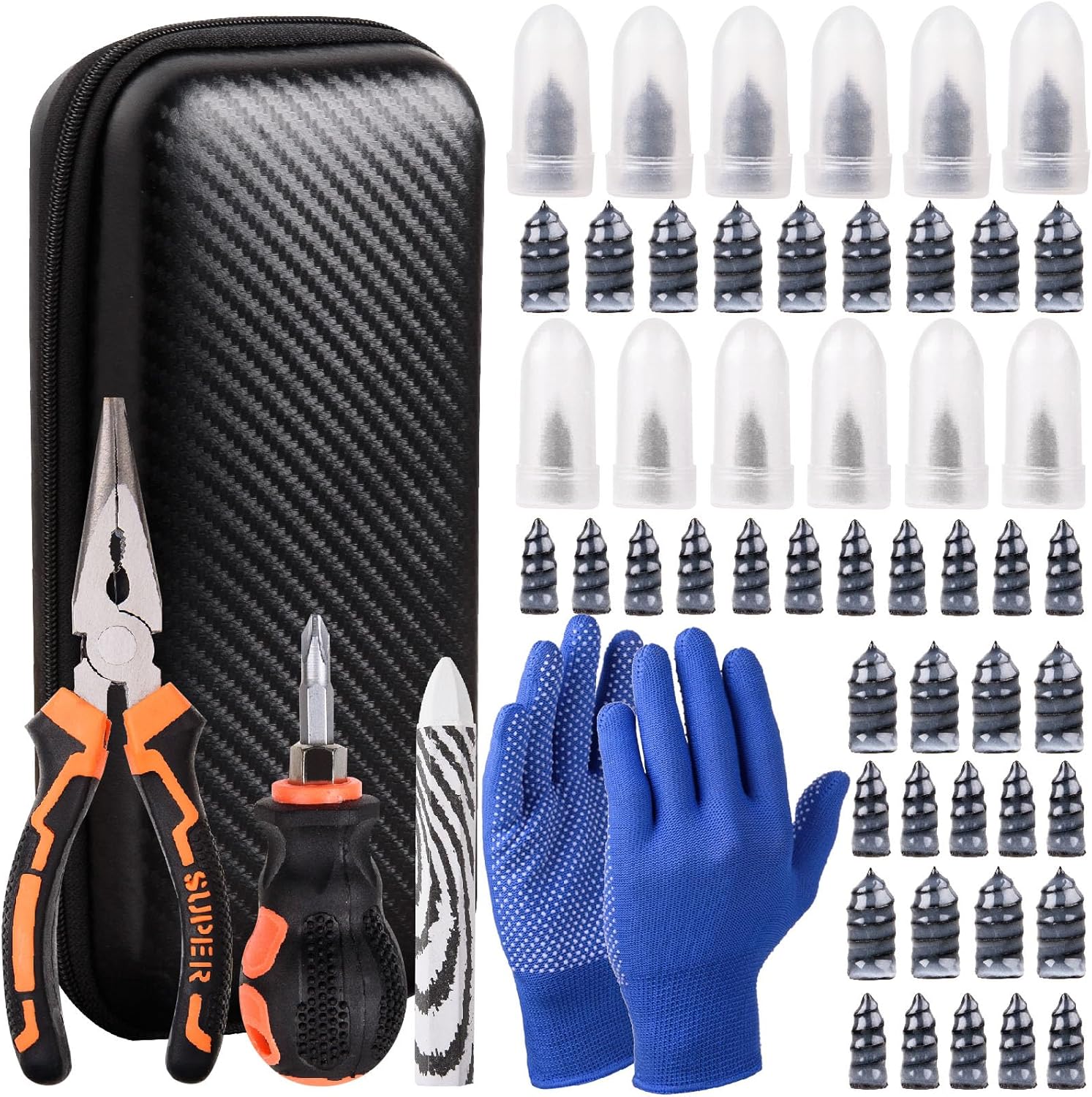
This tire sidewall puncture repair kit fixes flats fast without removing the tire, helping you get back on the road in minutes. It includes self-tapping repair nails, essential tools, gloves, and a portable storage bag for convenient roadside use. Designed for tubeless tires, it helps create a tight, leak-resistant seal for cars, motorcycles, trucks, SUVs, and ATVs.
315/70R17 Fitment Checklist
- Check the owner’s manual and tire placard for approved sizes and load requirements.
- Confirm the tire’s load index meets or exceeds the original equipment requirement.
- Confirm the speed rating is appropriate for the vehicle and use case.
- Check full-lock steering clearance on both sides.
- Check clearance under suspension compression.
- Verify wheel width and offset against the tire manufacturer’s approved rim-width range.
- Confirm spare-tire storage clearance if you carry a full-size spare.
- Recalibrate the speedometer if the tire diameter changes significantly from stock.
Pro Tip: Before ordering, compare the spec sheet for the exact tire model, not just the size code. Overall diameter, approved rim width, tread depth, weight, and load range can vary between 315/70R17 tires.
What Are the Load and Speed Ratings?
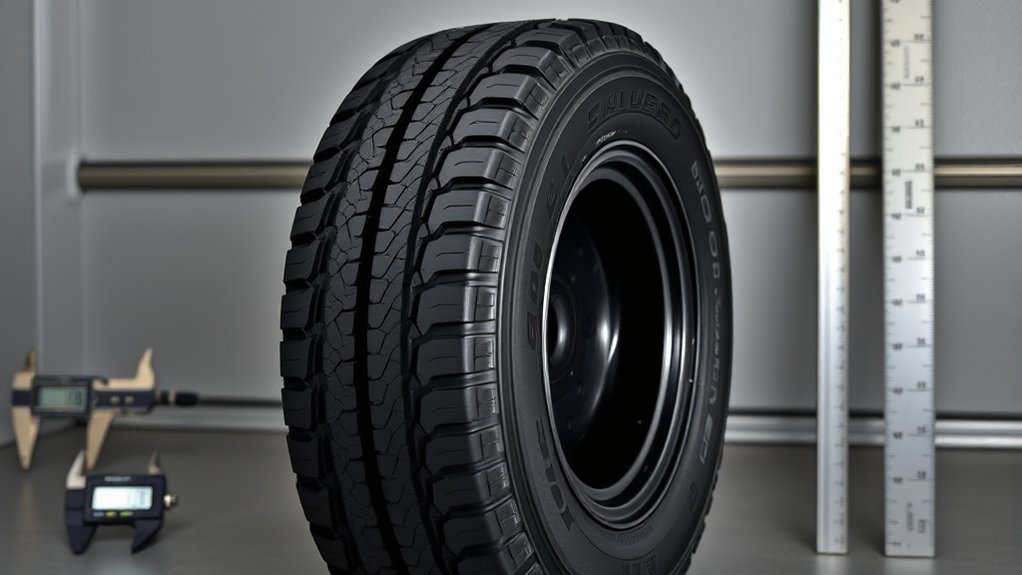
The load and speed ratings are part of the tire’s service description. They tell you how much weight the tire can carry and the maximum speed rating under specified test conditions. These values are not the same for every 315/70R17 tire.
Current 315/70R17 listings from Goodyear include tires with C, D, and E load ranges and Q, S, and T speed ratings, confirming that the size code alone does not determine load or speed capability. Michelin explains that the service description on the sidewall combines load and speed information, so verify the exact tire, vehicle placard, and owner’s manual before replacement. See Goodyear’s current 315/70R17 listings and Michelin’s load and speed rating guide.
| Marking | What It Means |
| 121 | Load index 121 corresponds to about 3,197 lb per tire when properly inflated for that rating. |
| Q | Speed rating up to 99 mph (160 km/h). |
| S | Speed rating up to 112 mph. |
| T | Speed rating up to 118 mph. |
Use the tire’s actual sidewall marking as the final answer. A larger tire does not increase the vehicle’s legal payload or axle rating. The vehicle remains limited by its GVWR, GAWR, suspension, brakes, wheels, and manufacturer specifications.
What Tire Sizes Are Close to 315/70R17?
A useful alternate size depends on whether you want nearly the same height, less rubbing risk, or more ground clearance. The sizes below are dimensional comparisons, not universal replacements. Your vehicle’s approved size, load requirement, wheel width, offset, and clearance still control fitment.
| Alternate Size | Approx. Diameter | Why Consider It? |
| 305/70R17 | 33.8 in | Slightly narrower and shorter; may reduce rubbing. |
| 285/75R17 | 33.8 in | Similar height to 305/70R17 but narrower than 315/70R17. |
| 33×12.50R17 | About 33.0 in | Wide footprint with less height than 315/70R17. |
| 35×12.50R17 | About 35.0 in | Slightly taller “true 35” option; often needs more clearance. |
| 325/70R17 | 34.9 in | Taller and wider than 315/70R17; fitment is more demanding. |
If your vehicle is close to rubbing on 315/70R17 tires, a 305/70R17 or 285/75R17 may be easier to package. If you are also considering a 285-series option, our 285/70R17 size breakdown shows the full dimensions. A 35×12.50R17 is the common flotation-size comparison, but its actual measured diameter and width still vary by tire model.
How Much Can 315/70R17 Change Speedometer Readings?
If you replace a smaller stock tire with 315/70R17, the vehicle can travel farther per wheel revolution. A simple estimate is: actual speed = indicated speed × new tire diameter ÷ original tire diameter. This is a nominal calculation, so final calibration should use the exact tire model and your vehicle manufacturer’s approved procedure.
| Original Size | Approx. Diameter | Diameter Change to 315/70R17 | If Speedometer Shows 60 mph |
| 275/70R17 | 32.2 in | About +6.8% | About 64.1 mph |
| 285/70R17 | 32.7 in | About +5.1% | About 63.0 mph |
These examples use nominal tire-size math. Real rolling circumference varies with tire model, tread wear, inflation, load, and calibration method, so do not use the table as a substitute for the vehicle manufacturer’s recalibration procedure.
How Do You Check Tire Pressure?
To check tire pressure, use a reliable gauge and compare the reading with the vehicle manufacturer’s recommended PSI on the driver’s door placard or in the owner’s manual. Do this when the tires are cold, meaning the vehicle has not been driven for at least three hours.
| Step | Action |
| 1 | Find the recommended cold PSI on the vehicle placard or owner’s manual. |
| 2 | Remove the valve cap from each tire. |
| 3 | Press the gauge firmly onto the valve stem. |
| 4 | Add or release air until the tire matches the recommended cold pressure. |
| 5 | Recheck the pressure and reinstall the valve cap. |
NHTSA recommends checking all tires, including the spare, at least once a month when cold. See NHTSA TireWise tire safety guidance for pressure, tread, rotation, and maintenance basics.
Will 315/70R17 Tires Fit Your Vehicle?
A 315/70R17 tire might fit your vehicle, but you should not assume it will. At about 34.4 inches tall and 12.4 inches wide, this tire needs enough room at the fenders, control arms, sway bar, frame, bumper, liners, and body mounts.
Use the vehicle placard and owner’s manual as your starting point. If the tire size is not listed as an approved replacement, talk with a tire professional or experienced fitment shop. A tire that clears while parked may still rub while turning, braking, towing, or compressing the suspension off-road.
The safest 315/70R17 fitment is not just the one that clears the fender. It is the one that also meets the vehicle’s load rating, speed rating, rim-width, pressure, and handling requirements.
Frequently Asked Questions
Is 315/70R17 the same as 35×12.50R17?
No. A 315/70R17 is about 34.4 inches tall and 12.4 inches wide, while a 35×12.50R17 is nominally 35 inches tall and 12.5 inches wide. Actual manufacturer dimensions vary, and the difference can still affect rubbing, gearing, speedometer accuracy, and clearance.
Which tire is taller, a 65 or 70 aspect ratio?
With the same tire width and wheel diameter, a 70-series tire is taller than a 65-series tire. The aspect ratio is the sidewall height as a percentage of the tire width, so 70% creates a taller sidewall than 65%.
How much bigger is a 315/70R17 than a 285/70R17?
A 315/70R17 is about 1.7 inches taller and about 1.2 inches wider than a 285/70R17 by nominal tire-size math. That extra size can increase clearance and stance, but it can also increase rubbing risk and change speedometer accuracy.
How tall and wide is a 315/70R17 tire?
A 315/70R17 tire is nominally about 34.4 inches tall and 12.4 inches wide. The sidewall is about 8.7 inches tall. Actual dimensions vary by tire model, rim width, tread depth, inflation pressure, and load.
Do I need to recalibrate my speedometer after installing 315/70R17 tires?
You may need recalibration if 315/70R17 tires are much taller than your stock tires. A larger diameter tire travels farther per revolution, which can make the speedometer and odometer read lower than your actual road speed and distance.
How many revolutions per mile does a 315/70R17 tire make?
Using the nominal 34.36-inch diameter, the calculated circumference is about 108.0 inches, which equals about 587 theoretical revolutions per mile. For speedometer or drivetrain calibration, use the exact tire manufacturer’s published revolutions-per-mile value when available because real rolling dimensions vary.
What wheel width fits a 315/70R17 tire?
There is no single approved wheel-width range that applies to every 315/70R17 tire model. Check the manufacturer’s specification sheet for the exact tire you plan to install, then confirm wheel width, offset, load capacity, and vehicle clearance together.
Conclusion
A 315/70R17 tire is nominally about 34.4 inches tall, about 12.4 inches wide, and built for a 17-inch wheel. Before buying, confirm the exact tire model’s measured dimensions, approved rim width, load and speed ratings, and your vehicle’s clearance at full steering lock and suspension compression. If you are upsizing from a smaller tire, also verify whether the vehicle needs speedometer or driver-assistance recalibration.
Sources
- Tire Rack — How Do I Calculate Tire Dimensions? — supports the sidewall and overall-diameter formula.
- Tire Rack — How To Determine the Section Width of a Tire — supports the effect of measuring rim width on section width.
- NHTSA TireWise — supports tire pressure, placard, tread, and safety guidance.
- Michelin — Tire Markings Explained — supports tire width, aspect ratio, load/speed markings, pressure markings, and 3PMSF/M+S explanation.
- Michelin — Tire Load Rating & Speed Rating Explained — supports load index and speed rating guidance.
- Yokohama Tire — Tire Replacement — supports matching replacement tire size, construction, load index, and speed rating.
- Goodyear — 315/70R17 tire listings — supports the current range of 315/70R17 load ranges and speed ratings.
- Ford — 2026 Bronco — supports the factory LT315/70R17 Sasquatch-package example.

Related Articles
305 Tire Size Explained: How Big Is It?
I explain how big a 305 tire really is—and why the exact fit can surprise you.
Read More
Tire Ply Rating Explained: What the Numbers Mean
Tire ply ratings reveal more than numbers, hinting at strength, load capacity, and hidden tradeoffs you’ll want to understand before choosing.
Read More
2 Ply Vs 4 Ply Tires: What’s the Real Difference?
I’ll explain the real difference between 2-ply and 4-ply tires, and the choice may surprise you depending on where you drive.
Read More