
How Many Miles Should a Tire Last? Average Lifespan Guide

Most tires last about 25,000 to 70,000 miles, depending on type and use. You can expect all-season tires to reach 50,000 to 70,000 miles, while winter, summer, and high-performance tires often wear out sooner. Your driving style, inflation, rotation schedule, and road conditions all affect lifespan. You should replace tires at 2/32 inch tread depth, or sooner if you see cracks, uneven wear, or dry rot. More details can sharpen your estimate.
Key Takeaways
- All-season tires typically last 50,000 to 70,000 miles, often around 60,000 with proper maintenance.
- Winter tires usually last 20,000 to 40,000 miles, while summer tires last about 25,000 to 30,000 miles.
- High-performance tires wear faster, often needing replacement after 15,000 to 20,000 miles.
- Driving habits, inflation, road conditions, and maintenance can shorten or extend tire life significantly.
- Replace tires at 2/32-inch tread depth, visible cracking, or after 6 to 10 years regardless of mileage.
How Many Miles Do Tires Last?

Tire lifespan varies considerably by type and use, but most all-season tires last about 50,000 to 70,000 miles under normal driving conditions. You can treat that range as the baseline for daily driving freedom. Winter tires usually last 20,000 to 40,000 miles, while summer tires often reach 25,000 to 30,000 miles. High-performance tires may only last 15,000 to 20,000 miles because their softer compounds trade longevity for grip. If you want your tires to last long, track pressure carefully and keep tread wear even through regular rotations. Proper maintenance can extend life and sometimes push all-season tires toward 60,000 miles. You should measure remaining tread, compare it with service limits, and replace your tires before traction falls below safe levels. In practice, tire miles depend on design, compound, and disciplined upkeep, so you can make informed choices without surrendering control to preventable wear. Additionally, factors such as UTQG ratings can help you assess tire durability and performance over time.
What Shortens Tire Life Most
The biggest tire-life killers are aggressive driving, poor inflation, and neglected maintenance. Your driving habits matter: hard launches and panic stops spike heat, stress tire tread, and make tires wear quicker. Rough road conditions, potholes, and debris add cuts and impact damage, cutting tire life further. Improper inflation is equally costly; low tire pressure flexes the sidewall, while excess pressure concentrates load and creates uneven tread wear. Lack of maintenance compounds every flaw, because skipped rotations and alignment checks let wear patterns spread and can reduce life by 25%. Environmental factors also matter: intense heat, freezing cold, and UV exposure age rubber even when mileage stays low. Regularly checking tire pressure can significantly extend the lifespan of your tires.
- Check tire pressure monthly.
- Rotate tires on schedule.
- Align wheels after impacts.
- Slow down on rough roads.
- Store vehicles away from heat.
Signs Your Tires Are Wearing Out
Once tire life starts dropping, the warning signs usually show up in the tread, sidewalls, and driving feel. You should inspect each tire for worn tread depth; at 2/32 inch, replace it because safety and traction collapse.
| Sign | Meaning |
|---|---|
| Cracks | Aging rubber |
| Uneven wear | Alignment problem |
| Vibrations | Structural issue |
| 10+ years | Replace now |
Look for visible cracks, discoloration, or dry rot on the sidewalls; those defects signal aging materials and a tire that’s no longer reliable. Uneven wear across the tread often points to an alignment fault, and you may need correction or replacement. If you feel vibrations or hear unusual noises, treat that tire as suspect and schedule immediate inspection. Age matters even when tread looks acceptable: after 10 years, the material can fail without much warning. Don’t let mileage alone decide the outcome; use these signs to judge when to replace. Additionally, understanding the importance of tire maintenance can significantly extend the life of your tires.
How to Make Tires Last Longer
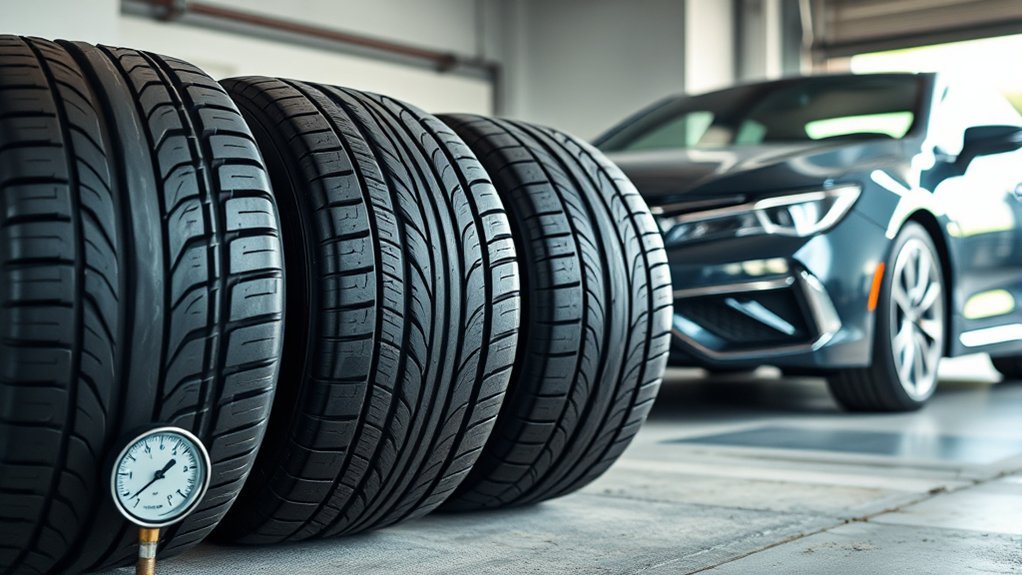
Keeping tires in service longer starts with controlling the variables that drive wear: check air pressure regularly and keep it at the manufacturer’s specification, rotate tires every 5,000 to 7,500 miles, and inspect tread depth with the penny test so you can replace them at 2/32 inch. That’s how you make tires last longer and protect the life of your tires.
Check tire pressure, rotate on schedule, and watch tread depth to keep tires lasting longer.
- Keep a log of air pressure checks.
- Make sure tires rotated follow the recommended interval.
- Use gentle throttle and braking inputs.
- Schedule alignments and balance checks after potholes.
- Compare different types only by load, speed, and usage.
If you’re asking how long do tires last, the answer depends on maintenance, road conditions, and driving style. Tire manufacturers design a new set for specific service limits, but your habits decide whether they reach them. It’s a good idea to inspect monthly, because precision extends performance and reduces waste. Additionally, consider using all-season tires to improve versatility and maintain grip in various conditions.
When to Replace Your Tires
When should you replace your tires? You should time to replace them when tread depth falls to 2/32 of an inch, or sooner if you see cracking, discoloration, or dry rot. Even if the tread looks acceptable, tires generally shouldn’t stay in service beyond 6 years, and you should never exceed 10 years from the DOT manufacturing date. Use regular inspections to check tire condition, because vibrations and uneven wear patterns can reveal hidden defects. If a tire is worn, its grip and braking performance drop sharply, regardless of how many miles do tires cover. Different tires provide different wear profiles, so follow the manufacturer’s guidance for your specific setup. New tires restore safety, but only when you replace them at the right threshold. Ask not just how long do tires last, but whether your tires still meet functional limits. Liberation from risk starts with precise monitoring, disciplined assessment, and timely replacement. Additionally, consider using winter tires for enhanced traction and safety in cold conditions.
Frequently Asked Questions
Is 30000 Miles Good for a Set of Tires?
Yes—30,000 miles can be good for performance tires, but it’s low for most all-season sets. You should check Tire wear and tread depth against replacement signs, then weigh mileage factors, driving conditions, tire maintenance, seasonal changes, and road hazards. If you’ve pushed performance tires hard, that lifespan fits. If not, you may need new tires sooner than expected. Stay critical, keep control, and don’t accept unsafe limits.
Is a 40,000 Mile Tire Good?
Yes, a 40,000-mile tire is good if you value balanced tire longevity and predictable mileage expectations. You’ll often see it on lower-end all season durability options or some performance tires, where softer compounds boost grip but increase tread wear. Your driving habits, tire maintenance, and seasonal changes will strongly affect results. Check tread depth, sidewall condition, and other replacement signs regularly, because age can outrun mileage.
What Is the #1 Tire Brand?
Michelin’s your #1 tire brand, and one study shows its all-season tires can last 55,000–95,000 miles. You should evaluate tire maintenance tips, tread wear indicators, seasonal tire changes, and tire pressure importance to maximize lifespan. Track tire rotation frequency, compare tire warranty policies, and perform tire safety checks when choosing tire brands. Michelin also makes eco friendly tires, giving you performance and control with less dependence on constant replacement.
Is 20,000 Miles on Tires a Lot?
No, 20,000 miles usually isn’t a lot. You’re still early in the tire lifespan, especially with all-season or touring tires. For performance tires or seasonal tires, it can be substantial. You should inspect tread wear, tire pressure, and tire rotation history, because driving conditions, road hazards, and tire maintenance matter more than mileage alone. If you’ve maintained them well, you may still have usable tread left.
Conclusion
Tires usually last between 25,000 and 50,000 miles, but your driving habits, alignment, inflation, and rotation schedule determine where you fall in that range. Watch for low tread, uneven wear, cracks, and vibration, because those symptoms signal declining performance and reduced safety. Maintain proper pressure and rotate on schedule to extend service life. Think of your tires as your vehicle’s only contact patch with the road; when they weaken, everything else matters less.

Related Articles
How Many Miles Before Replacing a Tire? Tread Life Explained
Compare tire tread life, mileage, and warning signs to know when replacement is due before your next drive.
Read More
How Long Does A Tire Repair Take? Time Guide & What Affects It
It can take 15 to 60 minutes to repair a tire—depending on damage, method, and shop load—but what makes the biggest difference?
Read More
Can You Drive With a Screw in Your Tire? What Experts Recommend
A screw in your tire may seem minor, but experts warn the right move depends on where it is, how much air remains, and what happens next.
Read More