
What Holds a Tire on a Car? Full Wheel & Hub Assembly Guide
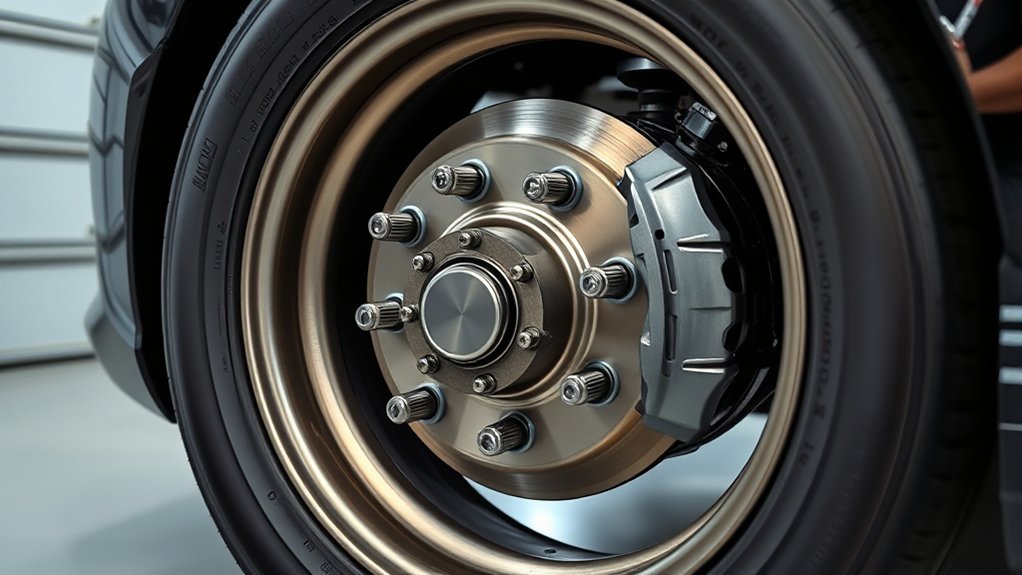
Your tire stays on the car because the wheel hub, studs, lug nuts, and rim clamp the wheel assembly to the axle. The rim supports the tire’s shape, while the bead seats against the rim to hold air pressure. You need properly torqued lug nuts and sound studs for secure attachment. Alignment and rotation also help maintain safe wear and handling. Keep going, and you’ll see how each part works together.
Key Takeaways
- The wheel hub and axle support the tire and connect it securely to the vehicle.
- Wheel studs and lug nuts clamp the wheel to the hub, keeping it firmly attached.
- The rim supports the tire’s structure and must match the tire’s size and width.
- Tire beads seal against the rim flanges to hold air pressure inside the tire.
- Proper torque, alignment, and rotation help maintain wheel security and tire performance.
What Holds a Tire on a Car?
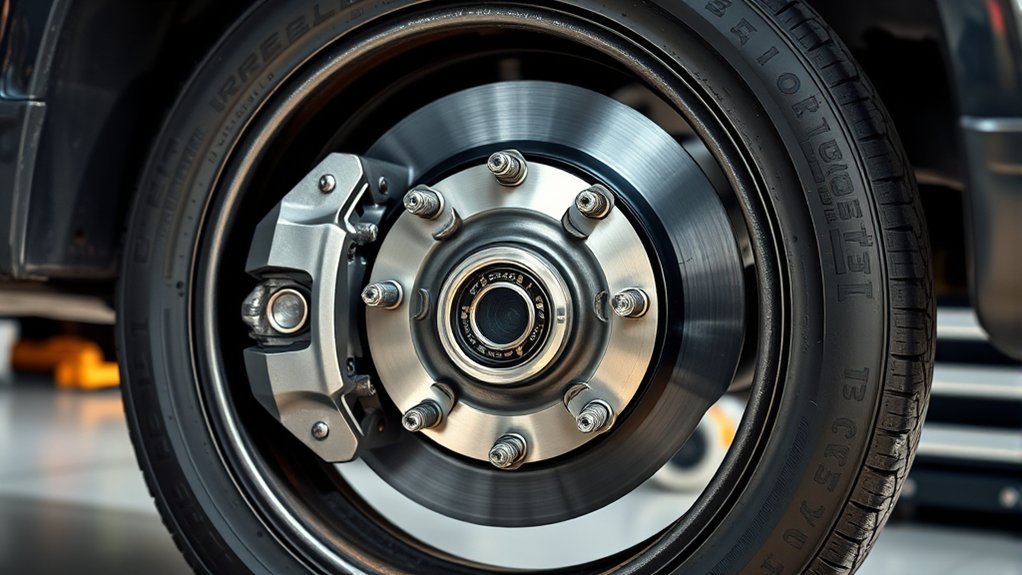
A tire stays secured to your car by the hub, which connects to the axle and uses five bolts with lug nuts to clamp the wheel in place. You depend on this hub-and-axle interface for direct structural support at the wheel center, not for carrying the tire alone. The rim surrounds the tire and works with air pressure to keep the assembly firm and controllable. Inside the tire, the beads seat against the rim to form an airtight fit, while mounting humps help keep those beads from slipping during cornering or impact. The center cap covers the center bore, shielding the lug nuts from debris and giving the wheel a clean finish. When you inspect your wheel, check for loose lug nuts, damaged beads, or uneven seating. Proper torque and correct inflation help you stay safe, reduce failure risk, and maintain the freedom of reliable motion. Additionally, ensuring stable handling at high speeds can enhance your driving experience and safety on the road.
How the Rim Supports the Tire
The rim forms the wheel’s structural skeleton, supporting the tire’s shape and creating the sealed cavity that lets air hold the assembly at the correct pressure. You depend on this rim for structural support, because its diameter and width set which tire sizes are compatible. That fit affects handling, load balance, and performance, so you don’t want guesswork. Steel and aluminum rims both keep the wheel assembly rigid while the inflated tire rides on them. The hub centers the assembly, but the rim gives the tire its working profile and stability.
- Match rim diameter to the tire spec
- Confirm rim width before mounting
- Choose a style that suits your vehicle
- Expect truck rims to be beefier
- Check compatibility for safe performance
When you select the right rim, you support the tire’s shape, protect inflation, and keep your vehicle ready to move with confidence. Additionally, the load rating of the rim must align with the tire’s specifications to ensure optimal performance and safety.
What Wheel Studs and Lug Nuts Do
Once the rim is sized correctly, the wheel still needs a secure connection to the hub, and that job falls to the wheel studs and lug nuts. You rely on wheel studs as threaded fasteners that anchor the wheel to the vehicle hub, giving you stability and a secure attachment. Most wheels use five studs, mounted semi-permanently so the wheel can clamp firmly in place. You then tighten the lug nuts onto the studs with the correct torque; that clamping force keeps the assembly from shifting or loosening during driving. If you under-torque or over-torque them, you weaken wheel security and invite failure. Because a loose wheel can separate and cause accidents, you should treat this hardware as critical safety equipment. Make regular inspection part of your maintenance routine, and replace worn or damaged studs or lug nuts before they compromise control. Ensuring proper torque settings is essential for tire performance and safety, as inadequate fastening can lead to serious driving hazards.
How the Tire Seals to the Rim
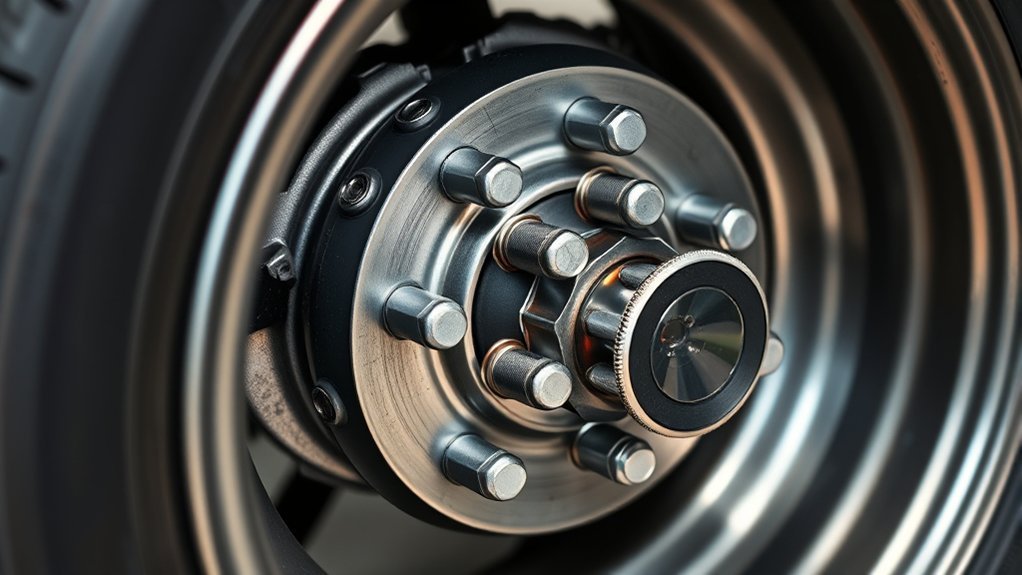
When you mount a tire, its beads seat tightly against the rim flanges to create the air seal that holds pressure and keeps the wheel stable. You depend on that fit for a secure connection, because the tire seals only when the beads match the rim profile without gaps.
- The beads lock against the rim to retain air pressure.
- Mounting humps help stop bead slip during hard cornering.
- The drop center gives you room for clean installation.
- Tight bead seating supports stability at speed and load.
- Solid fitment protects tire integrity in rough conditions.
- Proper installation is crucial for ensuring optimal tire performance in varying winter conditions.
If the beads sit unevenly, air can escape and performance drops fast. You can’t ignore this interface: it’s the barrier that keeps pressure inside and the tire working as designed. With proper installation, the seal forms naturally, the wheel stays composed, and you get the freedom of confident, controlled driving.
Why Alignment and Rotation Matter
Keeping your tires rotated and your wheels aligned helps you get even tread wear, steadier handling, and longer service life. Tire rotation changes each tire’s position so load doesn’t punish one corner, while wheel alignment keeps the tires parallel and correctly angled. That combination protects vehicle performance and helps you stay in control. Properly maintained tires, such as those designed for all-season performance, can enhance your driving experience and safety.
| Service | Benefit | Interval |
|---|---|---|
| Tire rotation | Reduces uneven wear | 5,000–7,500 miles |
| Wheel alignment | Improves handling | Check as needed |
| Regular maintenance | Supports safety | At every service |
When misalignment sneaks in, you can lose fuel efficiency and feel the car drift or pull. In adverse driving conditions, those faults compound fast. Follow recommended intervals, inspect wear patterns, and correct issues before they spread. Consistent tire rotation and wheel alignment keep the car responsive, efficient, and ready for the road.
Frequently Asked Questions
What Parts Hold the Wheel?
You hold the wheel with wheel lugs or wheel bolts, which clamp it to the hub assembly. The axle shaft supports the hub, while the bearing race lets it spin smoothly. The brake rotor sits inside the wheel path, and the rim structure keeps the tire bead seated. Proper tire pressure and wheel alignment keep everything stable, so you’re not fighting the road—you’re controlling it with precision.
What Is the Thing That Holds Your Tire Called?
It’s the rim that holds your tire. You mount the tire on the rim, and the hub assembly secures that wheel with lug nuts. Good rim design supports tire pressure, wheel balance, and tire mounting, while proper wheel alignment and tire rotation reduce tire wear. During wheel replacement, check the bead seats and the drop center. Keep the assembly tight, precise, and ready for your road freedom.
What Is the Piece That Holds the Tire in Place?
The wheel rim holds your tire in place, like a lock keeping a door shut. You’ll also rely on tire retention from the tire bead seating against the rim, plus wheel fasteners and the lug nut clamping the hub assembly. Proper mounting technique preserves tire pressure, and correct wheel alignment meets safety standards. If the fit’s wrong, your freedom rides shaky, so inspect every contact point.
Who Owns the Most Cars in the World?
The Sultan of Brunei likely owns the most cars in the world, with a collection exceeding 7,000 vehicles. You can see this through car ownership statistics, global car collectors, and historical car ownership patterns. Luxury car trends, classic car auctions, automotive industry leaders, car culture differences, electric vehicle growth, environmental impact vehicles, and future car technologies all shape ownership. You’re free to study these systems and challenge waste.
Conclusion
You can see that what holds your tire on your car isn’t one single part, but a precise partnership. The rim supports the tire, the studs and lug nuts clamp the wheel, and the tire bead seals tightly to the rim. When you keep alignment true and rotate tires regularly, you protect this secure system. Careful maintenance keeps every component connected, balanced, and road-ready, helping your wheels work safely, smoothly, and reliably.

Related Articles
How Wide Is a 265 Tire? Width in Inches, MM & Fitment Guide
How wide is a 265 tire? Discover inches, millimeters, and fitment tips before you choose the wrong wheel size.
Read More
How Tall Is a 265 70R17 Tire? Exact Height, Width & Dimensions
Discover the exact height, width, and dimensions of a 265/70R17 tire, and why it’s closer to 32 inches than many expect.
Read More
How Much Does a Semi Truck Tire Weigh? Exact Weight Guide
Know the exact weight of a semi truck tire, from standard steer tires to heavy-duty options, and discover what changes it next.
Read More