
How Tall Is a 265 70R17 Tire? Exact Height, Width & Dimensions
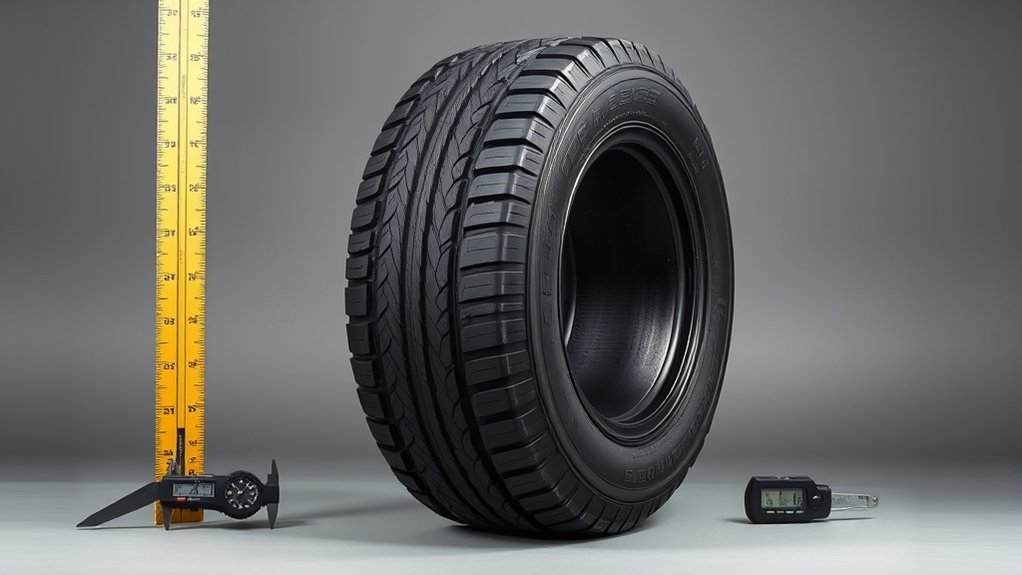
A 265/70R17 tire is about 31.6 inches tall, or 802.8 mm, with a section width of 10.4 inches (265 mm). You get a sidewall height of about 7.3 inches, since the 70% aspect ratio is based on the tire’s width. Its circumference is roughly 99.2 inches, and it has about 638 revolutions per mile. That makes it close to a 32-inch tire, not a true 33-inch size, and the details get more useful from here.
Key Takeaways
- A 265/70R17 tire is about 31.6 inches tall overall, which is close to a 32-inch tire.
- Its section width is 265 mm, or about 10.4 inches wide.
- The sidewall height is about 7.3 inches, since 70% of the tire’s width becomes sidewall.
- The tire’s circumference is about 99.2 inches, with roughly 638 revolutions per mile.
- It is smaller than a 285/70R17 tire, which measures about 32.7 inches tall.
What Is a 265/70R17 Tire?
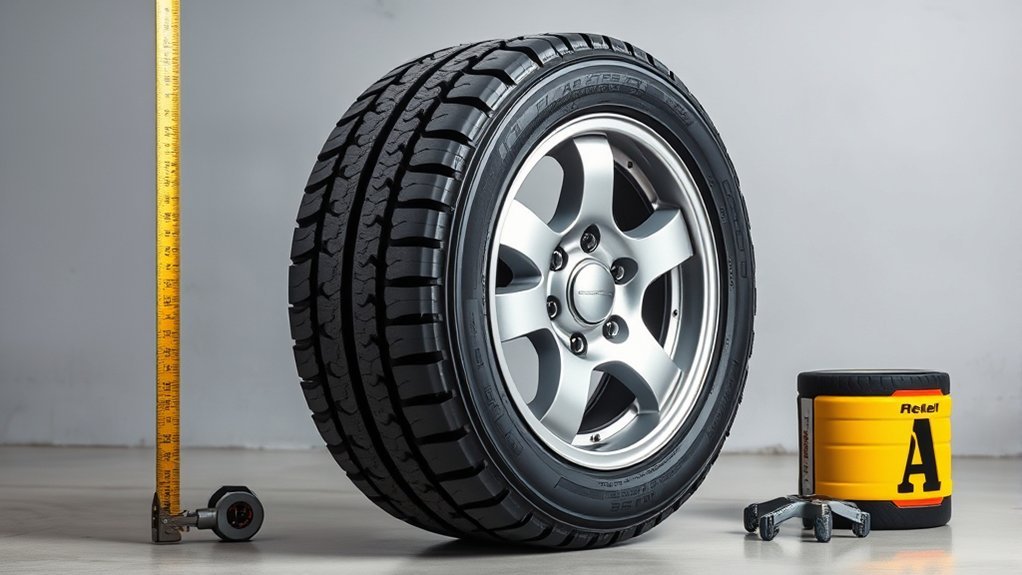
A 265/70R17 tire is a radial tire sized for a 17-inch wheel, with a tread width of 265 millimeters, or about 10.4 inches. You can read this tire size as a compact code that defines its dimensions with exactity, so you know what you’re fitting before you buy or mount it. The 70 means the sidewall height equals 70% of the width, giving you about 7.3 inches of height. That relationship matters because it shapes ride response, load behavior, and clearance. The R tells you it uses radial construction, the modern standard that supports flexibility and control. The 17 confirms the wheel diameter. When you decode the full size, you claim practical knowledge instead of leaving fitment to guesswork. This tire’s overall dimensions produce an approximate 31.6-inch diameter, giving you a clear technical baseline for your vehicle’s setup. Additionally, understanding the tire selection criteria can help ensure you choose the best fit for your driving style and needs.
How Big Is a 265/70R17 Tire?
A 265/70R17 tire measures about 31.6 inches in overall diameter, with a section width of 10.4 inches, so you can gauge its footprint quickly. Its sidewall height is roughly 7.3 inches, which gives you a clear sense of how much vertical sidewall you’re working with. Compared with smaller P-metric tires, you’ll see it sits in the mid-to-large range, making it common on pickup trucks and full-size SUVs. This size is often used for all-terrain tires, providing enhanced traction for off-road conditions.
Exact Tire Dimensions
One key way to understand how big a 265/70R17 tire is comes from its exact dimensions: it measures about 31.6 inches in overall diameter, 10.4 inches in section width, and 7.3 inches in sidewall height. You can use these numbers to judge fitment, clearance, and rolling behavior in your tire size setup.
| Measure | Inches | Millimeters |
|---|---|---|
| Overall diameter | 31.6 | 802.8 |
| Section width | 10.4 | 265 |
| Sidewall height | 7.3 | 185.5 |
| Circumference | 99.2 | 2522.07 |
| Revolutions/mi | 638 | — |
This exact geometry shapes speedometer accuracy and gear ratios, so you can evaluate performance with precision.
Width And Sidewall
With a section width of about 10.4 inches (265 mm), a 265/70R17 tire gives you a fairly wide footprint that supports stable handling and good road contact. That width helps you distribute load more evenly, which can improve steering precision and traction without sacrificing ride comfort. Your sidewall measures about 7.3 inches, or 185.5 mm, and the 70 aspect ratio means it’s tall enough to absorb impacts while still keeping control predictable. These dimensions create a practical balance: enough rubber for grip, enough sidewall for compliance. You get a tire that feels composed on varied pavement and remains adaptable for trucks and SUVs. In short, the width and sidewall work together to deliver reliable, confident performance.
Size Comparison Insights
At about 31.6 inches tall, a 265/70R17 tire sits very close to a 32-inch tire, so it’s a common fit for pickup trucks and SUVs that need a larger, more capable stance. When you compare tire sizes, you’ll see its diameter is only slightly smaller than a true 32-inch option, yet it keeps a balanced profile. The 265 mm section width gives you a 10.4-inch footprint, while the 70 aspect ratio means the sidewall takes up 70% of that width. That yields about 7.3 inches of sidewall, enough to cushion impacts without softening control too much. If you want more height, a 285/70R17 rises to about 32.7 inches, but the 265/70R17 stays tighter, lighter, and easier to manage.
How Wide Is a 265/70R17 Tire?
A 265/70R17 tire has a section width of 265 mm, which translates to about 10.4 inches. You can use that width to compare it against narrower or wider tire options when checking fitment and handling. That measurement stays consistent for this tire size across compatible rim diameters, so you’re evaluating a fixed width specification. Additionally, understanding tire load index helps ensure that the tire meets your vehicle’s requirements for safety and performance.
265 Mm Width Explained
The 265 in a 265/70R17 tire code refers to the section width, meaning the tire is about 265 mm wide from sidewall to sidewall, or roughly 10.4 inches. You’re looking at the Tire Size Width that shapes handling, stance, and clearance.
- 265 mm is the nominal tread-section measurement.
- Width affects fitment in wheel wells and suspension space.
- A wider tire can improve stability without sacrificing control.
Because this size also uses a 70 aspect ratio, the sidewall stays substantial, and you get a balanced, capable setup on trucks and SUVs. The radial construction supports modern performance, so you can move with confidence. When you understand this Width, you can choose a Tire Size that fits your freedom, your terrain, and your driving demands.
Width In Inches
Measured in inches, a 265/70R17 tire is about 10.4 inches wide from sidewall to sidewall, matching its 265 mm section width. You get a stable footprint that supports confident control and balanced dimensions. The width stays the same on compatible 17-inch wheels, while the 70 aspect ratio sets sidewall height at about 7.3 inches.
| Spec | Inches | Note |
|---|---|---|
| Width | 10.4 | Section width |
| Height | 31.6 | Overall diameter |
| Sidewall | 7.3 | 70% of width |
That width helps your truck or SUV hold traction on pavement and dirt without sacrificing freedom of movement. When you measure height and width together, you see how these dimensions shape clearance, handling, and load support.
Width Compared To Alternatives
When you compare sizes, a 265/70R17 tire measures about 10.4 inches wide, which puts it in the moderately wide range for trucks and SUVs. Its width stays the same on any rim diameter, so you can choose fitment with confidence and without compromise.
- 265/70R17: 10.4 inches wide, balanced for everyday control.
- 275/70R17: about 10.8 inches wide, roughly 0.4 inches wider.
- 285/70R17: about 11.2 inches wide, adding more traction but more drag.
If you want practical freedom, the 265/70R17 gives you solid stability without the extra fuel cost and steering weight of wider tires. You get a clean, precise width that works well for many trucks and SUVs.
265/70R17 vs 275/70R17 vs 285/70R17
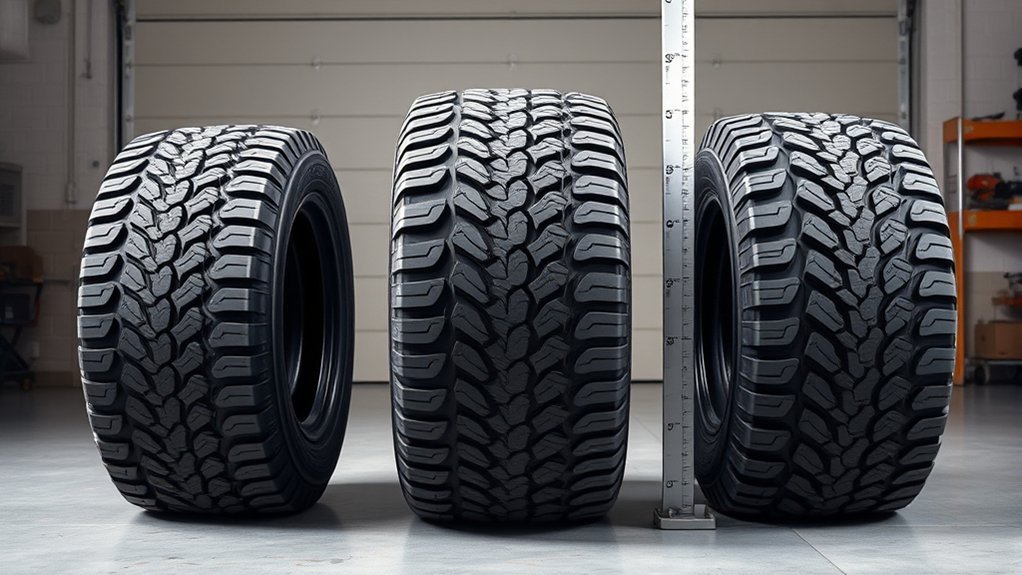
Compared side by side, 265/70R17, 275/70R17, and 285/70R17 differ mainly in width and overall diameter, which directly affects tire height, clearance, and vehicle behavior. Your 265/70R17 tire size gives you about 31.6 inches of overall diameter and 10.4 inches of width. Step up to 275/70R17, and you gain roughly 0.6 inch in diameter and 0.4 inch in width, so you’ll see a slightly taller, broader footprint. The 285/70R17 pushes farther, at about 32.7 inches tall and 11.2 inches wide, making it the widest and closest to a 33-inch fitment. Because all three use a 70 aspect ratio, their sidewalls stay proportionally similar, but the larger sizes can alter speedometer readings and handling. You should check vehicle compatibility carefully and consider gearing if you want to preserve response and control. Additionally, tire maintenance tips can help ensure optimal performance and longevity for your tires.
Is a 265/70R17 a 33-Inch Tire?
A 265/70R17 isn’t a true 33-inch tire; its overall diameter is about 31.6 inches, so it’s much closer to a 32-inch fitment. You can still hear people call it a 33, but you shouldn’t rely on labels alone. You need the real sizes and ratios to know what fits your wheelwell, suspension, and clearance targets.
- Width: 265 mm equals about 10.4 inches, giving you a moderately wide footprint.
- Sidewall: The 70% aspect ratio produces roughly 7.3 inches of sidewall height.
- Context: A commonly called 33-inch 285/70R17 actually measures about 32.71 inches, so your 265/70R17 sits smaller.
When you compare these dimensions, you gain technical control instead of guessing. That’s useful if you want better fitment without surrendering to vague marketing. The economy of space matters, and exact measurement keeps your build free, deliberate, and precise. Additionally, understanding tire specifications can help you make informed decisions about your vehicle’s performance and compatibility.
How 265/70R17 Tires Affect Speedometer and MPG
Installing 265/70R17 tires will usually make your speedometer read a little slow, because the tire’s larger 31.6-inch diameter changes the distance traveled per revolution. That tire diameter creates speedometer inaccuracies of about 3-4%, so when you see 65 mph, you’re actually moving near 68 mph; at 75 mph, you may be closer to 79 mph. You should recalibrate if you want exact readings.
The larger tire diameter also changes your final drive ratio. At highway speed, your engine turns fewer RPM, which can feel calmer but also reduces leverage off the line. Without re-gearing, you may notice sluggish acceleration and weaker low-end torque on grades or during quick starts. Expect a modest hit to fuel economy, usually 2-3 mpg, because the larger rotating mass demands more energy to spin and stop. If you value precision and control, factor these changes into your setup before you drive free and fast. Additionally, using low rolling resistance tires can help mitigate some of the fuel economy loss associated with larger tire sizes.
Frequently Asked Questions
How Tall Are 285 70 17 Tires?
285/70R17 tires are about 32.7 inches tall, or 829.4 mm, on a 17-inch wheel size. You get roughly 11.2 inches of tire width, and the 70 aspect ratio means the sidewall measures about 7.9 inches. That size gives you a near-33-inch fit with more ground clearance and a wider footprint, so you can tune handling, stance, and speedometer calibration with precision and freedom.
How Much Taller Is a 70 Tire Than a 65?
A 70 tire is roughly 0.4 inches taller in sidewall height than a 65, like a small rebellion lifting your chassis. You’ll usually gain about 1 inch in overall diameter, depending on tire aspect and size. That extra height can change tread patterns’ contact, shift performance differences in ride, clearance, and speedometer calibration. You’ll feel freer off-road, but you may lose a bit of fuel efficiency.
Is a 265 70 17 a 33-Inch Tire?
No, you’re not getting a true 33-inch tire with a 265/70R17. Its tire height is about 31.6 inches, so you’d usually call it a 32-inch tire. Your tire width is roughly 10.4 inches, and the sidewall measures about 7.3 inches. Those tire specifications matter because they define fitment, clearance, and stance. You can still run it confidently, but don’t mistake it for a genuine 33-inch setup.
Are 275 Tires Taller Than 265?
Yes—you’ll usually find 275 tires taller than 265 tires, especially in the same aspect ratio. You’re gaining roughly 10 mm in width, and that often increases overall diameter slightly, about 0.6 inches in 275/70R17 comparisons. You should also check tire aspect, load rating, and tread patterns, because these affect fitment, handling, and speedometer accuracy. When you choose well, you keep control and move with confidence.
Conclusion
To sum up, a 265/70R17 tire measures about 31.6 inches tall and 10.4 inches wide, so it falls short of a true 33-inch tire. If you’ve wondered whether the sizing theory matches real-world fitment, it does: the math and the physical tire dimensions line up closely. You’ll see only a modest speedometer change, but your MPG can dip slightly because of the added rolling resistance and weight compared with a smaller tire.

Related Articles
How Much Does a Semi Truck Tire Weigh? Exact Weight Guide
Know the exact weight of a semi truck tire, from standard steer tires to heavy-duty options, and discover what changes it next.
Read More
How Much Does a Car Tire Weigh? Exact Weight Guide
Discover how much a car tire weighs and why the exact number depends on size, build, and vehicle type.
Read More
How Heavy Is a Car Tire? Average Weight by Size & Type
Just how heavy is a car tire? Find the average weight by size and type, and discover what else changes before you choose.
Read More