
How Long Does Tire Replacement Take? Time Guide & What Affects It

Tire replacement usually takes 30 to 45 minutes at a shop, and a full four-tire service with balancing and alignment often takes about 1 hour or more. If you do it yourself, expect 1 to 2 hours per axle, depending on your vehicle and tools. Rust, seized lug nuts, vehicle size, and skill level can slow you down. Proper lifts and impact tools speed the job, and there’s more to know below.
Key Takeaways
- Professional tire replacement usually takes 30 to 45 minutes for a standard set of tires.
- A full four-tire service with balancing and alignment usually takes at least 1 hour.
- DIY tire changes often take 1 to 2 hours per axle, especially for beginners or rusted parts.
- Vehicle size, wheel condition, tools, and skill level all affect how long replacement takes.
- Tire shops are faster and safer when you need mounting, balancing, or torque accuracy.
How Long Does Tire Replacement Take?

How long does tire replacement take? For professional tire replacement, you can expect about 30 to 45 minutes for a standard set, and a complete four-tire service with balancing and alignment checks usually takes at least 1 hour. If you’re changing a tire yourself, plan on 1 to 2 hours per axle, even if you’ve done it before. Compact cars often finish near 30 minutes, while bulky pickups may need up to 1 hour. The exact time it takes depends on the vehicle and the condition of the wheel hardware. Rust-seized parts or a stuck-on tire can slow the job sharply. Using proper tools matters: hydraulic lifts and impact wrenches speed tire maintenance far more than manual gear. You control more than you think; with preparation and the right tools, tire replacement becomes a manageable, precise task rather than a setback. Additionally, understanding treadwear warranties can help you plan your tire maintenance schedule efficiently.
What Affects Tire Replacement Time?
Several variables change tire replacement time, starting with vehicle size and hardware condition. If you drive a compact car, you may finish a tire change in about 30 minutes; a bulky pickup can push that close to an hour because the lift points, wheel weight, and access all demand more effort. You’ll also lose time when tires are stuck, corroded, or rust-seized, since removal takes extra torque and care to avoid damage. The tools available matter too: hydraulic lifts and impact wrenches speed the tire-changing process, while manual jacks and basic tools slow it down. Your skill level changes the pace as well. Experienced mechanics often replace the tire in roughly 30 minutes, but less experienced people can need over an hour. In practice, professional service usually runs 30 to 45 minutes for a full set, while DIY work often takes 1 to 2 hours. Additionally, tire durability features can affect how easily tires come off, as stronger tires may require more effort to remove.
How Long Does Each Tire Change Take?
A professional tire change usually takes you about 10 to 15 minutes per tire, while a DIY swap can take 15 to 30 minutes depending on your tools and experience. You’ll finish faster with compact vehicles, proper lifting equipment, and an experienced technician, while trucks and SUVs often take longer. If you’re changing tires during peak season, expect added wait time to affect the total turnaround. Additionally, choosing the right tire fitment and load rating can influence the ease of installation and overall performance.
Per-Tire Change Time
Per tire, the job usually takes 10 to 15 minutes for an experienced person, while a first-time DIY change can stretch to an hour. When you change a tire, you’re doing tire installation, removal, mounting, and balance checks in sequence. A flat tire in a professional service department often moves faster because trained techs use efficient tools and equipment.
- Experienced hands: 10-15 minutes per tire
- Tire shops: 5-15 minutes per flat tire
- Manual DIY: up to 60 minutes if you’re learning
In practice, a single tire change may take about 30 minutes once you include setup and verification. With hydraulic lifts and impact wrenches, you can finish faster and reclaim your time.
Factors That Affect Speed
How long each tire change takes depends on the vehicle, the tire condition, the tools you use, and the mechanic’s experience. In this time guide, expect one tire to change in 10 to 15 minutes with experienced mechanics, while all four can take 45 minutes to 1 hour in a shop. Compact cars often finish near 30 minutes; bulky pickups may take up to an hour because of weight and access. Rust-seized lugs, damaged beads, or stuck-on tires slow the job further. Hydraulic lifts and impact wrenches cut time fast, but manual jacks and basic tools don’t. Your skill level matters too: seasoned technicians work efficiently, while beginners can spend over an hour. These factors shape your real-world pace and your freedom.
Is DIY Tire Replacement Worth It?
DIY tire replacement can save you money, but it usually takes 1 to 2 hours per axle if you’re experienced, compared with about 30 to 45 minutes for a professional. If you’re doing it yourself, you’ll trade cash savings for labor, risk, and time. A DIY tire replacement becomes practical only when you have the right tools, solid technique, and enough space to work safely. Certified technicians finish faster because they already know the procedure and can handle stubborn tire issues efficiently.
- Inexperienced changing tires can take over an hour.
- Manual jacks and basic tools slow the job.
- Larger vehicles and stuck tires add difficulty.
If you lack equipment or confidence, DIY may cost you more through mistakes, delays, or unsafe installation. For liberation through self-reliance, weigh your skill level honestly. If you want control and lower cost, DIY can work; if you want speed and assurance, let certified technicians do it. Additionally, understanding all-season tire performance can help you choose the right tires for your vehicle’s needs.
Why Tire Tools Speed Up the Job
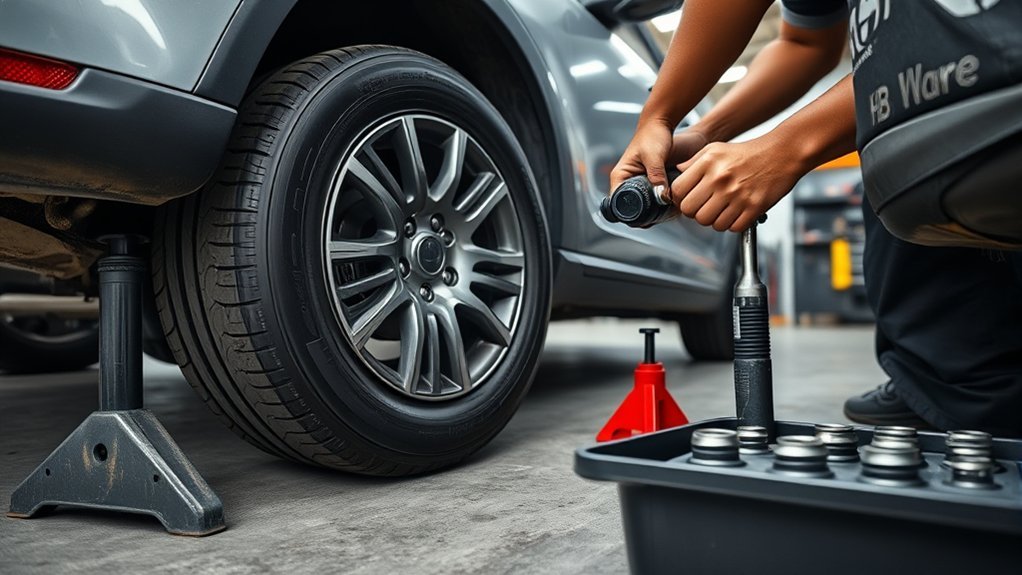
Hydraulic lifts save you time by raising the vehicle quickly and giving you immediate access to the tires, so you spend less time on setup and stabilization. Impact wrenches speed lug nut removal and tightening, often reducing each tire’s service time to only a few seconds. With the right tools, you’ll cut labor steps and shorten the overall replacement process. Additionally, having a reliable spare tire kit can ensure you have the necessary tools at your fingertips for quick roadside repairs.
Hydraulic Lifts Save Time
When you use a hydraulic lift instead of a manual jack, you can raise the vehicle in seconds and get straight to work on all four tires at once. This cuts dead time and lets you finish tire changes with less effort and more control. Hydraulic lifts improve service speed because you aren’t moving the car repeatedly or fighting low-access positions.
- You reach every wheel at the same time.
- You reduce physical strain and work safer.
- You can finish under 30 minutes with experienced mechanics and quality tools.
For you, that means faster turnaround and more freedom from long shop delays. In a busy season, hydraulic lifts help you serve more customers without sacrificing precision.
Impact Wrenches Speed Removal
Impact wrenches cut tire removal time dramatically because they deliver high torque in seconds, letting you loosen and tighten lug nuts far faster than a manual wrench. In a tire shop, you can remove the tire, then tighten the lug nuts with less strain and more control. That speed helps when changing the tire under pressure.
| Tool | Time Effect | Benefit |
|---|---|---|
| Impact wrenches | Fast | Rapid lug nut removal |
| Manual wrench | Slow | More effort needed |
| Hydraulic lift + impact wrenches | Fastest | Multiple tires serviced |
Skilled technicians often finish full tire changes in 30 to 45 minutes, and some complete them in under 30. Stuck-on lug nuts won’t trap you, because impact wrenches break them free cleanly, restoring your time and freedom.
What Usually Delays Tire Replacement?

What usually slows a tire replacement is a mix of vehicle complexity, part condition, tools, and technician experience. If you need to remove the flat and change tires, your wait depends on how hard the job is to access and free. Compact cars can be done in about 30 minutes, while bulky pickups may take around an hour because they demand more labor and clearance.
- Rust-seized studs, corroded lugs, or a tire stuck on the hub force extra effort.
- Basic tools slow the job; hydraulic lifts and impact wrenches speed it up.
- Inexperienced DIYers or new techs often need over an hour, while seasoned pros work faster.
Seasonal demand also matters. In winter, snow and ice push more drivers into the service department, so appointments fill up and you may wait longer before the work even starts. Additionally, all-season tires can influence the time it takes to replace them due to their varying tread designs and construction features.
How Long Does Installation and Balancing Take?
Installation and balancing for four tires usually takes about 40 minutes to 1 hour, though a skilled technician with the right equipment can finish in under 30 minutes. You can expect each tire’s installation to take about 10 minutes, with balancing adding a few more minutes per wheel. The exact tire replacement time depends on the experience of the technicians and the tools used, because efficient lifts, torque tools, and balancers speed up the workflow. If the service includes alignment checks or driveline inspections, the total visit will take longer than basic installation and balancing alone. Seasonal demand can also stretch your wait, especially during busy winter periods when many drivers need the same service. For the fastest, most reliable result, you should schedule ahead and confirm what’s included in the service so you know whether you’re getting only installation and balancing or a fuller inspection. Additionally, having proper tire fitment ensures optimal performance and safety during the installation process.
When to Let a Tire Shop Handle It?
If you don’t have the right tools, a tire shop is the safer, faster option for replacement. When to let a tire shop handle it comes down to control, precision, and risk. You benefit from professional expertise when your vehicle’s size, wheel torque, or access makes DIY work difficult. SUVs and trucks often need equipment and lifting capacity you may not have. Time constraints also matter: shops usually finish in 30 to 45 minutes, while home replacement can take 1 to 2 hours.
- You lack a jack, torque wrench, or impact tools.
- You’re facing safety concerns with lifting or lug-nut torque.
- You need thorough inspections because tire wear or damage isn’t clear.
A shop can verify mounting, balancing, and fitment with technical accuracy, ensuring you select the right all-season performance tire for your driving needs. That means you get back on the road with less uncertainty and more freedom.
How to Make Tire Replacement Go Faster
To speed up a tire replacement, set up before you start: gather your torque wrench, wheel chocks, and other tools, then park on a flat surface, engage the parking brake, and loosen the lug nuts slightly before lifting the vehicle. This is how to make tire replacement go faster without sacrificing control. Use the right tools, because a hydraulic lift and an impact wrench cut labor time far more than a manual jack and lug wrench. When you place the jack, position it at the approved lift point and raise the vehicle only after the nuts break free. Keep your workflow tight: remove, swap, torque, and verify in order. If you’re changing multiple tires, stage each wheel and fastener so you don’t stop mid-job. If you want the quickest result, consider professional help; experienced mechanics can finish in about 30 minutes, even when demand is high. Additionally, using high-quality all-season tires like the Fullway HP108 can enhance your vehicle’s performance and comfort during drives, making the need for frequent replacements less likely.
Frequently Asked Questions
How Long Does a Tire Change Usually Take?
A tire change usually takes you 10 to 15 minutes with a pro, or 15 to 30 minutes if you do it yourself. You’ll move faster when you know the tire changing process, have the tools required ready, and avoid common mistakes like loose lug nuts. Use DIY tips for safer work and compare tire selection options before you start. Rust, vehicle size, and experience can push the job longer.
How Fast Can I Go on a Replacement Tire?
Lightning in a bottle? You can drive at normal highway speeds only if the replacement tire matches your vehicle’s specs and its speed rating. Respect tire speed limits, since speed rating significance directly affects replacement tire performance and safety. Watch for tire quality differences, keep inflation correct, and avoid hard launches or sharp turns. For the first 50–100 miles, follow these driving safety tips and stay under the tire’s rated max.
What Is the 3% Tire Rule?
The 3% tire rule means you shouldn’t let your tires on the same axle differ by more than 3% in tread depth. You’ll keep better traction, avoid alignment issues, and extend tire lifespan. Check tread depth with a penny, especially after seasonal changes. Replace tires in pairs when needed, and follow maintenance tips to keep your vehicle stable, efficient, and under your control on the road.
Is $600 for 4 Tires Good?
Yes—$600 for 4 tires can be good if you’re getting solid tire quality and the installation cost is included. You should compare brands, because a premium brand may justify the price, while budget options may not. Check warranty options and confirm balancing or alignment fees. Think of it like a simple value map: price, durability, and service. For liberation from waste, use maintenance tips to extend tread life and reduce long-term costs.
Conclusion
So, how long will your tire replacement really take? It may only be minutes—or it may stretch longer than you expect. Your tools, skill, tire type, and shop workload all change the clock. If you prepare well, you save time. If you rush, you risk more than delay. The real question isn’t just speed. It’s whether you’re ready for what comes next. Replace your tires carefully, and the road will tell you why.

Related Articles

What Is Tire Mounting? Cost, Process & What Happens at the Shop
How much does tire mounting cost, and what exactly happens at the shop?
Read More
Is Tire Shine Bad for Tires? The Truth About Dressings & Safety
Depends on the formula—some tire shines protect, while others may harm rubber; discover which dressings are safe before you apply one.
Read More
Is It Free to Dismount a Tire? What Shops Charge & How to Save
Just wondering if tire dismounting is ever free? See what shops really charge and the simple questions that could save you more.
Read More