
Inner Tire Wear on Honda Accord: Causes & Fixes
What’s in This Article
- Basics of Tire Wear
- How Negative Camber Affects Tire Longevity
- Impact of Toe Settings on Tire Longevity
- How Lowering Your Vehicle Affects Alignment
- Signs of Tire Misalignment to Watch For
- Driving Habits That Cause Inner Tire Wear
- Importance of Regular Tire Rotation and Maintenance
- How to Inspect Suspension Components to Improve Tire Lifespan
- What to Do If You Notice Misalignment
- Best Practices for Extending Tire Life on Your Honda Accord
- Frequently Asked Questions
- Conclusion
Inner tire wear on your Honda Accord can shorten tire life, reduce grip, and make your car less stable. The most common cause is poor alignment, especially too much negative camber or incorrect toe settings. Worn suspension parts, low tire pressure, aggressive driving, and lowering the vehicle can make the problem worse. This guide explains what causes inner tire wear and what you can do to slow it down.
Quick Answer
Inner tire wear on a Honda Accord usually points to alignment trouble, worn suspension parts, or both. Ask a shop to check camber, toe, tire pressure, and front-end components. Fixing the cause early can help you avoid premature tire replacement and unsafe handling.
Key Takeaways
- Check alignment first when the inner edge of a tire wears faster than the rest.
- Incorrect toe settings often wear tires faster than camber alone.
- Inspect ball joints, bushings, control arms, struts, and wheel bearings during diagnosis.
- Rotate your tires on schedule and keep tire pressure at the recommended level.
- Get a professional inspection if the car pulls, wanders, vibrates, or feels unstable.
Basics of Tire Wear
Understanding tire wear helps you protect your Honda Accord’s ride, handling, and safety. Tire pressure, wheel alignment, suspension condition, and load all affect how the tread wears over time. When one edge wears faster than the rest, your tires usually need more than a simple rotation.
Inner tire wear means the inside edge of the tread wears down faster than the center or outside edge. Poor toe settings, excess negative camber, worn suspension parts, and under-inflation can all cause this pattern. Monitoring wear trends helps you catch small issues before they become expensive repairs.
Your driving style also matters. Hard braking, fast cornering, and quick starts can increase tire scrub and heat. Regular tire rotations help spread normal wear across all four tires, but they won’t fix a mechanical or alignment problem.
[Products Worth Considering]

EVOULTES heavy duty tire inflator with an integrated gauge delivers accurate pressure readings from 10–120 PSI, helping you inflate, deflate, and check tires in one tool. The 16.5-inch extended dual-head air chuck with swivel base reaches hard-to-access dual wheel valves on trucks and RVs. A brass trigger core and side-mounted air release valve make operation smooth, with standard 1/4" NPT threading and quick-connect compatibility for easy setup.

This portable cordless tire inflator delivers up to 160 PSI with fast 17 L/min airflow to help you quickly top up tires and get back on the road. It features dual power mode, running on a 21V rechargeable battery or a 12V DC adapter for convenient roadside use. An automatic shut-off with digital pressure gauge helps prevent overinflation, and a built-in LED light improves visibility in low-light conditions.

The JACO FlowPro Tire Inflator measures, inflates, and airs down tires up to 100 PSI with battery-free operation and ±2% accuracy after calibration. It features a glowing pressure dial for night visibility, a heavy-duty steel build with a hybrid hose, and a precision push-to-inflate thumb trigger. The patented Lightning Air Chuck locks on for a secure seal, and the kit includes quick-connect hardware for easy inline use with your air compressor.
How Negative Camber Affects Tire Longevity
Negative camber means the top of the tire tilts inward toward the vehicle. A small amount can help handling, but too much can load the inner edge of the tread. On a Honda Accord, excess negative camber can lead to early inner tire wear.
Regular inspections and alignment adjustments can help reduce this wear. regular alignment checks can also lower the risk of early tire wear caused by poor alignment.
Negative Camber Explained
When the top of your tire tilts inward, the tire does not sit flat on the road. The inside edge carries more load, especially during turns. That extra load can wear the inner tread faster than the rest of the tire.
Lowering springs, worn bushings, bent suspension parts, and poor alignment can all increase negative camber. If you’ve changed your suspension height, get the alignment checked soon after the work. Proper camber adjustment helps your tires sit closer to factory specifications.
Impact on Tire Wear
Excess negative camber can create a clear wear strip on the inner edge of the tire. Incorrect toe can make the damage worse because the tire scrubs sideways as it rolls. A shop should check both camber and toe before recommending tire replacement.
Correct tire pressure also matters. Under-inflated tires flex more and can heat up faster, which may worsen uneven wear. Smooth steering, braking, and cornering can help reduce extra stress on the inner tread.
Impact of Toe Settings on Tire Longevity
Toe describes the direction your tires point when viewed from above. If the fronts of the tires point inward, the setting is toe-in. If they point outward, the setting is toe-out.
Poor toe settings can wear tires quickly because the tread scrubs against the road instead of rolling cleanly. Toe-out often increases wear on the inner edges, while toe-in can increase wear on the outer edges. The correct setting depends on the vehicle’s factory specifications, not a single universal number.
Ask the shop for a printout after an alignment. The printout should show camber, caster, and toe before and after adjustment. Keeping toe within specification protects tire life and improves steering feel.
Pro tip: If the inner tread looks feathered or sharp to the touch, ask the shop to check toe before blaming camber alone.
How Lowering Your Vehicle Affects Alignment
Lowering your Honda Accord changes suspension geometry. The change can increase negative camber and shift toe settings away from the factory range. Better handling may come at the cost of faster tire wear if you skip the alignment.
After lowering the car, schedule an alignment and ask whether camber adjustment parts are needed. Some setups may need adjustable arms or bolts to bring the wheels back into range. Worn ball joints, control arms, and bushings can make the problem worse.
Make sure your tires also match the correct size, load rating, and speed rating for your Accord. load index specifications help you choose tires that can safely support the vehicle.
Signs of Tire Misalignment to Watch For
Misalignment often shows up before a tire fails. You may see uneven tire wear, feel the car pull, or notice that the steering wheel sits off-center. These symptoms can affect handling and safety if you ignore them.
tire uniformity also matters because mismatched or uneven tires can create handling problems. Check tread depth across each tire, not just at the center. Compare the inner edge, middle, and outer edge.
Signs of Uneven Wear
Uneven wear on your Honda Accord can point to alignment, suspension, or inflation issues. Inner-edge wear often suggests toe-out, excess negative camber, or worn parts that let the wheel move out of position. A quick visual check can catch the issue before cords show through the tread.
Inspect your tires at least once a month and before long trips. Look for bald inner edges, feathered tread, cupping, cracking, bulges, or exposed cords. Replace unsafe tires right away and fix the cause before installing a new set.
Steering Wheel Misalignment
A crooked steering wheel can signal an alignment issue. If you must hold the wheel at an angle to drive straight, the tires may not point in the correct direction. Poor steering response can also come from worn suspension or steering parts.
- Off-Center Steering Wheel: The wheel does not sit centered while you drive straight.
- Loose or Unresponsive Steering: The car feels vague or slow to respond.
- Handling Issues: The vehicle wanders, drifts, or feels hard to keep in one lane.
Vehicle Pulling to Side
If your Honda Accord pulls to one side, check tire pressure first. A low tire can mimic alignment trouble. If pressure looks correct, a bad alignment, dragging brake, tire defect, or worn suspension part may cause the pull.
A pull that appears after hitting a pothole or curb needs quick attention. Impacts can bend parts or knock the alignment out of range. Early repairs help protect the tires and steering system.
Driving Habits That Cause Inner Tire Wear
Your driving habits affect tire wear, especially when the alignment already sits near the edge of specification. Fast cornering, hard braking, and quick acceleration can add heat and scrub to the tread. These habits can make inner tire wear show up sooner.
Driving habits can speed up inner tire wear, especially when alignment or tire pressure already needs attention.
- Acceleration Patterns: Smooth starts and stops reduce stress on the tread.
- Cornering Technique: Slower, smoother turns help spread load across the tire.
- Tire Pressure: Correct inflation helps the tire keep its designed shape on the road.
Check the tire pressure when the tires are cold. Use the pressure listed on the driver’s door jamb, not the maximum pressure printed on the tire sidewall. Maintaining correct tire inflation helps the tread wear more evenly.
Importance of Regular Tire Rotation and Maintenance
Regular tire rotation helps your Honda Accord wear its tires more evenly. Many drivers rotate tires every 5,000 to 7,500 miles, but you should follow your owner’s manual and tire warranty terms. Rotation helps, but it won’t correct bad alignment or worn parts.
Use cross-rotation only when your tire type and tread pattern allow it. Directional tires need a different pattern than non-directional tires. Regular rotations support even tread wear, which affects handling and braking.
Combine rotation with pressure checks, tread-depth checks, and suspension inspection. This routine can help you find inner tire wear before it reaches the cords. It also gives you a chance to spot nails, sidewall damage, and uneven tread patterns.
[Products Worth Considering]

This cordless portable tire inflator delivers fast, safe inflation with an automatic shutoff when the target pressure is reached, helping prevent overinflation. The built-in LED lighting and real-time digital display make it easier to check pressure and handle roadside tire changes at night. It includes multiple nozzles for use on cars, motorcycles, bicycles, and inflatables like balls and swimming rings.

This portable cordless tire inflator delivers fast, efficient inflation for cars, motorcycles, bikes, and sports balls with a digital pressure gauge. Use the one-click PSI preset with auto shut-off for accurate, hands-free topping to your target pressure up to 150 PSI. It’s compact and rechargeable with a built-in emergency LED light plus valve adapters and accessories for quick, ready-to-go use.
How to Inspect Suspension Components to Improve Tire Lifespan
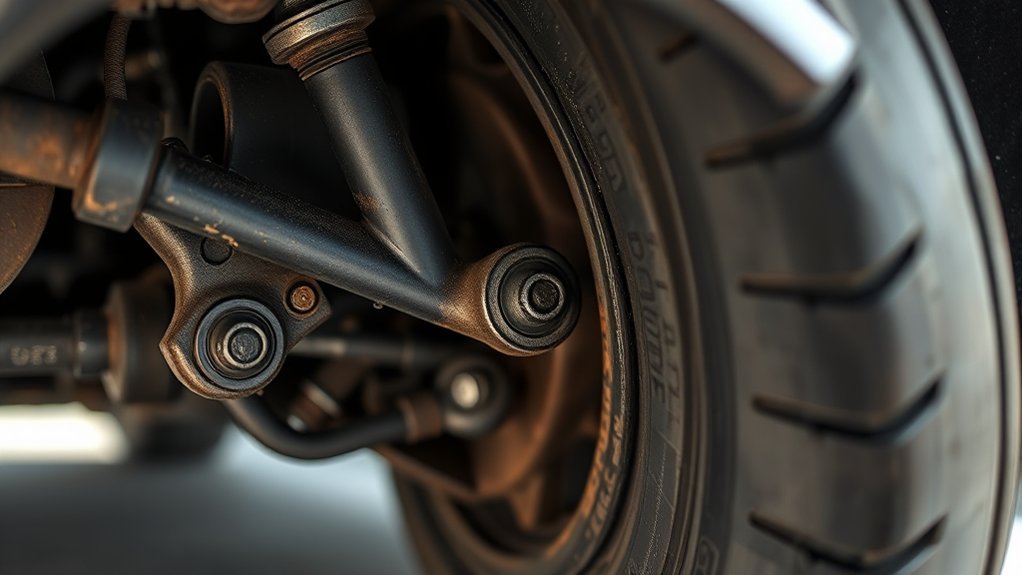
Worn suspension parts can let the wheel move in ways it should not. That movement can change camber or toe while you drive. A proper inspection helps find the real cause of inner tire wear.
Regular suspension checks help protect tire life, steering control, and ride comfort on your Honda Accord.
- Check Control Arms and Ball Joints: Look for looseness, torn boots, rust damage, or impact damage.
- Inspect Bushing Condition: Look for cracked rubber, excess movement, or fluid leakage from hydraulic bushings.
- Evaluate Shock Absorbers and Struts: Look for leaks, weak damping, uneven ride height, or clunking noises.
Ask a qualified technician to inspect the vehicle if you notice play, noise, vibration, or uneven wear. Regular inspections can also help identify tire age concerns. Tires can age out even when tread depth still looks acceptable.
When Inner Tire Wear Becomes Unsafe
Inner tire wear becomes unsafe when the tread reaches the wear bars, cords show, or the tire loses its normal shape. A tire with exposed cords or sidewall bulges can fail without much warning. Do not wait for a blowout before replacing a damaged tire.
Measure tread depth across the full width of the tire. The inner shoulder can be bald while the center still looks usable. Replace the tire if any part of the tread falls below the legal or safe limit in your area.
Warning: Do not drive on a tire with exposed cords, a bulge, or severe inner-edge wear.
What to Do If You Notice Misalignment
If you notice misalignment signs, schedule an alignment check soon. These signs include a crooked steering wheel, pulling, wandering, uneven tire wear, or new vibration. A technician should inspect the tires and suspension before adjusting the alignment.
Choose a shop that can provide a before-and-after alignment report. Systems such as the Hunter Hawkeye Elite can measure alignment angles accurately when the operator uses them correctly. The printout helps you confirm whether camber, caster, and toe returned to specification.
After replacing bearings, struts, control arms, tie rods, or tires, ask whether an alignment check makes sense. Tire rotations every 5,000 miles can also help you catch uneven wear early.
Signs of Misalignment
Watch for steering pull, an off-center wheel, rapid edge wear, or a car that feels unstable at speed. These signs can point to poor toe, excess camber, worn parts, or tire pressure problems. Start with a pressure check, then get a professional inspection if the issue remains.
- Uneven Tire Wear: The inner or outer edge wears faster than the center.
- Steering Instability: The car feels loose, vague, or hard to keep straight.
- Tire Pressure Changes: One tire loses air or shows different wear from the others.
Immediate Action Steps
Start by checking tire pressure and looking for visible tire damage. Do not rely on a quick glance at the outer tread because the inner edge may hide the worst wear. Turn the steering wheel or safely lift the vehicle if you need a better view.
Next, schedule a suspension and alignment inspection. Tell the technician where the tire wears and when the symptoms started. Clear details help the shop diagnose the cause faster.
Best Practices for Extending Tire Life on Your Honda Accord
To extend tire life, keep alignment, pressure, rotation, and suspension maintenance on schedule. These steps work together. Skipping one can reduce the benefit of the others.
- Rotate Tires Regularly: Follow your owner’s manual or tire warranty schedule.
- Monitor Tire Pressure: Check pressure cold and use the door-jamb specification.
- Maintain Suspension Components: Replace worn ball joints, tie rods, bushings, struts, and control arms as needed.
- Check Alignment After Impacts: Schedule an inspection after hitting a curb, pothole, or road debris.
- Use Correct Tires: Choose the correct size, load rating, and tread type for your driving needs.
Tire rotation patterns can vary by tire design and drivetrain. Review the tire rotation patterns recommended for your setup. The right pattern can help each tire wear more evenly.
Frequently Asked Questions
Why Is My Inside Tread Gone but the Outside Is Good?
Your inside tread may wear out first because the tire does not sit or roll correctly on the road. Excess negative camber, toe-out, worn suspension parts, or low tire pressure can cause this pattern. Ask a shop to inspect alignment and suspension before replacing the tire.
Can I Drive With Inner Tire Wear?
You should avoid driving on severe inner tire wear. The tire may have less grip, weaker tread, or hidden cord damage on the inside edge. If cords show or the tire looks bald on any edge, replace it before driving normally.
What Would Cause My Tires to Go Bald on the Inside?
Inside-edge baldness often comes from poor alignment, especially toe-out or too much negative camber. Worn control arm bushings, ball joints, struts, or tie rods can also change wheel angles while you drive. The repair should target the cause, not just the worn tire.
Does a Tire Rotation Fix Inner Tire Wear?
A tire rotation can slow uneven wear from normal use, but it cannot fix misalignment or worn suspension parts. If the inner edge keeps wearing, the same problem will damage the next tire position. Get the vehicle inspected before relying on rotation alone.
Should I Get an Alignment After Replacing Tires?
You should get an alignment check if the old tires had inner-edge wear. New tires can wear out quickly if the old alignment problem remains. A before-and-after report helps confirm that the wheels sit within specification.
Conclusion
Inner tire wear on your Honda Accord usually means the tire, wheel, or suspension no longer works in the correct position. Start with tire pressure, then inspect tread depth, suspension parts, and alignment settings. Fix the cause before installing new tires, or the same wear pattern may return. A well-aligned Accord feels safer, drives smoother, and helps your tires last longer.
References
- Tires — National Highway Traffic Safety Administration
- Tire Safety: Everything Rides on It — National Highway Traffic Safety Administration
- Tire Wear Patterns — Discount Tire
- Tire Alignment — Bridgestone

Related Articles
How Tall Is a 305 70 R17 Tire? Exact Height, Width & Dimensions
Curious how tall a 305 70 R17 tire really is—and whether it fits your truck?
Read More
Can-Am Defender Tire Size Guide: Stock Specs & Upgrade Options
Just how big can you go on a Can-Am Defender before mods become necessary?
Read More
How Tall Is a 275 65 20 Tire? Exact Height, Width & Dimensions
Check the exact height, width, and hidden fitment effects of a 275/65R20 tire before you buy or upgrade.
Read More