Choosing Honda Accord Tires If You Live in a Wet Climate

Choosing tires for your Honda Accord in a wet climate is essential for safety and control. Opt for specialized wet-weather tires, as they provide better traction and reduced hydroplaning risks. All-season tires can work too, but make sure they have deep grooves and effective water channels. Regular maintenance, like checking tread depth and pressure, keeps performance outstanding. Want to know the best brands and features for wet conditions? There’s plenty more to explore!
Why Tire Choice Matters in Wet Conditions
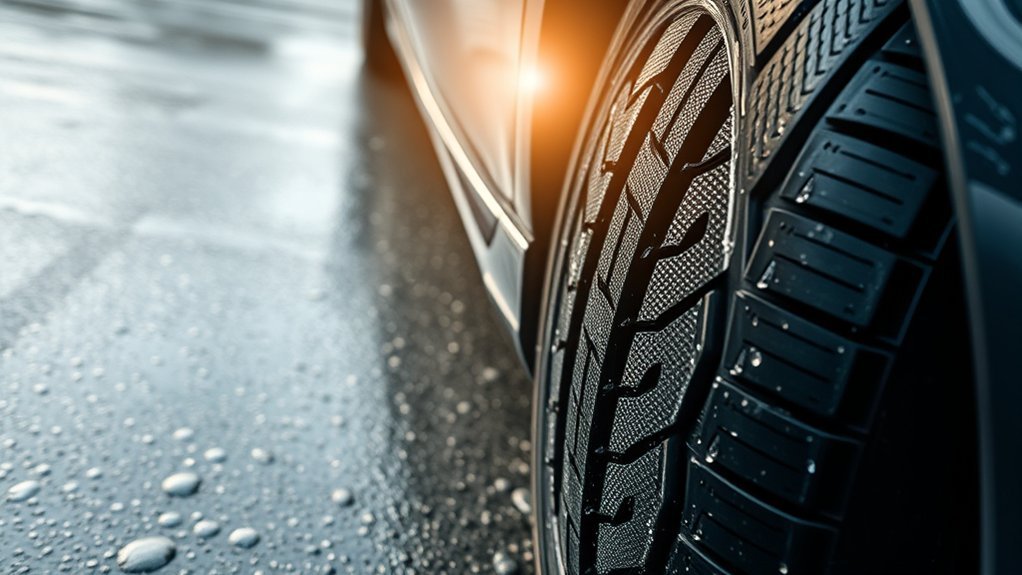
When it rains, choosing the right tires can make all the difference in your safety and control on the road. Tires designed for wet conditions enhance your grip, dramatically reducing the risk of hydroplaning. Their specialized tread patterns and deeper grooves efficiently channel water away, boosting traction and stability. While all-season tires perform reasonably well, dedicated wet-weather tires excel in handling and provide shorter stopping distances—crucial for your safety.
Don’t overlook tire longevity, either; regular maintenance guarantees your tires stay in peak condition. Keep an eye on your tire pressure—under-inflated tires can lead to skidding and poor fuel efficiency. Plus, checking tread depth is essential; aim for a minimum of 4/32 of an inch. This guarantees ideal water evacuation and improves your traction comparison against other options. Make informed choices for your Honda Accord, and drive confidently through any downpour. Proper tires(10 Must-Have Tires for Your RAV4 in Snowy Weather) improve stopping distance and confidence on icy roads.
What Makes All-Season Tires Effective in Wet Weather?
When you’re traversing wet roads, all-season tires shine thanks to their smart tread design. These tires feature deep grooves and channels that efficiently channel water away, helping to prevent hydroplaning. Plus, their flexible rubber compounds enhance grip, giving you confidence behind the wheel when conditions get slick. Additionally, their hydroplaning resistance is crucial for maintaining control during heavy rain, ensuring a safer driving experience.
Tread Design Features
All-season tires are designed with specialized tread patterns that excel in wet weather, ensuring you stay safe on the road. Their unique tread pattern analysis reveals deep grooves and channels that efficiently disperse water, helping to minimize hydroplaning risks. The rubber compounds remain flexible in cooler temperatures, providing superior grip on slick surfaces. Symmetrical tread designs enhance traction and stability, allowing for even road contact. Plus, many all-season tires feature lower rolling resistance, boosting fuel economy while performing well in rain. To maximize your tires’ effectiveness, keep an eye on tire wear indicators and regularly check tread depth and pressure. This maintenance will keep you liberated and confident behind the wheel, even in wet conditions.
2. Water Evacuation Mechanisms
Understanding how water evacuation mechanisms work can greatly enhance your driving experience in wet conditions. All-season tires excel in this area, thanks to specialized tread enhancement. Their deep grooves and channels efficiently direct water away from the contact patch, considerably reducing hydroplaning risk. You’ll also find siping technology in many models—these small slits in the tread create additional biting edges, boosting traction on slick roads. With a recommended minimum tread depth of 4/32 of an inch, these tires guarantee peak water evacuation. Plus, regular maintenance like pressure checks and rotations can further enhance their performance. Embracing these features means you can confidently navigate wet climates, enjoying a sense of freedom on the road.
3. Enhanced Grip Performance
Often, you’ll find that all-season tires deliver impressive grip performance in wet weather thanks to their thoughtfully engineered tread patterns. These tires utilize advanced tire technology to enhance traction dynamics, featuring wider grooves that effectively channel water away and reduce hydroplaning risks. The pliable rubber compounds guarantee peak traction in varying temperatures, while maintaining a minimum tread depth of 4/32 of an inch is vital for water channeling. Additionally, many all-season tires are designed for lower rolling resistance, improving fuel efficiency and wet traction by maximizing the contact patch with the road. Regular maintenance like proper inflation and tire rotation is fundamental to keep these tires performing at their best.
| Feature | Benefit |
|---|---|
| Tread Patterns | Enhanced grip on wet surfaces |
| Rubber Compounds | Peak traction in different temps |
| Tread Depth | Effective water channeling |
| Rolling Resistance | Better fuel efficiency |
| Maintenance | Preserves wet performance |
Do You Really Need Specialized Wet-Weather Tires?
When it rains, do you really want to take chances with your tires? Specialized wet-weather tires are designed to tackle slick conditions, enhancing your safety and driving experience. Their unique tread patterns improve water evacuation, considerably reducing the risk of hydroplaning. Compared to all-season tires, wet-weather tires can boost traction by up to 20%, which is essential in heavy rain.
These tires often use softer rubber compounds that stay flexible in cold, wet conditions, ensuring better grip and braking performance. The deeper grooves and sipes channel water effectively, increasing contact with the road for improved stability. While all-season tires can manage light rain, they fall short in prolonged wet conditions. If you frequently navigate rainy roads, investing in specialized tires not only enhances performance but can also contribute to tire longevity, ensuring you stay safe and confident behind the wheel. Additionally, winter tires maintain flexibility below 45°F, which further enhances grip in cold, wet conditions.
Essential Features of Effective Wet-Weather Tires
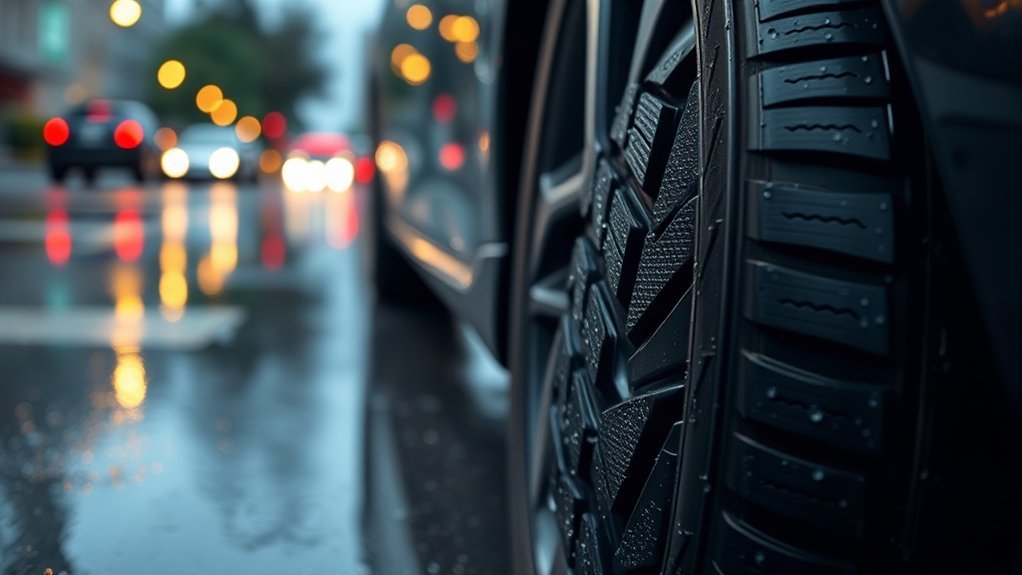
Specialized wet-weather tires come packed with features that elevate their performance in rainy conditions. Deep tread grooves enhance water evacuation, minimizing hydroplaning risks and ensuring better road contact. This means you can navigate slick surfaces with confidence. The specialized rubber composition stays flexible in cooler temperatures, improving grip on wet and slippery roads.
Additionally, a tread design with wide lateral channels offers better traction and stability, making cornering and braking safer. You’ll appreciate how these tires keep you grounded when the weather turns nasty. Moreover, tread features prioritizing water evacuation play a crucial role in reducing hydroplaning risks.
Designed for durability, wet-weather tires often boast a higher treadwear rating, ensuring tire longevity even under challenging conditions. To maximize their performance, regular maintenance like proper inflation and tread depth checks is essential—just a bit of under-inflation can greatly compromise your grip. Choose wisely, and embrace the freedom of driving in the rain without worry.
What Role Does Tread Design Play in Wet Performance?
When it comes to wet performance, tread design is key. Specialized patterns and grooves help channel water away, reducing the chance of hydroplaning. Plus, features like siping enhance grip and stability, ensuring you maintain control even on slick roads. Additionally, proper groove depth can significantly improve wet braking and steering control, further enhancing safety in rainy conditions.
Tread Patterns Explained
Tread patterns play an essential role in your Honda Accord’s wet performance, greatly impacting safety and handling. When you choose tires, consider tread types with deep grooves and channels that effectively disperse water, considerably reducing hydroplaning risks. A symmetrical tread design enhances traction and stability, giving you reliable grip during rain-soaked drives. Look for tires featuring siping—small slits in the tread—that improve surface contact for better performance on slick roads. Additionally, the rubber compound in wet-performance tires remains flexible in lower temperatures, ensuring peak traction. Finally, tires with a higher treadwear rating typically last longer, making them ideal for consistent use in wet climates. Empower yourself with the right tread design to navigate confidently through wet conditions.
Water Evacuation Channels
Effective water evacuation is essential for maintaining your Honda Accord’s performance in wet conditions. The tread design greatly influences how well your tires manage water flow. Tires featuring deep grooves and wide lateral channels excel at directing water away from the contact patch, reducing the risk of hydroplaning. Asymmetrical tread patterns enhance this effect, ensuring better water dispersal and maintaining traction on slick surfaces. Specialized siping adds flexibility, creating extra edges that grip the road. By opting for tires with a higher treadwear rating, you’re likely to benefit from advanced channel design, which further boosts wet weather performance. These features combine to give you the confidence to navigate rainy roads safely and effectively.
Grip and Stability Factors
While you might not think about it often, the design of your tires greatly affects grip and stability, especially in wet conditions. Tread design is essential; deep grooves and channels channel water away, minimizing hydroplaning risks. Asymmetrical tread patterns enhance grip by offering varying characteristics for better traction on both edges. Sipes—small slits in the tread—boost flexibility and create more biting edges, improving grip on slippery surfaces. Remember, while a higher treadwear rating suggests durability, softer compounds provide better wet grip, even if they wear faster. Regularly checking your tread depth is important; aim for at least 4/32 of an inch to maintain ideal wet traction. Your safety and driving experience depend on it.
Which Tire Brands Excel in Wet Weather?
When it comes to driving in wet conditions, having the right tires can make all the difference. Brands like Michelin, with its Premier A/S, utilize EverGrip technology to offer exceptional wet traction while maintaining grip as the tire wears down. If you value a quiet ride, the Bridgestone Turanza QuietTrack features a tread pattern that reduces hydroplaning risk, ensuring comfort and safety. For those needing reliable handling, Goodyear’s Assurance WeatherReady combines an aggressive tread design with specialized compounds perfect for wet roads. Continental’s TrueContact Tour excels in wet braking while promoting tire longevity, thanks to its high silica compound. Finally, the Pirelli Cinturato P7 All Season Plus boasts a water-evacuating groove design, enhancing hydroplaning resistance. Choosing any of these brands means you’re investing in safety and performance, allowing you to conquer wet roads with confidence. Additionally, proper tire maintenance is essential to ensure optimal performance and safety in challenging weather conditions.
Maintenance Tips for Optimal Tire Performance in Wet Climates
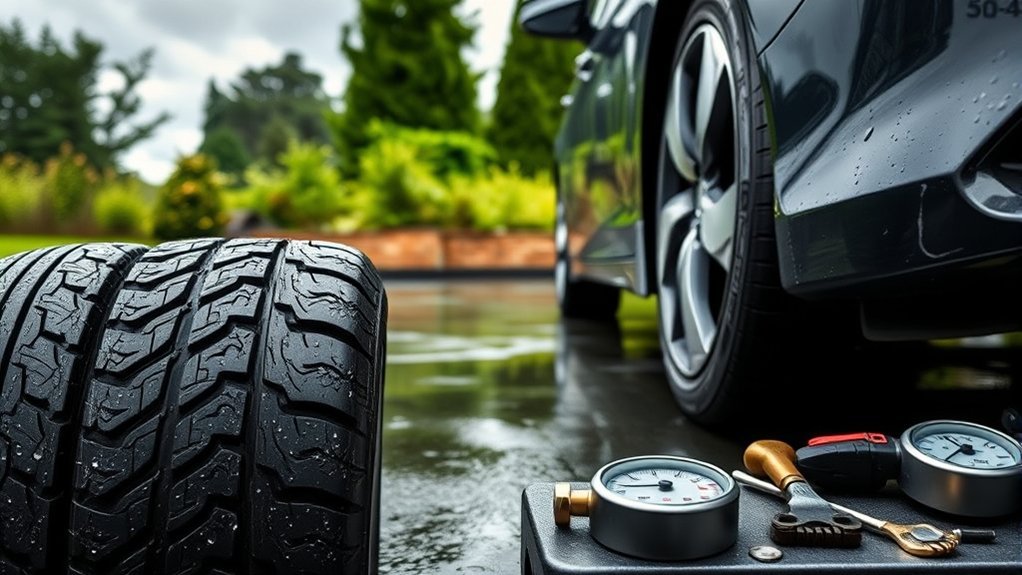
To guarantee your Honda Accord’s tires perform at their best in wet climates, regular maintenance is key. Start by checking your tire tread depth; a minimum of 4/32 of an inch guarantees ideal wet traction and helps prevent hydroplaning. Keep your tires properly inflated according to manufacturer specs—under-inflated tires can increase the risk of aquaplaning and diminish handling performance.
Rotate your tires every 6,000 to 8,000 miles to promote even wear, which is essential for maintaining traction on slippery surfaces. Regularly inspect for visible damage or uneven wear, as these can compromise safety and performance. Plus, consider investing in tires specifically designed for wet conditions; their advanced tread patterns and rubber compounds enhance grip and water displacement. Additionally, prioritize tires with deep grooves to effectively channel water away from the contact patch, reducing the risk of hydroplaning.
When to Replace Tires Before Rainy Season
Regular maintenance is essential for your Honda Accord, especially as the rainy season approaches. Before the downpours hit, take a moment to perform a thorough tread inspection. You’ll want at least 4/32 of an inch of tread depth to guarantee adequate grip and prevent hydroplaning. Don’t overlook visible damage, either—cracks or uneven wear can seriously compromise your tires’ performance in wet conditions.
Pay attention to tire aging as well; if your tires are six years or older, it’s time for a replacement, regardless of tread depth. Rubber degrades over time, making your tires less effective in rain. Finally, check your tire pressure monthly—under-inflated tires can lead to skidding and reduce fuel efficiency. Making these checks now can liberate you from worries during heavy rains, ensuring you stay safe and confident on the road. Additionally, maintaining proper tire pressure can enhance your vehicle’s overall fuel efficiency, further improving performance in wet conditions.
Top Tire Recommendations for Your Honda Accord in Wet Conditions
As the rainy season approaches, selecting the right tires for your Honda Accord becomes essential for maintaining safety and performance on wet roads. Here are some top recommendations to evaluate:
| Tire Model | Key Feature | Treadwear Rating |
|---|---|---|
| Cooper Endeavor | Deep grooves for hydroplaning resistance | Up to 65,000 miles |
| STARFIRE Solarus AS | All-season versatility for wet conditions | Varies |
| Lexani LX-TWENT | Specialized rubber for better grip | Varies |
| Fullway HP108 | Engineered for noise reduction | Varies |
| Bridgestone Potenza RE97 | Excellent wet traction | Varies |
In addition to choosing the right tire, consider that proper tire traction is vital for safe driving in wet conditions.
Frequently Asked Questions
How Do I Know When to Replace My Tires?
You’ll know it’s time to replace your tires when you notice significant tire wear during a visual inspection. Look for uneven tread, cracks, or a tread depth below 2/32 of an inch. Stay safe on the road!
Can Tire Pressure Affect Wet Weather Performance?
Imagine sailing smoothly through rain-soaked streets. Proper tire inflation guarantees your tread patterns grip the road, enhancing wet weather performance. Under-inflated tires can lead to hydroplaning, so stay vigilant for a safer, liberated drive.
What Is the Ideal Tread Depth for Wet Conditions?
For wet conditions, aim for a tread depth of at least 4/32 inches. This depth enhances tread patterns’ effectiveness in water dispersion, reducing hydroplaning and ensuring better grip on slippery surfaces for a safer driving experience.
Do Tire Brands Vary in Wet Performance?
Absolutely, tire brands do vary in wet performance. In fact, studies show 30% of accidents occur in wet conditions. Prioritize brands with proven reliability and superior tire tread designs to enhance your safety and confidence on the road.
How Can I Improve Traction on Wet Roads?
You can improve traction on wet roads by regularly checking tire maintenance, like tread depth and pressure. Also, practice smooth driving techniques, like gentle acceleration and braking, to enhance control and reduce skidding risks.
Conclusion
Choosing the right tires for your Honda Accord in a wet climate isn’t just smart; it’s essential for safety and performance. Imagine cruising through a downpour, confident in the grip beneath you, thanks to those all-season or specialized wet-weather tires. With the right tread design and maintenance, you can navigate those slick roads with ease. So, gear up with the best options, and turn those rainy days into a smooth ride instead of a slippery struggle.

Related Articles

Commuter vs Performance Tires on the Honda Accord
Navigating the choice between commuter and performance tires for your Honda Accord can transform your driving experience—discover which option suits you best.
Read More
When All-Season Tires Fall Short on a Honda Accord
When all-season tires fall short on a Honda Accord, understanding the risks can be crucial for your safety in winter conditions.
Read More
When to Swap Summer Tires for Winter on Your Honda Accord
Not sure when to switch your Honda Accord's tires? Discover the key temperature cues that signal it's time for winter preparation.
Read More