
True racing slicks are designed for dry, controlled track conditions, not routine public-road driving. Their smooth tread gives a large contact area on dry pavement, but it leaves little ability to move standing water away from the tire. Still, saying every slick-looking tire is automatically illegal is too simple. Street legality depends on the exact tire, its certification and intended-use markings, and the laws where you drive.
Quick Answer
True racing slicks generally should not be used for daily driving. Many are intended only for racing, and their smooth tread cannot evacuate standing water like a road tire. However, some track-focused semi-slick tires are street legal, so always check the exact tire’s markings, manufacturer instructions, and local road-use laws.
Key Takeaways
- True racing slicks have no normal water-evacuating tread grooves, which greatly reduces their margin against hydroplaning in standing water.
- A slick tire is not automatically illegal everywhere simply because it has little or no tread pattern; certification, intended use, sidewall markings, and local law all matter.
- The DOT symbol indicates certification to applicable U.S. federal motor-vehicle safety standards, but you should still follow manufacturer restrictions such as “Not for Highway Use.”
- There is no universal 200°F operating temperature for racing slicks. The correct temperature range depends on the tire and compound.
- Street-legal track tires and semi-slicks exist, but they are different from true competition slicks and can still have important wet- and cold-weather limitations.
Why Racing Slicks Usually Aren’t Street Tires

A true racing slick has a nearly continuous tread surface rather than the deep circumferential grooves and channels found on normal road tires. That construction can maximize rubber-to-pavement contact on a dry track, but it creates a serious disadvantage when water collects between the tire and road.
There is also an important legal distinction. In the United States, Federal Motor Vehicle Safety Standard No. 139 establishes performance, labeling, dimensional, and treadwear-indicator requirements for applicable new radial tires used on light vehicles. The rule does not simply say that every tire without a conventional tread pattern is illegal.
The DOT symbol on an applicable tire constitutes the manufacturer’s certification that the tire complies with applicable federal safety standards. That still does not mean every competition tire should be driven on the highway. Tire manufacturers can restrict a racing product to closed-course use even when it carries certain DOT-related markings.
Warning: Do not assume a DOT marking overrides a manufacturer’s usage warning. If a tire is labeled “Not for Highway Use,” “For Racing Purposes Only,” or has a similar restriction, treat it as a race tire and do not use it for normal public-road driving.
For example, Hoosier Racing Tire states that most of its racing products are designed for specified racing surfaces and are not intended for public-road operation. Its technical guidance specifically warns against using those race tires on public roads.
Public-road requirements can also vary by state, province, or country. That is why the safest question is not simply, “Does this tire look like a slick?” Instead, check whether the exact tire model is approved and intended for road use where you live.
Note: This article explains general U.S. tire-safety and regulatory principles. Road-use, inspection, and minimum-tread rules can differ by jurisdiction, so check your local vehicle code before using a track-focused tire on public roads.
Slick vs. Semi-Slick vs. Street Tires
The terms slick and semi-slick are often used loosely, which causes much of the confusion about street legality.
| Tire Type | Typical Design | Best Use | Public-Road Use |
|---|---|---|---|
| True racing slick | Smooth or nearly smooth competition tread | Dry closed-course racing | Usually race-only; verify exact markings and manufacturer instructions |
| Street-legal track / semi-slick | Large tread blocks with limited grooves | Track days and high-performance road use | Some models are road legal, but wet/cold limits may be significant |
| Performance street tire | Full road-oriented tread pattern | Daily driving and spirited road use | Designed for public-road use when correctly fitted |
| All-season tire | More grooves and sipes with a broad operating range | Year-round everyday driving in suitable climates | Designed for normal public-road use |
A good example of the distinction is the Michelin Pilot Sport Cup 2 R. Michelin describes it as a DOT-legal, track-focused tire optimized for dry conditions. It still has tread grooves, and Michelin warns that hydroplaning can become a major concern on wet roads, particularly as the tire wears.
A street-legal track tire can look almost like a slick, but “track focused” and “race-only slick” are not the same category.
[Products Worth Considering]
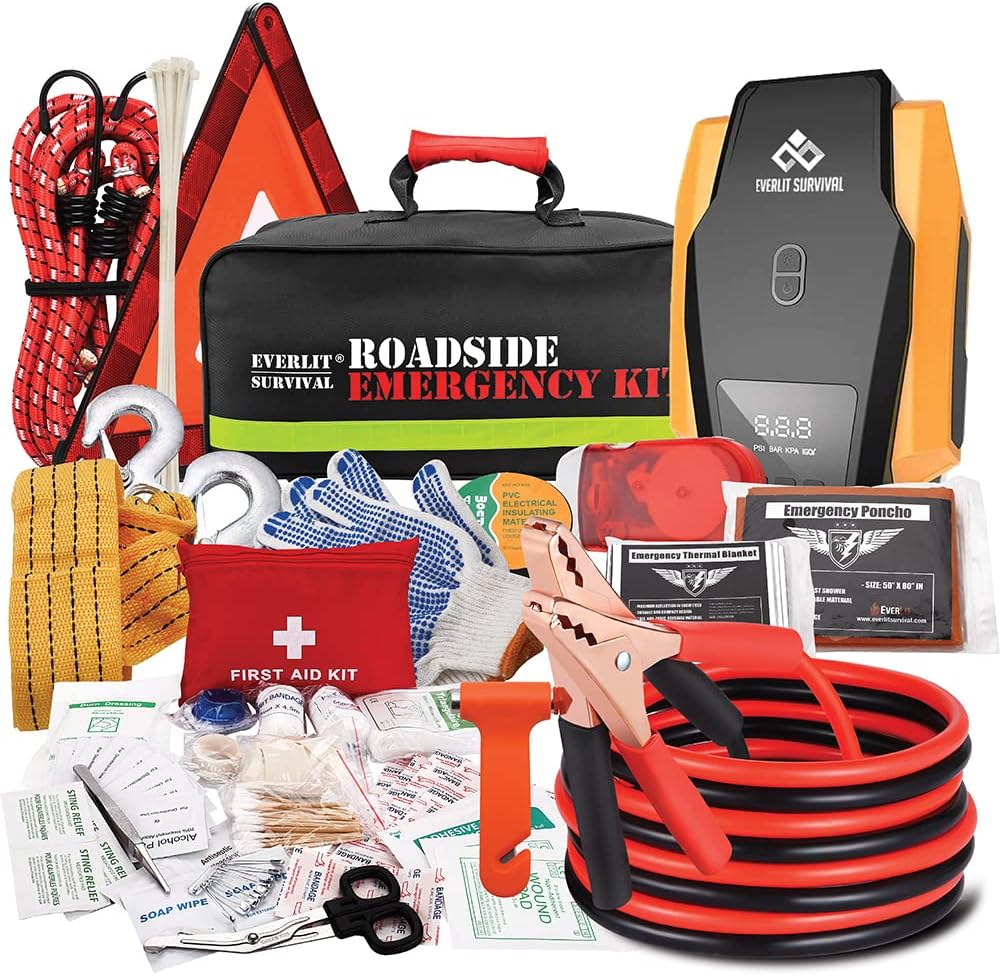
The Everlit Road Guardian emergency kit is designed for roadside breakdowns, combining essential safety gear and roadside tools in one compact bag. It includes a digital 12V auto tire inflator with preset and auto shutoff, plus 12-foot 8-gauge jumper cables to get you moving again. You also get a full 108-piece first aid kit, reflective warning tools, safety gloves, and emergency convenience items for safer travel.

Monitor tire tread wear with a smart, color-coded depth gauge that shows clear condition ranges at a glance. The bar is range marked for fast, easy readings, helping you maintain safer traction and performance. Each gauge is portable with a pocket clip, and the set includes 20 units for daily use and sharing.

Accurately measure tire tread depth with a calibrated gauge marked from 0 to 1 inch in 1/32 inch increments. The color-coded bar helps you quickly identify tread condition ranges, supporting safe driving for trucks, motorcycles, automobiles, and passenger vehicles.
How Slick Tires Perform in the Rain
Rain is one of the biggest reasons true racing slicks are unsuitable for normal road use. A slick has little or no tread channel to move standing water away from the contact patch.
When enough water builds underneath the tire, the rubber can lose direct contact with the pavement and begin riding on a film of water. That is hydroplaning. At that point, steering and braking ability can fall sharply.
The risk is not determined by tread alone. Vehicle speed, water depth, tire pressure, tire width, road surface, tread depth, and tread design all affect hydroplaning. But deep grooves give normal road tires an important way to evacuate water that a true dry racing slick does not have.
This does not mean a slick automatically loses all grip the instant pavement becomes slightly damp. The larger concern is that its safety margin falls quickly as water depth and speed increase, making changing public-road conditions much harder to manage.
Even street-legal track tires require caution. Michelin specifically advises reduced speed on wet roads with its track-oriented Pilot Sport Cup 2 R because worn track tires can be strongly affected by hydroplaning.
Pro Tip: If a track-focused tire is approved for road use, read its wet-weather and temperature guidance before driving. Street legal does not automatically mean suitable for heavy rain, standing water, freezing temperatures, or year-round commuting.
Why Slick Tires Need Heat to Work
Racing tires are engineered around specific rubber compounds, loads, pressures, track surfaces, and temperature ranges. Many competition compounds develop their strongest grip only after they have warmed sufficiently.
That does not mean every slick needs to reach about 200°F. There is no universal racing-tire operating temperature. Different compounds can have very different working windows, and the correct range comes from the tire manufacturer.
Even road-legal track tires can need warm-up. Michelin says its Pilot Sport Cup 2 R requires a warm-up phase to reach optimal performance. A true competition slick may be even more dependent on getting the compound into its intended working range.
Tire pressure also changes as the tire heats. On a race track, drivers and teams may measure hot pressures and tire temperatures to tune the setup. That does not mean track pressures should be copied onto the street. For public-road driving, use the vehicle manufacturer’s recommended cold inflation pressure unless the tire or vehicle manufacturer specifies otherwise.
Normal commuting creates very different conditions from repeated fast laps. Traffic, long stops, cold pavement, rain, and changing speeds make it difficult to maintain a race tire in the controlled temperature window for which it was designed.
How Street Tires Differ From Slick Tires
Street tires have to handle far more situations than a dry racing slick. A normal road tire may encounter rain, potholes, standing water, changing pavement temperatures, emergency braking, highway cruising, noise requirements, and thousands of miles of ordinary use.
- Water evacuation: Road-tire grooves and channels help move water away from the contact patch.
- Temperature range: Road compounds are designed to perform across a broader set of everyday conditions than a specialized racing compound.
- Wear life: Road tires generally prioritize durability far more than race slicks.
- Ride and noise: Their construction and tread patterns are developed with everyday comfort and noise in mind.
- Road certification: Highway tires must meet the applicable regulatory and labeling requirements for the market in which they are sold.
Slick tires make a different compromise. Eliminating tread grooves can increase the amount of rubber contacting dry pavement, while specialized compounds and construction can improve track performance. Those advantages are valuable in controlled racing conditions but come with significant compromises outside them.
[Products Worth Considering]

The SAFELIFE dial tire tread depth gauge measures tread depth in 1/32 inch increments with clear, easy-to-read 2-inch dial face. Color zones using a traffic light system help you quickly judge whether tread is low, marginal, or ample for safer driving. Built with a durable zinc cast body and a metal detect probe for precise, comfortable use across cars, motorcycles, trucks, and buses.

Measure tire tread depth quickly and accurately with this LUMITECO dial gauge that reads in 1/32" increments up to 14/32". The color-coded green/yellow/red zones make it easy to judge tire wear and know when replacement is needed. A rugged, compact design with a protective pouch helps keep the gauge ready for use on cars, trucks, motorcycles, and more.

Measure tyre tread depth precisely with a digital gauge that reads in both MM and inches, helping you monitor safe driving conditions. The large LCD screen is easy to operate, and the compact tool fits for cars, trucks, and motorcycles. It provides high accuracy with a 0-25.4mm range and includes a 1-year warranty for added peace of mind.
How to Check Whether a Track Tire Is Street Legal
Do not judge a tire only by how aggressive or smooth its tread looks. Check the exact model and size before driving it on public roads.
- Read the sidewall. Look for required road-use markings and any wording such as “Not for Highway Use” or “For Racing Purposes Only.”
- Check the manufacturer’s product page or technical bulletin. Confirm whether that specific tire is intended for highway or road use.
- Verify your local rules. Inspection requirements and minimum usable tread depth can differ by jurisdiction.
- Match the vehicle requirements. Use an approved tire size and an adequate load index and speed rating for your vehicle.
- Check remaining tread. The National Highway Traffic Safety Administration says tires should be replaced when tread is worn to 2/32 inch and recommends checking tread regularly.
In U.S. federal rules, applicable tires also use treadwear indicators that visually show when the tread has worn to 1/16 inch, which is the same as 2/32 inch.
Best Tires for Daily Driving
For daily driving, choose a tire designed for the weather, vehicle, and type of roads you actually use rather than trying to duplicate a racing setup.
An all-season road tire is often appropriate when you need everyday wet and dry capability over a broad range of conditions. A performance all-season tire can add steering response while retaining everyday versatility.
If you live where temperatures remain warm and want stronger dry and wet performance, a high-performance summer tire may be a better fit. Summer tires, however, are not intended to substitute for winter-capable tires in freezing conditions.
Drivers who regularly attend track days can consider a street-legal track-focused tire, but this category involves larger compromises in tread life, cold-weather performance, standing-water resistance, comfort, or noise. Follow the tire manufacturer’s specific road-use instructions rather than assuming every semi-slick behaves the same way.
Whatever category you choose, match the tire to the vehicle manufacturer’s specifications for size, load capacity, inflation pressure, and other fitment requirements.
[Products Worth Considering]

The Big Rig Defense Tire Thumper is a truck tire pressure checker that lets you quickly check multiple tires by giving them a firm whack. Listen for a reassuring thump and feel the stick bounce when a tire is fully inflated, helping you get back on the road safely. It features a comfortable, glove-friendly handle and a secure wrist strap for confident use on busy routes.
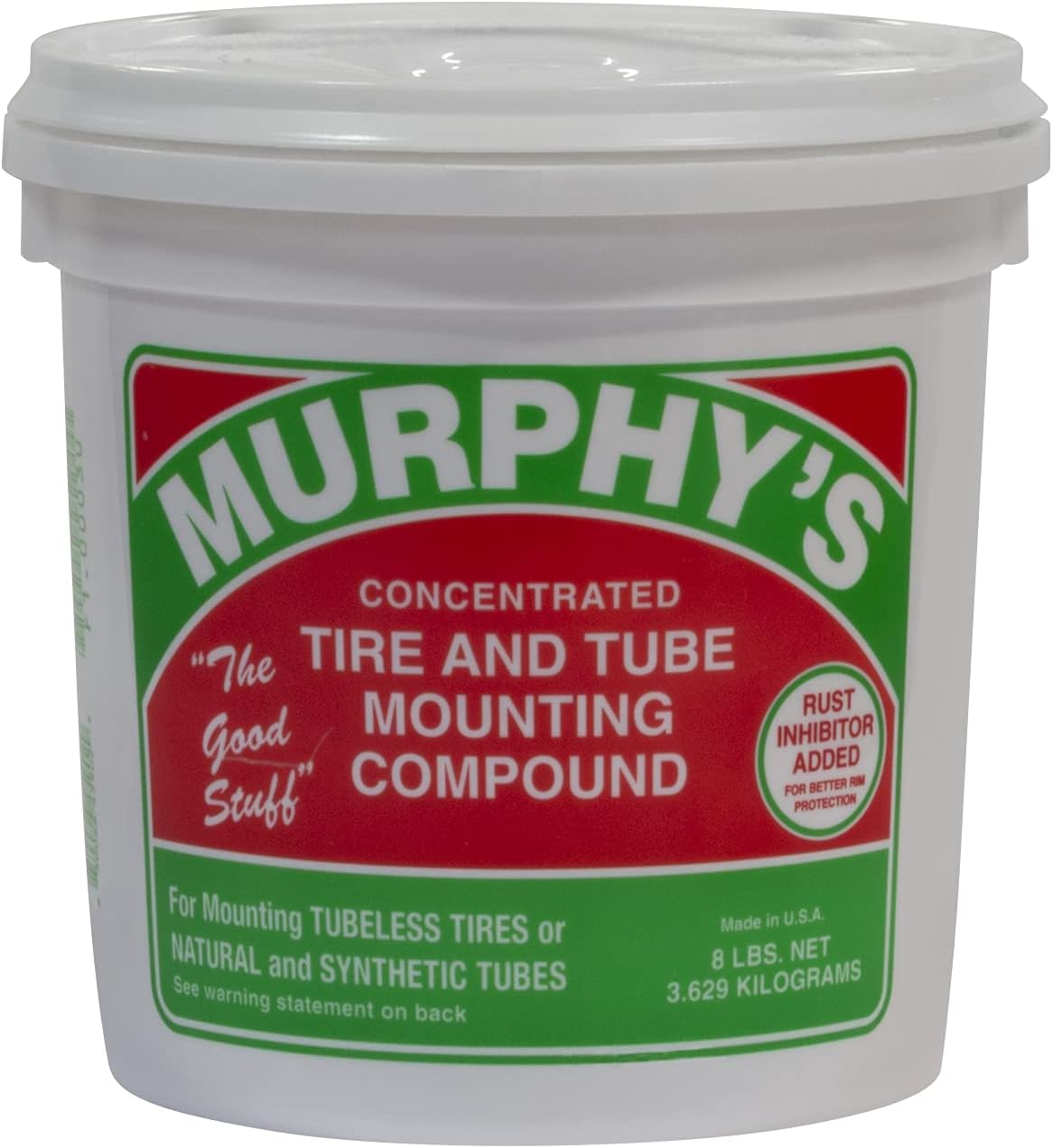
A concentrated tire and tube mounting compound designed to help simplify mounting rubber tires and tubes on passenger, semi truck, construction, and OTR applications. Its ultra-thick formula packs beads effectively and includes rust inhibitors to help protect against corrosion during use.

The Continental Grand Prix 5000 is an allround road bike tire engineered for faster rolling, improved ride comfort, and enhanced puncture protection. It features a Vectran Breaker cut-protection layer, Lazer Grip micro-profile tread for confident cornering control, and Active Comfort Technology to damp vibration for smoother rides. BlackChili compound optimizes grip and speed for everyday performance and long-lasting confidence.
Frequently Asked Questions
Can You Daily Drive With Slicks?
A true racing slick is a poor choice for daily driving. Many slicks are intended only for closed-course competition, have very limited standing-water capability, may require a specific temperature range, and can wear much faster than normal road tires. Use a road-approved performance tire instead.
Is It Illegal to Drive With Slick Tires?
It depends on the exact tire and the law where you drive. Many true racing slicks are explicitly restricted to competition use and should not be driven on public roads. Some track-focused tires with limited tread are DOT-certified and street legal. Always check the tire manufacturer’s intended-use instructions and local vehicle regulations.
Why Don’t Normal Cars Use Slick Tires?
Normal cars must work safely and predictably through rain, temperature changes, rough pavement, highway driving, and thousands of miles of everyday use. True racing slicks are optimized for controlled track conditions instead, so their wet-weather capability, operating range, wear characteristics, and intended use make them unsuitable for ordinary commuting.
Why Were Slick Tyres Banned?
Slick tires were not subject to one universal worldwide ban that applies to every tire and jurisdiction. True racing slicks are generally designed for closed-course use, while public-road rules require suitable approved tires and may impose tread, condition, or restricted-use requirements. Some track-focused semi-slick tires remain fully street legal.
Does a DOT Mark Mean a Racing Tire Is Safe for Daily Driving?
No. The DOT symbol is a certification related to applicable federal motor-vehicle safety standards, but it does not turn every competition-oriented tire into a good daily-driver tire. Follow the manufacturer’s intended-use warnings, temperature guidance, wet-weather recommendations, and your local road laws.
Can Street-Legal Semi-Slick Tires Be Used in Rain?
Some can, but their wet-weather ability varies by model and tread condition. Track-focused tires generally have less water-evacuating tread than conventional road tires, so standing water can become a concern sooner. Follow the manufacturer’s wet-road guidance and reduce speed when conditions deteriorate.
Conclusion
True racing slicks are specialized track tools, not everyday road tires. Their smooth tread can provide excellent dry-track contact, but it sacrifices the water evacuation, broad operating range, durability, and road-focused design needed for daily use. The important distinction is not simply “slick equals illegal.” Check whether the exact tire is intended and certified for road use, follow its manufacturer restrictions, and make sure it meets the rules where you drive.
Sources
- Electronic Code of Federal Regulations — 49 CFR § 571.139 — federal light-vehicle tire performance, labeling, DOT certification, and treadwear-indicator requirements.
- National Highway Traffic Safety Administration — TireWise — tire tread, safety checks, and the 2/32-inch replacement guidance.
- Hoosier Racing Tire — Technical Information — manufacturer warnings covering race-only tires and highway use.
- Hoosier Racing Tire — Hill Climb Product Bulletin — examples showing that racing compounds have different recommended temperature ranges.
- Michelin — Pilot Sport Cup 2 R — current guidance for a DOT-legal track tire, including warm-up and wet-road hydroplaning cautions.
- New York State DMV — Vehicle Safety Inspection Program — example of state requirements covering tread depth and restricted-use tire designations.