225 Vs 245 Tires: Which Size Fits Your Vehicle?
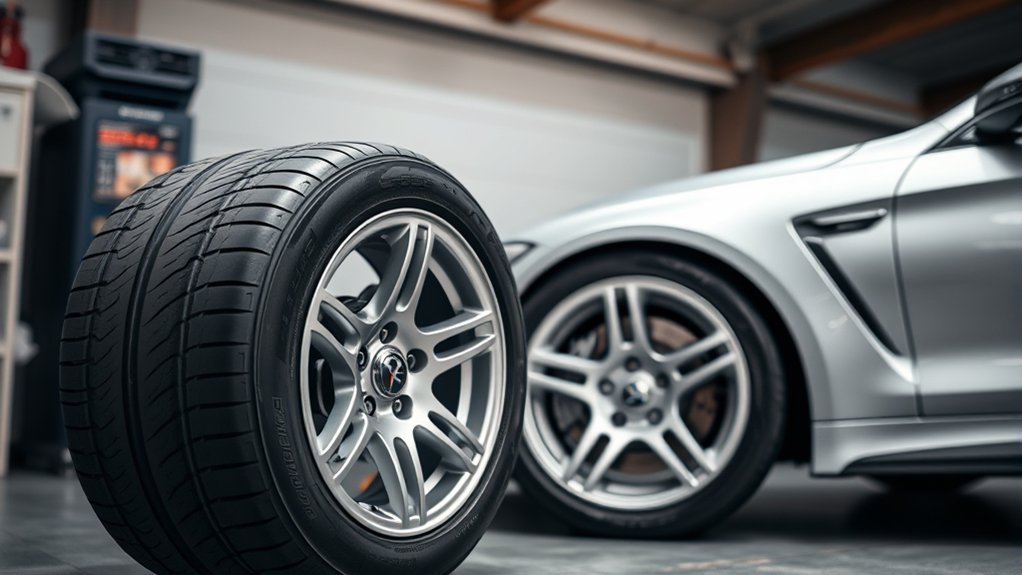
Choosing between 225 and 245 tires starts with one important distinction: 225 and 245 describe nominal tire section width only. A 245 tire is nominally 20 mm wider than a 225—about 0.79 inch, or 8.9%—but width alone does not tell you whether the tire will fit, how tall it is, how it will ride, or whether it will change your speedometer. The complete tire size, wheel specifications, load capacity, clearance, and vehicle manufacturer’s recommendations all matter.
Quick Answer
A 245 tire is nominally 20 mm wider than a 225 tire. A properly matched 245 can provide a wider, more performance-oriented fitment, while a 225 may feel lighter and can be easier to fit. Neither is automatically better: compare the complete tire size, approved rim width, load rating, overall diameter, and vehicle specifications before changing.
Key Takeaways
- 225 and 245 refer to nominal section width in millimeters; they do not identify the tire’s overall diameter.
- A 245 tire is nominally 20 mm, or about 0.79 inch, wider than a 225 tire.
- A wider tire can improve steering response and dry-road grip in a properly engineered fitment, but width alone does not guarantee shorter braking distances or better handling.
- Ride comfort, road noise, and fuel economy depend heavily on tire construction, aspect ratio, tread design, inflation pressure, weight, and compound—not width alone.
- Before switching sizes, verify the vehicle-approved tire size, wheel width and offset, clearance, load index, speed rating, and overall diameter.
225 Vs 245 Tires: Which One Should You Choose?
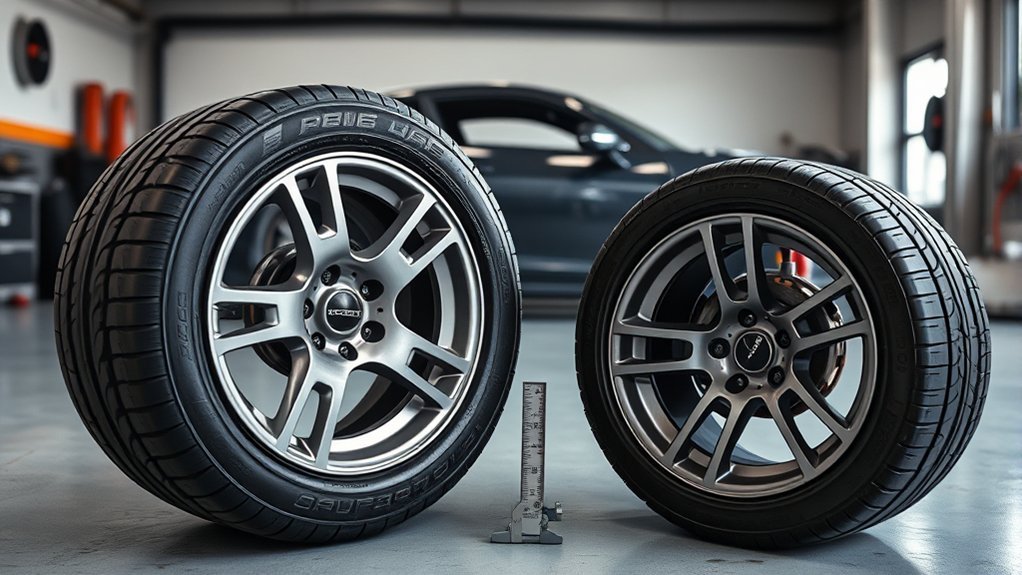
If you’re comparing 225 vs 245 tires, start with your vehicle’s approved fitment rather than appearance alone. According to Michelin’s tire-size guidance, the first number in a metric tire size represents nominal section width in millimeters.
That means a 225 tire is approximately 225 mm wide at its nominal section measurement, while a 245 is approximately 245 mm wide. The nominal difference is:
- 20 mm wider for the 245
- About 0.79 inch wider
- About 8.9% more nominal section width
Actual mounted section width can vary somewhat by tire model and wheel width, so those numbers should not be treated as an exact measurement of every installed tire.
| Comparison | 225 Tire | 245 Tire |
| Nominal section width | 225 mm / 8.86 in | 245 mm / 9.65 in |
| Steering feel | Can feel lighter in comparable fitments | Can feel more planted or responsive when properly matched |
| Fitment | Usually needs less lateral clearance | May require more wheel and suspension/body clearance |
| Ride comfort | Not determined by width alone | Not determined by width alone |
| Fuel economy | May have an efficiency advantage in some equivalent setups | May add rolling resistance or weight, but tire design matters more than width alone |
If your vehicle manufacturer approves both sizes, your priorities can help break the tie. A 225 fitment may suit everyday driving when you value easy fitment and lighter steering. A properly selected 245 can suit a driver looking for a wider, more performance-oriented setup.
However, the tire’s compound, tread design, wheel width, inflation pressure, suspension geometry, and overall diameter can change the result more than the 20 mm width difference by itself.
[Products Worth Considering]
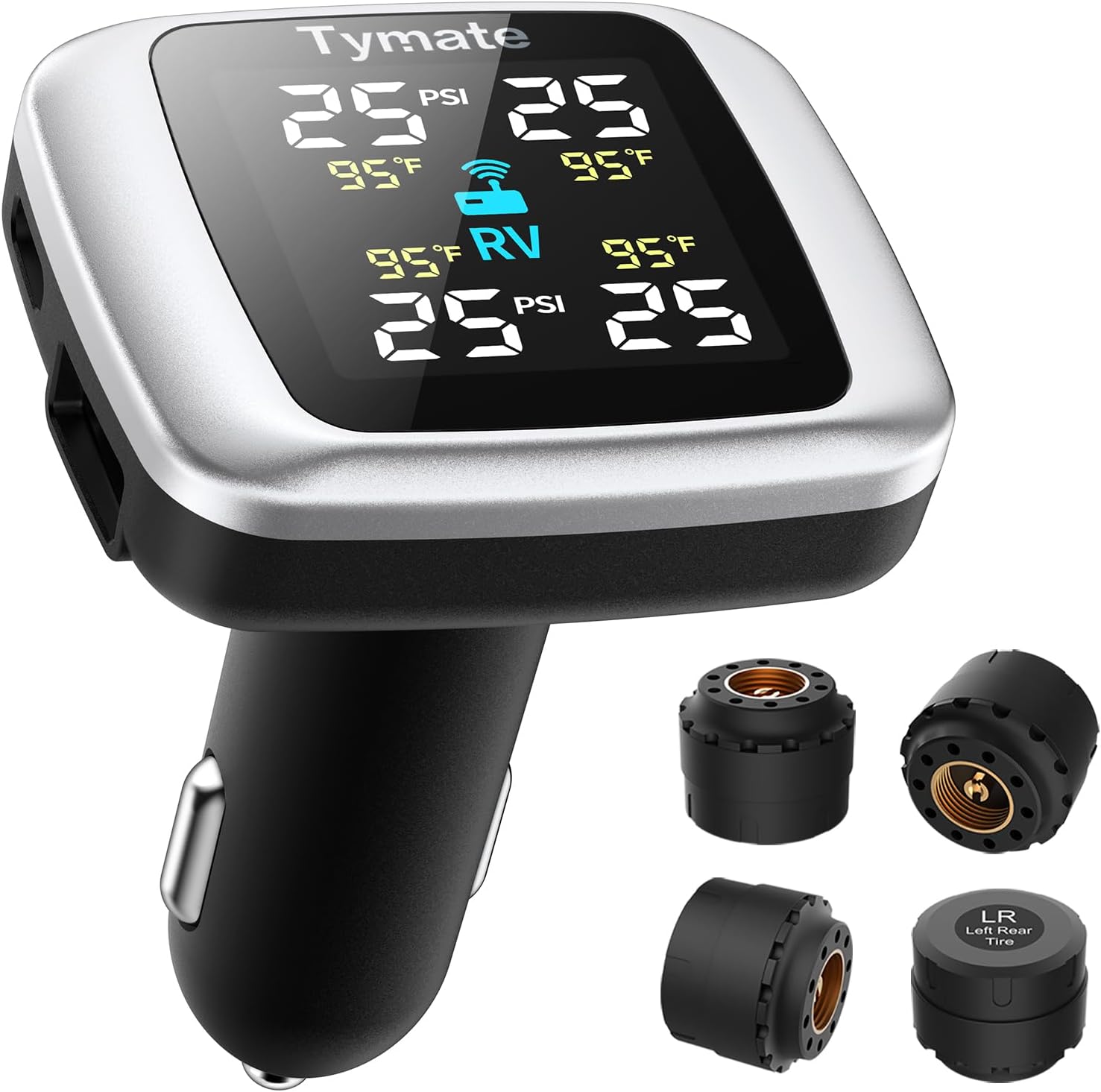
Tymate TM7 is a wireless tire pressure monitoring system that delivers real-time pressure and temperature readings for safer driving. It includes four external sensors, a bright color LCD display with adjustable backlight, and six alarm modes for high/low pressure, fast leakage, high temperature, and sensor signal or battery issues. The system covers a wide 0–144 PSI range and plugs into your vehicle’s cigarette lighter socket for quick DIY setup.

Keep your tires properly inflated with this analog VONDIOR tire pressure gauge, designed for fast, easy readings without batteries. The swiveling, two-axis hose and large glow dial help you measure at any tire angle with instant visibility. Built with a protective rubber shield, it supports durable, low-maintenance use for cars and trucks.

Measure tyre tread depth precisely with a digital gauge that reads in both MM and inches, helping you monitor safe driving conditions. The large LCD screen is easy to operate, and the compact tool fits for cars, trucks, and motorcycles. It provides high accuracy with a 0-25.4mm range and includes a 1-year warranty for added peace of mind.
What Do 225 and 245 Actually Mean?
Consider a tire marked 225/45R17. Each part describes something different:
- 225 — nominal section width in millimeters
- 45 — aspect ratio; sidewall height is 45% of the nominal section width
- R — radial construction
- 17 — wheel diameter in inches
The same system applies to a 245 tire. This is why comparing only “225 vs 245” cannot tell you whether one tire is taller than the other.
You can estimate overall tire diameter with this formula:
Overall diameter ≈ wheel diameter in millimeters + 2 × sidewall height
Sidewall height is calculated by multiplying section width by the aspect ratio.
A 245 tire is always nominally wider than a 225 tire, but it is not necessarily taller. The aspect ratio and wheel diameter determine whether overall diameter increases, decreases, or stays nearly the same.
Will 225 Or 245 Tires Fit Your Vehicle?
Fitment is more important than choosing the wider tire. Start with the tire information placard, owner’s manual, or manufacturer-approved fitment data. The U.S. Tire Manufacturers Association recommends replacement tires that meet the vehicle or tire manufacturer’s requirements for size, load index, and speed rating.
If your vehicle came with 225 tires, a 245 may fit, but only when the complete replacement size works with the vehicle. Check all of the following:
- Complete tire size, not width alone
- Approved wheel/rim width for the exact tire
- Wheel offset and available suspension/body clearance
- Overall tire diameter and rolling circumference
- Load index or load-carrying capacity
- Speed rating required by the vehicle manufacturer
- Front and rear clearance throughout steering and suspension travel
- ABS, stability-control, traction-control, and AWD/4WD compatibility
A 245 tire may need a wider wheel than a comparable 225. Michelin also notes in its performance-upgrade guidance that wider tires may require wider wheels and that tire-size changes should be checked against vehicle-manufacturer restrictions.
Warning: Do not install a tire simply because it physically mounts on the wheel. The tire must also meet the vehicle’s load requirements, approved rim-width range, clearance requirements, and other manufacturer specifications. On AWD and 4WD vehicles, mismatched rolling circumferences can also create drivetrain or electronic-control problems.
Does a 245 Tire Change Overall Diameter?
It can, but it does not have to. The aspect ratio determines how tall the sidewall is.
For example, compare two tires with the same 45-series aspect ratio and 17-inch wheel:
- 225/45R17: estimated diameter about 634.3 mm, or 24.97 inches
- 245/45R17: estimated diameter about 652.3 mm, or 25.68 inches
The 245/45R17 is about 2.84% larger in diameter. If a vehicle were calibrated for the 225/45R17 and nothing else compensated for the change, an indicated 60 mph would correspond to approximately 61.7 mph based purely on the diameter difference.
But changing the aspect ratio can produce a very different result. A 245/40R17, for example, has an estimated diameter of about 627.8 mm, which is roughly 1% smaller than a 225/45R17.
This demonstrates why “225 vs 245” alone cannot predict speedometer error.
Pro Tip: When considering a wider tire, compare the complete new size against an option specifically approved by your vehicle manufacturer or have a qualified tire professional verify rim width, diameter, clearance, and load capacity.
225 Vs 245 Tires For Handling And Grip
A properly matched 245 setup can provide a more performance-focused feel. Michelin notes that a correctly executed wider fitment can provide a wider contact patch and improved grip and handling. That does not mean every 245 tire will outperform every 225.
Tire performance also depends on:
- Rubber compound
- Tread pattern and tread depth
- Tire temperature
- Inflation pressure
- Wheel width
- Vehicle alignment and suspension geometry
- Road surface and weather
A high-quality 225 performance tire can easily provide more grip than a low-grip 245 tire built for a different purpose. Width is only one part of the package.
The steering difference can also be noticeable. A wider setup may feel more planted or provide sharper response when the wheel and tire are properly matched. A narrower setup can feel lighter and may require less steering effort. Again, tire construction and vehicle tuning can change that behavior significantly.
Braking should be treated the same way. A 245 does not automatically shorten stopping distance simply because it is wider. Compound, tread, temperature, braking system, road surface, tire pressure, and ABS behavior all influence stopping performance.
225 Vs 245 Tires For Ride Comfort And Noise
There is no reliable rule that says every 225 tire will ride softer than every 245 tire. Aspect ratio and tire construction matter greatly.
A tire with a taller, more flexible sidewall can absorb bumps differently from a low-profile tire, regardless of whether its nominal width is 225 or 245. Michelin’s tire-size guidance likewise explains that higher-profile sidewalls generally provide more impact absorption, while lower-profile tires tend to provide sharper response with a potentially firmer ride.
Important ride-comfort factors include:
- Sidewall height
- Sidewall stiffness
- Load rating and reinforced construction
- Tire pressure
- Tread and casing design
- Wheel diameter and weight
- Vehicle suspension tuning
Road noise is also strongly tire-model dependent. Tread block shape, groove design, rubber compound, casing construction, pavement type, and wear can make one 225 tire louder than another 245—or vice versa.
For a quiet daily-driving setup, compare actual tire models and their intended use rather than choosing solely by section width.
[Products Worth Considering]

This professional wheel and rim cleaning brush set lifts brake dust, grime, and dirt with soft, scratch-free microfiber and synthetic wool fibers. The rim brush bends up to 360 degrees for easy access to hard-to-reach areas around spokes, lips, and faces. Ideal for thorough cleaning of car, truck, motorcycle, bicycle, RV, and more wheel and tire surfaces.

The Topeak SmartGauge D2 delivers precise digital tire pressure readings for bikes, motorcycles, and sports equipment up to 250 psi (17 bar). Its rotating SmartHead works with both Presta and Schrader valves, so you can check pressure quickly without adapters. The LCD display makes it easy to read results in psi, bar, or kg/cm² with an included CR2032 battery for immediate use.

Add style while helping protect your tire valve stems with handmade crystal rhinestone caps and a durable plastic insert. These caps resist corrosion and help keep out rain, snow, and muddy water, extending tire life. Textured non-slip design makes them easy to grip for quick install and removal when checking tire pressure.
225 Vs 245 Tires For Fuel Economy And Daily Driving
A narrower 225 tire can have an efficiency advantage in some otherwise comparable setups, especially if the wider alternative is heavier or has higher rolling resistance. However, width is not a reliable fuel-economy rating by itself.
NHTSA’s TireWise guidance explains that tire design affects rolling resistance and that lower rolling resistance can improve fuel economy. Two tires of different widths can therefore behave differently depending on compound, construction, tread, pressure, and intended performance category.
For daily driving, proper inflation is especially important. Use the vehicle manufacturer’s recommended cold inflation pressure shown on the tire-information placard or specified in the owner’s manual. Do not inflate a tire based solely on the maximum pressure molded into its sidewall.
Note: If fuel economy is a priority, compare the actual rolling-resistance characteristics of the tire models you are considering. A 225 is not automatically an efficient tire, and a 245 is not automatically inefficient.
225 Vs 245 Tires in Rain, Snow, and Off-Road Driving
Wet Roads
Do not assume that the wider tire is always safer in rain. Wet traction depends heavily on tread compound, tread depth, groove design, inflation pressure, vehicle speed, and water depth.
A quality 245 tire with an effective wet-weather tread can perform very well, while a worn or poorly designed tire can perform badly regardless of width. Tire condition and design are more useful indicators than width alone.
Snow
Narrower tires can sometimes work well in snow because they concentrate the vehicle’s load over a narrower path and can cut through loose material differently. However, winter-tire compound and tread design usually matter much more than a simple 225-versus-245 comparison.
If winter traction is important, use a vehicle-approved winter tire size rather than choosing a narrower size without checking manufacturer guidance.
Off-Road and Soft Terrain
Wider tires can provide useful flotation on sand and other soft surfaces, particularly when the entire wheel-and-tire setup is designed for that use. Michelin notes that high-flotation tire designs are used for traction on sand and soft soil.
However, off-road traction depends on tread design, terrain, construction, pressure, vehicle weight, wheel width, and clearance. A 245 tire is not automatically superior to a 225 in mud, rocks, snow, or every other off-road condition.
How to Decide Between 225 and 245 Tires
Use this order of priority before choosing either size:
- Check the vehicle placard and owner’s manual. Start with the manufacturer-recommended size or approved alternatives.
- Compare the complete tire size. Width alone does not tell you overall diameter.
- Verify wheel compatibility. Make sure the exact tire is approved for your rim width.
- Check clearance. Account for the inner suspension side, outer fender side, steering lock, and suspension movement.
- Match load and speed requirements. Never reduce required load-carrying capacity.
- Consider vehicle systems. Large circumference changes can affect speedometer readings and may influence ABS, stability control, gearing, and other systems.
- Then compare driving priorities. Evaluate the actual tire models for handling, comfort, wet traction, noise, tread life, and rolling resistance.
If both sizes are manufacturer-approved and otherwise equivalent, a 225 can be attractive for an everyday setup where easy fitment and lighter steering are priorities. A 245 can be attractive when the vehicle is designed to support the wider fitment and you value a broader, more performance-oriented setup.
Frequently Asked Questions
Can I Mix 225 and 245 Tires on the Same Vehicle?
Not unless the vehicle manufacturer specifies or approves that combination. USTMA generally recommends matching tire size, load index, speed rating, and construction, although some vehicles use manufacturer-designed staggered setups with different front and rear sizes. Do not create your own staggered combination without verifying the vehicle and tire specifications.
How Do 225 and 245 Tires Affect Speedometer Accuracy?
Width alone does not determine speedometer error. The important measurement is overall diameter or rolling circumference. For example, a 245/45R17 is about 2.84% larger in calculated diameter than a 225/45R17, while a 245/40R17 is slightly smaller than a 225/45R17. Always compare the complete tire sizes.
Which Tire Size Is Cheaper to Replace, 225 or 245?
There is no universal winner. Tire prices depend on the complete size, brand, model, performance category, load and speed rating, availability, and retailer. Compare the exact 225 and 245 sizes you are considering rather than assuming the narrower tire will always cost less.
Do 245 Tires Require Different Rims Than 225 Tires?
Not always. Some wheels fall within the approved rim-width range for both particular 225 and 245 tire sizes, while other 245 tires require a wider wheel. Check the tire manufacturer’s specification for the exact tire and verify that the wheel width and vehicle offset are suitable.
How Do Tire Widths Impact Off-Road Performance?
Wider tires can improve flotation on soft terrain such as sand, but width alone does not determine off-road traction. Tread design, construction, terrain, tire pressure, wheel width, vehicle weight, and clearance can be more important. Use a tire and size approved for the vehicle and the terrain you drive.
Can I Replace 225 Tires With 245 Tires on the Same Wheels?
Possibly, but only if the specific 245 tire is approved for your wheel width and the complete size provides suitable clearance, diameter, load capacity, and vehicle compatibility. The fact that both tires share the same wheel diameter designation does not automatically make the wider tire suitable.
How Much Wider Is a 245 Tire Than a 225 Tire?
The nominal section-width difference is 20 mm, which is about 0.79 inch. That makes 245 approximately 8.9% wider than 225 by nominal section width. Actual mounted width varies somewhat with the tire model and wheel width.
Conclusion
Choosing between 225 and 245 tires is not simply a choice between comfort and performance. A 245 is nominally 20 mm wider, but the complete tire size and vehicle fitment determine whether that extra width is useful and safe.
If both sizes are approved for your vehicle, a 225 may provide easier fitment and a lighter steering feel, while a properly matched 245 may provide a wider, more performance-oriented setup. Do not assume that width alone guarantees better braking, worse fuel economy, more noise, or a harsher ride.
Check the vehicle placard and owner’s manual first, then verify wheel width, offset, clearance, overall diameter, load index, speed rating, and the tire manufacturer’s specifications before changing sizes.
Sources
- Michelin — Choosing the Right Tire Size for Your Vehicle — explains tire-size markings, section width, aspect ratio, recommended fitment, and effects of changing tire dimensions.
- Michelin — Changing Tire Size or Specifications — covers replacement-size guidance and manufacturer-approved alternatives.
- Michelin — Performance Upgrade and Plus Sizing — explains wider fitments, wheel requirements, handling considerations, and overall-diameter effects.
- U.S. Tire Manufacturers Association — Replacing Tires — covers replacement size, load index, speed rating, and tire-mixing guidance.
- National Highway Traffic Safety Administration — TireWise — provides tire-safety, rolling-resistance, fuel-economy, maintenance, and labeling guidance.
[Products Worth Considering]

This 3-piece wheel brush set makes it easy to clean wheels and tires with soft, scratch-free brushes designed for lifting brake dust and grime. The flexible rim brush bends up to 360 degrees to reach hard-to-access areas for a thorough clean, while the comfortable grip helps control during detailing. A dedicated detailing brush supports gentle cleaning for sensitive surfaces, including interior use.

This universal wheel alignment tool helps you accurately restore tire tilt angles after tire or suspension repairs using an adjustable camber gauge. It features a powerful magnetic base that firmly attaches to brake rotors for stationary, slip-free readings, improving consistency during measurement. Built from durable PC plastic, it resists wear and corrosion and is compact enough for car, truck, RV, and motorcycle alignment tasks.

This 15-inch tire spoons kit makes tire removal and installation easier with added leverage, reducing time and effort for everyday repairs. It includes tire spoons, rim protectors, a valve tool, and valve cores/caps, helping protect rims and streamline deflation and re-sealing. Built with durable hardened steel and a non-slip ergonomic grip for confident use on motorcycles, dirt bikes, ATVs, and lawn equipment.

Related Articles
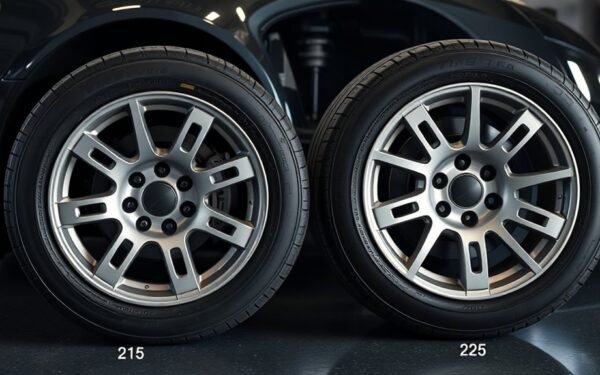
215 Vs 225 Tires: Which Size Should You Choose?
Jump into 215 vs 225 tires to see which size fits your driving style, boosts performance, and avoids costly fitment mistakes.
Read More
205 Vs 215 Tires: What’s the Difference?
A 205 vs 215 tires comparison reveals subtle differences in grip, comfort, and efficiency that could change your drive more than you expect.
Read More
18×8 Tires: What Sizes Fit This Rim?
An 18x8 rim fits several tire sizes, but the best choice depends on clearance, ride, and handling—see which one really works.
Read More