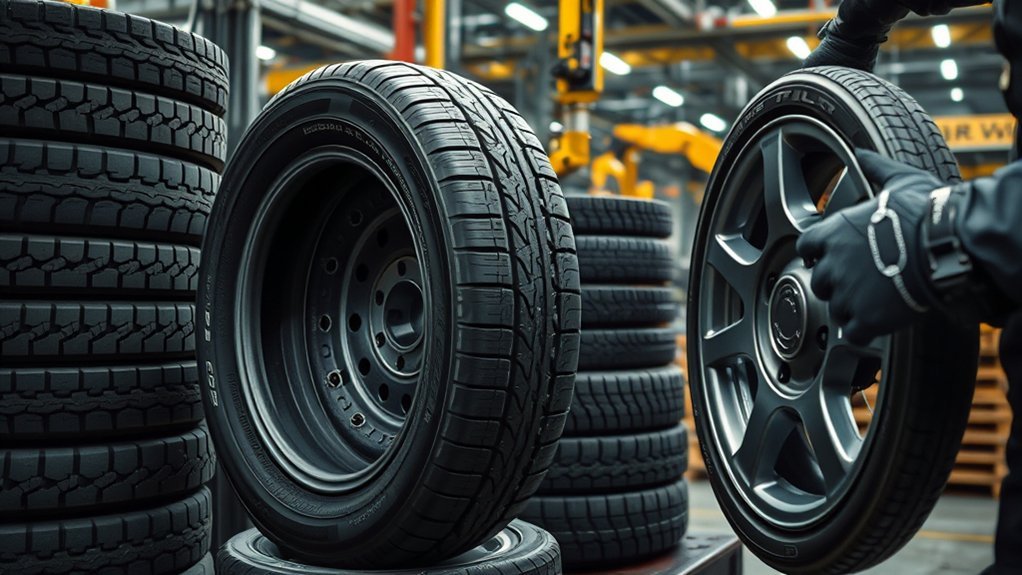
Tires are expensive because a modern tire is a precisely engineered structure, not simply a ring of rubber. Your price covers specialized compounds, steel and textile reinforcement, design work, molds, curing, inspection, safety testing, distribution, and retail costs. Size, load capacity, performance goals, production volume, and special technologies can push the price higher still.
Quick Answer
Tires are expensive because you are paying for advanced materials, structural reinforcement, engineering, specialized molds, manufacturing, inspection, safety testing, shipping, and retail costs. Larger, higher-load, performance, low-volume, and technology-heavy tires can cost even more because they are harder or less economical to design, build, stock, and distribute.
Key Takeaways
- A tire contains far more than rubber. Compounds, steel, textile cords, oils, silica, carbon black, antioxidants, and other materials all serve different jobs.
- Engineering, prototype development, molds, curing, inspection, and performance testing add costs before a tire reaches a store.
- Size, width, load capacity, speed capability, vehicle requirements, and production volume can all affect price.
- EV-focused, run-flat, low-rolling-resistance, high-load, and other specialized designs may require additional engineering or components.
- The advertised tire price is not always your final bill because mounting, balancing, TPMS service, disposal fees, taxes, and other services may be separate.
The Main Factors Behind Tire Prices
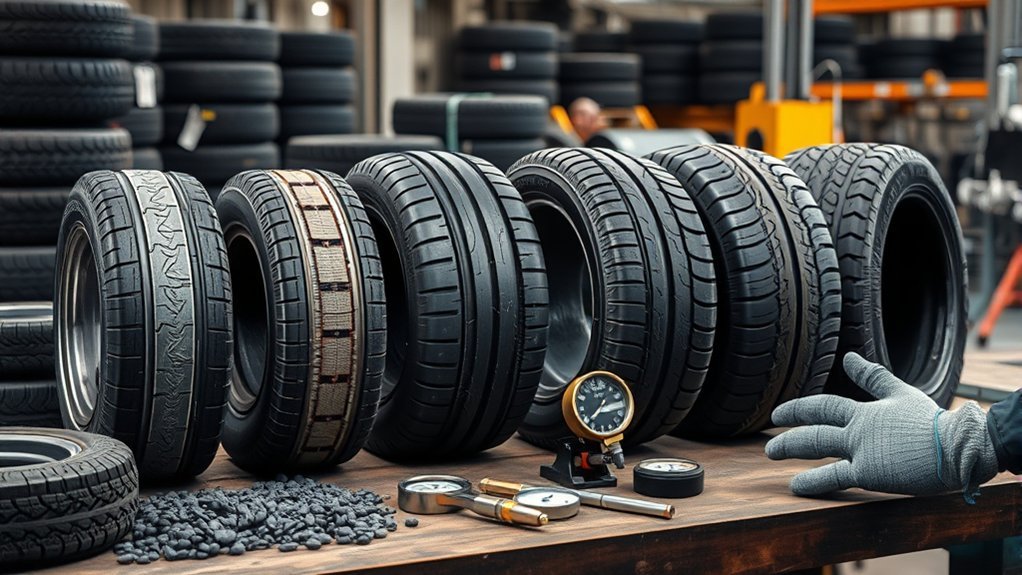
Tire prices vary because manufacturers are trying to balance several competing goals at once: grip, tread life, ride comfort, noise, efficiency, load capacity, heat resistance, and cost. Changing one part of the design can affect several of the others.
The U.S. Tire Manufacturers Association says as many as 200 raw materials can come together in a modern tire. Manufacturers also develop specifications, build prototypes, create molds, assemble multiple layers, cure the tire, inspect finished products, and perform additional testing.
| Cost Driver | Why It Can Raise the Price |
| Materials | Rubber compounds, silica, carbon black, oils, chemicals, steel, and textiles must meet specific performance and consistency targets. |
| Engineering and testing | Computer design, prototypes, vehicle-specific development, performance validation, and compliance testing require time and equipment. |
| Manufacturing and tooling | Mixers, building machines, precision molds, curing equipment, inspection systems, and quality controls add production expense. |
| Size and specification | Wide, high-load, high-speed, specialty, or uncommon fitments may require different construction and may be produced in smaller volumes. |
| Distribution and retail | Freight, warehouses, inventory, retailer overhead, and local availability affect what you ultimately pay. |
| Installation | Mounting, balancing, valve or TPMS service, disposal charges, taxes, and optional alignment can increase the out-the-door total. |
Market demand matters as well. A common size produced and stocked in large quantities may have more competing choices than an unusual fitment. Seasonal demand can also affect availability for winter, summer, all-terrain, or other specialized tires.
When comparing tires, look beyond the sticker price. Check the exact size, load and speed specification required for your vehicle, warranty terms, tire type, independent performance results, and the complete installed price.
Why Tire Materials Cost More
Raw materials are a major part of tire production because different sections of the tire perform different jobs. Tread rubber needs grip and wear resistance, the inner liner needs to retain air, and belts, plies, and beads must provide strength and stability.
According to USTMA, manufacturers may use several types of rubber along with oils, carbon black, pigments, antioxidants, silica, steel, polyester, and other materials. These ingredients are mixed into different compounds rather than using one universal rubber formula throughout the tire.
Silica, carbon black, resins, sulfur, oils, antioxidants, and other ingredients can alter characteristics such as wet traction, durability, heat behavior, rolling resistance, and processing. The formulation itself is part of the engineering challenge; using a particular ingredient does not automatically make one tire better than another.
Steel belts and bead wire also matter. They help the tire carry loads, maintain its shape, and seat securely on the wheel. Textile cords and body plies add reinforcement while allowing the tire to flex as it rolls.
These raw materials are purchased through global supply chains, so changes in commodity, energy, transportation, and sourcing costs can influence manufacturing expenses. The effect is not necessarily immediate or one-for-one at the retail counter, however.
USTMA says as many as 200 raw materials can be used to create a modern tire, which helps explain why tire manufacturing is much more complex than molding a single piece of rubber.
How Tire Design and Testing Add Cost
Materials are only part of the price. Tire engineers must turn those materials into a design that works with the intended vehicle and use case.
USTMA describes a development process in which vehicle requirements are converted into tire specifications, prototypes are built, and designs undergo months of testing, inspection, and quality checks before full production. A tread pattern also has to manage water, grip, wear, noise, and stability while working with the tire’s internal construction.
Molds add another expense. During curing, the uncured tire is pressed into a mold that forms its tread pattern and sidewall markings. Different models and sizes require appropriate tooling, and revisions to a tire design can require changes to that tooling.
Testing is not just marketing. Applicable light-vehicle radial tires sold in the United States must meet federal requirements. Federal Motor Vehicle Safety Standard No. 139 covers areas such as tire dimensions, labeling, load ratings, high-speed performance, endurance, low-inflation performance, strength, and bead-related requirements.
- Computer-based specifications and design work
- Prototype development
- Tread and compound refinement
- Mold development and tooling
- High-speed and endurance testing
- Wet, wear, noise, handling, and efficiency development
- Inspection and quality control
- Vehicle-manufacturer validation for some original-equipment applications
Note: Meeting a federal minimum requirement does not mean every tire performs identically. Tire models can differ substantially in wet grip, snow capability, tread life, noise, ride comfort, rolling resistance, and handling.
[Products Worth Considering]

Milton S-921 pencil tire pressure gauge helps you maintain optimal tire pressure for passenger cars with accurate readings in PSI and kPa. It features a built-in deflator valve for convenient pressure adjustments, plus a single chuck head and nylon indicator bar for easy use on the go. Built from durable plated brass and designed for reliable performance, it’s a practical road trip and cold-weather maintenance tool.

Monitor tire tread wear with a smart, color-coded depth gauge that shows clear condition ranges at a glance. The bar is range marked for fast, easy readings, helping you maintain safer traction and performance. Each gauge is portable with a pocket clip, and the set includes 20 units for daily use and sharing.

The SAFELIFE dial tire tread depth gauge measures tread depth in 1/32 inch increments with clear, easy-to-read 2-inch dial face. Color zones using a traffic light system help you quickly judge whether tread is low, marginal, or ample for safer driving. Built with a durable zinc cast body and a metal detect probe for precise, comfortable use across cars, motorcycles, trucks, and buses.
How Tire Size and Vehicle Type Affect Price
Larger or more demanding fitments often cost more, but wheel diameter alone does not explain the difference. Width, sidewall design, load capacity, speed rating, reinforcement, production volume, and the vehicle’s performance target all matter.
Larger, wider, high-load, high-speed, and low-volume tires can cost more because their construction, tooling, performance requirements, and production economics differ.
If you drive an SUV, truck, performance car, or other heavy vehicle, the tire may need a higher load capacity or more robust construction than a tire used on a small passenger car. Performance-oriented tires may also emphasize steering response, high-speed stability, heat management, and dry or wet grip.
Low-profile tires are another good example. A shorter sidewall does not automatically mean more rubber, but the combination of wheel size, width, construction, speed capability, and lower production volume can still make a fitment expensive.
The safest starting point is the tire specification chosen for your vehicle. NHTSA recommends checking the owner’s manual or Tire and Loading Information Label on the driver’s door edge or door post for the correct tire size and inflation information.
[Products Worth Considering]

Accurately measure tire tread depth with a calibrated gauge marked from 0 to 1 inch in 1/32 inch increments. The color-coded bar helps you quickly identify tread condition ranges, supporting safe driving for trucks, motorcycles, automobiles, and passenger vehicles.

Replace worn tires quickly with this universal 4.80/4.00-8 tire and inner tube set designed for wheelbarrows and outdoor utility carts. The ribbed tread helps reduce turf damage while the natural rubber construction supports longer service life. Compatible with 15.5-inch outer diameter, 4-inch width, and 8-inch rim diameter wheels, it uses a straight TR-13 valve stem for easy installation. For best results, inflate with a manual pump and do not exceed 25 PSI.

Keep your tires properly inflated with this analog VONDIOR tire pressure gauge, designed for fast, easy readings without batteries. The swiveling, two-axis hose and large glow dial help you measure at any tire angle with instant visibility. Built with a protective rubber shield, it supports durable, low-maintenance use for cars and trucks.
Why EV and Specialty Tires Can Cost More
Electric vehicles add another consideration. EVs are often heavier than comparable gasoline vehicles and can deliver strong torque immediately, increasing the demands placed on the tires. Some EV-focused tires therefore emphasize load capacity, wear resistance, low rolling resistance, and reduced road noise.
That does not mean every EV requires a tire with an “EV” label. Michelin’s current EV guidance, for example, says tires can work on EVs when their load-capacity requirements are respected. The important point is to match the size, load specification, speed capability, and other requirements set for your vehicle.
Other specialty designs can add cost too. Run-flat construction, self-sealing systems, acoustic treatments, high-load designs, specialized winter compounds, and ultra-high-performance construction may require additional materials, development, or manufacturing steps.
Low rolling resistance can also matter for fuel economy and EV range. The U.S. Environmental Protection Agency includes properly inflated and low-rolling-resistance tires among its fuel-economy recommendations.
How Brand and Shipping Affect Price
Brand choice can affect tire prices, but there is no reliable rule that a brand name adds a fixed percentage. Premium manufacturers may spread research, testing, original-equipment development, distribution, marketing, warranty programs, dealer support, and other business costs across the tires they sell.
A higher price does not automatically mean a tire is the best choice for you. One premium tire might excel in wet braking, another in tread life, and another in winter performance. A less expensive model may still meet your needs if its specifications and tested performance suit your vehicle and driving conditions.
Shipping and inventory matter because tires are bulky products that occupy substantial warehouse and truck space. A tire can move from a factory to a distributor, warehouse, retailer, and finally an installer before reaching your vehicle.
Rare sizes and specialty models may also sit in inventory longer or need to be shipped from a distant warehouse. Common fitments can have more local competition and availability.
- Freight and handling can become part of the retail price
- Warehouse and inventory costs affect distribution
- Low-volume sizes may have fewer competing choices
- Retailers must cover labor, facilities, equipment, and operating costs
- Warranty and support programs differ between brands and sellers
What You Pay Beyond the Tire Price
The price shown beside a tire is not always the amount you will pay to leave the shop. When comparing sellers, ask for the complete out-the-door total for the same tire model and specification.
Depending on the retailer and your vehicle, additional charges may include:
- Mounting the tires on the wheels
- Computer balancing
- New valve stems or TPMS service components
- Old-tire disposal or recycling charges
- Shop or environmental fees where applicable
- Sales tax
- Optional road-hazard protection
- Wheel alignment if inspection shows it is needed
Pro Tip: Compare the exact same tire model, size, load specification, speed rating, quantity, and installed total. A lower advertised price is not necessarily the cheaper deal after shipping, mounting, balancing, fees, and optional services are added.
Are Expensive Tires Worth It?
Sometimes, but the answer depends on what you need. Paying more can make sense when the higher-priced tire provides a measurable benefit you will actually use, such as stronger wet performance, better winter capability, a longer treadwear warranty, quieter highway operation, higher load capacity, or performance suited to your vehicle.
Start with the specifications on your vehicle’s placard or owner’s manual. Then compare tires within the correct size and service requirements.
For many passenger tires, NHTSA’s tire information can also help you understand treadwear, traction, and temperature ratings. Those ratings are useful pieces of information, but they should not be the only factors in your decision.
Consider these questions before paying for a more expensive tire:
- Does it fit the exact size and load requirements of my vehicle?
- Does its tire category suit my climate?
- Do reputable tests show a meaningful advantage in wet, dry, snow, noise, or wear performance?
- How long is the treadwear warranty, and what conditions apply?
- Is road-hazard protection included, separate, or unavailable?
- What is the complete installed price?
- Am I paying for performance I will actually use?
Note: “Premium” and “budget” are price categories, not safety ratings. Use the correct fitment and compare actual specifications, test results, warranty terms, and driving needs rather than assuming the most expensive tire is automatically best.
[Products Worth Considering]

The 22800 wheel stud installer makes replacing wheel studs quick and secure, saving time and effort during tire service. It uses a ratchet or impact wrench to pull new studs firmly into place, helping when existing studs are too long. Compatible with most automotive wheels and light-duty truck wheel studs, it’s designed for easy, tool-assisted installation.

Measure tire tread depth quickly and accurately with this LUMITECO dial gauge that reads in 1/32" increments up to 14/32". The color-coded green/yellow/red zones make it easy to judge tire wear and know when replacement is needed. A rugged, compact design with a protective pouch helps keep the gauge ready for use on cars, trucks, motorcycles, and more.

The Kurgo Seasonal Tire Tote helps protect your car interior, clothes, and garage from tire grime, brake dust, and residue during seasonal tire changes. Its universal design fits most passenger tires between 22" and 31" in diameter, making storage and transport simpler with less mess. Built for rugged, repeated use, it’s machine washable for easy care and comes with a lifetime warranty.
Frequently Asked Questions
How Often Should Tires Be Rotated?
Follow the rotation schedule in your vehicle owner’s manual or tire manufacturer’s guidance. If no interval is specified, USTMA recommends rotating tires every 5,000 to 8,000 miles. Directional tires, staggered front/rear sizes, and some specialty fitments may have different rotation options.
What Tire Pressure Is Best for My Car?
Use the vehicle manufacturer’s recommended cold tire pressure shown on the Tire and Loading Information Label, usually on the driver’s door area, or in the owner’s manual. Do not use the maximum pressure molded into the tire sidewall as your normal inflation target unless your vehicle manufacturer specifically calls for it.
How Do I Know When Tires Need Replacement?
NHTSA says tires are worn out when tread reaches 2/32 inch. Replace or professionally inspect a tire sooner if you see cuts, bulges, cracking, exposed material, severe irregular wear, repeated pressure loss, or other damage. Tire age also matters, so follow the service-life guidance from your vehicle and tire manufacturers even when tread remains.
Are All-Season Tires Good in Snow?
All-season tires can provide some mud-and-snow capability, but NHTSA says winter tires are more effective than all-season tires in deep snow. If you regularly drive in severe winter conditions, compare dedicated winter or appropriately rated all-weather options rather than assuming every all-season tire will provide the same snow performance.
Can Tire Warranties Cover Road Damage?
Sometimes, but check what kind of coverage you are buying. Standard manufacturer workmanship-and-material warranties commonly exclude road-hazard damage such as punctures, cuts, and impact damage. A retailer or separate road-hazard protection plan may cover eligible damage, subject to its own limits, exclusions, and fees.
Why Are Bigger Tires Usually More Expensive?
Bigger or wider fitments can cost more because of their construction, load requirements, tooling, speed capability, and production volume. Wheel diameter alone is not the whole explanation. A low-profile tire can still be expensive even though its sidewall contains less rubber than a taller tire.
Why Can EV Tires Be Expensive?
EVs can place high load and torque demands on tires, and some EV-focused models are engineered for additional load capacity, wear resistance, low rolling resistance, or reduced road noise. An EV label is not automatically required; the replacement tire must meet the specifications required for your vehicle.
Are More Expensive Tires Always Better?
No. A higher-priced tire may offer valuable advantages in areas such as wet grip, snow performance, noise, tread life, handling, or warranty coverage, but those benefits must match your vehicle and driving conditions. Compare specifications and credible test results rather than using price alone as a quality score.
Conclusion
So, why are tires so expensive? You are paying for far more than rubber. The final price reflects materials, steel and textile reinforcement, engineering, prototypes, molds, manufacturing, federal performance requirements, quality control, shipping, inventory, and retail costs. Size, load requirements, performance goals, specialized technology, and low production volume can raise the price further.
The best value is not automatically the cheapest or most expensive tire. Match the tire to your vehicle first, then compare tested performance, climate suitability, warranty terms, expected use, and the complete installed price. That makes it easier to see when extra money buys a useful performance benefit and when it does not.
Sources
- U.S. Tire Manufacturers Association — How a Tire Is Made — tire materials, design, manufacturing, curing, inspection, and testing.
- National Highway Traffic Safety Administration — TireWise — tire size, inflation, tread depth, ratings, replacement, and winter-tire guidance.
- Electronic Code of Federal Regulations — 49 CFR 571.139 — federal light-vehicle radial-tire performance, labeling, load, and testing requirements.
- U.S. Environmental Protection Agency — Your Mileage May Vary — proper tire inflation and low-rolling-resistance tire guidance.
- Michelin USA — Electric Vehicle Tire FAQ — EV load, torque, wear, and rolling-resistance considerations.
- Goodyear — Starfire Standard Warranty — current example of manufacturer warranty exclusions and separate road-hazard coverage.