
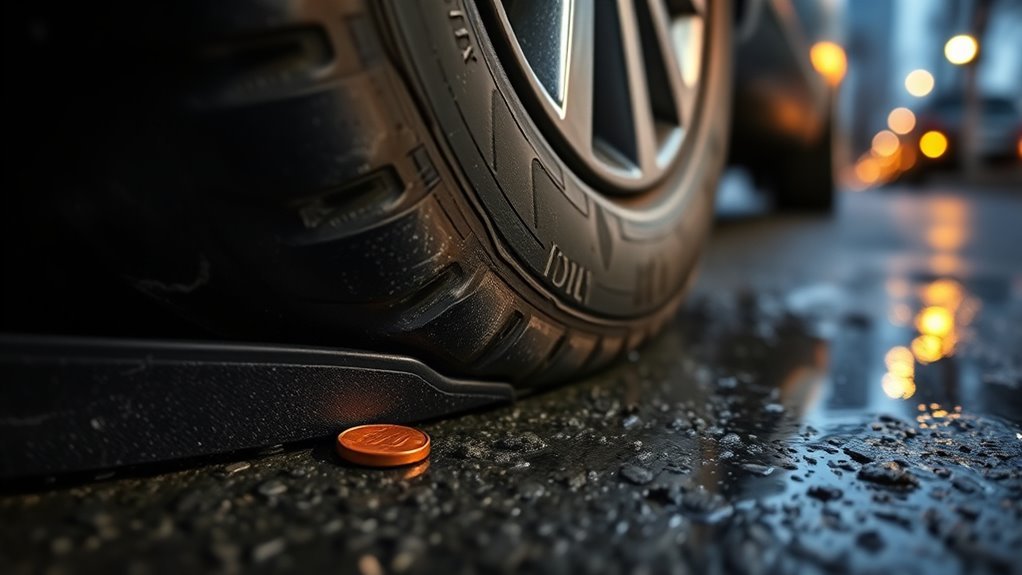
Tires can look fine from a distance and still put your safety at risk. You need new tires when tread, age, damage, or handling changes reduce grip, braking, or control. Check tread with the penny test or wear bars; replace tires at 2/32 inch, and consider replacement around 4/32 inch if you often drive in rain. Inspect sidewalls for cracks, bulges, cuts, and punctures, and check the tire age using the Department of Transportation (DOT) date code.
What’s in This Article
- Do I Need New Tires? Quick Checklist
- Check Tread Depth: Penny Test and Wear Bars
- Read Your Tire’s DOT Date: When Age Means Replace
- Spotting Tire Damage: Cracks, Bulges, and Cuts
- Uneven Wear and Handling Symptoms: Diagnose the Cause
- Wet Traction and Fuel Economy: Hidden Signs to Replace
- Replacing Tires: Two vs Four and AWD/2WD Rules
- How to Maintain Tires Before Replacement
- Frequently Asked Questions
- Conclusion
Quick Answer
You need new tires when tread reaches 2/32 inch, when sidewall damage appears, or when the tire reaches about 10 years from its manufacture date. You should also replace tires sooner if wet traction drops, the car vibrates, or uneven wear points to alignment, inflation, or suspension trouble.
Key Takeaways
- Replace tires at 2/32 inch of tread, and consider replacing them sooner for wet roads.
- Check every tire for cracks, bulges, cuts, punctures, and exposed cords.
- Read the DOT date code so you know the tire’s true age.
- Fix uneven wear causes before new tires wear out too soon.
- Replace all four tires when possible, especially on all-wheel-drive vehicles.
Do I Need New Tires? Quick Checklist
Wondering whether your tires need replacing? Start with a simple tire check once a month and before long trips. Look at the tread, sidewalls, tire pressure, and the way your car feels on the road.
- Replace the tire if tread reaches 2/32 inch or the wear bars sit flush with the tread.
- Plan earlier replacement around 4/32 inch if rain traction feels weak.
- Replace any tire with sidewall cracks, bulges, exposed cords, or deep cuts.
- Check the DOT date code and replace tires near 10 years old, even with usable tread.
- Get a tire shop to inspect vibrations, pulling, cupping, or one-sided wear.
These checks help you act before tire failure turns into a roadside emergency. They also help you protect fuel economy, braking, and steering control.
[Products Worth Considering]

The SAFELIFE dial tire tread depth gauge measures tread depth in 1/32 inch increments with clear, easy-to-read 2-inch dial face. Color zones using a traffic light system help you quickly judge whether tread is low, marginal, or ample for safer driving. Built with a durable zinc cast body and a metal detect probe for precise, comfortable use across cars, motorcycles, trucks, and buses.

Measure tire tread depth quickly and accurately with this LUMITECO dial gauge that reads in 1/32" increments up to 14/32". The color-coded green/yellow/red zones make it easy to judge tire wear and know when replacement is needed. A rugged, compact design with a protective pouch helps keep the gauge ready for use on cars, trucks, motorcycles, and more.

Accurately measure tire tread depth with a calibrated gauge marked from 0 to 1 inch in 1/32 inch increments. The color-coded bar helps you quickly identify tread condition ranges, supporting safe driving for trucks, motorcycles, automobiles, and passenger vehicles.
Check Tread Depth: Penny Test and Wear Bars
You can check tread depth with a penny or by looking for the tire’s built-in wear bars. Place a penny into the main tread groove with Lincoln’s head pointing down. If you can see the top of his head, the tread has reached about 2/32 inch and the tire needs replacement.
Wear bars run across the tread grooves. When the tread sits level with those bars, the tire has reached the legal minimum in many places. That limit does not mean the tire still performs well in rain.
Pro tip: Use a tread depth gauge if you want a more exact reading than the penny test gives.
Inspect tread depth every month or every few thousand miles. Also look for uneven wear, such as cupping, feathering, or wear on one edge. Those patterns often point to misalignment, incorrect tire pressure, or worn suspension parts.
Read Your Tire’s DOT Date: When Age Means Replace
Look for the Department of Transportation (DOT) code on the tire sidewall. The last four digits show the tire’s manufacture week and year. For example, 3520 means the tire came from week 35 of 2020.
Use that date to judge tire age, not just tread depth. Tire rubber breaks down over time from heat, sunlight, storage, and use. Many tire and vehicle makers advise replacing tires around 10 years from the manufacture date, even if the tread still looks usable.
Check every tire, including the spare. Record each date so you know when to plan replacement. A clear date-based decision helps you avoid guessing when safety matters.
[Products Worth Considering]

Monitor tire tread wear with a smart, color-coded depth gauge that shows clear condition ranges at a glance. The bar is range marked for fast, easy readings, helping you maintain safer traction and performance. Each gauge is portable with a pocket clip, and the set includes 20 units for daily use and sharing.

Measure tyre tread depth precisely with a digital gauge that reads in both MM and inches, helping you monitor safe driving conditions. The large LCD screen is easy to operate, and the compact tool fits for cars, trucks, and motorcycles. It provides high accuracy with a 0-25.4mm range and includes a 1-year warranty for added peace of mind.

Keep your tires properly inflated with this analog VONDIOR tire pressure gauge, designed for fast, easy readings without batteries. The swiveling, two-axis hose and large glow dial help you measure at any tire angle with instant visibility. Built with a protective rubber shield, it supports durable, low-maintenance use for cars and trucks.
Spotting Tire Damage: Cracks, Bulges, and Cuts
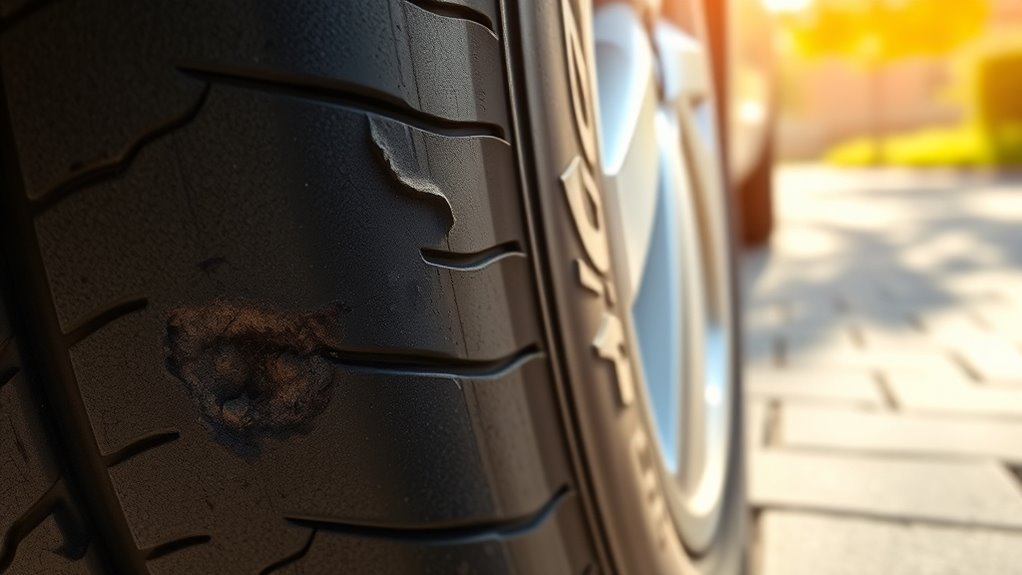
Check your tires often for visible sidewall cracks, bulges, blisters, punctures, cuts, and tears. These signs can point to damaged internal parts or weakened rubber. If you spot them, stop treating the tire as safe until a professional inspects it.
Visible Sidewall Cracks
Sidewall cracks may start small, but they can grow as the tire flexes. Age, sunlight, low pressure, and hard impacts can speed up cracking. Good tread does not make a cracked sidewall safe.
During a sidewall check, look for splits, exposed cords, and any change that appeared since your last inspection. Do not patch sidewall cracks. Replace the tire if a professional confirms structural damage.
| What to check | Action |
|---|---|
| Small sidewall cracks | Get inspected and replace if structural damage appears |
| Deep cuts | Replace |
| Exposed cords | Replace |
| Bulges or blisters | Replace immediately |
| New vibration or pull | Get professional inspection |
Bulges and Blisters
When you spot a bulge or blister on a tire sidewall, do not keep driving on it. That raised area often means impact damage has weakened the internal cords or belts. A blowout can happen with little warning.
During a sidewall inspection, sweep your eyes and hands around the tire. Look for raised areas, soft spots, or shiny breaks in the rubber. Potholes, curbs, and hard hits can crush the internal layers and create hidden damage.
Warning: Replace a tire with a sidewall bulge or exposed cords before you drive farther than necessary for safety.
Punctures, Cuts, and Tears
After you check for sidewall bulges, keep scanning for punctures, cuts, and tears. Sidewall damage and cuts that reach the sidewall usually cannot be repaired safely. Replace the tire to protect yourself and other drivers.
Small punctures in the tread may be repairable if they sit in the repairable tread area and measure no more than 1/4 inch. Use an approved patch-plug repair from a trained technician. Do not rely on a plug alone for a long-term repair.
Uneven Wear and Handling Symptoms: Diagnose the Cause
If you spot uneven tread, do not ignore it. Wear on one edge, the center, both shoulders, or patchy areas often signals a mechanical or pressure problem. That problem can reduce handling and shorten the life of new tires.
- One-sided wear often points to alignment or camber trouble.
- Center wear often points to overinflation.
- Shoulder wear often points to underinflation or hard cornering.
- Cupping often points to worn shocks, struts, or other suspension parts.
If one tire has much more wear than the others, schedule a professional inspection. Correcting alignment, tire pressure, and suspension issues helps restore even contact with the road. It also improves steering response and helps your next tire set last longer.
Wet Traction and Fuel Economy: Hidden Signs to Replace
Worn tires do more than look bad. Shallow tread cannot move water away as well, so your car may take longer to stop on wet roads. Poor tire condition can also raise rolling resistance and hurt fuel economy.
Reduced Wet Grip
When roads are wet, shallow tread has less space to channel water away from the contact patch. You may feel longer stopping distances, slipping, or weaker steering response. Those signs tell you the tire has lost useful wet-road grip.
Tread at 2/32 inch reaches the minimum replacement point, but wet performance can fade before that. Consider replacement around 4/32 inch if you drive often in heavy rain. That extra margin helps reduce hydroplaning risk and gives you more control.
Lowered Fuel Efficiency
Low pressure and uneven wear can make your engine work harder. Underinflated tires flex more, heat up faster, and raise rolling resistance. That can cost you fuel and add stress to the tire.
Check tire pressure when the tires are cold and use the pressure listed on the driver’s door placard or owner’s manual. Rotate tires on schedule and correct alignment problems early. These habits help you save fuel and delay replacement.
Replacing Tires: Two vs Four and AWD/2WD Rules
If you’re replacing tires, replace all four when you can. Matching tread depth, tire type, and tread pattern helps keep handling predictable. This matters most on all-wheel-drive (AWD) vehicles because mismatched tire sizes can strain drivetrain parts.
If you replace only two tires, many tire safety groups advise placing the new pair on the rear axle. Better rear grip helps reduce oversteer on wet or slippery roads. Ask your tire shop and check your owner’s manual for your vehicle’s exact needs.
On two-wheel-drive (2WD) vehicles, match the new tires as closely as possible to the remaining pair. Do not mix tire types, sizes, speed ratings, or load ratings unless your owner’s manual allows it. Consistency gives you safer braking, turning, and traction.
[Products Worth Considering]

This universal wheel alignment tool helps you accurately restore tire tilt angles after tire or suspension repairs using an adjustable camber gauge. It features a powerful magnetic base that firmly attaches to brake rotors for stationary, slip-free readings, improving consistency during measurement. Built from durable PC plastic, it resists wear and corrosion and is compact enough for car, truck, RV, and motorcycle alignment tasks.

Vigorder rubber cement glue delivers superior adhesion and cures quickly within about 30 seconds for seamless rubber bonding. Once cured, it helps provide a strong, durable, waterproof seal that holds up to vehicle weight, pressure, and heat. Suitable for cars, motorcycles, trucks, bicycles, and off-road tires, it’s designed for emergency patch and maintenance repairs.

The Airmoto portable tire inflator quickly and accurately fills car, truck, SUV, motorcycle, and bicycle tires up to 120 PSI with auto shut-off when your target pressure is reached. Its large LCD, multi-unit pressure display, and digital gauge make it easy to dial in settings and verify readings, while the built-in LED flashlight helps in low light. The included polyurethane hard carrying case and storage mesh pocket keep the inflator and accessories protected and organized.
How to Maintain Tires Before Replacement
Good tire care helps you get safe miles from every set. It also helps you notice problems before they become expensive. Make these checks part of your normal car routine.
- Check tire pressure monthly and before long trips.
- Rotate tires on the schedule in your owner’s manual.
- Inspect tread and sidewalls when you wash the car or fuel up.
- Book alignment service when the car pulls or tires wear unevenly.
- Replace missing valve caps to keep dirt out of the valve stems.
Keep records for tire dates, rotations, repairs, and pressure checks. Those notes help you spot patterns and make better replacement choices.
Frequently Asked Questions
What Is the 7 7 Rule for Tires?
The 7 7 rule usually means replacing tires at seven years old or when tread reaches 2/32 inch. Treat it as a cautious rule of thumb, not a law. Your owner’s manual, tire maker, and tire condition should guide the final decision.
Can I replace just one tire?
You can replace one tire only when it closely matches the other tires in size, type, and tread depth. AWD vehicles often need tighter tread-depth matching, so check the owner’s manual first. When in doubt, ask a tire professional before you buy.
How often should I check my tires?
Check tire pressure and condition at least once a month. Also check before road trips, after hitting a pothole, and when weather changes affect tire pressure. A five-minute check can catch damage early.
Are old tires dangerous if they have good tread?
Old tires can become risky even when tread looks deep. Rubber ages from heat, sunlight, storage, and normal use. Replace tires near 10 years old, or sooner if cracks, bulges, or handling changes appear.
What tire damage cannot be repaired?
Sidewall punctures, large tread punctures, bulges, exposed cords, and deep cuts usually cannot be repaired safely. A trained technician should inspect any damage before you drive far. Replace the tire when the damaged area affects its structure.
Safety Disclaimer: This article is for informational purposes only and does not replace advice from a qualified tire technician, mechanic, or your vehicle manufacturer. Always follow your owner’s manual and get professional help when tire damage, handling changes, or repair safety seems unclear.
Conclusion
Your tires deserve attention before they look completely worn out. Replace them when tread reaches 2/32 inch, age approaches 10 years, or damage and handling changes raise safety concerns. Check tread, pressure, sidewalls, and DOT dates on a regular schedule. When you catch problems early, you keep more control, spend less on avoidable repairs, and drive with more confidence.
References
- Tires — National Highway Traffic Safety Administration
- Tire Safety: Everything Rides on It — National Highway Traffic Safety Administration
- Tire Repair Basics — U.S. Tire Manufacturers Association
- Tire DOT Date Code — Michelin
