
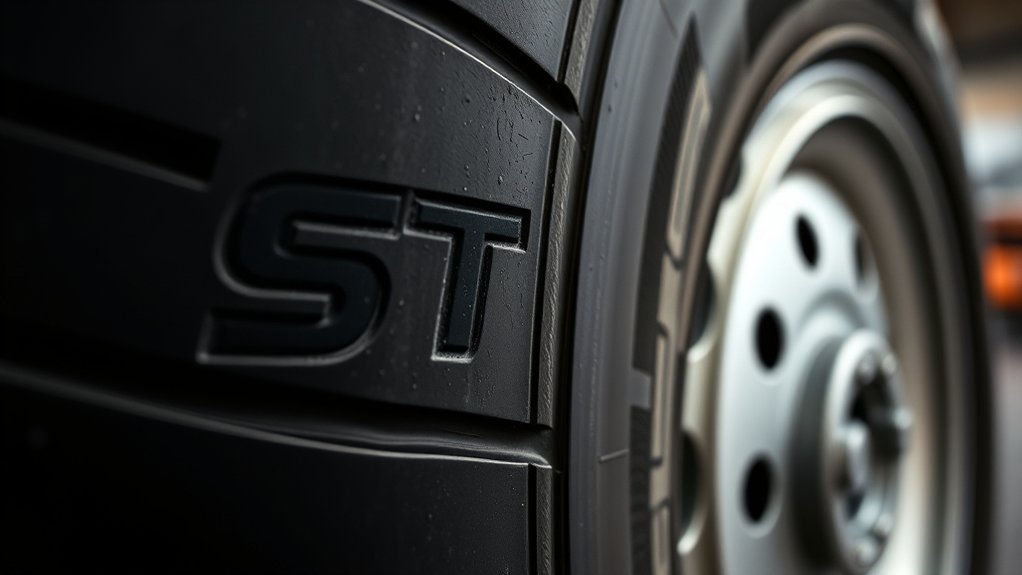
ST on a tire means Special Trailer. It tells you the tire is designed for trailer axles, not for a passenger car or a truck’s steering or drive axle. That marking matters because trailers carry weight differently than vehicles do: they need tires that can handle heavy vertical load, resist sway, and stay within the tire’s stamped load, inflation, and speed limits.
Quick Answer
ST on a tire means Special Trailer. It identifies a tire built for trailer service, not for a car or truck’s steering or drive axle. Use an ST tire only when its size, load range, maximum load, cold inflation pressure, and speed rating match your trailer’s placard and actual loaded weight.
Key Takeaways
- ST means Special Trailer, a tire service type made for trailer axles.
- Do not use ST tires on a passenger vehicle or a truck’s steering or drive axle unless the tire and vehicle manufacturers specifically allow it.
- Load capacity depends on the exact sidewall marking, not on the ST letters alone.
- Many trailer tires carry their maximum load only at the listed cold inflation pressure.
- Speed limits vary by tire, so always read the sidewall speed symbol or manufacturer limit before towing.
What ST Means on a Tire
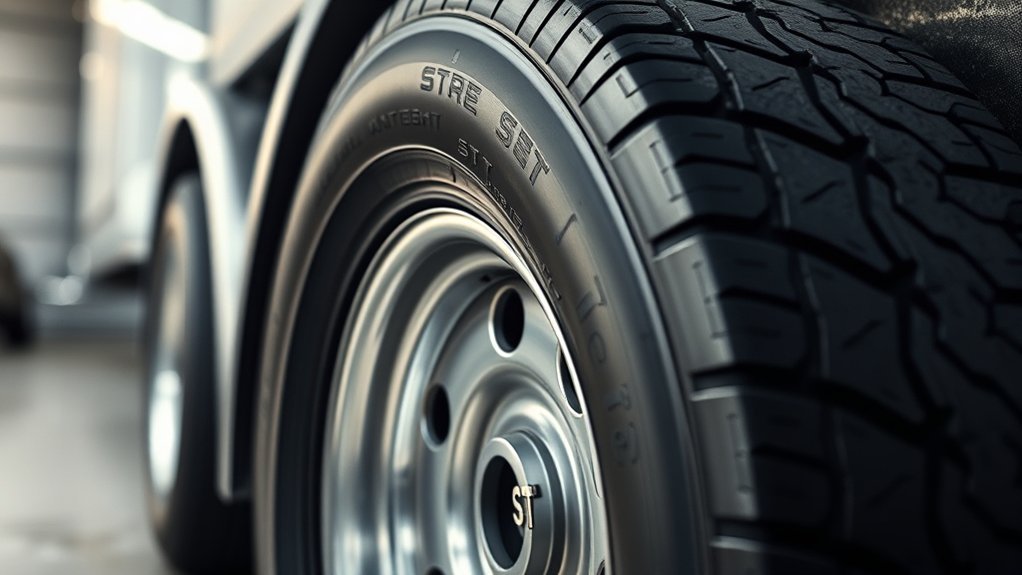
The letters ST stand for Special Trailer. You will usually see them at the beginning of a trailer tire size, such as ST205/75R15 or ST225/75R15. That prefix means the tire is intended for trailer service, where the tire supports the trailer’s load and follows the tow vehicle instead of steering, accelerating, or braking like a vehicle tire.
ST tires are built around trailer priorities: load carrying, sidewall stability, heat control, and straight tracking. That does not mean every ST tire fits every trailer. You still have to match the tire size, wheel size, load range, maximum load, cold inflation pressure, and speed rating to your trailer.
Warning: Never choose a trailer tire by size alone. A tire that fits the rim can still be unsafe if its load rating, inflation pressure, speed rating, or service type does not match the trailer.
How to Read ST Tire Sidewall Markings
The most important information is molded into the sidewall. Before towing, check both sides of the tire because some markings may appear on only one side.
| Sidewall Marking | What It Means |
| ST | Special Trailer service. The tire is designed for trailer axles. |
| 225/75R15 | Example tire size: section width, aspect ratio, radial construction, and rim diameter. |
| Load Range C, D, E, F | A strength/load category. It is not the same as the tire’s exact weight capacity, so still read the maximum load line. |
| Max Load at PSI Cold | The maximum weight the tire can carry at the listed cold inflation pressure. |
| Speed Symbol or Restriction | The tire’s speed capability under its rated load and proper inflation. Do not assume a speed limit from the ST prefix alone. |
| DOT / TIN Date Code | The last four digits show the week and year of manufacture, which helps you judge tire age. |
Federal tire rules require key markings such as tire size, maximum load rating, corresponding cold inflation pressure, tire construction, and load range on many tire types. You can review the federal marking requirements in 49 CFR § 571.119.
ST vs. LT vs. P Tires: What Is the Difference?
ST, LT, and P tires are not interchangeable just because the numbers look close. Each service type is built around a different job.
| Tire Type | Best Use | Key Point |
| ST | Boat, cargo, utility, RV, and equipment trailers. | Built for trailer load carrying and straight tracking. |
| LT | Light trucks, pickups, vans, and some SUVs. | Designed for vehicles that steer, brake, corner, and may carry cargo. |
| P | Passenger cars, minivans, and some crossovers. | Prioritizes ride comfort and vehicle handling, not trailer service. |
For a trailer, the safe choice is usually an ST tire with the correct size and load rating. Do not rely on a “close enough” LT or P tire unless the trailer manufacturer, tire manufacturer, and load calculations support that choice.
[Products Worth Considering]

Measure tire tread depth quickly and accurately with this LUMITECO dial gauge that reads in 1/32" increments up to 14/32". The color-coded green/yellow/red zones make it easy to judge tire wear and know when replacement is needed. A rugged, compact design with a protective pouch helps keep the gauge ready for use on cars, trucks, motorcycles, and more.

The SAFELIFE dial tire tread depth gauge measures tread depth in 1/32 inch increments with clear, easy-to-read 2-inch dial face. Color zones using a traffic light system help you quickly judge whether tread is low, marginal, or ample for safer driving. Built with a durable zinc cast body and a metal detect probe for precise, comfortable use across cars, motorcycles, trucks, and buses.

The 22800 wheel stud installer makes replacing wheel studs quick and secure, saving time and effort during tire service. It uses a ratchet or impact wrench to pull new studs firmly into place, helping when existing studs are too long. Compatible with most automotive wheels and light-duty truck wheel studs, it’s designed for easy, tool-assisted installation.
How Much Weight ST Trailer Tires Can Carry
ST trailer tire capacity depends on the exact tire. The sidewall will show the maximum load and the cold inflation pressure required for that load. A Load Range E tire, for example, is not automatically safe for every trailer; you still need to compare the stamped maximum load to your trailer’s axle rating and real loaded weight.
[Products Worth Considering]

Milton S-921 pencil tire pressure gauge helps you maintain optimal tire pressure for passenger cars with accurate readings in PSI and kPa. It features a built-in deflator valve for convenient pressure adjustments, plus a single chuck head and nylon indicator bar for easy use on the go. Built from durable plated brass and designed for reliable performance, it’s a practical road trip and cold-weather maintenance tool.
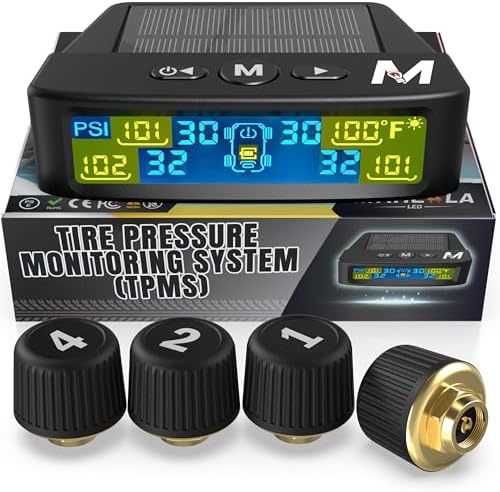
Marcala’s TPMS set of four sensors helps you monitor tire pressure and temperature in real time while driving, with updates every second. The bright color LCD uses auto-dimming for easy viewing, powered by dual solar and USB charging, and offers six alarm modes. Built for trailers, RVs, campers, trucks, and towing setups, the sensors support monitoring 1-4 wheels up to 98 PSI with IP67 waterproof protection.

Mount your spare tire directly to the inside wall of an enclosed trailer or garage to save space and keep your tire secure. This wall-mount spare tire carrier is designed for universal trailer tire fit and includes a fixed plate and chute for convenient screw replacement. Nylon insert hex lock nuts help prevent the tire from falling off, and wing hardware enables faster load and unload during maintenance.
Match Tire Capacity to Trailer Weight
Use this simple process before buying or towing on ST tires:
- Find the trailer placard. Look for tire size, recommended cold PSI, GVWR, and GAWR.
- Read the tire sidewall. Confirm the size, load range, maximum load, maximum cold PSI, and speed rating.
- Check axle capacity. The combined capacity of the tires on an axle should meet or exceed the axle load rating and your real loaded axle weight.
- Account for cargo. Water tanks, tools, motorcycles, landscaping equipment, or boat gear can quickly push a trailer over its tire capacity.
- Keep tires matched. Use the same size, construction, load range, and inflation specification across the trailer unless the manufacturer says otherwise.
The same safety principle appears in federal tire-selection rules: tires fitted to an axle must have enough combined load rating for the axle’s gross axle weight rating. See 49 CFR § 571.120 for the federal tire and rim selection requirements that apply to larger vehicles and RV trailers.
Pro Tip: If you are close to the trailer’s weight limit, weigh the trailer loaded the way you actually travel. Guessing from empty trailer weight can leave out cargo, fluids, accessories, and tongue-weight changes.
Load Range vs. Load Index
Load range is a strength category, commonly shown with letters such as C, D, E, or F. Load index is a numeric code that corresponds to a specific weight capacity. The most important line for a trailer owner is still the plain-language sidewall statement: Max load ___ lb at ___ psi cold.
Do not compare ST and LT tires by letter alone. A Load Range E ST tire and a Load Range E LT tire can have different size, pressure, and load specifications. Always compare the actual maximum load at the listed cold inflation pressure.
Why ST Tires Help Reduce Trailer Sway

ST tires help with trailer stability because they are built for trailer loads and straight-line tracking. Their sidewalls are typically designed to limit excessive flex under vertical load, which can help the trailer follow the tow vehicle more predictably.
That said, tires are only one part of trailer sway control. Sway can also come from poor tongue weight, uneven cargo loading, worn suspension parts, incorrect hitch setup, crosswinds, excessive speed, or underinflated tires. New ST tires will not fix a badly loaded trailer.
Note: If a trailer starts swaying after a tire change, recheck tire pressure, load balance, lug torque, wheel condition, hitch height, and tongue weight before towing at highway speed.
ST Tire Speed Ratings and Safety Limits
Do not assume every ST tire has the same speed rating. Older trailer tires were often discussed around a 65 mph limit, but many current ST radials list a specific speed symbol or manufacturer speed limit. The only safe answer is the one printed on your tire or published by that tire’s manufacturer.
Speed matters because higher speed increases heat, and heat is one of a tire’s biggest enemies. Load, inflation pressure, ambient temperature, road surface, and tire age all affect how hard a trailer tire works.
The ST marking tells you the tire is for trailer service. It does not give you permission to exceed the tire’s stamped speed rating, load rating, or cold inflation requirement.
Before a trip, check three things together: the trailer’s loaded weight, each tire’s cold PSI, and the tire’s speed rating. If any one of those is wrong, slow down and correct the problem before towing farther.
[Products Worth Considering]

The Milton S-693 straight foot dual head air chuck is designed for accurate tire pressure checks and quick, secure valve-core engagement with lock-on threads on both ends. With a 1/4" FNPT connection and a maximum 150 PSI rating, it’s built for use on inner duals and common vehicle tires, including trucks and RVs.
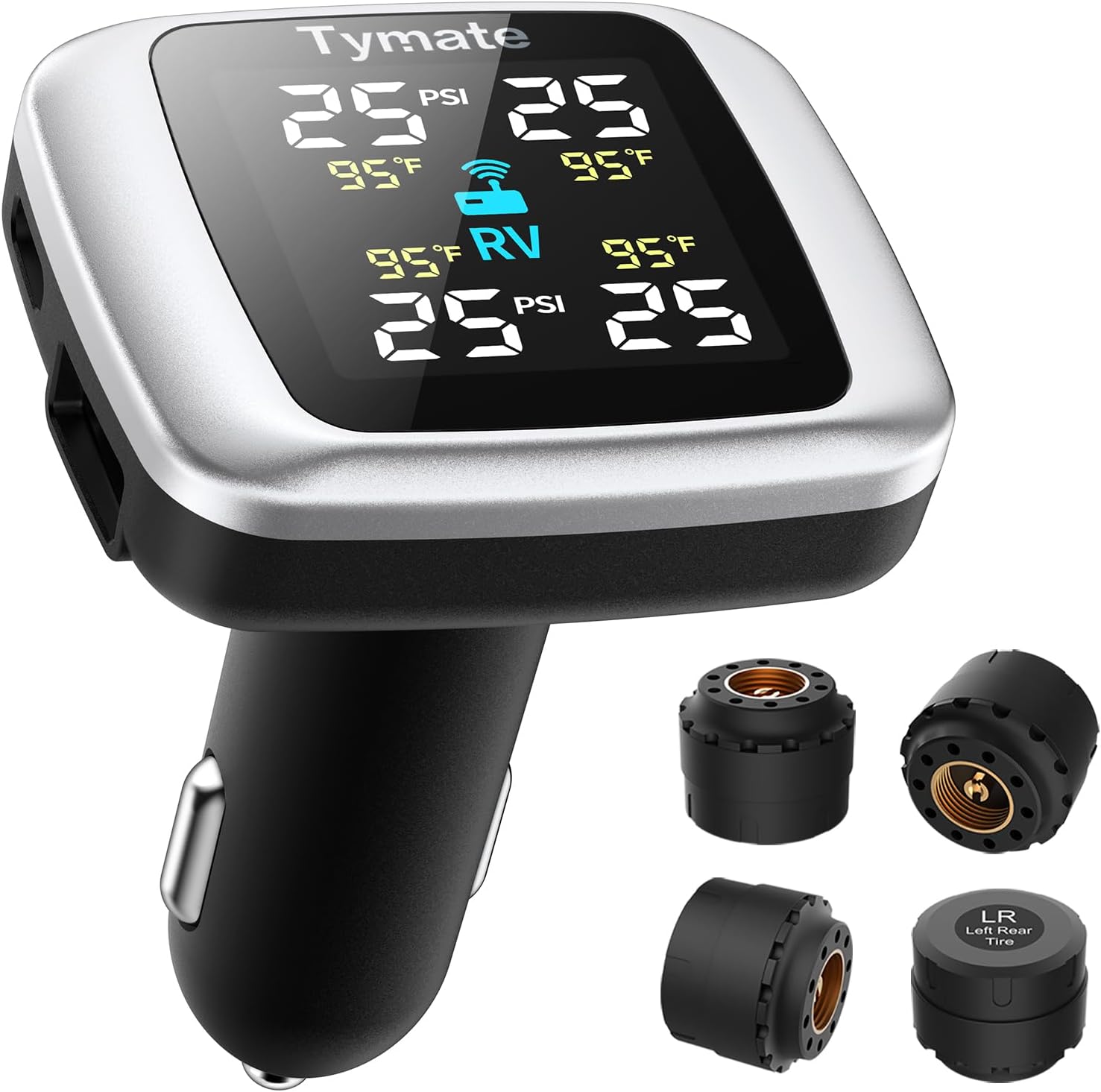
Tymate TM7 is a wireless tire pressure monitoring system that delivers real-time pressure and temperature readings for safer driving. It includes four external sensors, a bright color LCD display with adjustable backlight, and six alarm modes for high/low pressure, fast leakage, high temperature, and sensor signal or battery issues. The system covers a wide 0–144 PSI range and plugs into your vehicle’s cigarette lighter socket for quick DIY setup.
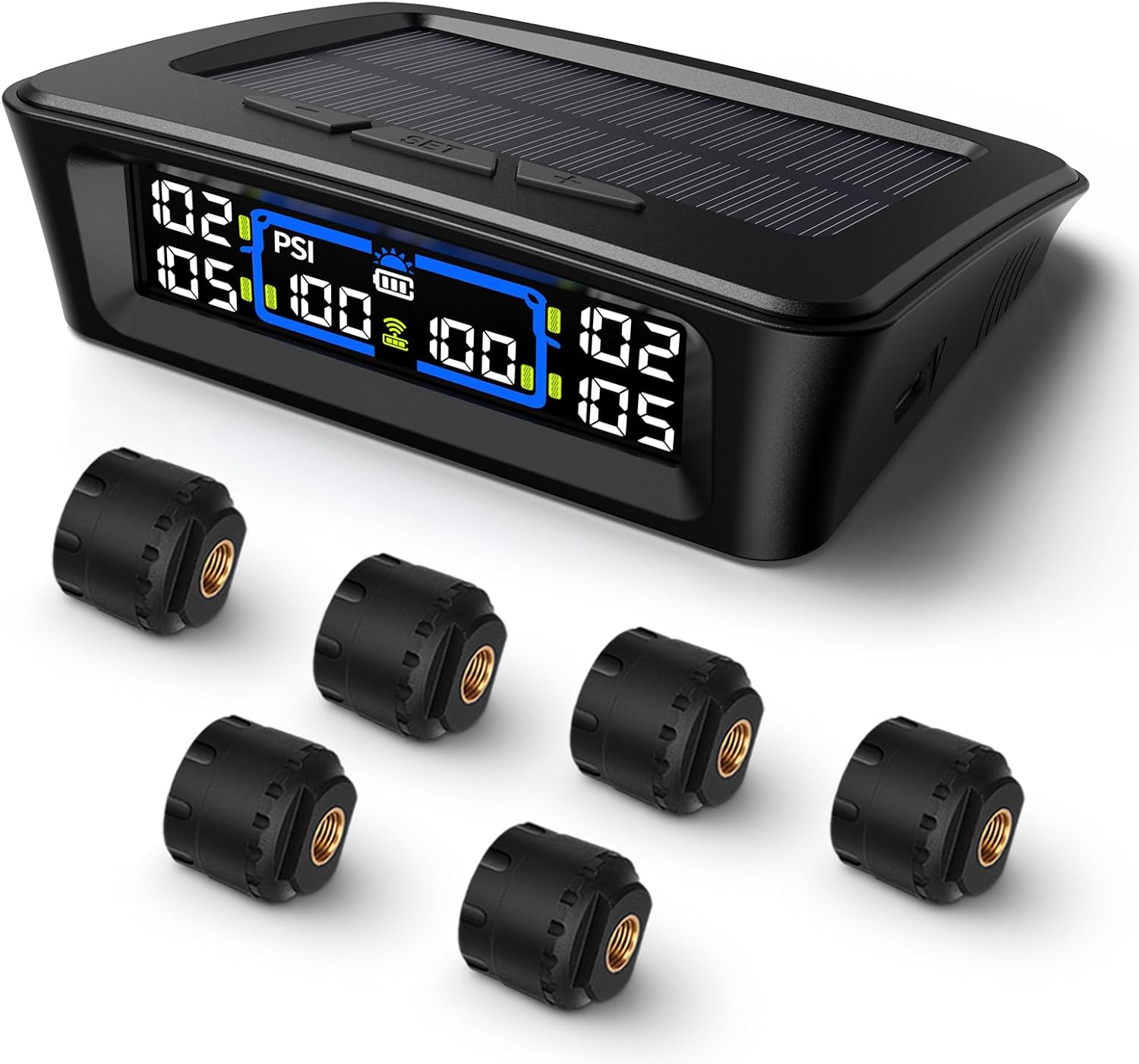
The Tymate TM12 RV TPMS delivers real-time tire pressure and temperature monitoring with a stable 433Hz display for safer long-distance driving. It supports simultaneous monitoring across vehicle and trailer zones, includes six alarm modes for pressure, temperature, leakage, battery, and signal loss, and features easy DIY installation with auto calibration. Power is supplied via USB-C charging or solar recharging, with a wide 0–144 PSI range and up to 50 ft signal coverage for RVs and towable trailers.
ST Trailer Tire PSI: Should You Inflate to Max Pressure?
Many ST trailer tires carry their maximum load only at the maximum cold inflation pressure printed on the sidewall. That is why trailer owners often run ST tires at the listed max cold PSI. But the better rule is this: follow the trailer placard, owner’s manual, and tire manufacturer’s load table, and never exceed the tire’s sidewall maximum.
NHTSA’s TireWise guidance says proper tire pressure is central to tire safety, durability, and fuel use, and tire pressure should be checked when tires are cold. You can review NHTSA’s consumer tire guidance at NHTSA TireWise.
- Check cold. Measure before driving or after the trailer has been parked long enough for the tires to cool.
- Do not bleed warm tires. Pressure rises during driving; bleeding warm tires can leave them underinflated when cold.
- Use a real gauge. Trailer tires can look normal while being dangerously underinflated.
- Recheck before long trips. Heat, storage, valve stems, punctures, and seasonal temperature changes can all change pressure.
Warning: Underinflation, overloading, and excess speed work together. A tire that is safe at the right pressure and load can overheat and fail when one of those limits is ignored.
When ST Tires Are the Right Choice
ST tires are the right choice when you are fitting tires to a trailer and the ST tire matches the trailer manufacturer’s required size, load range, load capacity, PSI, and speed rating. Common trailer uses include:
- Boat trailers
- Utility trailers
- Cargo trailers
- Travel trailers and RV trailers
- Equipment trailers
- Small enclosed work trailers
Choose ST tires when you want trailer-specific load capacity and stability. Then verify the details instead of assuming the ST label alone makes the tire safe.
When Not to Use ST Tires
Do not use ST tires on a passenger car, SUV, pickup, or van in place of normal vehicle tires. ST tires are not designed for the steering, cornering, braking, ride comfort, or traction needs of a powered vehicle axle.
You should also avoid ST tires that are:
- Below the trailer’s required load rating
- Below the trailer’s required speed rating
- Cracked, bulged, punctured, or weather-checked
- Too old for safe service, even if the tread looks deep
- Mismatched by size, construction, or load range on the same trailer
- Mounted on a rim that is not approved for that tire size and pressure
Trailer Tire Age and Maintenance
Trailer tires often age out before they wear out because many trailers sit for long periods. Check the DOT Tire Identification Number on the sidewall. The last four digits show the week and year the tire was made. For example, a code ending in 2324 means the tire was made in the 23rd week of 2024.
Inspect ST tires before each towing season and before long trips. Look for:
- Sidewall cracks or weather checking
- Bulges, cuts, exposed cords, or punctures
- Uneven tread wear
- Valve stem cracking
- Low pressure or slow leaks
- Vibration, noise, or heat after towing
NHTSA notes that some vehicle and tire manufacturers recommend replacing tires that are six to 10 years old regardless of treadwear. Trailer tires that sit outdoors, carry heavy loads, or run hot may need closer inspection.
What to Do If a Trailer Tire Blows Out
A trailer tire blowout can feel sudden, but the goal is to keep the tow vehicle and trailer stable. Do not slam on the brakes. Hold the steering wheel firmly, stay as straight as possible, ease off the accelerator, and slow down gradually before pulling off the road where it is safe.
After stopping, inspect the trailer, wheel, fender, wiring, brake lines, and nearby tire. A shredded trailer tire can damage more than the wheel well. Replace the failed tire with a properly rated spare, then drive slowly to a tire shop if anything else looks damaged.
Frequently Asked Questions
What is the difference between ST and LT tires?
ST tires are Special Trailer tires made for trailer axles. LT tires are Light Truck tires made for pickups, vans, and some SUVs. An LT tire may have strong load capacity, but it is not automatically the right choice for a trailer. Always follow the trailer manufacturer’s tire size, load, PSI, and speed requirements.
Can I use ST tires on my truck?
No. You should not use ST tires as normal truck tires. ST tires are designed for trailer axles, not for a truck’s steering, braking, cornering, or drive-axle demands. Use tires specified for your truck by the vehicle manufacturer.
What is the difference between ST and P on tires?
ST means Special Trailer, while P means Passenger. P tires are made for passenger vehicles and ride comfort. ST tires are made for trailer load carrying and stability. For trailer use, choose the tire type, size, load rating, and inflation pressure listed by the trailer manufacturer.
Should ST tires be inflated to max PSI?
Often, yes, because many ST tires carry their maximum rated load only at the maximum cold PSI printed on the sidewall. Still, do not guess. Follow the trailer placard, owner’s manual, and tire maker’s load table, and never exceed the tire’s sidewall maximum pressure.
Are ST tires always limited to 65 mph?
No. Do not assume one speed limit for every ST tire. Some older or lower-rated trailer tires may have lower limits, while many current ST tires list a specific speed symbol or manufacturer rating. Read the sidewall and follow the tire maker’s limit.
How old is too old for ST trailer tires?
There is no single age that fits every trailer tire, but age matters even when the tread looks good. Check the DOT date code, inspect for cracks and bulges, and follow your tire or trailer manufacturer’s replacement guidance. Some manufacturers recommend replacement at six to 10 years regardless of tread depth.
Conclusion
When you see ST on a tire, you are looking at a Special Trailer tire made for trailer service. That marking is important, but it is only the starting point. For safe towing, match the tire to the trailer’s required size, load rating, cold inflation pressure, rim, and speed limit. Read the sidewall, check the trailer placard, inspect tire age and condition, and never assume that a tire is safe just because it fits the wheel.
Sources
- 49 CFR § 571.119 — federal tire performance and marking requirements, including maximum load, inflation pressure, load range, and special-use trailer tire coverage.
- 49 CFR § 571.120 — tire and rim selection requirements and trailer load-carrying capacity information.
- NHTSA TireWise — tire pressure, maintenance, tire aging, tread, and blowout safety guidance.
