
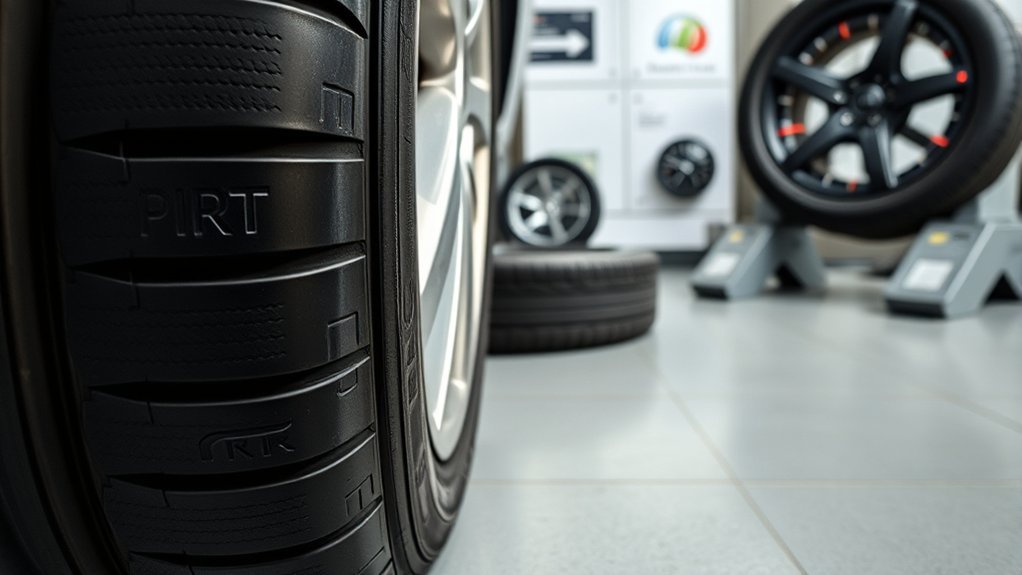
“R” on a tire sidewall is part of the tire size code, and it tells you how the tire is built. Once you understand that one letter, the rest of the code becomes easier to read: tire width, aspect ratio, wheel diameter, load index, speed rating, and other safety markings all work together to show whether a tire fits your vehicle.
Quick Answer
The “R” on a tire means radial construction. In a size such as P225/60R16, the R tells you the tire’s internal cords are arranged radially across the tire. It does not mean racing, rim, radius, or speed rating.
Key Takeaways
- “R” means radial construction, the standard layout for most modern passenger and light-truck tires.
- The R sits between the aspect ratio and wheel diameter in a tire size code, such as 225/60R16.
- Load index and speed rating come after the tire size and must meet or exceed the vehicle maker’s requirements.
- ZR is a high-speed radial marking, but the final speed symbol, such as W or Y, confirms the exact rating.
- Always confirm tire size, load rating, speed rating, and pressure with the driver-door placard or owner’s manual.
At a Glance
| Time Required | 2–5 minutes to read the sidewall code |
| Difficulty | Easy once you know the order of the markings |
| Tools Needed | Your tire sidewall, driver-door placard, and owner’s manual |
| Cost | Free |
What Does R Mean on a Tire?
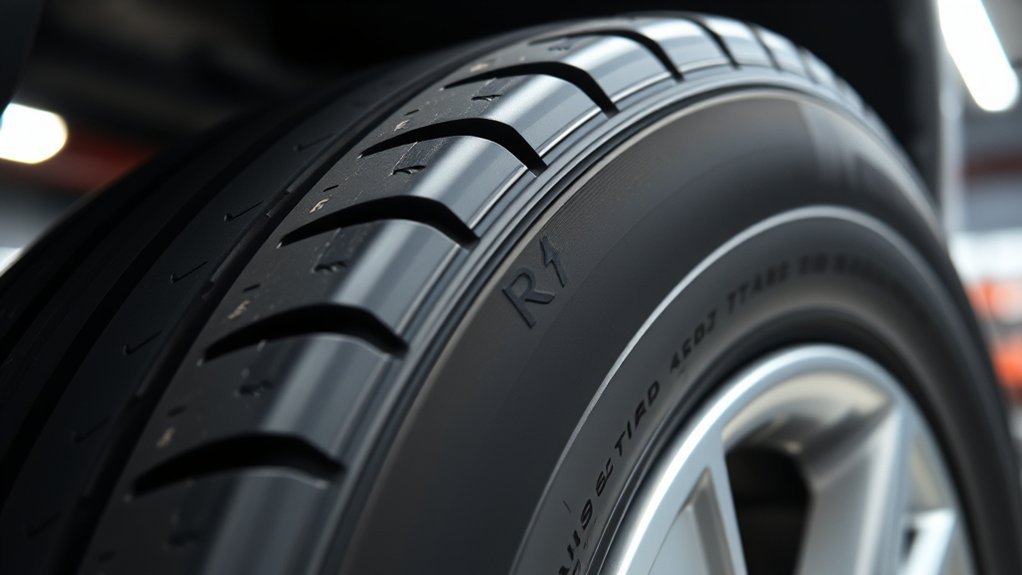
The “R” on a tire means radial construction. It appears in the tire size code to identify the tire’s internal structure. For example, in P225/60R16 98H, the R tells you the tire is radial, while the 16 tells you the tire fits a 16-inch wheel.
In a radial tire, the body cords run from bead to bead across the tire and generally at right angles to the direction of rotation. This construction is common on modern passenger and light-truck tires because it helps balance ride comfort, tread stability, rolling resistance, and handling when the tire is correctly matched to the vehicle.
The R is not a speed rating. Speed rating is the letter after the load index, such as H, V, W, or Y. The R is also not the rim size. The rim or wheel diameter is the number immediately after the R.
Warning: Never choose a replacement tire by the “R” alone. The full size, load index, speed rating, and vehicle placard must match your vehicle’s requirements.
How to Read a Tire Size Code
A tire size code is read from left to right. The easiest way to understand it is to break down a common example:
| Example Marking | What It Means | Why It Matters |
|---|---|---|
| P | Passenger tire type | Shows the tire category or intended application. |
| 225 | Section width in millimeters | Affects fitment, clearance, steering feel, and traction. |
| 60 | Aspect ratio | Sidewall height is 60% of the tire width. |
| R | Radial construction | Identifies the internal tire structure. |
| 16 | Wheel diameter in inches | Must match the wheel exactly. |
| 98H | Load index and speed rating | Shows load capacity and rated speed under specified conditions. |
Manufacturers and safety organizations explain tire sidewall markings in this same general order: size, construction, wheel diameter, load index, speed rating, and extra service markings. For replacement tires, use the size recommended by the vehicle manufacturer, not just the size already on the tire.
Tire Width Basics
The three-digit number before the slash is the tire’s section width in millimeters. In 225/60R16, the tire is about 225 millimeters wide from sidewall to sidewall. A wider tire may change steering response, road noise, clearance, fuel use, and wet-weather performance, so it should not be changed casually.
Aspect Ratio Meaning
The two-digit number after the slash is the aspect ratio. It tells you sidewall height as a percentage of tire width. In 225/60R16, the sidewall height is 60% of 225 mm. Lower aspect ratios usually mean shorter sidewalls and sharper steering response, while taller sidewalls can add more cushion over rough roads.
Rim Size Explained
The number after the R is the wheel diameter in inches. In 225/60R16, the tire must fit a 16-inch wheel. This number is not flexible. A 16-inch tire cannot be safely mounted on a 17-inch wheel, and the wrong wheel diameter can prevent the tire from seating correctly.
How to Read Tire Load Index Numbers
The load index is the number after the tire size. It is a code that corresponds to the maximum weight one tire can support when properly inflated. For example, in 225/60R16 98H, the load index is 98.
Do not treat the load index as a guess or a general size label. A tire with the same width, aspect ratio, and rim diameter can still have a different load index. If your vehicle requires a 98 load index, replacing it with a 94 may reduce load capacity even if the tire “fits” the wheel.
Some load values are rounded differently in pounds and kilograms. For example, load index 94 is commonly listed around 1,477 lb / 670 kg per tire. Always use the tire maker’s load chart and the vehicle placard when choosing replacements.
What Tire Speed Ratings Mean
The speed rating is the letter after the load index. In 225/60R16 98H, the speed rating is H. It tells you the maximum speed the tire is designed to sustain under specified load and inflation conditions.
Common passenger tire speed ratings include S, T, H, V, W, and Y. For example, H is commonly listed at 130 mph, V at 149 mph, W at 168 mph, and Y at 186 mph. These ratings are technical limits, not permission to exceed speed laws or drive beyond safe road conditions.
When replacing tires, choose a speed rating that meets or exceeds the vehicle manufacturer’s requirement unless the owner’s manual or tire professional confirms another safe option. Mixing speed ratings or installing a lower rating can affect handling expectations and safety margins.
Note: Load index and speed rating work together. A tire’s speed rating assumes the tire is properly inflated, in good condition, and carrying no more than its rated load.
What Do Passenger, LT, ST, and EV Mean?
Letters at the beginning of the tire size, or elsewhere on the sidewall, can describe the tire’s intended use:
- P: Passenger tire, commonly used on cars, minivans, crossovers, and some light-duty SUVs.
- LT: Light Truck tire, built for heavier loads, towing, and tougher service than many passenger tires.
- ST: Special Trailer tire, built for trailer use. Do not install ST tires on passenger vehicles.
- T: Temporary spare tire, intended for limited emergency use.
- EV or EV-ready markings: May indicate a tire designed for electric-vehicle weight, torque, noise, and rolling-resistance needs.
These labels do not replace the load index or speed rating. A tire still has to match your vehicle’s required size, load capacity, speed rating, and pressure recommendation.
[Products Worth Considering]

The 22800 wheel stud installer makes replacing wheel studs quick and secure, saving time and effort during tire service. It uses a ratchet or impact wrench to pull new studs firmly into place, helping when existing studs are too long. Compatible with most automotive wheels and light-duty truck wheel studs, it’s designed for easy, tool-assisted installation.
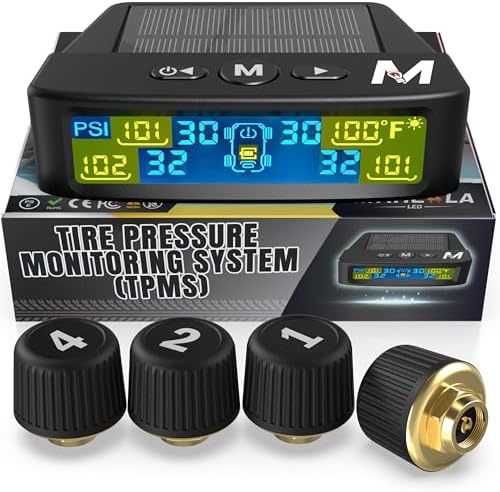
Marcala’s TPMS set of four sensors helps you monitor tire pressure and temperature in real time while driving, with updates every second. The bright color LCD uses auto-dimming for easy viewing, powered by dual solar and USB charging, and offers six alarm modes. Built for trailers, RVs, campers, trucks, and towing setups, the sensors support monitoring 1-4 wheels up to 98 PSI with IP67 waterproof protection.

TP-M13W combination repair unit kit includes wrapped stems with matching patches for fast, reliable tire repairs. It’s suitable for both radial and bias ply tires and is designed for chemical or heat vulcanization. Gray vulcanizing gum with blue backing helps create a strong bond, with the stem portion wrapped for added effectiveness.
What’s the Difference Between Radial and Bias Ply?
Radial tires, marked with R, use cords that run radially across the tire from bead to bead. This layout generally gives better tread stability, lower rolling resistance, and more flexible sidewalls than older bias-ply construction.
Bias-ply tires use body plies that cross at angles. They can still make sense for certain trailers, agricultural equipment, vintage vehicles, off-road uses, and specialty applications. For most modern passenger vehicles, though, radial tires are the expected fit.
You may also see construction letters such as D for diagonal bias or B for belted bias. These are not interchangeable with R unless the vehicle, wheel, and tire application allow it.
What Does ZR Mean on High-Speed Tires?
ZR means the tire is a radial tire with high-speed capability above 149 mph. You may see it in performance sizes such as 245/40ZR18.
On modern tires, ZR alone does not tell the whole story. You still need to read the final speed symbol after the load index. For example, a tire marked 245/40ZR18 97Y uses ZR in the size code, but the Y is the specific speed rating.
In simple terms: R means radial construction, while ZR means high-speed radial construction. The service description at the end of the size confirms the exact load index and speed rating.
What Do Standard Load, Extra Load, and Load Range Mean?
Tire markings such as SL, XL, Reinforced, HL, or light-truck load range letters describe load-carrying design. They tell you more about how much weight the tire can carry and what inflation pressure may be needed to carry that weight safely.
Same size does not always mean same capability. Two tires can share the same width, aspect ratio, construction, and rim diameter but have different load indexes, speed ratings, or load-range markings.
- SL: Standard Load for normal passenger-vehicle use when it meets the placard requirement.
- XL / Reinforced: Extra Load construction for higher capacity in the same general size.
- HL: High Load marking used on some newer vehicles that require more carrying capacity.
- LT load ranges: Letters such as C, D, or E on light-truck tires indicate heavier-duty service categories.
[Products Worth Considering]
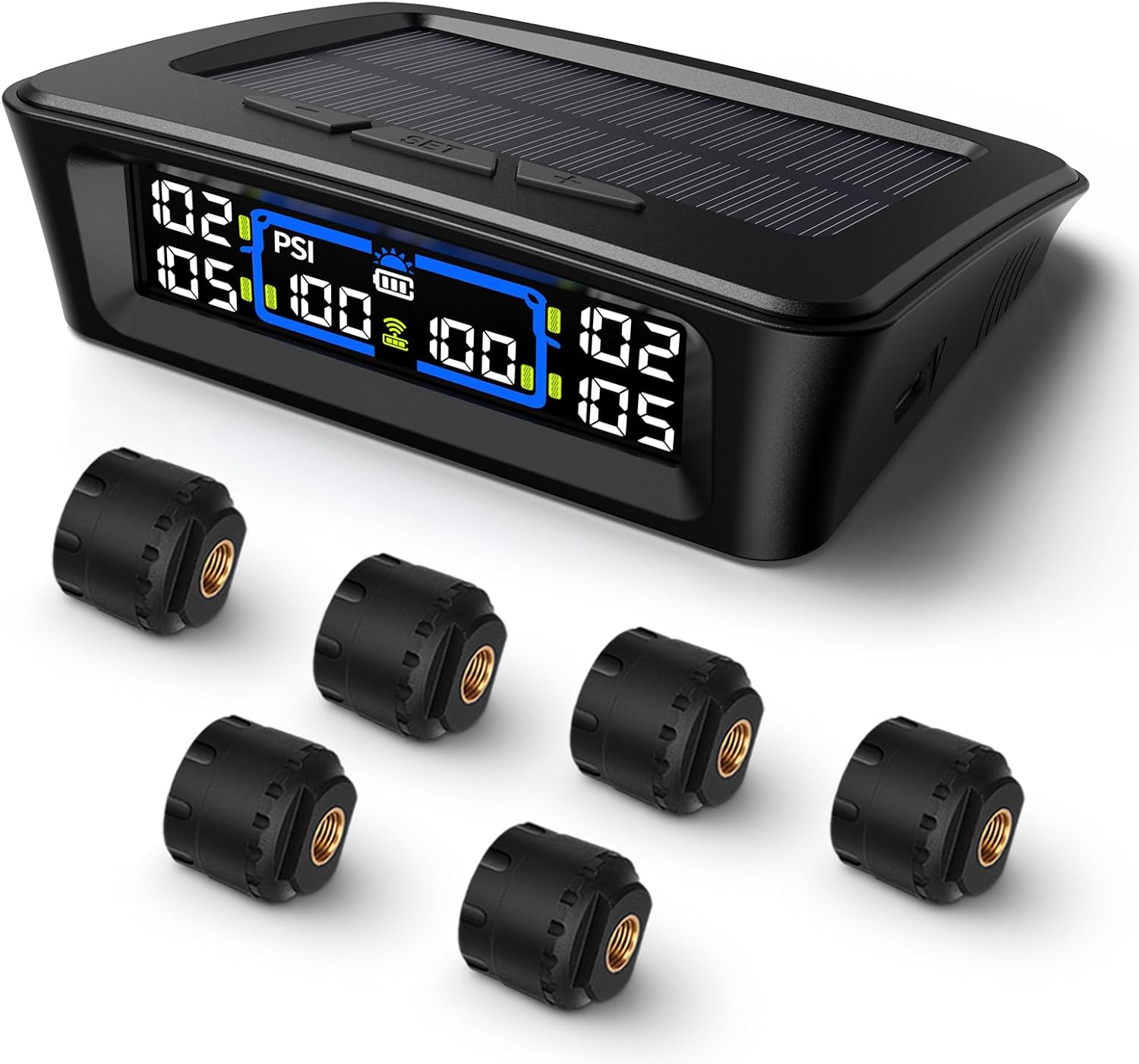
The Tymate TM12 RV TPMS delivers real-time tire pressure and temperature monitoring with a stable 433Hz display for safer long-distance driving. It supports simultaneous monitoring across vehicle and trailer zones, includes six alarm modes for pressure, temperature, leakage, battery, and signal loss, and features easy DIY installation with auto calibration. Power is supplied via USB-C charging or solar recharging, with a wide 0–144 PSI range and up to 50 ft signal coverage for RVs and towable trailers.

Secure your trailer or RV tires with a scissor-style wheel chock stabilizer that applies opposing force to help prevent wheel shift. It fits tight wheel gaps from 3.5 inches up to 12 inches and works for travel trailers, campers, fifth wheels, toy haulers, and heavy-duty trucks. The surface uses new electrophoretic technology to help prevent rust for reliable travel use.

Secure a full-size spare on your trailer with this powder-coated steel spare tire mount bracket. It fits most 4-, 5-, and 6-lug wheel bolt patterns and mounts to trailer tongues up to 4 in wide and 5 in tall. Built for reliable carry with a max 150 lb load rating and includes zinc-plated hardware for straightforward installation.
Other Sidewall Markings Worth Checking
The R marking is important, but it is only one part of the sidewall. Check these markings before you buy or evaluate a tire:
- DOT/TIN date code: The last four digits show the week and year of manufacture. For example, 2524 means the 25th week of 2024.
- M+S: Means Mud and Snow based on the manufacturer’s tread-geometry criteria. It does not always mean true severe-snow performance.
- 3PMSF: The Three-Peak Mountain Snowflake symbol means the tire has met a standardized snow-traction test.
- UTQG: U.S. passenger tires often show treadwear, traction, and temperature grades for comparison.
- MAX LOAD / MAX PRESS: Shows the tire’s maximum capacity and pressure limits, not your vehicle’s recommended everyday tire pressure.
- OE markings: Symbols such as MO, AO, T0, or other automaker codes can mean the tire was tuned for a specific original-equipment application.
Warning: Do not inflate tires to the sidewall “MAX PRESS” number unless a qualified source tells you that is correct for the application. For normal use, follow the recommended cold tire pressure on the vehicle placard or owner’s manual.
Where to Find Tire Ratings on the Sidewall
The main size code is molded into the outer sidewall in raised letters and numbers. Look for a sequence similar to P225/60R16 98H. The load index and speed rating usually appear immediately after the wheel diameter.
The DOT/TIN code, UTQG grades, maximum load, maximum pressure, traction markings, and brand/model details may appear in different places around the sidewall. If the outer sidewall does not show everything, check the inner sidewall too.
How to Match Tire Specs to Your Vehicle
To match tire specs correctly, start with the driver-side door placard, certification label, or owner’s manual. That information comes from the vehicle manufacturer and usually lists the correct tire size, recommended cold inflation pressure, and load information.
- Confirm tire size: Match the full size, such as P225/60R16, not just the R.
- Check load index: Meet or exceed the required load index unless the vehicle manufacturer says otherwise.
- Check speed rating: Meet or exceed the required speed rating for the vehicle and tire type.
- Match tire category: Do not swap P, LT, ST, or temporary spare tires without confirming the application.
- Check pressure source: Use the vehicle placard for normal cold inflation pressure.
- Consider OE markings: If the original tires carry vehicle-specific markings, replacing them with the same OE specification may help preserve ride, noise, range, and handling targets.
Pro Tip: Before ordering tires online, copy the full sidewall code and compare it with the driver-door placard. If the two do not match, use the placard or owner’s manual as the safer starting point.
[Products Worth Considering]

The Tymate TM2 RV tire pressure monitoring system keeps you informed with a color LCD display, automatic backlight, and solar charging for dependable operation. It supports up to 10 tire positions with four pre-paired sensors, while offering multiple alarm modes for fast leak detection, pressure extremes, temperature alerts, and low-signal warnings. Built-in monitoring uses accurate readings and reliable 433.92MHz communication to help protect your RV, trailer, truck, or SUV.

This professional wheel and rim cleaning brush set lifts brake dust, grime, and dirt with soft, scratch-free microfiber and synthetic wool fibers. The rim brush bends up to 360 degrees for easy access to hard-to-reach areas around spokes, lips, and faces. Ideal for thorough cleaning of car, truck, motorcycle, bicycle, RV, and more wheel and tire surfaces.

The Big Rig Defense Tire Thumper is a truck tire pressure checker that lets you quickly check multiple tires by giving them a firm whack. Listen for a reassuring thump and feel the stick bounce when a tire is fully inflated, helping you get back on the road safely. It features a comfortable, glove-friendly handle and a secure wrist strap for confident use on busy routes.
Frequently Asked Questions
Does the R in tire size matter?
Yes. The R tells you the tire uses radial construction. Most modern passenger and light-truck tires are radial, so the R is expected on most replacement tire sizes. Still, the R is only one part of the fitment. You also need the correct width, aspect ratio, wheel diameter, load index, and speed rating.
Does R mean rim size?
No. R means radial construction. The rim or wheel diameter is the number after the R. In 225/60R16, the R means radial, and 16 means the tire fits a 16-inch wheel.
What is the difference between R and ZR tires?
R means radial construction. ZR means the tire is a radial tire with high-speed capability above 149 mph. On modern tires, read the final speed symbol after the load index, such as W or Y, to confirm the exact speed rating.
What is the difference between R and S tires?
R describes construction, while S is usually a speed rating. In a code such as 225/60R16 98S, R means radial construction and S is the speed symbol. They answer different questions, so you need to read the whole sidewall code.
Which is better, D or R tires?
R tires are better for most modern passenger vehicles because radial construction is the standard fit. D usually means diagonal bias construction, which may be used for certain trailers, vintage vehicles, or specialty applications. Use the construction type specified for your vehicle or trailer.
Can I use a tire with a different load index?
A higher load index may be acceptable if the tire otherwise fits and the vehicle manufacturer allows it. A lower load index should be avoided because it can reduce the tire’s load-carrying capacity. Check the door placard, owner’s manual, and tire manufacturer data.
Should I use the pressure printed on the tire sidewall?
For normal driving, use the recommended cold tire pressure on the vehicle placard or owner’s manual. The sidewall maximum pressure is a tire limit, not usually the vehicle’s recommended operating pressure.
Conclusion
The R on a tire means radial construction. It tells you how the tire is built, but it does not tell you the whole fitment by itself. Read the full sidewall code: tire type, width, aspect ratio, R construction, wheel diameter, load index, and speed rating. Then compare those markings with your vehicle placard or owner’s manual before buying replacement tires.
Sources
- NHTSA TireWise — UTQG tire safety ratings and tire safety guidance.
- NHTSA Tire Safety Brochure — tire placard, recommended tire size, pressure, and replacement guidance.
- Michelin Tire Markings Explained — tire size, construction, load rating, speed rating, DOT date code, and 3PMSF/M+S markings.
- Continental Tire Markings — construction letters, load index, speed rating, and sidewall marking order.
- Tire Industry Association: Reading a Tire Sidewall — tire width, aspect ratio, R construction, rim diameter, and service description.
- U.S. Tire Manufacturers Association Care and Service Manual — radial construction and passenger/light-truck tire safety fundamentals.
