
A demo tire can be a lightly used, mounted, displayed, tested, or take-off tire sold at a discount, but the label itself does not guarantee condition. Before buying one, check its tread depth, DOT Tire Identification Number, sidewalls, bead, repair history, fitment, storage history, and warranty terms. If the tire has been driven, treat it as a used tire and judge it by its actual history rather than the word “demo.”
Quick Answer
A demo tire can be worth buying when its history is documented, tread is close to new, its age is acceptable, and a tire professional finds no damage. Treat any tire that has been driven as used, verify exact fitment and warranty coverage, and make sure the price advantage is meaningful compared with buying new.
Key Takeaways
- “Demo tire” is a seller description, not a standardized safety grade. A tire that has been mounted and driven should be evaluated as a used tire.
- Measure the tread with a gauge and inspect the tread, shoulders, sidewalls, bead, and inner liner when appropriate.
- Check the DOT Tire Identification Number, but remember that calendar age alone cannot tell you how much service life remains.
- Reject tires with bulges, exposed cords, serious cracking, separation, bead damage, unsafe repairs, or unexplained inflation loss.
- For a single replacement, match the tire’s size, type, load index, speed rating, model, and tread depth as closely as your vehicle manufacturer requires.
- Do not rely on a fixed “demo tire discount.” Compare the actual remaining usable tread, age, history, warranty, and price with the same tire new.
What Is a Demo Tire?

A demo tire is generally a tire a seller describes as having been used for demonstration, display, vehicle delivery, testing, or limited evaluation rather than normal long-term driving. However, “demo” does not tell you exactly how many miles the tire covered or how it was stored, mounted, inflated, or handled.
This distinction matters. The U.S. Tire Manufacturers Association states that once a tire has been mounted on a vehicle and driven, it is considered a used tire. That means a demo tire that has seen road or track use should be inspected with the same caution you would apply to another used tire.
A related term is new take-off tire. These tires are commonly removed from a new or nearly new vehicle because the owner or dealer changes wheels, tire size, brand, or tire type. A take-off may have extremely little road use, but you should still verify its actual tread depth, age, condition, and history instead of assuming it is equivalent to an untouched retail tire.
Display-only tires create another complication. A tire may look perfect because it has little or no tread wear, yet age, prolonged exposure to heat or sunlight, improper storage, repeated mounting, or other handling can still affect condition.
Note: The words “demo,” “take-off,” “showroom,” and “near new” do not replace a condition inspection. Ask the seller exactly how the tire was used and whether it was ever driven, repaired, run underinflated, or involved in an impact.
How Demo Tires Compare to New Ones
Compared with an untouched new tire, a demo tire may show mounting marks, cosmetic scuffs, slight tread wear, or signs of brief road use. How important those differences are depends on the individual tire.
If the demo tire is the same model and size, has nearly full tread, has been stored correctly, and has no structural damage, its everyday behavior may be close to that of a new tire. However, you should not assume identical grip, braking, wet traction, noise, or ride quality simply because the tire looks new.
Tire performance and service life are affected by more than tread depth. The U.S. Tire Manufacturers Association identifies factors such as inflation pressure, load, speed, temperature, impacts, maintenance, storage, and road-hazard damage as important to tire condition and service life.
A demo tire may also differ from a new replacement in less visible ways. The manufacturer’s warranty may be reduced, nontransferable, or unavailable. The tire may have an older DOT date. It may have been mounted more than once. A tire that was actually driven may also have internal damage that is not obvious from an exterior inspection.
For that reason, the real value is not simply “demo versus new.” Compare the exact tire’s condition, remaining tread, age, documentation, fitment, warranty, and selling price against a new example of the same model.
[Products Worth Considering]

Add style while helping protect your tire valve stems with handmade crystal rhinestone caps and a durable plastic insert. These caps resist corrosion and help keep out rain, snow, and muddy water, extending tire life. Textured non-slip design makes them easy to grip for quick install and removal when checking tire pressure.

Measure tire tread depth quickly and accurately with this LUMITECO dial gauge that reads in 1/32" increments up to 14/32". The color-coded green/yellow/red zones make it easy to judge tire wear and know when replacement is needed. A rugged, compact design with a protective pouch helps keep the gauge ready for use on cars, trucks, motorcycles, and more.

The SAFELIFE dial tire tread depth gauge measures tread depth in 1/32 inch increments with clear, easy-to-read 2-inch dial face. Color zones using a traffic light system help you quickly judge whether tread is low, marginal, or ample for safer driving. Built with a durable zinc cast body and a metal detect probe for precise, comfortable use across cars, motorcycles, trucks, and buses.
How to Tell a Demo Tire Is Worn
Start by measuring the tire rather than judging it by appearance. A tread pattern can look deep in a photo while measurements reveal meaningful wear or an uneven pattern.
Check tread depth at several points around the tire and across its width. Then inspect the shoulders and sidewalls for cracking, cuts, bulges, abrasion, or deformation.
If a tire shows irregular wear, unexplained damage, exposed reinforcement, a bulge, or evidence of structural separation, do not treat it as a bargain simply because much of the tread remains.
Tread Depth Checks
Use a proper tread-depth gauge and measure the main grooves at multiple positions around the circumference. Take measurements toward the inner edge, center, and outer edge so you can identify uneven wear.
The National Highway Traffic Safety Administration says tires should be replaced when tread is worn to 2/32 inch. Built-in treadwear indicators become level with the tread around this minimum.
That minimum does not mean every tire performs equally well until the last 2/32 inch. For example, Michelin’s tread-depth guidance notes that wet-weather performance can decline as tread wears and describes 4/32 inch as a point where drivers who frequently face heavy rain may want an additional safety buffer.
Tread remaining is only one part of the decision. A deep-tread tire with structural damage, an unsafe repair, or an unknown history is not automatically a good tire.
Compare the measured depth with the original tread depth for that exact tire model and size. Different tire designs start with different depths, so a single measurement such as 8/32 inch means little without context.
Sidewall Wear Signs
A tire’s sidewall can reveal damage that a tread measurement cannot. Look closely around both sidewalls, the shoulder, and the bead area.
Reject a tire with a bulge or bubble, exposed cords, serious cuts, visible separation, or obvious deformation. These signs can indicate damage to the tire’s structural components.
Look for cracking as well. Small surface changes and serious structural cracking are not the same thing, so if you are uncertain, have the tire inspected by a qualified tire professional rather than trying to diagnose it from appearance alone.
Dryness, fading, scuffing, or a chalky surface should prompt questions about storage. Tires should generally be protected from excessive heat, sunlight, petroleum products, solvents, and ozone-producing equipment during storage.
What to Watch Out for With Demo Tires
The biggest risk is not ordinary cosmetic wear. It is unknown history. A demo tire may have experienced low pressure, a pothole impact, hard braking, track testing, repeated mounting, or a repair without leaving an obvious clue on the outside.
That is why you should combine a tread and sidewall inspection with questions about the tire’s previous use, storage, repairs, and mounting history.
Tread Wear Signs
Look for uneven wear, feathering, cupping, flat spotting, localized abrasion, or a significant difference between the inner and outer shoulders.
Irregular wear does not automatically tell you what happened to the tire. Possible causes include alignment problems, inflation problems, worn vehicle components, hard use, or prolonged parking. What matters to you as a buyer is that the tire is no longer showing the consistent condition expected from a lightly used example.
Inspect the full circumference instead of checking one visible section. If the tire is mounted, rotate the wheel slowly so you can see every tread block and both shoulders.
If the seller describes a tire as “almost new” but its tread is noticeably below the original depth for that exact model, base your offer on the measurement rather than the description.
Hidden Damage Risks
Some important tire damage cannot be ruled out with an exterior inspection. USTMA warns that the inner liner and evidence of some improper repairs may only be visible once the tire has been removed from the wheel.
Warning: If a demo tire has been driven and its service or repair history is unknown, have a qualified tire professional inspect it before installation. Do not rely on tread depth or a clean sidewall to prove that the tire has no internal damage.
If there is evidence of a puncture, ask how it was repaired. USTMA’s passenger and light-truck repair guidance calls for removing the tire from the wheel for complete inspection. It limits repairable puncture injuries to the tread area, generally no larger than 1/4 inch (6 mm), and calls for an appropriate combination of filling the injury and sealing the inner liner. Shoulder and sidewall injuries are not treated as normal tread-area puncture repairs.
Also ask whether the tire was ever driven significantly underinflated. Damage caused by low-pressure operation may not be obvious after the tire has been reinflated.
When a Demo Tire Is Worth Buying
A demo tire is most attractive when the seller can document why it was removed, its measured tread is close to the original specification, its DOT date and condition are acceptable, and the price clearly compensates for any lost tread, warranty, or certainty.
A lightly used take-off can be especially useful when you need to replace one damaged tire and can find the exact same model with a tread depth that closely matches your remaining tires.
Check these factors together:
- Exact fitment: size, construction, load index, speed rating, and any vehicle-specific requirements.
- Model match: ideally the same brand and exact tire model as the tires remaining on the vehicle.
- Tread match: compare actual measurements, not phrases such as “90% tread.”
- DOT/TIN: confirm when the tire was manufactured.
- Physical condition: no disqualifying tread, sidewall, bead, or structural damage.
- Repair history: know whether the tire has been punctured or repaired.
- Storage and use: ask whether it was displayed indoors, driven on public roads, track-tested, or stored for a long period.
- Warranty and returns: get the actual terms before paying a premium for supposed coverage.
Pro Tip: Compare the demo tire with the original tread depth of the exact same new model. A tire that started at 10/32 inch and now measures 8/32 inch has already lost 2/32 inch of tread even if it still looks nearly new. The selling price should reflect measurable wear plus any uncertainty about age, warranty, or history.
Do not use a fixed percentage such as 20%, 30%, or 40% as the “correct” discount. There is no universal demo-tire discount. A rare matching tire with nearly full tread may be worth more to you than a common model, while a tire with lost tread and no warranty may need a much larger price advantage to make sense.
[Products Worth Considering]

Monitor tire tread wear with a smart, color-coded depth gauge that shows clear condition ranges at a glance. The bar is range marked for fast, easy readings, helping you maintain safer traction and performance. Each gauge is portable with a pocket clip, and the set includes 20 units for daily use and sharing.

Accurately measure tire tread depth with a calibrated gauge marked from 0 to 1 inch in 1/32 inch increments. The color-coded bar helps you quickly identify tread condition ranges, supporting safe driving for trucks, motorcycles, automobiles, and passenger vehicles.

This tire inflator with pressure gauge delivers long-lasting performance with a durable rubber-protected gauge and sturdy build. The longer hose and 360 swivel air chuck help you seal the valve securely and keep your hands free while measuring, inflating, or deflating. It’s battery-free for reliable use and provides ±2 PSI accuracy in the mid-range for most typical tires, with universal compatibility for 1/4 NPT compressor outputs.
How to Inspect a Demo Tire Before Buying
If a demo tire appears to offer good value, inspect it systematically before paying for it.
First, confirm the complete tire size and service description against your vehicle’s tire placard, owner’s manual, and the tires already installed. Check the load index and speed rating rather than matching only the wheel diameter.
Next, measure tread depth in several grooves and at several points around the circumference. Compare those readings with the exact model’s original tread depth.
Inspect both sidewalls and the bead for cuts, cracking, deformation, exposed material, abrasion, or bulges. If the tire is mounted, look for recurring air loss, vibration, or visible runout.
Then locate the DOT Tire Identification Number. On modern tires, the final four digits show the week and year of manufacture. For example, 2325 means the tire was manufactured in the 23rd week of 2025.
Age is important, but it should not be used alone to declare a tire safe or unsafe. NHTSA notes that some tire and vehicle manufacturers recommend age-based replacement in roughly the six-to-10-year range, while USTMA explains that actual serviceability also depends heavily on storage, use, inflation, load, temperature, impacts, and other conditions. Follow the recommendations for your specific tire and vehicle.
| Item | What to Check | What You Want to See |
|---|---|---|
| Tread | Depth at several grooves and positions | Consistent, measurable tread appropriate for your use |
| Wear pattern | Inner, center, and outer tread | No unexplained cupping, feathering, flat spots, or severe uneven wear |
| Sidewalls | Cuts, cracks, bubbles, deformation | No disqualifying damage |
| Beads | Mounting surface and damage | Clean and structurally intact |
| DOT/TIN | Manufacturing week and year | Readable and acceptable under the tire/vehicle maker’s guidance |
| Repairs | Patches, plugs, punctures, inner-liner evidence | No unsafe or unexplained repair |
| Inner liner | Low-pressure damage, repairs, contamination | Professionally inspected when history is uncertain |
| Valve stem, if sold mounted | Cracking, leaks, condition | No leakage or deterioration |
Also check whether the tire has been recalled. NHTSA provides a recall search for tires and other vehicle equipment. A readable TIN is useful for identifying the tire and determining its production date.
Demo Tires vs. Used Tires: Which Is Better?
A lightly used, well-documented demo or take-off tire may be a better purchase than a heavily worn used tire, but the word demo does not create an automatic safety advantage.
If a demo tire has been driven, it is still a used tire from a condition and history standpoint. What may make it more attractive is that it often has less mileage, more tread, and a clearer reason for removal.
An ordinary used tire can also be a reasonable candidate if its history is known, its condition is professionally verified, and it matches the vehicle correctly. The problem is that used tires often come with more unknowns.
Compare the two using the same criteria:
- Remaining tread and wear pattern
- Manufacturing date
- Exact model and fitment
- Repair history
- Sidewall, bead, and inner-liner condition
- Previous inflation and service history when known
- Warranty or return rights
- Price versus a new replacement
For a single-tire replacement, matching deserves extra attention. Ideally, use the same tire model, size, construction, load index, and speed rating. The replacement should also be reasonably close in tread depth to the tire on the other side of the axle.
AWD and 4WD vehicles require additional care. Manufacturers can specify maximum differences in tire circumference or tread depth. A replacement that looks close enough may still fall outside your vehicle’s specification. Check the owner’s manual or the vehicle manufacturer’s service guidance before installing only one tire.
Guidance on replacing tires also commonly favors matching tires across the vehicle and avoiding major traction differences between axles. Continental’s replacement guidance, for example, recommends matching tire characteristics closely and following the vehicle manufacturer’s instructions.
[Products Worth Considering]

Steelman white tire marking crayons provide high-contrast, semi-permanent marks for repairing and inspecting tires and equipment. They write on wet or dry, smooth or coarse surfaces including rubber, metal, glass, and wood, making them ideal for puncture location and damage outlining. The lead- and zinc-free crayons resist weather and fading yet wipe away when you no longer need the marks.
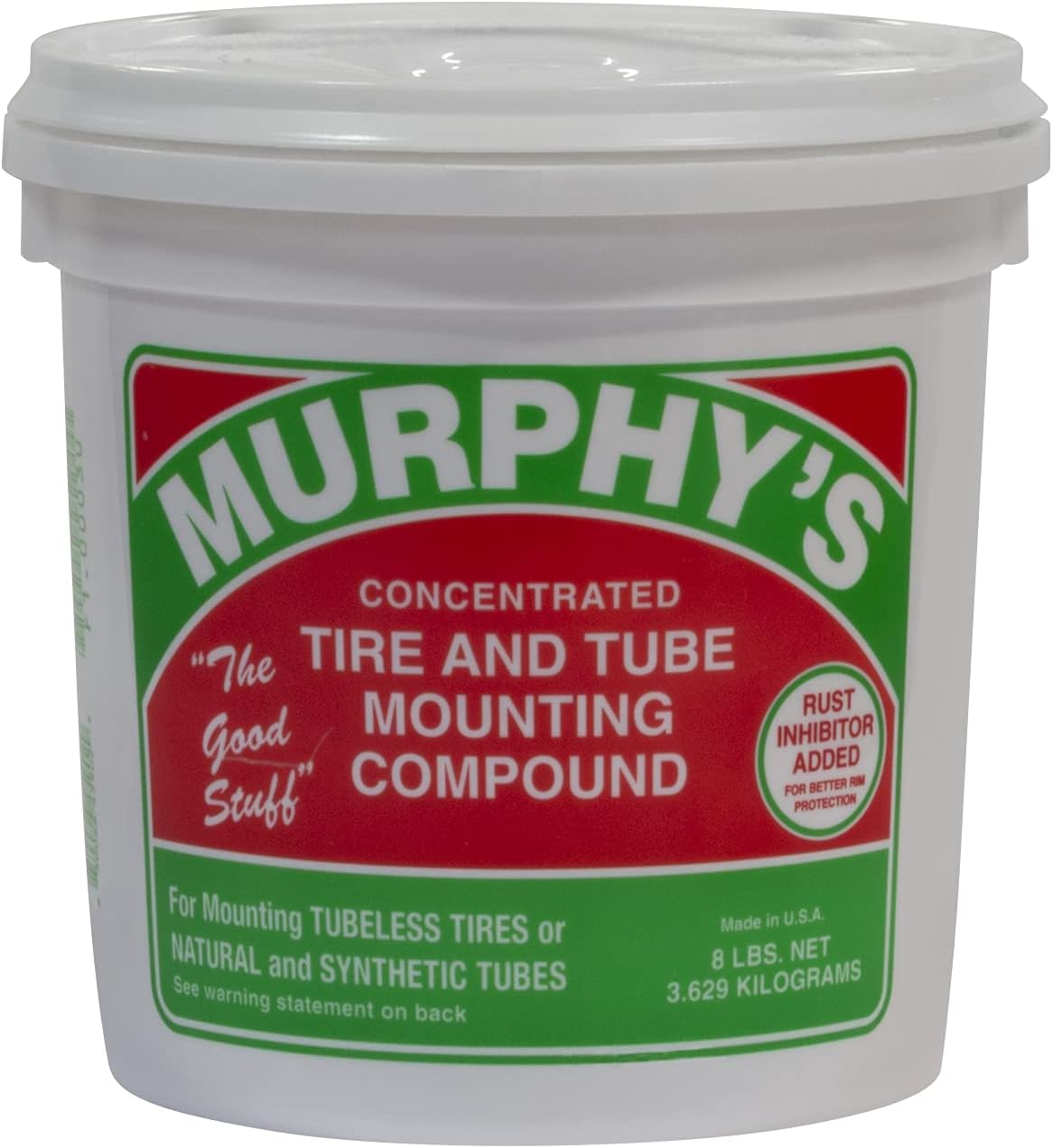
A concentrated tire and tube mounting compound designed to help simplify mounting rubber tires and tubes on passenger, semi truck, construction, and OTR applications. Its ultra-thick formula packs beads effectively and includes rust inhibitors to help protect against corrosion during use.

Measure tyre tread depth precisely with a digital gauge that reads in both MM and inches, helping you monitor safe driving conditions. The large LCD screen is easy to operate, and the compact tool fits for cars, trucks, and motorcycles. It provides high accuracy with a 0-25.4mm range and includes a 1-year warranty for added peace of mind.
Frequently Asked Questions
Are Demo Tires Covered by Manufacturer Warranties?
Sometimes, but never assume they are. Tire warranties can depend on whether you are the original purchaser, where the tire was bought, whether it was sold as new replacement equipment, proof of purchase, previous use, and the manufacturer’s specific terms. Ask the seller to identify the exact warranty that transfers to you and get the terms in writing before counting warranty coverage as part of the tire’s value.
Can Demo Tires Be Returned After Purchase?
Only if the seller’s return policy allows it. Check the return window, installation restrictions, shipping charges, restocking fees, and whether a tire can be returned after mounting. Do this before buying because return rules for discounted, take-off, clearance, and used tires can differ from rules for new tires.
Do Demo Tires Come in All Vehicle Sizes?
No. Availability depends on what dealerships, test fleets, shops, manufacturers, and vehicle owners have removed or used for demonstrations. Exact brand-and-model matches can therefore be difficult to find, especially when you also need a specific load index, speed rating, tread depth, or production date.
Are Demo Tires Safe for Winter Driving?
A demo tire can be suitable for winter only if the tire itself is designed for the conditions, has adequate remaining tread, has no damage, and matches the other tires appropriately. For severe snow use, look for the Three-Peak Mountain Snowflake (3PMSF) marking rather than assuming any lightly used all-season tire will deliver winter-tire performance. Follow the vehicle and tire manufacturer’s winter-fitment guidance.
How Much Should a Demo Tire Discount Be?
There is no universal percentage. Compare the selling price with the same tire new, then account for measured tread loss, age, warranty differences, repair history, seller return rights, and uncertainty about prior use. A small discount is less attractive when the tire has already lost meaningful usable tread or comes without the protections offered with a new tire.
Is a Demo Tire the Same as a Used Tire?
If the demo tire has been mounted on a vehicle and driven, you should evaluate it as a used tire. A display-only tire or an extremely low-mileage take-off may have much less wear than an ordinary used tire, but the seller’s label does not prove its condition. Ask for the actual history.
Can I Replace Just One Tire With a Demo Tire?
Sometimes. The best candidate is usually the same brand, model, size, construction, load index, and speed rating with tread depth close to the tire it will be paired with. AWD and 4WD vehicles can have strict allowable differences in tire circumference or tread depth, so follow the vehicle manufacturer’s specification before replacing only one tire.
Conclusion
A demo tire can be a sensible buy, especially when it is a documented low-mileage take-off that closely matches a tire already on your vehicle. But do not treat “demo” as proof that the tire is almost new or automatically safer than another used tire.
Measure the tread, read the DOT/TIN, confirm the exact fitment, inspect the tread, sidewalls, bead, and repair history, and verify warranty and return terms. If the tire has been driven or its history is uncertain, professional inspection is especially important because some internal damage cannot be ruled out from the outside.
The best deal is the tire that gives you a clear combination of known history, safe condition, correct fitment, useful remaining tread, and enough savings to justify choosing it over new.
Sources
- National Highway Traffic Safety Administration — Tire Safety — tread-depth replacement guidance, DOT/TIN age information, tire damage, and tire-age considerations.
- U.S. Tire Manufacturers Association — Used Tires — used-tire classification, unknown history, and hidden-damage concerns.
- U.S. Tire Manufacturers Association — Tire Repair Basics — internal inspection and passenger/light-truck puncture-repair criteria.
- Michelin — Tire Tread Depth — measuring tread and wet-weather considerations as tread wears.
- Continental — Replacing Tires — matching replacement tires and following vehicle-manufacturer fitment guidance.
- National Highway Traffic Safety Administration — Recalls — checking tire and vehicle-equipment safety recalls.