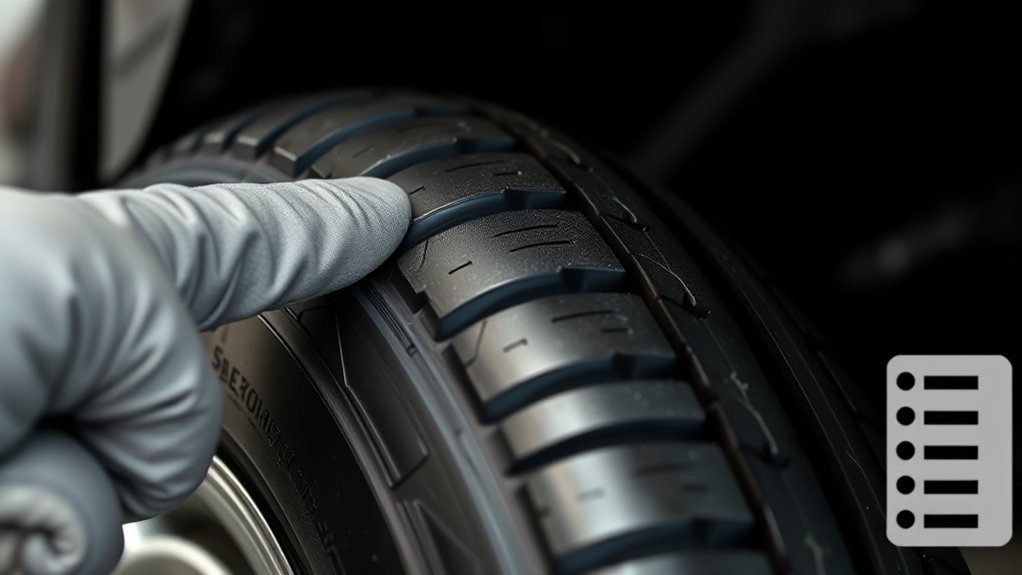
A P on a tire means the tire uses a P-Metric passenger tire size. You’ll usually see it at the start of a code like P225/65R17 102H. That code tells you the tire’s width, sidewall height, construction, wheel diameter, load index, and speed rating. Before you replace tires, always match the size and ratings listed on your vehicle’s door placard or owner’s manual.
Quick Answer
The P on a tire stands for P-Metric, a passenger-vehicle tire sizing system used on many cars, minivans, crossovers, and some light-duty trucks. It does not mean “performance.” It tells you the tire is designed around passenger-vehicle load and ride requirements.
Key Takeaways
- P means P-Metric, which is a passenger-vehicle tire size designation.
- A size like P225/65R17 shows tire width, aspect ratio, construction, and wheel diameter.
- The load index tells you how much weight the tire can carry when properly inflated.
- The speed rating shows the tire’s approved speed capability under rated conditions.
- Use the vehicle door placard or owner’s manual before changing tire size, load index, or tire type.
What Does the P Mean on a Tire?
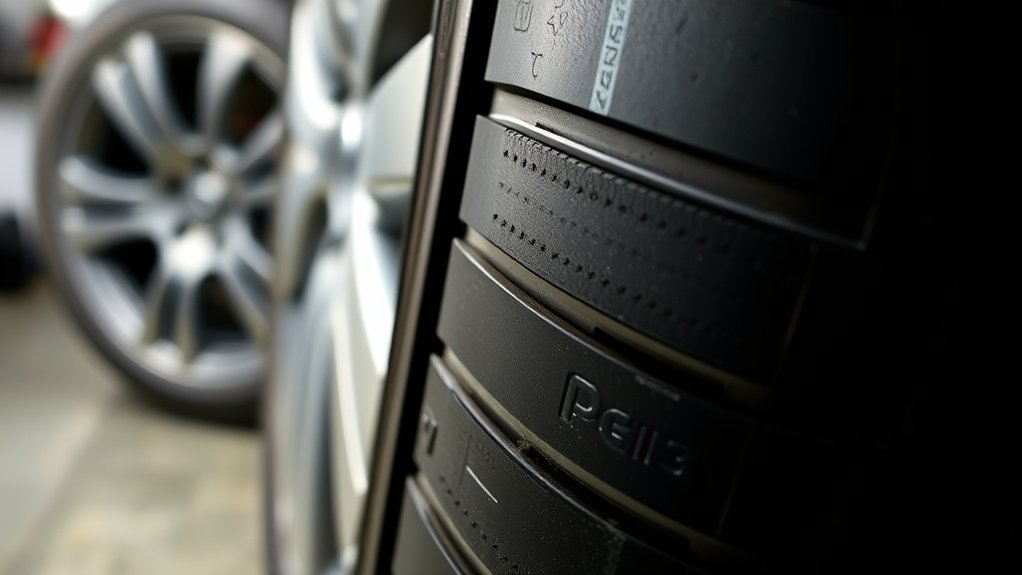
The P in a tire size means the tire is a P-Metric tire. This sizing format is common on passenger cars, minivans, crossovers, small SUVs, and some light-duty pickups. It helps separate passenger-vehicle tires from other tire types, such as LT tires for light trucks and ST tires for special trailers.
For example, in P225/65R17 102H, the P tells you the tire belongs to the passenger-vehicle sizing category. The numbers and letters after it tell you the tire’s dimensions, construction, load index, and speed rating. The P alone does not tell you whether a tire is sporty, all-season, winter-rated, or off-road capable.
The safest way to use this information is to compare the tire sidewall with your vehicle’s Tire and Loading Information Label or owner’s manual. That label gives the tire size and cold inflation pressure the vehicle manufacturer selected for your vehicle.
Note: A tire can fit the wheel and still be wrong for the vehicle if the load index, speed rating, or tire type does not match the manufacturer’s requirement.
How to Read a Tire Size Code
A tire size code looks confusing at first, but it follows a simple pattern. Use this example: P225/65R17 102H.
| Code Part | Meaning | In This Example |
|---|---|---|
| P | P-Metric passenger tire | Passenger-vehicle sizing category |
| 225 | Section width in millimeters | 225 mm wide |
| 65 | Aspect ratio | Sidewall height is 65% of tire width |
| R | Radial construction | Modern radial tire design |
| 17 | Wheel diameter in inches | Fits a 17-inch wheel |
| 102 | Load index | Maximum load capacity from the load-index chart |
| H | Speed rating | Rated up to 130 mph under proper conditions |
The letter R means radial construction, not “rim.” The final number and letter after the tire size matter just as much as the size itself because they affect load capacity and speed capability.
What Load Index Means on Tires
The load index is the number after the tire size that tells you the tire’s maximum load capacity when properly inflated. A higher load index usually means the tire can support more weight, but you should not choose by “higher is better” alone. You need the load index that meets or exceeds your vehicle’s requirement.
[Products Worth Considering]

The 22800 wheel stud installer makes replacing wheel studs quick and secure, saving time and effort during tire service. It uses a ratchet or impact wrench to pull new studs firmly into place, helping when existing studs are too long. Compatible with most automotive wheels and light-duty truck wheel studs, it’s designed for easy, tool-assisted installation.
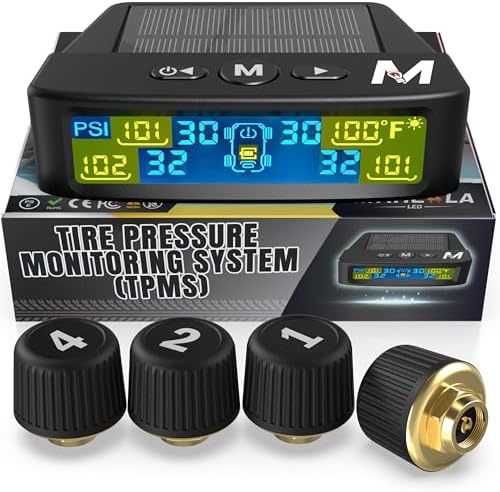
Marcala’s TPMS set of four sensors helps you monitor tire pressure and temperature in real time while driving, with updates every second. The bright color LCD uses auto-dimming for easy viewing, powered by dual solar and USB charging, and offers six alarm modes. Built for trailers, RVs, campers, trucks, and towing setups, the sensors support monitoring 1-4 wheels up to 98 PSI with IP67 waterproof protection.

The Milton S-693 straight foot dual head air chuck is designed for accurate tire pressure checks and quick, secure valve-core engagement with lock-on threads on both ends. With a 1/4" FNPT connection and a maximum 150 PSI rating, it’s built for use on inner duals and common vehicle tires, including trucks and RVs.
Load Index Basics
You’ll usually find the load index near the end of the sidewall size code. In P225/65R17 102H, the load index is 102. Federal tire rules define load rating as the maximum load a tire is rated to carry at a given inflation pressure, and tires must show maximum load rating on the sidewall.
| Load Index | Approx. Max Load Per Tire | Common Use |
|---|---|---|
| 91 | 1,356 lb | Many compact and midsize cars |
| 94 | 1,477 lb | Passenger cars and small crossovers |
| 100 | 1,764 lb | Crossovers and larger passenger vehicles |
| 104 | 1,984 lb | Heavier SUVs and light-duty applications |
Capacity Number Meaning
The load index is a code, not the actual weight printed in pounds. You compare the number with a load-index chart to find the rated capacity. For example, a load index of 94 equals 1,477 pounds per tire. That does not mean your vehicle can safely carry four times that amount as cargo, because vehicle weight, axle ratings, passengers, cargo, and tire pressure all matter.
Matching Vehicle Requirements
When you buy replacement tires, match the vehicle’s required tire size, load index, and speed rating. Check the driver-side door placard, the owner’s manual, or the tire information label. If the original tire shows 102H, do not install a lower load index or lower speed rating unless the vehicle manufacturer or a qualified tire professional confirms it is acceptable.
Warning: Never replace an LT tire with a P-Metric tire just because the size looks close. Passenger-car tires can carry less load in truck, MPV, bus, or trailer applications, and the wrong tire can reduce safety margins.
What Tire Speed Ratings Tell You
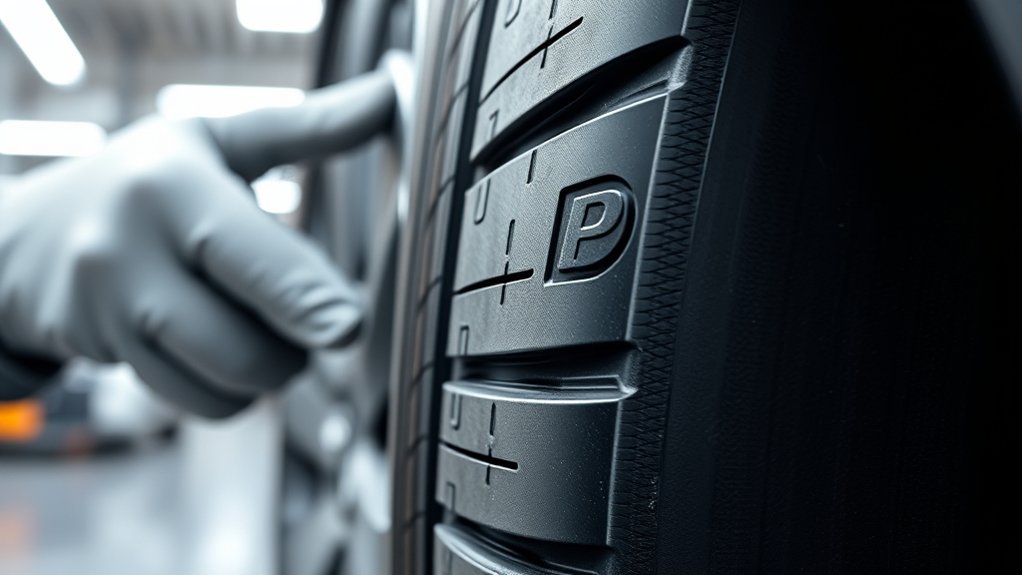
The speed rating is the final letter in many tire service descriptions. It shows the maximum speed capability the tire is designed to sustain under proper load, inflation, and operating conditions. It also relates to heat resistance, because heat buildup is one reason tires fail at high speeds.
| Speed Rating | Maximum Speed | Typical Fitment |
|---|---|---|
| S | 112 mph | Some cars, vans, and light trucks |
| T | 118 mph | Many passenger vehicles |
| H | 130 mph | Sedans, crossovers, touring tires |
| V | 149 mph | Performance-oriented vehicles |
| W | 168 mph | High-performance vehicles |
| Y | 186 mph | Ultra-high-performance vehicles |
For daily driving, the goal is not to buy the highest speed rating possible. The goal is to match or exceed the rating your vehicle requires. A tire with the wrong speed rating may affect handling, ride feel, and safety performance.
P-Metric vs. LT Tires
P-Metric tires and LT tires serve different jobs. P-Metric tires focus on passenger comfort, everyday handling, and efficiency. LT tires are made for light trucks, heavier loads, towing, and harsher service. They often use stronger construction and higher inflation pressures than passenger tires.
| Feature | P-Metric Tire | LT Tire |
|---|---|---|
| Main purpose | Passenger comfort and daily driving | Hauling, towing, and tougher service |
| Common vehicles | Cars, minivans, crossovers, small SUVs | Trucks, vans, heavy-duty SUVs |
| Ride feel | Usually smoother and lighter | Usually firmer and stronger |
| Load focus | Passenger and light cargo use | Higher loads and work use |
| Best choice | When your placard calls for P-Metric | When your placard or use case requires LT |
Some truck owners switch from P-Metric to LT tires for towing, off-road use, or heavier loads. That change can make sense, but it may also increase weight, road noise, stiffness, and required inflation pressure. Use the vehicle placard, owner’s manual, and professional fitment guidance before making that change.
[Products Worth Considering]

Secure your trailer or RV tires with a scissor-style wheel chock stabilizer that applies opposing force to help prevent wheel shift. It fits tight wheel gaps from 3.5 inches up to 12 inches and works for travel trailers, campers, fifth wheels, toy haulers, and heavy-duty trucks. The surface uses new electrophoretic technology to help prevent rust for reliable travel use.

Protect tire valves from water, dust, and sand to help prevent leaks and support safe driving. These universal stem caps install quickly by hand and feature durable aluminum alloy construction with an inner sealing ring for better air retention. Compatible with cars, SUVs, trucks, motorcycles, and bicycles for everyday convenience.
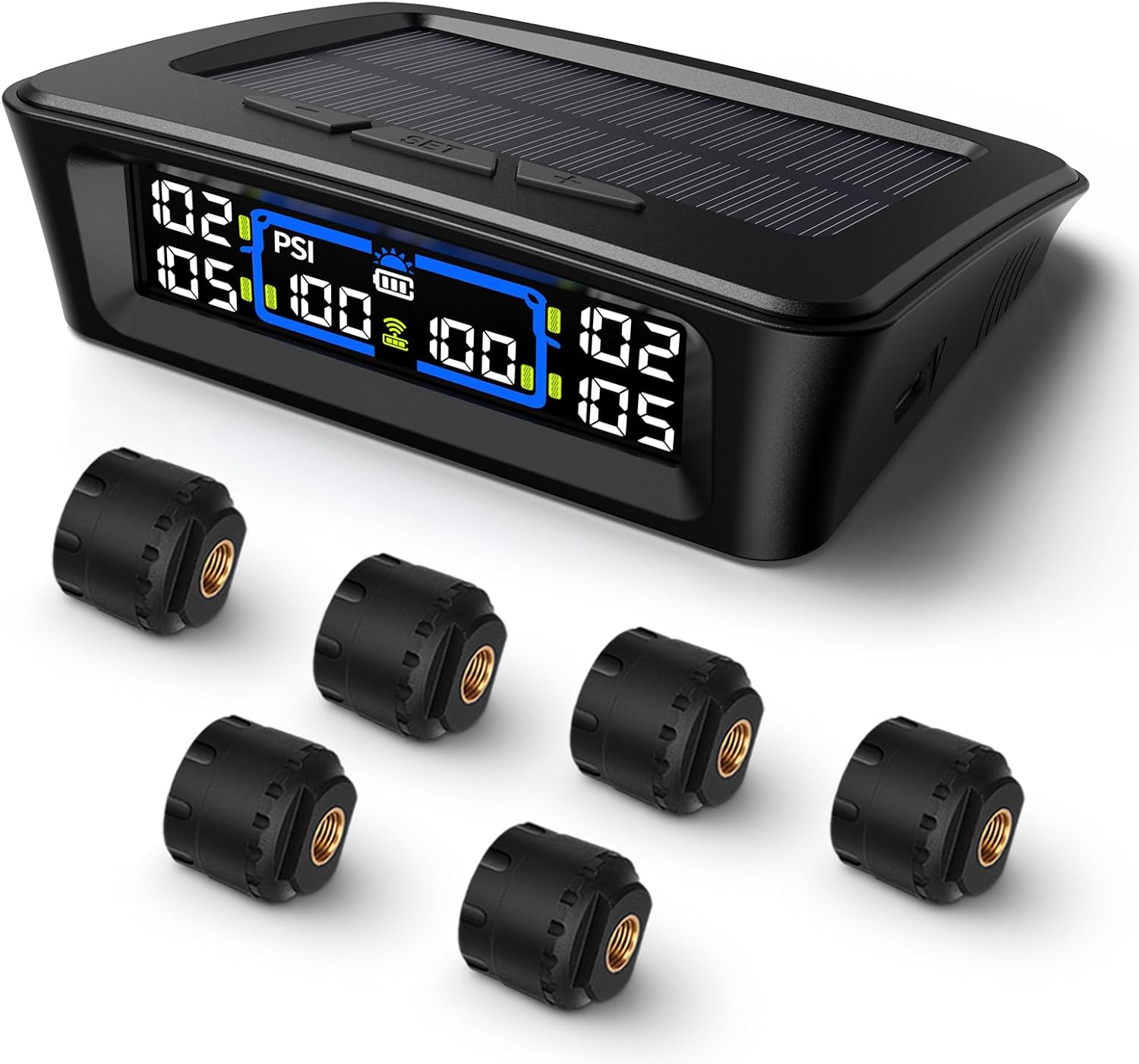
The Tymate TM12 RV TPMS delivers real-time tire pressure and temperature monitoring with a stable 433Hz display for safer long-distance driving. It supports simultaneous monitoring across vehicle and trailer zones, includes six alarm modes for pressure, temperature, leakage, battery, and signal loss, and features easy DIY installation with auto calibration. Power is supplied via USB-C charging or solar recharging, with a wide 0–144 PSI range and up to 50 ft signal coverage for RVs and towable trailers.
What If Your Tire Size Has No P?
Some passenger tires show a size such as 225/65R17 without the leading P. That does not automatically mean the tire is wrong. Many modern passenger tires use metric sizing without a P prefix. The important part is whether the tire’s size, load index, speed rating, and service description match your vehicle.
If your original tire says P225/65R17 and a replacement says 225/65R17, ask the tire dealer to confirm the load standard and fitment. Small code differences can matter, especially on SUVs, crossovers, and pickups.
Other Tire Letters You Might See
The P is only one possible tire prefix or service marking. Here are other common letters you may see:
- LT: Light truck tire, often used for towing, hauling, and heavier-duty service.
- ST: Special trailer tire, designed for trailer use, not passenger vehicles.
- T: Temporary spare tire, meant for limited temporary use.
- C: Commercial or cargo-focused tire marking in some sizing systems.
- No prefix: Metric tire size, often found on passenger vehicles.
Do not choose tires by prefix alone. The full size, load index, speed rating, tire type, and vehicle requirements all need to line up.
What Vehicles Use P-Metric Tires?
You’ll find P-Metric tires on many passenger-focused vehicles. They are common when the vehicle is built for everyday driving instead of constant heavy hauling.
Passenger Cars
Sedans, hatchbacks, coupes, and many wagons often use P-Metric tires. These tires usually support a comfortable ride, predictable steering, and lower rolling resistance than heavier-duty tire types.
- Daily commuting
- Highway driving
- Family and personal transportation
Minivans and Crossovers
Minivans and crossovers often use P-Metric tires because they carry passengers and moderate cargo rather than heavy work loads. Matching the original equipment size helps protect ride quality, braking behavior, and stability-control performance.
| Vehicle Type | Why P-Metric May Fit |
|---|---|
| Minivan | Comfort, passenger load, everyday cargo |
| Crossover | Car-like handling with SUV space |
| Small SUV | Balanced road manners and efficiency |
Light-Duty Trucks
Some half-ton pickups and light-duty trucks come with P-Metric tires from the factory. That setup can work well for commuting, light cargo, and normal highway use. If you tow heavy trailers, carry tools, or drive rough roads often, LT tires may be a better fit if your vehicle supports them.
- Choose P-Metric when your truck is mostly used on pavement and the placard calls for it.
- Choose LT only when the load, towing, or terrain demands justify it.
- Do not change tire type without checking load capacity and inflation requirements.
Where to Confirm the Correct Tire Size
The best source is not the tire you happen to have on the vehicle right now. A previous owner may have installed the wrong size. Instead, check these places:
- Driver-side door placard: Look for the Tire and Loading Information Label.
- Owner’s manual: Check the tire and wheel section.
- Vehicle manufacturer guidance: Use approved tire sizes and ratings for your trim.
- Qualified tire dealer: Ask them to confirm load index, speed rating, and inflation pressure.
Pro Tip: Take a photo of your door placard before shopping. It gives you the original tire size and cold tire pressure, so you do not have to rely only on the old tire’s sidewall.
Should You Choose P-Metric or LT Tires?
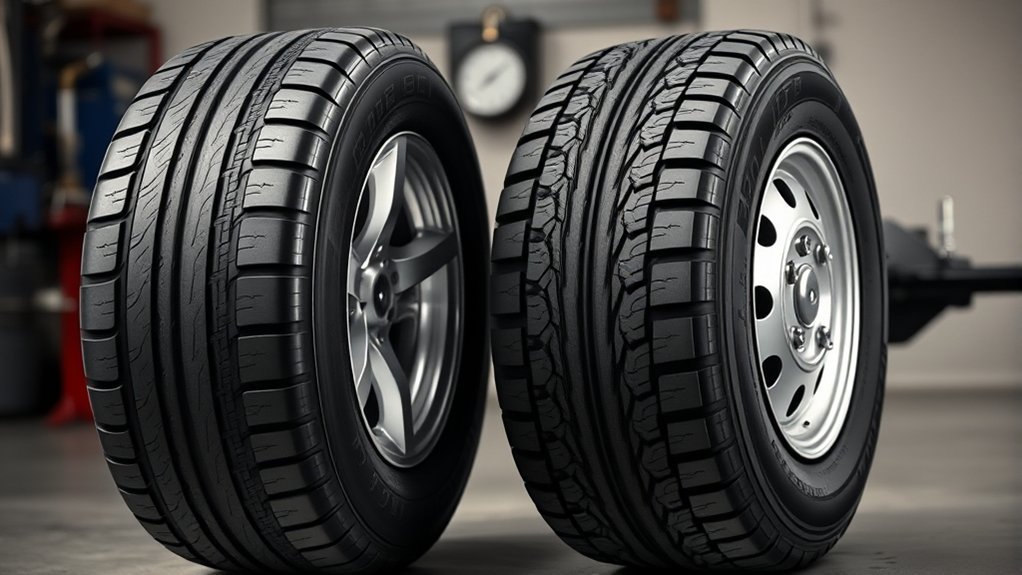
Choose P-Metric tires if your vehicle’s placard calls for them and your driving is mostly commuting, errands, highway travel, and light cargo. They usually give you the best balance of comfort, weight, and efficiency for passenger-focused vehicles.
Choose LT tires when your vehicle requires them or when your use case calls for stronger construction, higher load capacity, and tougher service. Towing, heavy payloads, job-site driving, and frequent rough-road use are common reasons to consider LT tires.
Federal tire selection rules require vehicle tire load limits to meet specific load requirements, and passenger-car tires used on some non-passenger applications can require load-rating adjustment. That is why the safest answer is simple: follow the vehicle manufacturer’s tire size and rating first, then adjust only with qualified guidance.
[Products Worth Considering]
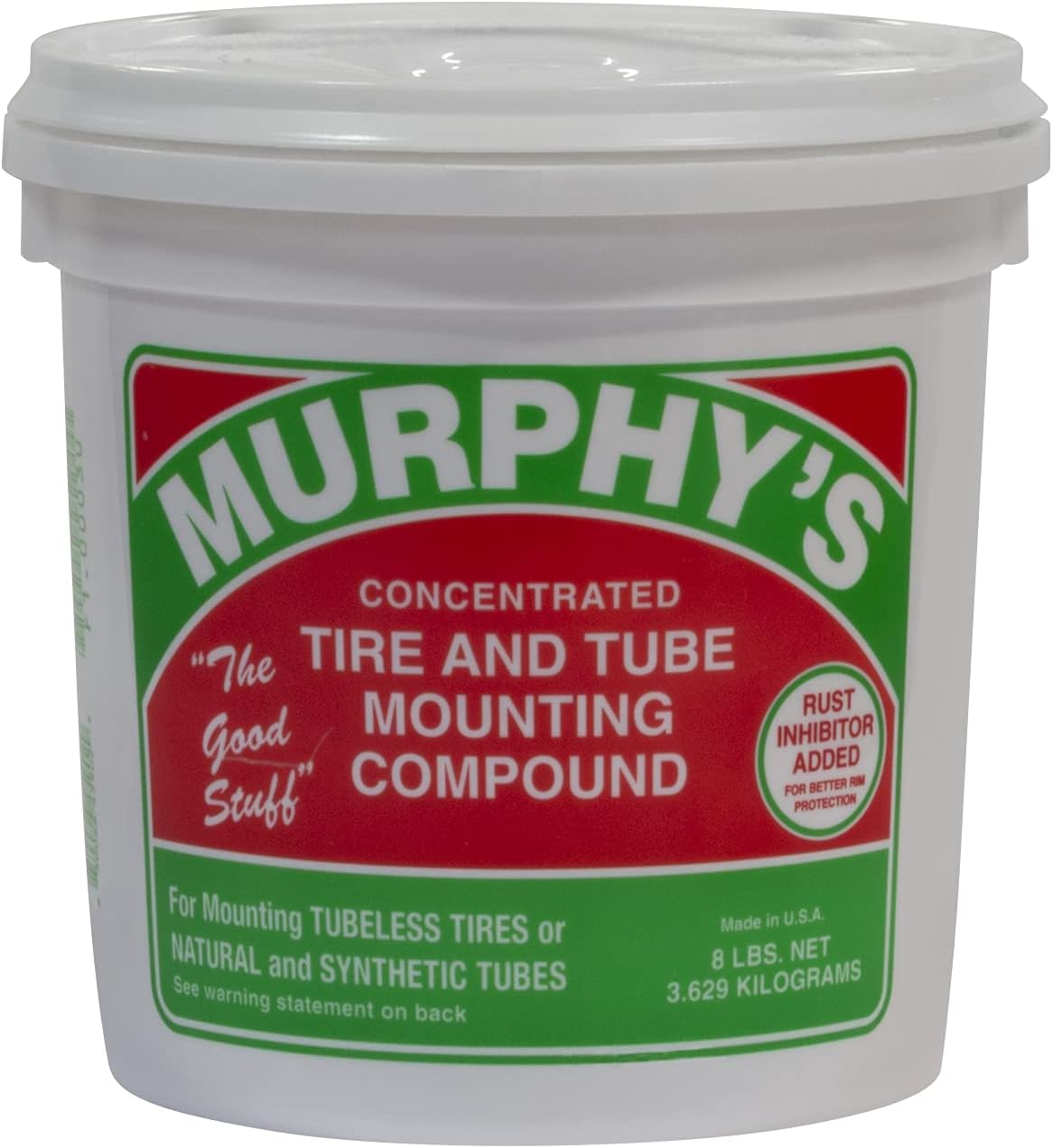
A concentrated tire and tube mounting compound designed to help simplify mounting rubber tires and tubes on passenger, semi truck, construction, and OTR applications. Its ultra-thick formula packs beads effectively and includes rust inhibitors to help protect against corrosion during use.

Protect your spare wheel with a waterproof, dustproof tire cover made to resist sun and harsh weather. The elastic band design makes it easy to install and remove without tools, while reinforced stitching helps it keep its shape. Available in multiple sizes, it fits common RV, trailer, Jeep, SUV, and truck spare tires.

Secure your vehicle during transport with this 4-pack of heavy-duty tire tie down straps designed for trailers and hauling. The ratchet system with flat hooks and D-rings helps you tension the straps quickly, while the wheel-friendly design protects tires. With high break strength and corrosion-resistant hardware, these straps provide reliable, confidence-inspiring tie-down security for cars, trucks, and UTVs.
Can You Mix P-Metric and LT Tires?
You should not mix P-Metric and LT tires on the same vehicle unless the vehicle manufacturer specifically allows it. Mixing tire types can create differences in sidewall stiffness, load capacity, traction, braking response, and handling feel. It can also affect all-wheel-drive and stability-control systems.
If you must replace only one damaged tire, match the remaining tires by size, type, load index, speed rating, tread pattern, and tread depth as closely as possible. For all-wheel-drive vehicles, check the owner’s manual because some systems require very close tread-depth matching.
Common Mistakes When Replacing P-Metric Tires
- Ignoring the load index: A tire can match the size but still carry too little weight.
- Dropping the speed rating: A lower speed rating may not meet the vehicle’s handling and heat requirements.
- Using sidewall max pressure as the target pressure: Use the vehicle placard pressure for normal driving, not the maximum pressure molded on the tire.
- Assuming LT is always better: LT tires can be stronger, but they may ride firmer and require different inflation pressure.
- Buying by size only: Always confirm size, load index, speed rating, tire type, and service description.
Frequently Asked Questions
What is better, LT or P-rated tires?
Neither is better for every vehicle. P-rated tires are usually better for comfort, efficiency, and everyday passenger use. LT tires are usually better for towing, hauling, and rougher service. Choose the type your vehicle requires.
Is P225 the same as 225?
Not always. Both may describe a 225 mm tire width, but the leading P identifies a P-Metric passenger-tire sizing category. A tire marked 225 without the P may follow a different metric sizing standard. Confirm the full service description before buying.
How do you tell if a tire is 6-ply or 10-ply?
Check the sidewall for load range and ply information. Load Range C is commonly called 6-ply rated, Load Range D is commonly called 8-ply rated, and Load Range E is commonly called 10-ply rated. Modern ply ratings describe strength category, not always the exact number of physical plies.
Is 35 psi good for tires?
It can be right for some vehicles, but you should not guess. Use the cold tire pressure listed on the driver-side door placard or in the owner’s manual. Check pressure monthly when the tires are cold.
Does P on a tire mean performance?
No. The P means P-Metric passenger tire. Performance tires may have higher speed ratings, sportier tread designs, or special compounds, but the P itself does not mean performance.
Can I put P-Metric tires on a truck?
Only if the truck manufacturer allows that tire type and the tire meets the required load index, speed rating, size, and inflation pressure. Some light-duty trucks come with P-Metric tires from the factory, but heavier towing or hauling may require LT tires.
Conclusion
The P on a tire means the tire uses a P-Metric passenger tire size. It helps you identify the tire category, but you still need to read the full sidewall code. Check the width, aspect ratio, wheel diameter, load index, and speed rating before buying replacements.
For the safest match, use your vehicle’s door placard or owner’s manual first. If you tow, haul, drive off-road, or plan to switch between P-Metric and LT tires, confirm the load capacity and inflation requirements with a qualified tire professional.
Sources
- NHTSA TireWise — tire buying, placard, inflation, tread, and safety guidance.
- 49 CFR 571.110 — tire selection, vehicle placard, load limits, and passenger-tire derating rules.
- 49 CFR 571.139 — federal sidewall marking, load rating, inflation, and light-vehicle tire requirements.
- The Tire and Rim Association — U.S. tire and rim standardization body and tire standards publications.