What Are Bulletproof Tires and How Do They Work?
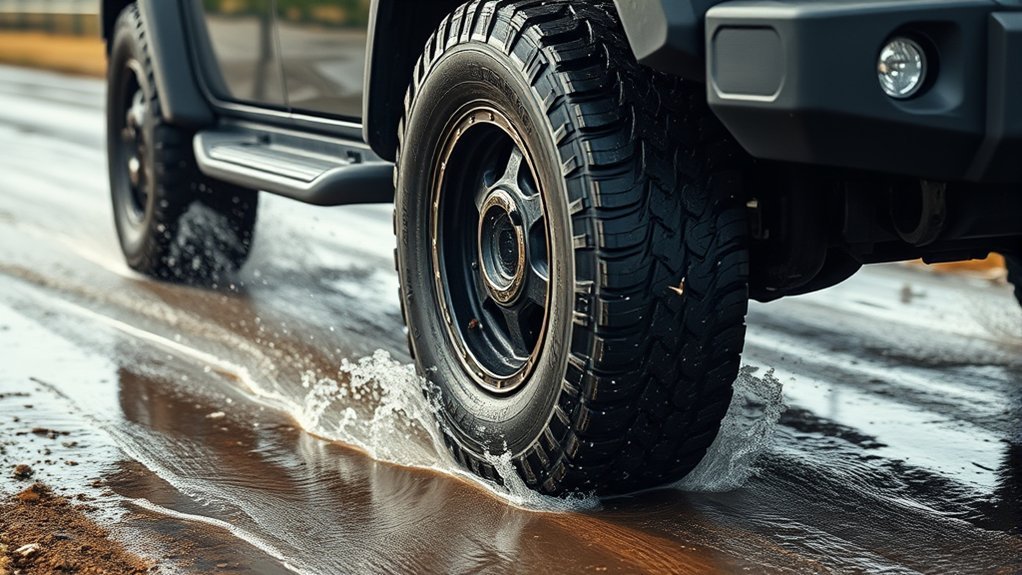
Bulletproof tires are specialized tire systems that let you keep driving after a puncture or other damage. You use them on armored, military, or high-risk vehicles because they combine reinforced carcasses, heat-resistant compounds, and internal support rings that carry the load when air pressure drops. They’re tougher than standard tires and more damage-tolerant than run-flats, but they add weight, reduce comfort, and still have limits. Keep going, and you’ll see how they’re built and maintained.
Key Takeaways
- Bulletproof tires are reinforced tire systems built to keep a vehicle mobile after puncture or damage.
- They use strong carcasses, heat-resistant compounds, and internal support rings to carry weight when air pressure is lost.
- Reinforced sidewalls help preserve tire shape, steering control, and directional stability during limited driving after damage.
- They are used on armored vehicles, military transports, and protection vehicles where stopping can create serious risk.
- They are heavier and stiffer than standard tires, which can reduce comfort and require regular inspection and proper inflation.
[Products Worth Considering]

This 100-piece set of snap-in tubeless tire valve stems is designed for standard 0.453 in (11.5 mm) rim holes and helps maintain reliable, steady tire pressure. Made with ozone-resistant rubber and brass cores, the valves are built for durability and long-term use. Easy to install by hand, they support safe driving and are suitable for cars, light trucks, trailers, and more.

Measure tire tread depth quickly and accurately with this LUMITECO dial gauge that reads in 1/32" increments up to 14/32". The color-coded green/yellow/red zones make it easy to judge tire wear and know when replacement is needed. A rugged, compact design with a protective pouch helps keep the gauge ready for use on cars, trucks, motorcycles, and more.

Monitor tire tread wear with a smart, color-coded depth gauge that shows clear condition ranges at a glance. The bar is range marked for fast, easy readings, helping you maintain safer traction and performance. Each gauge is portable with a pocket clip, and the set includes 20 units for daily use and sharing.
What Bulletproof Tires Are
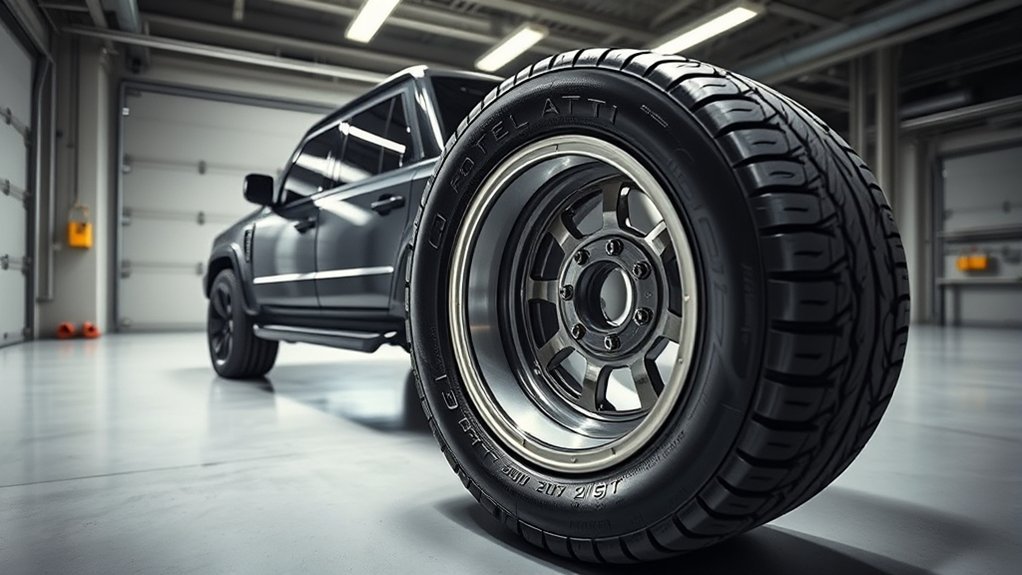
Bulletproof tires are specialized tire assemblies designed to keep a vehicle mobile after damage from bullets, shrapnel, or punctures. You should think of them as engineered systems, not ordinary rubber products.
Bulletproof tires are engineered assemblies that help keep vehicles mobile after bullets, shrapnel, or puncture damage.
They combine reinforced carcasses, heat-resistant compounds, and structural support elements that improve puncture tolerance and load handling. In tire technology, these designs prioritize controlled deformation, abrasion resistance, and compatibility with heavy vehicles or security platforms.
You’ll also find that their safety features focus on preserving steering response and maintaining tire integrity under extreme stress. Manufacturers test them against ballistic threats, road hazards, and high-speed operation to verify performance limits.
Unlike standard tires, they’re built for specialized use, where reliability matters more than comfort or low rolling resistance. When you evaluate bulletproof tires, you’re reviewing a purpose-built component that integrates material science, mechanical strength, and protective engineering into one assembly.
How They Stay Mobile
You rely on reinforced sidewalls to preserve tire geometry under load and prevent immediate collapse after damage.
You also use run-flat support rings to carry the vehicle’s weight when internal pressure drops, maintaining controllable motion.
This design lets you keep moving after a puncture, though only for a limited distance and at reduced speed.
Reinforced Sidewalls
Reinforced sidewalls use layered rubber compounds, aramid, or steel inserts to limit sidewall collapse after a puncture, so the tire keeps its shape under load.
You rely on reinforced materials embedded in the sidewall construction to resist lateral buckling when air pressure drops. These stiffness layers spread vehicle weight across a larger contact zone, reducing localized deformation at the bead and shoulder.
That controlled flex lets you keep steering response and directional stability longer than a standard tire can. Because the carcass still carries load, the sidewall doesn’t fold sharply, which helps prevent rim contact with the road surface.
In practice, the design trades some ride compliance for mobility, giving you a narrow operating window for controlled driving after damage.
Run-Flat Support Rings
Run-flat support rings take the load-management idea a step further by adding a rigid internal structure inside the tire cavity. You rely on this ring to carry vehicle weight when pressure drops, while the outer carcass keeps alignment. In run flat technology, the ring’s geometry, material modulus, and heat resistance determine how evenly stress distributes. This improves tire durability by limiting casing deformation and reducing rim contact.
| Component | Function | Effect |
|---|---|---|
| Ring core | Supports load | Stabilizes tread |
| Interface layer | Manages friction | Reduces heat |
| Tire casing | Contains assembly | Preserves shape |
| Wheel rim | Backup support | Prevents collapse |
| Materials | High stiffness | Boosts durability |
You get controlled mobility because the structure maintains usable rolling geometry under loss of inflation.
Mobility After Puncture
After a puncture, the tire can still roll because its internal structure takes over the load path and preserves the contact geometry.
You keep moving because reinforced sidewalls or support rings carry vertical load when air pressure drops. The tread then maintains enough shape to transmit steering and braking forces, so you don’t lose control immediately.
This design doesn’t eliminate damage, but it extends usable distance and speed long enough for safe service access. High puncture resistance reduces the chance of sudden collapse, while tire durability determines how long the carcass can operate under deflated conditions.
You should still limit speed and distance, since heat buildup and flexing accelerate wear.
Mobility after puncture depends on structural support, not restored inflation, so performance remains temporary and controlled.
Key Components of Bulletproof Tires
You’ll find that bulletproof tires rely on reinforced tire materials to increase puncture resistance, heat tolerance, and structural stiffness under load.
You’ll also see run-flat support rings inside the assembly, which carry the vehicle’s weight when air pressure drops and help maintain controlled mobility.
Together, these components define the tire’s ability to survive damage while still operating under severe conditions.
Reinforced Tire Materials
Reinforced tire materials give bulletproof tires their load-bearing strength, puncture resistance, and structural stability under extreme impact.
You’ll usually find advanced composites layered with high-tensile steel, aramid, or glass fibers, each chosen for specific stress paths and heat control. These materials spread force across the carcass, limiting localized deformation and preserving tire durability.
- A woven fiber matrix wraps the inner structure like a dense armor mesh.
- Stiff composite plies resist cuts from sharp debris and ballistic fragments.
- Heat-stable rubber compounds maintain integrity during sustained loading.
Run-Flat Support Rings
Beyond reinforced tire materials, bulletproof tires also rely on run-flat support rings to keep the vehicle mobile after severe pressure loss or sidewall failure.
You’ll find these rings mounted inside the tire, where they bear the vehicle’s load when air support disappears. In run flat technology, the ring prevents rim contact with the road, limiting heat buildup, bead unseating, and immediate collapse.
You can keep driving at reduced speed for a short distance, which preserves control and buys time for repair or extraction.
Ring geometry, compound stiffness, and fitment directly affect tire durability, ride harshness, and load capacity.
If you exceed speed or distance limits, the system’s protective value drops quickly, so you should treat it as a controlled mobility solution, not a permanent substitute.
Bulletproof Tires vs. Run-Flat Tires
Although people often lump them together, bulletproof tires and run-flat tires solve different problems. You should treat bulletproof tires as armored assemblies that resist puncture, ballistic damage, and structural collapse.
Run-flat tires, by contrast, keep supporting the vehicle after air loss, so you retain limited mobility. In practice, your choice depends on tire durability and the safety features you need, not on a simple upgrade path.
- A steel-plated wheel rolling through shattered glass.
- A deflated sidewall still holding a sedan upright.
- A convoy wheel absorbing impact while staying intact.
A bulletproof tire adds layered reinforcement, heavy inserts, and often a thicker carcass, which raises mass and stiffness.
Bulletproof tires add layered reinforcement, heavy inserts, and thicker carcasses, increasing mass and stiffness.
A run-flat tire relies on reinforced sidewalls or support rings, preserving shape long enough for controlled driving. You’ll notice bulletproof designs prioritize protection first, while run-flats prioritize continuation after pressure loss.
Where Bulletproof Tires Are Used
Bulletproof tires are typically used wherever vehicle immobilization could create a security or mission risk. You’ll most often see them on armored transport, convoy support vehicles, and tactical fleets in military applications, where mobility must continue under threat.
You also encounter them in civilian usage for cash-in-transit vans, executive protection vehicles, and diplomatic transport, where delay can expose passengers or cargo. In each case, you’re choosing a tire system that supports controlled movement after hostile action or severe damage, preserving route continuation and evacuation capability.
You may also find them on specialized law enforcement vehicles that operate in high-risk zones and need predictable mobility during incidents. Their placement reflects a narrow operational need: you use them when stopping isn’t acceptable and when vehicle uptime directly affects security outcomes.
Outside those environments, the added weight and cost usually don’t justify deployment, so you won’t see them on ordinary passenger vehicles.
[Products Worth Considering]

The SAFELIFE dial tire tread depth gauge measures tread depth in 1/32 inch increments with clear, easy-to-read 2-inch dial face. Color zones using a traffic light system help you quickly judge whether tread is low, marginal, or ample for safer driving. Built with a durable zinc cast body and a metal detect probe for precise, comfortable use across cars, motorcycles, trucks, and buses.

Upgrade your Toyota’s wheels with durable aluminum alloy valve stem caps that help protect valve cores from corrosion and direct exposure to road grime, clay, water, and snow. Rubber rings improve sealing to help prevent air leakage and maintain stable tire pressure for safer driving. These caps are easy to install or remove without tools and add a unique, stylish look to your car.

This tire inflator with pressure gauge delivers long-lasting performance with a durable rubber-protected gauge and sturdy build. The longer hose and 360 swivel air chuck help you seal the valve securely and keep your hands free while measuring, inflating, or deflating. It’s battery-free for reliable use and provides ±2 PSI accuracy in the mid-range for most typical tires, with universal compatibility for 1/4 NPT compressor outputs.
What Bulletproof Tires Can’t Handle
Even the toughest run-flat tire has hard limits, and you can’t treat it as immune to all forms of damage. You still face bulletproof limitations when sharp debris cuts the sidewall, when a puncture exceeds the self-sealing layer, or when impacts deform the rim beyond recovery.
In extreme conditions, heat buildup accelerates compound breakdown, and repeated flexing can tear internal reinforcement. You also can’t expect protection against sustained overload, which can separate plies and distort the tread package.
- A jagged metal shard slicing through a shoulder wall
- A curb strike that pinches the bead against the wheel
- A scorching road surface causing visible sidewall blistering
These failures usually happen faster than you’d predict because the tire’s armor is engineered for specific threats, not universal survivability. If you push beyond those design envelopes, you’ll need replacement, not repair.
How They Affect Vehicle Performance
Because reinforced tires add mass and stiffness, they can change how your vehicle accelerates, brakes, and responds to steering inputs. You’ll usually notice a measurable performance impact because the added unsprung weight increases rotational inertia and demands more energy to spin. That can slow launch response and slightly reduce fuel efficiency.
The stiffer sidewalls also alter handling dynamics: they limit flex, which can improve stability under load, but they often transmit more road texture and reduce compliance over bumps. During braking, the tire’s rigidity may help maintain contact patch shape, yet the extra mass can lengthen stopping distances if the rest of the system isn’t tuned for it.
In cornering, you may feel sharper turn-in at first, followed by a less forgiving breakaway when grip limits are reached. Overall, these tires trade responsiveness and ride comfort for durability, so your vehicle’s behavior becomes more controlled, but less agile, in everyday driving situations.
How to Choose the Right Tires
Choosing the right bulletproof tires starts with matching the tire’s construction to your vehicle’s weight, intended use, and operating environment.
You should compare tire types by sidewall reinforcement, tread depth, and ballistic rating, then verify terrain compatibility for pavement, gravel, mud, or mixed routes.
If you drive a heavier platform, select a design with higher load capacity and heat resistance. For urban security use, prioritize steering precision and road noise control; for off-road deployment, choose deeper tread blocks and stronger shoulder protection.
- A convoy vehicle rolling over broken asphalt with minimal deformation.
- A tactical SUV crossing wet gravel while maintaining stable grip.
- A reinforced tire absorbing impact from sharp debris without visible failure.
You’ll also want to confirm that wheel dimensions and speed ratings align with the tire specification.
Compare manufacturer data sheets, not marketing claims, so you can make a defensible choice based on measurable performance and mission requirements.
How to Maintain Bulletproof Tires
To keep bulletproof tires performing as designed, you need to inspect them on a fixed schedule and document wear, pressure, heat exposure, and impact damage after each use.
During each tire inspection, check the tread, sidewalls, bead area, and any embedded reinforcement for cuts, deformation, delamination, or exposed composite material. Measure inflation pressure with a calibrated gauge and keep it within the manufacturer’s specified range; pressure maintenance is critical because underinflation increases heat buildup, while overinflation reduces contact stability.
Rotate tires when service intervals require it, and replace valve stems and seals if they show cracking or leakage. After high-load or high-speed operation, let the tires cool before rechecking pressure and surface condition.
Clean off debris, oils, and corrosive contaminants with approved agents only. If you detect persistent vibration, uneven wear, or repeated air loss, remove the tire from service and have it evaluated by a qualified technician immediately.
Frequently Asked Questions
How Much Do Bulletproof Tires Cost?
You’ll usually pay $200-$800 per tire for bulletproof tire options, while specialized armored setups can exceed $1,500. Your tire safety features, construction, and vehicle compatibility drive pricing, installation, and maintenance costs considerably.
Can Bulletproof Tires Be Repaired After Damage?
Sometimes, yes: you can repair minor punctures, but about 70% of damaged run-flat armored tires need replacement. You should perform damage assessment and follow strict tire maintenance protocols, because sidewall or belt compromise usually can’t be safely fixed.
Do Bulletproof Tires Require Special Rims?
Yes, you’ll often need special rims because tire construction and safety features depend on bead-locking, load support, and run-flat compatibility. You can’t just mount them on standard wheels; you’ll need manufacturer-approved hardware.
How Long Do Bulletproof Tires Last?
You’ll typically get 50–100 miles after puncture, but normal tire longevity can still reach 20,000–40,000 miles with maintenance. You’ll notice performance impact from heavier construction, which raises heat and wear under aggressive driving.
Are Bulletproof Tires Legal for Civilian Vehicles?
Yes, you can usually install them, but you’ll need to check local legal regulations. You should consider civilian safety, because some jurisdictions restrict tire modifications, require certification, or limit use on public roads.
Conclusion
In the end, bulletproof tires give you mobility when ordinary tires would fail, but they are not invincible. You should treat them as a specialized system: strong sidewalls, reinforced inserts, and heat-resistant materials keep you moving after damage. Ask yourself—what is protection worth if you can’t keep rolling? Choose them for the right mission, maintain them carefully, and remember that even the toughest tire has limits.
[Products Worth Considering]

Accurately measure tire tread depth with a calibrated gauge marked from 0 to 1 inch in 1/32 inch increments. The color-coded bar helps you quickly identify tread condition ranges, supporting safe driving for trucks, motorcycles, automobiles, and passenger vehicles.

Measure tyre tread depth precisely with a digital gauge that reads in both MM and inches, helping you monitor safe driving conditions. The large LCD screen is easy to operate, and the compact tool fits for cars, trucks, and motorcycles. It provides high accuracy with a 0-25.4mm range and includes a 1-year warranty for added peace of mind.

This Dr.Roc tire valve stem puller tools set helps install or remove snap-in tubeless valve stems safely and efficiently. It includes ozone-resistant EPDM snap-in valve stems, a valve stem installer, and a valve core remover for quick core removal or installation during tire service. Designed for reliable tubeless tire repair on motorcycles, ATVs, lawn equipment, cars, and trucks.

Related Articles
Can You Drive on Tires With Cords Showing?
Hoping to keep driving on tires with cords showing, but what’s really at risk may surprise you.
Read More
What Is Hydroplaning? Causes and How to Prevent It
Glide into the surprising causes of hydroplaning and the simple ways to stop it before your tires lose grip.
Read More
Can You Drive on a Tire With a Bulge? Safety Risks
Can you drive on a tire with a bulge, or is a sudden blowout lurking around the corner?
Read More