Firestone vs Michelin: Which Tire Is Worth It?
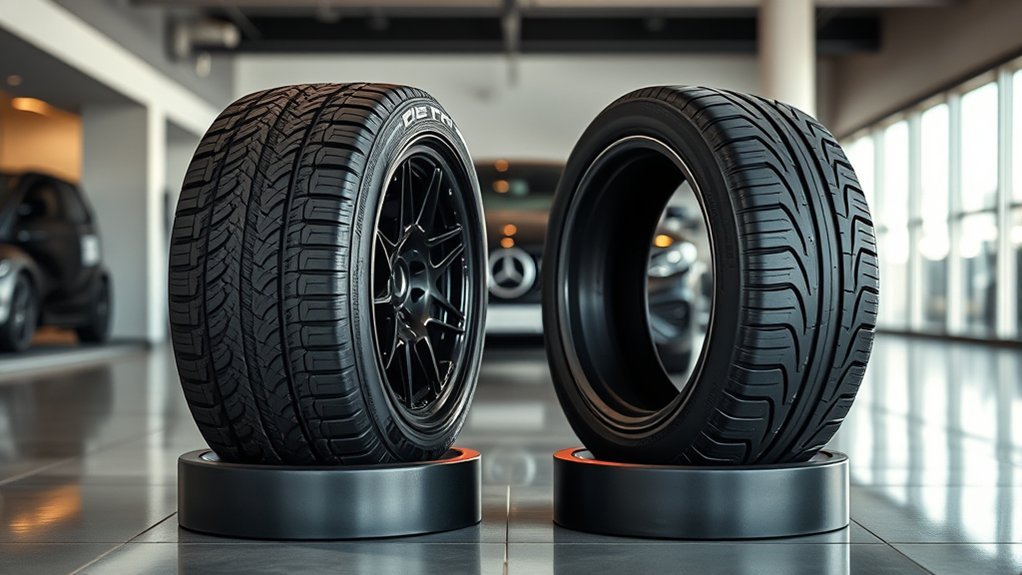
If you’re choosing between Firestone and Michelin, Firestone is the better pick for tighter budgets, with prices around $80 to $150 and solid everyday commuting performance. Michelin costs more, usually $120 to $250, but you get longer tread life, stronger wet and winter grip, lower road noise, and better fuel economy. If you drive more miles or face harsh weather, Michelin can be worth it, and there’s more to compare below.
Key Takeaways
- Firestone is cheaper upfront, making it a better fit for tighter budgets.
- Michelin costs more, but its longer tread life can reduce replacement frequency.
- Michelin offers better wet, snow, and overall road performance than Firestone.
- Michelin’s lower rolling resistance can improve fuel economy and offset some cost.
- Firestone suits moderate, lower-mileage driving; Michelin is better for high-mileage or harsh conditions.
[Products Worth Considering]

LiQuiTube Premium Heavy Duty Tire Sealant provides permanent flat tire protection to help maintain proper air pressure while sealing punctures and leaks. It seals bead, rim, and porosity weathering leaks and helps prevent flats in heavy ply industrial tires. Designed for versatile use on trailers and off-road equipment, it can be installed in tubeless tires and also inside tubes.
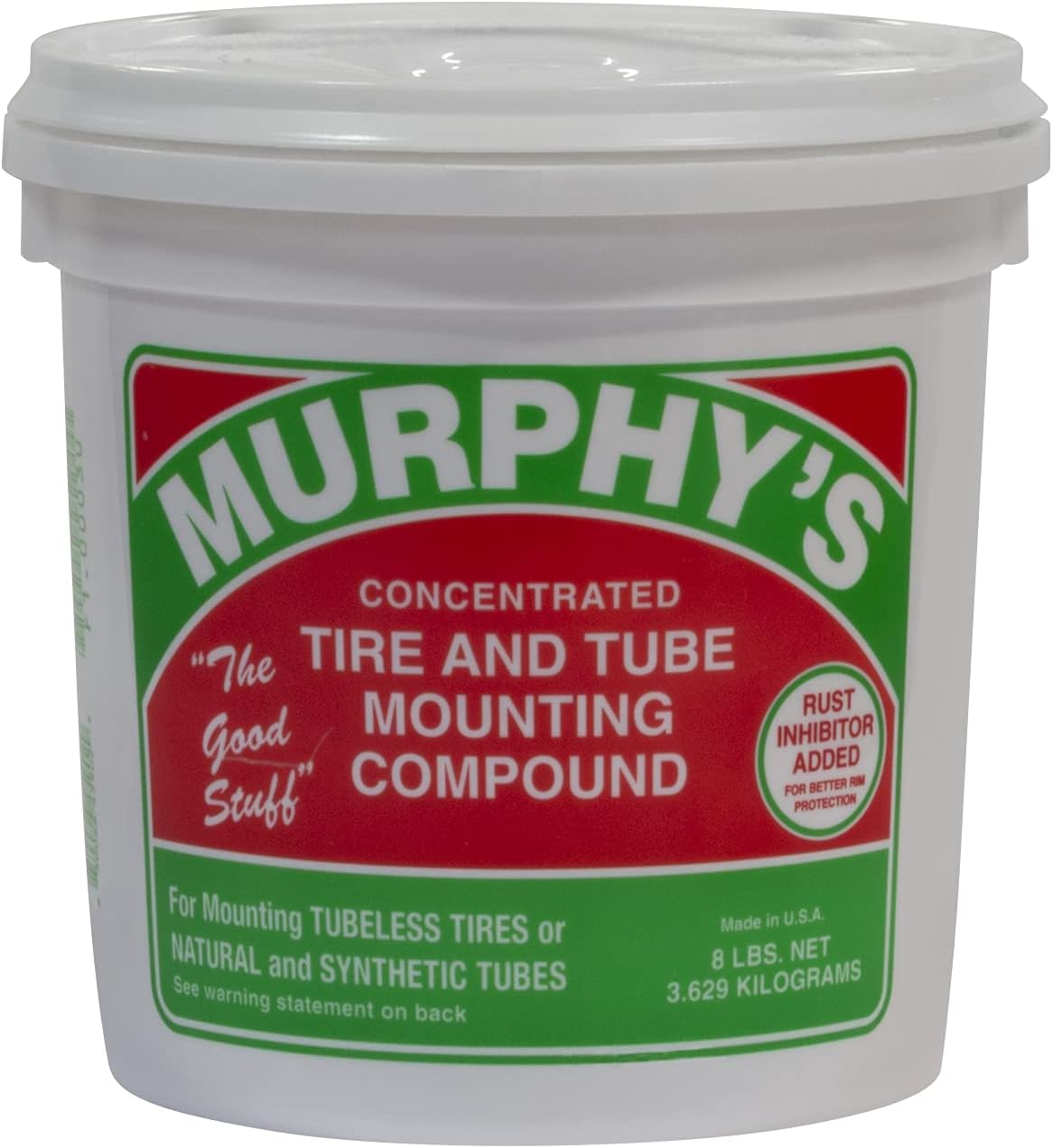
A concentrated tire and tube mounting compound designed to help simplify mounting rubber tires and tubes on passenger, semi truck, construction, and OTR applications. Its ultra-thick formula packs beads effectively and includes rust inhibitors to help protect against corrosion during use.

Keep your tires properly inflated with this analog VONDIOR tire pressure gauge, designed for fast, easy readings without batteries. The swiveling, two-axis hose and large glow dial help you measure at any tire angle with instant visibility. Built with a protective rubber shield, it supports durable, low-maintenance use for cars and trucks.
Firestone Vs Michelin: Key Differences
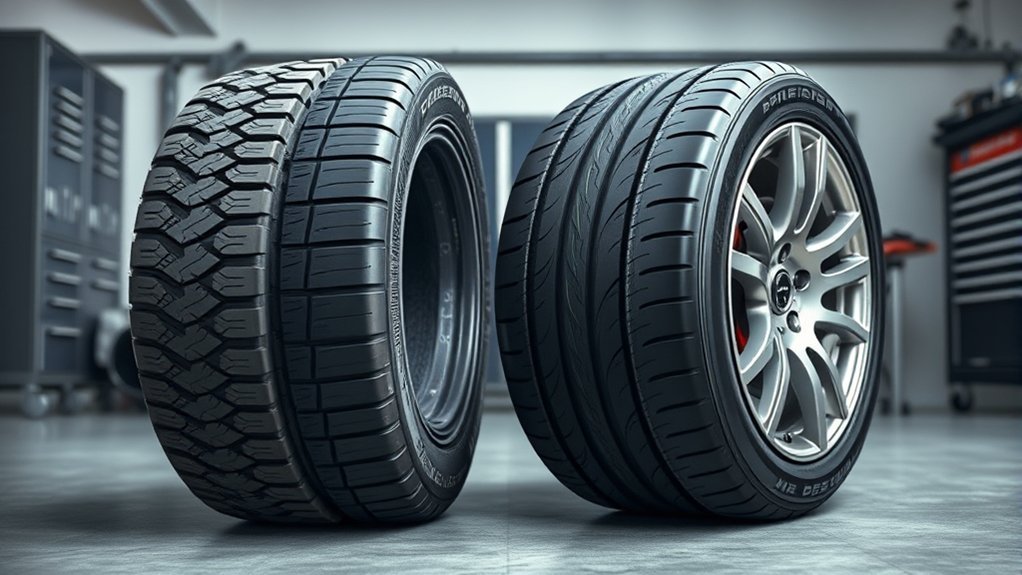
When you compare Firestone vs Michelin tires, the biggest differences are longevity, traction, warranty coverage, and price.
You’ll notice Firestone usually fits a tighter budget, with pricing from $80 to $150, while Michelin often costs $120 to $250. That gap matters in tire selection, but so do tread life and fuel economy.
Firestone typically lasts 60,000 to 65,000 miles, yet Michelin can exceed 80,000 miles and may improve fuel economy by 0.5 MPG.
Firestone typically lasts 60,000 to 65,000 miles, while Michelin can exceed 80,000 and boost fuel economy.
On many road conditions, Michelin’s EverGrip design delivers stronger wet-weather grip and better snow traction than Firestone’s Snow Traction Claw. That can make Michelin’s ride quality feel more consistent in winter weather.
Firestone still gives you a solid option if you want lower upfront cost, but Michelin often offers better long-term value because its durability and efficiency can offset higher pricing.
Tread Life and Warranty Comparison
Tread life is one of the clearest differences between Firestone and Michelin, and it can shape how much you spend over time. Firestone tires usually deliver 60,000 to 65,000 miles, while Michelin tires can exceed 80,000 miles, showing stronger durability. That gap matters when you compare mileage warranties and replacements over the life of the tire.
| Brand | Typical tread life | Mileage warranty |
|---|---|---|
| Firestone | 60,000-65,000 miles | 55,000-60,000 miles |
| Michelin | 80,000+ miles | Up to 70,000 miles |
Over 240,000 miles, you may need four Firestone replacements versus three Michelin replacements, so Michelin can lower your long-term investment. Firestone’s warranty coverage may leave more exposure to unexpected tire damage costs, while Michelin’s more generous terms help protect your budget. Performance testing backs Michelin’s longer-lasting tread life, making it the stronger value if you want fewer replacements and steadier coverage.
Wet, Dry, and Winter Performance
Beyond how long they last, Firestone and Michelin also separate on everyday grip and seasonal confidence. In wet and dry driving, Michelin gives you stronger traction, steadier braking, and better control, while Firestone feels adequate but less sure in heavy rain. That difference shows up most when you push cornering capabilities or drive luxury vehicles that demand precise response.
Michelin delivers stronger wet and dry grip, steadier braking, and more confident control than Firestone.
- Michelin’s Tread Design helps it stay composed on wet and dry pavement.
- Firestone’s Snow Traction Claw aids light winter use, but it isn’t built for severe snow.
- Michelin severe snow tires carry the Three Peak Mountain Snowflake rating for stronger winter performance.
- Michelin’s advanced acoustic technology also keeps road noise lower and Ride Comfort higher over time.
If you face mixed weather, Michelin’s balanced grip and quieter ride make it the more capable all-season choice, especially when conditions turn harsh and you want dependable performance.
[Products Worth Considering]

The Continental Grand Prix 5000 is an allround road bike tire engineered for faster rolling, improved ride comfort, and enhanced puncture protection. It features a Vectran Breaker cut-protection layer, Lazer Grip micro-profile tread for confident cornering control, and Active Comfort Technology to damp vibration for smoother rides. BlackChili compound optimizes grip and speed for everyday performance and long-lasting confidence.

Protect tire valves from water, dust, and sand to help prevent leaks and support safe driving. These universal stem caps install quickly by hand and feature durable aluminum alloy construction with an inner sealing ring for better air retention. Compatible with cars, SUVs, trucks, motorcycles, and bicycles for everyday convenience.

Upgrade your vehicle’s style with sparkling rhinestone valve caps that add a unique luxury look. Built with an O-ring seal and rotating thread design, they help prevent air leakage while keeping dust and road grime out. The universal fit works on standard American tire valves for cars, trucks, SUVs, and motorcycles, and installs easily without special tools.
Which Tire Saves More on Gas?
On fuel economy, Michelin has the edge: its lower rolling resistance gives you about 0.5 MPG more than Firestone, which can translate to roughly $42 in annual savings for a driver covering 15,000 miles.
That gap comes from Michelin tires’ advanced technology, which improves fuel efficiency without sacrificing everyday usability. Firestone tires often cost less upfront, but their higher rolling resistance can mean slightly weaker gas savings over time.
If you drive a lot, the difference adds up: over an 80,000-mile lifespan, Michelin can save you about $224 in fuel costs versus Firestone tires. That helps offset higher upfront costs and improves long-term value, especially if you’re a high-mileage driver.
Durability also matters here, because fewer replacements and steadier fuel economy can reduce total ownership costs.
If you want the lowest purchase price, Firestone may appeal, but Michelin delivers stronger fuel efficiency and better long-term savings overall.
Which Firestone Or Michelin Tire Fits You?
Which tire fits you best depends on how, where, and how much you drive. If you want dependable daily driving on a budget, Firestone often makes sense. Its $80 to $150 price range suits cost-conscious buyers, and its 60,000 to 65,000-mile lifespan can cover moderate annual mileage.
If you drive less than 15,000 miles a year and mostly in dry regions, Firestone may be the right choice.
- Firestone: lower upfront cost, solid reliability
- Michelin: higher prices, longer tread life
- Michelin: better traction in wet weather and snow conditions
- Firestone: practical for everyday commuting; Michelin: better for varied climates
If your driving style includes frequent highway use, heavy loads, or harsh weather, Michelin’s 80,000+ miles, Road Hazard protection, and Three Peak Mountain Snowflake rating may be worth it.
You’ll pay more, but you get stronger safety, durability, and better traction. For premium vehicles or demanding climates, Michelin is often the tire best matched to your needs.
Frequently Asked Questions
Which Is Better, Michelin or Firestone Tires?
Michelin’s usually better for your tire performance, tread durability, and tread life, though Firestone wins on price comparison. You’ll notice stronger handling characteristics, quieter noise levels, better all season capabilities, and better fuel efficiency with Michelin.
What Are the Top 3 Best Tire Brands?
Michelin, Bridgestone, and Goodyear lead: you’ll compare tire longevity comparisons, all season tire performance, and performance tire ratings. Next, weigh tire warranty differences, tire noise levels, eco friendly tires, off road tire options, and budget tire choices.
Are Michelin Tires Really Worth the Money?
Yes, you’ll usually find Michelin tires worth the money: Michelin durability, Michelin performance, Michelin technology, and Michelin warranty often beat cheaper options, and Michelin reviews, comparisons, innovations, tread, price, and customer satisfaction support that value.
Which Tire Brand Is Better Than Michelin?
You’ll rarely find a brand clearly better than Michelin; you should compare tire longevity, tread patterns, performance ratings, customer reviews, price comparison, weather performance, tire warranties, brand reputation, eco friendly options, and maintenance tips.
Conclusion
When you compare Firestone and Michelin, you’re really weighing upfront value against long-term performance. Firestone can save you money now, and some models still deliver solid everyday traction. Michelin usually costs more, but you often get longer tread life, better wet and winter grip, and better fuel efficiency. If price makes you hesitate, remember that the cheaper tire isn’t always the cheaper choice over time. Pick the one that matches how you drive.
[Products Worth Considering]

This compact tire repair kit includes a heavy-duty universal plug kit for fast roadside puncture repairs in most tubeless tires. It comes with a durable MOLLE storage pouch so you can keep the tools organized and easily store them in your UTV, ATV, truck, motorcycle, RV, or overlanding gear. Ideal for getting back on the road, trail, or job site with confidence.

MORNYRAY universal tire covers help protect RV, truck, SUV, trailer, and camper tires from sun, rain, and snow with waterproof, anti-UV fabric and a soft inner lining. Elasticized bands and windproof buckle design help keep covers securely in place for easy on and off use. The set includes a storage bag for convenient handling when not in use.

Add style while helping protect your tire valve stems with handmade crystal rhinestone caps and a durable plastic insert. These caps resist corrosion and help keep out rain, snow, and muddy water, extending tire life. Textured non-slip design makes them easy to grip for quick install and removal when checking tire pressure.

Related Articles
BFGoodrich vs Goodyear: Which Tire Brand Is Better?
I compare BFGoodrich vs Goodyear to reveal which tire brand wins for traction, comfort, and value—before you buy.
Read More
Hankook vs Goodyear Tires: Which Should You Buy?
Torn between Hankook and Goodyear tires? Discover which one delivers the best value, performance, and longevity before you buy.
Read More
Best Achilles Tires 2026: Budget Tire Picks for Dry and Wet Roads
You need tires that balance cost, safety and real-world performance, especially when you drive a truck or SUV on mixed dry and wet roads.…
Read More