
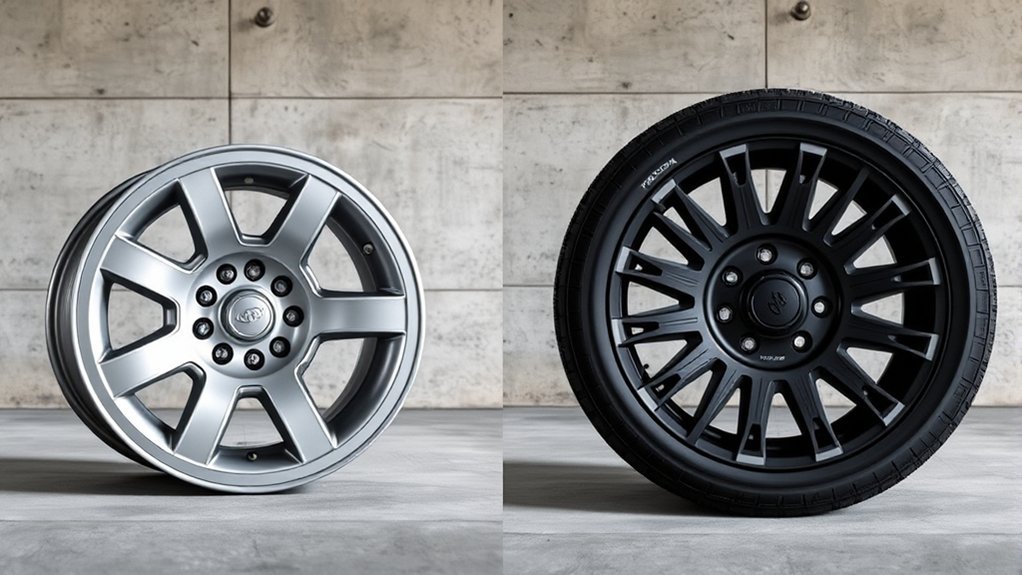
Stock wheels are usually the safest, simplest choice for a third-generation Toyota Tacoma because Toyota selected their size, offset, load capacity, brake clearance, and lug hardware as one system. Aftermarket wheels can improve appearance, create room for a different tire setup, or reduce wheel weight, but only when every fitment detail matches your exact 2016–2023 Tacoma. The best choice depends on how you drive, the tire you want, and whether you value factory predictability or customization.
Quick Answer
Keep the stock wheels if you want proven fitment, predictable ride quality, and the lowest installation risk. Choose aftermarket wheels when you need a specific width, offset, weight, strength rating, or style. For a third-generation Tacoma, verify the bolt pattern, center bore, M12×1.5 lug hardware, offset, brake clearance, wheel load rating, and tire clearance before buying.
Key Takeaways
- Third-generation Tacomas use factory wheel diameters of 16, 17, or 18 inches, depending on the model and equipment.
- Aftermarket does not automatically mean lighter, stronger, or better. Compare construction, tested load rating, total wheel-and-tire weight, warranty, and fitment.
- Offset changes more than appearance. It affects inner clearance, fender position, steering geometry, and the leverage placed on suspension and hub components.
- A tire advertised as a nominal 33-inch size is not guaranteed to clear a stock Tacoma. Actual dimensions, wheel width, offset, alignment, and suspension setup all matter.
- Use the correct lug-seat style, hand-start every lug nut, tighten in a star pattern, and confirm the final torque for your exact wheel and hardware.
Stock vs. Aftermarket Wheels: A Complete Comparison
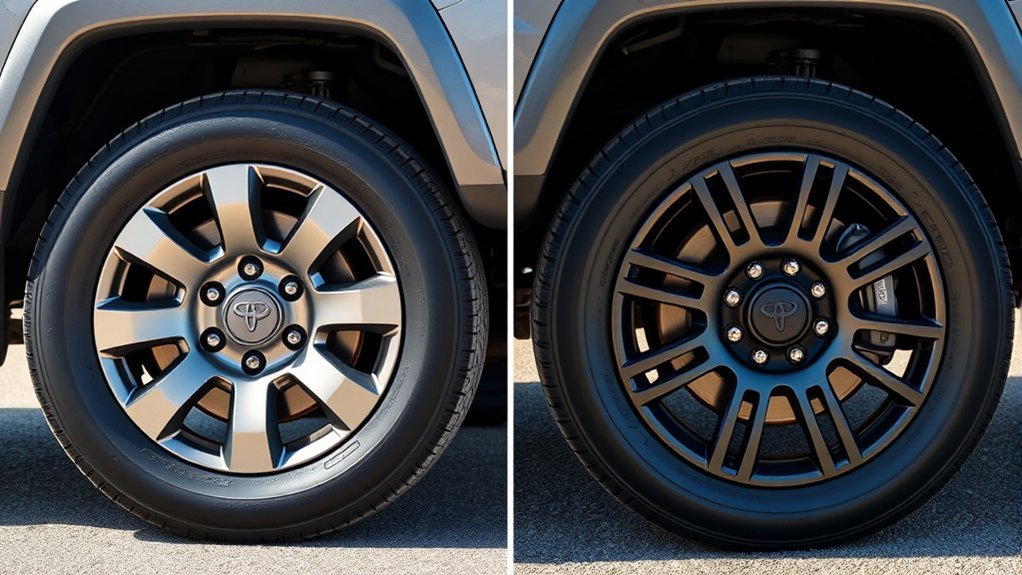
Stock Tacoma wheels are engineered around factory tires, brakes, suspension geometry, fender clearance, steering feel, and the truck’s rated loads. They are the easier option when you want factory-like handling and no uncertainty about the center bore, lug-seat design, or brake clearance.
Aftermarket wheels give you more freedom to choose diameter, width, offset, backspacing, construction method, finish, and weight. That flexibility can be useful for off-road tires, a wider stance, or a custom look. It also creates more ways to choose a combination that rubs, changes steering feel, uses the wrong lug nuts, or lacks adequate load capacity.
| Factor | Stock Wheels | Aftermarket Wheels |
|---|---|---|
| Fitment confidence | Designed for the original trim, brakes, hubs, and factory tire package | Must be verified by exact year, trim, drivetrain, brake package, and tire size |
| Ride and steering | Predictable factory balance | Can improve or worsen response, comfort, and tracking depending on weight, width, offset, and tire choice |
| Durability | Validated for the original vehicle application | Varies widely by design, manufacturing process, load rating, testing, and intended use |
| Customization | Limited factory sizes and finishes | Broad choice of sizes, finishes, spoke designs, and offsets |
| Installation complexity | Usually reuses factory-compatible hardware and dimensions | May require different lug nuts, centering rings, TPMS service, alignment checks, trimming, or suspension changes |
| Best for | Daily driving, towing, low-risk ownership, and factory restoration | Purpose-built tire setups, off-road use, weight reduction, or personal styling |
Factory Wheel and Tire Sizes on a Third-Generation Tacoma
Toyota offered several factory combinations across the 2016–2023 Tacoma range. The 2023 Toyota owner’s manual lists 16×7, 17×7.5, and 18×7.5-inch wheel sizes with 245/75R16, 265/70R16, 265/65R17, or 265/60R18 tires, depending on the equipment group. Your driver-door Tire and Loading Information label is the final reference for the original tire size and cold inflation pressure on your truck.
| Factory Wheel Size | Factory Tire Size Examples | General Character |
|---|---|---|
| 16×7 | 245/75R16 or 265/70R16 | More tire sidewall for rough roads and trails |
| 17×7.5 | 265/65R17 | Balanced appearance, sidewall, and tire availability |
| 18×7.5 | 265/60R18 | More wheel presence with less sidewall than the 16-inch setup |
Note: This guide covers the 2016–2023 third-generation Tacoma. Do not apply its hub, lug-thread, or torque details to a 2024 or newer Tacoma without checking that generation’s manual and wheel specifications.
Top Advantages of Aftermarket Wheels for Tacoma Owners
A correctly selected aftermarket wheel can solve a specific problem or support a planned build. The benefit comes from the exact wheel, not simply from the fact that it is aftermarket.
| Potential Advantage | What to Verify |
|---|---|
| Lower weight | Compare the actual wheel weight and the combined wheel-and-tire package, not marketing labels |
| Different tire fitment | Confirm approved tire-width range, inner clearance, fender clearance, and full-lock clearance |
| Higher application-specific strength | Check the wheel’s tested load rating and intended road or off-road use |
| Custom stance and appearance | Use an offset that preserves safe clearance and reasonable steering geometry |
| More finish choices | Consider corrosion resistance, repairability, warranty terms, and replacement availability |
Toyota’s own 16×7-inch TRD alloy accessory wheel, for example, uses a 13 mm offset and is designed around proper weight, brake clearance, and Tacoma fitment. That does not make 13 mm the correct offset for every aftermarket width or tire. Width and offset must be evaluated together.
Pro Tip: Compare the total mounted weight of the wheel and tire. A light wheel paired with a much heavier, larger tire can still increase rotating and unsprung mass.
[Products Worth Considering]

Upgrade your wheels with MIKKUPPA M12x1.5 mag seat lug nuts built for secure, corrosion-resistant performance. These closed-end chrome lug nuts are a direct replacement for select Toyota models, including Camry, Corolla, RAV4, Sienna, Avalon, Highlander, Matrix, Venza, and Prius. Triple-chromium plating and cold-forged, heat-treated steel help deliver strength for daily driving and replacement needs.

These M14x1.5 closed-end chrome lug nuts are a one-piece replacement designed for secure fitment on compatible GM, Ford, and select Chrysler/Dodge models. Featuring a 60-degree conical seat and anti-rust chrome plating, they help resist corrosion and maintain a bright look for everyday driving. Built for long-term durability, they include OEM-style part references and are backed by 12 months of support.

Upgrade your wheels with MIKKUPPA closed-end lug nuts designed for reliable fit and corrosion resistance. The one-piece, cold-forged and heat-treated steel construction helps resist rust and stripping, while the integrated finish delivers a durable black appearance. Built to OEM standards with a conical 60-degree seat, these nuts provide a secure solution for compatible Ford, Honda, Jeep, and Chevrolet models.
How Wheel Size Affects Performance and Handling
Wheel diameter alone does not determine performance. Tire sidewall height, tread design, compound, pressure, wheel width, offset, and total package weight all affect how your Tacoma drives.
- Smaller wheel with more sidewall: Usually gives the tire more room to absorb sharp impacts and flex over rocks or broken pavement.
- Larger wheel with less sidewall: Can sharpen steering response, but may transmit more impact harshness and leave the rim more exposed to pothole damage.
- Wider wheel and tire: May increase dry-road contact area, but can add weight, follow road grooves, reduce clearance, and perform differently in water, snow, sand, or loose terrain.
- Lighter package: Can help the suspension control wheel movement and can improve responsiveness. The effect depends on how much weight changes and where that weight is located.
- Larger overall tire diameter: Changes effective gearing, acceleration feel, braking demand, speedometer accuracy, clearance, and spare-tire compatibility.
Plus-sizing guidance generally aims to keep the replacement tire’s overall diameter close to the original while preserving load capacity. Large diameter changes can affect the speed data used by the speedometer and vehicle control systems.
The best-performing upgrade is a balanced wheel-and-tire package with correct load capacity and clearance, not simply the largest wheel or widest tire that can be installed.
Offset, Backspacing, and the Tacoma’s Stance
Wheel offset is the distance between the wheel’s mounting surface and its centerline. Positive offset generally moves the wheel inward, while a lower or negative offset moves it outward. Backspacing measures from the mounting surface to the inner edge of the wheel.
Moving the wheel outward may create a wider-looking stance and more inner suspension clearance, but it can reduce fender clearance and alter steering feel. It also increases leverage on the hub and suspension compared with a wheel positioned closer to the original geometry. Moving the wheel too far inward can contact the upper control arm, tie rod, brake component, or inner wheel well.
There is no universal “ideal” zero offset for a stock-height Tacoma. The correct range depends on wheel width, tire dimensions, brake clearance, alignment, and the intended use. A 17×9 wheel at zero offset occupies different inner and outer space than a 17×7.5 factory wheel, even before the tire is mounted.
Cost Comparison: Stock vs. Aftermarket Wheels
Wheel prices change by brand, size, construction, finish, load rating, and availability, so a fixed per-wheel range quickly becomes outdated. Compare the total installed package instead of the wheel price alone.
[Products Worth Considering]

These aluminum alloy tire valve stem caps with an O-ring seal help protect valve stems from corrosion while adding a clean, stylish look to your vehicle. The universal fit works across cars, trucks, motorcycles, bicycles, and more, making them an easy upgrade for everyday driving and off-road use. Installation is quick, and the included four-pack keeps all your tires dressed and protected.

The 22800 wheel stud installer makes replacing wheel studs quick and secure, saving time and effort during tire service. It uses a ratchet or impact wrench to pull new studs firmly into place, helping when existing studs are too long. Compatible with most automotive wheels and light-duty truck wheel studs, it’s designed for easy, tool-assisted installation.

The Trivd Frol 1/2" air impact wrench delivers high performance torque up to 1500 ft-lbs with a twin hammer impact mechanism for strong, balanced blows. It features an ergonomic grip, compact lightweight design, and quick-stop control with 3 forward speeds up to 8000 RPM plus a reverse speed. Built for demanding automotive repair and tire shop work, the rear exhaust helps keep debris away from the surface.
Initial Purchase Price
A stock setup may be least expensive when you already own the wheels or can find a clean factory take-off set. An aftermarket package can require new tires, different lug nuts, TPMS sensors or service kits, hub-centric rings, mounting, road-force balancing, alignment, and possible body or suspension work. Include every required part before comparing options.
Long-Term Value Analysis
OEM wheels often retain broad replacement availability and make it easier to return the truck to factory condition. Quality aftermarket wheels may hold value within an enthusiast market, but resale is not guaranteed. Damage risk, finish durability, replacement-wheel availability, tire cost, and whether the setup causes uneven wear matter more than the logo on the wheel.
Fuel economy also cannot be predicted from wheel type alone. A lighter wheel may reduce rotating mass, but a wider, taller, or more aggressive tire can add weight and rolling resistance. Measure the complete package and expect real-world results to vary.
Aesthetic Appeal: Customizing Your Tacoma With Aftermarket Wheels
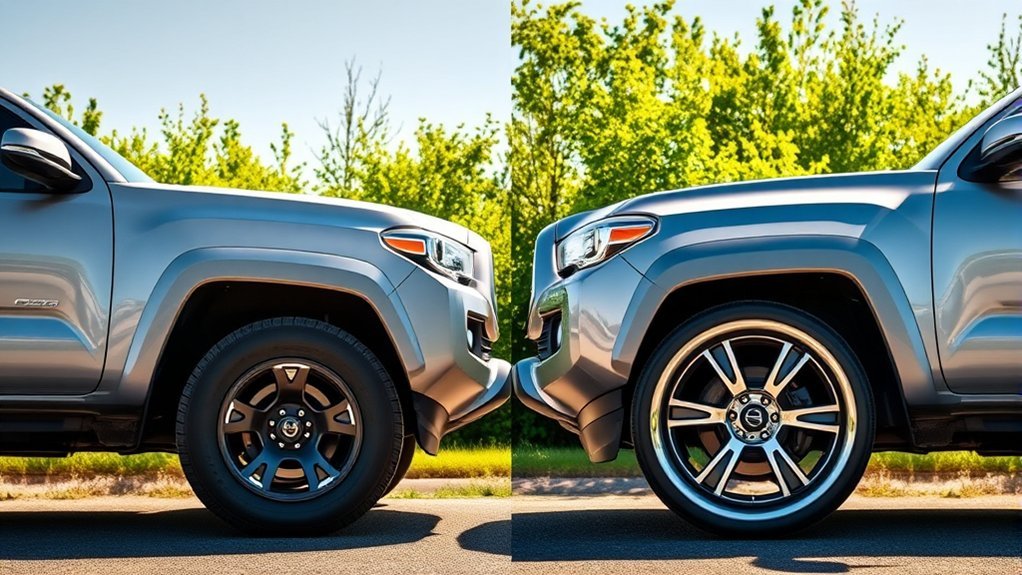
Aftermarket wheels can change your Tacoma’s appearance more dramatically than most exterior upgrades. Spoke design, finish, diameter, tire sidewall, and how far the wheel sits relative to the fender all influence the result.
Choose the look only after confirming the technical requirements:
- Wheel diameter: Select a size that clears the brakes and has tires with suitable load capacity and overall diameter.
- Wheel width: Match it to the tire manufacturer’s approved rim-width range.
- Offset and backspacing: Confirm inner suspension and outer fender clearance.
- Finish: Consider winter salt, mud, rock chips, cleaning chemicals, and the ability to replace one matching wheel later.
- Open-spoke designs: Verify caliper clearance, not just wheel diameter.
What to Know About Tacoma Wheel Fitment
A wheel can share the Tacoma’s bolt pattern and still be unsafe or unusable. Complete fitment includes the hub, studs, lug-seat shape, wheel dimensions, brakes, tire, suspension, and load rating.
Warning: Do not buy a wheel based only on diameter and bolt pattern. An incorrect center bore, lug seat, offset, brake clearance, or load rating can cause vibration, rubbing, damaged hardware, poor handling, or wheel loosening.
Third-Generation Tacoma Fitment Checklist
- Confirm the truck: Verify the exact year, trim, drivetrain, cab, bed, and any brake or suspension modifications.
- Match the bolt pattern: Third-generation six-lug Tacoma fitments use 6×139.7 mm, also written as 6×5.5 inches.
- Check the center bore: A third-generation Tacoma uses a 106.1 mm hub bore. A wheel with a smaller bore will not seat. A larger-bore wheel may require the wheel maker’s approved centering ring.
- Use the correct studs and lug nuts: The 2016–2023 Tacoma uses M12×1.5 threads. Match the lug nut’s seat style to the wheel, because factory flat-seat nuts may not fit an aftermarket conical-seat wheel.
- Verify width, offset, and backspacing: Calculate both inner and outer position changes compared with the current wheel.
- Check brake and hub clearance: Test-fit the wheel before mounting all four tires whenever the supplier cannot guarantee fitment.
- Confirm load capacity: The wheel and tire must be rated for the truck’s axle loads and intended use. Use the certification label and manufacturer data rather than appearance or spoke count.
- Match the tire to the wheel: Use a tire size approved for the wheel width, with adequate load and speed ratings.
- Check full movement: Inspect clearance at full steering lock and through suspension travel, including the front mud flap, cab mount area, upper control arm, and fender liner.
- Plan for TPMS and the spare: Confirm sensor compatibility and whether the spare can safely cover the new tire diameter.
NHTSA advises owners to use the tire size listed in the owner’s manual or on the Tire and Loading Information label unless selecting another properly approved size. It also stresses correct load capacity, inflation, balance, and alignment. See NHTSA TireWise for the federal tire-safety guidance.
Will a 285/70R17 Tire Fit?
A 285/70R17 is commonly described as a roughly 33-inch tire, but the name does not guarantee clearance. Actual measured diameter and section width vary by tire model and approved rim width. On a third-generation Tacoma, rubbing risk also changes with wheel offset, caster setting, ride height, spring rate, bumper weight, body mounts, liners, and how the truck is used.
Some trucks need only minor liner or mud-flap work, while others need more extensive trimming, alignment changes, suspension parts, or body-mount clearance. A lift can create vertical space, but it does not automatically solve rubbing at full steering lock. Have the complete combination checked rather than relying on a single “fits with a lift” rule.
Installing Aftermarket Wheels: What You Need to Know
Professional mounting is the safest choice when changing wheel dimensions, lug-seat style, tire size, or TPMS hardware. The installer should verify fitment before the tires are fully mounted and should stop if the wheel does not sit flat against the hub.
Fitment Considerations
- Clean rust, dirt, paint buildup, and debris from the hub and wheel mounting surfaces.
- Confirm the wheel seats fully without contacting the caliper, hub, studs, or suspension.
- Use only lug nuts approved for the wheel’s seat shape and stud thread.
- Hand-start every lug nut to prevent cross-threading.
- Tighten gradually in a star pattern with a calibrated torque wrench.
- Toyota lists 83 ft-lb (113 N·m) for the factory wheel setups in the 2023 Tacoma owner’s manual. Confirm the specification for your model year and follow any approved instructions supplied with the aftermarket wheel and hardware.
- After installation, check for rubbing at full left and right lock, verify TPMS operation, and follow the wheel manufacturer’s retorque instructions.
Performance Benefits
A lighter, properly sized aftermarket package can make the suspension feel more responsive because the shocks and springs control less unsprung mass. It may also reduce the energy needed to accelerate or slow the rotating assembly. However, a heavy all-terrain tire can cancel the wheel’s weight savings. Tire Rack’s lightweight-wheel testing and explanation shows why the complete package matters.
Wider or lower-offset wheels may change steering response and stance, but those changes are not automatically improvements. The safest performance setup keeps adequate brake, suspension, and body clearance while preserving suitable tire load capacity and predictable steering behavior.
How to Choose the Right Wheel for Your Tacoma
Start with your use case, then work backward to the wheel specification.
- Mostly daily driving: Keep close to a factory diameter, width, offset, and tire diameter for predictable comfort and low fitment risk.
- Rough roads and trail use: Favor enough tire sidewall for impact absorption, a wheel with a documented load rating, and a finish that can tolerate chips and corrosion.
- Towing or heavy payloads: Prioritize wheel and tire load capacity, heat management, proper inflation, and stable steering over aggressive offset or maximum tire size.
- Performance and responsiveness: Compare total package weight and select tires suited to the road conditions, not just a visually larger wheel.
- Appearance: Choose the final offset and stance only after checking full-lock and suspension-travel clearance.
Ask the seller for the exact wheel part number, dimensions, offset, center bore, load rating, lug-seat type, required hardware, and written vehicle fitment. A generic statement that a wheel “fits six-lug Toyota trucks” is not enough.
[Products Worth Considering]

This professional wheel and rim brush kit makes it easy to lift brake dust, grime, and dirt from wheels and tires without scratching finishes. The brushes feature soft, metal-free wool heads and a flexible 360-degree rim brush design for reaching hard-to-clean areas. Includes multiple brush types plus accessories for thorough car, motorcycle, and general vehicle detailing.

These universal tire valve stem caps help protect valve cores from dust, debris, and moisture while helping maintain stable tire pressure. The corrosion-resistant metal construction and sealed design provide reliable protection in road grime, mud, and winter conditions. Twist-on installation makes them quick to fit on cars, SUVs, trucks, and motorcycles.

This 1/2-inch drive breaker bar delivers powerful leverage for loosening and tightening stubborn lug nuts and automotive fasteners. The 180-degree flex head helps you reach tight spaces at the angle you need, making tire and brake jobs easier. A spring-loaded ball detent design holds 1/2-inch sockets securely while the chrome-moly head provides durable strength for everyday use.
Frequently Asked Questions
What wheel size is best for a third-generation Toyota Tacoma?
A 16-inch wheel provides more tire sidewall, a 17-inch wheel offers a useful balance of sidewall and tire selection, and an 18-inch wheel emphasizes street appearance. The best size is the one that clears your brakes, supports the required load, matches an appropriate tire, and fits your driving conditions.
What is the difference between TRD Pro and aftermarket wheels?
Toyota TRD wheels are vehicle-specific accessories designed around Toyota fitment requirements. Aftermarket wheels offer more widths, offsets, constructions, and finishes, but their quality and fit vary. Compare the exact part number, load rating, weight, center bore, offset, brake clearance, and required lug hardware.
What is the difference between factory and aftermarket wheels?
Factory wheels provide known compatibility with the original brakes, hubs, lug nuts, suspension geometry, and tire package. Aftermarket wheels allow more customization and may reduce weight or support a different tire, but every fitment and load requirement must be checked separately.
Which is better, OEM or replica wheels?
OEM wheels are the safer default when you want documented factory fitment and replacement support. A replica can be acceptable only when the manufacturer provides a suitable load rating, correct dimensions, proper testing information, compatible hardware, and a warranty. Do not assume two visually identical wheels have the same construction or capacity.
Do negative-offset wheels improve Tacoma stability?
Not automatically. Moving the wheels outward changes track width, but it also changes steering geometry, clearance, and leverage on hub and suspension components. A lower offset may suit a specific build, yet too much can worsen rubbing, steering feel, and component loads.
Do aftermarket Tacoma wheels need hub-centric rings?
A direct-fit 106.1 mm center bore does not need a reducing ring. A wheel with a larger bore may use an approved hub-centric ring to help center it during installation. A wheel with a bore smaller than the hub will not fit. Follow the wheel manufacturer’s fitment instructions.
Conclusion
Stock wheels are the better choice when you want factory fitment, predictable ride quality, and minimal installation risk. Aftermarket wheels make sense when they serve a clear goal, such as a specific tire, lower package weight, stronger application-specific construction, or a custom appearance.
Do not judge a wheel by diameter, style, or bolt pattern alone. Verify the exact center bore, M12×1.5 lug compatibility, lug-seat design, width, offset, backspacing, brake clearance, wheel load rating, tire capacity, full-lock clearance, TPMS requirements, and torque procedure. A properly engineered package can improve your Tacoma; an incompatible one can create expensive and unsafe problems.
Sources
- Toyota Manuals and Warranties — official model-specific manuals, tire information, and wheel-nut specifications.
- Toyota Genuine 16-Inch TRD Alloy Wheel — example of a Tacoma-specific wheel with documented size, offset, and brake-clearance design.
- NHTSA TireWise — tire sizing, load, inflation, balance, alignment, and replacement safety guidance.
- Tire Rack: What Is Wheel Offset? — offset, backspacing, and clearance fundamentals.
- Tire Rack: Plus-Size Wheels and Tires — overall diameter, sidewall, handling, and system-accuracy considerations.
- Tire Rack: Lightweight Wheels and Performance — unsprung and rotational-weight effects.
