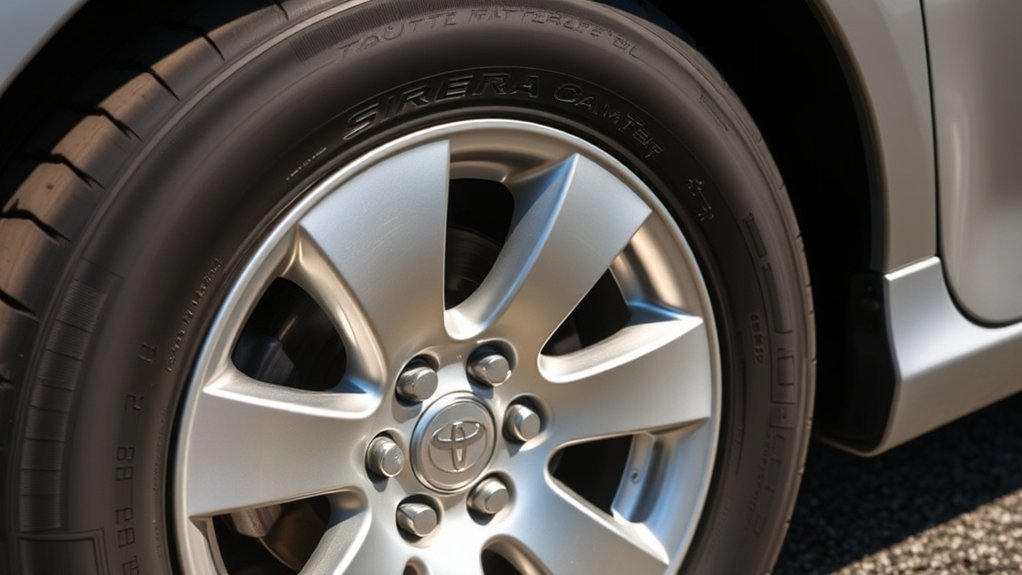
The correct tire for a 2012 Toyota Camry depends on the trim, factory wheel package, and any changes made by a previous owner. Most U.S. models use one of three sizes—P205/65R16, P215/55R17, or P225/45R18—but you should verify the driver-side door placard before ordering tires or wheels.
Quick Answer
For a U.S.-market 2012 Toyota Camry, the common factory sizes are P205/65R16, P215/55R17, and P225/45R18, but the correct size depends on the trim and installed wheels. Use 35 psi cold for the 16- and 17-inch setups and 33 psi cold for the 18-inch setup, unless your driver-door placard states otherwise.
Key Takeaways
- L, LE, and Hybrid LE models commonly use 205/65R16 tires.
- XLE, Hybrid XLE, and many four-cylinder SE models commonly use 215/55R17 tires.
- The 225/45R18 package is mainly associated with the SE V6 and certain SE Sport configurations—not every V6 Camry.
- The door placard is more reliable than a generic online chart because it identifies the tire size and cold pressure assigned to that specific vehicle.
- Match the original load capacity and an appropriate speed rating, not just the three size numbers.
At a Glance
| Time Required | About 10–20 minutes to verify the placard, sidewall, trim, and wheel size |
| Difficulty | Easy for a factory-size replacement; professional fitment is recommended for wheel changes |
| Tools Needed | Flashlight, tire-pressure gauge, door placard, owner’s manual, and current tire sidewall |
| Cost | No cost to verify the specification; tire, sensor, mounting, alignment, and wheel prices vary |
Understanding the 2012 Camry’s Factory Tire Sizes
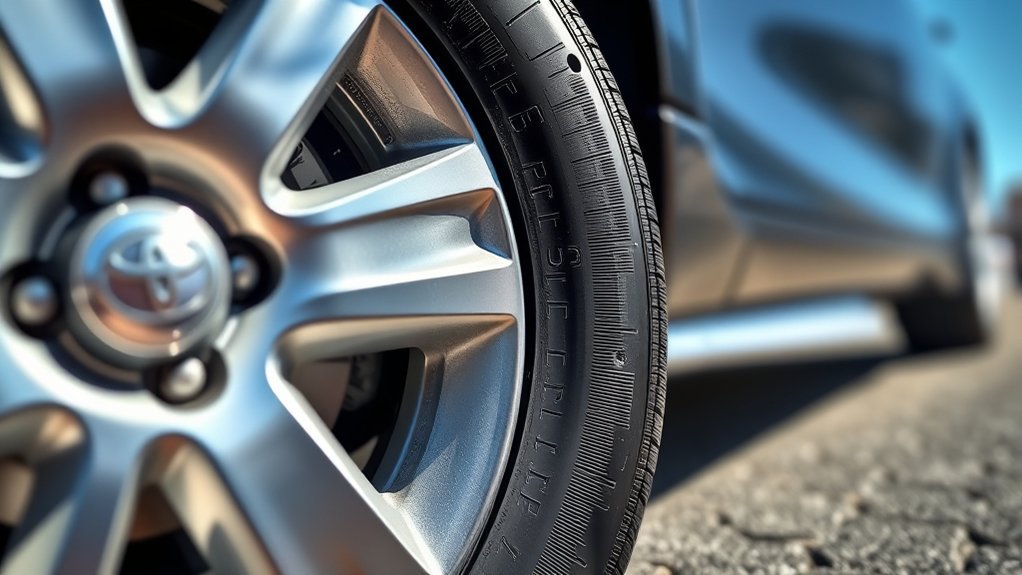
Toyota offered several wheel packages for the seventh-generation Camry. According to Toyota’s 2012 Camry product information, the LE used a 16-inch package, the standard SE used a 17-inch package, the XLE used a 17-inch package, and the SE V6 offered an 18-inch package with 225/45R18 tires.
The table below summarizes the common U.S.-market fitments. Special editions, regional specifications, dealer-installed wheels, and later modifications can differ, so treat the table as a starting point rather than a substitute for the vehicle placard.
| Trim or Common Configuration | Common Factory Tire Size | OEM Wheel Baseline | Normal Cold Pressure |
|---|---|---|---|
| L, LE, Hybrid LE | P205/65R16 | 16 × 6.5 inches | 35 psi front and rear |
| SE four-cylinder | P215/55R17 | 17 × 7 inches | 35 psi front and rear |
| XLE four-cylinder, XLE V6, Hybrid XLE | P215/55R17 | 17 × 7 inches | 35 psi front and rear |
| SE V6 and certain SE Sport configurations | P225/45R18 | 18 × 7.5 inches | 33 psi front and rear |
Warning: Never inflate a tire to the pressure molded on its sidewall simply because that number is higher. The sidewall number is a tire limit, not the Camry’s recommended operating pressure. Check pressure when the tires are cold and use the driver-door placard as the final authority.
How to Verify Your Exact Size
- Open the driver’s door. Read the Tire and Loading Information label on the door pillar or door edge.
- Check the current tire sidewall. All four tires should normally carry the same size unless the vehicle has a specially engineered staggered setup.
- Confirm the wheel diameter. The last number in the tire size must match the wheel diameter.
- Review the owner’s manual. Toyota provides historical manuals through its official manuals and warranties portal.
- Confirm the trim and powertrain. The NHTSA VIN decoder can help identify the vehicle, but the door placard remains more useful for an installed tire package.
- Look for modifications. If the sidewall and placard disagree, a previous owner may have changed the wheels. Have a tire professional confirm the package before buying replacements.
Pro Tip: Photograph the door placard and one tire sidewall before shopping. This gives the installer the original specification and the size currently mounted on the car.
What the Tire Size Means
In P205/65R16, the letters and numbers describe the tire’s construction and dimensions:
- P identifies a passenger-car tire under the P-metric system.
- 205 is the nominal section width in millimeters.
- 65 is the sidewall height as a percentage of the tire’s width.
- R means radial construction.
- 16 is the wheel diameter in inches.
The service description after the size also matters. For example, a code such as 93V contains a load index and speed rating. A replacement tire should meet or exceed the load requirement shown for the vehicle. Do not reduce either rating without confirmation from the tire manufacturer or a qualified installer.
How to Choose the Best Tires for the 2012 Camry
The best tire is not simply the most expensive model or the one with the longest advertised warranty. It is a tire that fits your exact Camry, carries the required load, suits your weather, and matches how you drive.
[Products Worth Considering]

Monitor tire tread wear with a smart, color-coded depth gauge that shows clear condition ranges at a glance. The bar is range marked for fast, easy readings, helping you maintain safer traction and performance. Each gauge is portable with a pocket clip, and the set includes 20 units for daily use and sharing.

Replace worn or malfunctioning GM TPMS sensors with this 433MHz pre-programmed sensor set designed for compatibility with many Chevrolet, Buick, GMC, and Cadillac models. It includes guidance for proper OBDII relearning/pairing after installation and supports reliable long-term operation with a high-performance CR2032 battery. Quality tested for durability and performance to help restore accurate tire pressure monitoring.
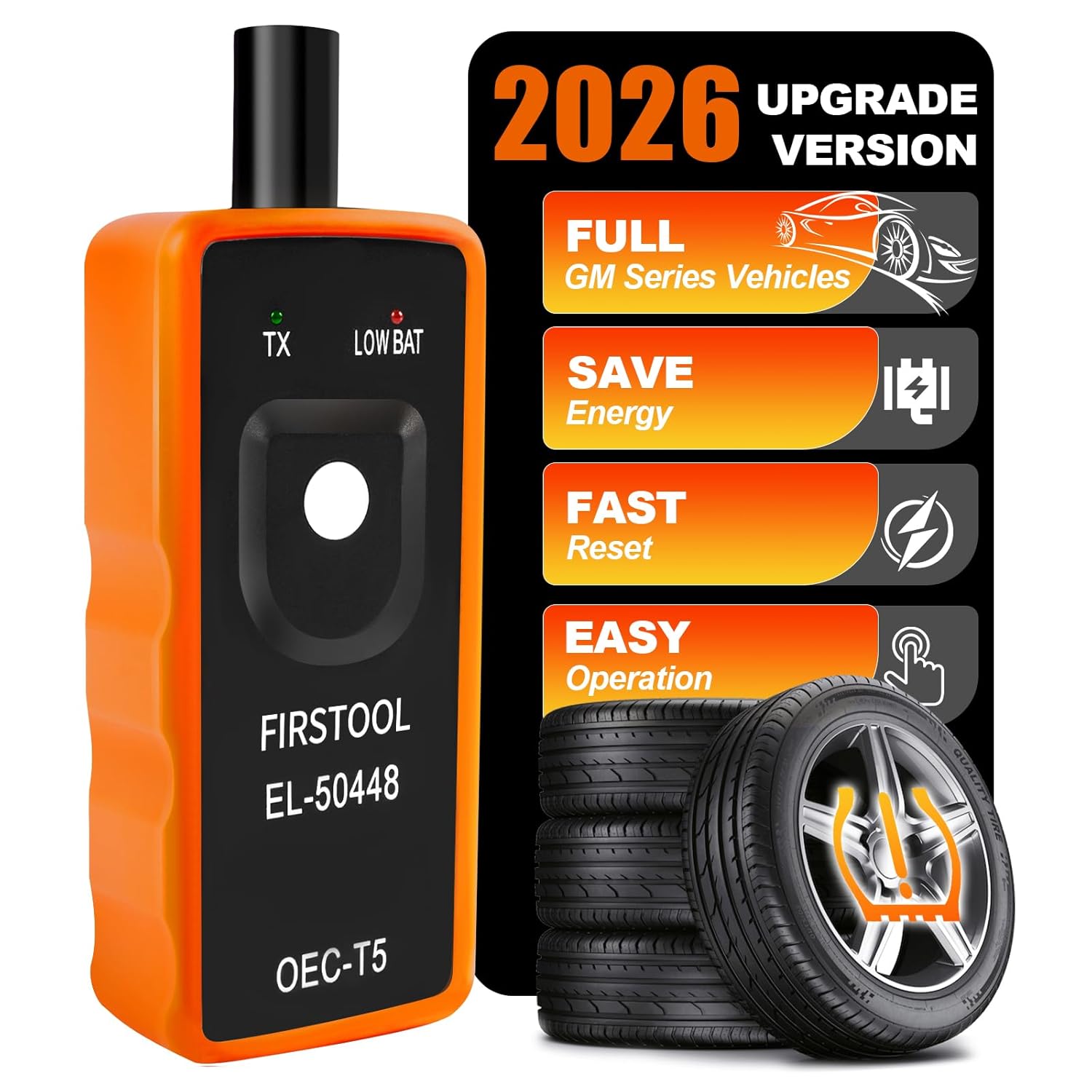
This TPMS relearn tool helps you quickly activate, match, and reset GM tire pressure sensors to keep the vehicle monitoring system working properly. It clears tire pressure alarms and dashboard warning lights after sensor replacement or tire rotation, and supports learning for common 315/433 MHz TPMS sensors. Designed for simple one-button operation, it can help you avoid unnecessary trips to repair shops.
1. Match the Complete Specification
Start with the size on the door placard. Then check the load index, speed rating, wheel diameter, and whether the tire is approved for the wheel width. A tire that shares only the basic size may still have an unsuitable load or speed rating.
2. Choose the Right Seasonal Type
- All-season tires are a practical choice for many drivers who see moderate temperatures and occasional light snow.
- All-weather tires may provide stronger winter capability while remaining suitable for year-round use, depending on the model.
- Winter tires are the better choice for regular snow, ice, and prolonged cold conditions.
- Summer tires can improve warm-weather response and grip but are not intended for snow, ice, or freezing conditions.
NHTSA’s tire guidance explains that tire type should be selected for the weather and driving conditions where the vehicle is used.
Note: For winter use, install four matching winter tires. Mixing winter tires with all-season or summer tires can create an uneven balance of grip during braking and cornering.
3. Compare Performance Categories
Decide which characteristics matter most for your driving:
- Wet braking and resistance to hydroplaning
- Snow and ice traction
- Dry handling and steering response
- Ride comfort and road noise
- Tread life and warranty terms
- Rolling resistance and fuel economy
- Pothole resistance and sidewall durability
The 16-inch setup generally provides more sidewall cushioning. The 18-inch setup can feel more responsive but may ride more firmly and can be more vulnerable to pothole damage.
4. Understand UTQG Ratings
The Uniform Tire Quality Grading system uses separate grades for treadwear, wet traction, and temperature resistance. A larger treadwear number suggests a slower relative wear rate in the test system, but it is not a mileage promise. The traction grade addresses wet straight-line stopping, while the temperature grade addresses heat resistance.
UTQG does not fully measure snow grip, hydroplaning resistance, ride comfort, noise, dry cornering, or real-world braking. Use it as one comparison tool rather than an overall safety score.
5. Check Tire Age and Recall Status
Read the last four digits of the DOT Tire Identification Number. They show the week and year of manufacture. For example, 2325 means the tire was made in the 23rd week of 2025.
Inspect older tires even when the tread looks deep. Toyota’s manual advises having tires more than six years old checked by a qualified technician, and NHTSA notes that age can increase the risk of failure. You can also search the NHTSA recall database for tire recalls.
6. Replace Tires as a Balanced Set
Use the same size, construction type, and similar tread design on all four corners. If only two tires are replaced, ask the installer where the new pair should be mounted based on the tire maker’s guidance and the condition of the remaining tires. Significant differences in tread depth can affect wet handling and stability.
Best Tire Brands for the 2012 Toyota Camry
There is no single best brand for every 2012 Camry driver. Michelin, Bridgestone, and Goodyear offer multiple touring, all-season, and winter tire lines in Camry-compatible sizes. Budget-market brands such as Lionhart may also offer tires in the required dimensions, but matching the size does not make a tire original equipment or prove that it performs like the factory-installed model.
Compare individual tire models rather than relying on the logo alone. A useful comparison should cover:
- The exact size and service description
- Wet- and dry-braking results from a consistent test
- Snow performance when relevant
- Noise and ride-comfort testing
- Treadwear warranty terms and exclusions
- Manufacturing date and recall status
- Availability of road-hazard coverage
- Installer support and replacement availability
A premium touring tire may be worthwhile for a driver who values quiet highway comfort and wet braking. A less expensive tire can still be suitable when it meets the required specifications and has credible performance data, but price alone should not decide a safety-related purchase.
[Products Worth Considering]

Marsflex brand TPMS replacement sensors help restore tire pressure monitoring for compatible Toyota, Lexus, Scion, and Pontiac models. Each sensor is pre-programmed for the vehicle application and includes a long-life battery for up to 8 years of normal use. Designed to replace common OE numbers and requires relearning using a TPMS scan tool after installation.

Replace your worn or missing TPMS sensors with pre-programmed, direct-fit sensors for compatible Ford, Lincoln, and select Mazda models. Each sensor comes ready to activate with a scan tool, helping restore accurate tire pressure monitoring and trouble-free installation. Built with a long-life CR2032 battery and tested before factory release, this set provides dependable performance with a one-year warranty.

Keep your tires properly inflated with this analog VONDIOR tire pressure gauge, designed for fast, easy readings without batteries. The swiveling, two-axis hose and large glow dial help you measure at any tire angle with instant visibility. Built with a protective rubber shield, it supports durable, low-maintenance use for cars and trucks.
Essential Tire Maintenance Tips for Longer Lifespan
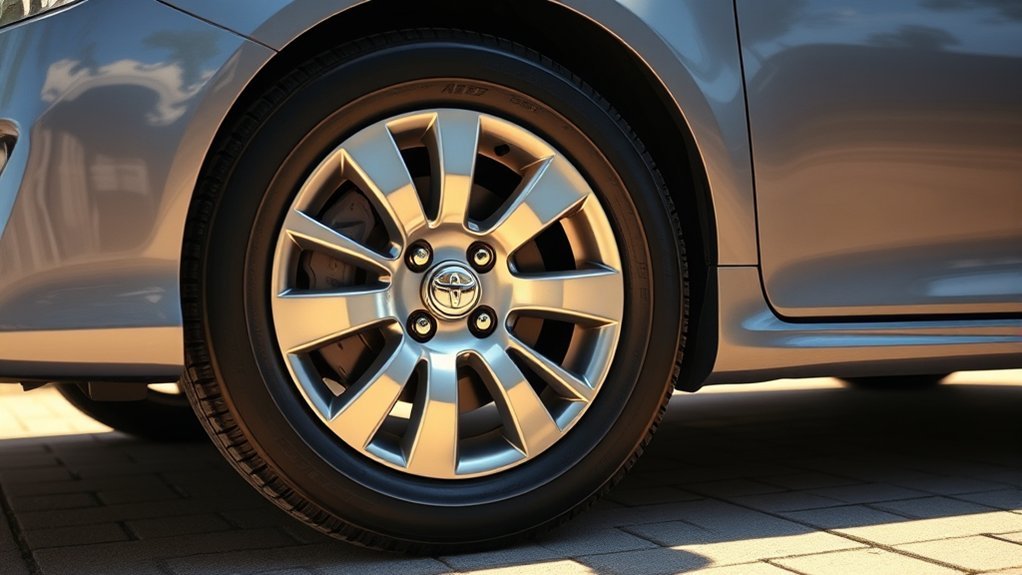
Check Pressure Cold
Check all four tires at least monthly and before a long trip. Toyota’s manual recommends checks every two weeks or at least once a month. A tire is considered cold when the car has been parked for at least three hours or has been driven only a short distance.
- 16-inch tires: 35 psi front and rear under normal conditions
- 17-inch tires: 35 psi front and rear under normal conditions
- 18-inch tires: 33 psi front and rear under normal conditions
These are U.S. owner-manual baselines. Use the pressure printed on your Camry’s Tire and Loading Information label if it differs.
Rotate the Tires Regularly
Toyota says to rotate the tires at the same interval as tire inspection. For many owners, pairing rotation with each approximately 5,000-mile maintenance visit is a practical schedule. Follow the tire manufacturer’s instructions when they call for a different interval.
Have the alignment checked if the steering wheel is off-center, the vehicle pulls, or one edge of a tire wears faster than the other. Rotation can spread wear among the tires, but it cannot correct an alignment or suspension problem.
Monitor Tread and Damage
Replace a tire when the tread reaches 2/32 inch, when the treadwear bars are flush with the tread, or sooner if the tire has unsafe damage. Inspect for:
- Cuts, deep cracks, punctures, or exposed cords
- Bulges or bubbles in the sidewall
- Repeated pressure loss
- Uneven or cupped tread wear
- Vibration that appears at specific speeds
- Damage caused by potholes or curb impacts
Treat 2/32 inch as the absolute tread replacement point—not a target for how long to keep driving on a tire with poor wet grip, visible damage, or advanced age.
Do Not Rely on TPMS Alone
The tire-pressure monitoring system warns when pressure becomes significantly low, but it does not replace a gauge. If new wheels or sensors are installed, the sensor identification codes may need to be registered and the system may need to be initialized. Initialization alone cannot register an incompatible or unknown sensor.
Store Seasonal Tires Correctly
Clean and dry removed tires before storage. Keep them in a cool indoor space away from sunlight, standing water, electric motors, fuel, solvents, and strong heat. Mark each tire’s former position so the set can be rotated correctly when reinstalled.
Thinking About Upgrading Your Camry’s Wheels? Here’s What to Know
Larger wheels can change the Camry’s appearance and steering response, but they also reduce sidewall height. That can create a firmer ride, increase the chance of pothole damage, raise replacement cost, and sometimes add weight.
Toyota’s factory wheel sizes provide a safer baseline than broad aftermarket width ranges:
| Factory Package | OEM Wheel Size | Common Tire Size | Typical Tradeoff |
|---|---|---|---|
| 16-inch | 16 × 6.5 inches | 205/65R16 | More sidewall cushioning and generally lower tire cost |
| 17-inch | 17 × 7 inches | 215/55R17 | Balanced ride comfort and steering response |
| 18-inch | 18 × 7.5 inches | 225/45R18 | Sharper appearance and response with a firmer, less protected sidewall |
[Products Worth Considering]

This metal-free wheel and tire cleaning brush uses dense, fluffy synthetic wool to safely clean rims, spokes, fenders, and engine areas without worrying about damaging surfaces. Its flexible, comfortable design helps you reach detailed areas while maintaining durability, and the extra absorbent fibers work well with wheel spray cleaners for faster cleanup. Reusable and washable performance helps prevent grime and build-up for cleaner vehicles and easier maintenance at home.

This 62-inch extra-long car wash brush kit makes it easy to clean hard-to-reach areas on cars, trucks, SUVs, and RV roofs with lightweight, sturdy poles. It includes soft, non-scratch microfiber and bristles with protective bumpers to help prevent scratches while cleaning effectively. A rubber squeegee helps remove water stains quickly, plus a wheel/tire brush and absorbent towels for complete exterior detailing.
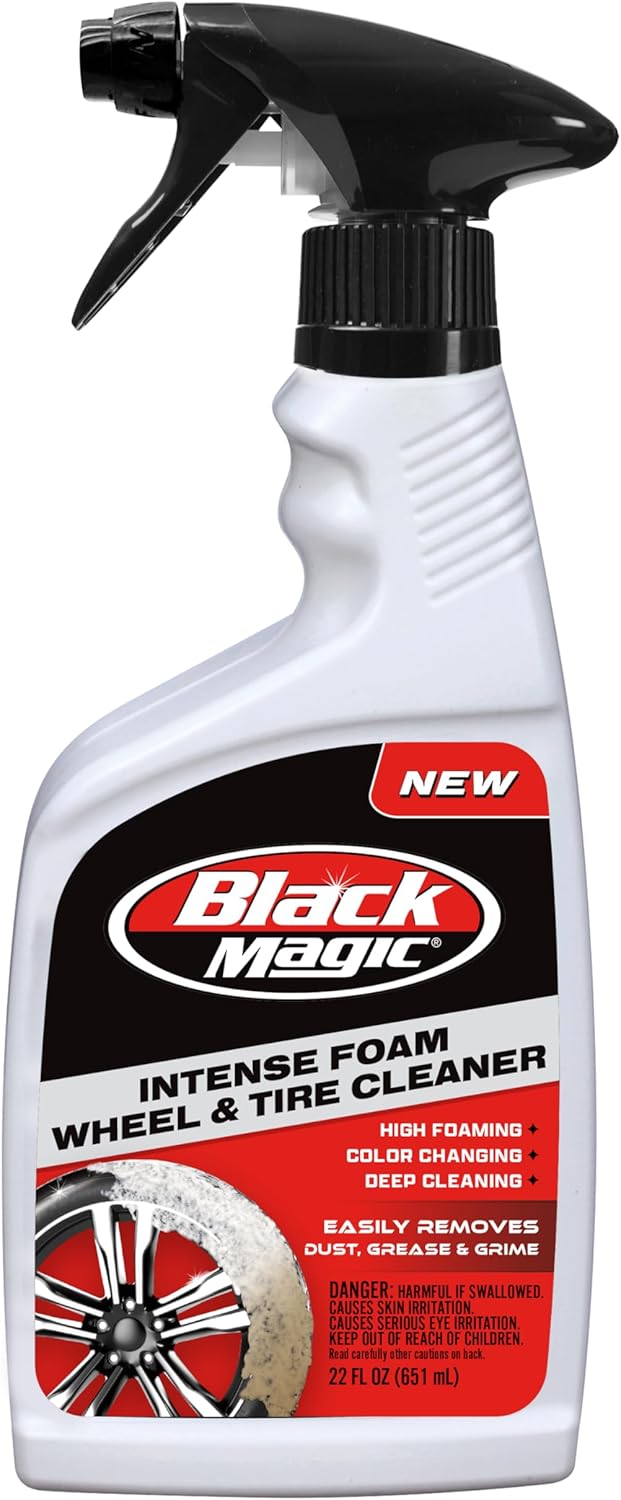
Black Magic Intense Foam Wheel & Tire Cleaner uses a high-foaming action to lift away dirt, grime, and brake dust without scrubbing. The color-changing formula helps show contaminants being dissolved as foam turns from white to brown. Safe for all wheel types and even wheel wells, it leaves a like-new, slick finish with a fresh cherry scent.
Check More Than Diameter
Some fitment tools use a roughly 3% overall-diameter difference as an initial screening rule. Staying close to the original diameter helps limit speedometer and gearing changes, but diameter alone does not prove that a package is safe.
A qualified installer should verify all of the following:
- Wheel diameter and width
- Offset and inside/outside clearance
- Bolt pattern and correct wheel-nut seat type
- Center bore and any properly designed hub-centering hardware
- Wheel and tire load ratings
- Brake-caliper, strut, fender, and suspension clearance
- Clearance through the full steering and suspension range
- TPMS sensor compatibility
- Tire approval for the selected wheel width
You may see a 60.1 mm center-bore specification in aftermarket catalogs for this Camry generation. Treat that number as one item to verify, not as a guarantee of fit or a vibration-free ride. Balance, wheel condition, tire uniformity, offset, mounting accuracy, and hub contact also affect vibration.
Use the Correct Wheel-Nut Torque
The 2012 Camry owner’s manual specifies 76 ft-lb (103 N·m) for the wheel nuts. Tighten them in a crisscross pattern with a calibrated torque wrench. Do not rely only on an impact wrench, and use nuts with the correct seat design for the wheel.
Warning: A wheel that clears the car while parked can still rub during steering, braking, cornering, or suspension compression. Do not drive on a new package until full clearance, load capacity, fastener engagement, and torque have been checked.
Sources
- Toyota: Seventh-Generation Camry Introduction — factory grade, engine, wheel, and tire-package information
- Toyota Manuals and Warranties — official owner-manual access and vehicle-specific maintenance information
- NHTSA TireWise — tire pressure, tread, age, UTQG, seasonal selection, and maintenance guidance
- NHTSA VIN Decoder — vehicle identity and configuration verification
- NHTSA Recall Lookup — vehicle and tire recall searches
Frequently Asked Questions
What are the benefits of upgrading to larger tires and wheels?
A properly engineered larger-wheel package can sharpen steering response and change the car’s appearance. The tradeoffs may include a firmer ride, higher tire cost, greater pothole vulnerability, added wheel weight, and less winter traction from some performance-focused tires. Larger is not automatically safer or faster.
Can I use winter tires on my 2012 Camry?
Yes. Use four matching winter tires in a size and service rating approved for your Camry and wheel package. A 16- or 17-inch winter package may provide more sidewall protection than an 18-inch setup, but the wheels must clear the brakes and meet all fitment requirements.
How often should I rotate my tires?
Toyota recommends rotating the tires at the tire-inspection interval. For many drivers, rotating them at approximately 5,000-mile maintenance visits is practical. Follow the tire manufacturer’s instructions and rotate sooner when uneven wear begins to appear.
What is the recommended tire pressure for the 2012 Camry?
The U.S. owner’s manual lists 35 psi cold for the 16- and 17-inch packages and 33 psi cold for the 18-inch package under normal driving conditions. Check the driver-door Tire and Loading Information label because it is the final specification for your particular vehicle.
Are there tire-size restrictions for the 2012 Camry?
Yes. The tire must fit the wheel, carry the required load, maintain safe clearance, and work with the vehicle’s steering, suspension, brakes, and TPMS. Using a similar overall diameter is not enough by itself to establish compatibility.
What tire sizes does the 2012 Camry Hybrid use?
The Hybrid LE commonly uses 205/65R16, while the Hybrid XLE commonly uses 215/55R17. Verify the door placard because market specifications and installed wheel packages can differ.
Can I replace the 18-inch wheels with 17-inch wheels?
A compatible 17-inch package may be possible and can improve ride comfort and pothole protection. The new wheel must clear the brakes, have suitable width and offset, carry the required load, accept compatible TPMS sensors, and use a correctly sized tire. Confirm the full package with an experienced installer before purchase.
Why is the TPMS light still on after I added air?
One tire may still be low, a tire may be leaking, the system may need initialization, or a sensor may be damaged or unregistered. Check all tires cold with a gauge. A warning light that flashes before staying on commonly indicates a system fault rather than pressure alone.
Conclusion
The 2012 Toyota Camry commonly uses 205/65R16, 215/55R17, or 225/45R18 tires, but trim, wheel package, and previous modifications determine which one is correct. Confirm the driver-door placard, match the load and speed requirements, and use the specified cold pressure. For wheel upgrades, check the complete fitment—not just diameter or appearance—and have the installation finished with the correct 76 ft-lb wheel-nut torque.