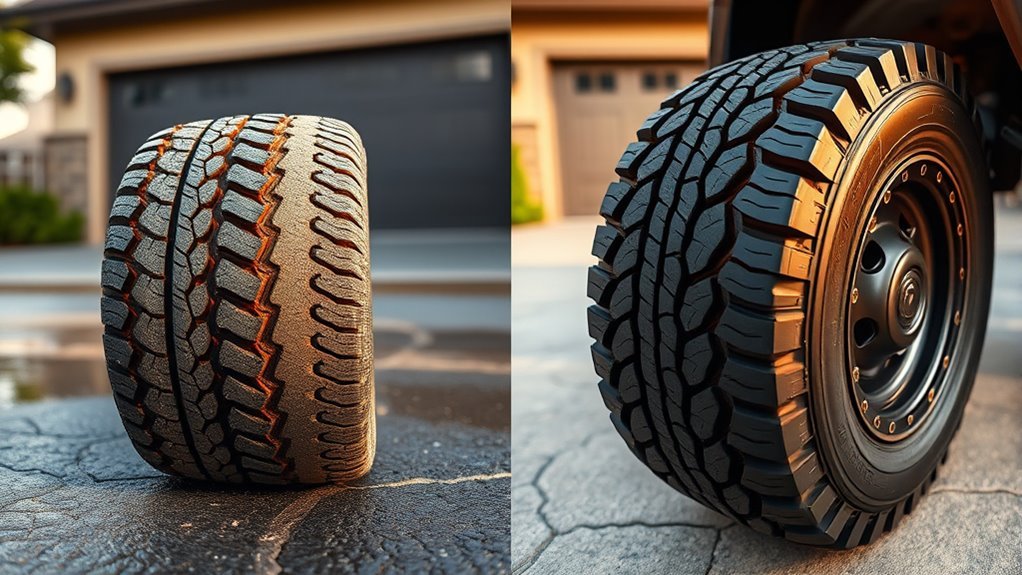
If you drive mostly on pavement, all-terrain tires usually make more sense than mud-terrain tires. You still get light-trail traction, but you avoid much of the road noise, faster pavement wear, rougher ride, and possible fuel-economy penalty that comes with aggressive mud-terrain tread. Choose mud-terrain tires only when deep mud, ruts, rocks, or loose trails are a regular part of your driving, not just an occasional weekend plan.
Quick Answer
For daily driving, choose all-terrain tires if you spend most of your time on highways, city roads, rain, light snow, gravel, or mild trails. Choose mud-terrain tires only if you regularly drive through deep mud, rocky trails, rutted job sites, or steep loose terrain where maximum off-road bite matters more than comfort.
Key Takeaways
- All-terrain tires are the better daily-driver choice for most trucks and SUVs because they balance road comfort with moderate off-road traction.
- Mud-terrain tires work best in deep mud, rocks, ruts, and loose off-road surfaces, but they usually bring more road noise and a rougher highway feel.
- Do not assume every all-terrain tire is snow-rated. Look for the 3PMSF symbol if winter traction matters.
- Check tire size, load rating, speed rating, and cold inflation pressure before choosing any tire style.
- Your real cost depends on mileage, tire price, fuel economy, rotations, alignment, and how often you drive off pavement.
The Real Difference Between All-Terrain and Mud-Terrain Tires
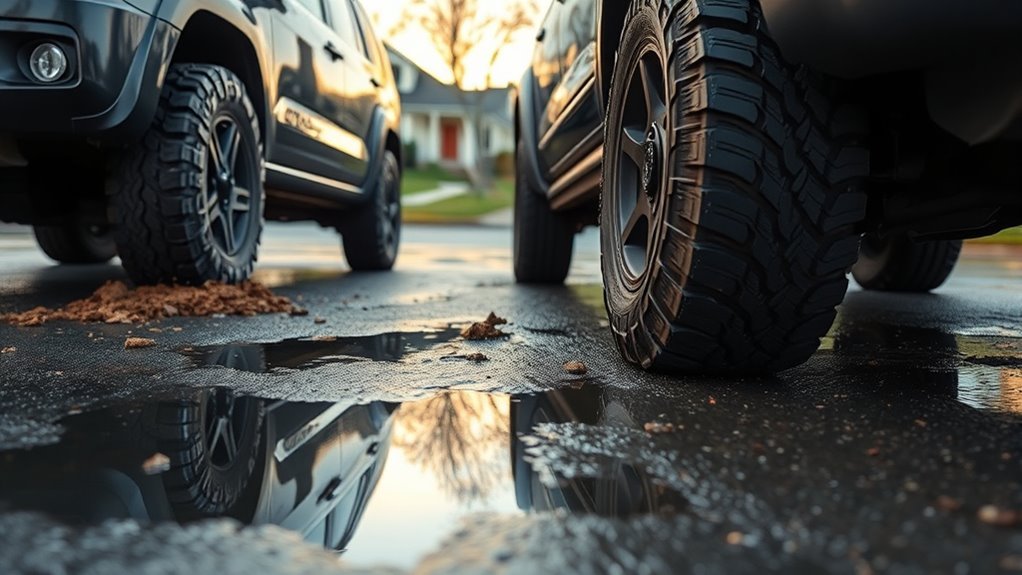
When you compare all-terrain and mud-terrain tires, you are really comparing compromise against specialization. The National Highway Traffic Safety Administration describes all-terrain tires as a compromise between on-road driving and off-road capability, which is exactly why they fit many daily-driven trucks and SUVs. NHTSA TireWise
All-terrain tires use a more balanced tread pattern. Their tread blocks, grooves, and siping are designed to handle pavement, gravel, dirt, rain, and some snow without making the tire feel too harsh on the road.
Mud-terrain tires use larger tread blocks, wider voids, and stronger shoulder lugs. That design helps the tire clear mud, bite into soft ground, and grip uneven rock. The trade-off is simple: the same aggressive pattern that helps off road can feel loud, heavy, and less refined on pavement.
| Category | All-Terrain Tires | Mud-Terrain Tires |
| Best use | Daily driving, gravel, dirt roads, camping routes, mild trails | Deep mud, ruts, rocks, job sites, technical off-road trails |
| Highway comfort | Usually smoother and quieter | Usually louder and more vibration-prone |
| Wet-road manners | Often better for daily rain because of road-focused grooves and siping | Varies by model; large voids can reduce contact stability on pavement |
| Treadwear coverage | Many models include mileage warranties | Many models offer limited warranty coverage without mileage treadwear coverage |
| Best daily choice? | Yes, for most drivers | Only if severe off-road traction is a real need |
3 Questions That Reveal Which Tire Type You Need
Your tire choice should follow your real driving, not the look you want in the driveway. Start with these three questions.
- How much pavement do you drive? If most of your miles are highway, city, suburban, or towing on pavement, all-terrain tires usually fit better.
- How often do you need deep-mud or rock traction? If you hit serious mud, ruts, sharp rocks, or rough job sites every week, mud-terrain tires may be worth the comfort trade-off.
- What weather do you face? If you drive in rain, slush, or light snow, compare wet traction, 3PMSF status, and braking reviews before choosing a tire.
For many drivers, the honest answer is simple: you need a tire that works well on Tuesday morning, not only on Saturday afternoon. That usually points toward all-terrain tires.
Note: Tire category names are broad. One aggressive all-terrain can ride louder than another mild all-terrain, and one newer mud-terrain can feel more controlled than an older design. Always compare the exact model, not just the label.
How Long Do All-Terrain Tires Last vs. Mud-Terrain?
All-terrain tires often last longer on pavement because their tread pattern spreads road contact more evenly. Mud-terrain tires can wear faster during daily highway use because their larger lugs move, flex, and scrub more on hard surfaces.
Manufacturer warranties show the difference clearly. Toyo lists the Open Country A/T III with a treadwear warranty of up to 65,000 miles, with 65,000 miles for P/Euro-metric sizes and 50,000 miles for LT and flotation sizes. BFGoodrich lists the All-Terrain T/A KO2 with a 50,000-mile mileage warranty. By comparison, Toyo lists the Open Country M/T with a limited warranty, not a mileage treadwear warranty.
Tread Life Expectancy
For a daily driver, expect tread life to depend on tire model, vehicle weight, alignment, inflation pressure, rotation habits, road surface, load, towing, and driving style. A heavy diesel truck that tows often can wear the same tire faster than a lightly loaded SUV.
Use mileage warranties as a guide, not a promise. A warranty tells you what the manufacturer is willing to back under its terms. It does not guarantee every driver will reach that mileage.
Warranty Coverage Comparison
All-terrain tires are more likely to include mileage treadwear coverage. Mud-terrain tires often focus on off-road durability, sidewall strength, and traction instead of long mileage coverage.
Before buying, read the warranty booklet for your exact tire size. LT sizes, flotation sizes, commercial use, misalignment, poor inflation, overloading, and lack of rotation can change or void coverage.
Replacement Cost Analysis
Do not compare tires by purchase price alone. Compare cost per mile.
| Cost Item | How to Check It |
| Tire cost per mile | Total installed price ÷ expected miles |
| Fuel impact | Track your MPG before and after the tire change |
| Maintenance cost | Add rotation, balancing, alignment, and repair costs |
| Downtime | Consider how often you will need replacement or service |
Why Mud-Terrain Tires Are So Loud on Highways?
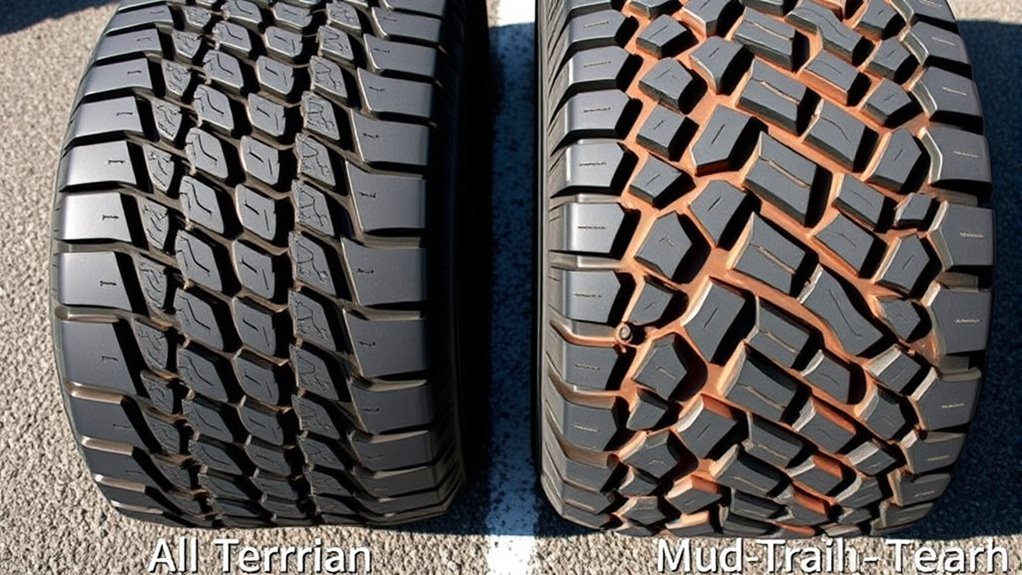
You hear more noise from many mud-terrain tires because their tread blocks are larger and farther apart. At highway speed, those open spaces move air, strike the road surface, and create a steady hum or drone.
All-terrain tires usually use tighter tread spacing and more road-focused patterning. That helps keep the contact patch more stable, which can reduce vibration and cabin noise during long drives.
Tread Block Design
Mud-terrain tread blocks are built to dig. That works in loose ground, but pavement does not need the same clawing action. On asphalt, those blocks can slap the road and send vibration through the steering wheel, floor, and seat.
All-terrain tires give up some extreme mud bite, but they usually feel calmer during commuting, towing, and road trips.
Air Trapping Noise
Large tread voids can trap and release air as the tire rolls. That repeated air movement adds to the sound you hear in the cabin. The faster you drive, the more obvious the pattern noise can become.
You can reduce some tire noise with correct pressure, rotation, balancing, and alignment, but you cannot make an aggressive mud-terrain tire behave like a highway tire.
Pro Tip: Before buying mud-terrain tires for a daily driver, ride in a similar truck with the same tire model at highway speed. Online reviews help, but your ears will tell you more in five minutes.
Daily Driving: All-Terrain Comfort vs. Mud-Terrain Noise
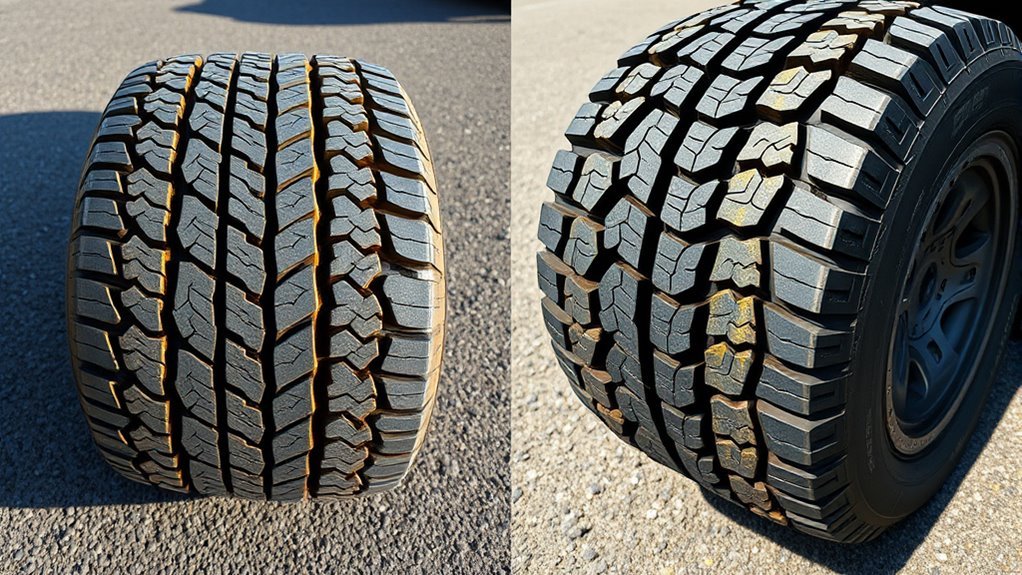
For daily driving, comfort matters more than many buyers expect. A tire that looks tough can become annoying if it drones every morning, follows road grooves, or makes the steering feel heavy.
All-terrain tires usually offer a better balance for commuting because they can handle mild trails without giving up too much road comfort. Mud-terrain tires make sense when off-road grip is a real tool you use often.
You will usually notice three daily-driving differences:
- Noise: Mud-terrain tires often create more hum on highways.
- Ride feel: Larger tread blocks can feel rougher over pavement seams and uneven roads.
- Steering response: Heavier, more aggressive tires can feel slower or less precise.
Rain, Snow, and Ice: Which Tire Handles Better?
In rain and light snow, many all-terrain tires are easier to live with than mud-terrain tires because they use more road-focused grooves and siping. Siping helps create biting edges, while grooves help move water away from the contact patch.
If snow traction matters, do not rely on the words “all-terrain” alone. Look for the Three-Peak Mountain Snowflake symbol on the tire sidewall and confirm it on the manufacturer’s spec sheet.
Some all-terrain tires are 3PMSF-rated. For example, Toyo lists the Open Country A/T III as Three-Peak Mountain Snowflake qualified, and BFGoodrich lists the KO2 as 3PMSF rated. That does not mean every all-terrain tire is winter-ready.
Mud-terrain tires vary. Some include siping and perform acceptably in wet conditions, while others focus much more on mud evacuation than paved-road grip. If your winters include ice, packed snow, or long freezing seasons, compare dedicated winter tires as well.
Warning: A 3PMSF all-terrain tire is not the same as a dedicated winter tire on ice. If you drive in severe winter conditions, check your local tire laws and compare true winter tires before relying on AT or MT tires.
The Annual Fuel Cost of Mud-Terrain vs. All-Terrain Tires
Aggressive tires can affect fuel use because they may be heavier, wider, and less efficient than the tires your vehicle came with. Still, no single MPG number applies to every truck, SUV, tire size, axle ratio, or driving route.
Use this simple formula instead:
Annual fuel cost = annual miles ÷ MPG × fuel price per gallon
For example, if your MPG drops after switching to heavier mud-terrain tires, plug your real before-and-after MPG into that formula. That gives you a more honest answer than any universal estimate.
Also keep pressure in check. FuelEconomy.gov says properly inflated tires are safer, last longer, and can improve gas mileage by 0.6% on average, up to 3% in some cases. FuelEconomy.gov
When All-Terrain Tires Hit Their Off-Road Limits
All-terrain tires are versatile, but they are not magic. They can struggle when the trail gets deep, slick, sharp, or steep enough to demand a true mud-terrain tread.
Deep Mud Conditions
Deep mud is where all-terrain tires often show their biggest weakness. Their tighter tread can pack with mud, which reduces bite and turns the tire into a spinning slick. Mud-terrain tires use wider voids and open shoulders to clear mud more effectively.
If you regularly drive through clay, farm ruts, hunting trails, or muddy job sites, mud-terrain tires may save you from repeated recoveries.
Rock Crawling Challenges
Technical rock crawling puts heavy stress on sidewalls, shoulders, and tread blocks. All-terrain tires can handle mild rocks, but sharp ledges and jagged edges may call for stronger sidewalls and more aggressive shoulder lugs.
If you air down often and crawl over rocks, compare sidewall construction, load range, and puncture resistance before choosing.
Extreme Terrain Boundaries
Choose mud-terrain tires when your driving includes deep ruts, loose climbs, slick clay, sharp rocks, or remote trails where losing traction creates a real safety problem. Choose all-terrain tires when those conditions are rare.
Hybrid Terrain Tires: When Neither AT nor MT Fits
Hybrid terrain or rugged terrain tires sit between all-terrain and mud-terrain designs. They usually look more aggressive than a mild all-terrain but aim to stay more road-friendly than a full mud-terrain.
Consider a hybrid terrain tire if you drive pavement during the week but also need better bite for muddy trails, hunting roads, overlanding routes, or job sites. You still need to check noise reviews, weight, warranty, 3PMSF status, and wet braking because this category varies a lot by model.
[Products Worth Considering]
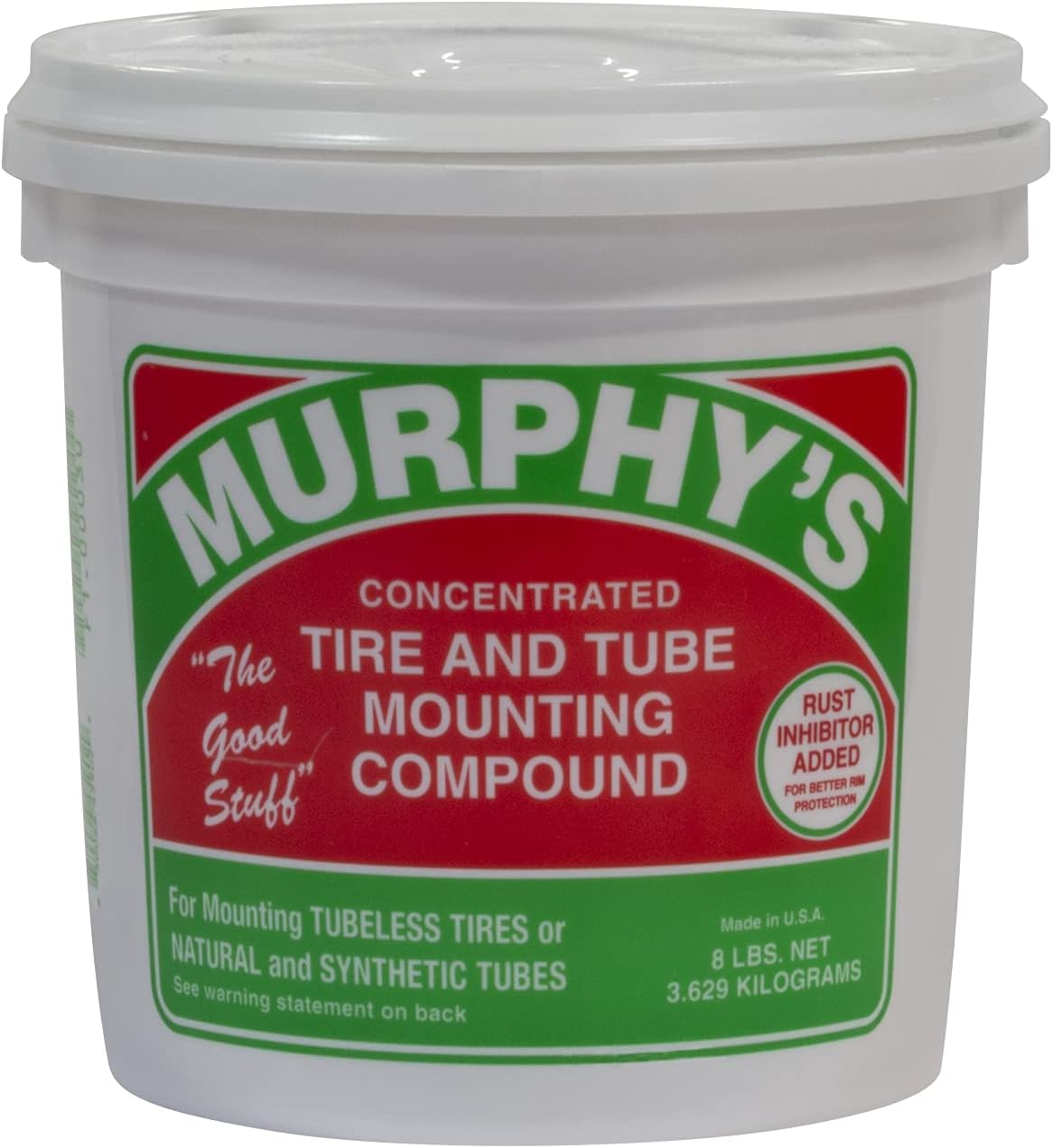
A concentrated tire and tube mounting compound designed to help simplify mounting rubber tires and tubes on passenger, semi truck, construction, and OTR applications. Its ultra-thick formula packs beads effectively and includes rust inhibitors to help protect against corrosion during use.

Monitor tire tread wear with a smart, color-coded depth gauge that shows clear condition ranges at a glance. The bar is range marked for fast, easy readings, helping you maintain safer traction and performance. Each gauge is portable with a pocket clip, and the set includes 20 units for daily use and sharing.
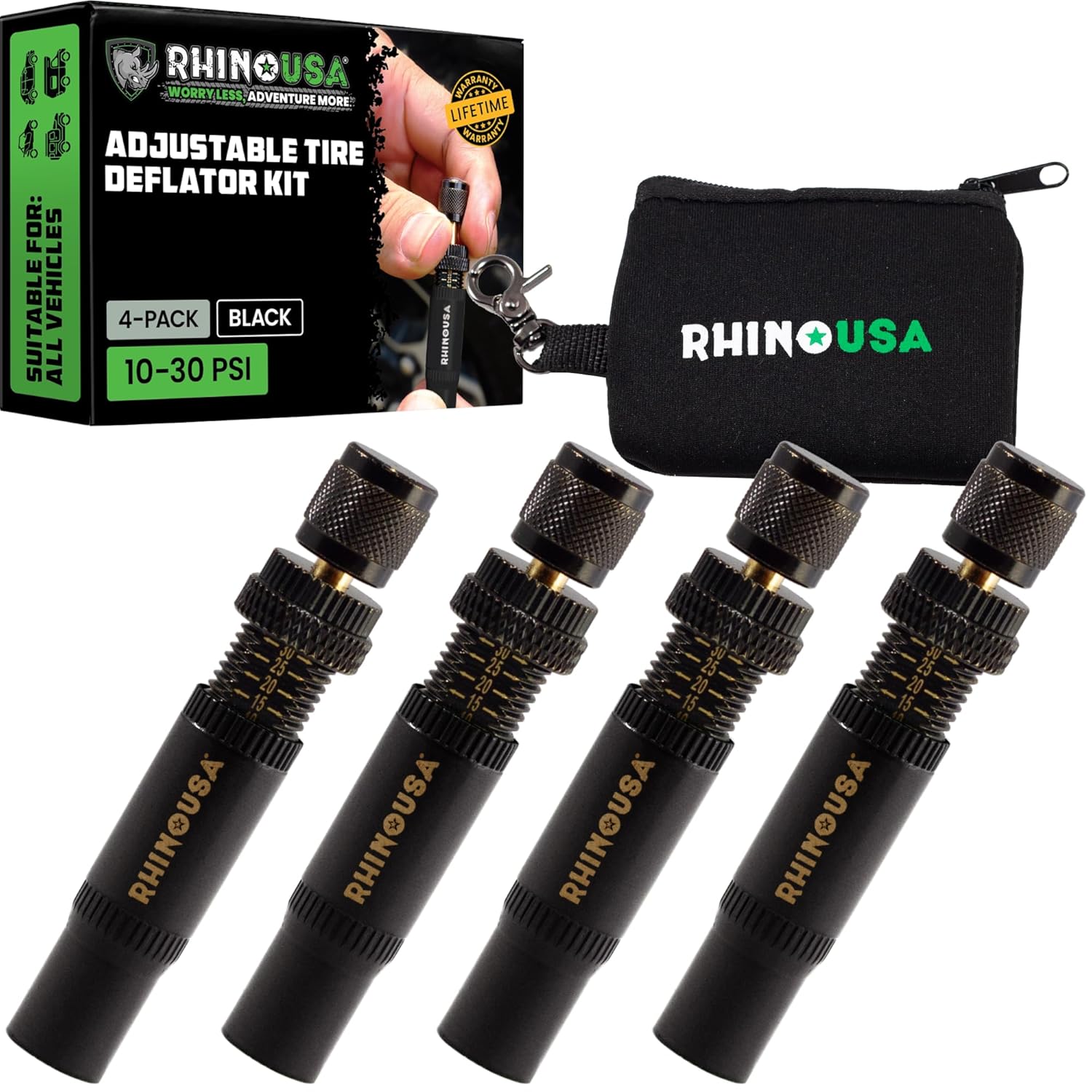
Use the Rhino USA adjustable tire deflators to air down all four tires at once by screwing one deflator onto each valve stem, letting you step away while the tires reach your preset pressure. Each deflator independently adjusts across a 10–30 PSI range with laser-etched indicators for quick setup and verification, making it ideal for beach, sand, and rocky off-road trails.
Fitment and Safety Checks Before You Buy
Never choose tires by tread style alone. Your tire must match your vehicle’s size, load needs, and pressure requirements.
- Check tire size: Use the owner’s manual or the tire placard on the driver’s door area.
- Check load rating: Make sure the tire can carry your vehicle, passengers, cargo, and trailer tongue weight when applicable.
- Check speed rating: Do not downgrade below what your vehicle requires unless a tire professional confirms it is safe and legal for your use.
- Check cold pressure: Use the vehicle placard pressure, not the maximum pressure printed on the tire sidewall.
- Check tread depth: NHTSA says tires should be replaced when tread reaches 2/32 inch.
NHTSA also recommends checking tire pressure at least monthly and rotating tires every 5,000 to 8,000 miles if your vehicle manufacturer recommends rotation. NHTSA TireWise
[Products Worth Considering]

Measure tyre tread depth precisely with a digital gauge that reads in both MM and inches, helping you monitor safe driving conditions. The large LCD screen is easy to operate, and the compact tool fits for cars, trucks, and motorcycles. It provides high accuracy with a 0-25.4mm range and includes a 1-year warranty for added peace of mind.

Keep your tires properly inflated with this analog VONDIOR tire pressure gauge, designed for fast, easy readings without batteries. The swiveling, two-axis hose and large glow dial help you measure at any tire angle with instant visibility. Built with a protective rubber shield, it supports durable, low-maintenance use for cars and trucks.

This ALL-TOP auto-stop tire deflator valve kit lets you air down off-road tires quickly without watching pressure, automatically stopping when your preset PSI is reached. Each valve is individually calibrated for reliable performance with an acceptable +/- 2 PSI tolerance. The adjustable deflator range covers 10 to 30 PSI and includes four valves plus valve caps and a zipper pouch for easy setup on trucks, SUVs, RVs, UTVs, and powersports.
4 Driver Profiles: Which Tire Matches Yours?
Your driving pattern should decide your tire type.
- Daily commuter: Choose all-terrain tires if you want a tougher look and light-trail ability without punishing highway comfort.
- Weekend camper or overlander: Choose a 3PMSF-rated all-terrain if you see gravel, dirt, rain, and light snow more often than deep mud.
- Work-truck driver: Choose all-terrain, hybrid terrain, or mud-terrain based on the job site. Mud-terrain makes sense if ruts, clay, rocks, and construction access roads are common.
- Serious off-roader: Choose mud-terrain tires if you regularly air down, crawl rocks, drive deep mud, or need maximum self-cleaning tread.
For most people, all-terrain tires are the safer first choice. Move to mud-terrain only when your terrain demands it.
[Products Worth Considering]

The Airmoto portable tire inflator quickly and accurately fills car, truck, SUV, motorcycle, and bicycle tires up to 120 PSI with auto shut-off when your target pressure is reached. Its large LCD, multi-unit pressure display, and digital gauge make it easy to dial in settings and verify readings, while the built-in LED flashlight helps in low light. The included polyurethane hard carrying case and storage mesh pocket keep the inflator and accessories protected and organized.

The 22800 wheel stud installer makes replacing wheel studs quick and secure, saving time and effort during tire service. It uses a ratchet or impact wrench to pull new studs firmly into place, helping when existing studs are too long. Compatible with most automotive wheels and light-duty truck wheel studs, it’s designed for easy, tool-assisted installation.

Slip the Powerbuilt tire step over your vehicle’s tire to reach roof racks, engine bays, truck boxes, and more without overreaching. Its adjustable, universal design fits tires with a cross tread width up to 13 inches, including car, truck, RV, and semi tires. The non-slip cheesegrater surface and anti-slip tape provide secure grip while the open design lets mud and debris pass through. Fold-flat storage with rubber bumpers helps keep your tire and the step protected between uses.
Frequently Asked Questions
Are mud-terrain tires good for everyday driving?
Mud-terrain tires can be used every day if they are street-legal and properly fitted, but they are usually not the best daily-driver choice. They often create more road noise, ride rougher, and may wear faster on pavement than all-terrain tires.
Are all-terrain tires better in rain?
Many all-terrain tires are better suited to daily rain than mud-terrain tires because they often use more road-focused grooves and siping. Still, wet traction depends on the exact model, tread depth, age, pressure, and vehicle setup.
Do all-terrain tires last longer than mud-terrain tires?
They often last longer on pavement, especially when they include a mileage treadwear warranty. Mud-terrain tires can wear faster during highway use because their aggressive tread blocks flex and scrub more on hard surfaces.
Are mud-terrain tires bad in snow?
Mud-terrain tires can work in loose snow, but they are not automatically good on packed snow or ice. If winter safety matters, look for 3PMSF-rated tires and compare dedicated winter tires for severe ice and snow.
Will mud-terrain tires lower fuel economy?
They can, especially if they are heavier, wider, or more aggressive than your previous tires. The best way to know is to track your MPG before and after installation using the same route and driving style.
Conclusion
Choose all-terrain tires if your truck or SUV spends most of its life on pavement with occasional gravel, dirt, camping roads, or mild trails. They give you the best mix of comfort, tread life, wet-road control, and light off-road ability.
Choose mud-terrain tires only when your real driving includes deep mud, ruts, rocks, or rough job sites often enough to justify the extra noise and pavement trade-offs. The right tire is not the most aggressive one. It is the one that matches your roads, weather, load, and actual off-road use.
Sources
- NHTSA TireWise — tire type guidance, tread depth, inflation, rotation, balancing, alignment, and safety checks.
- FuelEconomy.gov: Keeping Your Vehicle in Shape — tire pressure and fuel-economy guidance.
- Toyo Open Country A/T III — all-terrain example with 3PMSF qualification and mileage warranty details.
- Toyo Open Country M/T — mud-terrain example with off-road positioning and limited warranty details.
- BFGoodrich All-Terrain T/A KO2 — all-terrain example with 3PMSF status and mileage warranty details.