
Tire sidewall markings tell you far more than the tire size. On a Toyota RAV4, they help confirm whether a tire fits the wheel, can carry the vehicle’s load, matches the recommended speed rating, suits the season, and is inflated safely. Once you know how to read the code, choosing replacement tires becomes much less confusing.
Quick Answer
RAV4 tire sidewall markings show the tire’s type, width, aspect ratio, construction, wheel diameter, load index, speed rating, age, and seasonal capability. Match the size, load rating, speed rating, and cold tire pressure to the tire and loading information label on your driver’s door jamb, not just the numbers printed on the tire.
Key Takeaways
- A code such as P225/65R17 102H tells you the tire type, width, sidewall height, construction, wheel size, load index, and speed rating.
- Your RAV4’s correct tire size and cold inflation pressure are listed on the tire and loading information label, usually on the driver’s door jamb.
- The sidewall’s maximum pressure is not the recommended daily driving pressure.
- M+S tires can handle light mud and snow, but the Three-Peak Mountain Snowflake symbol is the stronger winter-traction marker.
- The DOT/TIN date code helps you check tire age, even when the tread still looks usable.
At a Glance
| Time Required | 5–10 minutes per tire |
| Difficulty | Easy |
| Tools Needed | Flashlight, tire pressure gauge, your RAV4 tire placard or owner’s manual |
| Cost | Free if you already have a tire pressure gauge |
Decoding Tire Type and Size Codes
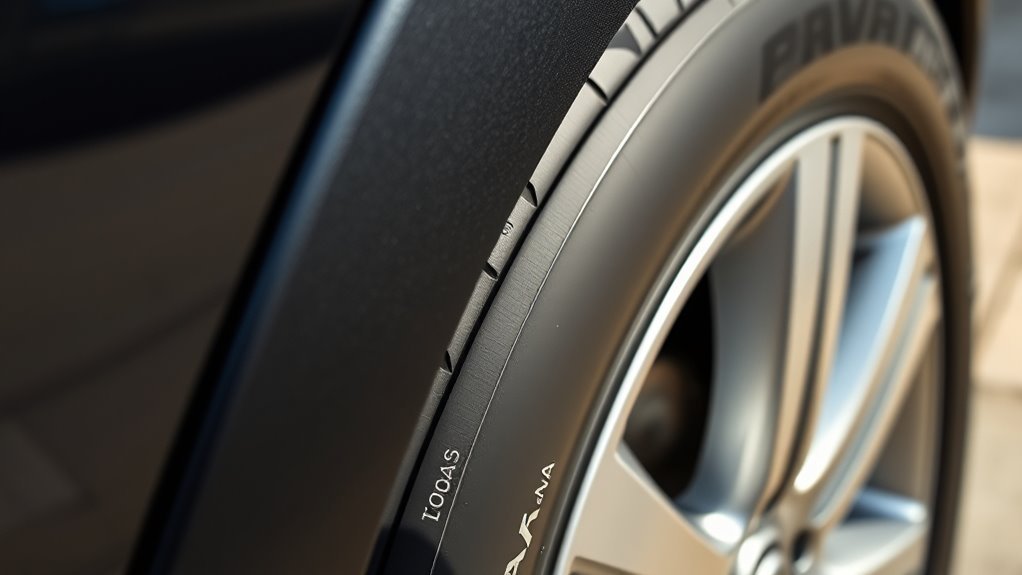
When you check your tire sidewall, the main size code may look something like P225/65R17. Your exact RAV4 size can vary by model year, trim, wheel package, and market, so always compare the sidewall with the label on the driver’s door jamb and the owner’s manual.
Here is how to read the common format:
- P: Passenger-vehicle tire. Some tires may not show a starting letter, especially metric passenger tires.
- 225: Tire width in millimeters, measured from sidewall to sidewall.
- 65: Aspect ratio. This means the sidewall height is 65% of the tire’s width.
- R: Radial construction, the standard construction type for modern passenger SUVs like the RAV4.
- 17: Wheel diameter in inches. A 17-inch tire must go on a 17-inch wheel.
Warning: Never choose a tire only because it “looks close.” A small change in wheel diameter, load rating, or overall tire size can affect fitment, handling, speedometer accuracy, and safety systems.
[Products Worth Considering]

Monitor tire tread wear with a smart, color-coded depth gauge that shows clear condition ranges at a glance. The bar is range marked for fast, easy readings, helping you maintain safer traction and performance. Each gauge is portable with a pocket clip, and the set includes 20 units for daily use and sharing.

Keep your tires properly inflated with this analog VONDIOR tire pressure gauge, designed for fast, easy readings without batteries. The swiveling, two-axis hose and large glow dial help you measure at any tire angle with instant visibility. Built with a protective rubber shield, it supports durable, low-maintenance use for cars and trucks.

Measure tire tread depth quickly and accurately with this LUMITECO dial gauge that reads in 1/32" increments up to 14/32". The color-coded green/yellow/red zones make it easy to judge tire wear and know when replacement is needed. A rugged, compact design with a protective pouch helps keep the gauge ready for use on cars, trucks, motorcycles, and more.
Load Index: What It Means for You
The load index is the number after the tire size, such as the 102 in P225/65R17 102H. It tells you how much weight one tire can carry when inflated correctly. For example, a load index of 102 equals a maximum load capacity of 1,874 pounds per tire.
Do not replace your RAV4 tires with a lower load index than Toyota specifies. A lower-rated tire may not safely support the vehicle, passengers, cargo, and towing tongue weight where applicable.
| Load Index | Approx. Max Load Per Tire |
|---|---|
| 99 | 1,709 lb |
| 100 | 1,764 lb |
| 101 | 1,819 lb |
| 102 | 1,874 lb |
| 103 | 1,929 lb |
Note: Load index steps are not a simple fixed number across the whole chart. Use the tire manufacturer’s load index chart or ask a qualified tire professional if you are comparing sizes.
Speed Ratings: Understanding Their Impact on Tire Performance
The speed rating is the letter after the load index. In P225/65R17 102H, the H means the tire is rated for sustained speeds up to 130 mph under controlled test conditions.
| Speed Rating | Max Speed | Common Use |
|---|---|---|
| T | 118 mph / 190 km/h | Many touring and all-season tires |
| H | 130 mph / 210 km/h | Touring and crossover tires |
| V | 149 mph / 240 km/h | Performance-oriented tires |
| W | 168 mph / 270 km/h | High-performance tires |
| Y | 186 mph / 300 km/h | Ultra-high-performance tires |
For replacement tires, match or exceed the original speed rating unless your owner’s manual, tire shop, or Toyota dealer confirms a different rating is suitable. Speed rating is not just about top speed; it can also reflect tire construction, heat resistance, and handling feel.
Interpreting Construction Types: Radial vs. Bias
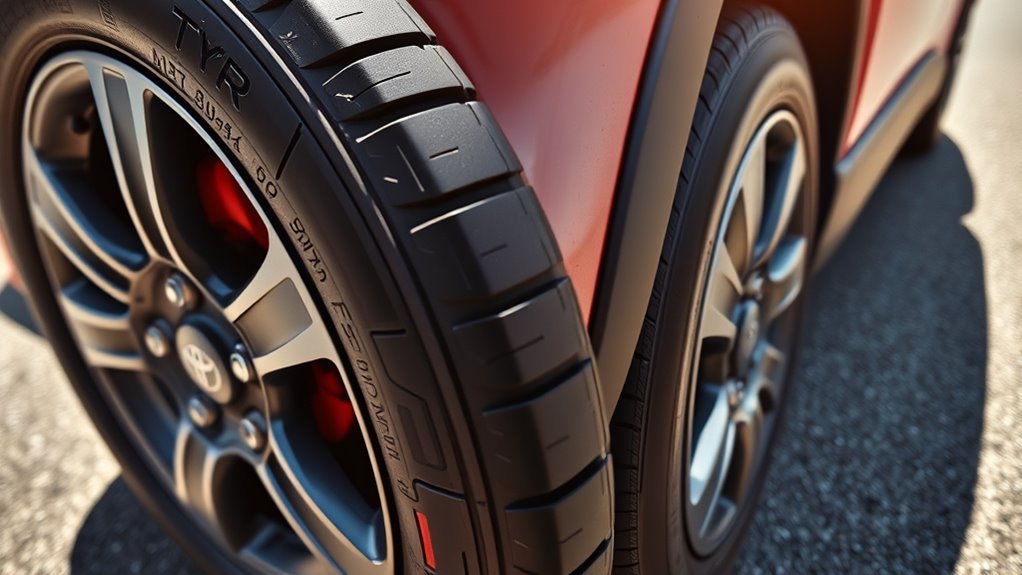
The construction letter in the tire size tells you how the tire is built. For most RAV4 owners, the important letter is R, which means radial.
- Radial tires (R): The cord layers run across the tire from bead to bead. Radials usually provide better ride comfort, tread life, heat control, and fuel efficiency for everyday driving.
- Bias-ply or diagonal tires (D): The cord layers cross at angles. These are uncommon on modern passenger SUVs and are usually not the right choice for normal RAV4 replacement tires.
- Belted bias tires (B): Rare on modern passenger vehicles and not typical for a RAV4.
Unless your vehicle documentation says otherwise, a RAV4 should use radial passenger or light-truck tires that match the size, load index, and speed rating specified for your trim.
DOT/TIN and Tire Age: The Marking Many Drivers Miss
The DOT Tire Identification Number, often called the TIN, shows that the tire meets U.S. Department of Transportation marking requirements and identifies the tire’s plant, size, manufacturer code, and production date.
The last four digits are the date code. For example, 2324 means the tire was made in the 23rd week of 2024. This code may appear on only one side of the tire, so you may need to check the inner sidewall.
Pro Tip: Check tire age when buying “new” tires. A tire can have full tread and still be older than expected if it sat in storage for years.
Tire age matters because rubber changes over time. If your tires are several years old, have cracking, or have unknown history, have them inspected even if the tread depth looks acceptable.
UTQG: Treadwear, Traction, and Temperature Ratings
Many passenger tires sold in the United States include Uniform Tire Quality Grading markings, often written as Treadwear, Traction, and Temperature.
- Treadwear: A comparative number that estimates wear compared with a government test tire. Higher is generally longer-lasting, but only compare ratings within the same brand carefully because real-world wear depends on driving, alignment, rotation, pressure, and road conditions.
- Traction: A grade such as AA, A, B, or C based on wet straight-line braking traction on test surfaces.
- Temperature: A grade such as A, B, or C showing heat resistance under test conditions.
UTQG can help compare tires, but it should not override the RAV4’s required size, load index, speed rating, and seasonal needs.
Understanding M+S and Snowflake Markings for Winter Tires
Winter tire markings can be confusing because M+S and the Three-Peak Mountain Snowflake symbol do not mean the same thing.
[Products Worth Considering]

Vigorder rubber cement glue delivers superior adhesion and cures quickly within about 30 seconds for seamless rubber bonding. Once cured, it helps provide a strong, durable, waterproof seal that holds up to vehicle weight, pressure, and heat. Suitable for cars, motorcycles, trucks, bicycles, and off-road tires, it’s designed for emergency patch and maintenance repairs.
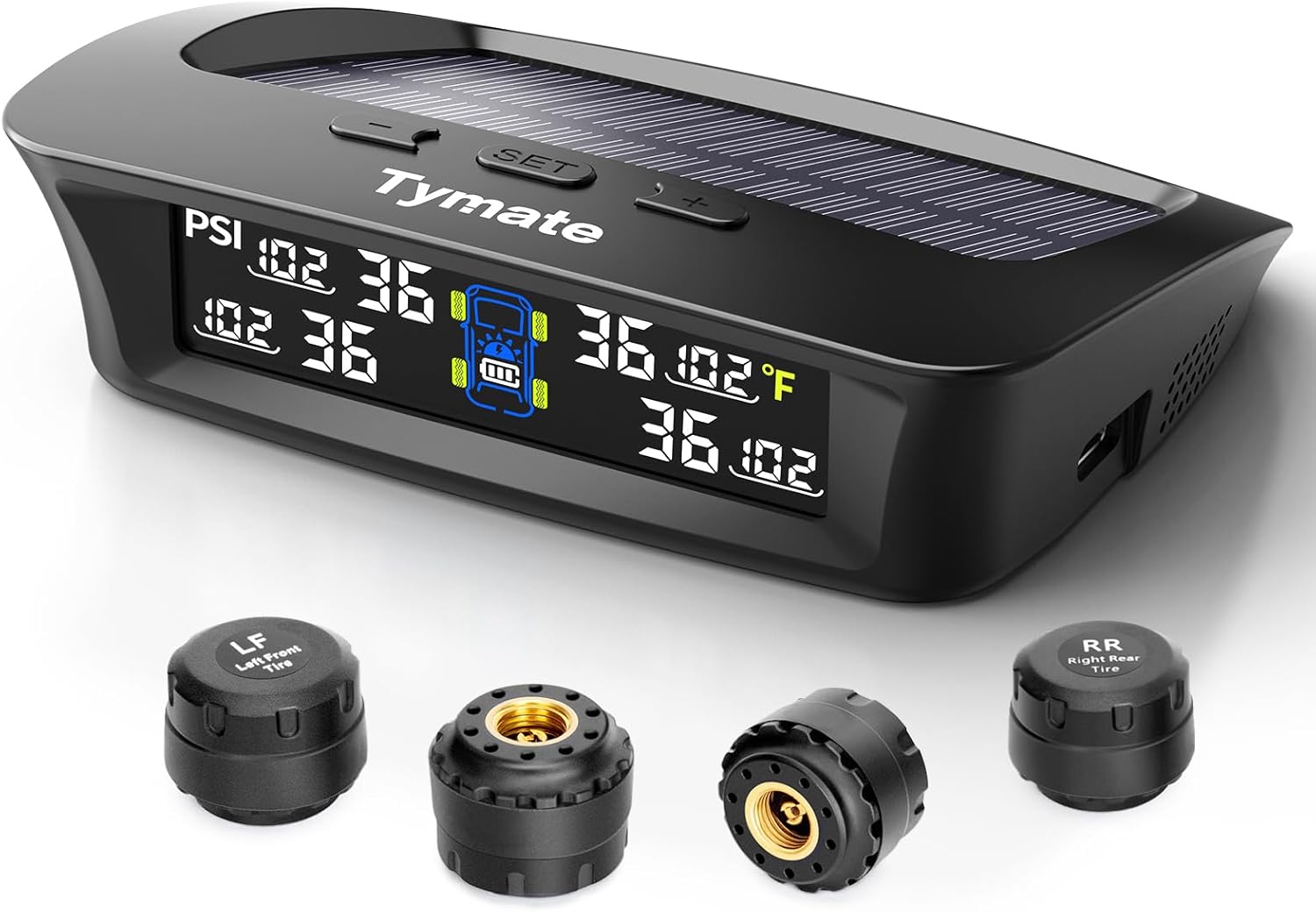
The Tymate TM3 RV TPMS delivers real-time tire pressure monitoring from 0 to 144 PSI with accurate readings and dependable wireless communication. It includes four external sensors with pre-pairing, six alarm modes for rapid leak, pressure extremes, temperature, and signal loss, plus an easy-reference setup for alert thresholds. Solar and USB-C charging help keep the display powered, while the color LCD and adaptive backlight improve visibility for safer driving and towing.

The SAFELIFE dial tire tread depth gauge measures tread depth in 1/32 inch increments with clear, easy-to-read 2-inch dial face. Color zones using a traffic light system help you quickly judge whether tread is low, marginal, or ample for safer driving. Built with a durable zinc cast body and a metal detect probe for precise, comfortable use across cars, motorcycles, trucks, and buses.
M+S Designation Explained
M+S, also written as M/S or M&S, stands for mud and snow. Many all-season tires carry this marking. It means the tire has a tread pattern intended to offer better traction in mud or light snow than a summer tire.
However, M+S alone does not prove strong winter performance. It does not mean the tire has passed the same severe-snow traction test used for the Three-Peak Mountain Snowflake marking.
Snowflake Symbol Significance
The Three-Peak Mountain Snowflake, also called 3PMSF, identifies tires that meet a recognized snow-traction performance test. It is a better marker for winter capability than M+S alone.
| Marking | What It Means | Best Use |
|---|---|---|
| M+S | Tread design suitable for mud and light snow | Mild winter conditions |
| 3PMSF | Meets a snow-traction performance standard | Regular snow and colder winter driving |
| Ice-grip symbol | Indicates ice-braking performance under a separate standard where used | Icy winter climates |
Note: The 3PMSF test focuses on snow acceleration traction. It does not automatically mean the tire has the best ice braking or cornering performance.
Choosing Winter Tires Wisely
If you drive your RAV4 in heavy snow, freezing rain, mountain passes, or long periods below about 45°F / 7°C, dedicated winter tires or severe-snow-rated all-weather tires are usually safer than standard all-season tires.
- Choose 3PMSF tires for regular winter weather, not just M+S tires.
- Install four matching tires so traction stays balanced from front to rear.
- Use the correct size and load rating from your RAV4 tire placard.
- Check local rules if you live where winter tires, chains, or snow-rated tires are legally required during certain months or on certain roads.
Why Tire Pressure Matters
Correct tire pressure affects safety, tire wear, fuel economy, steering response, braking, and ride comfort. Toyota states that the recommended cold tire inflation pressure and tire size are shown on the tire and loading information label. Toyota also recommends checking tire pressure regularly with a gauge, not relying only on the tire pressure warning system.
Keeping tires properly inflated can improve gas mileage by 0.6% on average and up to 3% in some cases, according to FuelEconomy.gov.
Optimal Performance Levels
The correct pressure for your RAV4 is not the maximum pressure printed on the tire sidewall. The sidewall shows a tire limit; the door-jamb placard shows the vehicle’s recommended cold pressure.
- Check pressure when tires are cold, before driving or after the vehicle has been parked for several hours.
- Use a reliable tire pressure gauge.
- Check all four tires and the spare if your RAV4 has one.
- Recheck after major temperature swings because pressure changes with temperature.
- Follow the tire rotation schedule in your owner’s manual.
Safety and Longevity
Under-inflated tires can overheat, wear along the shoulders, reduce fuel economy, and increase the risk of tire failure. Over-inflated tires can wear more in the center, ride harshly, and reduce grip on rough or wet roads.
Warning: If the tire pressure warning light comes on while driving, stop somewhere safe and check the tires. A TPMS light can indicate low pressure, a flat tire, or a system issue.
Choosing the Right Tires for Seasonal Conditions
The best RAV4 tire depends on your climate, driving style, trim, and road conditions. The right tire for a warm city commute may not be the right tire for mountain snow, gravel roads, or frequent highway trips.
- All-season tires: Good for moderate climates and everyday driving, but limited in deep snow, ice, and extended freezing temperatures.
- All-weather tires: Often carry the 3PMSF symbol and can be a good year-round option in areas with occasional snow.
- Winter tires: Best for regular snow, ice, and cold conditions. Use a complete set of four.
- Touring tires: Prioritize comfort, low noise, and long tread life.
- All-terrain tires: Useful for gravel, dirt roads, and light off-road use, but may add road noise and reduce fuel economy.
[Products Worth Considering]

The Big Rig Defense Tire Thumper is a truck tire pressure checker that lets you quickly check multiple tires by giving them a firm whack. Listen for a reassuring thump and feel the stick bounce when a tire is fully inflated, helping you get back on the road safely. It features a comfortable, glove-friendly handle and a secure wrist strap for confident use on busy routes.
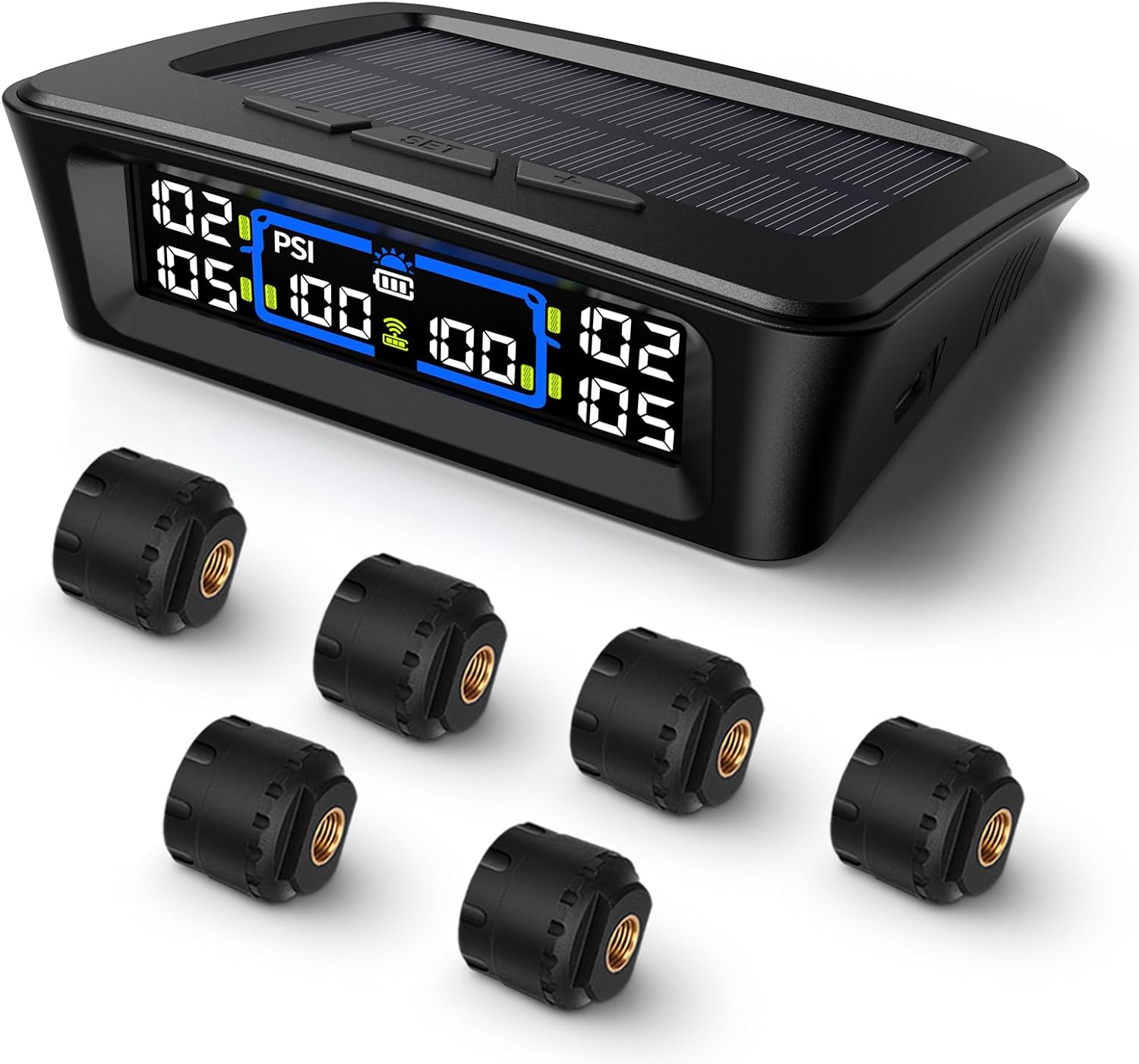
The Tymate TM12 RV TPMS delivers real-time tire pressure and temperature monitoring with a stable 433Hz display for safer long-distance driving. It supports simultaneous monitoring across vehicle and trailer zones, includes six alarm modes for pressure, temperature, leakage, battery, and signal loss, and features easy DIY installation with auto calibration. Power is supplied via USB-C charging or solar recharging, with a wide 0–144 PSI range and up to 50 ft signal coverage for RVs and towable trailers.

The Tymate TM2 RV tire pressure monitoring system keeps you informed with a color LCD display, automatic backlight, and solar charging for dependable operation. It supports up to 10 tire positions with four pre-paired sensors, while offering multiple alarm modes for fast leak detection, pressure extremes, temperature alerts, and low-signal warnings. Built-in monitoring uses accurate readings and reliable 433.92MHz communication to help protect your RV, trailer, truck, or SUV.
How to Check Your RAV4 Tire Sidewall Step by Step
- Find the tire placard. Open the driver’s door and look for the tire and loading information label.
- Write down the recommended size. Note the tire size, load rating, and cold inflation pressure listed for your RAV4.
- Read the sidewall size. Compare the tire’s size code with the placard.
- Check the load index and speed rating. Make sure they meet or exceed the recommended specification.
- Look for seasonal markings. Check whether the tire has M+S, 3PMSF, or summer-only markings.
- Find the DOT/TIN date code. Confirm the tire’s production week and year.
- Inspect condition. Look for cracks, bulges, punctures, uneven wear, exposed cords, or objects stuck in the tread.
- Measure pressure cold. Inflate to the vehicle placard pressure, not the sidewall maximum.
Common Sidewall Mistakes to Avoid
- Using the sidewall maximum PSI as the daily pressure: This is a tire limit, not Toyota’s recommended pressure.
- Replacing only one tire with a mismatched rating: Different load, speed, tread, or diameter can affect handling and all-wheel-drive behavior.
- Ignoring the date code: Tire age matters even if tread depth looks fine.
- Assuming M+S means winter tire: M+S is not the same as the 3PMSF severe-snow marking.
- Buying by wheel diameter only: A 17-inch tire is not automatically correct just because your wheel is 17 inches.
Frequently Asked Questions
Will my RAV4 tell me which tire is low?
Some RAV4 model years and trims may show individual tire pressure information, while others only show a general tire pressure warning light. Toyota warns that TPMS alerts the driver when tire pressure is critically low, but you should still check pressure regularly with a gauge.
Is a higher sidewall better for a RAV4?
A taller sidewall can improve ride comfort and help absorb potholes or rough roads. The tradeoff is usually less sharp handling compared with a shorter sidewall. Do not change sidewall height unless the overall tire size is approved for your RAV4.
Can I use a different tire size on my RAV4?
Use the size listed on your tire placard or an approved alternate size from Toyota or a qualified tire professional. Random size changes can affect clearance, speedometer readings, braking, stability control, and all-wheel-drive operation.
What does XL mean on a tire sidewall?
XL means extra load. An XL tire can carry more weight at its specified pressure than a standard-load tire of the same size. Only use XL tires when they match your RAV4’s size, load, speed, and pressure requirements.
Where is the correct RAV4 tire pressure listed?
The correct cold tire pressure is listed on the tire and loading information label, usually on the driver’s door jamb. It is also in the owner’s manual. Do not use the maximum pressure molded into the tire sidewall as your normal driving pressure.
Conclusion
Reading tire sidewall markings turns a confusing string of letters and numbers into practical safety information. For your RAV4, focus on the tire size, load index, speed rating, construction type, DOT date code, seasonal markings, and cold tire pressure. When those markings match Toyota’s placard and your driving conditions, you get a safer, smoother, and more reliable ride.
Sources
- NHTSA TireWise — tire sidewall markings, tire safety, ratings, and general tire maintenance guidance.
- Toyota Owners: Tire Inflation Pressure — RAV4 tire pressure label location and tire pressure checking guidance.
- Toyota Support: Tire Pressure Monitor — TPMS limitations and the need to check pressure with a gauge.
- FuelEconomy.gov: Keeping Your Vehicle in Shape — fuel economy effects of proper tire inflation.
- Tire Rack: Three-Peak Mountain Snowflake Symbol — explanation of 3PMSF snow-traction testing and limitations.