

Disclosure: As an Amazon Associate, we earn from qualifying purchases. If you click a link on this page and make a purchase, we may receive a small commission at no extra cost to you.
Keeping tire pressure accurate is easier when one tool can read pressure, add air, and bleed off excess air. The SPECSTAR 2-Pack Digital Tire Inflator is built for that job, but it must connect to an air compressor and cannot inflate a tire by itself. Its main strengths are the 0.1-resolution backlit display, 250 PSI measurement range, locking chuck, and two-unit package. This review helps you decide whether that setup fits your garage, vehicle fleet, or occasional maintenance needs.
Quick Verdict
Rating: 7.5/10, recommended with caveats
Best For: Home garages, multi-car households, and small workshops that already own a compatible air compressor
Bottom Line: You get two compact inflator gauges with a clear display and useful inflate, check, and bleed functions. The tradeoff is that neither unit is a standalone portable compressor or an automatic preset inflator.
Key Specifications
| Specification | Detail |
|---|---|
| Brand | SPECSTAR |
| Product type | Digital tire inflator gauge and air-compressor accessory |
| Package quantity | 2 inflator gauges |
| Pressure range | 0 to 250 PSI |
| Display resolution | 0.1 |
| Measurement units | PSI, bar, kPa, and kg/cm² |
| Display | Backlit digital screen |
| Main materials | Brass fittings, rubber hose, and protective rubber body covering |
| Functions | Checks pressure, adds air through a compressor, and releases excess air |
| Compressor connection | Quick-connect setup for compatible compressor fittings |
| Vehicle compatibility | Cars, SUVs, motorcycles, light trucks, RVs, and trailers using compatible valve stems |
| Display power | Replaceable batteries |
| Warranty | One-year limited warranty listed by the retailer |
| Key limitation | Requires an external air compressor and does not stop airflow automatically at a preset tire pressure |
SPECSTAR 2-Pack Digital Tire Inflator
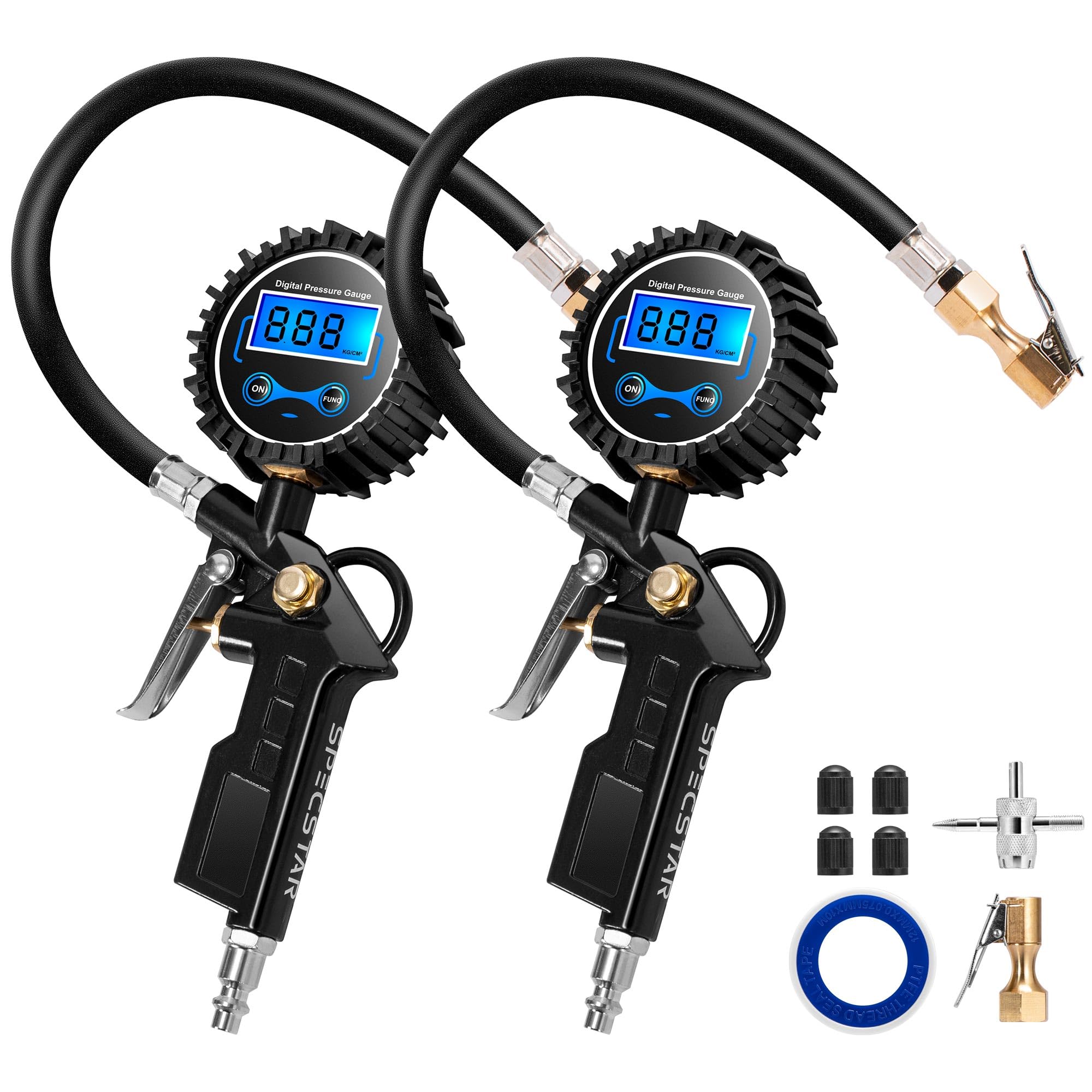
Two digital inflator gauges with a 250 PSI range, backlit display, rubber hose, locking air chuck, bleed control, and quick-connect compressor fitting.
View Product on Amazon →Before You Buy: This is not a battery-powered or 12-volt portable air compressor. You need a separate compressor, a compatible air-line coupler, and enough compressor output for the tire you plan to service.
What Is the SPECSTAR 2-Pack Digital Tire Inflator?
The SPECSTAR set combines a pressure gauge, inflator trigger, rubber hose, locking chuck, and air-release control in one handheld tool. Once you connect it to a compatible compressor line, you can check pressure, add air, and bleed off excess pressure without swapping between separate tools.
The two-pack suits a garage with more than one work area or a household that wants a primary gauge and a backup. The 250 PSI range is far above normal passenger-car pressure, but that figure describes the gauge’s measurement range. It does not mean every tire should be inflated near 250 PSI or that your compressor can supply that pressure.
Who Should Buy It?
Best For
- You already own an air compressor and want one tool for checking, filling, and bleeding tires.
- You maintain several cars, motorcycles, trailers, or other compatible vehicles.
- You want two gauges so you can keep a backup or equip two garage stations.
Skip If
- You need a self-powered inflator for roadside emergencies.
- You want to enter a target PSI and let the machine stop automatically.
- Your compressor hose or valve setup does not match the supplied connections.
[Products Worth Considering]

AstroAI’s digital tire pressure gauge with inflator helps you quickly check, inflate, and deflate tires with an easy lock-on chuck and integrated bleed valve. It delivers calibrated accuracy within 1% for a clear PSI readout from 3 to 250 PSI, supporting dependable tire maintenance. Designed for many vehicle types, it connects to common compressor outputs and standard Schrader valves.

AstroAI’s digital tire pressure gauge inflates and measures with high accuracy, reading within 1% and supporting four pressure units from 3 to 250 PSI. The heavy-duty brass air chuck locks securely on valve stems, while the 19.7-inch stainless braided hose and 360° rotatable dial improve comfort and control for faster single-hand operation. Battery-saver behavior and an integrated flashlight add convenience and safety for everyday roadside and garage use.

The ETENWOLF T500 digital tire pressure gauge with inflator delivers accurate readings across a wide 0–250 PSI range, calibrated to ANSI B40.7 Grade 2A. An all-in-one tool combines gauge, air chuck, hose, inflating and controlled bleed for checking, inflating, and deflating tires on many vehicle types. It’s built for reliable use in extreme temperatures and features an illuminated backlit display with replaceable AAA batteries for convenient operation.
Feature-by-Feature Review
Backlit Display and Pressure Readings
The digital screen shows readings at 0.1 resolution and supports PSI, bar, kPa, and kg/cm². The backlight helps when you are working in a dim garage or checking a tire before sunrise. A digital display is also easier to read quickly than a small analog dial, especially when you are adjusting pressure in small steps.
Resolution and accuracy are not the same measurement. A 0.1 readout means the screen can display tenths, but you should still compare both units against a trusted reference gauge when they arrive. If the two SPECSTAR gauges disagree noticeably, stop using the questionable unit until you confirm which reading is correct.
Materials and Build
Brass fittings handle the main air connections, while the rubber hose gives you enough flexibility to reach a valve without holding the gauge directly against the wheel. The rubber covering around the body can improve grip and offers some protection from light garage bumps.
This is still a compact consumer tool rather than a heavy shop inflator built for constant commercial use. The battery compartment, screen, hose joints, chuck seal, and quick-connect fitting deserve a close inspection before regular use. Any air leak at a connection can slow inflation and make the reading less stable.
Inflate, Check, and Bleed Controls
The all-in-one layout is the product’s most useful feature. You attach the chuck to the tire valve, read the current pressure, pull the control to add air from your compressor, and use the bleed valve to release small amounts if you overshoot. That workflow saves time because you do not need to remove the tool after every adjustment.
The display may shut down automatically to preserve battery power, but that is not a preset-pressure stop. You remain responsible for watching the reading and releasing the inflator control when the tire reaches the vehicle manufacturer’s recommended pressure.
Compressor and Valve Compatibility
The inflator must connect to a compatible compressed-air line. Before ordering, compare the coupler and thread setup with your compressor hose. An adapter may be needed when your shop uses a different fitting standard.
The locking air chuck is intended for common automotive-style valve stems. It can work across cars, SUVs, motorcycles, light trucks, RVs, and trailers when the valve stem is accessible and compatible. Tight wheel openings, dual rear wheels, angled motorcycle valves, or recessed stems may require a different chuck or extension.
How It Performs in Real Use
Routine Passenger-Car Checks
For monthly checks, the bright screen and combined controls make small corrections straightforward. Check the tires when they are cold, attach the chuck firmly, and compare the display with the pressure shown on the driver’s door placard. The 0.1 readout helps you make measured changes without repeatedly removing the tool.
Multi-Car Households
The two-pack is useful when two drivers maintain vehicles in different places. You can keep one unit near the main compressor and store the second with another compressor or workbench. Keeping one loose in a trunk does not provide emergency inflation unless you also carry a suitable portable compressor.
Trailer and RV Preparation
The broad measurement range can cover many higher-pressure applications, but the tire placard, wheel rating, valve rating, and compressor capacity still control what is safe. Check every tire before a trip and do not use the sidewall maximum as a universal target. A stable seal matters because trailer and RV valve positions can be harder to reach.
Motorcycles and Small Garage Jobs
The flexible hose can make motorcycle valves easier to reach than a rigid pencil gauge. Still, brake discs, spokes, and tight valve angles may limit access. Confirm that the chuck locks without side-loading the valve stem, and use a suitable adapter when the wheel design requires one.
How to Use It Correctly
- Find the recommended cold-tire pressure on the vehicle placard or in the owner’s manual.
- Confirm that the tire, valve stem, hose, coupler, and compressor are in good condition.
- Connect the SPECSTAR gauge to the compressor line and check each joint for leaks.
- Turn on the display, select the correct pressure unit, and make sure the reading returns to zero.
- Lock the chuck onto the tire valve so it forms a firm seal.
- Read the pressure, add air in short bursts, and pause airflow before judging the final reading.
- Use the bleed control for small corrections if the pressure is too high.
- Remove the chuck, reinstall the valve cap, and recheck with a trusted gauge when accuracy is critical.
Pro Tip: Test both included gauges on the same cold tire before relying on them. Close agreement gives you a useful baseline, while a large difference tells you to verify them against a known reference gauge.
Compatibility and Safety
Use the pressure listed by the vehicle manufacturer, not a guess based on tire appearance. The pressure molded into a tire sidewall usually represents a maximum condition, not the normal target for your vehicle. Check cold tires when possible because driving heats the air and raises the displayed pressure.
Wear eye protection around pressurized air, keep your face away from the valve and fittings, and never use damaged hoses or cracked connectors. Do not exceed the ratings of the tire, wheel, valve stem, hose, coupler, gauge, or compressor. If pressure drops repeatedly, inspect the tire for a puncture or valve leak instead of treating constant top-offs as a permanent repair.
What People Say
The existing customer-feedback summary is mixed but generally favors the readable screen, quick-connect layout, and solid-feeling brass parts. The recurring caution involves occasional display or battery-compartment problems. Because this is a two-pack, inspect and test both units as soon as they arrive rather than assuming they will read identically.
Overall Sentiment: Neutral

Pros and Cons
Pros
- Two inflator gauges give you a backup or a second work-station tool.
- Backlit digital screen is easier to read in low light.
- 0.1 display resolution supports small pressure adjustments.
- Combined inflate, measure, and bleed functions reduce tool swapping.
- Brass fittings and a flexible rubber hose suit regular home-garage use.
Cons
- Requires a separate air compressor and compatible connection.
- Does not provide preset-pressure automatic airflow shutoff.
- Some reported display or battery-cover issues make arrival testing important.
Why Customers Choose It
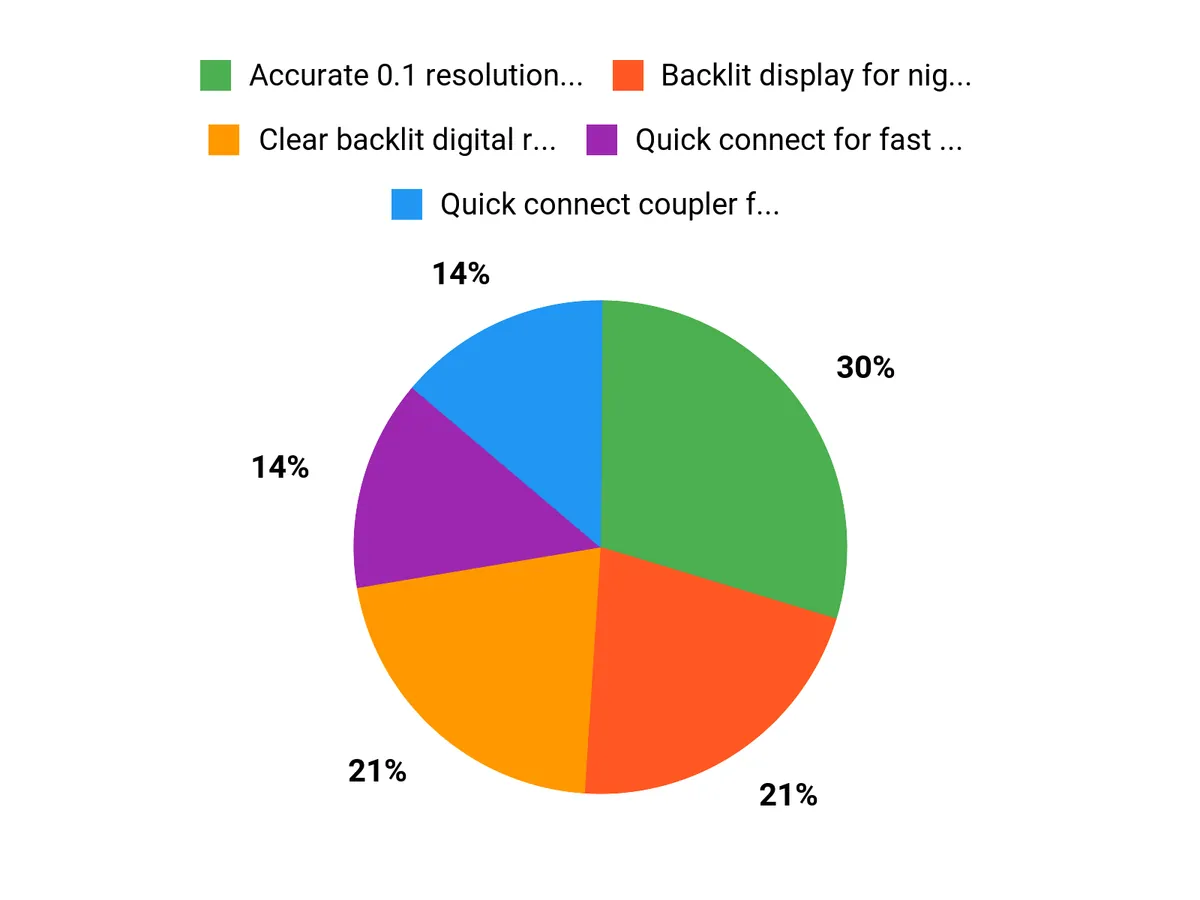
The main appeal is convenience rather than raw inflation power. You can connect one tool, see the pressure on a backlit screen, add air, and bleed off a small excess without changing attachments. The two-unit package also makes sense for a household or garage that would otherwise buy two separate gauges.
Is It Worth the Price?
The SPECSTAR two-pack offers strong value when you already own a compressor and genuinely need two inflator gauges. The backlit display, broad pressure range, locking chuck, and bleed control cover the core tasks most home users expect from this type of tool.
The value drops sharply when you need roadside independence, automatic preset inflation, or professional shop durability. In those cases, spending more on a self-powered compressor or a calibrated shop-grade inflator may be the better decision. Check the current package details and return policy before ordering because accessories and seller terms can change.
[Products Worth Considering]

AstroAI’s calibrated digital tire pressure gauge delivers precise readings across a 0–150 PSI range, with high clarity from a backlit LCD. Built for everyday road use, it features one-button operation, an anti-slip ergonomic grip, and support for multiple pressure units plus auto shutoff. Powered by AAA batteries, it’s an all-weather essential for checking tire health and TPMS warnings.

Get quick, reliable tire readings with a backlit digital gauge that seals easily to valve stems for accurate 0.1 increments. Switch units on demand and check pressure on cars, trucks, motorcycles, and bicycles using the included Presta-to-Schrader adapter. The gauge powers with AAA batteries and automatically shuts off to help save battery life.

AstroAI’s tire pressure gauge with inflator helps you check and adjust car tire pressure accurately for safer, smoother driving. It offers 3-in-1 operation to inflate, deflate, or measure pressure, with an easy-to-read 2.5-inch glow dial and a heavy-duty air chuck for convenient use. Universal compatibility supports Schrader-valve tires and quick-connect 1/4" NPT air compressors for quick maintenance.
How It Compares to Alternatives
The AstroAI 250 PSI two-pack is the closest like-for-like alternative because it offers the same general digital inflator-gauge format for compressor users. A JACO FlowPro digital inflator is a better comparison for buyers who prioritize a shop-oriented chuck and documented calibration standard, though it is commonly sold as a single unit and has a different maximum range.
A cordless or 12-volt portable compressor is the better category when you need to create air pressure away from a garage. The SPECSTAR set makes the most sense when your compressor is already in place and you want two simple control-and-gauge tools.
[Products Worth Considering]

The AstroAI 2 pack air chucks provide a heavy-duty, closed-flow locking design that helps keep air flowing during inflation while securely attaching to the valve stem. Built with 250 PSI rated brass components and compatible with Schrader valves, they feature 1/4" female NPT threads for a wide fit with common inflators. The straight tip and locking clip make filling tires and monitoring pressure more convenient.

Inflate Presta and Schrader bike and car tires with one compressor attachment, including tubeless setups. The digital gauge lets you monitor 2–200 PSI readings in 0.1 PSI increments with ±2 PSI accuracy, while the adjustable lever and built-in bleed button help you dial in precise pressure. Quick-connect coupler, hose, and a complete Presta service kit with spare cores and caps make it ready for fast maintenance.

This digital tire pressure gauge with built-in inflator helps you accurately check and adjust tire pressure for safer driving and better fuel efficiency. It supports multiple units (PSI, KPA, BAR, KG/CM²) and reads within 1% for reliable results. The 3-in-1 design inflates, deflates, and measures, with a quick-connect air chuck and compatible hose setup for cars, trucks, SUVs, RVs, and motorcycles.
Frequently Asked Questions
Does the SPECSTAR inflator work without an air compressor?
No. It is an inflator gauge and compressor accessory, not a self-powered pump. You must connect it to a compatible compressed-air source before it can add air to a tire.
Does it stop automatically at the pressure I choose?
No preset-pressure stop is confirmed for airflow. You need to watch the display and release the inflator control when the tire reaches the correct pressure. Automatic screen shutdown should not be confused with automatic inflation control.
What does the 250 PSI rating mean?
It is the upper end of the gauge’s stated measurement range. It is not a recommended tire pressure and does not guarantee that your compressor, hose, fittings, valve, wheel, or tire can safely operate at that pressure.
Can I use it on cars, motorcycles, trailers, and RVs?
It can serve those applications when the valve stem, chuck access, pressure requirement, and compressor connection are compatible. Tight or angled valve locations may need an adapter or a different chuck.
How should I check its accuracy?
Test both units on the same cold tire, then compare them with a trusted reference gauge. A 0.1 display resolution does not by itself prove calibration accuracy. Recheck any unit that shows an unstable or noticeably different reading.
Which tire pressure should I use?
Use the vehicle manufacturer’s cold-tire pressure listed on the driver’s door placard or in the owner’s manual. Do not treat the maximum pressure printed on the tire sidewall as the normal target for every vehicle.
Who should skip this two-pack?
Skip it when you do not own a compressor, need a compact roadside pump, or want a device that stops at a preset PSI. It is also a poor fit when your air-line connection or valve access requires parts that are not included.
The Bottom Line
The SPECSTAR 2-Pack is a practical choice for a home garage or small workshop that already has a compatible air compressor. Its best features are the two-unit package, backlit 0.1-resolution display, and combined inflate-and-bleed controls, while its main limitation is that it cannot create air pressure or stop automatically at a preset PSI.
Buy it when you want two straightforward compressor accessories for routine tire maintenance. Skip it when you need a standalone emergency inflator or professional-grade calibration and durability.
Ready to Buy?
Check the latest price, included parts, and product details before you decide.

![[2026NEW] 5000A Jump Starter with Air Compressor (150PSI)](https://m.media-amazon.com/images/I/71oG4PFNsmL._AC_SL1500_.jpg)