
Disclosure: As an Amazon Associate, we earn from qualifying purchases. If you click a link on this page and make a purchase, we may receive a small commission at no extra cost to you.
Checking tire pressure should be simple, but awkward valve stems, dim gauges, and separate tools can slow the job down. The ENDARK EN52C 250 PSI Digital Tire Pressure Gauge with Inflator combines pressure checking, inflation, and controlled deflation in one air-compressor attachment. Its backlit display, rotating chuck, and extended hose are useful for routine garage work, though it is not a stand-alone electric pump. This review explains where it works well, what comes in the case, and which buyers should consider another option.
Quick Verdict
Rating: 8.2/10, recommended with caveats
Best For: Drivers and home-garage users who already own an air compressor with a 1/4-inch NPT connection.
Bottom Line: The ENDARK EN52C gives you a wide 3 to 250 PSI range, a clear backlit display, and three functions in one hand tool. Its main tradeoff is that inflation requires a separate air compressor, and the chuck may need careful positioning to prevent a small air leak.
Key Specifications
| Specification | Detail |
|---|---|
| Brand | ENDARK |
| Model | EN52C |
| Product type | Digital tire pressure gauge and pneumatic inflator attachment |
| Functions | Pressure check, inflation, and deflation |
| Pressure range | 3 to 250 PSI |
| Display resolution | 0.1 PSI |
| Measurement units | PSI, kPa, bar, and kg/cm² |
| Claimed accuracy | Within 1% according to the product listing |
| Air connection | 1/4-inch NPT quick-connect setup |
| Chuck design | Heavy-duty 360-degree rotating air chuck |
| Main materials | Stainless steel structure, brass components, and rubber hose |
| Dimensions | 9.6 x 3.7 x 3.1 inches |
| Weight | 1.4 pounds |
| Included items | Inflator gauge, four tire valve caps, brass air chuck, thread-seal tape, and carrying case |
| Warranty | Two years according to the listing |
ENDARK 250 PSI Digital Inflator

Three-in-one digital tire pressure gauge and inflator attachment with a 3 to 250 PSI range, backlit screen, 360-degree chuck, extended hose, quick-connect coupler, and carry case.
Check Price on Amazon →What Is the ENDARK EN52C?
The ENDARK EN52C is a pneumatic tire-service tool, not a portable compressor. You connect it to a compatible air compressor, attach the chuck to a tire valve, and use the same hand unit to read pressure, add air, or release excess air. This setup reduces the need to switch between a separate chuck and pressure gauge.
Its backlit LCD shows readings in four units, while the 360-degree rotating chuck and rubber hose help you reach valve stems that sit at awkward angles. The 250 PSI upper limit gives the gauge a wider range than most passenger vehicles require, though you should always inflate each tire to the vehicle or tire maker’s recommended pressure rather than the tool’s maximum rating.
Before You Buy: This tool does not create compressed air. You need a separate air compressor and a compatible 1/4-inch NPT connection to use the inflation function.
Who Should Buy It?
Best For
- Home-garage users who already have an air compressor
- Drivers who want one tool for checking, filling, and bleeding tire pressure
- Owners of cars, SUVs, motorcycles, RVs, or other equipment with compatible valves
Skip If
- You need a cordless or 12-volt inflator that works without a compressor
- You want a certified shop instrument for professional calibration work
- Your compressor uses a different fitting and you do not want to add an adapter
[Products Worth Considering]

Inflate Presta and Schrader bike and car tires with one compressor attachment, including tubeless setups. The digital gauge lets you monitor 2–200 PSI readings in 0.1 PSI increments with ±2 PSI accuracy, while the adjustable lever and built-in bleed button help you dial in precise pressure. Quick-connect coupler, hose, and a complete Presta service kit with spare cores and caps make it ready for fast maintenance.

AstroAI’s digital tire pressure gauge inflates and measures with high accuracy, reading within 1% and supporting four pressure units from 3 to 250 PSI. The heavy-duty brass air chuck locks securely on valve stems, while the 19.7-inch stainless braided hose and 360° rotatable dial improve comfort and control for faster single-hand operation. Battery-saver behavior and an integrated flashlight add convenience and safety for everyday roadside and garage use.
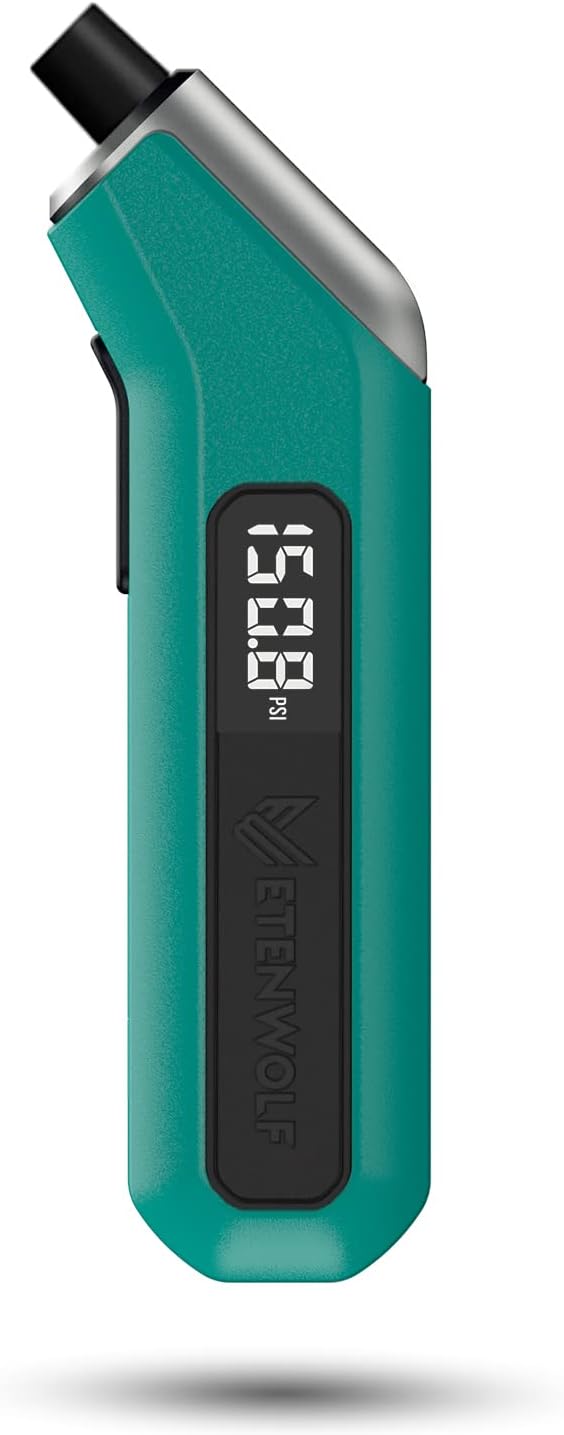
ETENWOLF T300 is a calibrated digital tire pressure gauge designed for reliable readings across low and high pressure ranges. It includes thermal compensation for stable performance in extreme cold or heat, an LED light for visibility, and an auto shut-off to help preserve battery life. Ideal for pickups, RVs, and heavy-duty vehicles, it delivers accurate PSI measurements with sturdy durability.
Display, Accuracy, and Controls
The backlit LCD is the main reason to choose this model over a basic analog inflation gun. Large numbers are easier to read in a dim garage, and the four-unit display lets you work in PSI, kPa, bar, or kg/cm². The 0.1 PSI resolution also makes small adjustments easier to see while you release or add air.
ENDARK states that the gauge reads within 1% of actual pressure. That is a useful manufacturer claim, but you should still compare any new gauge with a trusted reference gauge before relying on it for routine service. A quick cross-check can also reveal a low battery, damaged chuck seal, or reading that changes when the tool is held at an angle.
Chuck, Hose, and Build Quality
The rotating chuck gives you more freedom than a fixed head when a valve sits close to a wheel spoke or faces inward. The extended rubber hose also reduces the need to bend the whole gauge body against the wheel. These details matter most on motorcycles, dual-wheel setups, and wheels with limited hand space.
Stainless steel and brass components give the EN52C a more substantial feel than an all-plastic gauge. The hard carrying case protects the display and keeps the small accessories together. It is still a consumer garage tool, so frequent commercial tire-shop use may justify a heavier professional model with documented calibration service.
What People Say
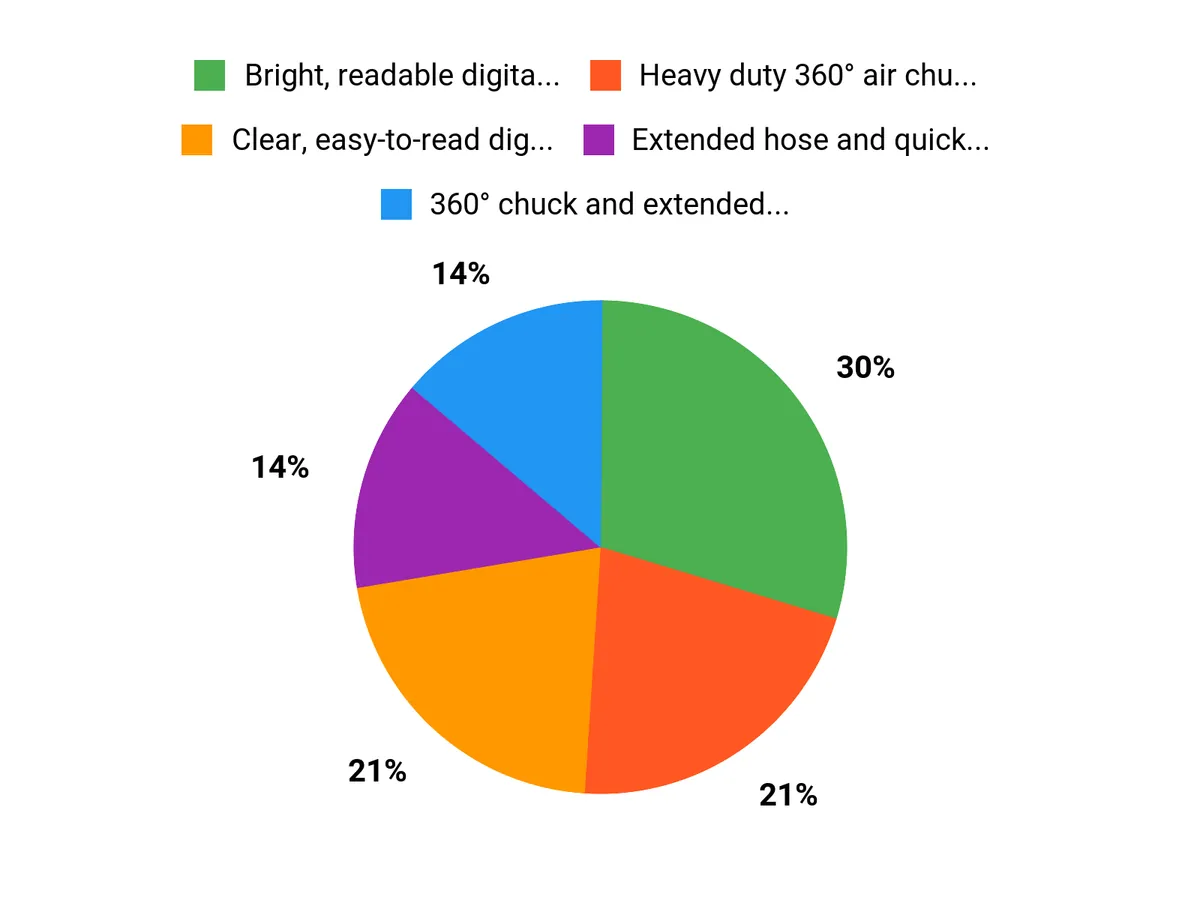
Buyer feedback commonly highlights the readable display, useful storage case, and convenience of combining three jobs in one tool. The rotating chuck also receives positive comments because it can make valve access easier than a rigid fitting.
The most useful criticism involves sealing and consistency. Some users report that the chuck can hiss or lose air until they change its angle, while a smaller number question long-term battery or gauge reliability. Those concerns do not make the tool unusable, but they support checking the seal and comparing the reading with another gauge when you first set it up.
Overall Sentiment: Positive, with practical cautions about chuck placement and long-term consistency.

Pros and Cons
Pros
- Combines pressure checking, inflation, and deflation
- Wide 3 to 250 PSI measurement range
- Backlit LCD with four pressure units and 0.1 PSI resolution
- 360-degree chuck and extended hose improve valve access
- Carry case and small accessories are included
Cons
- Requires a separate air compressor for inflation
- Chuck position may need adjustment to stop a small leak
- Not the best choice for continuous professional shop use
Ease of Use
| Task | What to Expect |
|---|---|
| Reading pressure | Easy once the chuck seals fully on the valve |
| Adding air | Simple after connecting a compatible air compressor |
| Releasing air | Controlled through the deflation button while watching the display |
| Reaching angled valves | The rotating chuck and hose help, though placement may take a second try |
| Storage | The fitted case keeps the gauge and accessories together |
How It Performs in Real Use
Routine Car Tire Checks
For weekly or monthly pressure checks, the single-tool design keeps the process organized. You can read the current pressure, add a short burst of air, and bleed off excess without disconnecting the gauge. That is especially useful when you are trying to match all four tires to the cold-pressure figure on the vehicle’s door placard.
Pre-Trip Garage Checks
The carry case makes the kit easy to store near your compressor, and the backlit display helps when you are working before sunrise or in a poorly lit garage. You can also check the spare tire while the compressor is already connected, provided the valve is accessible and within the gauge’s range.
Motorcycles, RVs, and Awkward Valves
The flexible hose and rotating chuck are most valuable when the valve does not point directly outward. You still need enough clearance to lock the chuck in place, and you should avoid pulling sideways on the valve stem. For high-pressure applications, confirm that the tire, wheel, hose, compressor, and fittings are all rated for the pressure you intend to use.
Occasional Inflatable Accessories
The included accessories can broaden the tool’s use beyond standard vehicle valves, but the correct adapter and safe pressure limit still matter. Use the pressure stated by the item’s manufacturer and never assume that a high maximum gauge range makes an inflatable safe at high pressure.
Setup Tips and Common Mistakes
- Install the display batteries with the correct polarity and confirm the screen returns to zero before connecting it.
- Use thread-seal tape only on suitable threaded air fittings, not on the tire valve stem or chuck face.
- Connect the 1/4-inch NPT fitting to your compressor setup and check the joint for air leaks.
- Seat the chuck squarely on the valve. If you hear steady hissing, release it and try a slightly different angle.
- Inflate in short bursts while watching the live reading, then use the bleed control for small corrections.
- Check pressure when the tires are cold and follow the vehicle placard or tire maker’s instructions.
Pro Tip: Compare the EN52C with a trusted gauge when you first receive it, then repeat the check occasionally. This gives you a useful reference and can reveal battery or sealing problems early.
Compatibility and Safety
The EN52C is designed around a 1/4-inch NPT air-compressor connection and common tire valves. Compatibility can still vary because compressor couplers, plug profiles, and regional fittings are not always identical. Check your compressor connection before buying, and use a properly rated adapter when needed.
Never use the tool’s 250 PSI ceiling as a target pressure. Inflate only to the pressure specified for the tire, vehicle, or accessory, and inspect hoses and fittings before use. Wear eye protection around pressurized air, keep your hands clear of damaged valve stems, and stop if the gauge, hose, or chuck shows cracks or unusual movement.
Is It Worth the Price?
The ENDARK EN52C sits in the practical consumer-tool category. Its value comes from combining a gauge, inflator control, bleed function, rotating chuck, accessories, and storage case instead of making you buy and organize each piece separately.
It is a smart buy for everyday garage use when you already own a compressor and want a readable digital setup. It offers less value if you need a self-powered roadside inflator or a professional instrument with regular calibration support.
[Products Worth Considering]

The ETENWOLF T500 digital tire pressure gauge with inflator delivers accurate readings across a wide 0–250 PSI range, calibrated to ANSI B40.7 Grade 2A. An all-in-one tool combines gauge, air chuck, hose, inflating and controlled bleed for checking, inflating, and deflating tires on many vehicle types. It’s built for reliable use in extreme temperatures and features an illuminated backlit display with replaceable AAA batteries for convenient operation.

This digital tire pressure gauge with built-in inflator helps you accurately check and adjust tire pressure for safer driving and better fuel efficiency. It supports multiple units (PSI, KPA, BAR, KG/CM²) and reads within 1% for reliable results. The 3-in-1 design inflates, deflates, and measures, with a quick-connect air chuck and compatible hose setup for cars, trucks, SUVs, RVs, and motorcycles.

AstroAI’s digital tire pressure gauge with inflator helps you quickly check, inflate, and deflate tires with an easy lock-on chuck and integrated bleed valve. It delivers calibrated accuracy within 1% for a clear PSI readout from 3 to 250 PSI, supporting dependable tire maintenance. Designed for many vehicle types, it connects to common compressor outputs and standard Schrader valves.
How It Compares to Alternatives
The AstroAI ATG250 is a close alternative with a similar 250 PSI digital design, while the JACO FlowPro Digital series is worth comparing if you prefer a more established specialty-gauge brand and do not need a 250 PSI upper range. Milton also sells heavier-duty digital inflator gauges aimed more toward frequent shop use.
The ENDARK makes the most sense when you want the included case, rotating chuck, broad pressure range, and accessory bundle in one consumer-friendly package. Choose a cordless compressor instead when portability without an air hose matters more than shop-style control.
[Products Worth Considering]

AstroAI’s tire pressure gauge with inflator helps you check and adjust car tire pressure accurately for safer, smoother driving. It offers 3-in-1 operation to inflate, deflate, or measure pressure, with an easy-to-read 2.5-inch glow dial and a heavy-duty air chuck for convenient use. Universal compatibility supports Schrader-valve tires and quick-connect 1/4" NPT air compressors for quick maintenance.

This all-in-one air compressor accessory kit combines a digital tire pressure gauge with an inflator and blow gun in a single easy-to-use unit. The heavy duty, corrosion-resistant construction helps you quickly set and read tire PSI up to 200, and the vent valve releases excess air without removing the chuck. It connects to any 1/4 inch NPT air compressor output and includes multiple nozzles, adaptors, and stem caps for versatile inflating and blowing tasks.

AstroAI’s calibrated digital tire pressure gauge delivers precise readings across a 0–150 PSI range, with high clarity from a backlit LCD. Built for everyday road use, it features one-button operation, an anti-slip ergonomic grip, and support for multiple pressure units plus auto shutoff. Powered by AAA batteries, it’s an all-weather essential for checking tire health and TPMS warnings.
Frequently Asked Questions
Does the ENDARK EN52C inflate tires by itself?
No. It is an inflator gauge attachment that needs compressed air from a separate compressor. The digital display can check pressure without adding air, but the inflation trigger works only when the tool is connected to an air supply.
What compressor connection does it use?
The product uses a 1/4-inch NPT connection. Confirm that your compressor hose and quick coupler use a compatible plug profile, because some systems need an adapter even when the thread size matches.
How accurate is the digital gauge?
ENDARK claims accuracy within 1% and a 0.1 PSI display resolution. Treat that as a manufacturer specification and compare the tool with a trusted reference gauge before depending on it for regular tire service.
Why does the chuck leak at the valve?
A steady hiss usually means the chuck is not sitting squarely on the valve stem. Remove it, inspect the contact area, and reconnect at a slightly different angle without forcing the valve sideways.
Can it be used on motorcycles, trucks, and RVs?
The pressure range and rotating chuck make it suitable for many vehicle types with compatible valves. You still need to confirm the correct pressure and make sure every hose, fitting, and compressor component is rated for the job.
What comes in the package?
The listing includes the inflator gauge, four tire valve caps, one brass air chuck, thread-seal tape, and a carrying case. Check the current seller details before ordering because package contents can change.
How should you store it?
Release pressure from the hose, wipe away dirt or moisture, and place the tool and accessories in the case. Remove the batteries before very long storage periods and inspect the battery compartment before the next use.
Who should skip this inflator gauge?
Skip it if you do not own an air compressor, need a compact emergency pump for your trunk, or require a professionally calibrated shop gauge. A cordless or 12-volt compressor is a better match for stand-alone roadside inflation.
Why Users Choose
You choose the ENDARK EN52C when you want a readable digital gauge, a rotating chuck, and inflation control in one organized kit. The broad pressure range and included case make it useful across several garage tasks, while the main buying decision comes down to compressor compatibility and your tolerance for occasional chuck adjustment.
The Bottom Line
The ENDARK EN52C is a good fit for drivers and DIY garage users who already have a compatible compressor and want one tool for reading, adding, and releasing tire pressure. Its backlit display, rotating chuck, and complete accessory case are the main strengths, while the need for a separate compressor and careful chuck placement are the main limitations. Skip it when you need a self-powered roadside inflator or a higher-grade shop instrument.