
Disclosure: As an Amazon Associate, we earn from qualifying purchases. If you click a link on this page and make a purchase, we may receive a small commission at no extra cost to you.
A leaking valve stem can leave you topping up a tire repeatedly, but paying for tire removal may feel excessive when the rubber stem is the only failed part. The Sandfren Car Tire Valve Quick Change Tool Kit is designed to remove and install a standard snap-in rubber valve stem while the tire remains on the rim. This review explains what the 7-piece kit includes, where it fits, how the process works, and which safety limits matter. Its low-complexity design is useful for prepared DIY owners, but it is not a universal fix for punctures, damaged rims, or every TPMS valve assembly.
Quick Verdict
Rating: 8/10, recommended with caveats
Best For: DIY owners replacing compatible TR413-style snap-in rubber stems on cars, SUVs, trucks, and motorcycles
Bottom Line: The kit gives you the core tools and four replacement TR413 stems in a compact package. Its main tradeoff is compatibility, because it does not diagnose the source of a leak and should not be treated as a universal TPMS or metal-valve repair kit.
Key Specifications
| Specification | Detail |
|---|---|
| Brand | Sandfren |
| Product type | Quick-change tire valve stem removal and installation kit |
| Listed set size | 7-piece kit |
| Included parts | 1 T-hook, 1 push rod, 1 positioning tube, and 4 TR413 valve stems; the listing also mentions 1 pair of gloves |
| Tool material | Alloy steel |
| Color | Black |
| T-hook size | 3.15 x 6.5 inches |
| Push rod size | 1.85 x 8.5 inches |
| Positioning tube size | 1.18 x 4.7 inches |
| Valve stem height | 1.57 inches |
| Listed vehicle types | Passenger cars, SUVs, trucks, and motorcycles |
| Best use | Replacing a compatible leaking or aged snap-in rubber valve stem without removing the tire from the rim |
What Is the Sandfren Tire Valve Quick Change Tool Kit?
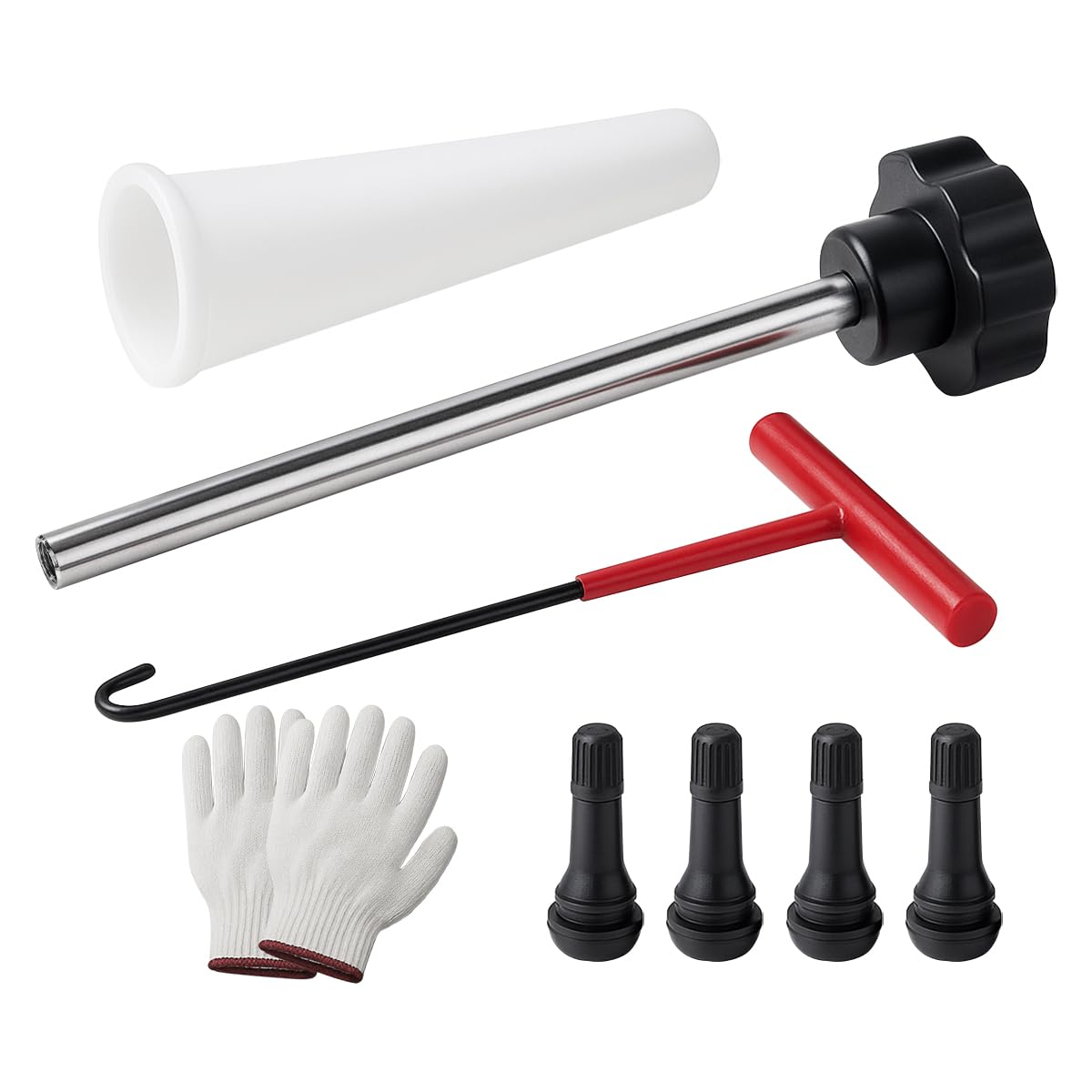
The Sandfren kit is a compact set for servicing standard snap-in rubber tire valves. Instead of breaking the tire bead and removing the tire from the wheel, you use the T-hook, positioning tube, and push rod to work through the existing valve opening. Four TR413 replacement stems are included, so the package covers several repairs when that stem type matches the wheel.
The listing describes the tools as alloy steel and gives separate dimensions for the three main tools. This makes the kit more specific than a basic valve-core tool: it is intended to replace the complete rubber stem, not merely unscrew the small valve core inside it.
What Comes in the Package?
The listed package includes one T-hook for removal, one push rod for installation, one positioning tube, and four TR413 rubber stems. The product description also mentions a pair of gloves. Because marketplace packaging can change, compare the current listing photos and package description before ordering if every accessory matters to you.
What People Say
Buyer feedback summarized in the original article is broadly positive about the kit’s value and its ability to complete a basic stem replacement without removing the tire from the rim. The most useful caution is technique-related: the narrow hook can bend when it is pulled at an angle, and the positioning tube may take some trial and error on certain wheel shapes.
Overall Sentiment: Positive, with repeated reminders to align the tools carefully and lubricate the new rubber stem lightly.

Who Should Buy It?
Best For
- DIY owners who have confirmed that the leaking part is a compatible snap-in rubber valve stem
- Households maintaining several cars, motorcycles, trailers, or small equipment with TR413-compatible wheels
- Prepared users who already have a safe work area, an air source, a pressure gauge, and leak-test solution
Skip If
- Your wheel uses a metal clamp-in valve or a sensor-specific TPMS service kit
- You have not confirmed whether the leak comes from the stem, valve core, tire tread, bead, or wheel
- You cannot fully deflate and safely reinflate the tire to the vehicle maker’s specified pressure
Before You Buy: TR413 describes a common snap-in rubber stem, not a universal valve for every wheel. Check the current valve style, wheel-hole requirement, and TPMS setup before removing anything.
[Products Worth Considering]

This Dr.Roc tire valve stem puller tools set helps install or remove snap-in tubeless valve stems safely and efficiently. It includes ozone-resistant EPDM snap-in valve stems, a valve stem installer, and a valve core remover for quick core removal or installation during tire service. Designed for reliable tubeless tire repair on motorcycles, ATVs, lawn equipment, cars, and trucks.

This 100-piece set of snap-in tubeless tire valve stems is designed for standard 0.453 in (11.5 mm) rim holes and helps maintain reliable, steady tire pressure. Made with ozone-resistant rubber and brass cores, the valves are built for durability and long-term use. Easy to install by hand, they support safe driving and are suitable for cars, light trucks, trailers, and more.
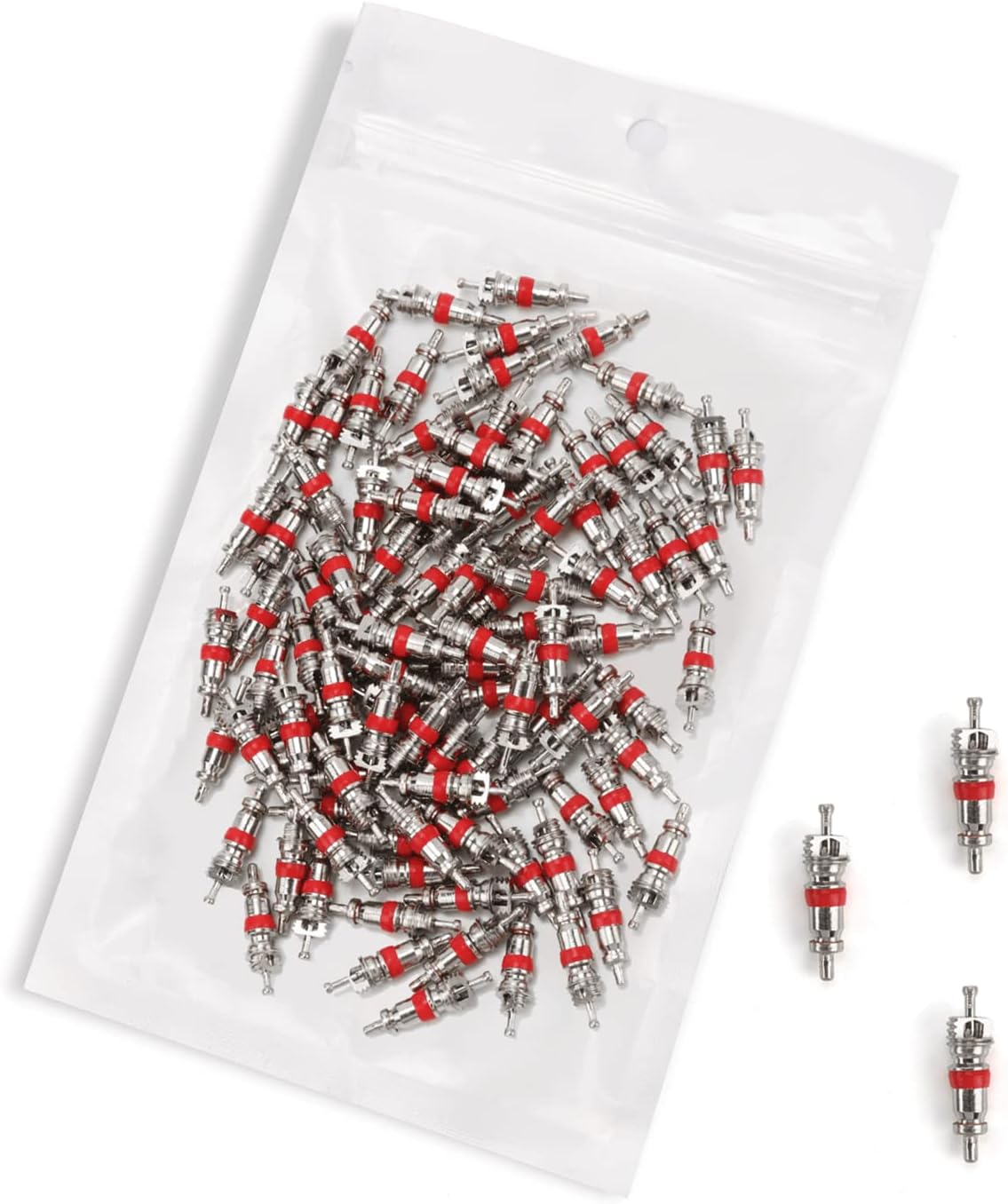
Replace worn Schrader valve cores with durable, nickel-plated replacements designed to resist rust and corrosion for a longer service life. Each core is 100% leakage tested and rated for up to 300 PSI, helping maintain a safe, reliable tire pressure system. Universal fit makes them suitable for cars, RVs, ATVs, motorcycles, bicycles, and many refrigeration/air conditioning applications.
Fit and Compatibility
The listing names passenger cars, SUVs, trucks, and motorcycles, but vehicle category alone does not confirm fit. The critical detail is the valve assembly. This kit makes the most sense for a standard snap-in rubber stem that matches the included TR413 replacements and the wheel’s valve hole.
Metal clamp-in stems use different seals and hardware. Some TPMS systems also place a sensor on the valve assembly and require vehicle-specific service parts. If you see a metal retaining nut at the wheel or know the valve carries a sensor, identify the correct service procedure before using a pull-through tool.
Materials and Build Quality
Sandfren lists alloy steel for the tools. The T-hook, push rod, and positioning tube are sized to provide leverage while staying compact enough for a toolbox or trunk. The design is simple, with no powered parts or calibration requirements.
The weak point is the narrow removal hook. It must enter and pull in line with the valve opening. Side-loading it can bend the hook or damage the rubber around the opening, so controlled pressure matters more than brute force.
Installation and Setup
The basic process is to fully deflate the tire, remove the old rubber stem, guide the replacement through the positioning tube, and seat it in the wheel with the push rod. The tire can remain mounted on the rim when the valve opening and tool alignment allow the process to work as intended.
You still need supporting equipment. Keep an accurate pressure gauge, an air compressor or inflator, mild tire-mounting lubricant or a rubber-safe lubricant, and soapy water or approved leak detector nearby. The kit does not include an air source or diagnose other causes of pressure loss.
Pro Tip: Photograph the existing valve and compare it with the included TR413 stem before you deflate the tire. This gives you a simple visual check and reduces the chance of discovering a mismatch midway through the job.
How It Performs in Real Use
For a Confirmed Stem Leak
When soapy water bubbles around a cracked rubber stem and the tire, bead, and valve core are otherwise sound, the kit targets the failed part directly. A successful replacement can restore the seal without tire-machine work, provided the new stem seats evenly and passes a leak test.
For Home Garage Maintenance
This is the kit’s strongest use case. You can work on a level surface with good lighting, organize the parts, use steady pressure, and reinflate the tire immediately. The compact tools also store easily between jobs, while the four included stems give you spares for compatible wheels.
For Trailers and Small Equipment
The kit may be useful on compatible trailer, mower, or utility wheels where removing a tire is inconvenient. Compatibility still depends on the valve hole and stem type, not wheel diameter alone. Older or corroded wheels deserve closer inspection because a damaged valve seat may continue leaking after a stem replacement.
For Roadside Emergencies
Roadside use is possible only when you can park safely, fully deflate the tire, perform the repair, and reinflate it before driving. A portable inflator and pressure gauge are essential. Do not attempt the job in an exposed traffic lane, and do not drive on a tire that remains underinflated or continues to leak.
How to Use It Correctly
- Confirm the leak source. Apply soapy water or an approved leak detector around the valve core, rubber stem base, bead, and visible tread area.
- Identify the valve type. Confirm that the wheel uses a compatible snap-in rubber stem and that the TR413 replacement is appropriate.
- Secure the vehicle or wheel. Park on a level surface, set the parking brake, and chock the wheels. If you remove a wheel, support the vehicle correctly and never rely on a jack alone.
- Deflate the tire fully. Remove the valve cap and core only after the work area is secure. Confirm that pressure has dropped before inserting the removal tool.
- Keep the T-hook aligned. Pull in line with the valve opening. Stop if the hook twists, binds, or begins to bend.
- Lubricate the new stem lightly. Use a rubber-safe lubricant on the stem’s seating area, then follow the kit’s positioning-tube and push-rod sequence.
- Seat and inspect the stem. Confirm that the rubber shoulder is evenly seated and the stem is not cut, twisted, or stretched.
- Reinstall the core, inflate, and test. Inflate to the pressure on the vehicle’s tire-information label, then check the stem and core for bubbles before driving.
Common Mistakes to Avoid
- Replacing the whole stem when only a loose or damaged valve core is leaking
- Assuming every rubber-looking TPMS stem accepts a standard TR413 replacement
- Using petroleum-based grease that may harm rubber
- Pulling the hook sideways or forcing the stem through a damaged valve hole
- Skipping the final leak test and pressure check
Compatibility and Safety
A tire-pressure leak can affect steering, braking, tire temperature, and tread wear. Treat the kit as a repair tool for a confirmed compatible valve-stem problem, not as proof that the tire is otherwise safe. If the wheel is bent, the bead is damaged, the tire has sidewall damage, or pressure continues to drop, stop and have the assembly inspected by a tire professional.
Follow the vehicle maker’s pressure label rather than the maximum pressure molded on the tire sidewall. Recheck pressure after the first short drive and again the next day. Any renewed bubbling, stem movement, or pressure loss means the repair needs attention.
Pros and Cons
Pros
- Replaces a compatible snap-in rubber stem without removing the tire from the rim
- Includes four TR413 replacement stems for multiple compatible repairs
- Alloy-steel tools have a simple, reusable design
- Compact enough for a home toolbox, trailer kit, or trunk
- Separate T-hook, positioning tube, and push rod support the full removal-and-installation process
Cons
- TR413 compatibility must be confirmed before the tire is deflated
- The narrow hook can bend if it is misaligned or pulled sideways
- The kit does not include an inflator, pressure gauge, or leak-detection supplies
Is It Worth the Price?
The Sandfren kit sits in the budget DIY-tool category. Its value comes from combining the removal and installation pieces with four replacement stems, rather than making you buy each part separately. You get the most value when you maintain several compatible wheels and already own an inflator, gauge, and basic tire-service supplies.
It is less compelling when you need only a valve-core tool, have a sensor-equipped metal stem, or are unsure where the leak begins. In those cases, paying for diagnosis can prevent an incorrect repair and may cost less than replacing parts that were not faulty.
[Products Worth Considering]
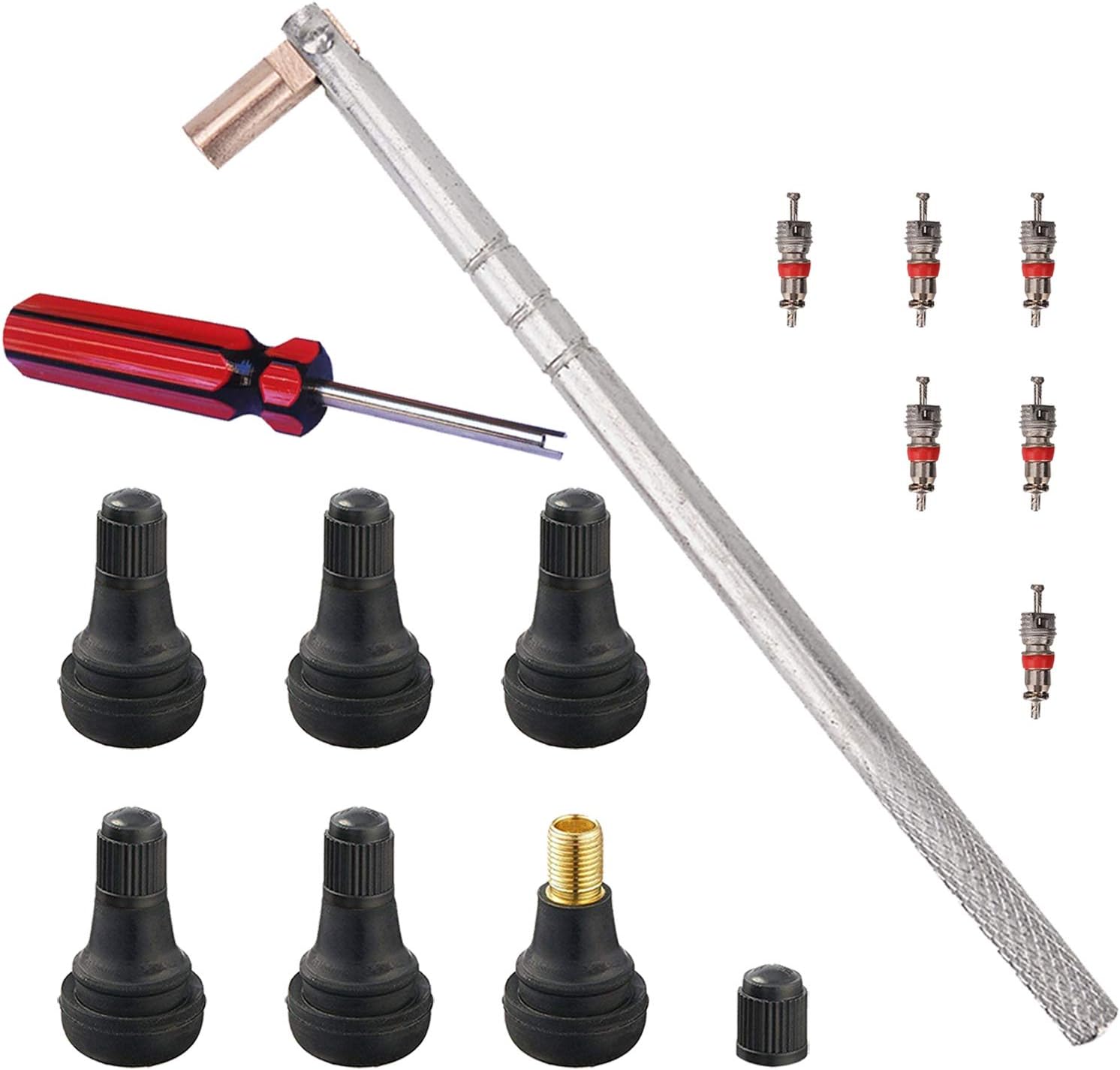
This FEBRYTOLD tire valve stem tool set makes it easy to remove and install standard 0.453 inch snap-in valve stems for tubeless tires. It includes valve stem cores and a single-head valve core remover/installer tool to help you complete repairs quickly. Designed to help avoid scratching wheels and damaging valve stems during service.

Protect tire valves from water, dust, and sand to help prevent leaks and support safe driving. These universal stem caps install quickly by hand and feature durable aluminum alloy construction with an inner sealing ring for better air retention. Compatible with cars, SUVs, trucks, motorcycles, and bicycles for everyday convenience.

Get back on the road fast with this compact tire plug repair kit for tubeless tires. It includes self-vulcanizing rubber plugs, T-handle rasp and insert tools, and a storage box that fits in your glove compartment for easy access. Also included are a 4-way valve steam tool set with valve cores and caps for added roadside convenience.
How It Compares to Alternatives
The AME International 51025 Quick Valve Change Tool is a better-known professional-style alternative for buyers who want an established dedicated tool. Richcat and Prozwee also sell larger valve-service kits with more stems or valve-core accessories, which may suit a garage that handles several stem sizes.
The Sandfren kit makes the most sense when you want a compact TR413-focused package with the three main tools and four replacement stems. A larger assortment is more useful when you regularly encounter TR412, TR414, TR418, or sensor-specific parts.
[Products Worth Considering]

This multi-function tire valve stem removal tool set makes it fast to remove, install, bleed, and clean valve cores for easier tire maintenance. It includes valve core removers, a 4-way spool tool, replacement valve caps, and spare cores to handle replacements and repairs with confidence. Universal compatibility suits cars, trucks, motorcycles, bicycles, and more for roadside convenience.

Keep your tires performing with these valve core removal tools designed to quickly disassemble and reinstall standard valve cores. The compact, portable design makes it easy to carry for bicycle, motorcycle, car, or truck repairs. Durable stainless steel construction helps you handle routine tire maintenance with less hassle.

This 39-piece AC valve core accessories kit helps technicians efficiently remove and install Schrader valve cores for R12 and R134a automotive air conditioning and HVAC systems. It includes multiple single and dual-head removal tools for versatile service, plus replacement valve cores and seal caps to maintain a reliable seal and reduce leakage. Built for durable, secure handling, the kit is suitable for home and commercial maintenance and repair.
Why Buyers Choose It
Buyers choose this kit because it addresses a narrow but common repair without requiring a tire machine. The included TR413 stems, compact steel tools, and straightforward mechanical design make it easy to keep the full repair set together. The strongest reason to buy is convenience after compatibility is confirmed, not the promise that it will fix every slow leak.
Frequently Asked Questions
Will this kit fit my vehicle?
The listing covers passenger cars, SUVs, trucks, and motorcycles, but fit depends on the valve and wheel, not the vehicle category alone. Confirm that your wheel accepts the included TR413-style snap-in rubber stem before starting.
Does the tire need to come off the rim?
The kit is designed to replace a compatible snap-in rubber stem while the tire remains mounted on the rim. You must still fully deflate the tire, and a damaged valve seat or difficult wheel shape may require professional tire removal.
Can it replace a TPMS valve stem?
Do not assume that it can. Metal clamp-in valves and sensor-integrated TPMS assemblies often require specific seals, nuts, stems, or service kits, so identify the sensor and valve design first.
How do I know the stem is the source of the leak?
Apply soapy water or approved leak detector around the valve core and the rubber base where the stem enters the wheel. Also inspect the tread and bead area, because a puncture or wheel leak can produce the same gradual pressure loss.
What else do I need for the repair?
Keep a pressure gauge, air compressor or portable inflator, rubber-safe lubricant, and leak-test solution nearby. The Sandfren package supplies the stem tools and replacement stems, but it does not provide inflation equipment.
Why can the removal hook bend?
The hook is narrow so it can enter the valve opening, but that shape also makes it sensitive to side-loading. Keep the tool aligned with the opening, pull steadily, and stop if it binds rather than forcing it at an angle.
How should I check the repair afterward?
Inflate the tire to the pressure shown on the vehicle’s tire-information label, then apply leak detector around the stem base and valve core. Recheck pressure after a short drive and again the next day to confirm the seal remains stable.
The Bottom Line
The Sandfren 7-piece kit is a practical choice for a prepared DIY owner who has confirmed a leaking, TR413-compatible snap-in rubber stem. Its strongest feature is the complete compact tool sequence with four replacement stems, while its main limitation is that valve and TPMS compatibility must be checked before use. Skip it when the leak source is uncertain, the wheel uses a metal clamp-in assembly, or the tire has other visible damage.
Ready to Buy?
Check the latest price, package contents, and product details before you decide.