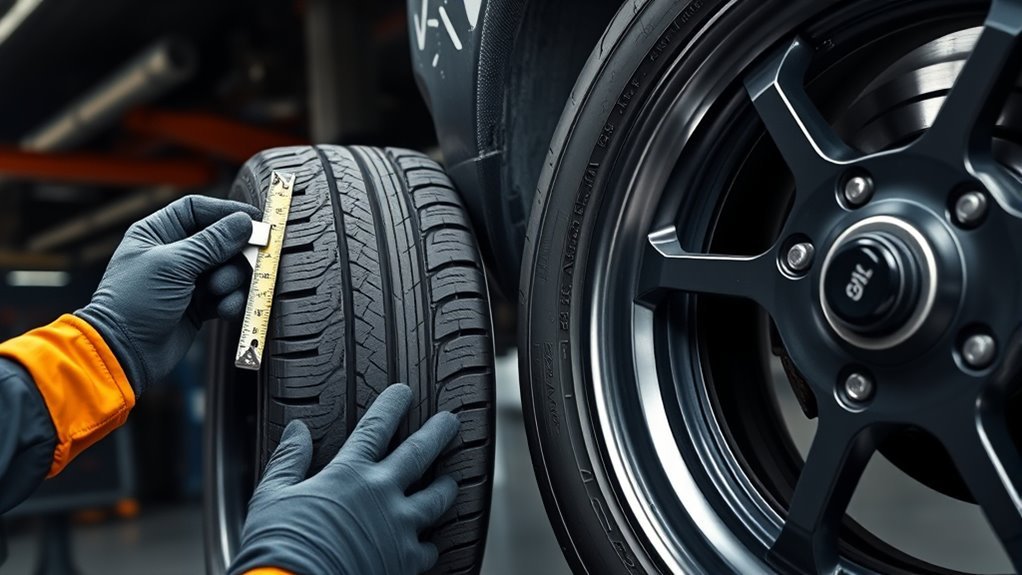
Plus sizing tires means moving to a larger wheel diameter while using a lower-profile tire so the tire’s overall diameter stays close to the original size. Done correctly, it can sharpen steering response, improve cornering feel, and give the vehicle a sportier stance. Done carelessly, it can create rubbing, harsher ride quality, load-rating problems, speedometer error, TPMS issues, and a higher risk of wheel or tire damage on potholes.
Quick Answer
Plus sizing is worth it if you want sharper road handling and a sportier look, but it is not a simple “bigger is better” upgrade. Keep rolling circumference close to stock, match or exceed the original load and speed ratings, confirm wheel width and offset, and check clearance before buying.
Key Takeaways
- True plus sizing increases wheel diameter but keeps the overall tire diameter nearly the same; it usually does not raise ground clearance.
- The safest starting point is the vehicle tire placard, owner’s manual, and approved tire-size list from the vehicle or tire manufacturer.
- The new tire should meet or exceed the original load index and speed rating, and the tire must fit an approved wheel width.
- Lower sidewalls can improve steering feel, but they also reduce impact cushioning and make pothole, curb, and wheel damage more likely.
- After installation, check alignment, balancing, cold tire pressure, clearance at full steering lock, TPMS reset/relearn, and speedometer accuracy.
At a Glance
| Time Required | 30–60 minutes to compare sizes; 1–2 hours for professional installation, balancing, and checks |
| Difficulty | Moderate for research; best handled by a tire professional for final fitment |
| Tools Needed | Vehicle tire placard, owner’s manual, tire-size calculator, tape measure, wheel specs, torque wrench, tire-pressure gauge |
| Cost | Free to research; final cost depends on wheels, tires, mounting, balancing, TPMS service, alignment, and any required suspension or fender work |
Who Should Plus-Size Their Tires?
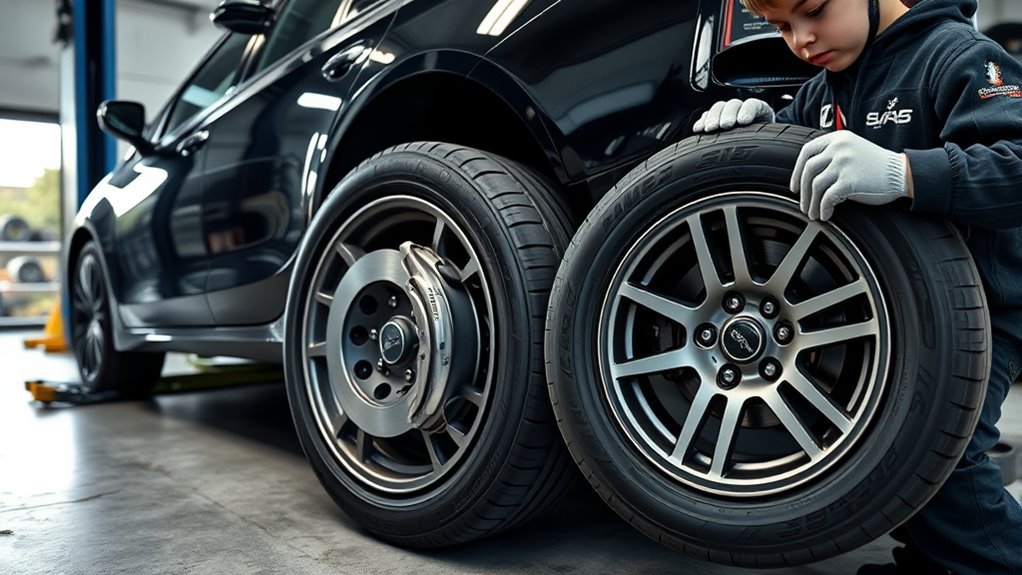
Plus sizing makes the most sense for drivers who want sharper handling, quicker steering response, and a more aggressive wheel-and-tire look without greatly changing the vehicle’s overall tire diameter. It is common on sport sedans, coupes, performance SUVs, and modified street cars where road feel and cornering response matter more than maximum ride comfort.
You should consider plus sizing if you mainly drive on paved roads, want less sidewall flex in corners, and are willing to accept a firmer ride. A wider, lower-profile tire can change the shape of the tire footprint and reduce tread movement, which can improve steering precision when the tire, wheel, alignment, and suspension all work together.
Plus sizing is less ideal if you regularly drive on rough roads, deep potholes, gravel, snow, or mud. A shorter sidewall gives the tire less room to absorb impacts, so the wheel is more exposed to bending, cracking, curb rash, and pinch damage. If your goal is off-road clearance, that is usually oversized tire upsizing, not traditional plus sizing, because true plus sizing tries to keep the overall diameter close to stock.
Warning: Do not buy plus-size wheels based on appearance alone. Wheel diameter, width, offset, bolt pattern, center bore, load rating, brake clearance, suspension clearance, and tire service description all matter for safety.
How Plus Sizing Works: Sizes, Plus Levels, and Diameter Math
When you plus-size, you increase wheel diameter and reduce tire sidewall height so the overall rolling diameter stays close to the original equipment size. That helps preserve gearing, speedometer accuracy, ABS behavior, traction-control calibration, and body clearance. Continental’s tire guidance also notes that up-sizing requires equal or greater load capacity, correct inflation pressure, equal or greater speed rating, close rolling circumference, approved tire-and-rim combinations, and adequate body and chassis clearance under service conditions according to Continental Tires.
Plus levels are simple:
- Plus One: Increase wheel diameter by 1 inch and reduce sidewall height.
- Plus Two: Increase wheel diameter by 2 inches and reduce sidewall height further.
- Plus Three: Increase wheel diameter by 3 inches, usually with a much shorter sidewall and a firmer ride.
The tire size code gives you the three numbers needed for the math. For example, in 205/55R16, 205 is the tire width in millimeters, 55 is the sidewall height as a percentage of width, and 16 is the wheel diameter in inches. Continental’s tire-size guide explains that tire size, load index, and speed rating are all part of selecting the correct replacement tire according to Continental Tires.
The Basic Diameter Formula
Use this formula to compare the original tire with the plus-size option:
Overall diameter = wheel diameter in millimeters + (tire width × aspect ratio × 2)
Because wheel diameter is listed in inches, multiply the wheel size by 25.4 to convert inches to millimeters.
| Example Size | Sidewall Height | Overall Diameter | Difference |
|---|---|---|---|
| 205/55R16 original | 205 × 0.55 = 112.75 mm | 631.9 mm | Baseline |
| 225/45R17 Plus One | 225 × 0.45 = 101.25 mm | 634.3 mm | About +0.4% |
Many installers use a common ±3% diameter guideline as a screening tool, but you should still follow the vehicle manufacturer’s approved sizes where available. A size that passes the math can still fail because of wheel offset, fender clearance, brake clearance, load rating, or suspension travel.
Pro Tip: Compare tire diameter, width, wheel offset, and approved rim-width range together. Diameter alone does not tell you whether the tire will clear the fender liner, strut, spring perch, brake caliper, or control arm.
Performance Gains and Trade-Offs of Wider Tires and Lower Sidewalls
When you fit wider tires with lower sidewalls, you usually gain steering response and cornering stability because the sidewall flexes less. The vehicle can feel more direct during turn-in, lane changes, and hard cornering. On the right tire compound, the result can be more confidence and grip on dry pavement.
The trade-off is comfort. A shorter sidewall has less air cushion between the road and the wheel. You may feel more bumps, expansion joints, potholes, and vibration through the cabin. Wider tires can also increase road noise, rolling resistance, and unsprung weight, especially if the larger wheel is heavier than the factory wheel.
[Products Worth Considering]

Autel MX TPMS sensors combine 315MHz and 433MHz in a single easy-to-install press-in design for faster tire service. They support wireless programming with strong signal performance, and the sensors are clone-able for streamlined replacement. Built for reliability and tested to SAE standards, each sensor includes a series number for quality control.

Replace worn or missing TPMS sensors with a pre-programmed 4-pack designed for compatible GM vehicles. These 315MHz sensors provide real-time tire pressure monitoring and alert you if pressure is too high, too low, or if a rapid air leak occurs. Most installations are ready with minimal relearn effort after mounting, helping improve safety and driving confidence.

Keep your tires properly inflated with this analog VONDIOR tire pressure gauge, designed for fast, easy readings without batteries. The swiveling, two-axis hose and large glow dial help you measure at any tire angle with instant visibility. Built with a protective rubber shield, it supports durable, low-maintenance use for cars and trucks.
Increased Grip, Reduced Squirm
Although plus sizing changes several dynamics at once, the main handling benefit comes from the combination of a shorter sidewall, a wider tread shape, and a tire compound suited to your driving. You may notice improved tire feedback, faster steering response, and better lateral stability in dry cornering.
- Lower sidewalls reduce sidewall flex and make steering inputs feel quicker.
- Wider tires can create a wider footprint shape, which may improve dry-road cornering when matched to the right wheel width.
- Performance tire compounds often add more grip than size alone.
- Too much width can reduce performance in standing water, snow, mud, or loose gravel.
- Heavier wheels and tires can slightly hurt acceleration, braking feel, suspension control, and fuel economy.
Size is only one part of the upgrade. A high-quality tire in a well-matched size usually performs better than an overly wide tire on the wrong wheel.
Ride Harshness, Efficiency Trade-Off
Because shorter sidewalls and wider treads change how the vehicle absorbs road inputs, plus sizing generally makes the ride firmer. The difference is mild with a conservative Plus One setup and more noticeable with Plus Two or Plus Three. If you commute on rough roads, the comfort penalty may outweigh the steering benefit.
Wider tires can also raise rolling resistance, and heavier wheels increase rotational mass. That can reduce fuel economy and make the suspension work harder. For electric vehicles, the effect may also reduce driving range, so tire load rating, rolling resistance, and wheel weight deserve extra attention.
Fitment Rules: Clearance, Load Rating, Speedometer, and the 3% Rule
If you are changing wheel sizes, follow strict fitment rules to avoid clearance issues, insufficient load capacity, speedometer errors, vibration, and unsafe handling. Start with the tire placard on the driver’s door jamb and the owner’s manual. Michelin explains that a tire’s load rating and speed rating are part of the tire’s service description and should be verified when replacing tires according to Michelin.
- Check overall diameter: Keep rolling diameter close to stock, and do not rely on a calculator alone if the size is not approved for your vehicle.
- Confirm load index: The new tire must meet or exceed the original load-carrying requirement. A higher load index does not increase the vehicle’s maximum payload.
- Confirm speed rating: Match or exceed the original speed rating unless the vehicle or tire manufacturer gives a specific approved exception.
- Check rim-width range: The tire must be approved for the wheel width. A tire squeezed onto a wheel that is too narrow or stretched onto one that is too wide can handle poorly.
- Verify offset and backspacing: The wheel must clear the strut, control arms, brakes, fender, and inner liner.
- Test steering travel: Check for rubbing at full left and full right lock.
- Test suspension travel: Clearance must remain safe when the vehicle is loaded and the suspension compresses.
- Check speedometer impact: A larger overall diameter can make the speedometer read slower than actual speed; a smaller diameter can make it read faster.
- Check TPMS needs: Direct TPMS sensors may need service kits or programming. Indirect TPMS systems may need a reset or relearn after size and pressure changes.
Note: All-wheel-drive and four-wheel-drive vehicles can be more sensitive to tire diameter differences. The U.S. Tire Manufacturers Association warns that even small outside-diameter differences may cause drivetrain problems on some 4WD and AWD vehicles, so follow the owner’s manual closely.
[Products Worth Considering]

Measure tire tread depth quickly and accurately with this LUMITECO dial gauge that reads in 1/32" increments up to 14/32". The color-coded green/yellow/red zones make it easy to judge tire wear and know when replacement is needed. A rugged, compact design with a protective pouch helps keep the gauge ready for use on cars, trucks, motorcycles, and more.

This professional wheel and rim brush kit makes it easy to lift brake dust, grime, and dirt from wheels and tires without scratching finishes. The brushes feature soft, metal-free wool heads and a flexible 360-degree rim brush design for reaching hard-to-clean areas. Includes multiple brush types plus accessories for thorough car, motorcycle, and general vehicle detailing.

Monitor tire tread wear with a smart, color-coded depth gauge that shows clear condition ranges at a glance. The bar is range marked for fast, easy readings, helping you maintain safer traction and performance. Each gauge is portable with a pocket clip, and the set includes 20 units for daily use and sharing.
Choosing the Right Plus Size for Your Vehicle and Driving Goals
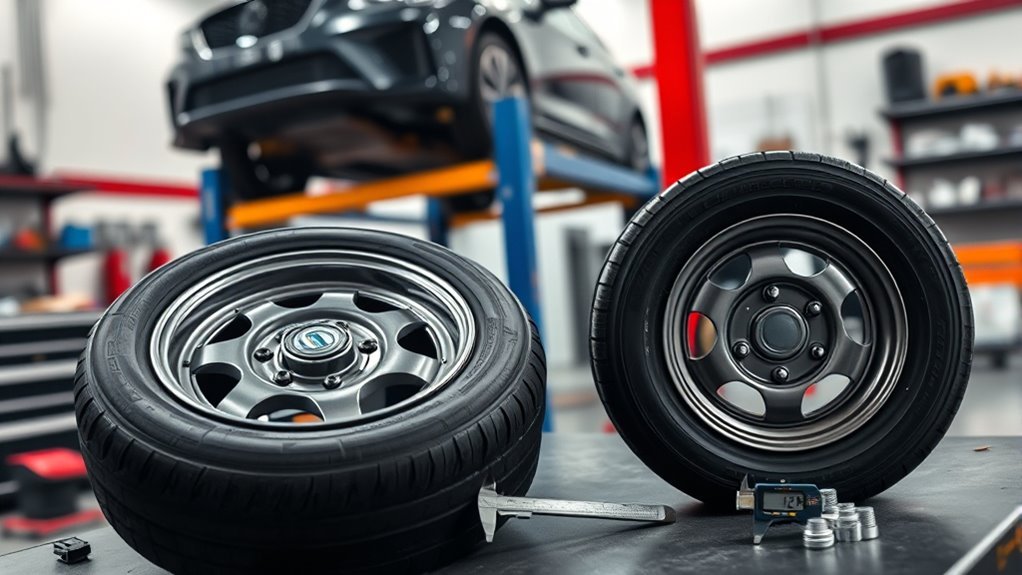
When selecting a plus size, start with your goal. A daily driver needs a different setup than a weekend canyon car, track car, show car, or light off-road vehicle. The best size is the one that improves the trait you care about without creating problems in safety, comfort, load capacity, or clearance.
| Driving Goal | Best Plus-Size Approach | Watch Out For |
|---|---|---|
| Daily comfort | Mild Plus One with quality touring or performance all-season tires | Road noise, pothole damage, pressure changes |
| Sporty street handling | Plus One or Plus Two with proper wheel width, offset, and performance tire compound | Heavier wheels, harsher ride, tramlining |
| Track or autocross | Size chosen around tire compound, heat range, wheel width, alignment, and class rules | Brake clearance, tire heat, camber needs, fender rubbing |
| Winter driving | Often better to keep stock size or use approved minus sizing with winter tires | Wide tires can perform worse in deep snow and slush |
| Off-road clearance | Use vehicle-specific oversized tire fitment, not traditional plus sizing | Gearing, rubbing, spare fit, speedometer error, suspension strain |
Before ordering, compare the original tire size, new tire size, wheel width, wheel offset, bolt pattern, center bore, brake clearance, load rating, and speed rating. The U.S. Tire Manufacturers Association Tire Care and Safety Guide says replacement tires should be the OE size designation or approved options recommended by the vehicle or tire manufacturer, and it recommends consulting a tire service professional when selecting a tire or rim other than the recommended one.
[Products Worth Considering]

Replace your worn or missing TPMS sensors with pre-programmed, direct-fit sensors for compatible Ford, Lincoln, and select Mazda models. Each sensor comes ready to activate with a scan tool, helping restore accurate tire pressure monitoring and trouble-free installation. Built with a long-life CR2032 battery and tested before factory release, this set provides dependable performance with a one-year warranty.

The Ziopetru adjustable magnetic wheel alignment tool helps you check and restore camber and caster positioning after removing and reinstalling undercarriage components. With a clear leveling/bubble measurement system and an easy zeroing adjustment knob, it supports precise horizontal angle checking. The strong magnetic base mounts to metal surfaces for convenient use at home on cars, motorcycles, trucks, vans, and SUVs.

Masoll Gen 2 external TPMS sensors are a DIY replacement set of 4 for select GM vehicles made after 2006, helping you shut off the TPMS warning light quickly. Simply screw the sensors onto the tire valves and sync to your car ECU using the included EL-50448 relearn tool. Dual-frequency 315/433 MHz design provides OEM-level performance with accurate readings and replaceable batteries for about two years.
Common Plus-Sizing Mistakes to Avoid
- Choosing by wheel diameter only: A wheel can have the right diameter and still have the wrong width, offset, or brake clearance.
- Ignoring load rating: A tire that fits physically is not safe if it cannot carry the required load.
- Buying the widest tire that fits: Wider is not always faster, safer, or more comfortable.
- Forgetting the spare tire: A temporary spare may not match the new rolling diameter well enough for extended use, especially on AWD vehicles.
- Skipping alignment: New wheels and tires can reveal worn suspension parts or poor alignment settings.
- Assuming TPMS will work automatically: Sensors, service kits, relearn procedures, and pressure thresholds may need attention.
- Not checking full-load clearance: A tire may clear in the driveway and rub when passengers, cargo, braking, cornering, or bumps compress the suspension.
Installation Checklist and Post-Upgrade Steps (Alignment, PSI, Inspections)
Although plus sizing can deliver sharper handling and a more aggressive stance, the installation process matters as much as the size choice. NHTSA’s TireWise tire safety resources emphasize proper tire selection, maintenance, labeling, and tire-pressure monitoring as part of tire safety according to NHTSA.
Use this checklist before and after installation:
- Confirm the new tire size is approved or professionally verified for the vehicle.
- Confirm the new tire’s load index and speed rating meet or exceed the original requirement.
- Confirm the tire fits the selected wheel width.
- Confirm wheel bolt pattern, center bore, offset, and brake clearance.
- Install new valve stems or TPMS service kits where required.
- Mount and balance all wheels and tires professionally.
- Torque lug nuts or bolts to the vehicle manufacturer’s specification.
- Set cold tire pressure according to the vehicle manufacturer, tire manufacturer, or professional fitment guidance.
- Reset or relearn TPMS after installation if required.
- Check for rubbing at full steering lock in both directions.
- Check clearance with the suspension loaded and compressed.
- Complete a professional wheel alignment if tire wear, steering pull, suspension changes, or handling changes are present.
- Verify speedometer and odometer accuracy with a GPS app or scan tool, and recalibrate if needed.
- Recheck torque and pressure after the first short drive and again after several heat cycles.
- Inspect for vibration, rubbing, uneven wear, sidewall damage, or pressure loss during the first 500–1,000 miles.
A good plus-size setup should feel sharper without creating rubbing, warning lights, harsh impacts, or unsafe load-rating compromises. If the upgrade creates new problems, the fitment is not finished.
Frequently Asked Questions
What is the 7 7 rule for tires?
The “7 7 rule” is an informal tire-sizing shortcut, not an official manufacturer standard. Drivers sometimes use it to compare section-width and aspect-ratio changes, but it should not replace proper fitment checks. Use the vehicle placard, owner’s manual, approved tire sizes, load index, speed rating, rim-width range, clearance checks, and professional advice instead.
What are the pros and cons of larger tires?
The pros are sharper steering response, sportier appearance, and possible dry-road grip gains when the tire compound and wheel width are well matched. The cons are a firmer ride, more road noise, higher cost, more pothole vulnerability, possible rubbing, heavier rotating mass, speedometer error if the diameter changes, and possible warranty or inspection issues if the size is not approved.
Does plus sizing affect ground clearance?
Traditional plus sizing usually does not raise ground clearance because the larger wheel is paired with a shorter tire sidewall to keep the overall tire diameter close to stock. If you install a tire with a larger overall diameter, that is oversized tire upsizing, and it can affect clearance, gearing, speedometer readings, braking, suspension travel, and drivetrain stress.
Will plus sizing make my speedometer inaccurate?
It can. If the new overall tire diameter is larger than stock, the vehicle may travel farther per wheel rotation, so the speedometer may read lower than your actual speed. If the new diameter is smaller, it may read higher. Keeping rolling diameter close to stock reduces the error, but you should still verify accuracy after installation.
Do I need an alignment after plus sizing?
An alignment is strongly recommended if the vehicle pulls, the steering wheel is off-center, the old tires showed uneven wear, suspension parts were changed, or the new setup changes ride height or handling feel. Even when alignment angles are unchanged, fresh plus-size tires make it easier to notice existing alignment problems.
Can I plus-size only two tires?
Do not mix sizes unless the vehicle manufacturer specifically approves a staggered setup for your vehicle. Many vehicles, especially AWD and 4WD models, need closely matched tire diameter and construction on all four corners. Mixing sizes can affect ABS, stability control, handling balance, and drivetrain durability.
Conclusion
Plus sizing can make a car feel more responsive and look more aggressive, but it is a fitment decision, not just a styling choice. The right setup keeps rolling diameter close to stock, uses a tire with the correct load index and speed rating, fits an approved wheel width, clears the brakes and suspension, and works with the vehicle’s TPMS, ABS, traction control, and alignment needs.
If you want the best balance, start with a conservative Plus One setup and a high-quality tire that matches your driving conditions. For daily driving, that often gives the best mix of sharper handling, acceptable comfort, and lower risk. For track, show, off-road, or AWD applications, get vehicle-specific fitment advice before buying.
Sources
- Continental Tires: How do I properly up-size my tires? — supports load capacity, inflation pressure, speed rating, rolling circumference, rim combination, and clearance checks.
- Continental Tires: Tire Size Guide — supports tire-size markings, approved sizes, load index, speed rating, and manufacturer specification guidance.
- Michelin: Tire Load Rating and Speed Rating Explained — supports service description, load index, speed rating, and replacement-rating guidance.
- NHTSA TireWise — supports tire safety, consumer tire information, tire labeling, and tire-pressure monitoring awareness.
- U.S. Tire Manufacturers Association: Tire Care and Safety Guide — supports tire placard use, replacement tire guidance, professional fitment advice, and AWD/4WD tire-matching cautions.