

Disclosure: As an Amazon Associate, we earn from qualifying purchases. If you click a link on this page and make a purchase, we may receive a small commission at no extra cost to you.
Checking tire pressure should not require separate tools, awkward hand positions, and repeated trips between the valve and compressor. The Milton S-506 combines an analog pressure gauge, trigger-operated inflator, 15-inch hose, and dual-head chuck in one serviceable tool. It is especially useful for routine top-offs on cars, trucks, trailers, and dual-wheel setups. Its main limitation is equally important: the dual-head sealing design cannot start inflation when a tire has absolutely zero air pressure.
Quick Verdict
Rating: 8.5/10, recommended with caveats
Best For: Drivers, RV owners, trailer users, and shop technicians who already have an air compressor.
Bottom Line: The S-506 offers a wide 10–160 PSI range, easier access to recessed valves, and replaceable service parts. It is not a portable compressor, and its dual-head chuck is unsuitable for a completely flat, zero-pressure tire.
Key Specifications
| Specification | Detail |
|---|---|
| Brand | Milton |
| Model | S-506; current manufacturer listing uses part S-506D |
| Product type | Analog tire inflator gauge for use with an air compressor |
| Pressure range | 10–160 PSI |
| Scale | 2 PSI increments with magnifying window lens |
| Chuck design | Dual-head, full-swivel air chuck with 6-inch extension |
| Hose | 15-inch EPDM hose, 1/4-inch inside diameter |
| Air inlet | 1/4-inch FNPT |
| Body | Cast aluminum body with ergonomic grip |
| Service parts | Replaceable gauge and valve cartridges; replacement hose and chuck parts are available |
| Package | Single inflator gauge; compressor and air-line plug are not listed as included |
| Key limitation | Cannot inflate a completely flat tire from zero pressure |
TL;DR
|
Buying Factor |
Verdict |
|---|---|
|
Ease of Use |
One trigger controls airflow, while the integrated gauge lets you check and add pressure without changing tools. |
|
Build and Serviceability |
The cast aluminum body, EPDM hose, and replaceable gauge and valve cartridges suit repeated garage or shop use. |
|
Pressure Reading |
The calibrated 10–160 PSI scale uses 2 PSI increments and a magnifying window for easier viewing. |
|
Valve Access |
The 15-inch hose, 6-inch extension, full-swivel connection, and dual-head chuck help with recessed or inward-facing valves. |
|
Main Tradeoff |
The self-sealing dual-head chuck needs some tire pressure, so it cannot begin filling a zero-pressure tire. |
Milton S-506 Tire Inflator Gauge

Analog inflator gauge with a 10–160 PSI range, 15-inch EPDM hose, dual-head full-swivel chuck, magnifying lens, replaceable cartridges, and 1/4-inch FNPT air inlet.
View Product on Amazon →What Is the Milton S-506?
The Milton S-506 is a pneumatic tire inflator gauge, not a self-powered compressor. You connect its 1/4-inch FNPT inlet to a compatible air line, seat one side of the dual-head chuck on a Schrader valve, and use the trigger to add air while reading pressure through the magnified analog window.
Its 10–160 PSI range covers common passenger vehicles and many higher-pressure truck, trailer, RV, lawn-equipment, ATV, and motorcycle applications. The 15-inch EPDM hose and full-swivel chuck reduce strain when a valve points inward or sits behind a wheel opening.
The current manufacturer listing identifies the improved version as part S-506D. It adds a deflation button for fine adjustments and keeps the repairable design that separates this tool from many sealed, disposable inflator gauges.
Who Should Buy It?
Best For
- Drivers who maintain several vehicles with one shop compressor
- Truck, trailer, RV, and dually owners who need better valve access
- Technicians who prefer repairable analog tools over sealed digital units
Skip If
- You need a cordless inflator or a compressor for roadside emergencies
- You regularly need to revive tires that are completely empty
- You want a backlit digital display or readings finer than 2 PSI
Before You Buy: This tool needs a separate air compressor, a compatible air-line plug or adapter, and some pressure inside the tire for the dual-head chuck to seal. It is not a stand-alone emergency inflator.
[Products Worth Considering]
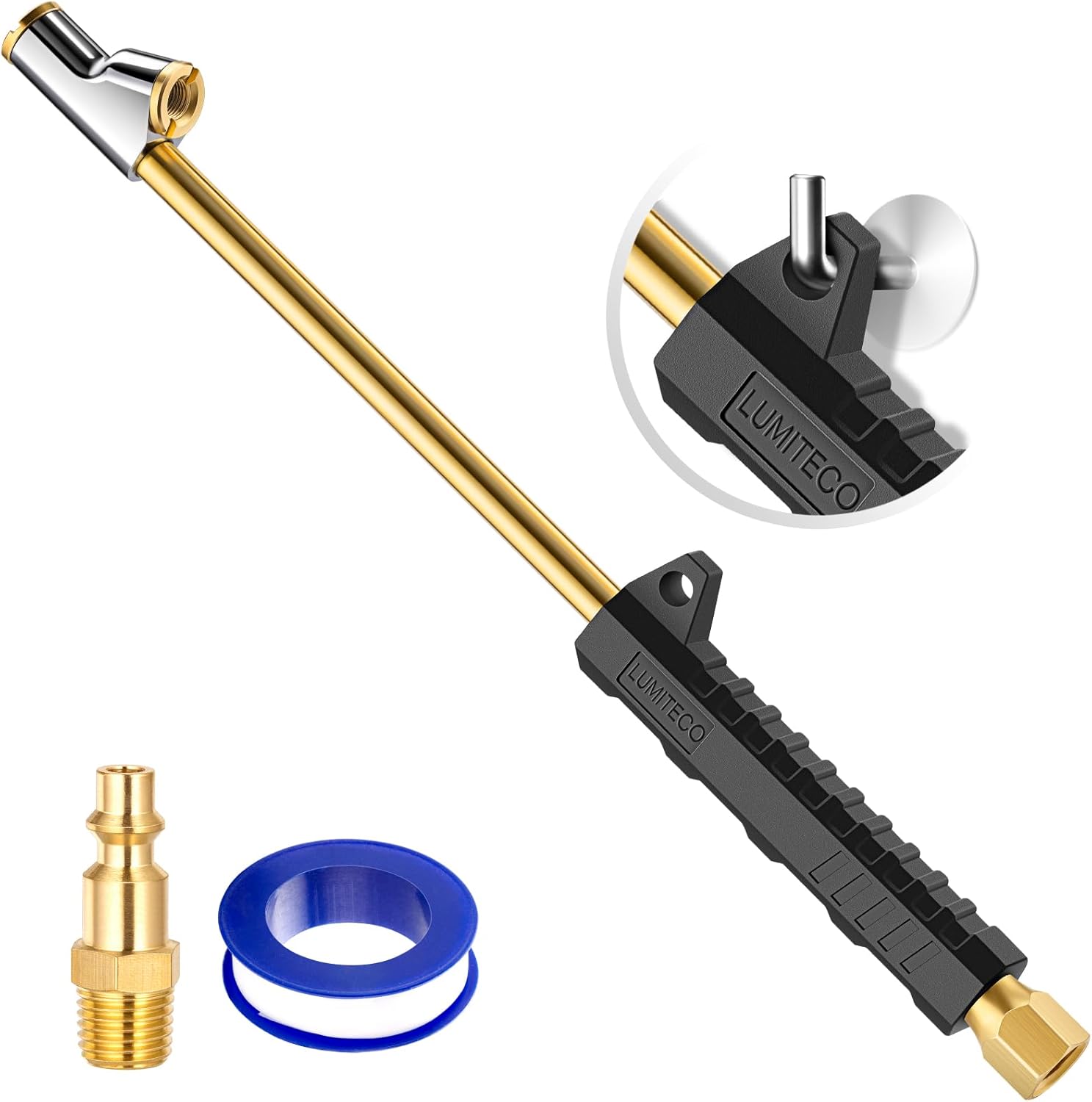
The LUMITECO 12" extended reach dual head air chuck is designed for hard-to-reach truck, RV, and bus dual wheels, making tire inflation quick and easier. It features a straight foot lock-on chuck for inner tires and a 30° reverse chuck for outer valves, with a closed-flow design that only allows air when engaged. Built with a brass body and ergonomic rubber grip, it connects easily using a 1/4" FNPT thread plus a standard quick plug for compressor-ready inflation.

This EVOULTES 2-way air chuck set includes a dual head closed flow air chuck and a ball head chuck for versatile tire inflation. It connects easily to air lines, inflator gauges, and compressors using 1/4" NPT threads and includes two 1/4" male quick plugs for fast coupling. Built with durable metal construction and sealed threads using Teflon tape to help prevent air leaks, it’s ideal for inflating Schrader valve tires across cars, bikes, and motorcycles.

The AstroAI 2 pack air chucks provide a heavy-duty, closed-flow locking design that helps keep air flowing during inflation while securely attaching to the valve stem. Built with 250 PSI rated brass components and compatible with Schrader valves, they feature 1/4" female NPT threads for a wide fit with common inflators. The straight tip and locking clip make filling tires and monitoring pressure more convenient.
What People Say
Buyer feedback commonly highlights the solid feel, readable magnifying window, and easier access provided by the hose and dual-head chuck. The serviceable gauge and valve cartridges also appeal to users who would rather repair a worn component than replace the entire tool. The most important complaint is not a defect but a design limit: the chuck cannot start filling a tire at zero pressure.
Overall Sentiment: Positive

Pros and Cons
Pros
- Combines pressure checking, inflation, and controlled deflation in one tool
- Wide 10–160 PSI range works across many vehicle and equipment types
- Dual-head chuck, swivel connection, and long hose improve valve access
- Magnifying window makes the analog scale easier to read
- Replaceable cartridges and hose components support long-term service
Cons
- Cannot begin inflating a tire with zero air pressure
- Needs a separate compressor and a compatible air-line fitting
- The 2 PSI analog scale is less precise for buyers who want decimal readings
Build Quality and Serviceability
Milton describes the current body as cast aluminum and the hose as 15-inch EPDM. That combination keeps the tool suited to repeated handling without relying on a fragile plastic housing. The ergonomic grip also gives you a defined hold point while the hose and swivel joint absorb much of the twisting force near the valve.
The strongest long-term feature is repairability. Milton lists replaceable gauge and valve cartridges, plus replacement washers, hose whips, and chuck components. A worn seal or damaged hose therefore does not automatically turn the whole inflator into waste.
Gauge Range and Readability
The S-506 is performance-tested and calibrated across 10–160 PSI, with markings every 2 PSI. That range is broader than many basic passenger-car gauges and gives you room for higher-pressure truck and trailer tires, provided the target pressure remains within the tool’s range.
The magnifying window improves visibility, but this remains an analog gauge. It does not offer backlighting, automatic shutoff, presets, or decimal readings. For routine maintenance, the scale is quick and practical. For pressure-sensitive applications that demand finer resolution, a quality digital gauge may be a better companion tool.
Dual-Head Chuck and Hose Reach
The two chuck heads approach a valve from different angles. This design helps with inner dually valves, rear-facing stems, and valves that sit close to a wheel opening. The 15-inch hose, 6-inch chuck extension, and full-swivel joint provide more freedom than a rigid gauge attached directly to the valve.
The tradeoff is the chuck’s internal sealing valve. It depends on normal tire pressure to close the unused side. When the tire is completely empty, air can escape through the open head instead of entering the tire, which is why Milton states that the tool cannot inflate a zero-pressure tire.
Compressor Fit and Setup
The inflator uses a 1/4-inch FNPT inlet. Your compressor hose needs a matching male fitting, quick-connect plug, or suitable adapter. Because quick-connect standards vary, check the fitting already used on your air line before buying extra hardware.
This product does not generate compressed air. Your compressor must provide enough pressure and airflow for the tire or equipment you are filling. Set the compressor regulator within the safe limits of your hose, fittings, inflator, and tire.
How It Performs in Real Use
Routine Car and SUV Top-Offs
For normal pressure checks, the integrated gauge saves time because you do not need to remove the chuck and reach for a second tool. Attach the chuck firmly, read the scale, add short bursts of air, and use the deflation control on the improved model when you overshoot.
Truck, Trailer, and Dually Tires
The dual-head design is most useful when a valve faces inward or sits behind another wheel. The hose gives you room to align the chuck without forcing the gauge body against the rim. The 160 PSI upper range also covers more high-pressure applications than many car-focused inflators.
Garage and Service-Bay Work
Repeated use favors the S-506 because its main wear parts can be replaced. Shops that already standardize on 1/4-inch air fittings can keep the tool connected and use it for quick pressure corrections across several vehicles.
Roadside and Emergency Use
The S-506 is useful only when compressed air is available. It can pair with a portable compressor that has a compatible hose connection, but it adds no battery, motor, or storage tank. A zero-pressure tire also needs another chuck or bulk-fill method before this dual-head unit can take over.
How to Use It Correctly
- Check the vehicle placard or equipment manual for the recommended pressure.
- Connect a compatible air-line fitting to the 1/4-inch FNPT inlet and check for leaks.
- Choose the chuck head that gives the straightest approach to the Schrader valve.
- Seat the chuck fully, then read the gauge before adding air.
- Use short trigger pulls and pause between them so the gauge can settle.
- Use the deflation button on the improved model to release small amounts of excess pressure.
- Recheck pressure after disconnecting, especially when tire temperature changes.
If air escapes from the unused side, Milton advises removing the chuck, pointing the straight outlet upward and away from people, squeezing the trigger to move the sealing valve, and reconnecting while air is flowing. Follow the manufacturer’s instructions and never direct an open air chuck toward yourself or another person.
Pro Tip: Test the inflator on a tire with normal pressure before relying on it during a trip. This confirms that your quick-connect fitting seals correctly and that you can read the gauge from your usual working position.
Maintenance and Safety
Keep the chuck, hose, lens, and inlet fitting clean. Dirt around the chuck washer can cause leaks, while a damaged hose can affect control and safety. Replace worn seals or cartridges with compatible Milton parts rather than using the tool after it begins leaking or giving unstable readings.
Use eye protection around compressed air, keep the open chuck pointed away from people, and stay within the rated pressure of every component in the system. Inflate tires to the vehicle or equipment manufacturer’s recommendation, not simply to the maximum number molded on the tire sidewall.
Is It Worth the Price?
The Milton S-506 sits closer to a professional, serviceable shop tool than a low-cost emergency gauge. Its value comes from the combined inflator and gauge, wide pressure range, dual-head access, and availability of replacement parts.
It makes the most financial sense when you already own a compressor and expect regular use across several vehicles or equipment types. It is less compelling for a driver who checks one car occasionally and would get more practical value from a compact cordless inflator.
[Products Worth Considering]

This dual head and ball air chuck set provides closed-flow tire inflation that routes air only through the chuck engaged with the valve. It includes both dual-head and ball-head chucks plus quick plug fittings for easy, fast connections to air lines and compressors. Built for reliable, leak-resistant operation, it’s ideal for filling Schrader valves on bikes, motorcycles, cars, trucks, and more.

Inflate Presta and Schrader bike and car tires with one compressor attachment, including tubeless setups. The digital gauge lets you monitor 2–200 PSI readings in 0.1 PSI increments with ±2 PSI accuracy, while the adjustable lever and built-in bleed button help you dial in precise pressure. Quick-connect coupler, hose, and a complete Presta service kit with spare cores and caps make it ready for fast maintenance.

The Milton S-693 straight foot dual head air chuck is designed for accurate tire pressure checks and quick, secure valve-core engagement with lock-on threads on both ends. With a 1/4" FNPT connection and a maximum 150 PSI rating, it’s built for use on inner duals and common vehicle tires, including trucks and RVs.
How It Compares to Alternatives
The Milton S-505 uses a single-head chuck, so it may be simpler for ordinary outward-facing valve stems. The AstroAI T3 offers a similar analog inflator format and may appeal to buyers comparing gauge ranges and chuck designs. Milton’s 507KIT adds a digital display and higher pressure capacity for users who prefer easier numerical readings.
The S-506 makes the most sense when dual-head access and repairability matter more than digital features. Its combination of a 15-inch hose, service parts, and 10–160 PSI range remains its clearest advantage.
[Products Worth Considering]

The Milton S-693-12 straight foot dual head air chuck provides extended 12-inch reach for efficiently inflating inner dual tires on trucks and semi trucks. It has 1/4" female NPT threading and locks securely onto valve core threads for reliable sealing up to 150 PSI. Designed for use on an air line with a cushioned grip handle for comfortable operation.

SAFELIFE dual head air chucks feature an extended 16-1/4-inch overall length to reach awkward valve locations on dually tires. The straight and 30-degree reverse ends help inflate outer and inner valves on trucks, RVs, buses, and more. A lock-on design with closed flow operation provides a strong seal and controlled airflow when engaged. Heavy duty brass construction with a 1/4" FNPT quick plug makes it easy to connect to compressors and inflator setups.
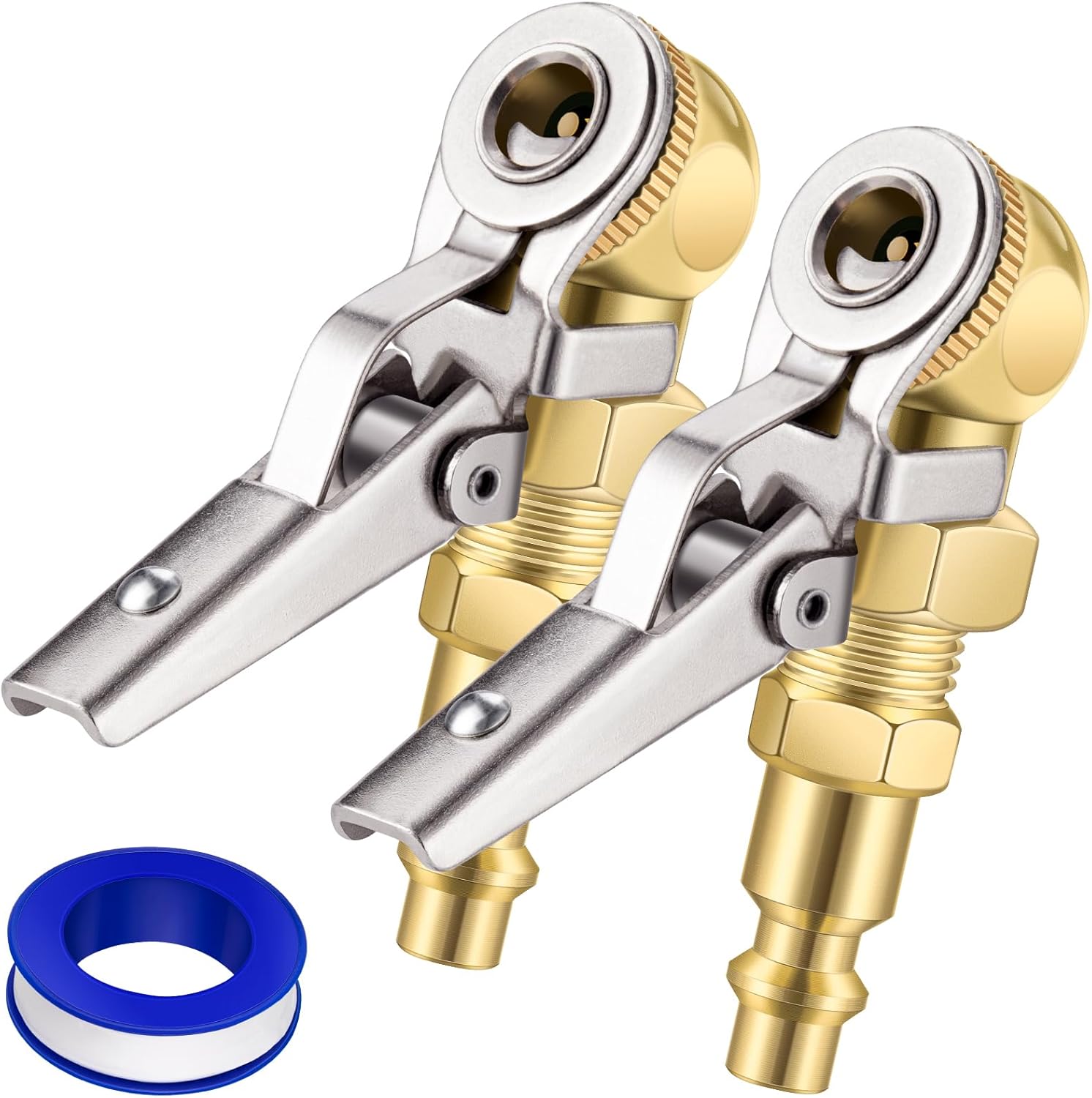
EVOULTES 2-pack closed ball tire chucks lock onto Schrader valves to help you inflate tires hands-free. The set includes both chucks with quick plug compatibility and a 2-way connection approach for easy setup to your air line or compressor. Durable metal construction supports reliable use for cars, trucks, RVs, bikes, and other Schrader-valve tires up to 250 PSI.
Why You Should Choose It
Choose the Milton S-506 when you want one compressor-connected tool for checking, adding, and fine-tuning tire pressure. It is particularly well suited to truck, trailer, RV, and multi-vehicle maintenance where awkward valve positions and repeated use make a serviceable dual-head inflator worthwhile.
Frequently Asked Questions
Can the Milton S-506 inflate a completely flat tire?
No. Milton states that the dual-head chuck needs normal tire pressure for its internal sealing valve to work. Use another chuck or fill method to establish some pressure, then use the S-506 for controlled inflation and final adjustment.
Does the S-506 include an air compressor?
No. It is an inflator gauge that connects to an external compressed-air source. You also need a compatible plug or adapter for its 1/4-inch FNPT inlet.
What pressure range does the gauge cover?
The analog gauge covers 10–160 PSI in 2 PSI increments. The magnifying window helps you read the scale, but it does not provide decimal-level digital resolution.
Is it suitable for dually and truck tires?
Yes, when the valve uses a compatible Schrader connection and the required pressure stays within the gauge range. The dual heads, 6-inch extension, swivel joint, and 15-inch hose are designed to improve access to inward-facing or recessed valves.
Will it fit every compressor hose?
Not automatically. The inflator has a 1/4-inch FNPT inlet, while compressor hoses may use different quick-connect profiles. Match the plug or adapter to your existing coupler before use.
Can you release air if the tire is overinflated?
The current improved S-506D manufacturer listing includes a deflation button for fine adjustment. Release air in short steps and let the needle settle before checking the final pressure.
Are replacement parts available?
Yes. Milton lists replaceable gauge and valve cartridges, plus compatible washers, hose whips, and chuck components. Confirm the part number against your exact S-506 version before ordering a repair item.
The Bottom Line
The Milton S-506 is a strong choice for buyers who already have a compressor and need reliable access to car, truck, trailer, RV, or dually valves. Its repairable construction, wide analog range, and dual-head hose setup are the main strengths, while the zero-pressure limitation and lack of a built-in compressor are the reasons some drivers should skip it.
