
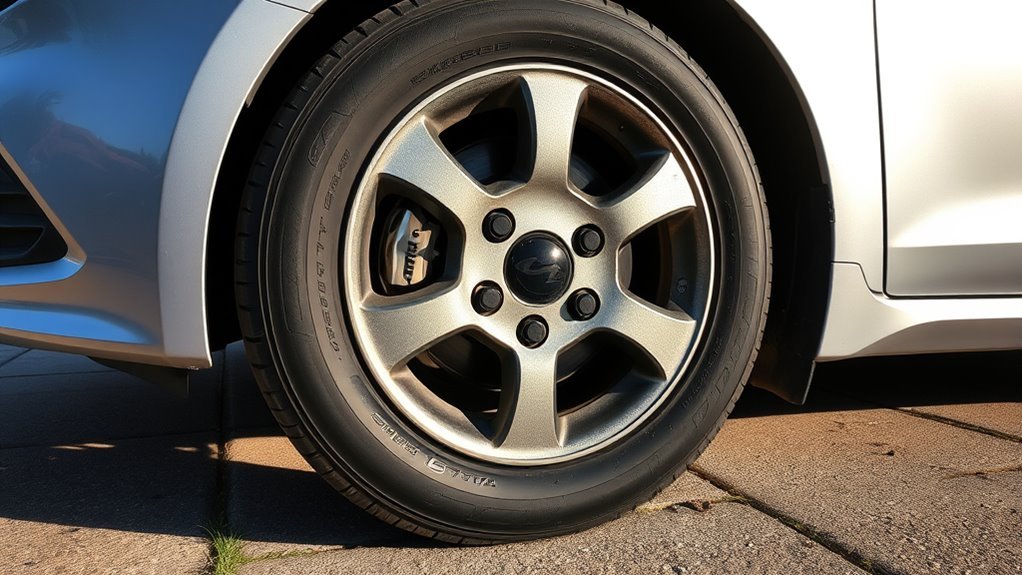
If you hear a thumping noise from the tire area of your Hyundai Sonata, treat it as a clue, not just an annoyance. A rhythmic thump often points to a tire or wheel issue, but brakes, wheel bearings, CV joints, alignment, balance, and suspension parts can also be involved. The safest approach is to note when the sound happens, do a simple visual inspection, and have the car checked quickly if the noise is new, loud, or getting worse.
Quick Answer
A Hyundai Sonata thumping noise near the tire is most often caused by a damaged or unevenly worn tire, low tire pressure, a flat spot, wheel imbalance, brake rotor rust, worn brake parts, a bad wheel bearing, or a CV joint issue. Stop driving if you see a tire bulge, exposed cords, severe vibration, grinding brakes, or a loose-wheel feeling.
Key Takeaways
- A tire-speed thump usually means something is rotating unevenly: tire, wheel, brake rotor, hub, bearing, or axle.
- If the noise changes while braking, focus on brake pads, rotors, calipers, and parking brake hardware.
- If it gets louder with speed or changes when turning, a wheel bearing, tire wear pattern, or suspension issue becomes more likely.
- Check tire pressure cold, inspect tread and sidewalls, and do not drive on a tire with a bubble, exposed cords, or deep damage.
- For lifting, bearing checks, brake work, or wheel removal, use proper jack stands and follow your Sonata owner’s manual.
At a Glance
| Time Required | 10–20 minutes for basic visual checks; longer if a shop inspects brakes, bearings, alignment, or suspension. |
| Difficulty | Easy for visual tire checks; moderate to advanced for lifting, brake inspection, and bearing diagnosis. |
| Tools Needed | Tire pressure gauge, flashlight, tread-depth gauge or penny, gloves, and your owner’s manual. Use a jack and jack stands only if you know the safe lift points. |
| Cost | Basic DIY checks cost little or nothing. Repair cost depends on whether the fix is tire service, brake work, bearing replacement, alignment, or suspension repair. |
Warning: Do not crawl under a Sonata supported only by a jack. Use properly rated jack stands on solid ground, follow the owner’s manual lift points, and get professional help if you are not comfortable lifting the vehicle or removing a wheel.
What Causes Thumping Noises in Your Hyundai Sonata?
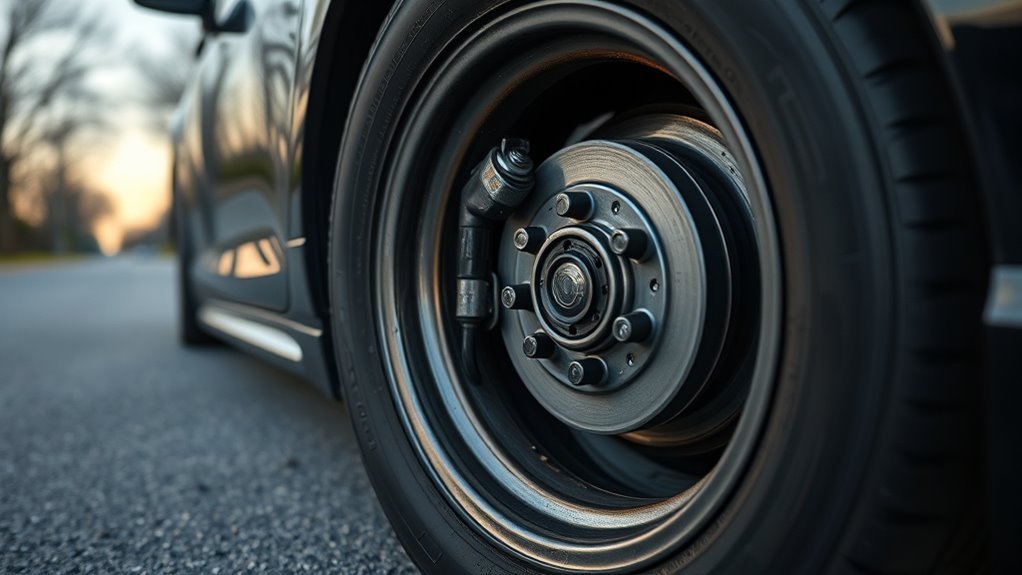
A thumping noise near one tire usually comes from a part that spins with the wheel or moves with the suspension. The most common possibilities are tire damage, uneven tread wear, a wheel balance problem, brake rotor rust, worn brake parts, a loose or bent wheel, a failing wheel bearing, a CV joint issue, or worn suspension parts.
The timing of the sound matters. A thump that speeds up as the car moves faster often points toward the tire, wheel, brake rotor, hub, or bearing. A thump that happens mainly while braking points more toward pads, rotors, calipers, or parking brake hardware. A click or pop during turns often points toward a CV joint.
| What You Notice | Likely Area | What to Check First |
|---|---|---|
| Thump speeds up with vehicle speed | Tire, wheel, rotor, hub, bearing | Tread damage, tire bulge, uneven wear, loose lug nuts, bent wheel |
| Noise changes when braking | Brake pads, rotors, calipers, parking brake | Rotor rust, pad thickness, grinding, pulling, brake warning light |
| Clicking or popping during turns | CV joint or axle | Torn CV boot, grease leakage, clicking while accelerating in a turn |
| Vibration at highway speed | Wheel balance, tire wear, bent rim | Balance weights, cupped tread, rim damage, alignment symptoms |
| Thump after the car sat for days | Flat-spotted tire or light rotor rust | Whether the sound fades after gentle driving and braking |
Common Causes of Thumping Noises
Start with the simple, visible items before assuming the problem is expensive. Many tire-area noises come from wear or damage you can spot with a flashlight.
- Uneven tire wear: Cupped, scalloped, heel-toe, or one-edge wear can create a repeating thump or hum.
- Low or uneven tire pressure: Under-inflation can wear both tire shoulders; over-inflation can wear the center tread.
- Tire damage: A sidewall bubble, shifted belt, flat spot, nail, separated tread, or exposed cords can cause a rhythmic thump.
- Wheel imbalance: A wheel that is out of balance can shake or thump more at certain speeds.
- Brake rotor rust or brake wear: Rust, rotor unevenness, worn pads, stuck caliper hardware, or parking brake parts can make noise, especially while braking.
- Wheel bearing wear: A bad bearing may make a growl, hum, or rhythmic noise that changes with speed or turning load.
- CV joint wear: A worn outer CV joint often clicks or pops during turns, especially under acceleration.
- Suspension issues: Worn shocks, struts, bushings, ball joints, or tie rods can let the wheel bounce or shift over bumps.
Note: If the thump appeared right after tire replacement, pothole impact, curb strike, brake work, or a tire rotation, tell the mechanic. That timing can narrow the diagnosis quickly.
How Rust and Brake Wear Affect Thumping Sounds
Brake rotor rust is common after rain, washing, humidity, or parking the car for a few days. A light film may scrape away after a few normal stops. However, heavy rust, pitting, rotor thickness variation, warped rotors, worn pads, stuck caliper pins, or loose parking brake hardware can create repeated thumps, scraping, grinding, or vibration.
Pay attention to whether the noise changes when you press the brake pedal. If the sound gets louder, fades, pulses through the pedal, or comes with grinding, the brake system should be inspected. Hyundai recommends regular brake inspections because worn pads can damage rotors if ignored, and Hyundai owner information notes that worn disc brake pads may create a high-pitched warning sound when new pads are needed.
Pro Tip: If the thump only happens during the first few stops after the Sonata sat overnight, light rotor surface rust is possible. If the noise continues after normal driving, treat it as a real brake, tire, or wheel problem.
Identifying Wheel Bearing and CV Joint Issues
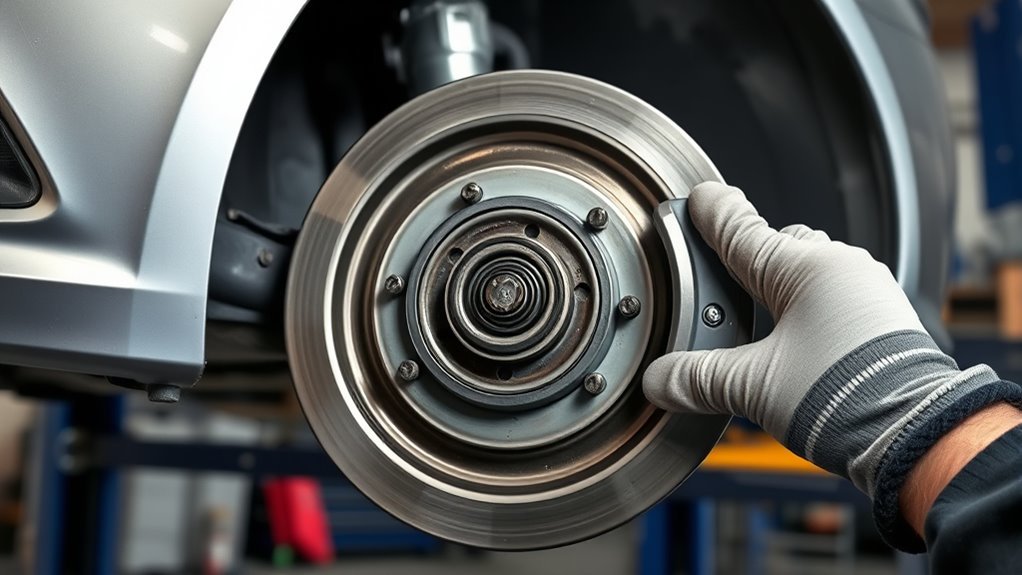
Wheel bearings and CV joints can both make tire-area noises, but they usually sound different. A wheel bearing often makes a growling, humming, or rumbling noise that changes with speed. Sometimes it gets louder when turning one direction because the vehicle’s weight loads that bearing. A CV joint is more likely to click, pop, or clack during low-speed turns or acceleration.
- Possible wheel bearing signs: humming or growling that rises with speed, vibration, looseness at the wheel, or noise that changes while gently steering left or right.
- Possible CV joint signs: clicking during turns, grease around the inside of the wheel, torn rubber boot, or vibration under acceleration.
- Possible suspension signs: clunking over bumps, uneven tire wear, wandering steering, or a loose-feeling front end.
Do not ignore bearing or CV symptoms. A failing bearing or axle can become a safety issue, and the safest diagnosis usually requires the vehicle to be lifted and inspected by someone with proper equipment.
[Products Worth Considering]

This universal wheel alignment tool helps you accurately restore tire tilt angles after tire or suspension repairs using an adjustable camber gauge. It features a powerful magnetic base that firmly attaches to brake rotors for stationary, slip-free readings, improving consistency during measurement. Built from durable PC plastic, it resists wear and corrosion and is compact enough for car, truck, RV, and motorcycle alignment tasks.

These M14x1.5 closed-end chrome lug nuts are a one-piece replacement designed for secure fitment on compatible GM, Ford, and select Chrysler/Dodge models. Featuring a 60-degree conical seat and anti-rust chrome plating, they help resist corrosion and maintain a bright look for everyday driving. Built for long-term durability, they include OEM-style part references and are backed by 12 months of support.

Upgrade your wheels with MIKKUPPA closed-end lug nuts designed for reliable fit and corrosion resistance. The one-piece, cold-forged and heat-treated steel construction helps resist rust and stripping, while the integrated finish delivers a durable black appearance. Built to OEM standards with a conical 60-degree seat, these nuts provide a secure solution for compatible Ford, Honda, Jeep, and Chevrolet models.
How Tire Condition Affects Road Noise
Tires are one of the first things to inspect because they are the only parts touching the road. A damaged tire can thump once per revolution, and uneven tread can sound like a bad bearing. Check all four tires, not just the corner where the noise seems loudest.
Look for sidewall bubbles, tread separation, nails, cuts, exposed cords, flat spots, uneven shoulder wear, center wear, cupping, scalloping, and heel-toe wear. Hyundai’s tire maintenance guidance says cold tire pressure should be checked at least once a month using the driver-door placard, and tire wear should be inspected at the same time. Hyundai also notes that tread wear indicators appear at 2/32 inch, but tires should be replaced before the tread is worn down to the indicator.
A tire with a sidewall bubble, exposed cords, deep cut, or separated tread is not just noisy — it can fail while driving.
[Products Worth Considering]

Replace or upgrade your zero-turn lawn mower tires with a universal fit flat-free tire and wheel assembly in a convenient 2-pack. Smooth tread front-caster style helps turning with reduced turf damage, while flat-free design eliminates the maintenance and downtime of air-filled flats. The included adapter kit supports 5/8-inch axles and hub lengths from 3.4 to 5 inches for compatibility across most ZTR mowers.

Milton S-921 pencil tire pressure gauge helps you maintain optimal tire pressure for passenger cars with accurate readings in PSI and kPa. It features a built-in deflator valve for convenient pressure adjustments, plus a single chuck head and nylon indicator bar for easy use on the go. Built from durable plated brass and designed for reliable performance, it’s a practical road trip and cold-weather maintenance tool.

Upgrade your wheels with MIKKUPPA M12x1.5 mag seat lug nuts built for secure, corrosion-resistant performance. These closed-end chrome lug nuts are a direct replacement for select Toyota models, including Camry, Corolla, RAV4, Sienna, Avalon, Highlander, Matrix, Venza, and Prius. Triple-chromium plating and cold-forged, heat-treated steel help deliver strength for daily driving and replacement needs.
Why Wheel Alignment and Balancing Matter
Wheel alignment and wheel balancing are different services, but both can affect noise and tire wear. Alignment sets the wheel angles so the tires contact the road correctly. Balancing helps the tire and wheel assembly rotate smoothly at speed.
Poor alignment can cause the Sonata to pull to one side, wear one edge of a tire, or feel unstable. Wheel imbalance can cause vibration through the steering wheel, seat, or floor, especially at highway speeds. Michelin explains that alignment, balancing, mounting, and wheel fitment all influence tire wear, handling, ride comfort, and operational efficiency.
If the thumping began after hitting a pothole or curb, ask for tire balance, rim runout, and alignment to be checked. A bent wheel or shifted tire belt can mimic suspension or bearing noise.
Diagnosing the Noise Before Visiting a Mechanic
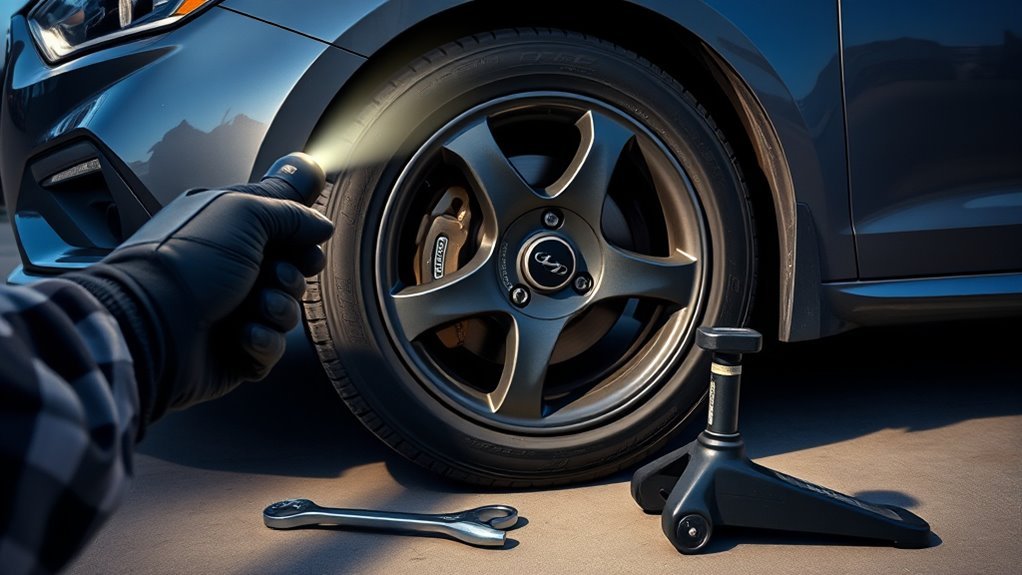
Before you schedule service, write down exactly when the thump happens. This helps the mechanic avoid guesswork.
- Note the speed: Does the noise start at low speed, highway speed, or all speeds?
- Test braking behavior safely: On a quiet road, does light braking change the sound?
- Notice turning behavior: Does it get louder when turning left or right?
- Check the tires cold: Compare pressure with the driver-door placard, not the number molded on the tire sidewall.
- Inspect tread and sidewalls: Look for bubbles, cuts, nails, uneven wear, cupping, and exposed cords.
- Look at the wheels: Check for bent rim lips, missing wheel weights, fresh curb damage, or loose-looking lug nuts.
- Listen after sitting: If the car sat for several days, see whether the thump fades after careful driving.
- Record recent work: Note tire rotation, brake service, wheel replacement, pothole impact, or alignment work.
Warning: Stop driving and arrange service if you feel severe vibration, the steering wheel shakes hard, the car pulls sharply, you hear grinding brakes, you smell burning, or you see a tire bubble, exposed cords, or a visibly loose wheel.
DIY Checks for Common Noise Issues
You can do several checks without removing parts. Keep the inspection simple and safe. If anything looks damaged, do not keep driving just to “test it.”
Inspect Tires and Wheels
- Check tire pressure when the tires are cold.
- Run your eyes across the tread for high-low patches, cupping, missing chunks, or nails.
- Look at both sidewalls for bubbles, cracks, or cuts.
- Check the wheel rim for bends or fresh impact marks.
- Look for missing balance weights if you recently noticed highway vibration.
Inspect Brake Components
Look through the wheel spokes with a flashlight. You may be able to see rotor rust, deep scoring, or very thin brake pad material. Many mechanics recommend replacing pads before they wear below about 3 mm, but your technician should measure the pads and rotors against the correct specification for your Sonata.
If you hear grinding, scraping, or a pulsing brake pedal, do not delay service. Driving with worn pads can damage rotors and reduce braking performance.
Check for Bearing or Suspension Clues
A proper wheel bearing and suspension check usually requires the vehicle to be safely raised. If you do not have jack stands, the correct lift points, and experience, leave this to a shop. A technician can check bearing play, hub noise, ball joints, tie rods, struts, axle boots, and brake hardware during one inspection.
When to Replace Brake, Tire, or Wheel Parts
Replacement depends on the confirmed cause, not just the noise. Use these general signs:
- Replace or repair the tire: sidewall bubble, exposed cords, tread separation, deep cut, repeated air loss, or tread near the wear bars.
- Service the brakes: grinding, pulsation, rotor scoring, stuck caliper hardware, worn pads, or a brake warning sound.
- Replace a wheel bearing: confirmed bearing play, roughness, or bearing noise after inspection.
- Repair CV axle issues: torn boot with grease loss, clicking during turns, or axle vibration.
- Correct alignment or balance: pulling, uneven edge wear, cupping, steering vibration, or symptoms after pothole impact.
Hyundai brake guidance recommends brake checks during regular tire rotations, about every six months or 7,500 miles. Hyundai tire guidance also says most Hyundai models use a 7,500-mile tire rotation interval or sooner if irregular wear develops, but you should always follow the schedule and rotation pattern for your exact model year and tire setup.
[Products Worth Considering]

The Ziopetru adjustable magnetic wheel alignment tool helps you check and restore camber and caster positioning after removing and reinstalling undercarriage components. With a clear leveling/bubble measurement system and an easy zeroing adjustment knob, it supports precise horizontal angle checking. The strong magnetic base mounts to metal surfaces for convenient use at home on cars, motorcycles, trucks, vans, and SUVs.

Monitor tire tread wear with a smart, color-coded depth gauge that shows clear condition ranges at a glance. The bar is range marked for fast, easy readings, helping you maintain safer traction and performance. Each gauge is portable with a pocket clip, and the set includes 20 units for daily use and sharing.

Steelman white tire marking crayons provide high-contrast, semi-permanent marks for repairing and inspecting tires and equipment. They write on wet or dry, smooth or coarse surfaces including rubber, metal, glass, and wood, making them ideal for puncture location and damage outlining. The lead- and zinc-free crayons resist weather and fading yet wipe away when you no longer need the marks.
Follow-Up: Confirming the Noise Is Fixed
After repair, drive the Sonata under the same conditions that caused the thump before. Check low speed, steady speed, gentle braking, and turns. The noise should be gone or clearly reduced. If the sound remains, return to the shop with your notes and ask whether the remaining cause could be tire balance, wheel runout, bearing noise, suspension play, or brake rotor variation.
Keep monitoring tire pressure, tread wear, and brake condition. A small alignment or tire-pressure issue can become a noisy, expensive problem if it wears the tire unevenly for thousands of miles.
Frequently Asked Questions
Why is there a knocking sound coming from my tire area?
A knocking or thumping sound from the tire area can come from a damaged tire, uneven tread wear, wheel imbalance, loose wheel hardware, brake rotor issues, worn suspension parts, a bad wheel bearing, or a CV joint. If the noise follows vehicle speed, start with tires, wheels, brakes, and bearings.
How much does it cost to replace a wheel bearing on a Hyundai Sonata?
The cost depends on the model year, whether the hub assembly is replaced, local labor rates, parts brand, and which side is bad. Expect it to be a several-hundred-dollar repair in many cases, but ask for a written estimate that separates parts, labor, alignment needs, and taxes.
Is it safe to drive with a thumping tire noise?
Not always. If the thump is mild and you find no visible tire damage, drive carefully to a shop for inspection. Do not keep driving if you see a sidewall bubble, exposed cords, loose wheel, severe vibration, grinding brakes, smoke, burning smell, or sudden pulling.
Can a flat spot on a tire cause a thumping noise?
Yes. A tire can develop a temporary flat spot after the car sits, especially in cold weather or after long parking. A mild flat-spot thump may fade as the tire warms up. If it does not fade, inspect for tire damage, belt separation, balance issues, or uneven wear.
Will an alignment fix a thumping noise?
Alignment can help if the thump comes from uneven tire wear caused by misalignment, but it will not fix a damaged tire, bent wheel, bad bearing, worn brake part, or CV joint problem. A shop should inspect the tire and wheel assembly before doing only an alignment.
Conclusion
A thumping noise near a Hyundai Sonata tire is usually a sign that something in the tire, wheel, brake, bearing, axle, or suspension system is not rotating or moving smoothly. Start with tire pressure, tread, sidewall condition, wheel damage, and braking symptoms. If the sound is new, strong, speed-related, or tied to braking or turning, schedule an inspection before the problem becomes unsafe or more expensive.
Sources
- Hyundai Owners — Brake Maintenance & Safety Tips — brake inspection interval and brake pad wear guidance.
- Hyundai Owner’s Manual — Disc Brakes Wear Indicator — worn brake pad warning sound.
- Hyundai Technical Service Bulletin 20-SS-002H — tire pressure, rotation, tread wear, tire age, and wear-pattern guidance.
- NHTSA TireWise — tire safety, maintenance, and tire-related crash-prevention information.
- Michelin — Wheel Alignment and Balancing — alignment, balancing, tire wear, vibration, and handling guidance.

