Radial tires are the standard construction type for modern passenger cars, including the Hyundai Sonata. The word “radial” does not name a brand or tread pattern. It describes how the tire’s internal body plies run from bead to bead, with stabilizing belts under the tread to help the tire ride smoothly, track predictably, and manage heat during everyday driving.
Quick Answer
A Hyundai Sonata radial tire uses body plies that run radially from bead to bead, plus belts under the tread for stability. To identify one, look for the “R” in the tire size, such as 215/55R17. For safe replacement, match the tire size, load index, speed rating, and cold pressure listed on the driver-side door placard or in the owner’s manual.
Key Takeaways
- The “R” in a Sonata tire size means radial construction, not a speed rating or trim code.
- Radial tires use flexible body plies and stabilizing belts to support comfort, handling, traction, and tread life.
- Your Sonata’s correct tire size, load rating, speed rating, and cold PSI come from the tire placard, not from the tire’s sidewall maximum pressure.
- Tire condition matters as much as construction. Check pressure monthly, inspect tread, and replace tires that are worn, damaged, or mismatched.
At a Glance
| Time Required | 5–10 minutes to identify and check tire markings |
| Difficulty | Easy for inspection; professional help recommended for tire replacement or size changes |
| Tools Needed | Flashlight, tire pressure gauge, tread-depth gauge or penny, and your Sonata tire placard |
| Cost | Free to inspect; replacement cost depends on tire size, brand, performance category, and installation |
Introduction to Radial Tires: Key Features and Benefits
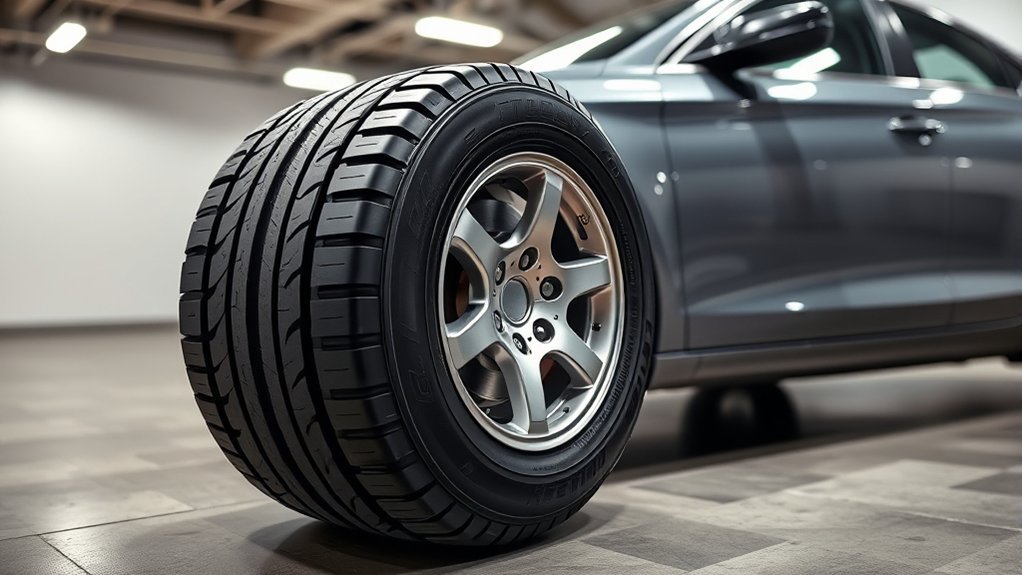
When people talk about radial tires on a Hyundai Sonata, they are talking about the tire’s internal construction. In a radial tire, the body plies run across the tire from bead to bead, roughly at a 90-degree angle to the direction of travel. Belts under the tread help keep the tread area stable while the sidewalls remain flexible.
This separation between sidewall flex and tread stability is the main reason radial tires became the standard for passenger cars. A well-matched radial tire can support a smoother ride, better highway stability, lower rolling resistance, and more even treadwear than older bias-ply designs.
That does not mean every radial tire performs the same way. A touring all-season tire, a performance tire, a winter tire, and a budget tire can all be radial, but each may feel different in noise, braking, snow grip, steering response, and tread life. For your Sonata, radial construction is only the starting point; the exact size, load index, speed rating, tread design, and inflation pressure matter just as much.
Overview of Hyundai Sonata Radial Tire Components
A modern Sonata tire is a layered structure. Each part has a job, and understanding those parts makes it easier to choose replacements and spot unsafe wear.
Key Tire Components Explained
| Body plies | Fabric-reinforced layers, often polyester, rayon, or nylon, that form the tire casing and help contain inflation pressure. |
| Belts | Usually steel-reinforced layers under the tread that stabilize the contact patch and support handling, wear, and traction. |
| Bead | High-strength wire bundles that lock the tire to the wheel rim. |
| Innerliner | An air-retaining rubber layer inside a tubeless tire. It helps hold pressure without a separate inner tube. |
| Sidewall | The side of the tire that protects the casing and carries important markings such as size, construction, load index, speed rating, and DOT date code. |
| Tread | The rubber compound and pattern that meet the road, affecting grip, water evacuation, road noise, and wear. |
Benefits of Radial Design
For a Hyundai Sonata, radial construction is useful because the car is designed for paved-road comfort, predictable handling, and everyday efficiency. The main benefits include:
- Ride comfort: Flexible sidewalls help absorb small road impacts.
- Stable tread contact: Belts under the tread help keep the tread area flatter and more controlled.
- Lower heat buildup: Compared with older bias-ply designs, radial construction generally manages highway heat better.
- Better fuel economy potential: Many radial passenger tires are designed with lower rolling resistance than older construction styles.
- Longer usable tread life: When properly inflated, rotated, and aligned, radial tires can wear more evenly.
Note: Radial construction helps, but it does not override poor maintenance. Underinflation, overloading, worn shocks, bad alignment, and aggressive driving can shorten the life of even a high-quality radial tire.
Importance of Tire Specifications
The safest tire for your Sonata is not simply “any radial tire.” It must match the tire information specified for your exact model year and trim. Before buying replacements, check the Tire and Loading Information Label on the driver-side door edge or door post, then compare it with the sidewall markings on your current tires.
A tire size such as 215/55R17 94V breaks down like this:
- 215: tire width in millimeters.
- 55: aspect ratio, or sidewall height as a percentage of width.
- R: radial construction.
- 17: wheel diameter in inches.
- 94: load index, which indicates how much weight one tire can support when properly inflated.
- V: speed rating, which indicates the tire’s tested speed capability under specified conditions.
Warning: Do not use the maximum PSI molded on the tire sidewall as your Sonata’s normal tire pressure. Use the cold inflation pressure listed on the vehicle tire placard or in the owner’s manual.
How Radial Tires Are Made
Radial tire manufacturing combines rubber compounds, fabric cords, steel wire, bead bundles, and curing technology. The exact recipe varies by brand and tire model, but the broad process is similar across passenger-car radial tires.
Tire Manufacturing Process
- Innerliner is prepared: A special rubber layer is formed to help retain air pressure.
- Body plies are added: Fabric-reinforced plies create the tire casing and support the air pressure inside the tire.
- Beads are installed: Wire bead bundles anchor the tire to the wheel rim.
- Belts and tread are applied: Steel belts stabilize the tread area, and the tread rubber is added on top.
- The green tire is cured: Heat and pressure shape the tire, bond the materials, and mold the tread pattern and sidewall markings.
- Quality checks are completed: Finished tires are inspected for defects, uniformity, and compliance before sale.
Key Material Components
Radial tire materials are chosen to balance comfort, traction, durability, rolling resistance, and heat resistance. Steel belts support tread stability. Textile plies support the casing. Rubber compounds influence grip and wear. Fillers such as carbon black and silica can affect traction, abrasion resistance, and rolling resistance.
For a Sonata driver, the takeaway is simple: two tires may both be radial and the same size, but their compounds and internal reinforcements can make them feel very different on the road.
Understanding Radial vs. Bias Ply Tires
Radial and bias-ply tires are built differently. Bias-ply tires use crisscrossing plies that connect sidewall movement more directly with tread movement. Radial tires separate those jobs more effectively, which is why they are the normal choice for modern passenger cars.
| Feature | Radial Tire | Bias-Ply Tire |
| Ply direction | Runs radially from bead to bead | Runs diagonally in crisscross layers |
| Ride comfort | Usually smoother on paved roads | Usually stiffer and less refined |
| Heat control | Generally better for highway driving | Can build more heat at sustained speed |
| Best use | Modern passenger cars, commuting, highway use | Certain trailers, vintage vehicles, and specialty equipment |
For a Hyundai Sonata, radial tires are the correct category to shop unless a tire professional and the vehicle manufacturer’s specifications say otherwise.
[Products Worth Considering]

The SAFELIFE dial tire tread depth gauge measures tread depth in 1/32 inch increments with clear, easy-to-read 2-inch dial face. Color zones using a traffic light system help you quickly judge whether tread is low, marginal, or ample for safer driving. Built with a durable zinc cast body and a metal detect probe for precise, comfortable use across cars, motorcycles, trucks, and buses.

TP-M13W combination repair unit kit includes wrapped stems with matching patches for fast, reliable tire repairs. It’s suitable for both radial and bias ply tires and is designed for chemical or heat vulcanization. Gray vulcanizing gum with blue backing helps create a strong bond, with the stem portion wrapped for added effectiveness.

Keep your tires properly inflated with this analog VONDIOR tire pressure gauge, designed for fast, easy readings without batteries. The swiveling, two-axis hose and large glow dial help you measure at any tire angle with instant visibility. Built with a protective rubber shield, it supports durable, low-maintenance use for cars and trucks.
Why Radial Tires Are Great for Your Hyundai Sonata
The Sonata is built for daily driving, commuting, road trips, and paved-road comfort. Radial tires fit that mission well because they combine flexible sidewalls with a more stable tread area. That balance helps the car feel composed over bumps while keeping the tread planted during braking, cornering, and highway cruising.
Radial tires also give shoppers many choices. Depending on your climate and driving style, you can choose from touring all-season tires, grand-touring tires, performance all-season tires, winter tires, and low-rolling-resistance options. The best choice depends on how and where you drive, not just on the fact that the tire is radial.
Tire choice is a safety decision, not just a comfort upgrade. NHTSA reported 511 deaths in tire-related crashes in 2024, which is why correct inflation, tread depth, load rating, and fitment matter.
[Products Worth Considering]

Measure tire tread depth quickly and accurately with this LUMITECO dial gauge that reads in 1/32" increments up to 14/32". The color-coded green/yellow/red zones make it easy to judge tire wear and know when replacement is needed. A rugged, compact design with a protective pouch helps keep the gauge ready for use on cars, trucks, motorcycles, and more.

Milton S-921 pencil tire pressure gauge helps you maintain optimal tire pressure for passenger cars with accurate readings in PSI and kPa. It features a built-in deflator valve for convenient pressure adjustments, plus a single chuck head and nylon indicator bar for easy use on the go. Built from durable plated brass and designed for reliable performance, it’s a practical road trip and cold-weather maintenance tool.

Measure tyre tread depth precisely with a digital gauge that reads in both MM and inches, helping you monitor safe driving conditions. The large LCD screen is easy to operate, and the compact tool fits for cars, trucks, and motorcycles. It provides high accuracy with a 0-25.4mm range and includes a 1-year warranty for added peace of mind.
How to Identify Radial Tires on Your Hyundai Sonata
You can identify a radial tire without removing it from the car. Look at the sidewall and find the main size code. On a Sonata, it will usually follow a format similar to 215/55R17, 235/45R18, or another size listed for your model year and trim.
- Find the “R” in the size: The “R” means radial construction.
- Check the full service description: The number and letter after the size, such as 94V, are the load index and speed rating.
- Look for “TUBELESS”: Most modern passenger radial tires are tubeless, but this is a separate marking from “R.”
- Check the DOT date code: The last four digits show the week and year the tire was made, such as 2624 for the 26th week of 2024.
- Compare against the placard: The driver-side door label is your best quick reference for the original tire size and cold pressure.
Pro Tip: Take a clear photo of your tire sidewall and your driver-side door placard before shopping. That makes it easier to compare size, load index, speed rating, and PSI at a tire shop or online.
Selecting the Best Radial Tires for Your Driving Experience
To choose the best radial tires for your Hyundai Sonata, start with fitment and safety, then compare comfort, weather traction, tread life, and price.
- Confirm the factory tire size: Use the Tire and Loading Information Label or owner’s manual for your exact Sonata.
- Match or exceed the load index: Never choose a lower load rating than the vehicle requires.
- Match the required speed rating: A higher speed rating may be acceptable, but a lower one can affect handling, heat resistance, and safety unless a tire professional confirms a proper winter-tire exception.
- Pick the right category: Touring tires favor comfort and tread life; performance tires favor steering response; winter tires improve cold-weather grip; low-rolling-resistance tires may help efficiency.
- Check real-world priorities: Compare wet braking, road noise, snow rating, warranty, ride comfort, and reputable owner reviews.
Warning: Avoid mixing radial and bias-ply tires, using different sizes on the same axle, or installing a tire with a lower load index than specified. If you want a different wheel or tire size, ask a qualified tire professional to confirm clearance, load rating, diameter, TPMS compatibility, and speedometer impact.
[Products Worth Considering]

Accurately measure tire tread depth with a calibrated gauge marked from 0 to 1 inch in 1/32 inch increments. The color-coded bar helps you quickly identify tread condition ranges, supporting safe driving for trucks, motorcycles, automobiles, and passenger vehicles.

AstroAI’s digital tire pressure gauge with inflator helps you quickly check, inflate, and deflate tires with an easy lock-on chuck and integrated bleed valve. It delivers calibrated accuracy within 1% for a clear PSI readout from 3 to 250 PSI, supporting dependable tire maintenance. Designed for many vehicle types, it connects to common compressor outputs and standard Schrader valves.

AstroAI’s heavy-duty digital tire pressure gauge delivers quick, accurate readings with 0.1 increments and a secure valve-stem seal. It features a green backlit LCD and built-in flashlight for easy use in low light, plus an ergonomic non-slip stainless-steel design. The wide 0–230 PSI range works across common vehicle tires, with unit selection and an auto shut-off to save battery.
How Radial Tire Construction Impacts Durability
Radial construction can support durability because the tread area is stabilized while the sidewalls remain flexible. This can reduce heat buildup and help the tread wear more evenly during normal driving. However, construction alone cannot protect a tire from neglect.
To help your Sonata tires last longer:
- Check cold tire pressure at least once a month and before long trips.
- Inspect tread depth monthly. Tires should be replaced when tread reaches 2/32 inch, and wet-weather traction can decline before that point.
- Rotate tires according to the maintenance schedule for your model and tire setup.
- Have alignment checked if the car pulls, the steering wheel is off-center, or tread wear is uneven.
- Replace tires with cracks, bulges, exposed cords, puncture damage in unsafe areas, or repeated air loss.
Common Hyundai Sonata Tire Mistakes to Avoid
Most tire problems start with small assumptions. These are the mistakes to avoid when choosing or maintaining radial tires for your Sonata:
- Buying by price only: Cheap tires may save money upfront but can cost more through noise, wear, poor wet grip, or shorter lifespan.
- Ignoring the door placard: The placard is more reliable than guessing from an old tire that may already be the wrong size.
- Using sidewall max pressure: Sidewall max pressure is not the recommended daily pressure for your car.
- Replacing only one worn tire without checking tread depth: Large tread-depth differences can affect braking and handling.
- Skipping rotation and alignment: Uneven wear can make good tires noisy, rough, and short-lived.
- Assuming all-season means all-weather: All-season tires are not the same as dedicated winter tires in severe cold, ice, or deep snow.
Frequently Asked Questions
What does construction type radial mean?
Radial construction means the tire’s body plies run radially from bead to bead, generally at a 90-degree angle to the direction of travel. Belts under the tread help stabilize the contact patch. This design supports comfort, lower heat buildup, and predictable handling on passenger cars like the Hyundai Sonata.
What are the three types of tire construction?
The three common construction categories are radial, bias-ply, and bias-belted. Radial tires are the normal choice for modern passenger cars. Bias-ply and bias-belted tires are more common in certain specialty, vintage, trailer, or equipment uses.
How do I know if my Hyundai Sonata tires are radial?
Read the tire size on the sidewall. If the size includes an “R,” such as 215/55R17, the tire is radial. The “R” appears between the aspect ratio and the wheel diameter.
Can I put bias-ply tires on a Hyundai Sonata?
For normal Sonata use, no. A Hyundai Sonata is designed around modern passenger radial tires. Bias-ply tires are not appropriate for routine Sonata replacement unless a qualified tire professional and the vehicle specifications confirm a safe, legal, and compatible application.
What tire pressure should I use for Sonata radial tires?
Use the cold tire pressure listed on the driver-side Tire and Loading Information Label or in the owner’s manual for your exact Sonata. Do not use the maximum pressure printed on the tire sidewall as your normal inflation target.
Does the “R” in tire size mean speed rating?
No. The “R” means radial construction. The speed rating is the letter after the load index near the end of the tire size, such as the “V” in 215/55R17 94V.
Conclusion
Radial tires are the right construction type for a Hyundai Sonata, but the safest choice is not just any tire with an “R” on the sidewall. Match the tire size, load index, speed rating, and cold inflation pressure listed for your exact vehicle. Then choose a tread category that fits your climate, driving style, and comfort needs. With proper pressure checks, rotation, alignment, and tread inspections, quality radial tires can help your Sonata ride smoothly, handle predictably, and stay safer on the road.
Sources
- NHTSA TireWise: Tire Safety Ratings and Awareness — tire pressure, tread depth, tire placard, TPMS, and tire-related crash safety guidance.
- Hyundai Tire Care and Maintenance — Hyundai owner guidance on tire pressure, inspection, and TPMS awareness.
- U.S. Tire Manufacturers Association: Tires 101 — tire components, materials, innerliner, belts, body plies, and tire construction basics.
- Tire Industry Association: Reading a Tire Sidewall — tire size markings, “R” radial construction, service description, and DOT code.
- Michelin: Tire Load Rating and Speed Rating Explained — load index, speed rating, and replacement-rating guidance.