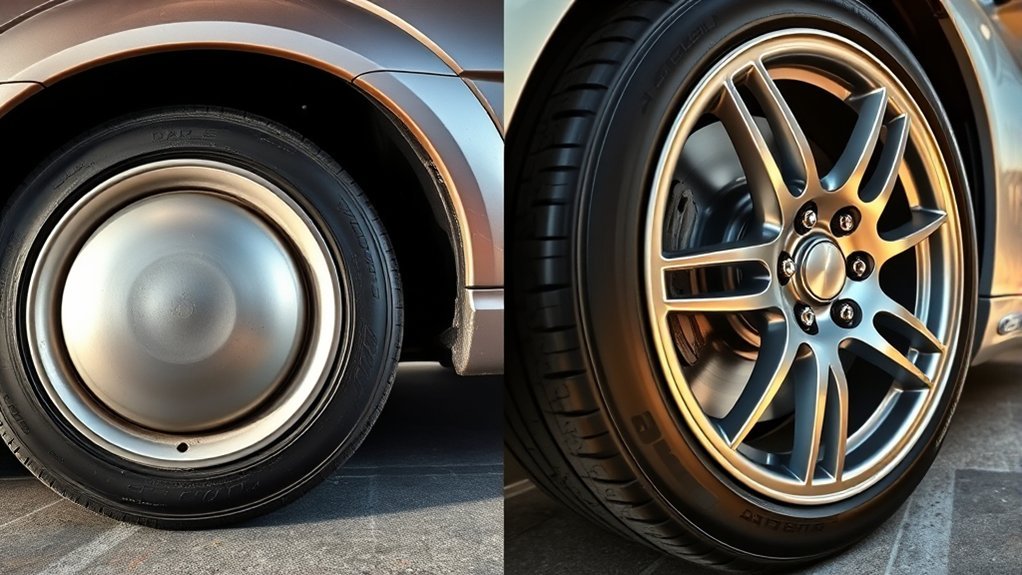
Hubcaps and rims are very different parts of your vehicle’s wheel assembly. A hubcap is a non-structural cover used mainly for appearance and to shield parts of the wheel center, while the rim is the part of the wheel where the tire bead seats. Knowing the difference matters when you are buying replacement parts, checking damage, or choosing new wheels.
Quick Answer
A hubcap is an optional cover fitted over part of a wheel, while the rim is the metal area that supports and seats the tire bead. In everyday speech, people often call the entire wheel a “rim,” but technically the wheel is the complete structural assembly and the rim is part of it.
Key Takeaways
- A hubcap is a removable, non-structural cover; the rim is part of the structural wheel and provides the surface where the tire bead seats.
- The terms hubcap, center cap, and wheel cover are sometimes used loosely, but they can describe covers of different sizes.
- Hubcap damage is usually cosmetic, but a loose cover should be secured or removed before it falls off.
- A cracked or significantly bent wheel is a safety concern because it can affect tire support, sealing, balance, and handling.
- Steel and aluminum-alloy wheels differ in weight, design, cost, and impact behavior, but material alone does not guarantee better handling or fuel economy.
What’s the Difference Between Hubcaps and Rims?
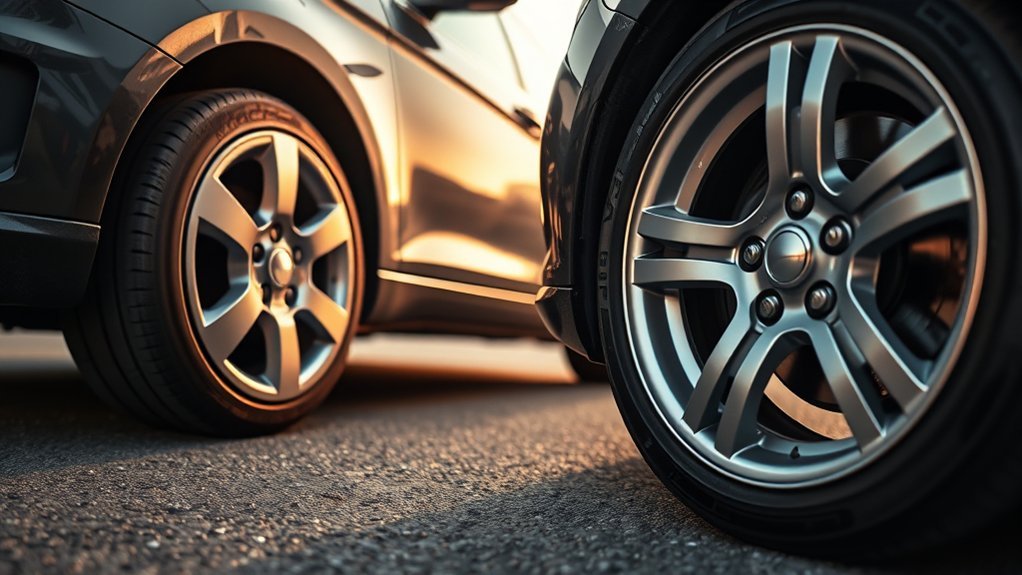
The simplest difference is that a hubcap is a cover, while a rim is part of the structure that supports the tire.
Federal tire terminology defines a rim as the metal support on which the tire beads are seated. The complete wheel includes more than that rim area, even though drivers, tire shops, and aftermarket sellers commonly use the words rim and wheel interchangeably.
| Feature | Hubcap | Rim / Wheel |
|---|---|---|
| Main purpose | Appearance and limited protection | Supports and positions the tire |
| Structural? | No | Yes |
| Typical material | Plastic or metal | Steel or aluminum alloy |
| Necessary to drive? | Usually no | Yes |
| Damage concern | Usually cosmetic or retention-related | Can become a safety issue |
A hubcap covers part of the wheel. The rim helps support the tire. They are not interchangeable parts.
If you only need to replace a damaged cover, you normally do not need a new wheel. If the wheel itself is cracked, bent, badly corroded, or otherwise structurally damaged, the issue is more serious.
What Each One Does
Hubcaps and rims sit close together, but they perform different jobs. The cover deals mainly with appearance and exposure of wheel-center components, while the rim has a direct relationship with tire fit and support.
Hubcaps Protect Center Areas
A traditional hubcap covers the hub or center section of a wheel. Depending on the design, it may hide lug nuts, the center opening, or other visible hardware.
The cover can help keep some dirt, road debris, and moisture away from the covered area. However, you should not treat a hubcap as a substitute for proper corrosion protection or wheel maintenance.
Hubcaps are also an inexpensive way to change the appearance of a basic wheel without replacing the structural wheel itself. They may attach with clips, retaining rings, screws, or lug-retained systems, depending on the vehicle and wheel design.
Note: “Hubcap” is sometimes used loosely for several types of wheel covers. Check the actual size and attachment method before ordering a replacement.
Rims Support Tire Structure
The rim is the area of the wheel where the tire bead seats. Correct rim dimensions are important because the tire must be compatible with the wheel on which it is installed.
On a tubeless setup, the tire bead contacts the rim bead-seat area while the tire’s innerliner and valve system help retain air. Damage or distortion around the wheel can therefore cause vibration, poor sealing, or other problems.
| Feature | Role | Why It Matters |
|---|---|---|
| Diameter | Matches tire bead diameter | Required for tire compatibility |
| Width | Supports an approved tire-width range | Affects tire fit and shape |
| Offset | Positions the wheel inward or outward | Affects clearance and suspension geometry |
| Material | Provides structural strength | Influences weight, finish, and impact behavior |
| Condition | Must remain structurally sound | Cracks or significant bends can create a safety concern |
Wheel vs. Rim vs. Hubcap vs. Center Cap vs. Wheel Cover
These terms are easy to confuse, especially because product sellers and drivers do not always use them consistently.
- Wheel: the complete rigid assembly mounted to the vehicle and carrying the tire.
- Rim: technically, the portion supporting the tire bead; in casual automotive language, “rim” often means the entire wheel.
- Center cap: a smaller cover over the wheel’s center opening or hub area.
- Hubcap: traditionally a cover over the hub or center area, although the word is sometimes used for larger wheel covers.
- Full wheel cover: a larger removable cover that hides most or all of the visible face of a wheel.
Ford parts information, for example, describes wheel center caps as covers for the center opening of a wheel, while Ford service information separately refers to full wheel covers.
Where Hubcaps and Rims Sit
The rim is around the tire-mounting area of the wheel. The hubcap or center cap sits farther inward, around the wheel’s center.
- Tire: surrounds the outside of the wheel.
- Rim: provides the bead-seat area where the tire mounts.
- Wheel center: contains the mounting area that attaches the wheel to the vehicle.
- Hubcap or center cap: covers some of the visible center area.
- Full wheel cover: may extend across most of the wheel face.
This difference is especially easy to see on a basic steel wheel. Remove the decorative wheel cover or hubcap and the structural steel wheel remains in place and continues carrying the tire.
Hubcap and Rim Materials Explained
Hubcaps and wheel covers are commonly made from molded plastic, although metal designs also exist. Structural automotive wheels are commonly made from steel or aluminum alloy.
| Part | Common Materials | Typical Characteristics |
|---|---|---|
| Hubcap / wheel cover | Plastic, sometimes metal | Light, removable, mainly cosmetic |
| Steel wheel | Steel | Strong, generally simple, often heavier for comparable applications |
| Aluminum-alloy wheel | Aluminum alloy | Allows many designs and can reduce wheel mass |
Aluminum is less dense than steel, so aluminum alloys can help engineers reduce vehicle-component weight. The U.S. Department of Energy notes that vehicle lightweighting can improve efficiency.
That does not mean every aluminum wheel is lighter than every steel wheel. Diameter, width, spoke design, manufacturing process, load rating, and material thickness all affect the final weight.
Do Hubcaps or Rims Affect Performance?
A normal decorative hubcap has little direct effect on vehicle performance. Its job is primarily cosmetic and protective.
Some modern wheel covers are specifically engineered to change airflow around a wheel. That can influence aerodynamics, but you should not assume that any ordinary hubcap automatically improves fuel economy.
An SAE study examining wheel mass and aerodynamics found that wheel efficiency depends on more than weight alone; the lightest wheel tested was not automatically the most fuel-efficient design.
Changing the structural wheels can also alter unsprung and rotating mass, tire fitment, track position, and clearance. Those changes may affect the way a vehicle drives, which is why wheel specifications matter more than appearance alone.
When to Replace a Hubcap or Rim
You can usually replace a hubcap when it becomes cracked, badly scratched, warped, missing, or unable to stay attached securely.
Wheel damage needs more caution. Cracks, major bends, severe corrosion, repeated air loss, or damage after a hard impact deserve professional inspection because the wheel supports the tire.
Warning: Do not continue normal driving on a wheel that is visibly cracked, severely bent, leaking air around the bead area, or causing major vibration. Stop safely and have the wheel and tire inspected by a qualified tire or wheel professional.
[Products Worth Considering]

This professional wheel and rim cleaning brush set lifts brake dust, grime, and dirt with soft, scratch-free microfiber and synthetic wool fibers. The rim brush bends up to 360 degrees for easy access to hard-to-reach areas around spokes, lips, and faces. Ideal for thorough cleaning of car, truck, motorcycle, bicycle, RV, and more wheel and tire surfaces.

This 3-piece wheel and tire brush set makes it easy to clean light, medium, and heavy dirt from wheels, rims, tires, and exterior surfaces. It includes both soft and stiff bristle options for gentle scrubbing and tough grime removal, helping lift brake dust and road buildup. The long-handle design supports comfortable cleaning across cars, trucks, SUVs, RVs, motorcycles, and more, with simple care instructions to restore brush shape.

This metal-free wheel and tire cleaning brush uses dense, fluffy synthetic wool to safely clean rims, spokes, fenders, and engine areas without worrying about damaging surfaces. Its flexible, comfortable design helps you reach detailed areas while maintaining durability, and the extra absorbent fibers work well with wheel spray cleaners for faster cleanup. Reusable and washable performance helps prevent grime and build-up for cleaner vehicles and easier maintenance at home.
Hubcap Damage Signs
Check a hubcap or wheel cover if you notice cracks, broken mounting tabs, distortion, fading, dents, or a poor fit.
Pay particular attention to the retention system. A cover that rattles, sits crooked, or starts separating from the wheel can eventually fall off.
- Look for cracks and broken clips.
- Check whether the cover sits evenly against the wheel.
- Listen for rattling after installation.
- Confirm that the correct retention system is engaged.
- Replace a cover that cannot stay securely attached.
A damaged hubcap normally does not weaken the structural wheel underneath it, but a loose cover should still be dealt with promptly.
Rim Repair Or Replace
Cosmetic wheel damage and structural wheel damage are not the same thing.
Small surface scratches or curb rash may only affect the finish. By contrast, cracking, severe bending, deformation near the tire bead, or major impact damage can compromise the wheel.
BMW’s 2025 tire guidance states that a bent or cracked wheel must be replaced. Repair policies can also vary by wheel material and manufacturer, so do not assume structural straightening, welding, or heating is safe for every wheel.
After hitting a deep pothole, curb, or road debris, inspect both the tire and wheel. If you notice vibration, steering changes, air-pressure loss, or visible deformation, have the assembly checked before continuing normal driving.
How to Choose the Right Rims
Choosing replacement wheels involves much more than matching the visible diameter. The wheel must be compatible with the vehicle, tire, brakes, hub, suspension, and required load.
Federal regulations recognize rim diameter and width as core rim-size specifications and require suitable tire-to-rim combinations. Your vehicle manufacturer’s specifications should be your starting point.
- Diameter: use a wheel diameter compatible with the intended tire size and vehicle specifications.
- Width: make sure the tire is approved for the wheel-width range.
- Bolt pattern: the number and spacing of wheel fasteners must match the vehicle.
- Center bore: confirm correct hub fit or an approved centering system where applicable.
- Offset: keep the wheel in the correct position relative to the hub, suspension, and body.
- Backspacing: verify enough clearance for suspension, steering, and brakes.
- Load rating: the wheel must be rated appropriately for the vehicle and intended use.
- Brake clearance: confirm that spokes and the wheel barrel clear the brake calipers and other components.
- Tire compatibility: use a tire size approved for the wheel and appropriate for the vehicle.
Pro Tip: Do not buy a wheel based only on diameter and appearance. Verify the complete vehicle-specific fitment, especially bolt pattern, width, offset, center bore, load rating, tire compatibility, and brake clearance.
If you are changing wheel diameter or offset rather than replacing an identical factory wheel, use vehicle-manufacturer specifications or a reputable professional fitment guide before ordering.
[Products Worth Considering]

Upgrade your vehicle’s look with glossy hubcap wheel covers designed for 16-inch steel wheels. These snap-on replacements help protect against scratches, rust, and brake dust while offering durable, impact-resistant ABS construction. Installation is quick with no special tools, and the covers are easy to clean with water. Note: they are not compatible with alloy rims or damaged/deformed steel wheels.

Clean wheels and rims with soft feathered bristles that safely remove dirt and road grime while helping restore original luster. The short non-slip handle makes it easy to scrub in tight wheel wells, and the brush is suitable for vehicles and hard-to-reach areas. It can also be soaked and rubbed to help restore bristles to their shape after use.

These M14x1.5 closed-end chrome lug nuts are a one-piece replacement designed for secure fitment on compatible GM, Ford, and select Chrysler/Dodge models. Featuring a 60-degree conical seat and anti-rust chrome plating, they help resist corrosion and maintain a bright look for everyday driving. Built for long-term durability, they include OEM-style part references and are backed by 12 months of support.
Can You Drive Without Hubcaps?
In most passenger vehicles, yes. A decorative hubcap, center cap, or wheel cover is normally not required for the structural wheel to support the vehicle.
If the cover falls off but the wheel, tire, lug fasteners, valve, and other components are undamaged, the missing cover itself normally does not prevent the vehicle from being driven.
However, do not confuse a missing hubcap with a loose wheel, missing lug nut, damaged wheel, or damaged tire. Those conditions can be safety problems and require separate attention.
If a hubcap is partly detached, remove or secure it safely before driving rather than allowing it to fall into traffic.
Why Do Some Modern Cars Still Use Wheel Covers?
Traditional decorative hubcaps are less prominent on many vehicles with exposed alloy wheels, but wheel covers have not disappeared.
Manufacturers may still use covers on steel wheels for styling, and some vehicles use specially shaped covers as part of an aerodynamic wheel design. Modern terminology may include wheel cover, aero cover, center cap, wheel trim, or similar names.
This is why saying “cars do not use hubcaps anymore” is too broad. The designs and terminology have changed, but removable wheel covers are still used.
How to Care for Rims and Hubcaps
Clean wheels and covers regularly so brake dust, road grime, salt, and other contaminants do not remain on the finish longer than necessary.
A safe starting point for many finishes is cool water, mild soap, and a soft cloth or non-abrasive cleaning tool. BBS, for example, recommends mild soap and water on a cool wheel.
Avoid assuming that one cleaner is safe for every finish. Strong acids, harsh chemicals, abrasive polishes, and aggressive brushes can damage certain painted, polished, machined, or coated wheels.
Wax and protective products are also finish-specific. Some manufacturers allow them, while others provide different care instructions. Follow the guidance for your exact wheel finish rather than applying a universal rule.
After rough-road driving or a hard pothole impact, inspect the wheels and tires for:
- Cracks or obvious deformation
- New vibration
- Air-pressure loss
- Damage around the rim edge
- Loose hubcaps or wheel covers
- Broken retention clips
Inspect the structural wheel after a major impact and check decorative covers for secure attachment before your next drive.
If you keep spare hubcaps or covers, store them in a clean, dry area where mounting clips will not be crushed or distorted.
[Products Worth Considering]

The Chemical Guys Gerbil Wheel & Rim Brush is designed to safely clean wheels, rims, exhaust tips, tires, and engine bay components without scratching delicate finishes. Its soft natural bristles help lift brake dust, grime, and buildup while conforming to tight spaces and intricate contours. A comfort grip handle delivers control for extended detailing sessions.
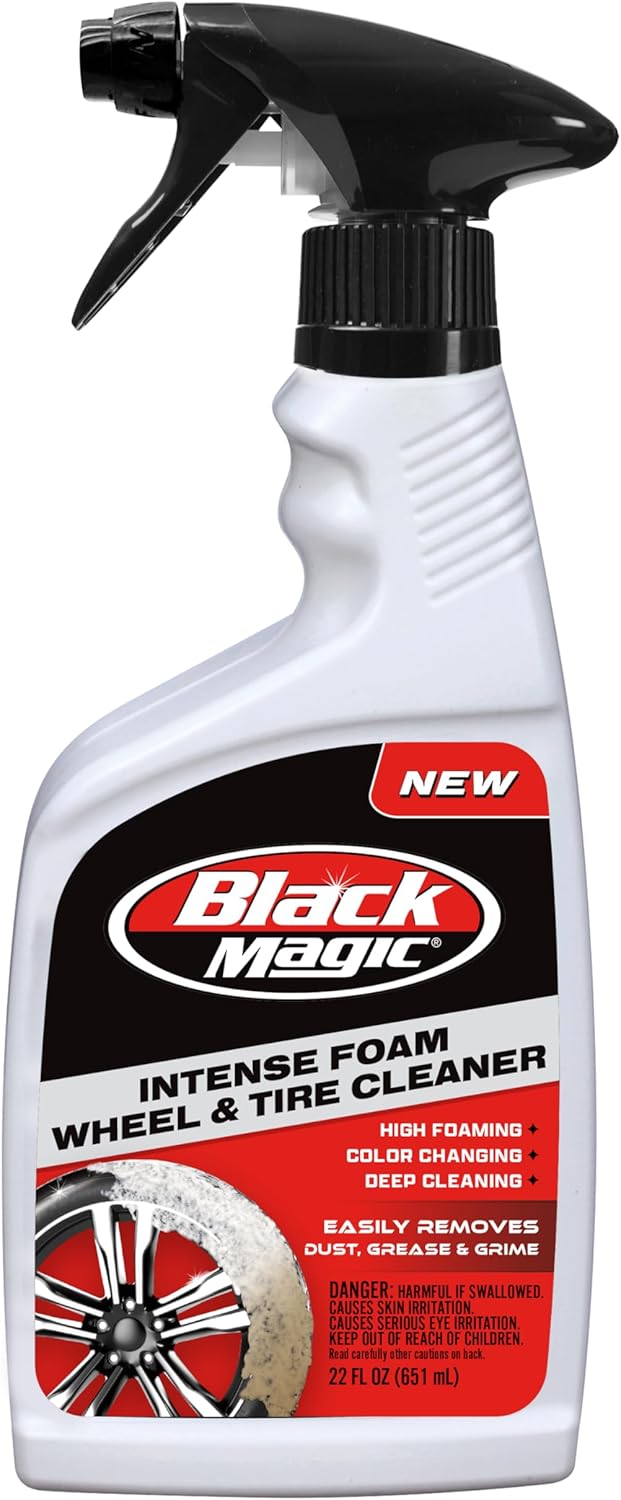
Black Magic Intense Foam Wheel & Tire Cleaner uses a high-foaming action to lift away dirt, grime, and brake dust without scrubbing. The color-changing formula helps show contaminants being dissolved as foam turns from white to brown. Safe for all wheel types and even wheel wells, it leaves a like-new, slick finish with a fresh cherry scent.

This professional wheel and rim brush kit makes it easy to lift brake dust, grime, and dirt from wheels and tires without scratching finishes. The brushes feature soft, metal-free wool heads and a flexible 360-degree rim brush design for reaching hard-to-clean areas. Includes multiple brush types plus accessories for thorough car, motorcycle, and general vehicle detailing.
Frequently Asked Questions
Is It Better to Have Rims or Hubcaps?
They are not competing alternatives. Your tire needs a structural wheel and rim area to support it, while a hubcap is an optional cover. Choose a hubcap for appearance or coverage; choose replacement wheels based on safe vehicle and tire fitment.
Why Don’t We Use Hubcaps Anymore?
Hubcaps have not completely disappeared. Many vehicles use exposed alloy wheels with small center caps, while others still use full wheel covers or aerodynamic covers. The designs and names have changed, so traditional hubcaps are simply less obvious on many modern cars.
Can I Put Hubcaps on Any Rim?
No. A hubcap or wheel cover must match a compatible wheel size and attachment system. Center caps may also be specific to a particular wheel design, diameter, clip pattern, or part number. Check the actual wheel and mounting method before buying.
What Are Hubcaps Called Now?
Depending on the design, you may see terms such as hubcap, wheel cover, wheel trim, center cap, or aero cover. They are not always identical parts, so compare the coverage area and mounting system instead of relying on the product name alone.
Is a Rim the Same as a Wheel?
Not technically. The wheel is the complete rigid component mounted to the vehicle, while the rim is the portion that supports the tire bead. In everyday automotive language, however, people commonly use “rims” to mean complete wheels.
Can You Drive With a Missing Hubcap?
Usually, yes, if only the decorative hubcap or wheel cover is missing and the wheel, tire, lug fasteners, and other components are undamaged. A partly detached cover should be secured or removed before driving so it does not fall off.
Do Hubcaps Improve Fuel Economy?
Do not expect an ordinary decorative hubcap to produce a measurable fuel-economy improvement. Purpose-designed aerodynamic wheel covers can change airflow around a wheel, but the result depends on the entire wheel and vehicle design.
Conclusion
The key difference is simple: a hubcap is a removable cover, while the rim is part of the structure that supports the tire. The complete structural component is the wheel, although people commonly call wheels “rims.” Hubcaps, center caps, and full wheel covers mainly affect appearance and coverage, while wheel condition and fitment can directly affect safety.
Replace loose or broken covers when needed, but give structural wheel damage much more attention. If a wheel is cracked, significantly bent, leaking around the bead area, or causing strong vibration after an impact, have the wheel and tire inspected before continuing normal driving.
Sources
- Electronic Code of Federal Regulations — 49 CFR § 571.139 — federal definition of a rim and tire/rim terminology.
- Electronic Code of Federal Regulations — 49 CFR § 571.110 — rim dimensions, tire compatibility, and light-vehicle rim requirements.
- Ford Parts — Wheel Cap Cover — manufacturer example showing how a center cap covers the wheel’s center opening.
- U.S. Department of Energy — Lightweight Materials for Cars and Trucks — relationship between component weight, vehicle mass, and efficiency.
- SAE International — The Effects of Mass and Wheel Aerodynamics on Vehicle Fuel Economy — evidence on wheel mass, aerodynamics, and fuel economy.
- BBS of America — Warranty and Wheel Care Guidance — manufacturer guidance recommending mild soap and water for wheel cleaning.