
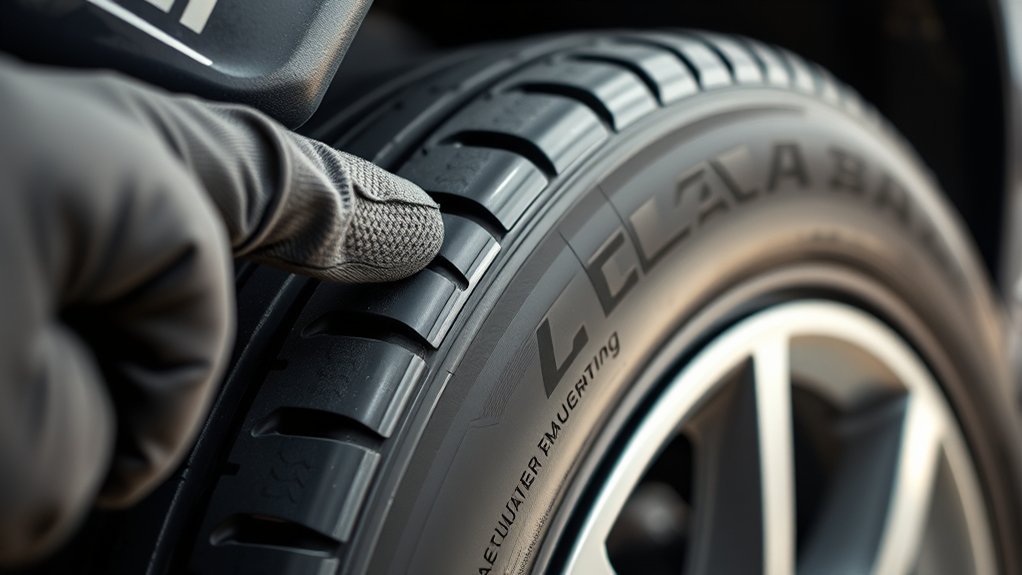
You can tell whether a tire is likely all-season by checking the sidewall markings, the tire model information, and the tread design. The key clues are usually the M+S marking, a balanced tread pattern with moderate siping, and a size/load/speed code that matches your vehicle. If you also see the Three-Peak Mountain Snowflake symbol, the tire has met a snow-traction test, but that does not automatically make it a dedicated winter tire.
Quick Answer
To identify an all-season tire, look for M+S, M&S, M/S, or MS on the sidewall, then confirm the tire model and tread pattern. M+S is a useful clue, not a severe-winter guarantee. A 3PMSF snowflake symbol means tested snow traction, often found on all-weather or winter tires.
Key Takeaways
- M+S is common on all-season tires, but it does not prove severe winter performance.
- The 3PMSF mountain-snowflake symbol means the tire passed a standardized snow-traction test, not an ice or braking test.
- All-season tires usually have moderate siping, circumferential grooves, and a tread built for dry, wet, and light-snow use.
- Always match the tire size, load index, and speed rating to your vehicle placard or owner’s manual.
- If you drive in regular snow, ice, mountain passes, or a region with winter-tire laws, check local requirements before relying on all-season tires.
At a Glance
| Time Required | 3 to 5 minutes per tire |
| Difficulty | Easy |
| Tools Needed | Flashlight, clean cloth, tire tread depth gauge or coin, and your vehicle tire placard or owner’s manual |
| Cost | Free if you inspect visually; a tread depth gauge usually costs only a few dollars |
What Do All-Season Tire Markings Mean?
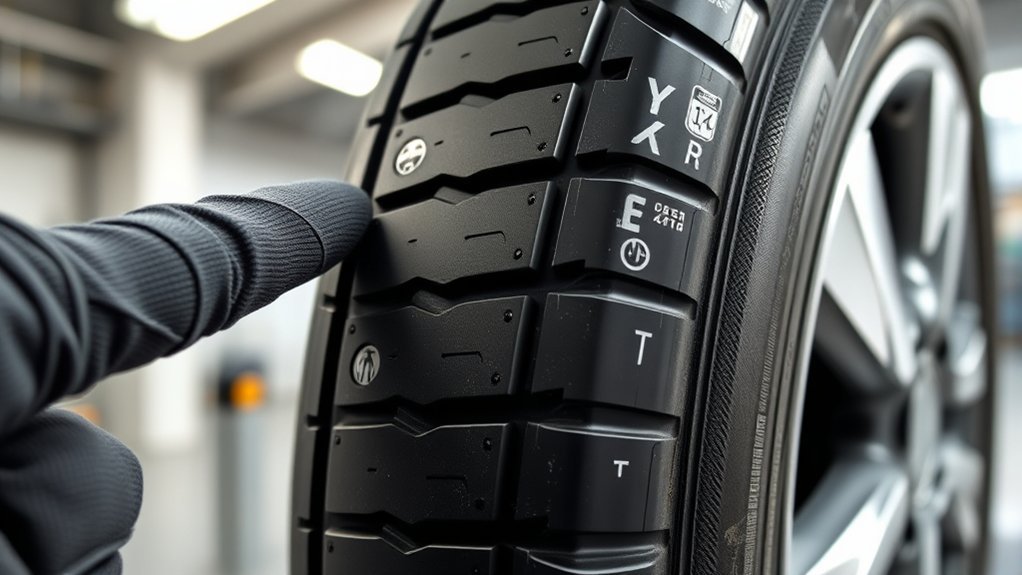
All-season tire markings help you understand what the tire is designed to handle, but no single marking tells the whole story. The most common clue is M+S, which stands for mud and snow. You may also see it written as M&S, M/S, or MS. This usually means the tread pattern is intended to offer better mud and light-snow capability than a basic road tire.
However, M+S is not the same as a severe-winter rating. It can appear on all-season, all-weather, SUV, light-truck, and some winter tires. Use it as a starting clue, then confirm the tire model, tire category, size code, load index, speed symbol, tread condition, and your vehicle’s recommended tire specifications.
Some tires also carry the Three-Peak Mountain Snowflake symbol, often shortened to 3PMSF. This symbol means the tire met a standardized snow-traction threshold. It is commonly seen on winter tires and on many all-weather tires, which are designed for year-round use with stronger snow capability than a typical all-season tire.
Warning: A tire marking does not make a tire safe by itself. Do not use a tire that is the wrong size, has the wrong load rating, has exposed cords, has sidewall damage, is severely cracked, or has worn-out tread.
How to Spot 3PMSF and M+S Symbols
Start on the tire sidewall. Look near the size code, service description, brand name, and DOT code. The markings are molded into the rubber, so you may need a flashlight or a damp cloth to clean the sidewall before reading it.
3PMSF Snowflake Symbol
The 3PMSF symbol looks like a three-peaked mountain with a snowflake inside it. In U.S. snow-tire testing language, a snow tire must meet a snow-traction index of at least 110 compared with a standard reference test tire and carry the Alpine symbol on at least one sidewall. That makes 3PMSF more meaningful than M+S for snow traction.
The 3PMSF symbol is a snow-traction rating. It does not guarantee ice grip, wet braking, dry handling, or cornering traction in every winter condition.
| Marking | What It Means | What It Does Not Prove |
|---|---|---|
| 3PMSF | Meets a standardized snow-traction threshold | It does not prove ice braking, cornering, or dedicated winter-tire performance |
| M+S / M&S / M/S / MS | Mud and snow tread-design marking | It does not prove severe-snow certification |
| No M+S or 3PMSF | May be a summer, performance, touring, or other road tire | It does not confirm year-round winter suitability |
M+S Mud and Snow Marking
The M+S marking is one of the quickest clues that a tire may be an all-season tire. It means the tread pattern or structure is intended to perform better in mud and light snow than a regular tire. Still, it is not the same as the 3PMSF snowflake symbol.
Many everyday all-season tires have M+S. Some all-terrain, SUV, and light-truck tires also have it. That is why you should not stop at M+S. Check the tire model, look up the tire on the manufacturer’s website if needed, and compare the size and rating to your vehicle placard.
Sidewall Location Tips
Most markings are molded around the outer sidewall. Check both sides of the tire if you do not see the symbol right away. On some tires, one sidewall has more complete information than the other.
- Find the tire size code, such as 205/55R17 91V.
- Look nearby for M+S, M&S, M/S, or MS.
- Look for the 3PMSF mountain-snowflake symbol if you need stronger snow capability.
- Check the brand and model name, then confirm the tire category online if the markings are unclear.
- Inspect the tread and sidewall condition before deciding the tire is safe to use.
Pro Tip: If the sidewall is hard to read, search the exact tire model and size on the tire maker’s website. The manufacturer’s product page usually states whether the tire is all-season, all-weather, winter, summer, touring, performance, or all-terrain.
How to Read All-Season Tire Size Codes
After you identify the seasonal marking, read the tire size code. This confirms whether the tire can fit your vehicle correctly. A common example looks like this:
| Example Code | Meaning | Why It Matters |
|---|---|---|
| 205 | Tire width in millimeters | Affects fit, contact patch, and clearance |
| 55 | Aspect ratio, or sidewall height as a percentage of width | Affects ride comfort, handling, and overall tire diameter |
| R | Radial construction | Most modern passenger tires are radial |
| 17 | Wheel diameter in inches | Must match the wheel size |
| 91 | Load index | Must meet or exceed the vehicle manufacturer’s requirement |
| V | Speed symbol | Indicates the tire’s rated speed capability under specified conditions |
Do not choose a tire only because it says all-season or M+S. Check the tire placard on the driver’s door jamb or the owner’s manual. The size, load rating, speed rating, and inflation pressure must match what your vehicle requires.
Check the Tread Pattern and Rubber Compound
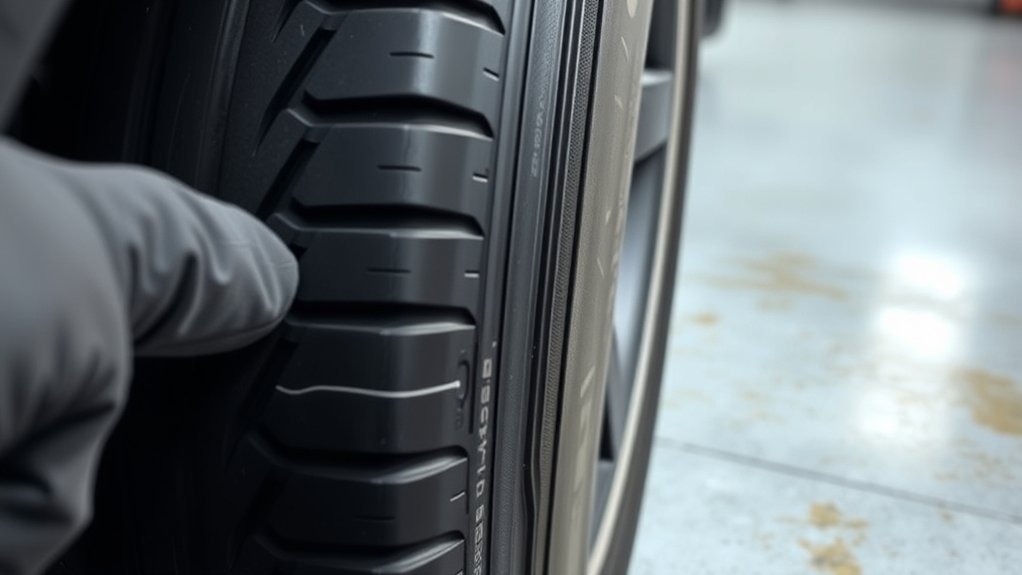
All-season tires are built to balance dry-road stability, wet-road grip, tread life, comfort, and light-snow capability. Their tread pattern usually sits between a summer tire and a winter tire.
Look for these all-season tire traits:
- Moderate siping: Small slits in the tread blocks help create extra biting edges for wet roads and light snow.
- Circumferential grooves: Long channels around the tire help move water away from the contact patch.
- Balanced tread blocks: All-season tires usually do not have the large, aggressive voids found on some winter or off-road tires.
- Year-round compound: The rubber is designed to work across a broad temperature range, though it may harden in serious cold compared with winter-tire rubber.
- Normal road manners: Most all-season tires are designed for comfort, tread life, and predictable highway driving.
Also check the tread depth and wear pattern. Uneven wear can point to alignment, inflation, or suspension problems. If the tread is too shallow, the tire may be unsafe even if the markings say M+S or all-season.
[Products Worth Considering]

Measure tire tread depth quickly and accurately with this LUMITECO dial gauge that reads in 1/32" increments up to 14/32". The color-coded green/yellow/red zones make it easy to judge tire wear and know when replacement is needed. A rugged, compact design with a protective pouch helps keep the gauge ready for use on cars, trucks, motorcycles, and more.

Monitor tire tread wear with a smart, color-coded depth gauge that shows clear condition ranges at a glance. The bar is range marked for fast, easy readings, helping you maintain safer traction and performance. Each gauge is portable with a pocket clip, and the set includes 20 units for daily use and sharing.

The SAFELIFE dial tire tread depth gauge measures tread depth in 1/32 inch increments with clear, easy-to-read 2-inch dial face. Color zones using a traffic light system help you quickly judge whether tread is low, marginal, or ample for safer driving. Built with a durable zinc cast body and a metal detect probe for precise, comfortable use across cars, motorcycles, trucks, and buses.
Use a 5-Step Check to Confirm an All-Season Tire
Use this quick process when you are inspecting tires on your car, a used car, or a loose set of tires before buying.
- Clean the sidewall. Wipe away dirt so the molded markings are easy to read.
- Find the seasonal clues. Look for M+S, M&S, M/S, MS, and the 3PMSF symbol.
- Read the model name. Search the exact tire model if the sidewall does not clearly say all-season, all-weather, winter, or summer.
- Match the fitment code. Compare the size, load index, and speed symbol with your vehicle placard or owner’s manual.
- Inspect condition. Check tread depth, uneven wear, sidewall bulges, cracking, punctures, and the DOT date code.
The DOT Tire Identification Number can help you find the tire’s manufacturing date. On many tires, the final four digits show the week and year of manufacture. For example, 2924 means the tire was made in the 29th week of 2024.
Compare All-Season, All-Weather, Winter, and Summer Tires
The easiest way to avoid confusion is to compare the tire types side by side. All-season and all-weather tires are often mixed up because both can be used year-round in many climates. The difference is that all-weather tires usually carry the 3PMSF symbol and are built for stronger snow traction than a typical all-season tire.
| Tire Type | Common Markings | Best Use | Main Limitation |
|---|---|---|---|
| All-season | Often M+S | Dry roads, rain, mild temperatures, and occasional light snow | Not ideal for regular deep snow or ice |
| All-weather | Usually M+S and 3PMSF | Year-round use in places with more frequent cold, slush, and moderate snow | Still may not match a dedicated winter tire on ice or in severe snow |
| Winter / snow | 3PMSF; sometimes M+S | Cold temperatures, snow, slush, mountain roads, and winter-tire-law regions | Can wear faster and handle worse in warm weather |
| Summer | Usually no M+S or 3PMSF | Warm dry and wet roads where snow and freezing conditions are not a concern | Not designed for snow, ice, or freezing temperatures |
[Products Worth Considering]

Accurately measure tire tread depth with a calibrated gauge marked from 0 to 1 inch in 1/32 inch increments. The color-coded bar helps you quickly identify tread condition ranges, supporting safe driving for trucks, motorcycles, automobiles, and passenger vehicles.

Steelman white tire marking crayons provide high-contrast, semi-permanent marks for repairing and inspecting tires and equipment. They write on wet or dry, smooth or coarse surfaces including rubber, metal, glass, and wood, making them ideal for puncture location and damage outlining. The lead- and zinc-free crayons resist weather and fading yet wipe away when you no longer need the marks.
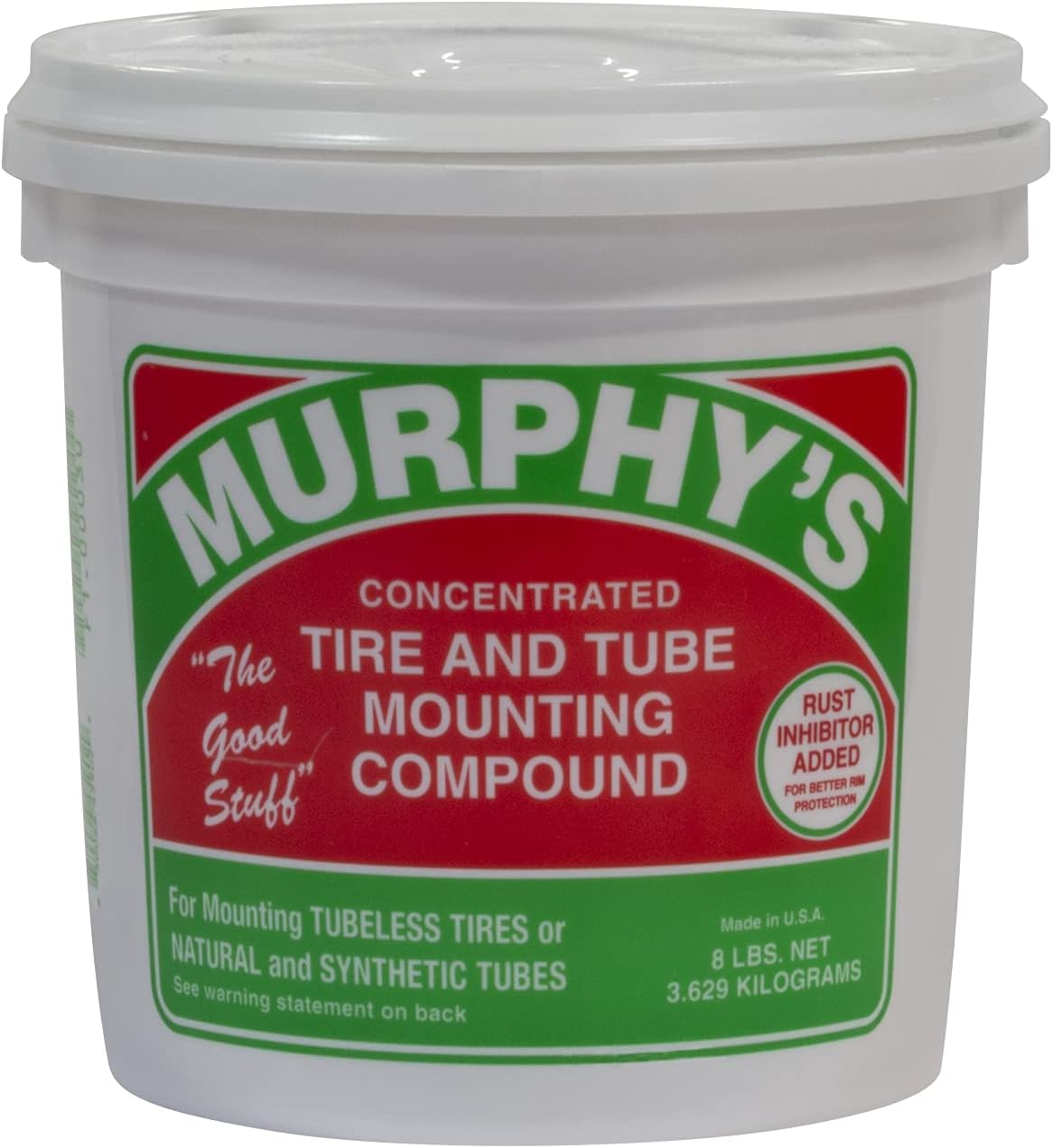
A concentrated tire and tube mounting compound designed to help simplify mounting rubber tires and tubes on passenger, semi truck, construction, and OTR applications. Its ultra-thick formula packs beads effectively and includes rust inhibitors to help protect against corrosion during use.
All-Season Tire Markings
All-season tires commonly carry the M+S marking and use a tread pattern with moderate grooves and siping. Some may also have model names that include words like “A/S,” “Touring,” “Grand Touring,” or “All Season.” Because naming varies by manufacturer, the sidewall and product page should be checked together.
Winter Tire Symbols
Winter tires are easier to identify when they carry the 3PMSF symbol. They usually have deeper grooves, more siping, and softer rubber compounds designed to stay flexible in cold weather. If your area has winter-tire laws, check the exact regional rule instead of assuming M+S is enough.
Summer Tire Differences
Summer tires usually have fewer sipes, larger tread blocks, and compounds designed for warm-weather grip. They can deliver sharp handling in heat, but they are not built for snow or ice. If a tire has no M+S or 3PMSF symbol and has a low-siped performance tread, it may be a summer tire.
Choose the Right All-Season Tire for Your Climate
Your climate should decide whether all-season tires are enough. In mild regions with mostly dry and wet roads, a quality all-season tire can be a practical year-round choice. In places with occasional light snow, an all-season tire with healthy tread may be acceptable if local laws allow it and you drive cautiously.
If you see regular snow, freezing rain, mountain passes, or untreated winter roads, look at all-weather tires with 3PMSF or dedicated winter tires. In severe winter conditions, dedicated winter tires generally provide the strongest cold-weather performance.
Note: Winter-tire laws vary by region. For example, Québec requires compliant winter tires during the legal winter period, and a compliant tire must have the winter pictogram or be a legal studded tire. Always check the rule where you drive.
[Products Worth Considering]

Milton S-921 pencil tire pressure gauge helps you maintain optimal tire pressure for passenger cars with accurate readings in PSI and kPa. It features a built-in deflator valve for convenient pressure adjustments, plus a single chuck head and nylon indicator bar for easy use on the go. Built from durable plated brass and designed for reliable performance, it’s a practical road trip and cold-weather maintenance tool.

Measure tyre tread depth precisely with a digital gauge that reads in both MM and inches, helping you monitor safe driving conditions. The large LCD screen is easy to operate, and the compact tool fits for cars, trucks, and motorcycles. It provides high accuracy with a 0-25.4mm range and includes a 1-year warranty for added peace of mind.

TIRESHIELD PRO RV tire covers in a set of four deliver year-round protection against UV rays, cracking, fading, water, and snow. The StormLock-System helps keep the covers securely fastened through high wind, while heavy-duty, double-stitched construction supports long-lasting performance. Designed for universal fit, they’re intended for RV, camper, truck, car, and trailer tires within the 26–28.75 inch diameter range, with easy wipe-clean care and storage in the included bag.
Common Mistakes When Identifying All-Season Tires
- Assuming M+S means winter tire: M+S is not the same as 3PMSF.
- Assuming 3PMSF means dedicated winter tire: Some all-weather tires also carry 3PMSF.
- Ignoring the vehicle placard: A tire can be all-season and still be wrong for your vehicle.
- Judging only by tread shape: Tread can give clues, but sidewall markings and the tire model matter too.
- Forgetting tread depth and age: Old, cracked, or worn tires may perform poorly even if the markings look right.
- Relying on traction control or AWD: Electronic systems help manage power, but they do not replace tire grip.
Frequently Asked Questions
How can I tell if my tires are all-season tires?
Check the sidewall for M+S, M&S, M/S, or MS, then look for the tire model name and tread pattern. Most all-season tires have moderate siping and grooves for dry, wet, and light-snow use. If you are still unsure, search the exact tire model on the manufacturer’s website.
How are all-season tires marked?
Many all-season tires are marked M+S, M&S, M/S, or MS. Some may also use “A/S” in the tire model name. A 3PMSF symbol is not a standard all-season requirement; it usually means the tire has stronger tested snow traction and may be an all-weather or winter tire.
Are all-season tires M and S?
Many all-season tires are M+S, but not every M+S tire is a standard passenger-car all-season tire. M+S can also appear on all-weather, SUV, light-truck, all-terrain, and winter tires. Use M+S as a clue, then confirm the tire category by model name and manufacturer information.
How do I tell all-season tires from winter tires?
Winter tires usually carry the 3PMSF symbol and have more aggressive siping, deeper grooves, and rubber designed for cold conditions. All-season tires usually have a more balanced tread pattern and are built for dry, wet, and light-snow driving rather than repeated severe winter use.
Does the 3PMSF symbol mean a tire is not all-season?
Not always. Some tires with 3PMSF are dedicated winter tires, while others are all-weather tires designed for year-round use with stronger snow traction. Check the tire model category before deciding what type it is.
Can I use all-season tires in snow?
All-season tires can handle light, occasional snow when they are in good condition, but they are not the best choice for regular deep snow, ice, or severe winter roads. For those conditions, choose all-weather tires with 3PMSF or dedicated winter tires, depending on your climate and local laws.
Conclusion
To tell if a tire is all-season, start with the sidewall, but do not rely on one marking alone. M+S is a strong clue for mud and light-snow capability, while 3PMSF means the tire passed a snow-traction test. Then confirm the tire model, tread pattern, size code, load index, speed symbol, condition, and your vehicle’s recommended specifications. The right tire is not just the one with the right label; it is the one that fits your vehicle, climate, and road conditions safely.
Sources
- NHTSA TireWise — supports tire type differences, all-season capability, UTQG ratings, and vehicle placard guidance.
- NHTSA FMVSS No. 139 Test Procedure — supports the snow tire definition and 3PMSF snow-traction threshold.
- Tire Industry Association: Reading a Tire Sidewall — supports tire size, aspect ratio, rim diameter, load index, speed symbol, and DOT code explanations.
- Michelin: Tire Load Rating and Speed Rating — supports load index and speed rating fitment guidance.
- Gouvernement du Québec: Requirements for Winter Tires — supports regional winter-tire compliance and tread-depth guidance.
- Tire Rack: What Are All-Weather Tires? — supports the all-weather vs. all-season distinction and the limits of 3PMSF testing.
