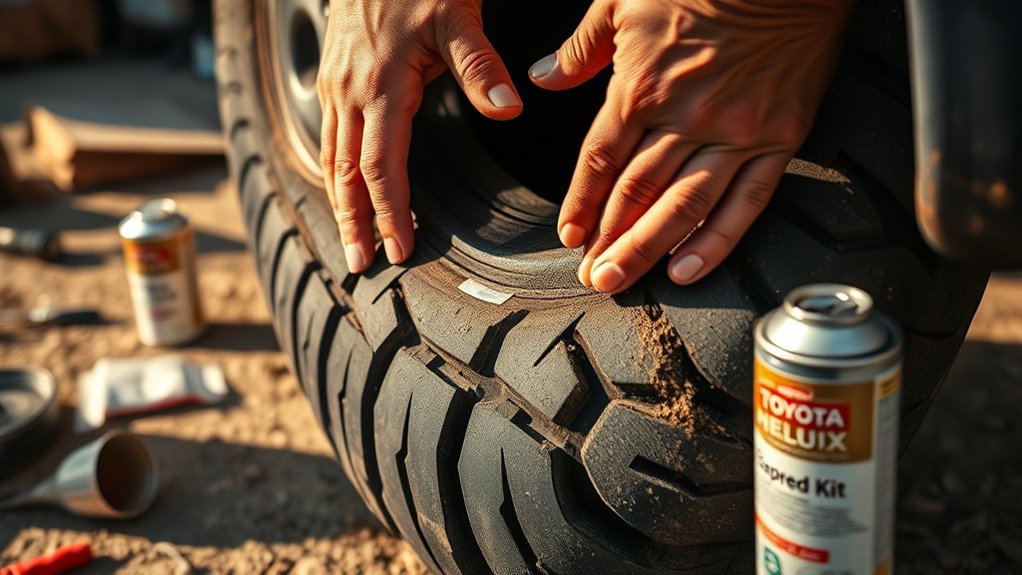
You can patch a Toyota Hilux tire only when the puncture is small, straight, and located in the repairable tread area. If the damage is in the sidewall, shoulder, bead, rim area, or the tire has been driven flat, replace the tire or fit the spare instead. A sealant kit is a temporary roadside fix; a proper permanent repair normally requires the tire to be removed from the wheel, inspected inside, and repaired with an internal combination patch-plug by a trained tire technician.
Quick Answer
For a Toyota Hilux tire, use a repair kit only for a small tread puncture and only as a temporary way to reach a tire shop. Do not repair sidewall damage, bulges, cracks, exposed cords, or a tire that was driven flat. The safest lasting fix is an internal combination patch-plug after full inspection.
Key Takeaways
- A tire repair kit with sealant is for short-term mobility, not a permanent Hilux tire repair.
- Only tread-area punctures are candidates for repair; sidewall and shoulder damage mean replacement.
- Check the Hilux owner’s manual and tire placard for jack points, pressure, spare-wheel details, and model-specific instructions.
- After any repair, check pressure cold, test for leaks, and have the tire inspected before towing, off-roading, or driving at highway speed.
At a Glance
| Time Required | 10–20 minutes for a temporary sealant-kit fix; 30–60 minutes for a professional internal patch-plug repair |
| Difficulty | Easy to moderate for roadside temporary repair; professional-level for internal patching |
| Tools Needed | Tire repair kit or spare wheel, compressor, tire-pressure gauge, wheel chocks, jack, lug wrench, torque wrench, soapy water, gloves, and flashlight |
| Cost | Usually low for a temporary kit; professional repair or replacement cost varies by tire size, region, and damage |
Warning: Do not patch a Toyota Hilux tire with sidewall damage, shoulder damage, a bulge, cracking, exposed cords, bead damage, rim damage, or repeated pressure loss. These are replacement or professional-inspection situations, not DIY repair situations.
When to Use a Tyre Repair Kit
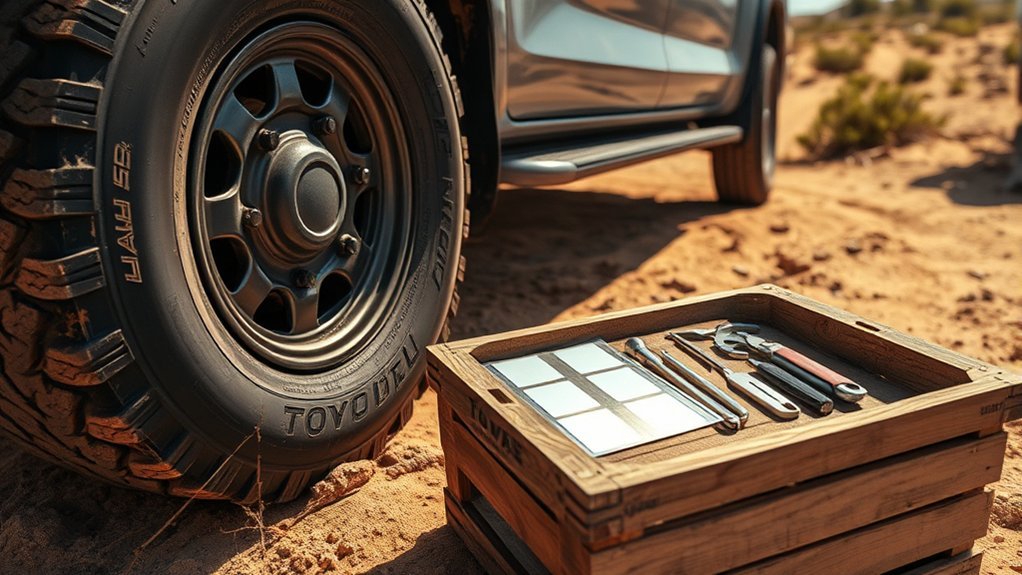
Use a Toyota Hilux tyre repair kit only when the puncture appears to be in the main tread area and the tire can still hold enough air to inflate. The kit is meant to help you reach a safe repair location, not to restore the tire for normal long-distance use.
Before doing anything, pull well away from traffic, switch on the hazard lights, set the parking brake, and place the Hilux on firm, level ground. If the puncture is on the traffic side of the vehicle, or you cannot work safely, call roadside assistance instead of trying to repair it beside moving traffic.
Check your Toyota owner’s manual for your exact Hilux model and market. Some Hilux models carry a spare wheel under the rear of the vehicle, while others may include a repair kit, compressor, sealant bottle, jack, or wheel tools in different storage locations.
Note: If your Hilux has a full-size spare and the tire has sidewall damage, a large puncture, or visible structural damage, fitting the spare is safer than trying to seal the damaged tire.
[Products Worth Considering]
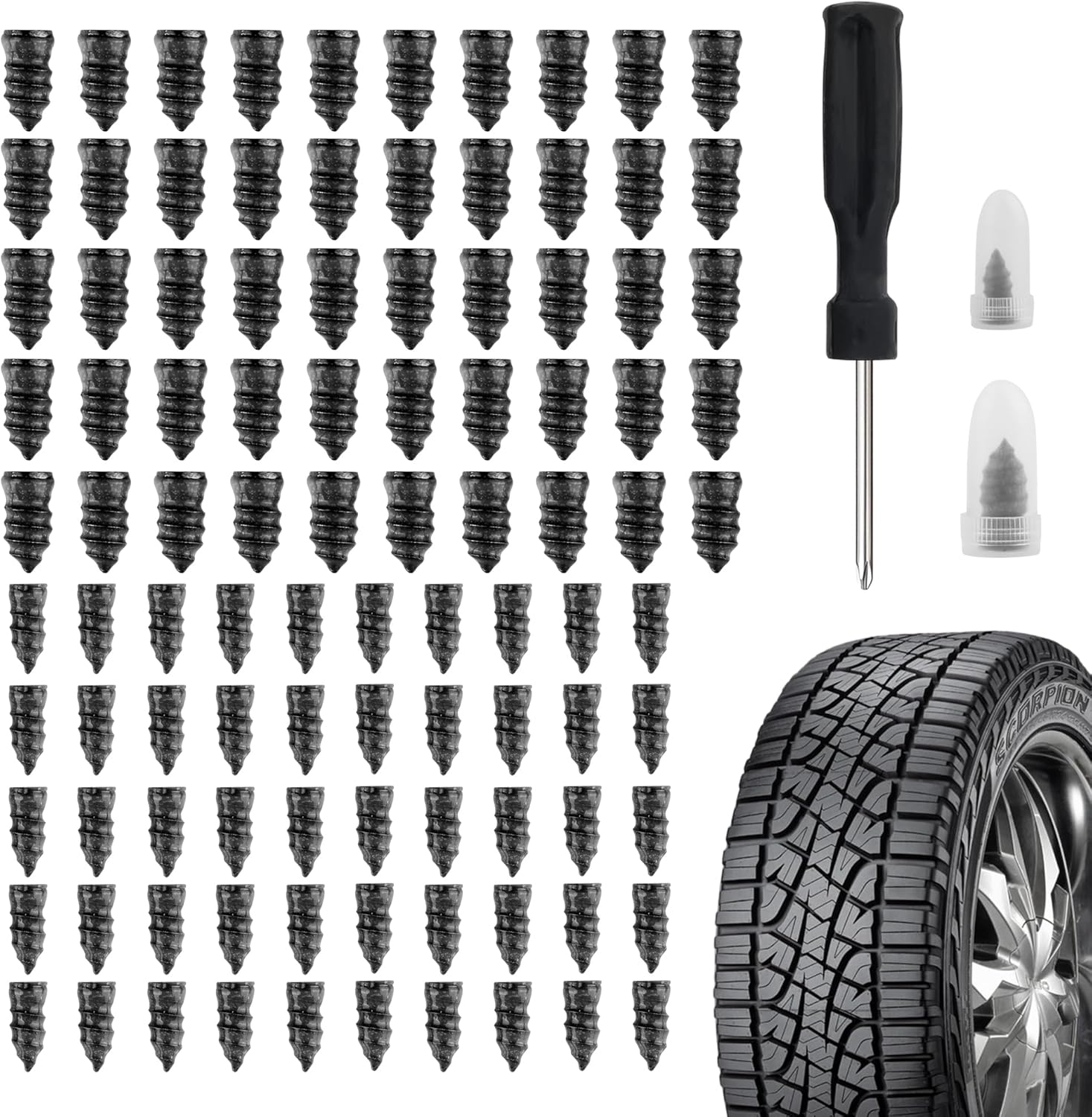
Salior’s tire plug kit provides a fast, reliable self-service fix for punctured or leaking tires without the need for flaring tools. Choose the correct plug size, then screw the nail into the puncture using the included screwdriver for an enhanced seal. The set is durable and convenient for on-the-go maintenance across multiple vehicle types.

Vigorder rubber cement glue delivers superior adhesion and cures quickly within about 30 seconds for seamless rubber bonding. Once cured, it helps provide a strong, durable, waterproof seal that holds up to vehicle weight, pressure, and heat. Suitable for cars, motorcycles, trucks, bicycles, and off-road tires, it’s designed for emergency patch and maintenance repairs.

The Trivd Frol 1/2" air impact wrench delivers high performance torque up to 1500 ft-lbs with a twin hammer impact mechanism for strong, balanced blows. It features an ergonomic grip, compact lightweight design, and quick-stop control with 3 forward speeds up to 8000 RPM plus a reverse speed. Built for demanding automotive repair and tire shop work, the rear exhaust helps keep debris away from the surface.
Is Your Hilux Tire Repairable?
A tire is only a repair candidate after a full inspection. Roadside checks can help you decide what to do next, but they cannot replace an internal inspection by a tire shop.
- Repair may be possible if the puncture is small, straight, and located in the central tread area.
- Do not repair if the damage reaches the sidewall, shoulder, bead, rim area, or edge of the tread.
- Do not repair if the tire was driven flat, smells burnt, shows rubber dust inside, or has a visible crease around the sidewall.
- Do not repair if there are bulges, cracks, cuts, exposed cords, tread separation, or multiple close punctures.
- Do not rely on sealant before towing, carrying a heavy load, or driving off-road again.
For tire pressure, use the Hilux tire placard or owner’s manual, not the maximum pressure printed on the tire sidewall. The National Highway Traffic Safety Administration recommends checking tire pressure when tires are cold and inspecting tires regularly for pressure, tread, and damage.
NHTSA reported 511 traffic fatalities in tire-related crashes in 2024, which is why a “small puncture” should still be treated as a safety issue.
Temporary Roadside Fix With a Tyre Repair Kit
If the puncture looks repairable and your Hilux has a sealant-and-compressor kit, use it exactly as the kit label and owner’s manual describe. Different kits have different limits for puncture size, speed, distance, and sealant use.
- Park safely. Move away from traffic, turn on hazard lights, set the parking brake, and chock the wheels if you have wheel chocks.
- Inspect before attaching the kit. Look for sidewall cuts, rim damage, bulges, or a tire that has been driven flat. If you see these, do not use sealant.
- Leave the object in place unless the kit says otherwise. Pulling out a screw or nail too early can make the leak worse.
- Attach the sealant bottle and compressor. Remove the valve cap, connect the hose tightly to the valve stem, and plug the compressor into the vehicle’s power outlet as instructed.
- Inflate to the required pressure. Use the pressure shown on the tire placard or the kit’s minimum emergency pressure, depending on the instructions.
- Stop if pressure will not build. If the tire cannot inflate or loses pressure right away, fit the spare or call for assistance.
- Drive only as directed. Many kits require a short drive to spread the sealant. Stay within the speed and distance limits printed on the kit.
- Recheck pressure. Stop in a safe place, check the pressure again, and look for leaks before continuing.
- Go to a tire shop soon. Tell the technician that sealant was used so the wheel and tire can be cleaned and inspected properly.
Pro Tip: Keep a small tire-pressure gauge in your Hilux. The compressor gauge can be rough, and an accurate cold-pressure check is one of the easiest ways to catch a slow leak before it becomes a roadside problem.
[Products Worth Considering]

Yieokei Tesla jack pads are molded rubber lifting pucks designed for 2016-2026 Model 3/Y/S/X, including Juniper, to fit securely in the jack hole. They cushion the underframe and help position the jack precisely at the factory jack points to reduce risk of battery, paint, or chassis damage. The set also includes a tire repair tool kit for emergency roadside fixes and comes with a portable storage case to keep everything organized.
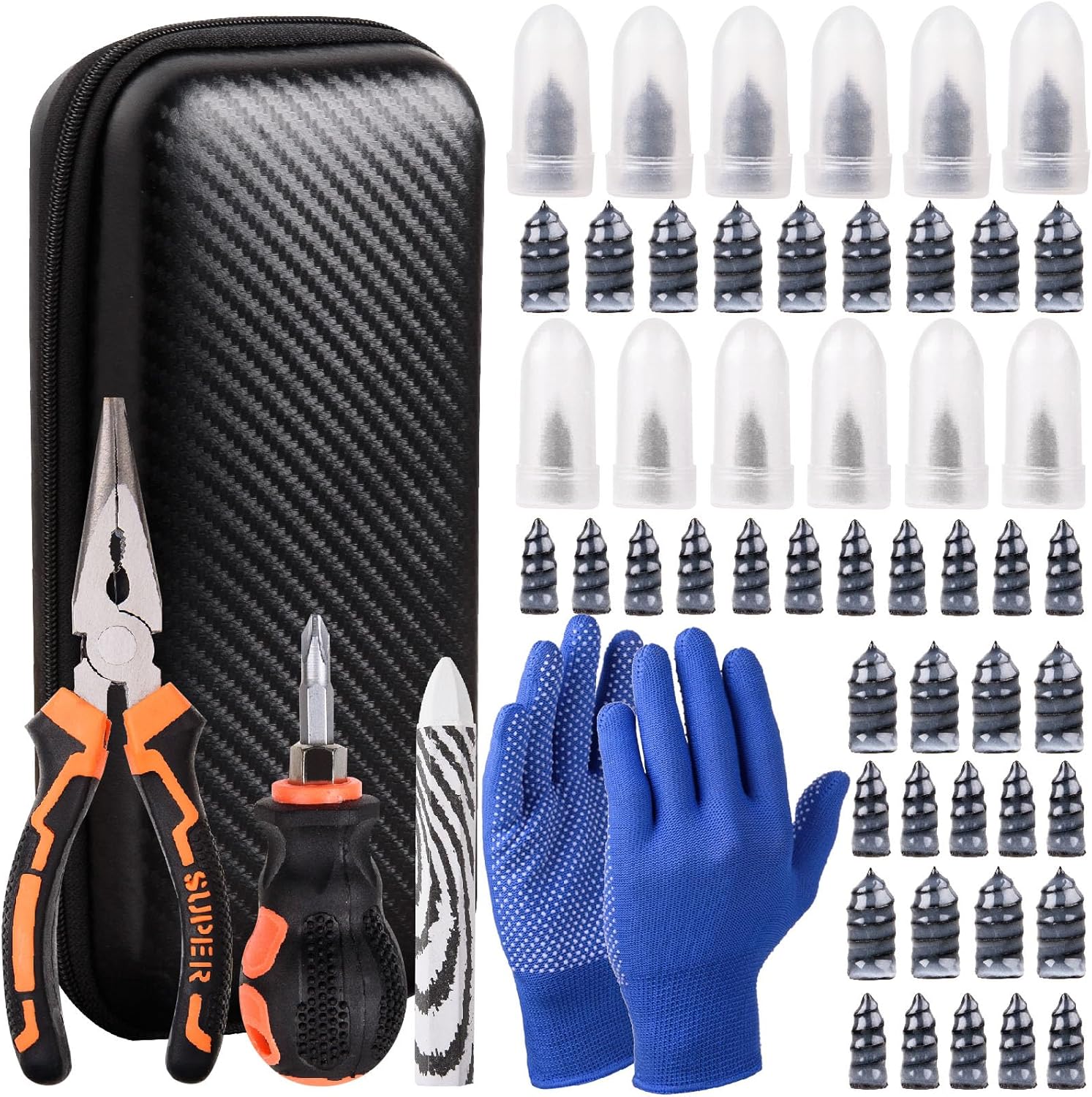
This tire sidewall puncture repair kit fixes flats fast without removing the tire, helping you get back on the road in minutes. It includes self-tapping repair nails, essential tools, gloves, and a portable storage bag for convenient roadside use. Designed for tubeless tires, it helps create a tight, leak-resistant seal for cars, motorcycles, trucks, SUVs, and ATVs.

Wykodra tire plugs provide quick vulcanizing repairs for tubeless tires, helping you seal punctures and get back on the road. The industrial-strength rubber creates a long-lasting, leak-resistant bond and is designed for emergency fixes without removing the tire. Choose between two standard plug sizes with color-matched options for small to larger damage across many vehicles and off-road uses.
Step-by-Step Tire Patching Guide
A true tire patch is not the same as squirting sealant into the tire. A proper internal repair usually uses a combination patch-plug, which seals the puncture channel and covers the injury from inside the tire. This is the preferred repair style for a repairable tread puncture because the tire must be removed and inspected from the inside first.
- Remove the wheel safely. Use the correct Hilux jack point from the owner’s manual. Loosen lug nuts slightly before lifting, lift on firm ground, and support the vehicle safely.
- Mark the puncture. Find the object, mark the tread, and note the angle of entry.
- Demount the tire from the wheel. This step is normally done at a tire shop with proper tire equipment.
- Inspect the inside of the tire. Look for sidewall damage, rubber dust, cords, belt separation, moisture, previous repairs, or hidden impact damage.
- Prepare the puncture channel. The technician cleans and prepares the injury area according to the repair material instructions.
- Install the internal combination patch-plug. The plug fills the injury path and the patch seals the inner liner.
- Trim, seal, and rebalance. The wheel should be rebalanced after the tire is remounted.
- Inflate and leak-test. Inflate to the Hilux’s recommended cold pressure and check the valve, bead, and repair with soapy water.
- Reinstall and torque the wheel. Tighten lug nuts in a star pattern to the torque specified for your model.
If you only have a string plug kit on the road, treat it as an emergency repair. It may slow a leak, but it does not let you inspect the inside of the tire. For a Hilux that tows, carries tools, runs gravel roads, or goes off-road, do not treat a plug-only repair as the final fix.
How to Use Your Tyre Repair Kit
Before using the tyre repair tools, confirm whether your Hilux has a sealant kit, a spare wheel, or both. The storage location can vary by year, body style, and country. Look under or behind the seats, inside the tool storage area, or under the rear of the pickup bed for the spare-wheel carrier and tool kit.
Read the sealant bottle before connecting it. Check the expiry date, temperature limits, and whether the kit is approved for your tire size. Shake the sealant if the instructions say to. Do not use a bottle that is expired, leaking, clogged, or not designed for automotive tires.
Once the kit is connected and the tire inflates, keep your speed low and avoid hard braking, fast cornering, gravel impacts, and heavy loads. Go directly to a tire service center. If the tire-pressure warning light comes back on, the steering feels heavy, or the Hilux vibrates, pull over safely and stop driving on that tire.
[Products Worth Considering]

These aluminum alloy tire valve stem caps with an O-ring seal help protect valve stems from corrosion while adding a clean, stylish look to your vehicle. The universal fit works across cars, trucks, motorcycles, bicycles, and more, making them an easy upgrade for everyday driving and off-road use. Installation is quick, and the included four-pack keeps all your tires dressed and protected.

This AUTOWN flat tire repair kit is designed for quick, reliable puncture repairs using a plug kit and spiral probe tool to simplify installation. Built for durability and safe handling, it offers strong adhesion and flexibility to help maintain tire air tightness. With a portable storage case and a multi-vehicle approach, it’s suitable for cars, motorcycles, ATVs, tractors, lawn mowers, RVs, jeeps, and trucks.

Upgrade your Toyota tire setup with these corrosion-resistant, leak-proof valve stem caps designed to help protect the valve core from water, snow, and road grime. The caps feature a snug rubber seal and durable copper alloy construction to resist rust and oxidation while maintaining stable tire pressure. Ideal for replacing worn original caps and keeping your wheels looking clean and stylish.
What Makes a Hilux Tire Not Safe to Patch?
Use this checklist before deciding whether to use sealant, fit the spare, or call a professional:
- Sidewall puncture: Replace the tire. Sidewalls flex heavily and are not a safe patch location.
- Shoulder puncture: Replace or get professional inspection. The shoulder area carries high stress.
- Large hole or tear: Do not use a repair kit. Fit the spare or call roadside assistance.
- Driven-flat damage: Replace or inspect professionally. A tire can be ruined internally even if the outside looks normal.
- Bulge or bubble: Replace the tire. This can signal internal cord damage.
- Cracks or exposed cords: Replace the tire. The tire structure is compromised.
- Repeated pressure loss: Check for valve, bead, rim, or internal tire damage.
- Multiple punctures: Get professional inspection. Repairs too close together can weaken the tire.
Top Mistakes to Avoid When Patching a Tire
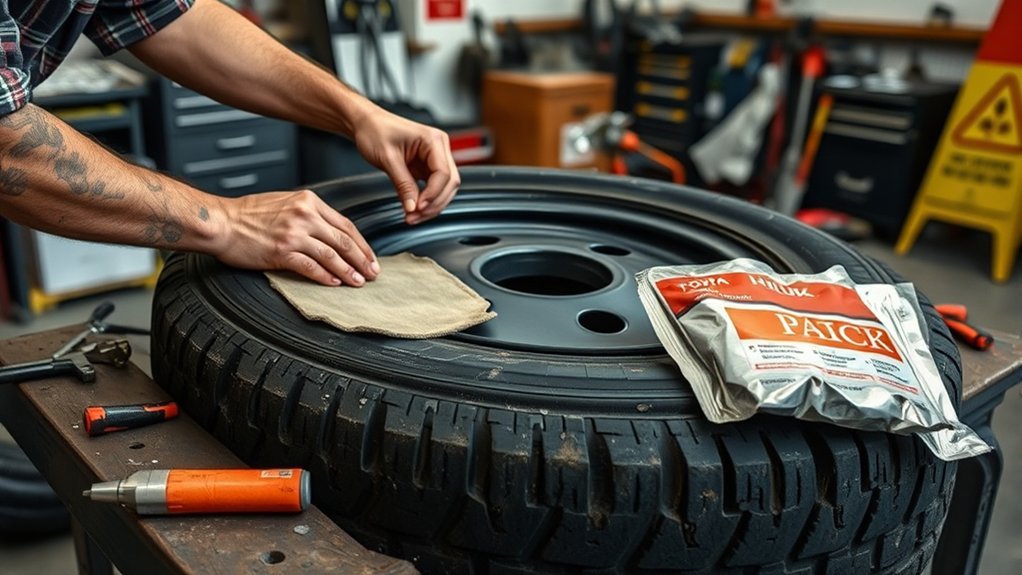
Most unsafe tire repairs happen because the driver tries to save a tire that should not be repaired, skips the internal inspection, or keeps driving too far on a temporary fix. Avoid these mistakes before you put the Hilux back under load.
Common Misdiagnosed Issues
- Calling sealant a patch: Sealant may slow a leak, but it is not an internal patch-plug repair.
- Ignoring a slow leak after repair: A slow leak can come from the valve stem, bead, rim corrosion, or an injury the sealant did not close.
- Missing sidewall damage: Sidewall cuts can be small but dangerous, especially on a loaded pickup.
- Assuming TPMS will catch everything: Tire-pressure monitoring helps, but it does not replace gauge checks and visual inspection.
Ignoring Manufacturer Guidelines
Your Hilux owner’s manual, tire placard, tire manufacturer, and repair-kit label all matter. Follow the lowest speed, shortest distance, and strictest repair limit shown by those instructions. If they disagree, choose the safer option and get professional help.
Also check whether the tire is original equipment, a replacement all-terrain tire, a light-truck tire, or a load-rated tire used for towing. Heavy-duty use makes tire condition more important, not less.
Skipping Proper Inspection Steps
Do not skip the inspection just because the tire inflates. After a puncture, check the tread, sidewalls, rim, valve stem, and repair area. Use soapy water around the valve, bead, and puncture to look for bubbles. If bubbles continue, the repair has not sealed.
For a tire that was run at low pressure, ask the shop to inspect the inside for rubber dust, wrinkling, or heat damage. Internal damage can hide until the tire fails at speed.
Post-Patching Checks for Your Tire
After a temporary sealant fix or professional patch, do not return to normal driving until you complete a few checks:
- Check pressure cold. Use the pressure listed on the Hilux tire placard or owner’s manual.
- Test for leaks. Spray soapy water on the repair area, valve stem, and bead. Bubbles mean air is escaping.
- Watch the TPMS light. If it returns or flashes, inspect the tires and pressure again.
- Feel for vibration. Vibration after a repair can mean the wheel needs balancing or the tire is damaged.
- Inspect after the first drive. Look for air loss, bulges, cracks, and unusual tread wear.
- Avoid heavy use at first. Do not tow, haul heavy loads, or go off-road until the tire has been professionally checked.
If sealant was used, plan a shop inspection as soon as possible. Sealant can make the tire temporarily usable, but it can also hide the puncture path, coat the inside of the tire, and require cleaning before a permanent repair is considered.
When to Call in the Pros for Tire Help?
Call a tire professional or roadside service when the damage is unclear, the tire will not inflate, pressure drops again, or the Hilux has been driven on a flat tire. A trained technician can remove the tire from the wheel and inspect the inside, which you cannot do with a roadside kit.
Severe Damage Assessment
Get professional help immediately if you see any of these signs:
- Sidewall cuts, bubbles, or cracks
- Damage near the tread shoulder
- Rim dents, bead leaks, or valve damage
- Exposed cords or separated tread
- A tire that was flat for more than a short distance
- A puncture after off-road impact, rock strike, or heavy towing
These problems can make a tire unsafe even if it still holds air. When in doubt, fit the spare and let a tire shop decide whether the tire can be saved.
Persistent Leak Issues
A persistent leak after patching usually means the repair did not seal, the puncture was not the only leak, or the tire has internal damage. Do not keep topping it off and driving normally. Repeated low-pressure driving creates heat, damages the tire structure, and can lead to sudden failure.
If the Hilux loses pressure overnight, after a short drive, or whenever it carries a load, inspect the valve stem, bead seat, rim, and repair area. Replace the tire if the technician finds structural damage or a non-repairable puncture.
Tips for Maintaining Your Patching Job
Good tire maintenance helps the repair last and helps you catch problems early. Add these checks to your Hilux routine:
- Check all tires, including the spare, at least monthly with a gauge.
- Check pressure before long trips, towing, hauling, or off-road driving.
- Inspect tread depth and uneven wear during each pressure check.
- Rotate tires according to the owner’s manual, tire pattern, and tire type.
- Keep the repair kit sealant in date and replace it after use.
- Keep the jack, wheel tools, compressor, and valve caps in the vehicle.
- Recheck wheel-lug torque after a wheel has been removed, following the owner’s manual.
A repaired tire should behave like the other tires: stable pressure, no vibration, no pull, no noise, and no visible damage. If anything feels different, treat it as a warning sign.
Frequently Asked Questions
Is a patch safer than a plug?
A professional internal combination patch-plug is usually safer than a plug-only repair because the tire is removed, inspected inside, and sealed at both the puncture channel and inner liner. A plug-only repair is better treated as temporary, especially on a Hilux used for towing, hauling, or off-road driving.
Can I patch a Toyota Hilux tire sidewall?
No. Do not patch a sidewall puncture, cut, crack, or bulge. The sidewall flexes constantly and carries heavy loads, so a sidewall repair can fail suddenly. Fit the spare or replace the tire.
How long can I drive after using tire sealant?
Follow the sealant-kit label and the Hilux owner’s manual. Treat sealant as a short-distance emergency fix only. Keep speed low, avoid heavy loads, recheck pressure quickly, and go directly to a tire shop.
Should I remove the nail or screw before using the repair kit?
Not always. Some kits tell you to leave the object in place while sealant is added, because pulling it out can make the leak worse. Follow the kit instructions. If you are doing a professional-style repair, the tire should be removed and inspected from the inside.
Can I tow or go off-road after patching a Hilux tire?
Do not tow, haul heavy loads, or go off-road after a temporary sealant or plug-only repair. Get the tire inspected and permanently repaired or replaced first. A Hilux tire works hard under load, and a weak repair can fail faster on rough ground or at highway speed.
Conclusion
Patching your Toyota Hilux tire safely starts with the right decision, not the repair tool. A small tread puncture may be repairable, but sidewall damage, shoulder damage, bulges, cracks, exposed cords, rim damage, or a tire driven flat should not be patched. Use a sealant kit only as a temporary roadside fix, fit the spare when the damage is not safe to seal, and choose a professional internal combination patch-plug for a proper repair when the tire passes inspection. Your final checks are simple but essential: correct cold pressure, no leaks, no vibration, and no pressure loss before normal driving resumes.
Sources
- NHTSA TireWise — tire pressure, tread checks, TPMS limits, tire maintenance, and tire-related crash safety data
- Toyota Owner Manuals — model-specific Hilux owner-manual guidance, tool locations, jack points, and tire placard information
- U.S. Tire Manufacturers Association Tire Safety — tire safety, maintenance, and replacement guidance
- NHTSA Recalls — checking vehicle and tire recalls before long-term use