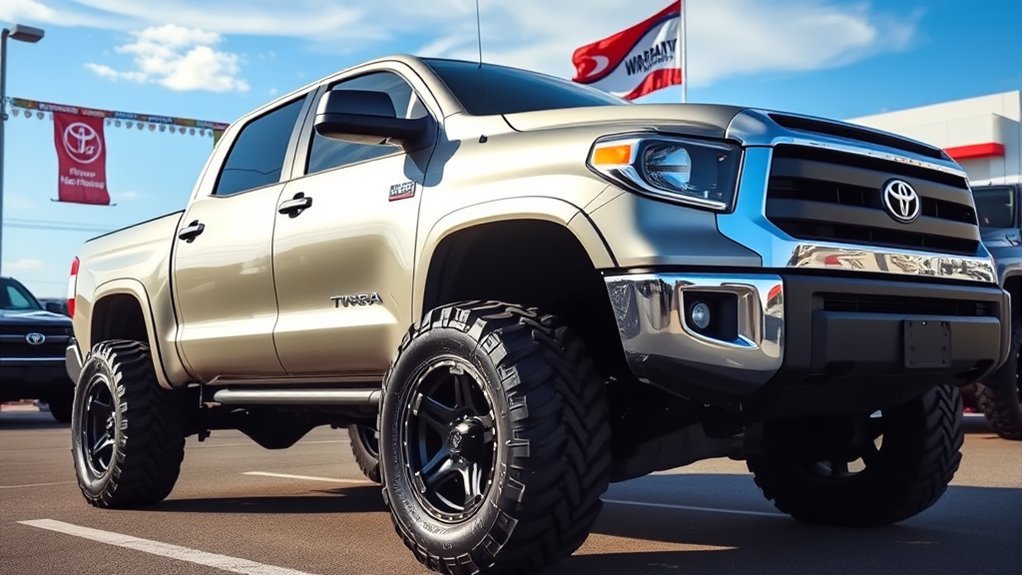
Installing larger tires on a Toyota Tundra does not automatically cancel the truck’s entire factory warranty. The real question is whether the tire or wheel modification caused, contributed to, or complicated the specific failure in your claim. Fitment, installation quality, load rating, calibration, maintenance records, and your model-year warranty terms all matter.
Quick Answer
Oversized tires normally do not void every part of a Toyota Tundra warranty. However, Toyota or a dealer may deny coverage for damage it can connect to the larger tires, improper wheels, rubbing, overloading, incorrect installation, or related modifications. Unrelated covered defects should remain eligible under the written warranty.
Key Takeaways
- A larger tire does not automatically erase the entire vehicle warranty.
- A claim may be denied when the modification caused or contributed to the damaged component.
- Drivetrain, steering, suspension, wheel-bearing, brake, body-clearance, and calibration complaints receive the closest scrutiny.
- Use a qualified installer and keep fitment calculations, invoices, alignment records, and maintenance records.
- Read the warranty guide for your exact model year because coverage, exclusions, and dispute procedures can differ.
Legal note: This article provides general U.S. consumer information, not legal advice. State law, Canadian law, commercial-use purchases, service contracts, and individual warranty terms may produce different results.
How Oversized Tires Affect a Toyota Tundra Warranty
The key distinction is between the whole warranty and a specific warranty claim. Under federal warranty guidance, using an aftermarket part does not by itself cancel warranty protection. A manufacturer or dealer can still refuse to pay for damage caused by a defective aftermarket part, an incorrect installation, or a modification that affected the failed system.
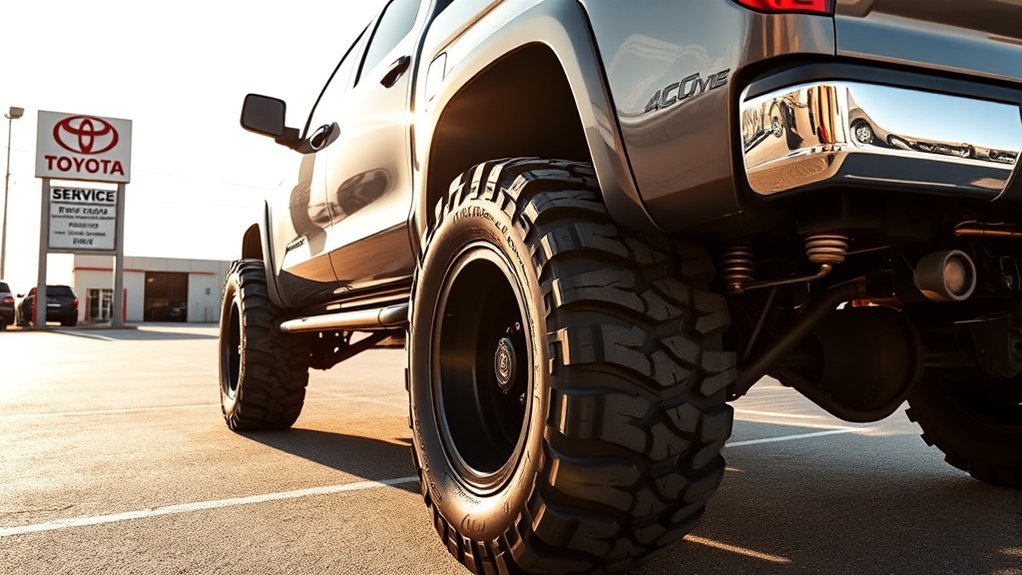
For example, an unrelated defect in the infotainment system should not become uncovered merely because the truck has larger tires. A failed wheel bearing, damaged fender liner, steering complaint, differential problem, or driveline vibration may receive a much closer causation review because those systems can be affected by tire diameter, mass, wheel offset, clearance, or installation.
The written Toyota Warranty and Maintenance Guide for your exact model year remains the starting point. It defines coverage, exclusions, required procedures, and Toyota’s dispute process. A dealership’s first opinion is important, but it is not a substitute for the warranty document or applicable law.
What Counts as an Oversized Tire on a Tundra?
An oversized tire is any tire whose dimensions differ materially from the original size or another size approved by Toyota for that model, trim, wheel, and configuration. Do not judge fitment by the sidewall number alone. Overall diameter, section width, wheel width, wheel offset, load index, speed rating, suspension height, and available clearance work together.
Start with the Tire and Loading Information label on the driver-side door area and the owner’s manual. The National Highway Traffic Safety Administration recommends using the original tire size or another size recommended by the vehicle manufacturer. A size that physically bolts on is not automatically a safe, approved, or warranty-neutral fitment.
| Fitment factor | Why it matters |
|---|---|
| Overall diameter | Changes effective gearing and may affect speed, distance, shift, traction-control, or braking calculations. |
| Tire and wheel mass | Can increase rotational load and the effort required to accelerate or slow the wheel assembly. |
| Wheel offset and width | Affects bearing leverage, steering geometry, inner clearance, and how far the tire extends from the body. |
| Load index and pressure | The replacement must safely support the truck’s actual axle loads without relying on the tire’s maximum sidewall pressure as the normal setting. |
| Clearance | The tire must clear suspension, brake, frame, body, wiring, and liner components through steering and suspension travel. |
How Dealer Attitudes Impact Your Warranty on Tire Modifications
Dealers can differ in experience, inspection methods, and willingness to work with modified trucks. One service department may quickly recognize that a complaint is unrelated to the tires, while another may request more diagnosis before submitting or approving a claim. That difference can affect the process, but it should not turn an unrelated aftermarket part into an automatic reason to cancel coverage.
Build a professional relationship with the service department, but rely on documentation rather than goodwill alone. Disclose the tire and wheel specifications, explain any lift or spacer changes, and provide installation and alignment records. Ask the advisor to place the claimed cause of failure and any denial reason in writing.
Note: Switching back to stock tires before service does not erase damage or change what caused a failure. Keeping the original set may help diagnosis, resale, or a return to factory configuration, but hiding a modification can weaken trust and documentation.
How Oversized Tires Impact Your Vehicle Warranty
Larger tires create the highest warranty risk when a complaint involves a system that directly carries, turns, stops, clears, or measures the wheel assembly. They create far less relevance to an unrelated electrical, interior, paint, or infotainment defect.
| System or complaint | Why the modification may be investigated | Helpful evidence |
|---|---|---|
| Wheel bearings, hubs, ball joints, or steering | Extra mass, changed offset, or altered leverage may contribute to load and wear. | Wheel offset, tire weight, alignment report, torque record, and inspection photos. |
| CV axles, driveshaft, differential, transmission, or shift quality | A larger diameter changes effective gearing and may increase load under acceleration, towing, or off-road use. | Diameter comparison, calibration details, usage history, diagnostic codes, and service records. |
| Rubbing, damaged liners, wiring, or bodywork | Insufficient clearance can directly damage nearby parts. | Full-lock and suspension-travel clearance inspection, photos, and installer measurements. |
| ABS, stability control, driver-assistance, speed, or mileage concerns | Diameter or mismatched tire sizes can change wheel-speed relationships and vehicle calculations. | All four tire sizes, tread-depth measurements, scan data, and calibration records. |
| Radio, seat motor, window switch, or unrelated defect | The tire modification usually has no logical connection to the failure. | Repair diagnosis showing the defect and its unrelated cause. |
The Role of the Magnuson-Moss Warranty Act in Modifications
The Magnuson-Moss Warranty Act governs written consumer-product warranties in the United States. It does not create unlimited coverage, approve every modification, or force a warrantor to pay for damage caused by an aftermarket part. It does restrict blanket tie-in requirements and gives consumers tools for warranty disputes.
Legal Protections Explained
The FTC explains that an auto warranty remains in effect when you use aftermarket or recycled parts. If a defective part or improper installation damages a covered component, the manufacturer or dealer may deny coverage for that damaged component. The FTC’s auto-warranty guidance says the manufacturer or dealer must prove the aftermarket part caused the damage before denying that coverage.
| Principle | Practical meaning for larger tires |
|---|---|
| No automatic blanket cancellation | The presence of aftermarket tires alone should not cancel every unrelated warranty obligation. |
| Causation matters | Coverage may be refused for the part or repair connected to damage caused by the tire, wheel, or installation. |
| Written terms still matter | The warranty defines covered parts, exclusions, claim procedures, and dispute steps. |
| State remedies may add protection | State warranty and consumer-protection laws can supplement federal rights. |
Modification Impact Assessment
A fair assessment should identify the failed part, determine the technical cause, and explain how the tire or wheel setup did or did not contribute. A broad statement such as “the truck is modified” is less useful than measurements, scan results, photos, service history, and a written diagnosis.
Ask these questions:
- What component failed, and what evidence identifies the failure mode?
- Is that component mechanically or electronically connected to tire size, wheel offset, load, or installation?
- Did the tires rub, overload an axle, create a mismatch, or require a calibration that was not performed?
- Were the tires properly rated, balanced, aligned, torqued, inflated, and maintained?
- Did the same problem exist before the modification?
Dealer Burden of Proof
Do not treat “burden of proof” as a magic phrase that guarantees approval. The FTC’s consumer guidance supports the rule that the manufacturer or dealer must establish that the aftermarket part caused the damage before denying coverage for that damage. In practice, you may still need to supply records, authorize diagnosis, obtain a second opinion, or use the warranty’s dispute process.
The strongest warranty argument is not “my tires cannot affect anything.” It is a documented explanation of why the claimed defect is unrelated, or why the installation met safe fitment and maintenance requirements.
Key Risks of Denied Warranty Claims Due to Larger Tires
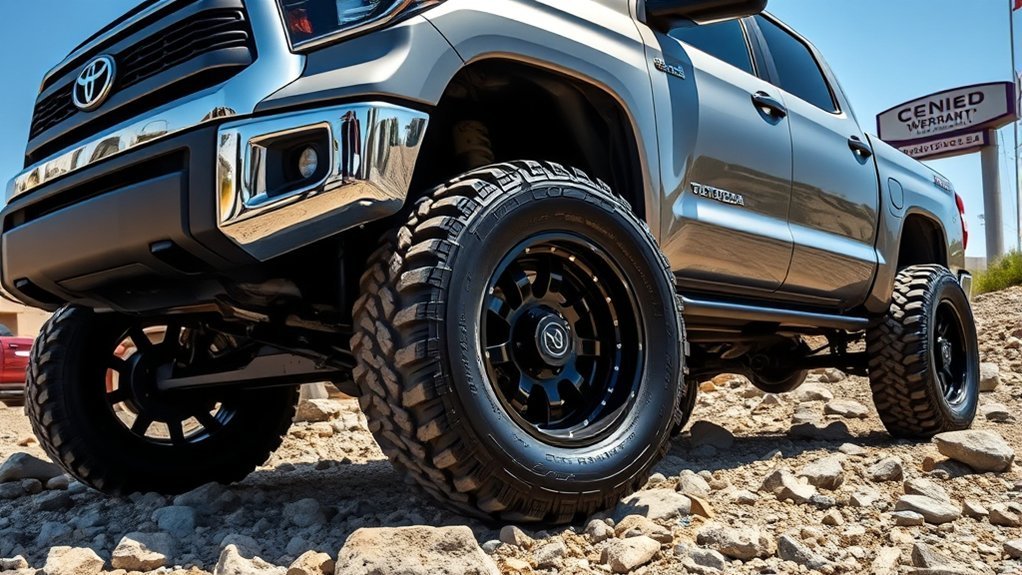
Your risk increases when the setup differs substantially from the factory configuration or when several modifications interact. A lift kit, spacers, low-offset wheels, heavy tires, trimming, and uncorrected calibration can create a more complicated claim than a modest, properly engineered tire change.
- Direct contact damage: Rubbing may damage liners, bodywork, hoses, wiring, or suspension parts.
- Incorrect load or pressure: A tire with unsuitable capacity, or an inflation method based only on the sidewall maximum, can create safety and wear problems.
- Wheel-specification errors: Improper width, offset, center bore, lug hardware, or torque can cause vibration, loosening, interference, or component stress.
- Driveline and gearing effects: A larger rolling diameter may change acceleration load, shift behavior, crawl performance, and towing response.
- Electronic-system effects: Incorrect or mismatched rolling circumference may affect wheel-speed-based systems and displayed speed or distance.
- Poor documentation: Missing invoices, alignment reports, specifications, and maintenance records make causation harder to evaluate.
Safety and Fitment Checks Before Installing Larger Tires
Warranty protection should not be the only concern. Tire fitment is a safety decision. Before installation, have a qualified tire or vehicle specialist confirm the complete setup for your exact Tundra year, trim, axle rating, wheel, suspension, and intended use.
- Confirm approved baseline information: Read the door placard, owner’s manual, and model-year warranty guide.
- Match capacity: Use a tire and wheel combination that meets the truck’s required load capacity and intended towing or hauling use.
- Check wheel compatibility: Verify diameter, width, offset, center bore, lug seat, fastener engagement, brake clearance, and torque specifications.
- Inspect full movement: Check clearance at full steering lock and through suspension compression and droop, not only while parked on level ground.
- Keep four-wheel systems consistent: Avoid mixing sizes, models, or substantially different tread depths unless Toyota specifically permits the combination.
- Plan for calibration: Ask whether the diameter change requires speed, transmission, stability-control, or driver-assistance calibration.
- Recheck after installation: Confirm torque, pressure, rubbing, alignment, vibration, and warning lights after the initial drive and again after the installer’s recommended interval.
Pro Tip: Ask the installer for a printed fitment sheet listing tire size, measured or published diameter, load index, wheel size and offset, recommended cold pressure rationale, alignment results, and any required calibration. That single document can improve both safety follow-up and warranty discussions.
[Products Worth Considering]
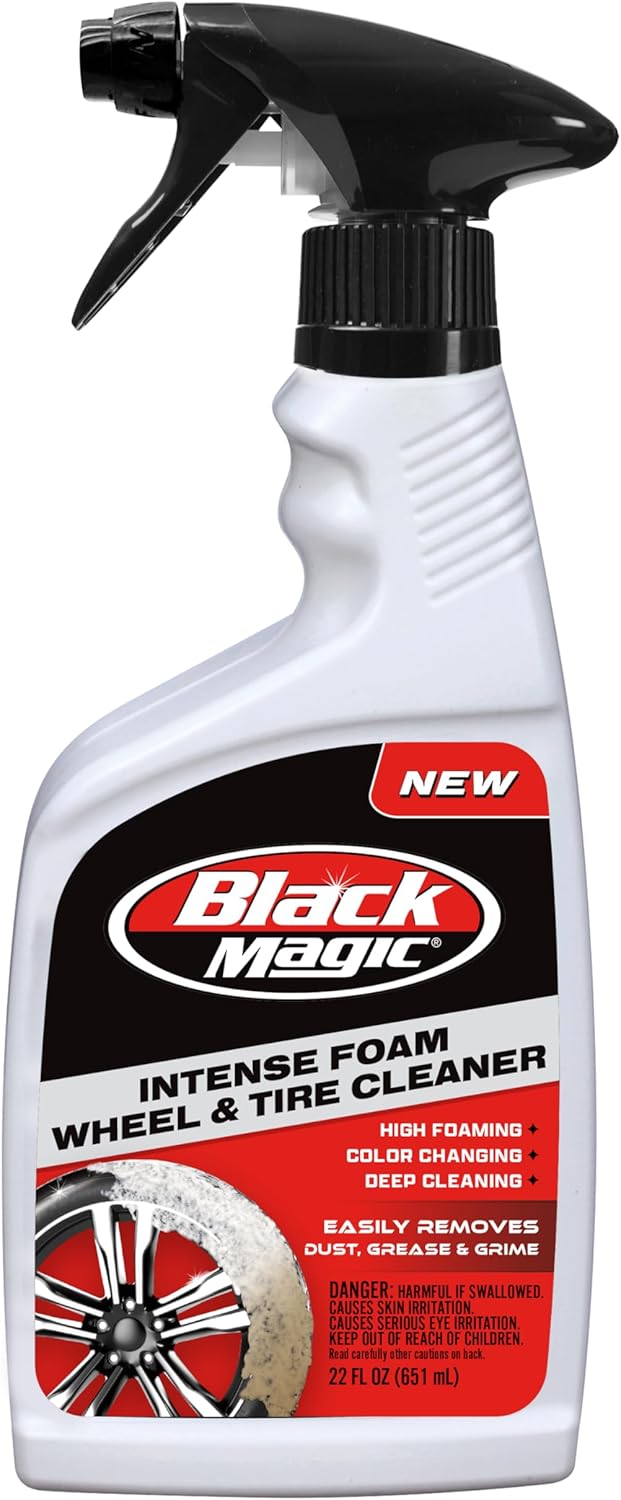
Black Magic Intense Foam Wheel & Tire Cleaner uses a high-foaming action to lift away dirt, grime, and brake dust without scrubbing. The color-changing formula helps show contaminants being dissolved as foam turns from white to brown. Safe for all wheel types and even wheel wells, it leaves a like-new, slick finish with a fresh cherry scent.

Replace or upgrade your zero-turn lawn mower tires with a universal fit flat-free tire and wheel assembly in a convenient 2-pack. Smooth tread front-caster style helps turning with reduced turf damage, while flat-free design eliminates the maintenance and downtime of air-filled flats. The included adapter kit supports 5/8-inch axles and hub lengths from 3.4 to 5 inches for compatibility across most ZTR mowers.

This manual duck head tire changer kit makes tire installation and removal simpler by letting you embed the duck head into the tire with applied pressure. The integrated design and durable steel construction help reduce friction and improve efficiency and safety during use. Suitable for 16–21 inch wheels, it’s convenient for cars, trucks, SUVs, and ATV tires, with 24-hour after-sales support.
How to Successfully Navigate Warranty Claims Post-Modification
Prepare before a failure occurs. Good records make it easier for both sides to separate a factory defect from modification-related damage.
- Save the factory information. Photograph the door placard and save the owner’s manual and warranty guide for your model year.
- Document every modification. Keep receipts, part numbers, tire and wheel specifications, installer details, alignment reports, calibration records, and dated photos.
- Maintain the truck on schedule. Save maintenance and inspection records, including tire rotations, pressure checks, balancing, and related repairs.
- Report symptoms early. Continuing to drive with rubbing, vibration, warning lights, or driveline noise can increase damage and weaken your position.
- Request a written diagnosis. Ask which component failed, why the modification is considered causal, and which warranty term supports the decision.
- Separate covered and non-covered work. A modification-related repair should not automatically prevent unrelated covered repairs from being evaluated.
- Escalate calmly. If the service advisor cannot resolve the issue, speak with the service manager, contact Toyota through the procedure in the warranty guide, and use any listed dispute-resolution program.
[Products Worth Considering]

These aluminum alloy tire valve stem caps with an O-ring seal help protect valve stems from corrosion while adding a clean, stylish look to your vehicle. The universal fit works across cars, trucks, motorcycles, bicycles, and more, making them an easy upgrade for everyday driving and off-road use. Installation is quick, and the included four-pack keeps all your tires dressed and protected.

The 22800 wheel stud installer makes replacing wheel studs quick and secure, saving time and effort during tire service. It uses a ratchet or impact wrench to pull new studs firmly into place, helping when existing studs are too long. Compatible with most automotive wheels and light-duty truck wheel studs, it’s designed for easy, tool-assisted installation.

The Trivd Frol 1/2" air impact wrench delivers high performance torque up to 1500 ft-lbs with a twin hammer impact mechanism for strong, balanced blows. It features an ergonomic grip, compact lightweight design, and quick-stop control with 3 forward speeds up to 8000 RPM plus a reverse speed. Built for demanding automotive repair and tire shop work, the rear exhaust helps keep debris away from the surface.
What Real Customers Say About Their Dealer Experiences
Owner reports can show what questions dealers commonly ask, but they are not reliable proof of what will happen in your case. Online posts often omit the truck’s model year, exact tire diameter, wheel offset, lift details, maintenance history, diagnostic findings, and written denial language.
Dealer Attitudes Towards Modifications
Instead of choosing a dealer only because an owner described it as “mod-friendly,” look for a service department that documents the failure, explains causation, and distinguishes the affected repair from unrelated coverage. Before installing tires, you can ask how the department handles modified vehicles, but request the applicable warranty language rather than relying on a verbal promise.
Warranty Claim Challenges
| Common situation | What the dealer may examine | What strengthens your position |
|---|---|---|
| Claim denied with only “modified vehicle” stated | Whether a technical cause and warranty exclusion were actually identified | Written denial, diagnostic report, and a request for the causal link |
| Suspension or driveline complaint | Tire diameter and mass, wheel offset, lift geometry, use, and maintenance | Complete specifications, alignment, installation records, and independent inspection |
| Unrelated electrical or interior defect | Whether any evidence connects the tire modification to the failure | A diagnosis showing an independent defect |
| Dealer and owner disagree on cause | Test results, inspection findings, and warranty procedure | Second opinion, preserved parts, photos, scan data, and formal escalation |
U.S. versus Canada: The Magnuson-Moss Warranty Act is a U.S. federal law. A Tundra owner in Ontario or another Canadian province must rely on the Canadian warranty terms and applicable federal and provincial consumer law, not Magnuson-Moss.
What to Do If a Warranty Claim Is Denied
A denial is easier to evaluate when it is specific. Ask for the decision in writing and collect the documents before authorizing major disassembly or discarding parts.
- Request the failed-part diagnosis, test results, photos, and the exact warranty exclusion being applied.
- Ask how the tire, wheel, lift, spacer, or installation caused or contributed to the failure.
- Keep copies of repair orders, estimates, emails, texts, invoices, maintenance records, and modification specifications.
- Ask Toyota customer support to review the claim using the contact and escalation process in your warranty guide.
- Obtain an independent written inspection from a qualified shop when causation is disputed.
- Use any required informal dispute-resolution process before litigation.
- For unresolved U.S. consumer issues, consider your state attorney general, state consumer-protection office, the FTC complaint system, or a qualified attorney.
[Products Worth Considering]

These M14x1.5 closed-end chrome lug nuts are a one-piece replacement designed for secure fitment on compatible GM, Ford, and select Chrysler/Dodge models. Featuring a 60-degree conical seat and anti-rust chrome plating, they help resist corrosion and maintain a bright look for everyday driving. Built for long-term durability, they include OEM-style part references and are backed by 12 months of support.

Upgrade your Toyota tire setup with these corrosion-resistant, leak-proof valve stem caps designed to help protect the valve core from water, snow, and road grime. The caps feature a snug rubber seal and durable copper alloy construction to resist rust and oxidation while maintaining stable tire pressure. Ideal for replacing worn original caps and keeping your wheels looking clean and stylish.
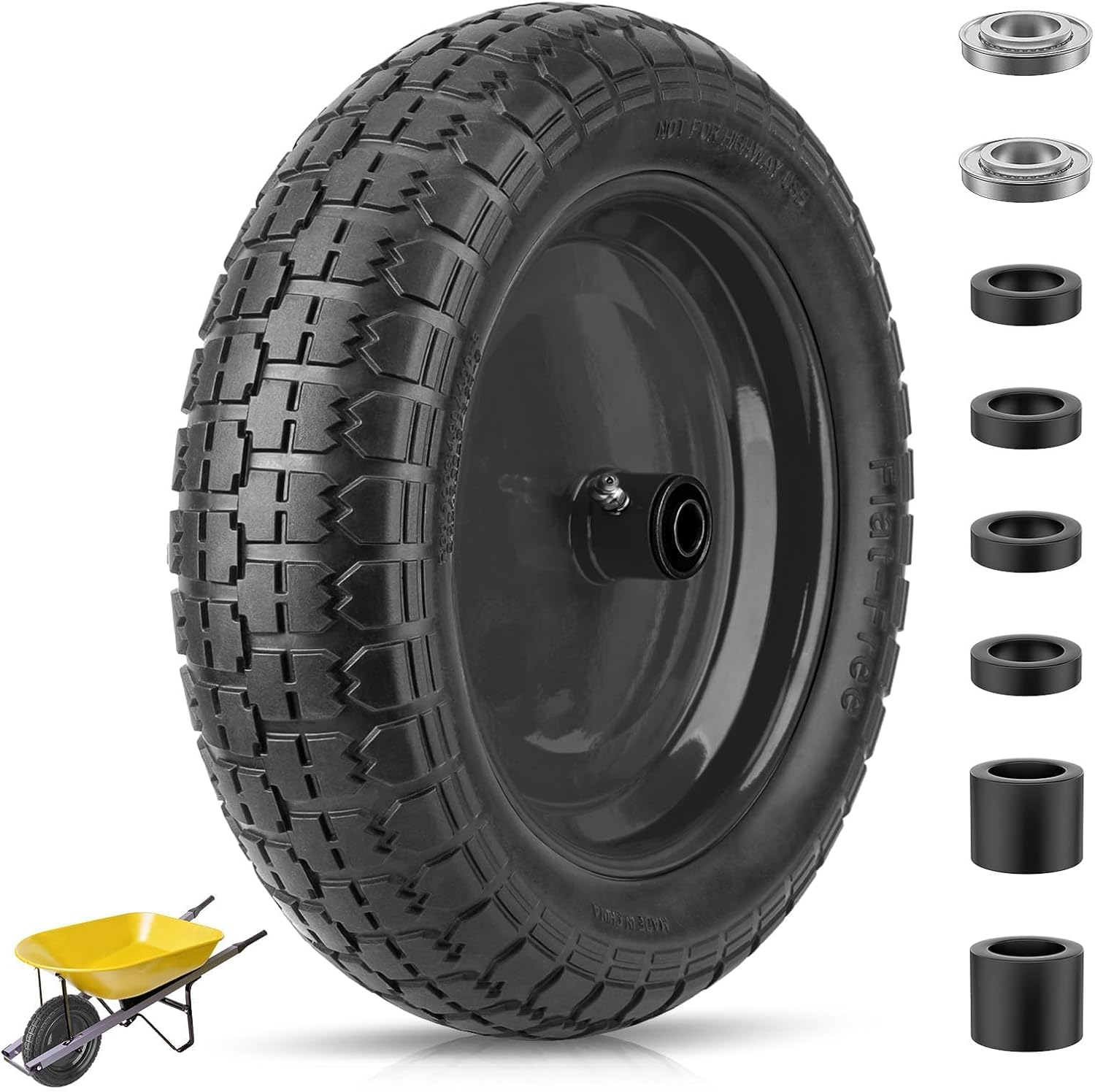
This flat-free TICONN wheelbarrow tire features durable polyurethane foam construction that never needs inflation, helping prevent punctures and reducing maintenance on rough outdoor terrain. With a 300 lb max load capacity and stable steel rim design, it supports safer transport for yard work and hauling tasks. An adapter kit with ball bearings and nylon spacers is included for easier fit and customization across common wheelbarrow and cart axle setups.
Frequently Asked Questions
Can I put bigger tires on my Toyota Tundra?
Yes, but confirm the complete fitment for your exact year and trim. The tire and wheel must meet load requirements, clear the truck through steering and suspension travel, work with the braking and electronic systems, and use appropriate pressure and calibration. A size that fits while parked may still rub or create problems in motion.
Do oversized tires void the entire Tundra warranty?
Normally, no. An aftermarket tire does not automatically cancel every warranty obligation. Coverage may be denied for a specific repair when the manufacturer or dealer can connect the damage to the tire, wheel, installation, or related modification. Unrelated covered defects should still be evaluated under the written warranty.
What actions can put a vehicle warranty claim at risk?
Claims may be at risk when damage results from an improper modification, misuse, overloading, neglected required maintenance, incorrect fluids or parts, poor installation, continued driving after a warning, or another excluded cause. These issues usually affect the related claim, not automatically every remaining part of the warranty.
Should I reinstall the stock tires before a dealer visit?
Do not reinstall them merely to hide the modification. The original set can help a technician compare behavior or return the truck to factory configuration, but causation and prior damage do not disappear when the tires are changed. Be transparent and keep records of both setups.
Does Magnuson-Moss apply to a Canadian Tundra warranty?
No. Magnuson-Moss is a United States federal warranty law. Canadian owners should review Toyota Canada’s warranty terms and the consumer-protection rules that apply in their province or territory.
Conclusion
Oversized tires do not automatically void a Toyota Tundra’s entire warranty, but they can change the outcome of a related claim. The safest approach is to choose a properly rated and engineered setup, document the installation, maintain the truck, address rubbing or warning signs immediately, and keep the warranty guide for your exact model year.
If a claim is denied, focus on the failed component and the evidence of causation. Request the decision and warranty basis in writing, gather your records, seek a qualified second opinion when needed, and follow Toyota’s formal escalation process.
Sources
- Federal Trade Commission: Auto Warranties and Auto Service Contracts — aftermarket parts, causation, proof, and maintenance records.
- Federal Trade Commission: Businessperson’s Guide to Federal Warranty Law — tie-in sales, exclusions for caused damage, and dispute procedures.
- Federal Trade Commission: Magnuson-Moss Warranty Act — official statute overview and legal references.
- National Highway Traffic Safety Administration: TireWise — tire-size, pressure, maintenance, and safety guidance.
- Toyota Owners: Manuals and Warranties — model-year owner’s manuals and Warranty and Maintenance Guides.